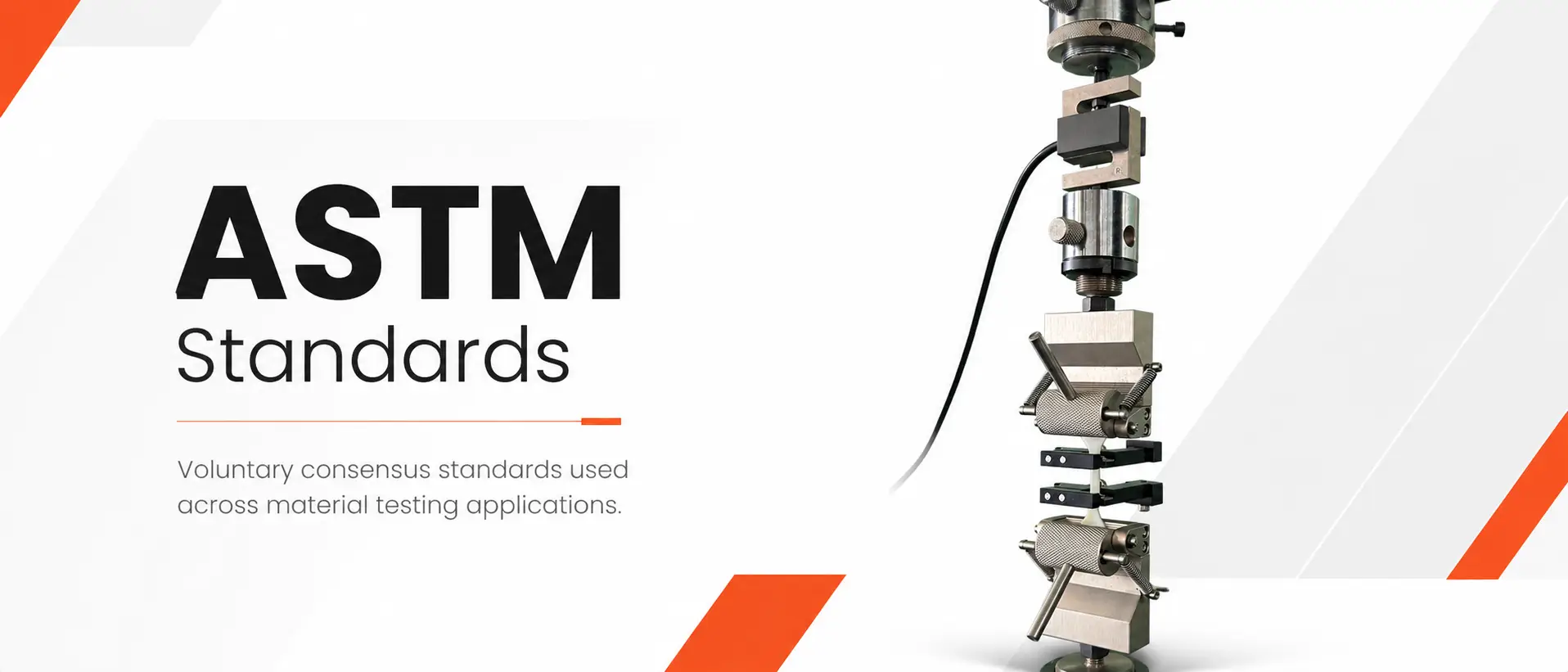

ASTM International is one of the most widely used standards organizations in material testing. Its voluntary consensus standards are used across plastics, metals, rubber, concrete, coatings, corrosion, textiles, geotechnical materials, and many other categories where consistent laboratory methods matter.
In practice, ASTM documents often help define how a specimen is prepared, what equipment is used, how the test is run, which values are calculated, and how results are reported. That makes ASTM a common starting point when laboratories and manufacturers are selecting testing machines, grips, fixtures, hardness testers, impact systems, corrosion chambers, or software workflows.
Standards In ASTM
Standards that begin with "A"
ASTM A1038-05
ASTM A1038-05 covers portable hardness testing by the ultrasonic contact impedance method. It is a narrow ASTM practice used when hardness needs to be checked directly...
View StandardASTM A1061
ASTM A1061/A1061M covers test methods for evaluating the mechanical properties of multi-wire steel prestressing strand. In practice, it is part of the tensile verification workflow used...
View StandardASTM A194
ASTM A194/A194M is an ASTM specification for carbon steel, alloy steel, and stainless steel nuts intended for bolts used in high-pressure or high-temperature service. It is...
View StandardASTM A255
ASTM A255 covers standard test methods for determining the hardenability of steel. It includes the Jominy end-quench test and a calculation method based on chemical composition,...
View StandardASTM A370
ASTM A370 covers mechanical test methods and definitions used for steel, stainless steel, and related alloy products. It is commonly referenced when tensile, bend, hardness, or...
View StandardASTM A416
ASTM A416/A416M is a standard specification for low-relaxation, seven-wire steel strand used in prestressed concrete construction. It is a product specification rather than a stand-alone test...
View StandardASTM A746
ASTM A746 is the ASTM specification for ductile iron gravity sewer pipe. It is used for centrifugally cast ductile iron pipe for sewer service, with push-on...
View StandardASTM A931
ASTM A931 is a standard test method for tension testing of wire ropes and strand at room temperature. It is used when labs and manufacturers need...
View StandardASTM A938
ASTM A938 covers torsion, or twist, testing of metallic wire. It is a standard test method used when manufacturers, labs, and buyers need a practical check...
View StandardASTM A956
ASTM A956/A956M is the ASTM test method for Leeb hardness testing of steel products. It covers rebound-type hardness checks on steel, cast steel, and cast iron,...
View StandardASTM A965
ASTM A965/A965M is a material specification for austenitic stainless steel forgings used in pressure and high-temperature service, including boilers, pressure vessels, and associated equipment. Because this...
View StandardStandards that begin with "B"
ASTM B117
ASTM B117 covers the apparatus, operating procedure, and environmental conditions used to create and maintain a salt spray (fog) environment for corrosion exposure testing. It is...
View StandardASTM B557
ASTM B557 is an ASTM test methods standard for tension testing wrought and cast aluminum- and magnesium-alloy products. It is used when comparable tensile strength and...
View StandardStandards that begin with "C"
ASTM C109
ASTM C109/C109M is an ASTM test method for determining the compressive strength of hydraulic cement mortars using 50 mm [2 in.] cube specimens. It is widely...
View StandardASTM C151
ASTM C151/C151M is the ASTM test method for measuring autoclave expansion of hydraulic cement. It is used to evaluate the expansion of hardened cement paste after...
View StandardASTM C1550
ASTM C1550 is an ASTM test method for measuring the flexural toughness of fiber-reinforced concrete using a centrally loaded round panel. It is commonly used when...
View StandardASTM C157
ASTM C157/C157M is a standard test method for determining length change in hardened hydraulic-cement mortar and concrete specimens made in the laboratory and exposed to controlled...
View StandardASTM C1609/C1609M
View StandardASTM C170
ASTM C170/C170M is the ASTM test method for determining the compressive strength of dimension stone. It covers sampling, specimen preparation, and compression testing for natural stone...
View StandardASTM C187
ASTM C187 covers the amount of water required to produce a hydraulic cement paste at normal consistency. It is a cement-lab test method used to establish...
View StandardASTM C191
ASTM C191 covers the time of setting of hydraulic cement by Vicat needle. It is an ASTM test methods document used in cement testing programs when...
View StandardASTM C192
ASTM C192/C192M is the ASTM practice for making and curing concrete test specimens in the laboratory. It is used when concrete mixtures are batched under controlled...
View StandardASTM C204
ASTM C204 covers determination of the fineness of hydraulic cement by air-permeability apparatus, commonly known as the Blaine method. It reports fineness as specific surface area,...
View StandardASTM C273/C273M
View StandardASTM C293/C293M
View StandardASTM C297
ASTM C297/C297M is a standard test method for measuring the flatwise tensile strength of sandwich constructions. It is commonly used to evaluate through-thickness tensile performance in...
View StandardASTM C305
ASTM C305 is the ASTM standard practice for mechanically mixing hydraulic cement pastes and mortars of plastic consistency. It is not a standalone property test or...
View StandardASTM C31
ASTM C31/C31M is the ASTM practice used to make and cure concrete test specimens in the field. It applies to cylinder and beam specimens made from...
View StandardASTM C363/C363M
View StandardASTM C364/C364M
View StandardASTM C365
ASTM C365/C365M covers flatwise compressive properties of sandwich cores. It is used when teams need compressive strength and modulus data in the direction normal to the...
View StandardASTM C367
ASTM C367/C367M is a standard test methods document used to evaluate strength-related properties of prefabricated architectural acoustical tile and lay-in ceiling panels. It focuses on hardness,...
View StandardASTM C39
ASTM C39/C39M is the ASTM standard test method for determining the compressive strength of cylindrical concrete specimens. It is commonly used for molded concrete cylinders and...
View StandardASTM C393/C393M
View StandardASTM C42
ASTM C42/C42M is the ASTM test method used to obtain, prepare, and test drilled cores from concrete for length, compressive strength, and splitting tensile strength determinations....
View StandardASTM C451
ASTM C451 is a standard test method for evaluating early stiffening in hydraulic cement paste. It is used when labs and producers need to understand whether...
View StandardASTM C490
ASTM C490/C490M is a standard practice covering the apparatus and procedures used to prepare specimens and measure length change in hardened cement paste, mortar, and concrete....
View StandardASTM C511
ASTM C511 is a specification for mixing rooms, moist cabinets, moist rooms, and water storage tanks used when preparing and storing specimens for hydraulic cement and...
View StandardASTM C617
ASTM C617/C617M is the ASTM standard practice for capping cylindrical concrete specimens before compressive strength testing. It covers the materials, apparatus, and procedures used to create...
View StandardASTM C633
ASTM C633 is an ASTM test method used to measure the adhesion of a thermal spray coating to its substrate or the cohesion of the coating...
View StandardASTM C78
ASTM C78/C78M is the ASTM test method for determining the flexural strength of concrete using a simple beam with third-point loading. Results are reported as modulus...
View StandardASTM C880
ASTM C880/C880M is the ASTM test method used to measure the flexural strength of dimension stone with a simple beam and quarter-point loading. It is commonly...
View StandardASTM C99
ASTM C99/C99M is a standard test method used to determine the modulus of rupture (flexural strength in bending) of dimension stone. It is commonly used to...
View StandardStandards that begin with "D"
ASTM D1004
View StandardASTM D1037
ASTM D1037 is a collection of small-specimen test methods used to evaluate mechanical and physical properties of mat-formed wood-based panels such as particleboard, MDF, hardboard, and...
View StandardASTM D1044
ASTM D1044 is a standard test method used to estimate how resistant transparent plastics are to surface abrasion using a Taber Abraser. Results are commonly reported...
View StandardASTM D1052
ASTM D1052 is a standard test method used to measure cut (crack) growth in vulcanized rubber when a pierced specimen is repeatedly flexed on a Ross...
View StandardASTM D1054
ASTM D1054 is a rubber resilience test method that uses a Goodyear‑Healey rebound pendulum to determine impact resilience and related penetration behavior. This standard is commonly...
View StandardASTM D1148-95
ASTM D1148-95 is a standard test method used to evaluate surface discoloration on white or light-colored vulcanized rubber after controlled exposure to heat and ultraviolet (UV)...
View StandardASTM D1151
ASTM D1151 is an ASTM practice that defines controlled moisture and temperature exposure conditions for evaluating how well an adhesive bond retains strength after conditioning. Instead...
View StandardASTM D1183
ASTM D1183 is a set of standard practices used to evaluate how adhesive bonds hold up after repeated exposure to cycling laboratory aging conditions such as...
View StandardASTM D1229
ASTM D1229 is a standard test method used to evaluate how well vulcanized rubber recovers after being compressed and then released while still at low temperature....
View StandardASTM D1238
ASTM D1238 is a standard test method used to determine the extrusion flow rate of molten thermoplastic resins using an extrusion plastometer (often called a melt...
View StandardASTM D1415
ASTM D1415 is a test method for measuring the international hardness of vulcanized and thermoplastic rubber using a ball indentation approach and reporting results in International...
View StandardASTM D1424
ASTM D1424 is a standard test method for measuring the force required to propagate a single-rip tear in textile fabrics using a falling-pendulum (Elmendorf-type) tear tester....
View StandardASTM D1525
ASTM D1525 is a plastics thermal test method used to determine a Vicat softening temperature: the temperature at which a specified needle penetration occurs while a...
View StandardASTM D1559
ASTM D1559 is a withdrawn ASTM test method that was used with the Marshall apparatus to evaluate the resistance to plastic flow of compacted bituminous (asphalt)...
View StandardASTM D1621
ASTM D1621 is a standard test method used to measure how rigid cellular plastics (foams) behave under compressive loading. It is commonly used to generate compressive...
View StandardASTM D1630
ASTM D1630 is a standard test method used to evaluate abrasion resistance for vulcanized rubber and similar rubber materials commonly used in footwear soles and heels....
View StandardASTM D1646
ASTM D1646 describes Mooney viscometer test methods used to measure Mooney viscosity (a torque-based processability indicator for rubber), plus stress relaxation behavior and early-stage pre-vulcanization (scorch)...
View StandardASTM D1681
ASTM D1681 is a laboratory chemical analysis test method used to determine synthetic anionic active ingredient in detergents using a cationic titration procedure with a two-phase...
View StandardASTM D1708
ASTM D1708 is a tensile test method used to measure comparative tensile strength and elongation of plastics using a standardized microtensile (small) specimen geometry. This method...
View StandardASTM D1781
View StandardASTM D1822
ASTM D1822 is a standard test method for determining the tensile-impact resistance of plastics by measuring the energy required to rupture a standardized tension-impact specimen using...
View StandardASTM D1883-07
ASTM D1883-07 is a laboratory test method for determining California Bearing Ratio (CBR) from compacted soil (and similar pavement-layer) specimens. It is commonly used to support...
View StandardASTM D1894
ASTM D1894 is a test method for measuring the static (starting) and kinetic (sliding) coefficients of friction (COF) for plastic film and sheeting as it slides...
View StandardASTM D1922
ASTM D1922 is a standard test method for measuring the force required to propagate an existing tear in plastic film and nonrigid thin sheeting using an...
View StandardASTM D198
View StandardASTM D2054
ASTM D2054 is a test method for evaluating color transfer (crocking / rub-off) from the textile tape portion of zippers to another surface under dry and/or...
View StandardASTM D2084
ASTM D2084 is a test method used to characterize the vulcanization (cure) behavior of vulcanizable rubber compounds using an oscillating disk cure meter (ODR). It is...
View StandardASTM D2105
ASTM D2105 is a standard test method for measuring longitudinal (axial) tensile properties of fiberglass pipe and tube under defined conditioning and test-speed requirements. It is...
View StandardASTM D2166
ASTM D2166 / D2166M is a standard test method for measuring the unconfined compressive strength of cohesive soils by applying axial load under strain-controlled conditions. It...
View StandardASTM D2210
ASTM D2210 is a standard test method for evaluating how light leather resists grain cracking and how much it extends when the material is bulged by...
View StandardASTM D2240
ASTM D2240 is a standard test method for measuring indentation hardness (commonly called durometer or Shore hardness) on rubber, elastomeric materials, cellular/foam-like materials, gel-like materials, and...
View StandardASTM D2290
ASTM D2290 is a standard test method used to determine the apparent hoop tensile strength of plastic and reinforced plastic pipe using a split disk or...
View StandardASTM D2344
ASTM D2344/D2344M is a standard test method for measuring the short-beam strength of polymer matrix composite materials and their laminates using a three-point bending setup. It...
View StandardASTM D2412
ASTM D2412 is a standard test method used to measure how plastic pipe responds to external compression when it is loaded between two parallel plates. It...
View StandardASTM D2435
ASTM D2435/D2435M is a laboratory test method for measuring one-dimensional consolidation behavior of soils under incremental (stepwise) vertical loading while lateral strain is restrained and drainage...
View StandardASTM D2436
ASTM D2436 is a withdrawn ASTM specification that was used to define performance-oriented requirements for forced-convection laboratory ovens used in electrical insulation work, including heat aging...
View StandardASTM D2444
ASTM D2444 is a standardized falling-weight (tup) impact procedure used to evaluate the impact resistance of thermoplastic pipe and fittings under defined impact conditions. It is...
View StandardASTM D256
ASTM D256 is a set of standard test methods for measuring the pendulum impact resistance of plastics using standardized impact machines and hammers. It is commonly...
View StandardASTM D2632
ASTM D2632 is a standard test method for measuring the impact resilience of solid rubber using a vertical rebound instrument. It is commonly used to compare...
View StandardASTM D2850
ASTM D2850 is a triaxial compression test method for cohesive soils run in an unconsolidated-undrained (UU) condition. It is widely used in geotechnical labs to characterize...
View StandardASTM D2990
ASTM D2990 is a set of standard test methods used to measure how plastics deform over time under a constant load (creep) and, when applicable, how...
View StandardASTM D3039
ASTM D3039/D3039M is a test method for measuring in-plane tensile properties of polymer matrix composite materials reinforced with high-modulus fibers. It is widely used to generate...
View StandardASTM D3080
ASTM D3080/D3080M is a standard test method for measuring the consolidated drained (CD) shear strength of soils using a direct shear apparatus. It is commonly used...
View StandardASTM D3167
View StandardASTM D3330
ASTM D3330/D3330M is a standard test method for measuring the peel adhesion of pressure-sensitive adhesive (PSA) tapes. It is commonly used to compare peel performance within...
View StandardASTM D3364
ASTM D3364 is an ASTM standard test method used to measure flow rate behavior of non-rigid poly(vinyl chloride) (PVC) compounds using an extrusion plastometer-style approach. It...
View StandardASTM D3410
ASTM D3410/D3410M is a standard test method used to determine in-plane compressive properties of polymer matrix composite (PMC) materials using a shear-loading approach with an unsupported...
View StandardASTM D3518
ASTM D3518/D3518M is a standard test method used to determine the in-plane shear response of polymer matrix composite materials by tensile testing a ±45° laminate. It...
View StandardASTM D3574
ASTM D3574 is a collection of test methods used to characterize slab, bonded, and molded flexible cellular polyurethane foams. It is commonly used to generate comparable...
View StandardASTM D3597
ASTM D3597 is a performance specification used to evaluate woven upholstery fabrics (plain, tufted, or flocked) intended for new indoor furniture. It sets out a practical...
View StandardASTM D3763
ASTM D3763 is a test method for measuring the high-speed puncture response of plastics using load and displacement sensors. It is commonly used when teams need...
View StandardASTM D3763-02
ASTM D3763-02 is a standard test method for measuring the high-speed puncture properties of plastics using load and displacement sensors. It is commonly used when teams...
View StandardASTM D3786
ASTM D3786/D3786M is a standard test method for measuring the bursting strength of textile fabrics using a diaphragm bursting strength tester (hydraulic or pneumatic). It is...
View StandardASTM D3822
View StandardASTM D3877
ASTM D3877 describes laboratory test methods used to evaluate one-dimensional expansion, shrinkage, and uplift pressure behavior of compacted soil–lime mixtures under controlled loading and moisture conditions....
View StandardASTM D3884
ASTM D3884 is a standard guide for evaluating the abrasion resistance of textile fabrics using a rotary platform abrader (often associated with Taber-type abrasion testing). It...
View StandardASTM D3939/D3939M-2013 (2017)
ASTM D3939/D3939M-2013 (2017) is a textile test method used to evaluate the snagging resistance of woven and knitted fabrics using the “mace” (spiked ball) snagging approach....
View StandardASTM D395
ASTM D395 is a set of test methods used to measure compression set in rubber—how well an elastomer rebounds after being held under compressive stress for...
View StandardASTM D4060
ASTM D4060 is an ASTM standard test method used to evaluate the abrasion resistance of organic coatings using a Taber Abraser. It is commonly specified for...
View StandardASTM D412
ASTM D412 is a set of standard test methods for measuring tensile (tension) properties of vulcanized (thermoset) rubber and thermoplastic elastomers (TPE). It is commonly used...
View StandardASTM D4157
ASTM D4157 is a standard test method used to evaluate the abrasion resistance of woven textile fabrics using an oscillatory cylinder abrasion tester (often called a...
View StandardASTM D430
ASTM D430 describes test methods used to evaluate how soft rubber materials (and rubber-to-fabric composites) resist damage from repeated flexing or distortion. It is commonly used...
View StandardASTM D4543
ASTM D4543 is a set of standard practices used to prepare rock core as cylindrical test specimens and verify that specimen dimensions and end-surface geometry meet...
View StandardASTM D4546
ASTM D4546 describes laboratory test methods used to measure one-dimensional wetting-induced swell or collapse of unsaturated soils, plus a method for load-induced compression after wetting-induced deformation....
View StandardASTM D4595
View StandardASTM D4648
ASTM D4648/D4648M covers laboratory miniature vane shear testing used to estimate the undrained shear strength of saturated, fine-grained cohesive soils (typically clays and silts) from undisturbed,...
View StandardASTM D4767
ASTM D4767 is a standard test method used in geotechnical laboratories to determine undrained shear strength and stress–strain behavior of saturated cohesive soils using a consolidated...
View StandardASTM D5034
ASTM D5034 is a standard test method for measuring the breaking strength and elongation of textile fabrics using the grab (and modified grab) tensile procedure. It...
View StandardASTM D5035
ASTM D5035 is a standard test method used to measure the breaking force and elongation of textile fabrics using a strip-style tensile test. It is commonly...
View StandardASTM D5289
ASTM D5289 is a rubber test method used to measure selected vulcanization (cure) characteristics of rubber compounds using rotorless cure meters, including both sealed and unsealed...
View StandardASTM D531
ASTM D531 is a standard test method for measuring indentation resistance of rubber and rubber-like materials using a Pusey and Jones type plastometer. It reports an...
View StandardASTM D5311
ASTM D5311/D5311M is a soil test method used to run load-controlled cyclic undrained triaxial tests on saturated soil specimens. It is commonly used in geotechnical laboratories...
View StandardASTM D5321
ASTM D5321 is a direct shear test method used to measure the shear strength at interfaces between soil and geosynthetics, or between two geosynthetics. It is...
View StandardASTM D5356
ASTM D5356 is a test method for determining the pH of chrome tanning solutions. It is commonly used in leather manufacturing and chemical control programs where...
View StandardASTM D5374
ASTM D5374 provides test methods for evaluating forced-convection, ventilated, electrically heated laboratory ovens used in thermal endurance evaluation of electrical insulating materials. It focuses on confirming...
View StandardASTM D5379
ASTM D5379/D5379M is a standard test method for determining shear properties of fiber-reinforced composite materials using a V-notched beam specimen and dedicated shear fixture. This method...
View StandardASTM D5423
ASTM D5423 is a specification for forced-convection, ventilated, electrically heated laboratory ovens used to support thermal endurance evaluation of electrical insulating materials. It is typically used...
View StandardASTM D5528
ASTM D5528/D5528M is a standard test method used to measure Mode I (opening) interlaminar fracture toughness (GIc) of unidirectional fiber-reinforced polymer matrix composites using a double...
View StandardASTM D5581
ASTM D5581 is a standard test method used to evaluate the resistance to plastic flow of asphalt paving mixtures using the Marshall apparatus with a 6...
View StandardASTM D5607
ASTM D5607 is a laboratory direct shear test method used to measure the shear strength behavior of rock (and concrete) specimens when the normal load is...
View StandardASTM D573
ASTM D573 is a rubber aging test method used to evaluate how vulcanized rubber properties change after exposure to elevated temperature in an air oven. It...
View StandardASTM D5731
ASTM D5731 is a rock mechanics test method for determining the point load strength index of rock using concentrated loading through opposed platens. It is commonly...
View StandardASTM D5734
ASTM D5734 is a standard test method for measuring the average force required to propagate a tear in a nonwoven fabric using a falling-pendulum (Elmendorf) tearing...
View StandardASTM D5748
ASTM D5748 is a film puncture test method used to measure how well stretch wrap (stretch film) resists being penetrated by a probe under a controlled,...
View StandardASTM D5868
ASTM D5868 is a standard test method for measuring lap shear adhesion (apparent shear strength) of adhesively bonded single-lap joints involving fiber reinforced plastic (FRP) adherends....
View StandardASTM D5961/D5961M
View StandardASTM D5963
ASTM D5963 is a rubber abrasion-resistance test method that uses a rotary drum abrader to compare how different vulcanized rubbers and thermoplastic elastomers resist frictional/abrasive wear....
View StandardASTM D6110
ASTM D6110 is a Charpy pendulum impact test method used to determine the impact resistance of notched plastic specimens under defined mounting and striker conditions. It...
View StandardASTM D6182
ASTM D6182 is a leather-finishing test method used to evaluate how a finish holds up when finished leather is repeatedly flexed. It is commonly used to...
View StandardASTM D624
ASTM D624 is a standard test method for measuring tear strength in conventional vulcanized rubber and thermoplastic elastomers (TPE). It is commonly used to compare formulations,...
View StandardASTM D6243
ASTM D6243/D6243M is a standard test method for measuring the internal shear resistance of a geosynthetic clay liner (GCL) and the interface shear resistance between a...
View StandardASTM D6272
ASTM D6272 is a standard test method for determining flexural properties of unreinforced and reinforced plastics (including high‑modulus composites) and electrical insulating materials using a four-point...
View StandardASTM D6279
ASTM D6279 is a standard test method used to compare the rub abrasion and mar resistance of high-gloss coatings applied to a flat, rigid surface. It...
View StandardASTM D638
ASTM D638 is a widely used tensile test method for measuring tensile properties of plastics using standardized “dumbbell” (dog-bone) specimens under defined conditioning and test-speed conditions....
View StandardASTM D647
ASTM D647 is a withdrawn ASTM practice that addressed how to design molds used to produce standardized plastic test specimens. It focused on mold design concepts...
View StandardASTM D648
ASTM D648 is a standard test method used to determine the temperature at which a rigid or semi-rigid plastic specimen reaches a defined deflection while loaded...
View StandardASTM D6484
ASTM D6484/D6484M is a standard test method for measuring open-hole compressive strength (often called OHC) of multidirectional polymer matrix composite laminates. It is commonly used when...
View StandardASTM D6637/D6637M
View StandardASTM D6641
ASTM D6641/D6641M is a standard test method for measuring compressive strength and stiffness-related properties of polymer matrix composite materials using a combined loading compression (CLC) test...
View StandardASTM D6671/D6671M
View StandardASTM D6742
ASTM D6742/D6742M is a standard practice used to run filled-hole tension and compression strength testing on polymer matrix composite laminates. It is commonly used when a...
View StandardASTM D6775
View StandardASTM D689
ASTM D689 is a standardized test method for measuring the internal tearing resistance of paper using an Elmendorf-type tearing tester. It is commonly used in paper...
View StandardASTM D6927
ASTM D6927 is a standard test method for determining Marshall stability (peak load resistance) and Marshall flow (deformation at/near peak) on compacted asphalt mixture specimens using...
View StandardASTM D695
ASTM D695 is a standardized compression test method used to measure the compressive properties of rigid plastics, including both unreinforced and reinforced materials. It is commonly...
View StandardASTM D7078
ASTM D7078/D7078M is a standard test method for determining shear properties of fiber-reinforced polymer matrix composites using a V-notched rail shear fixture. It is commonly used...
View StandardASTM D7121
ASTM D7121 is a standard test method for measuring the rebound resilience of rubber and similar elastomeric materials using a Schob type rebound pendulum. If you...
View StandardASTM D7136
ASTM D7136/D7136M is a standard test method for measuring the damage resistance of continuous-fiber, polymer matrix composite laminates subjected to a controlled drop-weight impact event. It...
View StandardASTM D7137
ASTM D7137/D7137M is a standard test method used to measure the compressive residual strength of multidirectional polymer matrix composite laminate plates after they have been intentionally...
View StandardASTM D7181-20
ASTM D7181-20 is a standard test method for running a consolidated drained (CD) triaxial compression test to determine drained shear strength and stress–strain behavior of soil...
View StandardASTM D7192
ASTM D7192 is a standard test method for measuring the high-speed puncture behavior of plastic films using instrumented load and displacement sensing. It is commonly used...
View StandardASTM D7264
ASTM D7264 (D7264/D7264M) is a standard test method for determining flexural properties of polymer matrix composite materials using either three-point or four-point bending. It is commonly...
View StandardASTM D751
ASTM D751 is a collection of test methods used to evaluate coated fabrics, including rubber-coated fabrics such as tarpaulins, rainwear, and related products. Because ASTM D751...
View StandardASTM D7625-10
ASTM D7625-10 is a standard test method for determining the abrasiveness of rock using the CERCHAR Abrasiveness Index (CAI). It is commonly used to help estimate...
View StandardASTM D785
ASTM D785 is a Rockwell indentation hardness test method used to quantify the hardness of plastics and related plastic electrical insulating materials using a Rockwell hardness...
View StandardASTM D790
ASTM D790 is a standard test method for determining flexural (bending) properties of plastics and related electrical insulating materials using a three-point loading setup. It is...
View StandardASTM D7905
ASTM D7905/D7905M is a standard test method for determining Mode II interlaminar fracture toughness (GIIc) of unidirectional fiber-reinforced polymer matrix composite laminates using the end-notched flexure...
View StandardASTM D792
ASTM D792 covers laboratory test methods for determining the density and specific gravity (relative density) of solid plastics using a liquid-displacement (buoyancy) approach. It is widely...
View StandardASTM D8067
View StandardASTM D813
ASTM D813 is a rubber durability test method used to evaluate crack growth in vulcanized rubber under repeated bending or flexing. It is commonly applied when...
View StandardASTM D828
ASTM D828 is a standard test method for measuring the tensile properties of paper and paperboard using a constant-rate-of-elongation (CRE) tensile tester. It is commonly used...
View StandardASTM D882
ASTM D882 is an ASTM International test method used to determine tensile properties of thin plastic sheeting and films. It is widely referenced for comparing material...
View StandardStandards that begin with "E"
ASTM E-18
ASTM E18 is a set of standard test methods for determining Rockwell and Rockwell superficial hardness of metallic materials using the Rockwell indentation hardness principle. It...
View StandardASTM E10
ASTM E10 is a standard test method for determining Brinell hardness of metallic materials using an indentation hardness approach. It defines core requirements for Brinell hardness...
View StandardASTM E10-12
ASTM E10-12 is an ASTM test method for measuring Brinell hardness of metallic materials using the Brinell indentation principle. It is widely used for shop-floor and...
View StandardASTM E1012
ASTM E1012 is a standard practice used to verify testing frame and specimen alignment when applying axial tensile or compressive forces. Its focus is identifying bending...
View StandardASTM E139
ASTM E139 describes test methods for running constant-tensile-load creep and rupture-type tests on metallic materials at constant temperature, including key requirements for the test equipment and...
View StandardASTM E143
ASTM E143 is a standard test method used to determine the shear modulus of structural materials at room temperature using torsional loading in the elastic (Hookean)...
View StandardASTM E145
ASTM E145 is a specification used to define and verify performance for general-purpose laboratory air ovens used in testing operations, including gravity-convection and forced-ventilation designs. If...
View StandardASTM E18
ASTM E18 is the primary ASTM test-method standard for Rockwell and Rockwell superficial hardness testing of metallic materials. It defines the Rockwell indentation hardness principle, outlines...
View StandardASTM E1820
ASTM E1820 is a fracture mechanics test method used to determine metallic material fracture toughness using K, J-integral, and CTOD (crack-tip opening displacement, δ) parameters under...
View StandardASTM E190
ASTM E190 is a standard test method for guided bend testing used to evaluate weld soundness and ductility. It is commonly specified when a fabricator, QA/QC...
View StandardASTM E208
ASTM E208 is a standard test method for conducting a drop-weight test to determine the nil-ductility transition temperature (NDT) of ferritic steels. It is commonly referenced...
View StandardASTM E21
ASTM E21 describes test methods used to run tensile tests on metallic materials at elevated temperature. It is commonly referenced when teams need tensile strength, yield...
View StandardASTM E2248
ASTM E2248 is a standard test method for notched-bar impact testing of metallic materials using miniaturized Charpy V-notch (MCVN) specimens. It is commonly used when standard...
View StandardASTM E2298
ASTM E2298 is a standard test method for instrumented impact testing of metallic materials using instrumented Charpy V-notch (CVN) and instrumented miniaturized Charpy V-notch (MCVN) specimens....
View StandardASTM E23
ASTM E23 is a set of standard test methods for notched-bar impact testing of metallic materials using Charpy (simple-beam) and Izod (cantilever-beam) configurations. It is commonly...
View StandardASTM E2368
ASTM E2368 is a standard practice for strain-controlled thermomechanical fatigue (TMF) testing of materials under uniaxial loading, where temperature and mechanical strain are varied in a...
View StandardASTM E29
ASTM E29 is a standard practice used to decide how many digits are significant in specification limits and how test results should be compared to those...
View StandardASTM E290
ASTM E290 is a set of bend test methods used to evaluate ductility by bending a specimen under defined constraint conditions and then examining the bend...
View StandardASTM E345
ASTM E345 describes test methods used to perform tensile (tension) testing on metallic foil at room temperature. It is commonly applied when foil handling, thickness measurement,...
View StandardASTM E370
ASTM A370 is a widely used set of test methods and definitions for mechanical testing of steel, stainless steel, and related alloy products. It is commonly...
View StandardASTM E384
ASTM E384 is a standard test method used to determine microindentation hardness using Knoop and Vickers indentation techniques. It is widely used when hardness needs to...
View StandardASTM E399
ASTM E399 is a standard test method for determining linear-elastic plane-strain fracture toughness (KIc) of metallic materials using fatigue precracked specimens. It is commonly used when...
View StandardASTM E4
ASTM E4-24 is a standard practice used to calibrate and verify the force indication of static or quasi-static testing machines operating in tension, compression, or both....
View StandardASTM E436
ASTM E436 is a standard test method for drop-weight tear testing (DWTT) of ferritic steels. It is commonly used to evaluate fracture propagation behavior and the...
View StandardASTM E466
ASTM E466 is an ASTM practice for conducting force-controlled, constant-amplitude axial fatigue tests on metallic materials. It is commonly used to generate stress-life (S–N) fatigue strength...
View StandardASTM E466-15
ASTM E466-15 is a standard practice for running force-controlled, constant-amplitude axial fatigue tests on metallic materials. It is widely used to generate stress-life (S–N) fatigue strength...
View StandardASTM E488
ASTM E488/E488M is a set of standard test methods used to determine the tensile and shear strength of anchors installed in concrete. It is commonly applied...
View StandardASTM E606 / E606M
ASTM E606/E606M is a standard test method used to generate strain-controlled fatigue data from uniaxial test specimens. It is commonly applied when fatigue behavior is driven...
View StandardASTM E643
ASTM E643 is a standard test method used to compare the stretch formability of metallic sheet by pushing a spherical punch into a clamped specimen until...
View StandardASTM E643-84
ASTM E643-84 is a test method for evaluating the formability/ductility of metallic sheet by driving a ball (hemispherical) punch into a clamped specimen until cracking occurs....
View StandardASTM E643-86
ASTM E643-86 is a ball-punch (cupping) deformation test used to compare the formability of metallic sheet intended for forming operations. It is commonly used when a...
View StandardASTM E646
ASTM E646 is a standard test method used to determine the tensile strain‑hardening exponent (the “n‑value”) of metallic sheet materials from tensile stress–strain data in the...
View StandardASTM E647
ASTM E647 is a standard test method for measuring fatigue crack growth rate (da/dN) as a function of stress-intensity-factor range (ΔK) under cyclic loading. It is...
View StandardASTM E7
ASTM E7 is a terminology standard that defines commonly used terms in metallography so teams can describe microstructures, preparation steps, and microscopy observations consistently. It is...
View StandardASTM E74 (Class AA)
ASTM E74 (Class AA) is used when a force-measuring instrument (such as a force-proving instrument, reference load cell, or dynamometer) is calibrated to a very high...
View StandardASTM E8
ASTM E8/E8M is a widely used standard test method for room-temperature tensile testing of metallic materials. It is commonly referenced for generating tensile properties used in...
View StandardASTM E8/E8M
View StandardASTM E813
ASTM E813 is a legacy test method for determining JIc, an elastic-plastic fracture toughness value near the onset of stable crack growth in metallic materials. It...
View StandardASTM E83
ASTM E83 is a standard practice used to calibrate, verify, and classify extensometer systems used for strain measurement in tensile and compression testing. It is commonly...
View StandardASTM E9
ASTM E9 describes test methods for axial-force compression testing of metallic materials at room temperature, including guidance on apparatus, specimen types, and key procedural considerations for...
View StandardASTM E92
ASTM E92 describes standardized test methods for determining Vickers hardness and Knoop hardness of metallic materials using diamond indentation. If you need help selecting the right...
View StandardStandards that begin with "F"
ASTM F1306
ASTM F1306 is a standard test method for measuring the slow-rate penetration (puncture) resistance of flexible barrier films and laminates using a driven probe. It is...
View StandardASTM F1319
ASTM F1319 is a test method that uses a crockmeter-style rubbing action to evaluate abrasion and smudge resistance of printed or copied images. Results are based...
View StandardASTM F1624
ASTM F1624 is a standard test method for measuring the hydrogen embrittlement threshold in steel using the incremental step loading (ISL) technique. It is commonly used...
View StandardASTM F1717
ASTM F1717 describes static and fatigue test methods for spinal implant assemblies evaluated in a vertebrectomy (corpectomy) model. It is widely used to compare mechanical behavior...
View StandardASTM F1798
ASTM F1798 is a standardized test method used to evaluate the static strength, fatigue strength, and resistance to loosening of interconnection mechanisms and subassemblies in spinal...
View StandardASTM F1800
ASTM F1800 is a standard practice used to run cyclic fatigue tests on metallic tibial tray components used in total knee joint replacements. It is commonly...
View StandardASTM F1820
ASTM F1820 is a standard test method used to measure the force required to disassemble a modular acetabular shell and liner (hip replacement cup components). It...
View StandardASTM F1978
ASTM F1978 is a test method used to quantify abrasion resistance of metallic thermal spray coatings on flat metal specimens using a Taber Abraser, with wear...
View StandardASTM F2009
ASTM F2009 is a standard test method for measuring the axial force needed to disengage a self-locking taper connection used in modular orthopedic implants. It is...
View StandardASTM F2077
ASTM F2077 is a set of test methods used to mechanically characterize intervertebral body fusion device (IBFD) assemblies under controlled laboratory loading. It is commonly used...
View StandardASTM F2193
ASTM F2193 is a combined specifications-and-test-methods standard used when defining and mechanically evaluating key components in spinal fixation systems—especially metallic spinal screws, plates, and rods. It...
View StandardASTM F2267
ASTM F2267 is a standard test method used to measure load-induced subsidence of non-biologic intervertebral body fusion devices (often referred to as spinal cages) under static...
View StandardASTM F2345
ASTM F2345 is a set of standard test methods used to evaluate the cyclic fatigue strength of ceramic modular femoral heads assembled onto a cone (taper)...
View StandardASTM F2580
ASTM F2580 is a fatigue test method used to evaluate the modular connection region of metallic femoral hip prostheses designed for proximal (metaphyseal) fixation. It applies...
View StandardASTM F2706
ASTM F2706 describes laboratory test methods used to mechanically evaluate occipital-cervical and occipital-cervical-thoracic spinal implant assemblies in a vertebrectomy model. It is commonly used for bench-level...
View StandardASTM F3067
ASTM F3067 is a standard guide focused on radial loading characterization for balloon-expandable and self-expanding vascular stents (including stent grafts with tubular geometry). It supports bench...
View StandardASTM F382
ASTM F382 is a standard specification and test method used for metallic bone plates intended for surgical internal fixation. It combines classification and geometric/performance characterization with...
View StandardASTM F519
ASTM F519 is a standard test method used to evaluate whether plating/coating processes—or later exposure to certain chemicals in service—can introduce hydrogen embrittlement risk in high-strength...
View StandardASTM F543
ASTM F543 is a combined specification and set of test methods used for metallic medical bone screws intended for implantation into bone. It addresses dimensional/tolerance expectations...
View StandardASTM F606
ASTM F606/F606M is a set of standard test methods used to determine mechanical properties for externally and internally threaded fasteners (such as bolts, screws, studs, and...
View StandardASTM F606-1
ASTM F606 is a set of test methods used to determine mechanical properties of threaded fasteners and related components, commonly including proof load, tensile/wedge tensile, and...
View StandardASTM F606-2
ASTM F606-02 is an ASTM test-method standard that describes procedures used to determine mechanical properties of externally and internally threaded fasteners, washers, and rivets. It is...
View StandardStandards without a leading letter
ASTM 208
ASTM E208 is a standard test method for determining the nil-ductility transition (NDT) temperature of ferritic steels. It is used when brittle-fracture behavior at lower temperatures...
View StandardASTM 4966/4970
ASTM D4966 and ASTM D4970/D4970M are closely related ASTM textile test methods built around the Martindale tester, but they do not measure the same performance characteristic....
View Standard