ASTM D1052 is a standard test method used to measure cut (crack) growth in vulcanized rubber when a pierced specimen is repeatedly flexed on a Ross flexing apparatus. It is commonly used to compare compounds or production lots for flex-crack growth resistance under controlled laboratory bending.
This method is typically selected when flexing-driven crack propagation is a concern in service (for example, repeated bending in rubber components), and when a repeatable, equipment-based screening test is needed. If you need help confirming whether D1052 is the right approach for your material or product, talk with our team.
ASTM D1052 — Standard Test Method for Measuring Rubber Deterioration—Cut Growth Using Ross Flexing Apparatus
ASTM D1052 is written as a test method for evaluating cut growth in rubber vulcanizates under repeated bend flexing using a Ross flexing apparatus. In practice, the result is used as a comparative indicator of resistance to crack propagation from an introduced cut.
Because flex-crack behavior can be sensitive to compound chemistry, cure state, and specimen preparation, it is important to match the test setup and reporting to the exact edition cited in your customer or internal specification.
Quick Definition
What it is: A rubber deterioration test method focused on cut growth during repeated bend flexing.
What it measures: The progression of cracking from a pierced/initiated cut in a vulcanized rubber specimen during cycling on a Ross flexing apparatus.
Typical use: Comparing formulations, suppliers, or lots for flex-crack growth resistance under a standardized mechanical flexing condition.
What This Standard Covers
ASTM D1052 covers a laboratory procedure for repeatedly flexing a vulcanized rubber specimen and tracking cut growth from an initiated defect. The method is intended to provide an estimate of resistance to crack growth under bend flexing rather than a direct prediction of service life.
In many procurement and QA/QC workflows, D1052 is used as an acceptance or comparison tool (pass/fail limits may be defined by an internal spec, customer drawing, or product standard that cites this method).
Why This Standard Matters in Testing
Flex-induced crack growth is a common failure mode in rubber parts that bend repeatedly in service. ASTM D1052 provides a controlled way to introduce a consistent starter defect and apply repeated flexing so different rubber compounds can be compared using the same mechanical exposure.
For product development, the method can help screen candidate formulations. For production control, it can support lot-to-lot consistency checks when crack-growth resistance is a key performance requirement.
Common Materials, Product Types, or Applications Covered
This method is used for vulcanized rubber materials where cracking under repeated bending is a concern. It is most often applied at the material or compound level rather than as a full finished-product durability test.
Common applications: Rubber components exposed to repeated flexing, bending, or cyclic deformation where small defects can grow into functional cracks.
Common Test or Verification Workflow
A typical ASTM D1052 workflow involves preparing standardized vulcanized rubber specimens, initiating a starter cut (pierced defect), cycling the specimens in a Ross flexing apparatus for a defined number of flex cycles, and measuring/reporting the amount of cut growth versus the specified endpoint(s).
Practical note: Because the test is comparative and highly method-dependent, laboratories generally lock down specimen preparation details, conditioning/aging requirements (when invoked by the cited edition), cycle count checkpoints, and the measurement approach used to quantify crack growth.
Equipment Commonly Used for This Standard
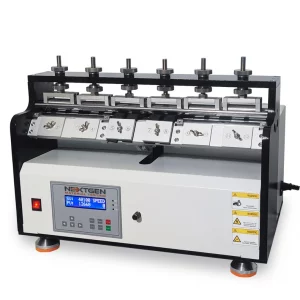
ASTM D1052 points to a dedicated bend-flexing setup based on the Ross flexing apparatus, along with tooling to create consistent specimens and a repeatable starter defect.
Common equipment: Ross flexing apparatus (Ross flex tester) with cycle counter/controls, specimen cutting dies, piercing/initiating tool, and inspection/measurement tools for tracking cut growth.
If you are equipping a lab for Ross flex cut-growth testing and need to match capacity, stations/fixtures, and control options to your throughput targets, you can request a detailed quote for an ASTM D1052-oriented configuration.
How to Read This Designation or Revision
ASTM standards are commonly cited as “ASTM D1052” with an added suffix that indicates the edition and reapproval year (for example, a year in parentheses may appear in some citations). When D1052 is referenced in a contract, purchase order, or quality plan, align your lab procedure to the exact cited designation and year to avoid mismatches in setup or reporting expectations.
Revision sensitivity: Equipment and fixturing are generally stable for this method, but details such as conditioning, cycling endpoints, and reporting conventions can depend on the specific edition named in the requirement.
Related Standards, Methods, or Frameworks
Programs that control rubber durability may pair ASTM D1052 results with other compound-level physical tests (for example, hardness, tensile/elongation, tear, heat aging, or ozone resistance) to build a broader view of field performance risk. The most appropriate companion methods depend on the product’s service environment and the failure mode being managed.
Talk to us about ASTM D1052 setup and throughput
If you are implementing ASTM D1052 for incoming inspection, compound screening, or qualification testing, we can help map the standard’s needs to a practical Ross flex testing station, tooling, and documentation package. Share your specimen type, target cycle counts, and reporting requirements, and contact our team to discuss the right setup.