
Soil Mechanics Testing Equipment
Products
Soil behaves differently depending on how it is loaded, how quickly, and whether water is allowed to escape, which is why its strength and settlement are measured rather than assumed. NextGen supplies apparatus for direct shear, triaxial, consolidation and vane testing on undisturbed and remoulded samples alike, working to ASTM D3080 for direct shear and ASTM D4767 for consolidated undrained triaxial.
Systems range from front-loading oedometers and manual shear boxes to automatic computerised triaxial rigs and resonant column apparatus for dynamic work, with load cells, pressure controllers and software supplied as one set rather than assembled from parts. Every system is installed and calibrated by our engineers, your team is trained on the procedures, and support continues for the life of the apparatus. Read More...
For Laboratories
One partner to equip your complete soil mechanics laboratory
Soil testing rarely stops at one machine. NextGen equips the whole geotechnical laboratory, from consolidation and shear testing to triaxial systems, vane apparatus and moisture determination, and stays responsible for it after delivery.
- Equipment, fixtures and software
- Installation, training, calibration
- Lifetime technical support
Sub-categories
 Sub-category · 2 products
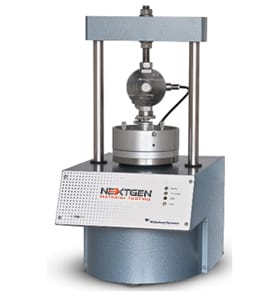
Triaxial Testing Systems for Soil
Automatic and dynamic triaxial testing systems for soil, covering CU, UU and CD compression, stress path, slow cyclic and higher-frequency cyclic loading, with pressure controllers, internal sensors and PC software for setup and reports.
Open
 Sub-category · 2 products
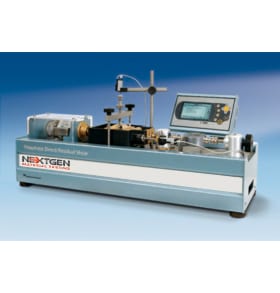
Oedometers for Soil Consolidation Testing
Front-loading and automatic computerized oedometers for measuring the rate and magnitude of soil consolidation under incremental vertical load, with cells for specimens from 50.47 to 112.8 mm diameter and a digital record of every test.
Open
 Sub-category · 4 products
Direct Shear and Vane Shear Testing Equipment for Soil
Direct shear machines and a laboratory vane apparatus for measuring the shear strength of soil, from bench units for 100 mm specimens to a large machine for coarse fill and geosynthetic interfaces.
Open
1
Shear strength
Direct shear and vane shear on the bench and in the field
4
Most requested
 5000 N
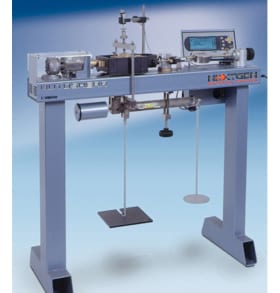
Automatic Shear Testing Machine
The Automatic Shear Testing Machine, also known as NG-Shear DGEN, is built for direct shear testing of soil under…
View product
Get quote
Most requested
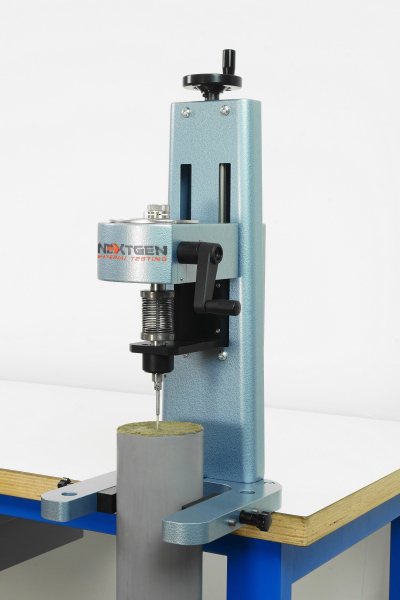 Laboratory Vane Apparatus
The Laboratory Vane Apparatus measures undrained shear strength of soft cohesive soils directly in a sample or…
View product
Get quote
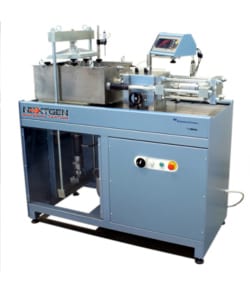 100 kN
Shearmatic 300 - Large Shear Testing Machine
Shearmatic 300 is a large automatic shear testing machine for soils, geosynthetics, industrial slag, shale, brick…
View product
Get quote
5 kN
Shearmatic - Automatic Shear Testing Machine
Shearmatic is an automatic shear testing machine for soil laboratories performing direct and residual shear tests.
View product
Get quote
5000 N
Automatic Shear Testing Machine
The Automatic Shear Testing Machine, also known as NG-Shear DGEN, is built for direct shear testing of soil under…
View product
Get quote
Most requested
Laboratory Vane Apparatus
The Laboratory Vane Apparatus measures undrained shear strength of soft cohesive soils directly in a sample or…
View product
Get quote
100 kN
Shearmatic 300 - Large Shear Testing Machine
Shearmatic 300 is a large automatic shear testing machine for soils, geosynthetics, industrial slag, shale, brick…
View product
Get quote
5 kN
Shearmatic - Automatic Shear Testing Machine
Shearmatic is an automatic shear testing machine for soil laboratories performing direct and residual shear tests.
View product
Get quote
2
Triaxial
Strength under controlled cell pressure and drainage
2
Most requested
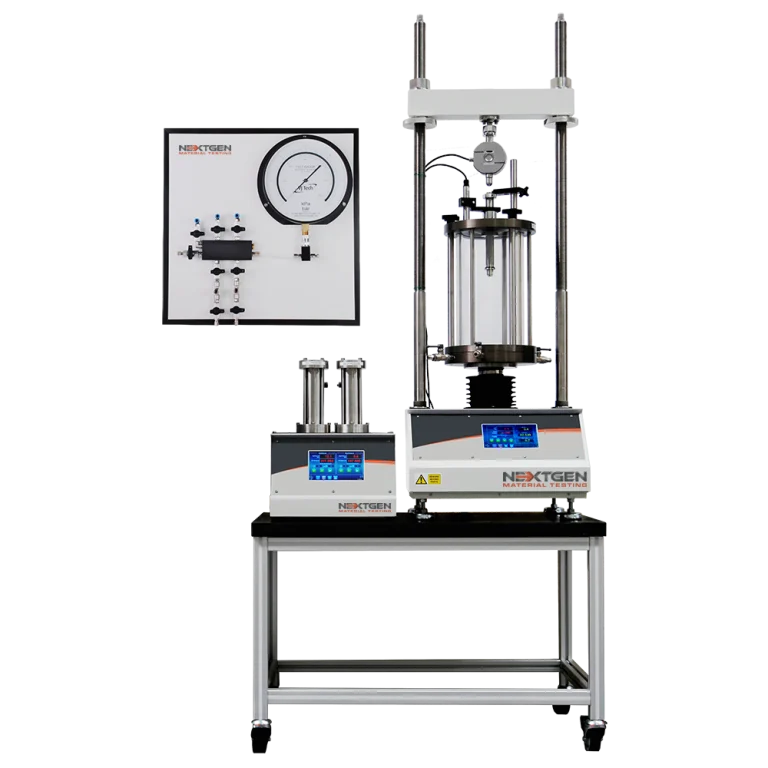 500 kN
Automatic Triaxial Testing System
The Automatic Triaxial Testing System is designed for fully automated total and effective stress testing of soil…
View product
Get quote
 Dynamic Triaxial Testing System
Dynamic Triaxial Systems 1000 kPa are designed for advanced soil testing under controlled cyclic and dynamic loading…
View product
Get quote
500 kN
Automatic Triaxial Testing System
The Automatic Triaxial Testing System is designed for fully automated total and effective stress testing of soil…
View product
Get quote
Dynamic Triaxial Testing System
Dynamic Triaxial Systems 1000 kPa are designed for advanced soil testing under controlled cyclic and dynamic loading…
View product
Get quote
3
Consolidation
Settlement of the sample under stepped load
2
ACE - Automatic Computerized Oedometer
ACE is an automatic computerized oedometer for determining the rate and magnitude of soil consolidation under…
View product
Get quote
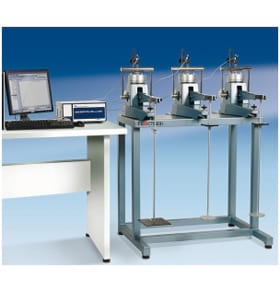 NG-Oedometer – Front-Loading Consolidation Oedometer
NG-Oedometer is a front-loading consolidation test system for determining the rate and magnitude of soil…
View product
Get quote
4
Dynamic properties
Stiffness and damping at small strain
1
5
Load frames
Frames that drive the cells and moulds
1
6
Moisture
Water content before anything else is measured
1
1
Shear strength
Direct shear and vane shear on the bench and in the field
4
Automatic Shear Testing Machine5000 N
The Automatic Shear Testing Machine, also known as NG-Shear DGEN, is built for direct shear testing of soil under…
Direct shear testing
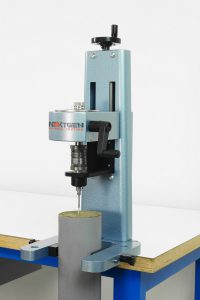 Laboratory Vane Apparatus
The Laboratory Vane Apparatus measures undrained shear strength of soft cohesive soils directly in a sample or…
Vane shear testing
Shearmatic 300 - Large Shear Testing Machine100 kN
Shearmatic 300 is a large automatic shear testing machine for soils, geosynthetics, industrial slag, shale, brick…
Direct shear testing
Shearmatic - Automatic Shear Testing Machine5 kN
Shearmatic is an automatic shear testing machine for soil laboratories performing direct and residual shear tests.
Direct shear testing
2
Triaxial
Strength under controlled cell pressure and drainage
2
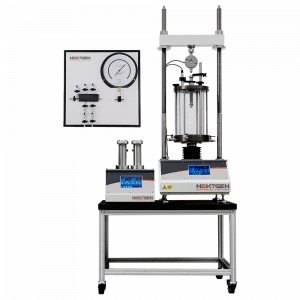 Automatic Triaxial Testing System500 kN
The Automatic Triaxial Testing System is designed for fully automated total and effective stress testing of soil…
Triaxial testing
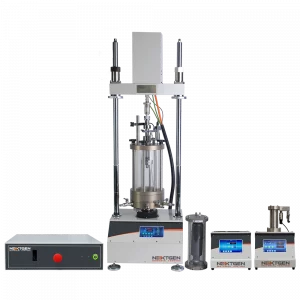 Dynamic Triaxial Testing System
Dynamic Triaxial Systems 1000 kPa are designed for advanced soil testing under controlled cyclic and dynamic loading…
Triaxial testing
3
Consolidation
Settlement of the sample under stepped load
2
ACE - Automatic Computerized Oedometer
ACE is an automatic computerized oedometer for determining the rate and magnitude of soil consolidation under…
Consolidation testing
NG-Oedometer – Front-Loading Consolidation Oedometer
NG-Oedometer is a front-loading consolidation test system for determining the rate and magnitude of soil…
Consolidation testing
4
Dynamic properties
Stiffness and damping at small strain
1
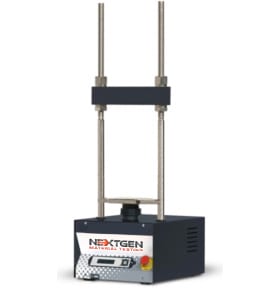
5
Load frames
Frames that drive the cells and moulds
1
6
Moisture
Water content before anything else is measured
1
Nothing matches that filter. Show all products
FAQs
The category covers the main tests of a geotechnical laboratory. Consolidation is covered by a front-loading oedometer and an automatic one. Direct shear is covered by three machines plus a vane apparatus, and triaxial work by a static and a dynamic system. A resonant column and torsional shear tester handles small-strain dynamic properties, the MULTISPEED handles displacement-controlled work, and the GenMoist balance handles moisture. Everything is supplied with installation, calibration and training.
Choose by the drainage condition and the question the project asks. Direct shear gives consolidated drained strength along a defined plane and is a practical choice when that plane matters. Triaxial testing separates drained from undrained behavior, and the consolidated undrained method measures pore pressure. The laboratory vane is a rapid undrained check for saturated fine-grained soil, intended for strengths below about 100 kPa. The methods are not interchangeable without engineering review.
The shear machines work to ASTM D3080 and BS 1377-7, and the Shearmatic 300 also lists ASTM D5321 and EN ISO 12957 for geosynthetic interfaces. The oedometers work to ASTM D2435 and BS 1377-5. The automatic triaxial system lists ASTM D4767, ASTM D2850 and ASTM D7181, the dynamic triaxial system follows ASTM D5311, and the vane apparatus follows ASTM D4648. Each model page lists its exact standards.
It differs by instrument, so check the model page. The NG-Oedometer ships without consolidation cells, gauges, weight sets and bench. The ACE is supplied without cells, Geo-Analysis templates, software and PC. The NG-Shear DGEN comes without load cell, displacement transducers and shear box assembly, while the Shearmatic includes its transducers and takes shear boxes as a separate order. Tell us your specimen sizes and we will quote the matching parts.
The MULTISPEED is a 50 kN digital universal tester for displacement-controlled work, with speed variable from 0.2 to 51 mm/min. CBR and Marshall speeds are selected by default, and other speeds can be set. It covers CBR, Marshall, indirect tensile, quick triaxial, unconfined and uniaxial soil tests, following ASTM D1883 for CBR and ASTM D6927 and AASHTO T 245 for Marshall.
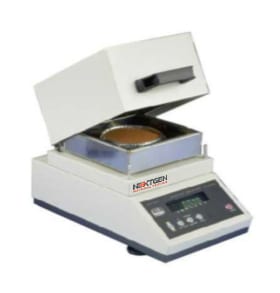
The GenMoist dries and weighs a solid sample at the same time, so moisture content is read directly as weight and percentage lost through the whole drying cycle. It has a 160 g capacity, 0.001 g readability and a timer from 0 to 99 minutes, and it is calibrated with the 100 g weight supplied. Compaction, consistency limits and strength are all reported against moisture content.