Classic Analogue Shore Durometer with Test Stand Options

Rubber Testing Equipment
Standards
DIN ISO 7619, DIN EN ISO 868, NF EN ISO 868, ASTM D2240, BS 903 Part. A 26, NF T 51-174, DIN 53505, JIS K 6253



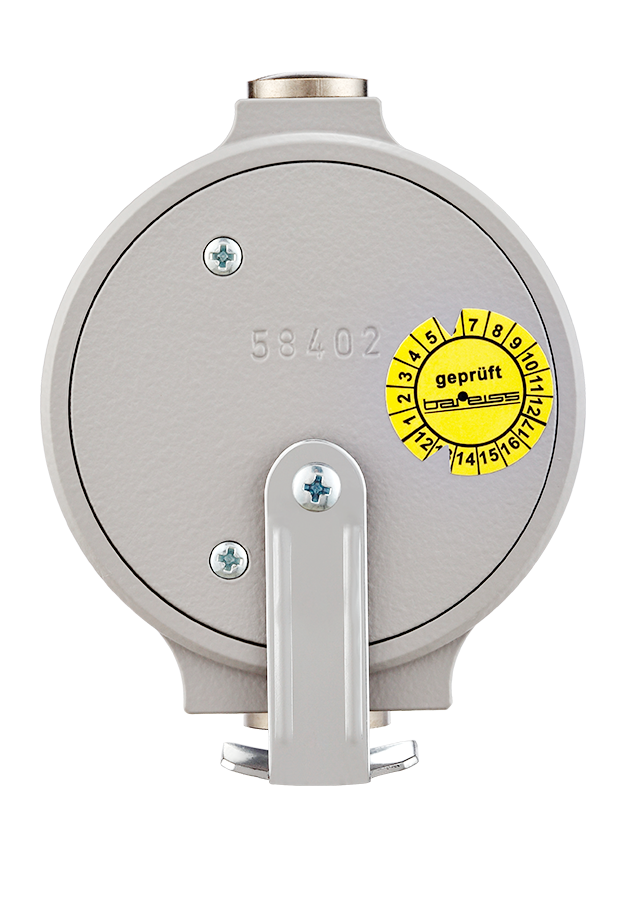
Certified



Description
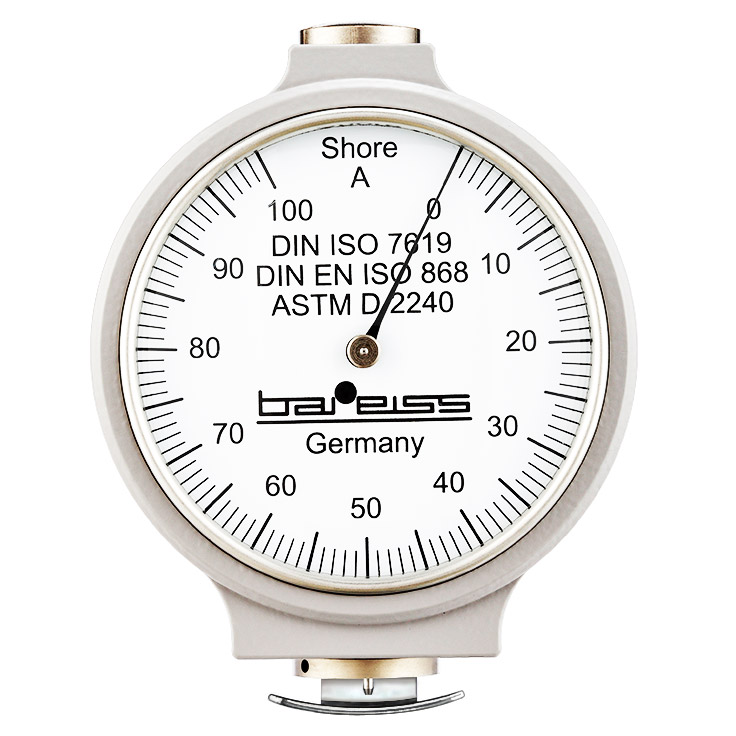
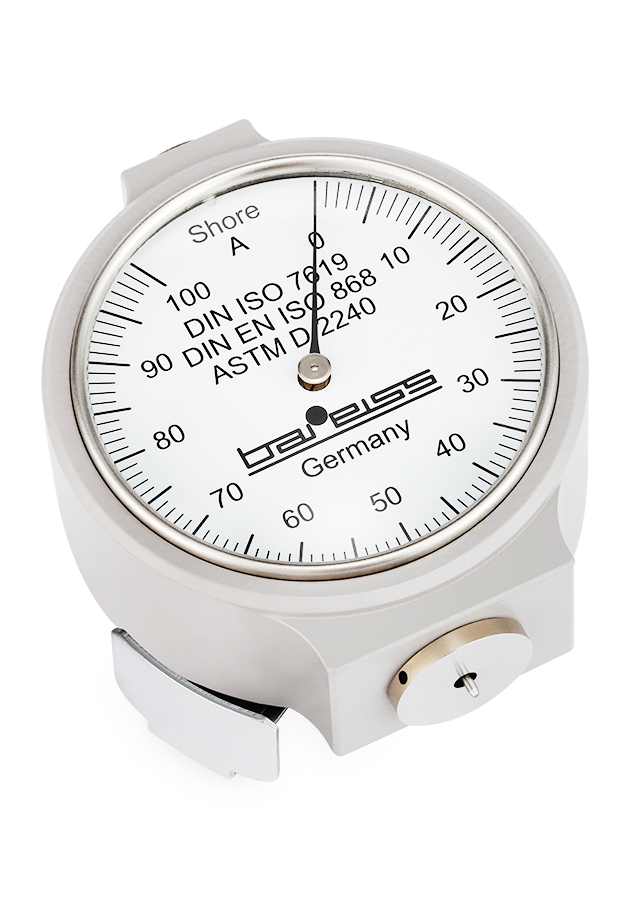
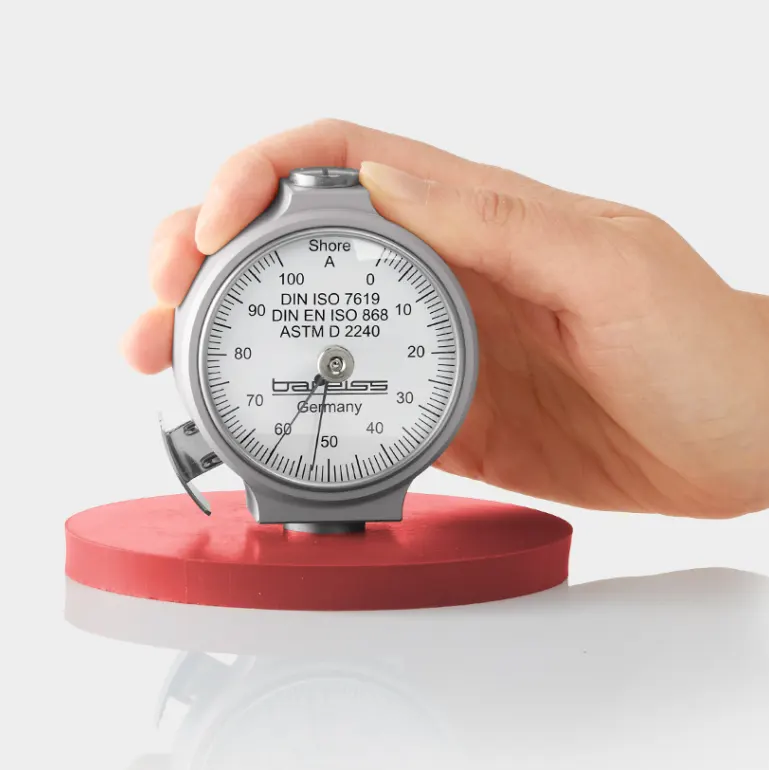
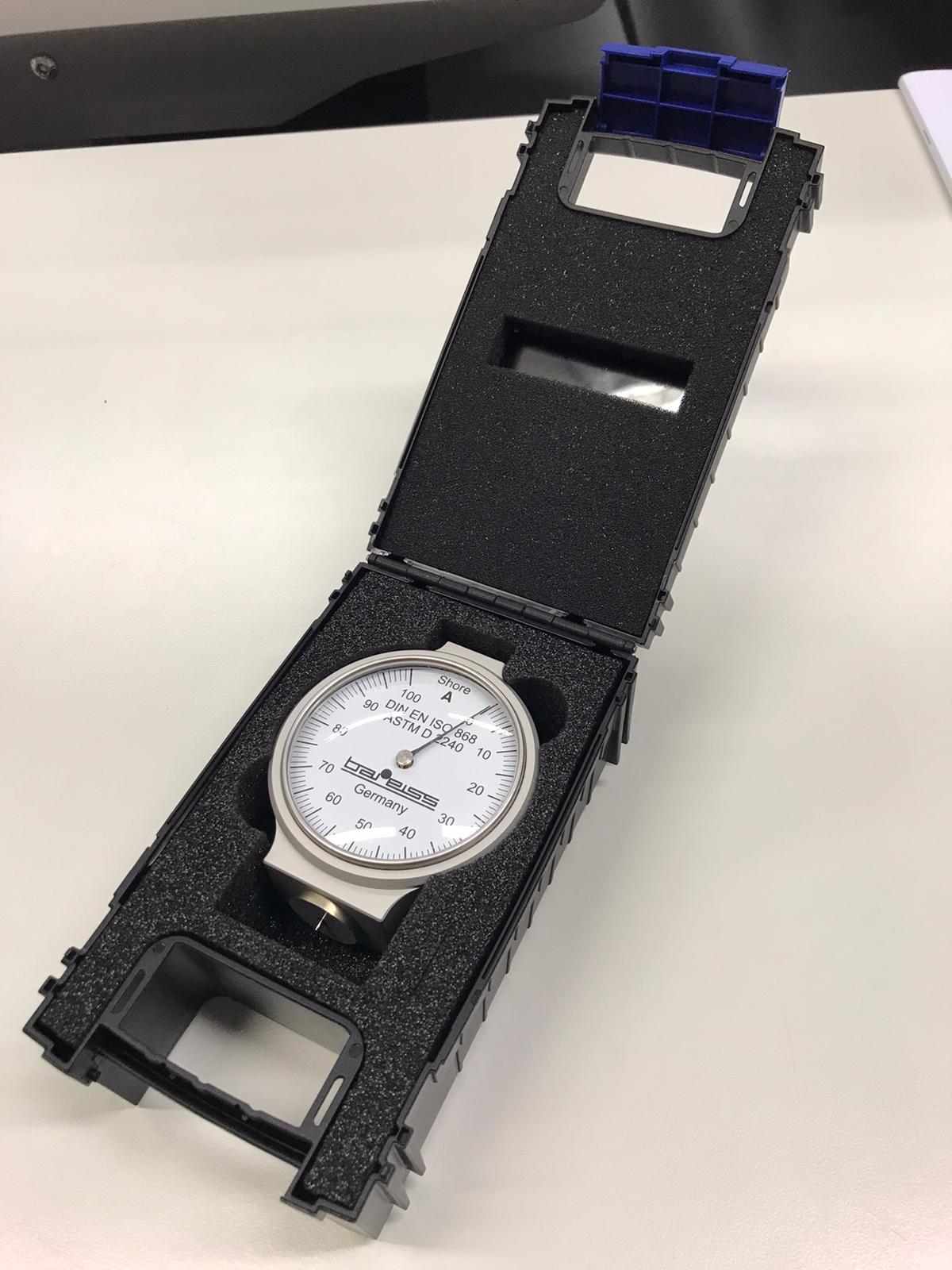
This Germany manufactured system has been the global landmark of Shore hardness testing systems since 1954. With ever enhanced ergonomic design, the HP Shore Hardness Tester is both visually appealing and precise rubber and plastic testing system as it has been for nearly 50 years. The HP system is world renowned best seller hardness tester with over 100,000 units sold to satisfied clients globally. It is considered the worlds highest and most used portable shore hardness tester.
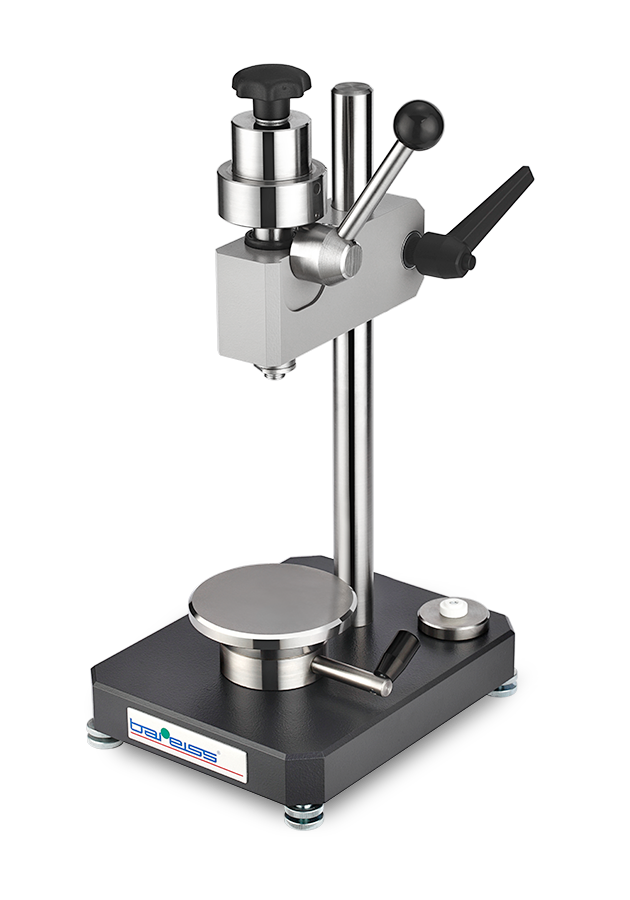
The system is designed to provide a combination of light weight and extraordinary durability for a compact shore testing machine. The systems are carefully assembled, quality control tested and certified by the German manufacturer, Bareiss. The system is designed so that the friction caused by travelling is avoided by the use of various size bearing balls which contribute to a perfect smooth travel for the indenter. This German manufactured system has the versatility of testing various Shore and non-Shore scales. Additionally, it can be combined with a manual or an automatic test stand options for an even more precise and repeatable testing results.
Test Methods
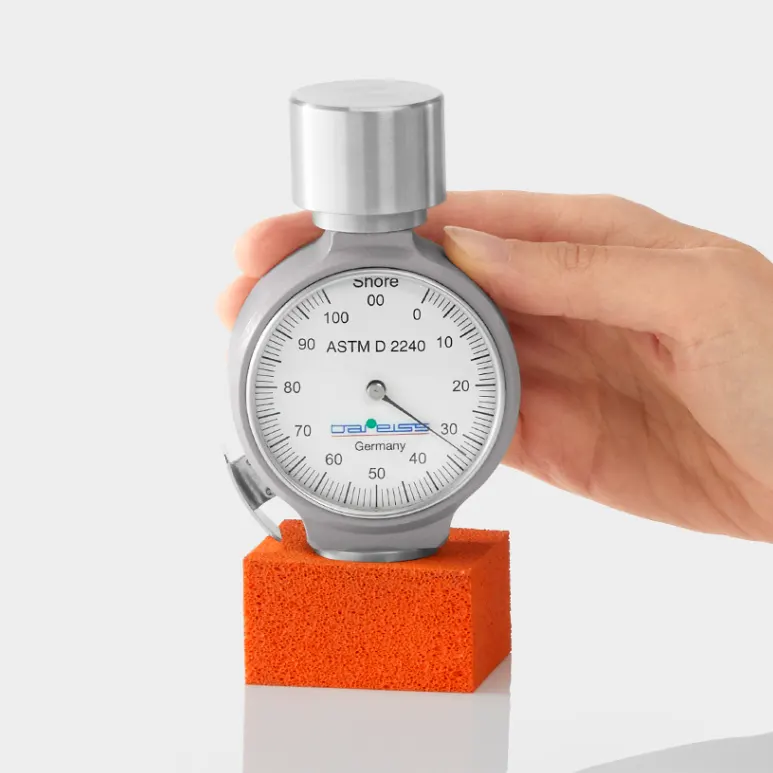
Shore A, A0/E, B, 0, C, D, D0, 00, 000, Bareiss Variant C (Asker C)
Features and Benefits
* Excellent solution for automotive industry, rubber and plastic industry, defense and aerospace industry, and more
* Over 500,000 systems sold worldwide
Aluminum Chassis – Shore system is suitable for field work due to its light weight and durable chassis.
Use of Ball Bearings - Reduces friction during the travel of indenter to achieve the best measuring results.
High Accuracy - Achieves 0.5 unit of Shore compared with the allowable tolerance 1.0 unit of Shore outlined in the industry standards.
Wide Model Range - Available in different Shore and non-Shore scales.
Technical Specifications
| Scale | Load | Spring Force | Foot Size | Indentor Travel | Min Sample Thickness | Indentor Shape |
|---|---|---|---|---|---|---|
| A | 1 Kg | 8.050 N | 18 mm | 2.5 mm | 4 mm (DIN EN ISO 868) 6 mm (all other standards) |
 |
| D | 5 Kg | 44.45 N | 18 mm | 2.5 mm | 4 mm (DIN EN ISO 868) 6 mm (all other standards) |
 |
| 0 | 1 Kg | 8.050 N | >500mm2 | 2.5 mm | 6 mm (all standards) |  |
| B | 1 Kg | 8.050 N | 18 mm | 2.5 mm | 6 mm (all standards) |  |
| C | 5 Kg | 44.45 N | 18 mm | 2.5 mm | 6 mm (all standards) |  |
| D0 | 5 Kg | 44.45 N | >500mm2 | 2.5 mm | 6 mm (all standards) |  |
| A0 | 1 Kg | 8.050 N | >500mm2 | 2.5 mm | 6 mm (all standards) |  |
| E | 1 Kg | 8.050 N | >500mm2 | 2.5 mm | 6 mm (all standards) |  |
| 00 | 400 g | 1.111 N | >500mm2 | 2.5 mm | 6 mm (all standards) |  |
| 000 | 400 g | 1.111 N | >500mm2 | 2.5 mm | 6 mm (all standards) |  |
| 000S | 400 g | 1.932 N | >500mm2 | 5.0 mm | 6 mm (all standards) |  |
Calibration
As a national accredited DAkkS/DKD laboratory, our partners are officially authorized to perform repair and recalibration services on all types of hardness testers in accordance with specified standards and to issue the DAkkS/DKD certificate.
Loaner Program for Testing Heads
Avoid service interruptions by getting a tester head on loan. Contact us today to ask how.
Sample Preparation Service
We welcome you to send your specimens to our facility to confirm that our equipment's accuracy is perfectly in line with your expectations. Contact us today to learn more.
Training
We stand behind our product. Should you require additional training support, please contact us and we would be happy to assist your most suitable remote communication method.
NG-BS 61 II test stand
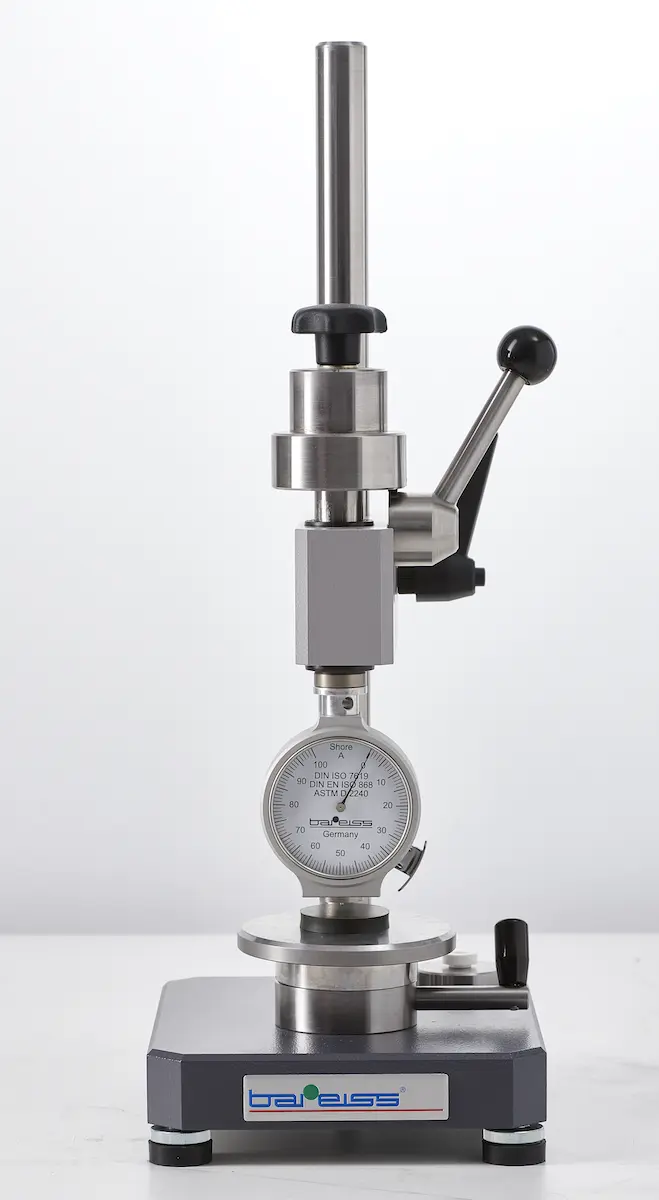
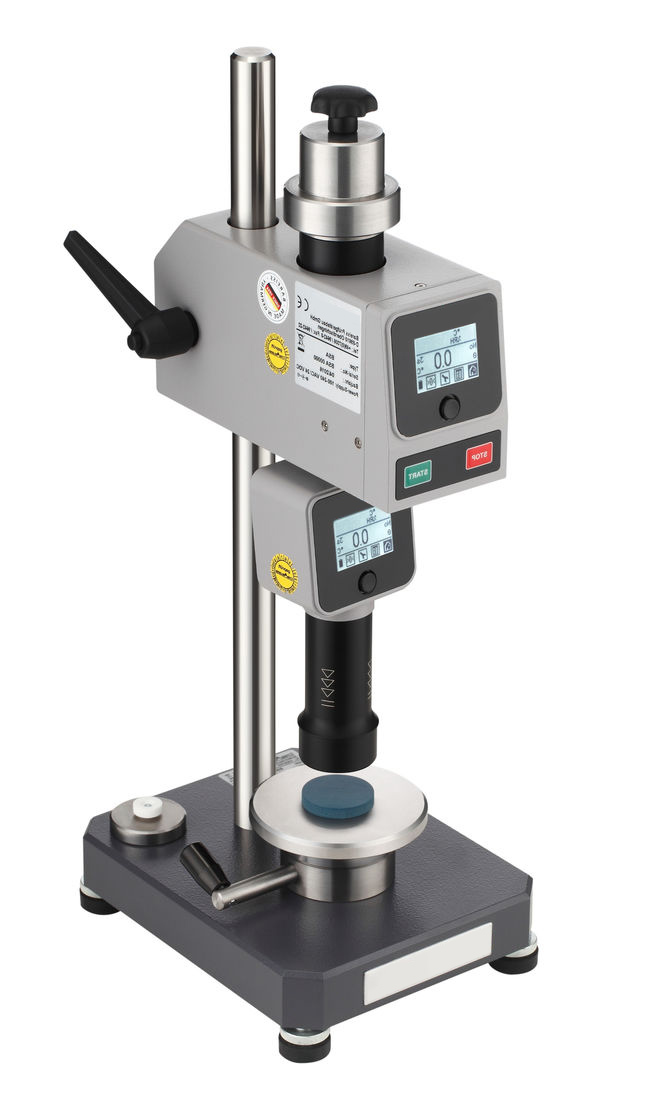
This Automatic test stand is perfectly compatible with our HP unit allowing for hardness measurements in accordance with Shore standards. The pick-up device found on the test stand allows for quick and easy clamping of the hardness tester. Manual test stand option is also available.
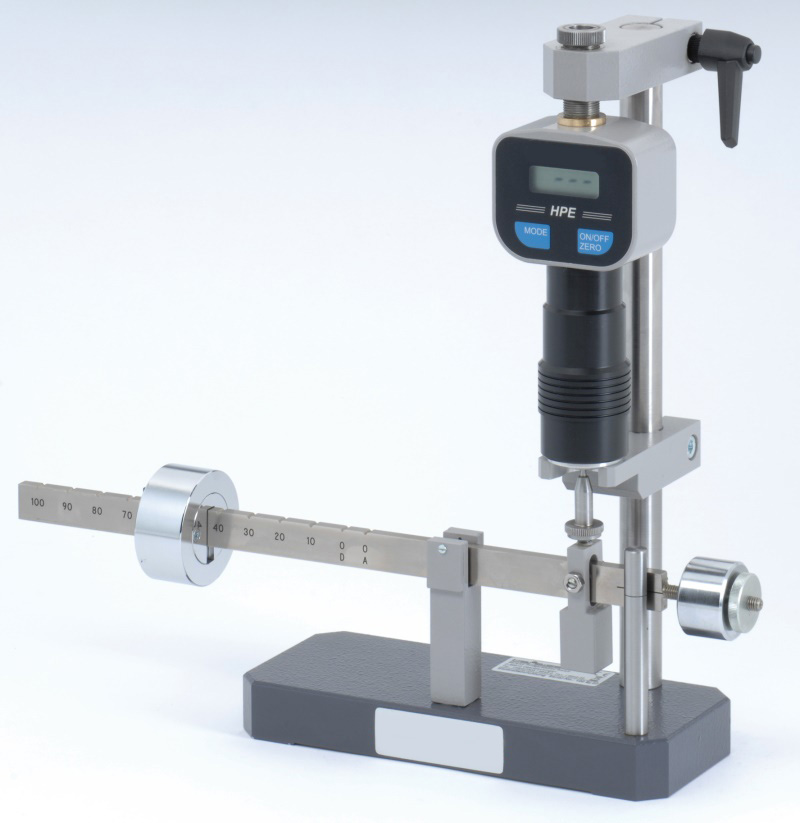
Calibration device for HP and HPE II
In compliance with ISO 9000 the operator should perform a periodical equipment calibration. With this calibration device the accuracy of the Shore hardness tester is controlled. It allows for a quick control of the spring force in increments of ten for the measuring ranges including Shore A/B/0/C/D/DO and L, L/c.
DIN 53 505, EN ISO 868, NF EN ISO 868, ASTM D2240, JIS K 6253.
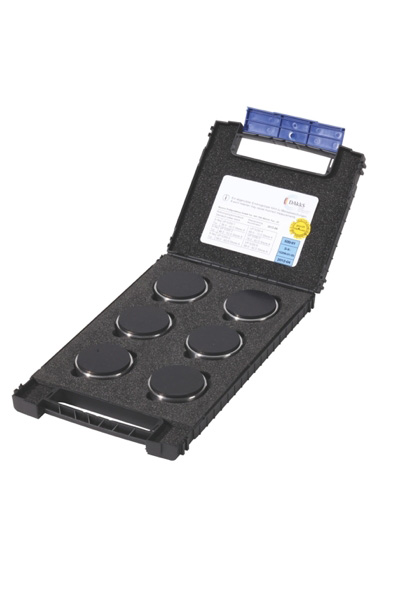
Shore Reference Test Blocks
Standard rubber blocks are used to ensure the metrological capability of the measuring device according to the Shore standard during the frequency of recalibration. The rubber blocks are embedded in a holder made of stainless steel.
The calibration stands can come with single, 3, 5 or 6 plates including DAkkS/DKD calibration certificate
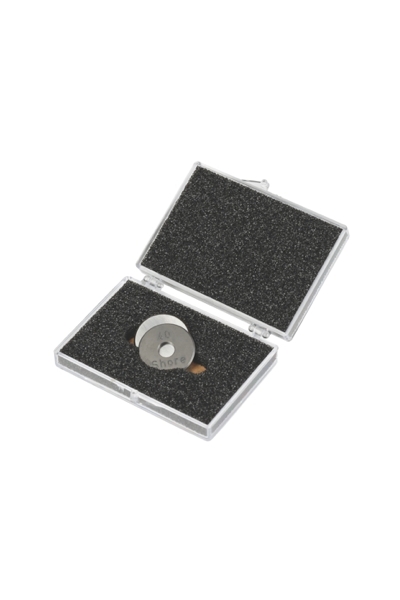
Shore Control Ring
Control of the measuring distance with DAkkS/DKD / WKS Certificate
- 20 Shore
- 40 Shore
- 60 Shore
- 80 Shore
FAQs
ASTM D2240 is an international standard test method used to measure the hardness of rubber and elastomers using a durometer. The durometer is an instrument that has a standardized indenter and a spring-loaded mechanism that applies a specific amount of force to the material being tested. The indenter is pressed into the surface of the material, and the depth of the indentation is used to determine the hardness of the material. The results of this test can be used to compare the hardness of different materials or to monitor changes in the hardness of a material over time. The test method specifies several different types of durometers, which vary in the shape and size of the indenter and the force applied. The most common type of durometer is the Shore durometer, which uses a conical indenter and is widely used for measuring the hardness of rubber and elastomers.
NextGen’s Classic Analogue Shore Durometer complies with ASTM D2240 standard.
Click here to request a personalized quote from our team.
BS 903 Part. A 26 is a British Standard that specifies a method for determining the compression set of rubber and rubber-like materials. The compression set is the amount of deformation or residual deformation that remains in a material after it has been compressed and then released. Such kind of test method involves subjecting a rubber sample to a specified compression force and then measuring the amount of residual deformation after a specified time period.
The test is mostly carried out at elevated temperatures, such as 70°C or 100°C. These conditions can accelerate the aging process and make it easier to detect changes in the compression set over time. The compression set test is often used to evaluate the performance of rubber materials in applications where the material will be subjected to compression and then released, such as gaskets, seals, and other mechanical components.
BS 903 Part. A 26 is one of several standards that are used to test the properties of rubber and rubber-like materials, and it is widely recognized in the UK and other countries.
NextGen’s Classic Analogue Shore Durometer complies with BS 903 Part. A 26 standard.
Click here to request a personalized quote from our team.
DIN EN ISO 868 is a European standard that specifies a method for measuring the Shore hardness of plastics and other materials. Shore hardness is a measure of the resistance of a material to indentation or penetration by a standardized indenter. The test method described in DIN EN ISO 868 is based on the same principles as ASTM D2240, which measures rubber and elastomers' hardness.
The test involves making an indentation on the material's surface with a durometer and a standardized indenter. The indentation depth is then measured and used to calculate the material's hardness, calculated in Shore A / D units.
The hardness of a wide range of plastic materials, including thermoplastics, thermosets, and elastomers, is measured by DIN EN ISO 868. This method lets you assess the quality of raw materials and final products because a material's hardness can indicate its strength, stiffness, and durability. You can also compare the hardness of different materials and track variations in a material's hardness over time, which might indicate changes in its qualities or performance.
NextGen’s Classic Analogue Shore Durometer complies with DIN EN ISO 868 Standard.
Click here to request a personalized quote from our team.
DIN ISO 7619 is a German standard that outlines how to use a durometer to measure the Shore hardness of rubber and plastic materials. Shore hardness is a measure of a material's resistance to indentation or penetration using a standardized indenter.
DIN ISO 7619 is a standard for measuring the hardness of rubber and plastic materials such as thermoplastics, thermosets, and elastomers. Because a material's hardness can predict its strength, stiffness, and durability, the test method is frequently used to evaluate the quality of raw materials and final products. The test can also be used to compare the hardness of different materials and to track variations in a material's hardness over time. Thus, indicating changes in the material's qualities or performance.
NextGen’s Classic Analogue Shore Durometer complies with DIN ISO 7619 standard.
Click here to request a personalized quote from our team.
Shore test methods are widely recognized and used in many automotive, aerospace, and construction industries. They are used to evaluate the quality of raw materials and finished products, as well as to compare the hardness of different materials and to monitor changes in the hardness of a material over time. By using Shore test methods, manufacturers can ensure that their products meet the necessary standards for hardness and durability and that they will perform as expected in their intended applications
Shore test methods are used to measure the hardness of rubber, plastics, and other elastomeric materials. The hardness of these materials refers to their resistance to indentation or penetration and is an essential factor in determining their suitability for various applications. Shore test methods use a durometer with a standardized indenter to make an indentation on the surface of the material being tested. The depth of the indentation is then measured and used to calculate the hardness of the material, which is expressed in units of Shore A or Shore D.
NextGen’s Classic Analogue Shore Durometer can perform Shore A, A0/E, B, 0, C, D, D0, 00, 000, Bareiss Variant C (Asker C) test methods.
Click here to request a personalized quote from our team.
Classic Analogue Shore Durometer system is designed to provide a combination of light weight and extraordinary durability for a compact shore testing machine. The systems are carefully assembled, quality control tested and certified by the German manufacturer, Bareiss.
Features and Benefits
* Excellent solution for automotive industry, rubber and plastic industry, defense and aerospace industry, and more
* Over 500,000 systems sold worldwide
- Aluminum Chassis– Shore system is suitable for field work due to its light weight and durable chassis.
- Use of Ball Bearings- Reduces friction during the travel of indenter to achieve the best measuring results.
- High Accuracy- Achieves 0.5 unit of Shore compared with the allowable tolerance 1.0 unit of Shore outlined in the industry standards.
- Wide Model Range- Available in different Shore and non-Shore scales.
Click here to request a personalized quote from our team.
Our German-made Classic Analogue Shore Durometer equipment is capable of testing several Shore and non-Shore scales. It can also be paired with a manual or automatic test stand for even more precise and repeatable testing results.
Here are the available accessories for NextGen’s Classic Analogue Shore Durometer:
- Manual Test Stand for Classic Shore Durometer System
- NG-BS 61 II test stand - This Automatic test stand is perfectly compatible with our HP unit allowing for hardness measurements in accordance with Shore standards.
- Calibration device for HP and HPE II - The periodical equipment calibration should be performed by the operator in compliance with ISO 9000
- Shore Reference Test Blocks - Standard rubber blocks are used to ensure the metrological capability of the measuring device according to the Shore standard during the frequency of recalibration.
- Shore Control Ring - DAkkS/DKD / WKS Certificate for controlling the measuring distance
Click here to request a personalized quote from our team.
Shore reference test blocks are rubber or plastic blocks used to check the accuracy of Shore hardness testing equipment. These test blocks have a known and consistent Shore hardness value calibrated and verified to the applicable standard.
Shore reference test blocks are typically made of the same material as the tested samples but with a much higher level of quality control to ensure consistency and repeatability. The blocks are produced and certified by a third-party calibration laboratory, which ensures that they meet the requirements of the relevant standards.
In material testing, Shore reference test blocks are used to verify the accuracy and consistency of Shore hardness testing equipment. The test blocks are placed on the durometer and measured using the same procedure as the tested sample. The hardness value of the test block is then compared to the known reference value to determine if the equipment is measuring accurately and consistently.
Regular use of Shore reference test blocks is vital to ensure that the Shore hardness testing equipment is working correctly and that the results are reliable. If the equipment is inaccurate or inconsistent, adjustments can be made to improve the accuracy of future measurements.
You can order NextGen’s Classic Analogue Shore Durometer with available Shore reference test blocks accessories. The calibration stands can come with single, 3, 5 or 6 plates including DAkkS/DKD calibration certificate.
Click here to request a personalized quote from our team.
Shore control rings are circular rings made of rubber or plastic used to verify the accuracy and consistency of Shore hardness testing equipment. The rings are manufactured to a specific Shore hardness value that has been calibrated and verified to the applicable standard.
Shore control rings are designed to be used as a quick and simple check-up for the Shore hardness testing equipment. They are placed on the durometer and measured using the same procedure as the tested sample. The hardness value of the control ring is then compared to the known reference value to determine if the equipment is measuring accurately and consistently.
Shore control rings are often recommended for routine checks of the Shore hardness testing equipment. They are easy to use, relatively inexpensive, and provide a quick and reliable check of the equipment's accuracy. However, it's important to note that they are not a substitute for the more rigorous and precise calibration procedures required for accurate material testing.
You can order NextGen’s Classic Analogue Shore Durometer with available Shore Control Rings accessories. Control of the measuring distance with DAkkS/DKD / WKS Certificate:
- 20 Shore
- 40 Shore
- 60 Shore
- 80 Shore
Click here to request a personalized quote from our team.
Shore Durometer requires a calibration device because it is important to ensure that the durometer is measuring the hardness of a material accurately and consistently. The Shore Durometer is a mechanical device and can be influenced by several factors, such as wear and tear, environmental conditions, and user error. Thus, it is necessary to calibrate the durometer periodically to verify that it measures the hardness of the material correctly.
Calibration devices for Shore Durometer, such as reference test blocks or control rings, provide a known and consistent hardness value that can be used to verify the accuracy of the durometer. These devices are calibrated to a specific standard and are designed to provide a reliable reference point for hardness measurements.
You can order a Calibration device for HP and HPE II as an optional accessory for your NextGen’s Classic Analogue Shore Durometer. Under ISO 9000, the operator should calibrate the equipment on a regular basis. This calibration equipment controls the accuracy of the Shore hardness tester. It enables rapid control of spring force in ten-point increments for measurement ranges such as Shore A/B/0/C/D/DO and L, L/c.
DIN 53 505, EN ISO 868, NF EN ISO 868, ASTM D2240, JIS K 6253.
Click here to request a personalized quote from our team.
Calibration
Our partners are officially authorized to provide repair and recalibration services on all types of hardness testers in line with specified standards and to issue the DAkkS/DKD certificate as a nationally recognized DAkkS/DKD laboratory.
Loaner Program for Testing Heads
By renting a tester head, you can avoid service interruptions. Contact us today to find out how.
Sample Preparation Service
We encourage you to send your specimens to our facility to ensure that the accuracy of our equipment meets your expectations. To learn more, please contact us immediately.
Training
We stand behind our product. Please contact us if you require additional training support, and we would be happy to assist with your most suitable remote communication method.
Click here to request a personalized quote from our team.
In Shore hardness testing, spring force refers to the force applied by a spring-loaded plunger to the surface of the material being tested. The plunger is typically made of a hard material, such as steel, and is designed to penetrate the surface of the material to a specific depth.
The amount of spring force used in Shore hardness testing depends on the specific scale being used, as different scales are designed to measure the hardness of different types of materials. For example, Shore A and Shore D scales, which are commonly used to measure the hardness of rubber and plastic materials, respectively, apply a force of 1 kgf (kilogram-force) and 5 kgf, respectively, to the material being tested.
The spring force is applied to the material over a specified period of time, typically a few seconds, and the depth of penetration is measured and used to calculate the material's hardness value. The spring mechanism within the durometer ensures that the force applied is consistent and repeatable, which is important for accurate and reliable hardness measurements.
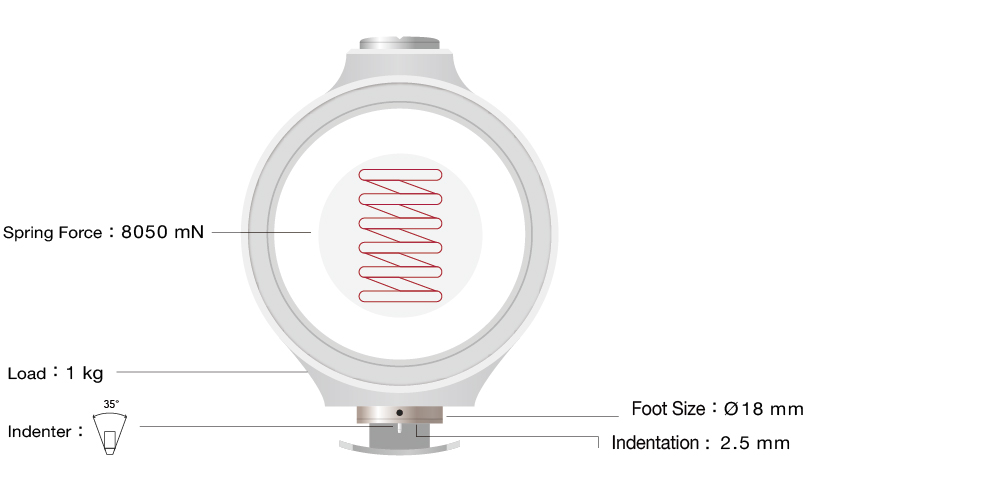
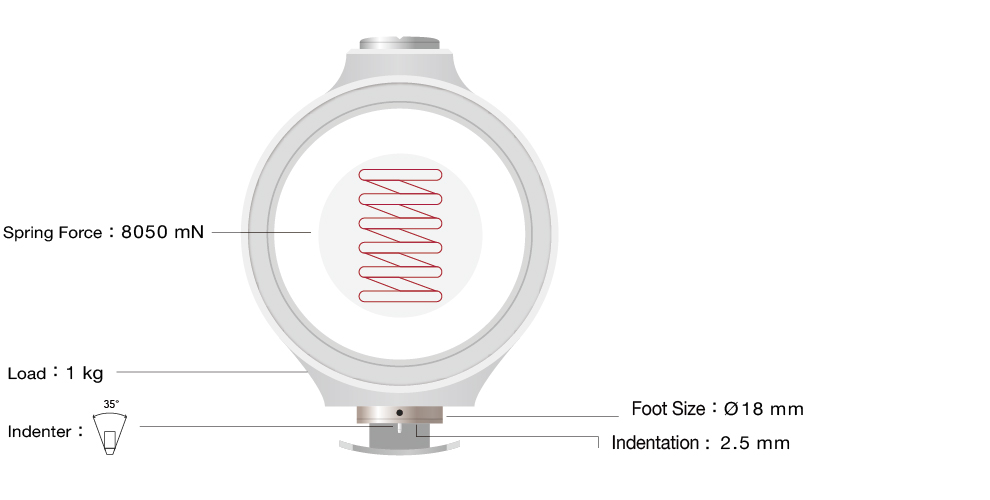
NextGen’s Classic Analogue Shore Durometer system spring force is 8050 mN.
Click here to request a personalized quote from our team.
In Shore hardness durometers, load force refers to the amount of force that is applied to the material being tested by the indenter or plunger of the durometer. The load force is typically generated by a spring mechanism within the durometer and is specified by the relevant standard or specification.
For example, in Shore A hardness testing, the load force is typically specified as 1 kgf (kilogram-force), which is equivalent to 9.81 Newtons (N). In Shore D hardness testing, the load force is typically specified as 5 kgf (49.05 N).
The load force is applied to the material for a specific period of time, typically a few seconds, and the depth of penetration is measured and used to calculate the material's hardness value. The load force and duration of the test are important parameters that influence the accuracy and reliability of the hardness measurements.
It's important to note that the load force and other test parameters must be selected carefully based on the properties of the material being tested and the relevant standard or specification. Using the wrong load force or test duration can lead to inaccurate hardness measurements, which can have significant consequences in material selection and product design.
NextGen’s Classic Analogue Shore Durometer load force is 1kg.
Click here to request a personalized quote from our team.
The indenter is the pointed plunger or needle-like device that is used to make an indentation on the surface of the material being tested. The indenter is typically made of a hard material, such as steel or tungsten carbide, and is designed to penetrate the material to a specific depth under a specified load.
The geometry of the indenter, including its shape and dimensions, is specified by the relevant standard or specification. For example, the Shore A indenter has a conical shape with a point angle of 35 degrees, while the Shore D indenter has a truncated pyramid shape with a point angle of 30 degrees. These geometries are optimized for the specific material being tested and the load force used in the test.
The indenter is attached to a spring-loaded plunger that applies the specified load force to the material being tested. The depth of penetration of the indenter into the material is measured, typically in units of millimetres or thousandths of an inch, and is used to calculate the material's hardness value.
The indenter parameter of NextGen’s Classic Analogue Shore Durometer is 35 degrees.
Click here to request a personalized quote from our team.
Indentation refers to the small depression or mark that is made on the surface of the material being tested by the indenter of the durometer. The indentation is produced by applying a specified load force to the material for a specified period of time, typically a few seconds.
The depth of the indentation is measured, typically in units of millimetres or thousandths of an inch, and is used to calculate the material's hardness value. Different Shore scales use different depth measurements and formulas to determine hardness values, but in general, harder materials will produce shallower indentations, while softer materials will produce deeper indentations.
The indentation that is produced by the durometer is typically quite small, typically less than a millimetre in diameter. However, it is important to ensure that the indentation is uniform and consistent from test to test in order to obtain accurate and reliable hardness measurements.
NextGen’s Classic Analogue Shore Durometer system indentation depth is 2.5mm.
Click here to request a personalized quote from our team.
The minimum sample thickness can vary depending on the type of durometer being used and the material being tested.
For example, ASTM D2240, the standard test method for rubber property-durometer hardness, specifies a minimum sample thickness of 6.4 mm (0.25 in) for Shore A and Shore D durometer tests. This is because thinner samples may not provide enough material for the indenter to penetrate and create a measurable indentation.
Other standards and specifications may have different minimum sample thickness requirements, and it's important to consult the appropriate documentation for the test.
It's worth noting that the durometer should be held perpendicular to the surface of the sample to ensure that the indentation is created correctly. If the sample is too thin, it may not be possible to hold the durometer perpendicular to the surface, which can result in inaccurate readings. Additionally, it's important to ensure that the sample is supported correctly during testing to prevent it from bending or deforming, which can also affect the accuracy of the readings.
The minimum sample thickness of NextGen’s Classic Analogue Shore Durometer system is 4mm for Scale A & D and 6mm for all other scales.
Click here to request a personalized quote from our team.
Foot size refers to the size and shape of the base or foot of the durometer. The foot is part of the durometer that is placed in contact with the surface of the material being tested.
The foot size can vary depending on the type of durometer being used and the specific application. For example, the standard foot size for Shore A and Shore D durometers is typically 10 mm (0.39 in) in diameter. However, durometers with larger or smaller foot sizes may be available for testing different types of materials or for specialized applications.
The foot of the durometer is typically made of a hard material, such as steel or tungsten carbide, to ensure that it can withstand the force of the indentation without deforming or damaging the material being tested. The foot is also designed to provide a stable and consistent contact surface with the material being tested, which is important for obtaining accurate and reliable hardness measurements.
It's important to ensure that the foot of the durometer is clean and free of debris before each test to prevent any interference with the test results.
NextGen’s Classic Analogue Shore Durometer system foot size for Scale A, D, B, C is 18mm & >500 square mm for all other scales.
Click here to request a personalized quote from our team.
Since 1954, this Germany-made system has been the global standard for Shore hardness testing systems. As it has been for nearly 50 years, the HP Shore Hardness Tester is both visually appealing and accurate rubber and plastic testing system, with ever improved ergonomic design. With over 100,000 units supplied to pleased customers worldwide, the HP system is a world-renowned best-seller hardness tester. It is regarded as the highest and most widely used portable shore hardness tester in the world. The system is intended to provide a compact shore testing machine with a mix of light weight and exceptional durability.
NextGen’s Classic Analogue Shore Durometer system weighs 250g and is 84mm high, 65mm wide & 28mm long.
Click here to request a personalized quote from our team.
The DAkkS/DKD calibration certificate is a formal document that provides evidence of the accuracy and traceability of the calibration of a Shore hardness durometer. It includes detailed information about the calibration process, such as the equipment used, the calibration procedures followed, and the results obtained. It also includes information about the uncertainty of measurement associated with the calibration, which is a measure of the level of confidence in the calibration results.
The DAkkS/DKD calibration certificate is recognized internationally as a high-quality calibration standard, and it is often required for applications that demand high levels of accuracy and reliability, such as in quality control or research and development. It can be particularly important for industries that are subject to strict regulations, such as the medical or aerospace industries.
If a Shore hardness durometer is calibrated with a DAkkS/DKD calibration certificate, it means that the instrument has undergone a rigorous testing process to ensure that it is measuring hardness values accurately and consistently. This can help to ensure that the durometer is providing reliable and trustworthy results, which is essential for many applications where material hardness is an important parameter.
NextGen’s Classic Analogue Shore Durometer system comes with DAkkS/DKD calibration certificate.
Click here to request a personalized quote from our team.
Related Products
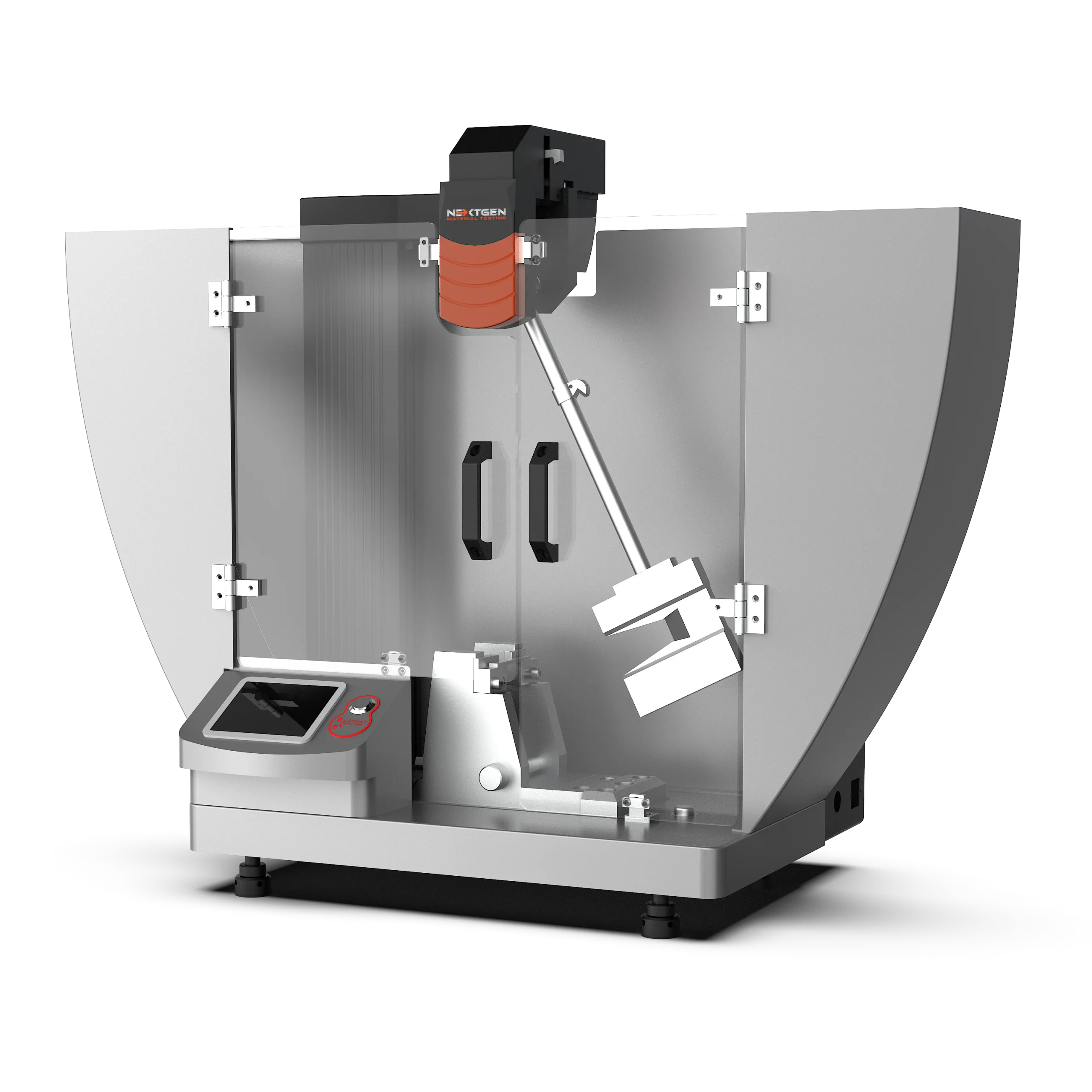
Class J - Charpy and Izod Automatic Impact Testing System - 1J - 50J
Class J is an automatic Charpy and Izod impact testing system for low-energy impact evaluation of plastics and related materials. It covers 1–50 J for Charpy tests and 1–22 J for Izod tests, with interchangeable pendulums, adjustable spans, controlled striking velocity, and ASTM D6110, ASTM D1822, ISO 179, GB/T 1043, and ISO 9854.1 support for standardized testing.
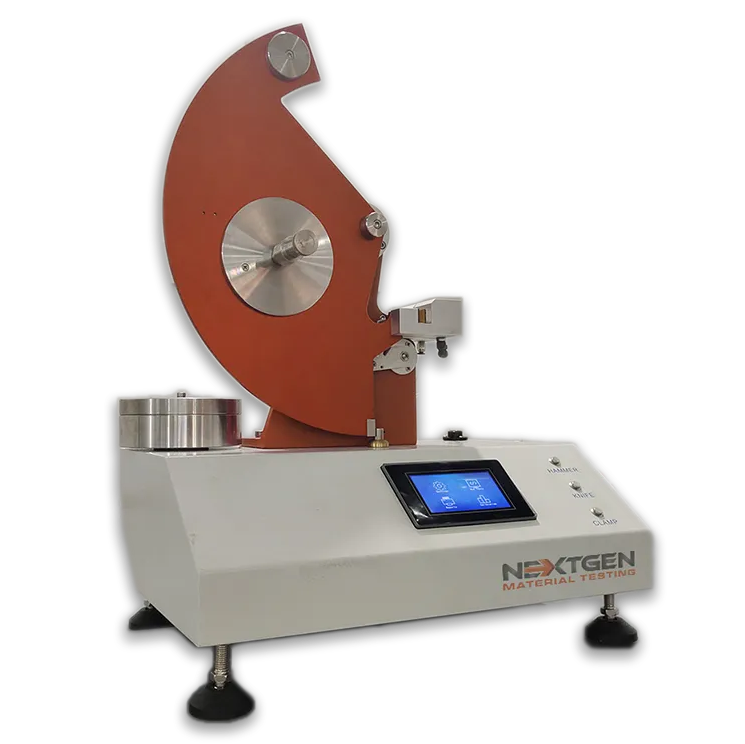
GenElm Series Elmendorf Tearing Tester – 64N and 128N Models
GenElm Series is an Elmendorf tearing tester for measuring tear resistance of plastic film, sheeting, textiles, paper, board, and other flexible materials. Available with 64 N and 128 N high-capacity pendulum options, it supports ASTM D1922, ASTM D1424, ISO 6383-2, ISO 1974, and related methods. The pendulum-based design helps QC and R&D labs generate clear, repeatable tear-strength data.
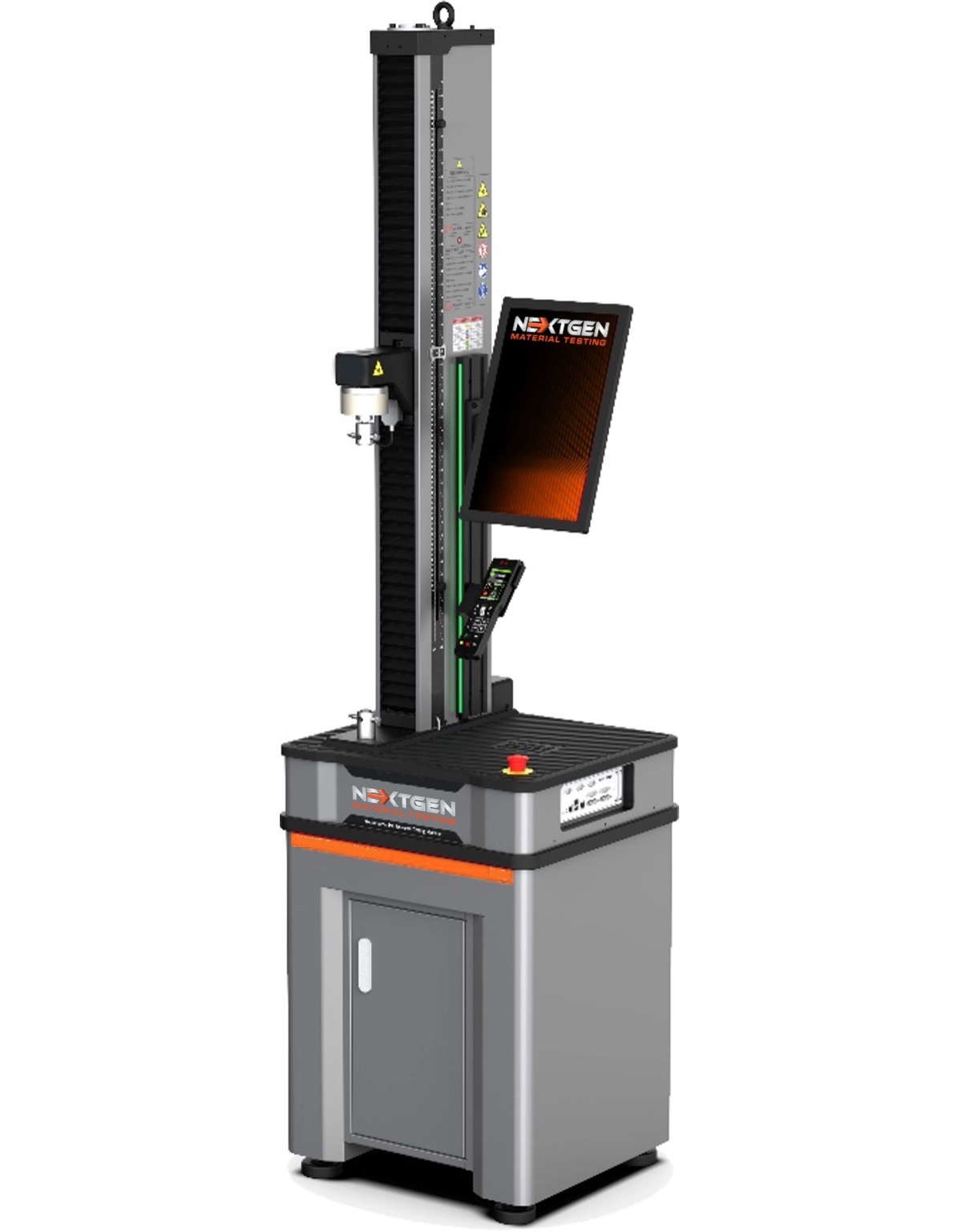
NG-EML Series A – Single Column Bench Top Universal Testing Machine (50 N – 5 kN)
NG-EML Series A is a compact single-column benchtop universal testing machine for low-force tensile, compression, and flexural testing. Covering 50 N to 5 kN capacity options, it is suited for rubber, plastics, adhesives, films, foams, wires, metals, composites, and consumer products. Its electromechanical frame, high-speed servo actuation, GenTest software, and standards support make it practical for R&D and routine QC.
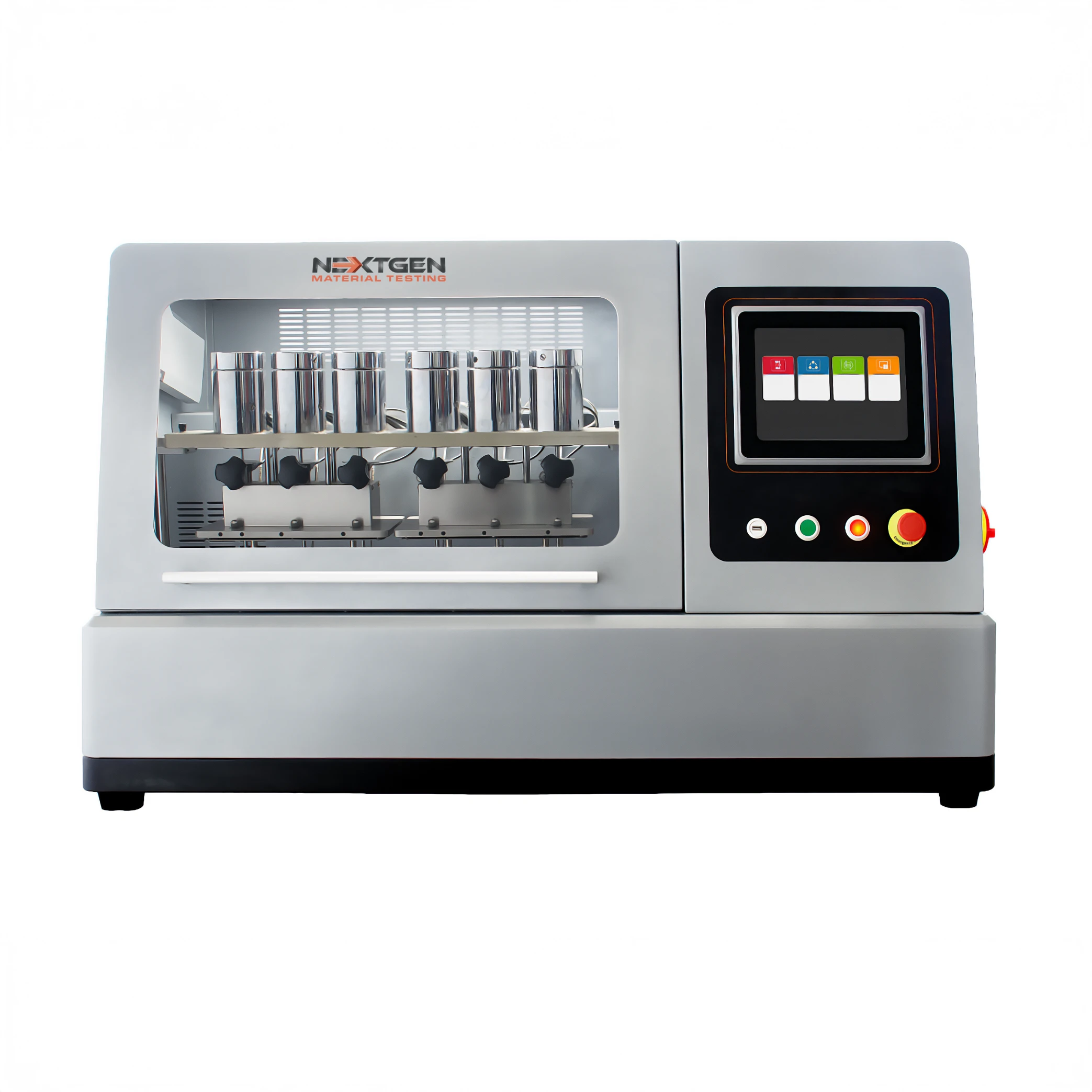
HDT/VICAT Testing Machine – Thermal Analysis for Plastics NG-HDT
NG-HDT is an HDT/Vicat testing machine for measuring heat deflection temperature and Vicat softening temperature of thermoplastics, including pipes and fittings. Available in 3- and 6-station configurations, it uses a touchscreen industrial PC, Class A temperature sensing, LVDT displacement measurement, controlled linear heating, and an oil bath rated to 300°C to support QA/QC, material development, and standards-based thermal analysis.
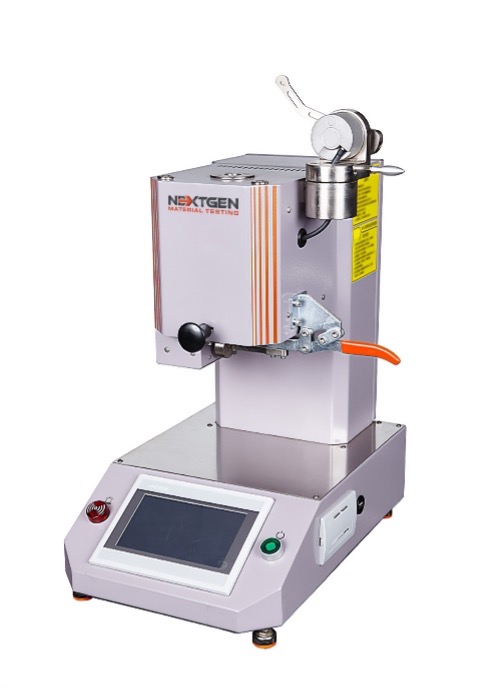
Melt Flow Indexer
The Melt Flow Indexer measures melt flow rate, melt index, and melt volume rate of thermoplastic materials for quality control, research, and material development. With a broad measuring range, 7-inch display, mass or volume method selection, precise temperature control, optical displacement measurement, automatic cutting, microcomputer control, and result printing, it helps labs evaluate viscosity, processability, and batch consistency according to ISO, ASTM, DIN, BS, and JIS methods.
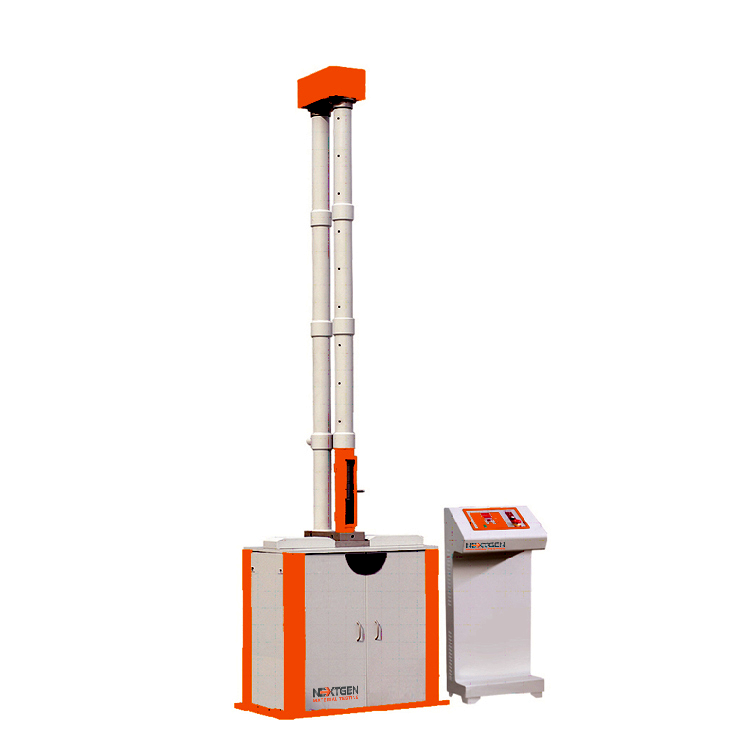
NG-ImpactFall – Falling Weight Impact Tester
NG-ImpactFall is a falling weight impact tester for evaluating external impact resistance of plastic pipes, fittings, boards, and other non-metal materials. Designed around ISO 3127, ISO 4422, and ASTM D2444 methods, it supports controlled drop heights, interchangeable hammer weights, multiple striker noses, and pipe diameters from φ16 to φ4000 mm for reliable QC, durability assessment, and standards-based product validation.
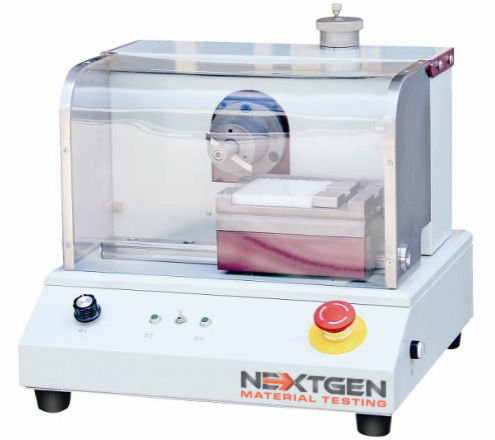
Advanced Motorized Multi-Specimen Notching and Broaching Machine for Impact Testing on Plastic Specimens GenNotch 3000
GenNotch 3000 is a motorized multi-specimen notching and broaching machine for preparing plastic specimens before Charpy and Izod impact testing. It holds up to 20 samples and can process 60 specimens in about 10 minutes, helping laboratories improve throughput. Adjustable feeding, controlled knife movement, ASTM D256, ASTM D6110, ISO 179, and ISO 180 compliance support consistent, standards-ready notches.
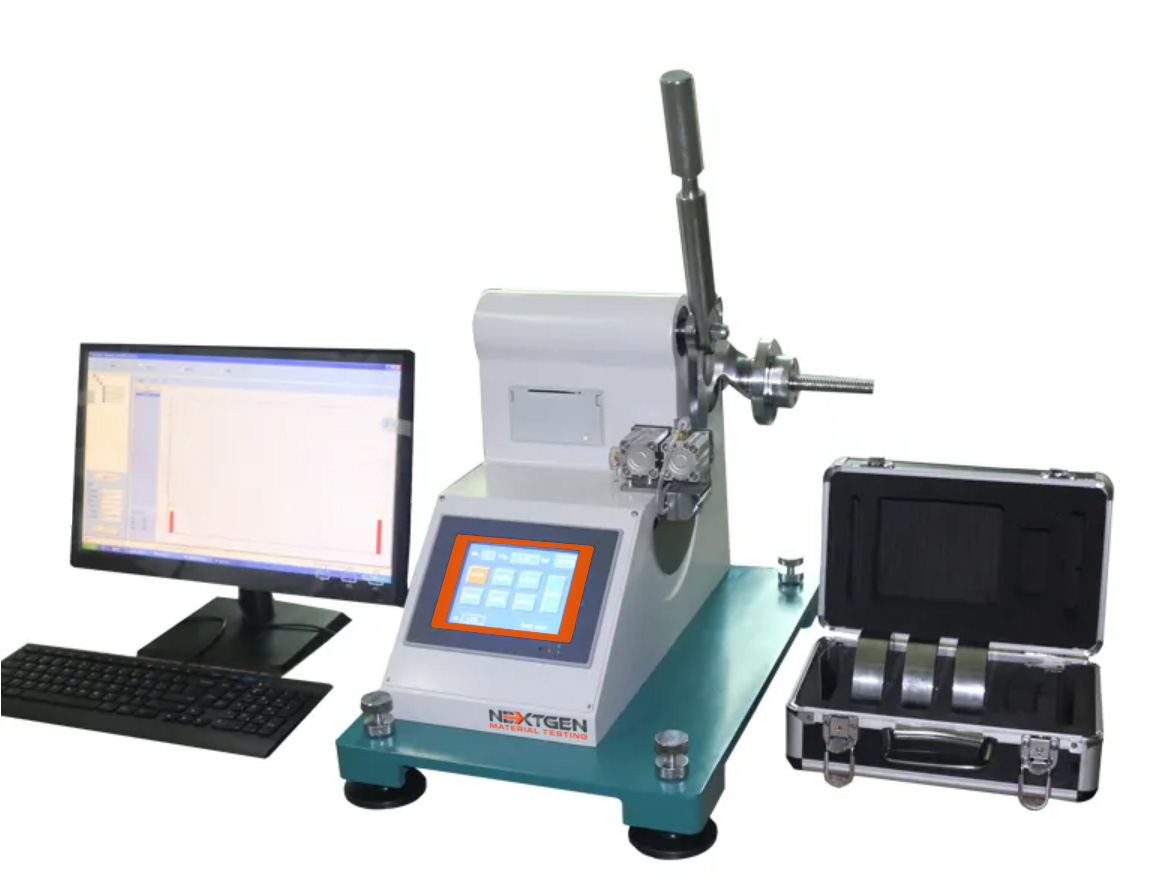
High Energy Elemendorf
NG-HE Elmendorf is a high-energy tearing strength tester for plastics, films, textiles, paper, and other flexible materials. It supports tear-force ranges up to 128 N with pneumatic clamping, automatic testing, result calculation, and data reporting. Compliance with standards such as ASTM D1424, DIN 53862, and ISO 13937-1 makes it useful for quality control and material comparison.
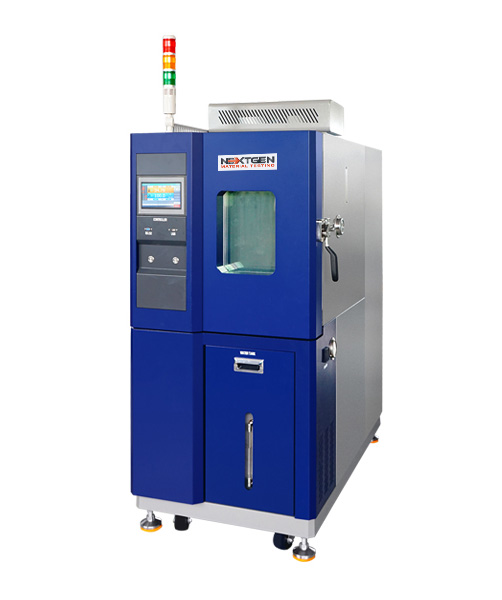
NextGen Environmental Chambers NG-EC 100,150,225,408,1000
NextGen NG-EC Environmental Chambers provide controlled temperature and humidity conditions for material, product, and quality-control testing. Available in 100, 150, 225, 408, and 1000 L sizes, they feature insulated steel construction, stainless interior walls, mechanical compression refrigeration, circulating air ducts, adjustable sample racks, a viewing window, and 7-inch touchscreen control to support stable, repeatable environmental simulation.
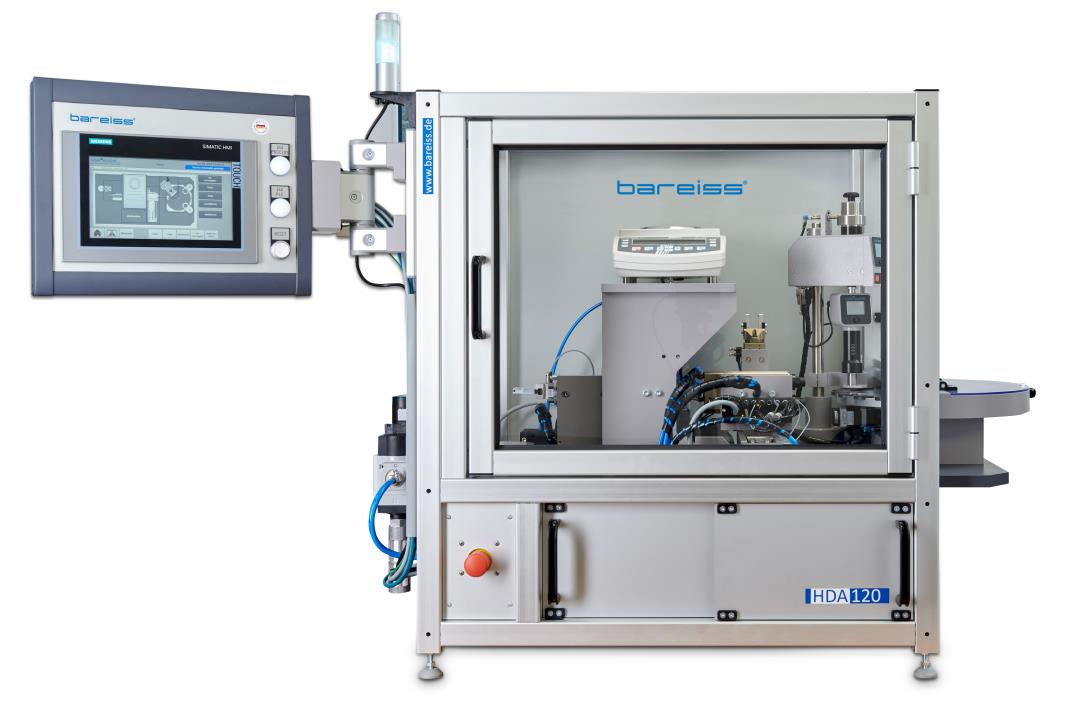
HDA 120 - Hardness and Density Automation Test System
HDA 120 is a semi-automatic hardness and density automation system for rubber and plastic sample characterization. It can handle up to 20 samples, perform three hardness measurements on a rotary table, and transfer specimens for density determination using a pneumatic gripping system. Data interfaces, touchscreen operation, ISO-compliant methods, and automated handling help improve throughput, traceability, and repeatability.
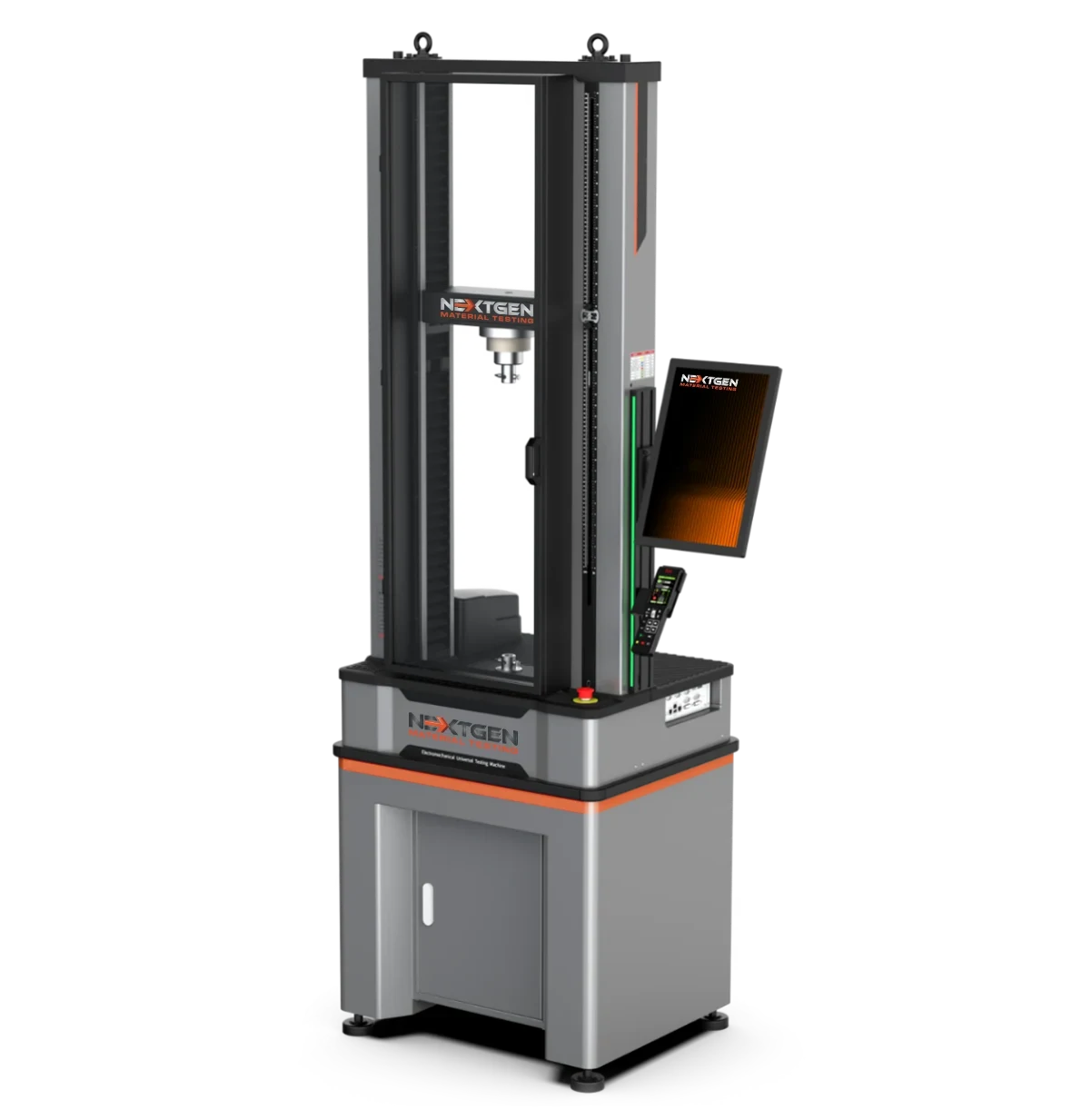
NG-EML Series B – Dual Column Bench Top Universal Testing Machine (100 N – 10 kN)
NG-EML Series B is a dual-column benchtop electromechanical universal testing machine for precision testing from 100 N to 10 kN. Built for research and industrial labs, it supports tension, compression, flexural, and component testing of composites, high-strength metals, polymers, films, foams, and rubber. Its compact rigid frame, advanced control accuracy, and GenTest software help deliver repeatable results in limited lab space.
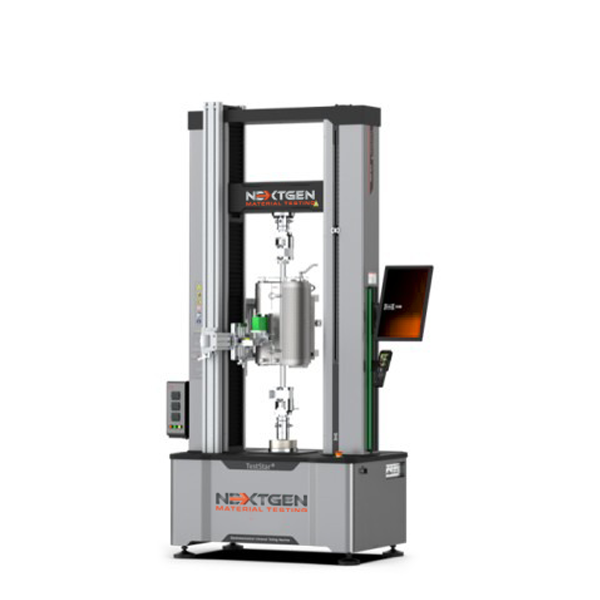
NG-EML Series C – Dual Column Bench Top and Floor Standing Universal Testing Machine (5 kN – 50 kN)
NG-EML Series C is a dual-column electromechanical universal testing machine available in bench-top and floor-standing formats from 5 kN to 50 kN. Built for tension, compression, flexural, shear, and peel testing, it combines Class 0.5 accuracy, a servo direct-drive system, high-rigidity frame, touchscreen control, and GenTest software to support precise testing of metals, composites, rubber, plastics, and polymers.
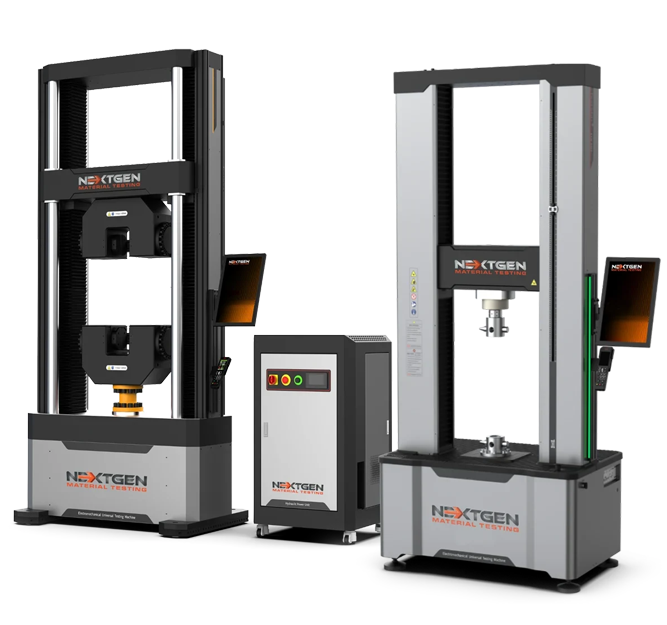
NG-EML Series D – Floor Standing Universal Testing Machine (50 kN – 1000 kN)
NG-EML Series D is a heavy-duty floor-standing electromechanical universal testing machine for high-capacity tensile, compression, and flexural testing. Available from 50 kN to 1000 kN, it is built for high-strength steels, advanced composites, alloys, and challenging research materials. Its rigid dual-column frame, servo direct-drive system, closed-loop control, safety protections, and GenTest software support stable, accurate testing.
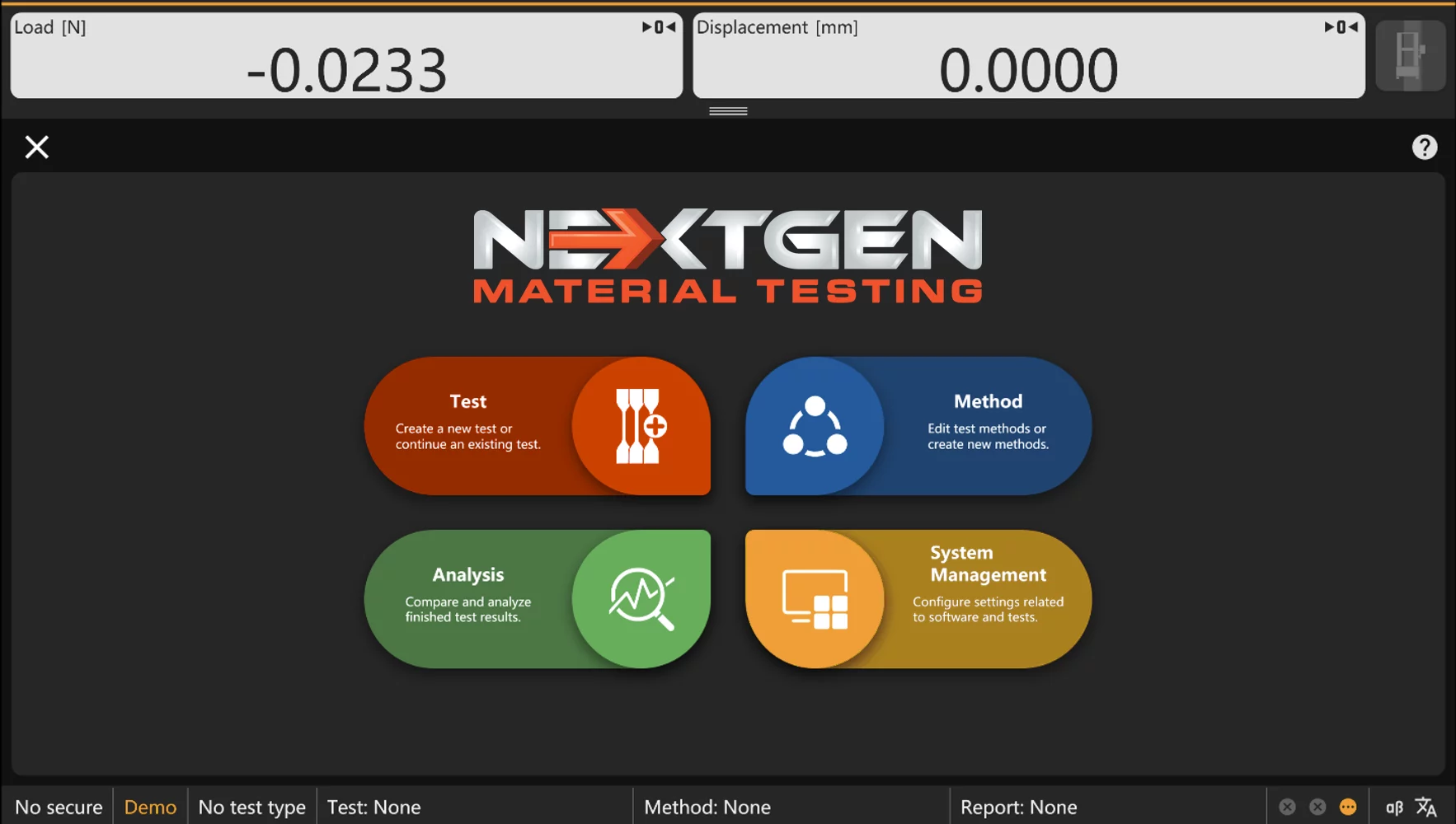
GenTest – Advanced UTM Testing Software
GenTest is NextGen’s advanced UTM testing software for electromechanical universal testing machines, managing test setup, live control, data acquisition, calculations, curves, and reporting from one method-driven environment. Preconfigured ASTM, ISO, DIN, EN, and BS templates help operators load the correct control mode, speeds, gauge length, formulas, and result fields for tensile, compression, and flexural tests.
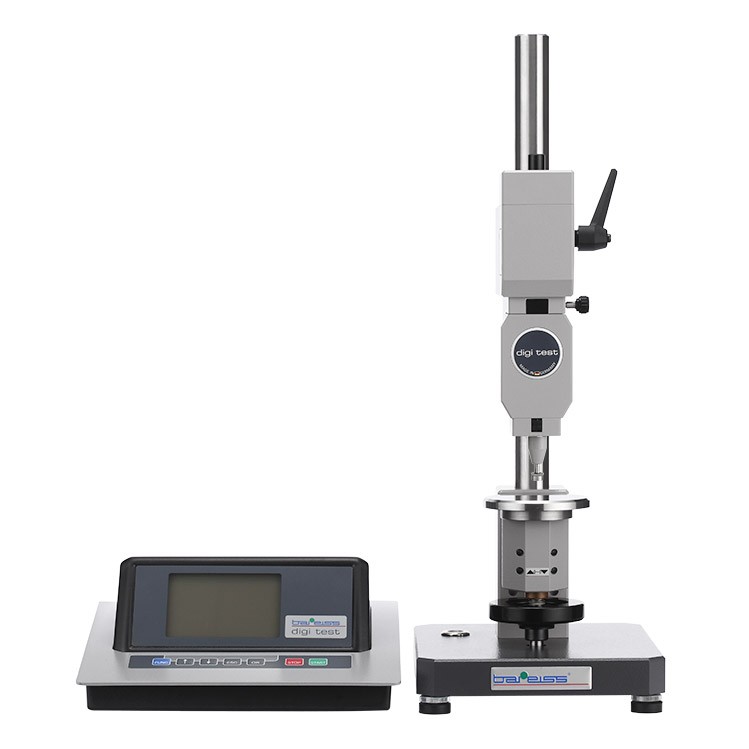
Automatic Shore, IRHD and VLRH Hardness Testing System
Digi Test II is an automatic Shore, IRHD, and VLRH hardness testing system for rubber, plastics, foams, elastomers, O-rings, tubes, hoses, and shaped parts. It combines an electronic control unit, loading module, test stand, and interchangeable measuring heads with automatic range recognition, programmable measuring time, USB output, and low-operator-influence operation. DIN, ISO, ASTM, BS, and DAkkS certificate support strengthen repeatability.
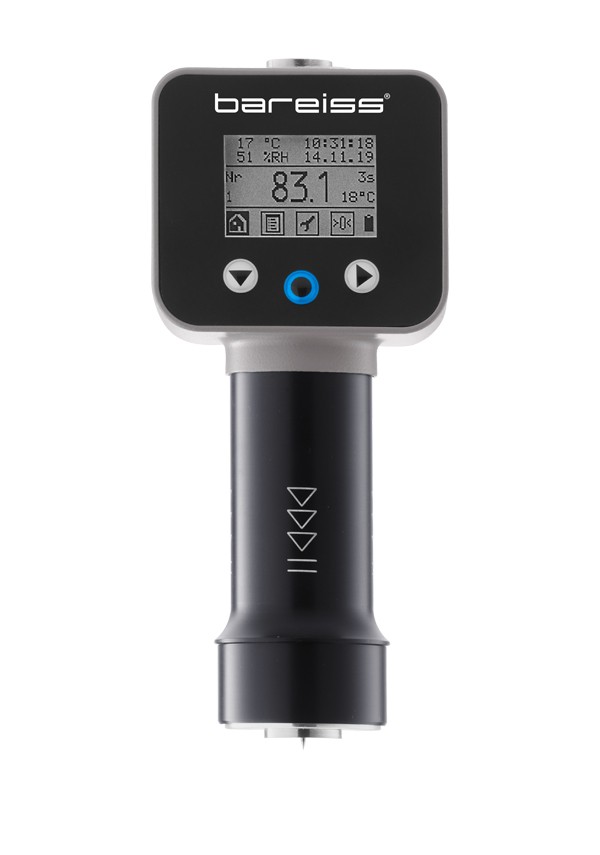
Advanced Portable Shore Durometer System with Test Stand Options
HPE III is an advanced portable Shore durometer system for hardness testing of rubber, plastics, and related materials. It measures hardness while also displaying specimen or environmental temperature and humidity, helping users track conditions during testing. A large LCD display, aluminum casing, patented ergonomic hand grip, USB connection, historical data display, rechargeable operation, and compatible manual or automatic test stands improve repeatability.
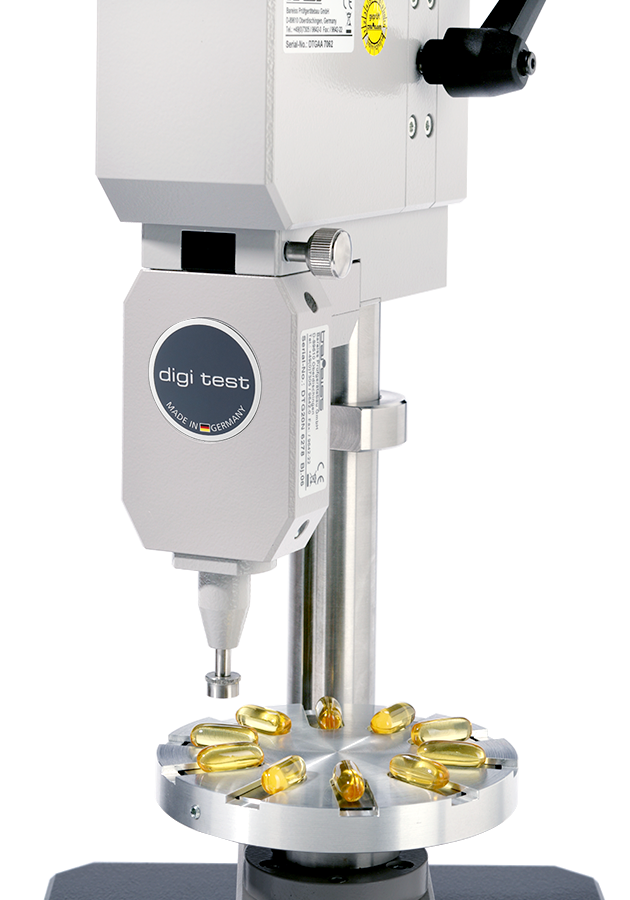
Automatic Capsule and Soft Gel Hardness Tester
Gelomat is an automatic capsule and soft gel hardness tester for gelatin capsules, softgels, plasticine, edible gelatin, and similar materials. Available with 0–2 N or 0–20 N measuring heads, it supports non-destructive hardness testing with automatic measurement, clear electronic display, USB data transfer, auto correction, hysteresis function, and optional custom Centrofix holders for precise capsule centering and efficient pharmaceutical-style QC.
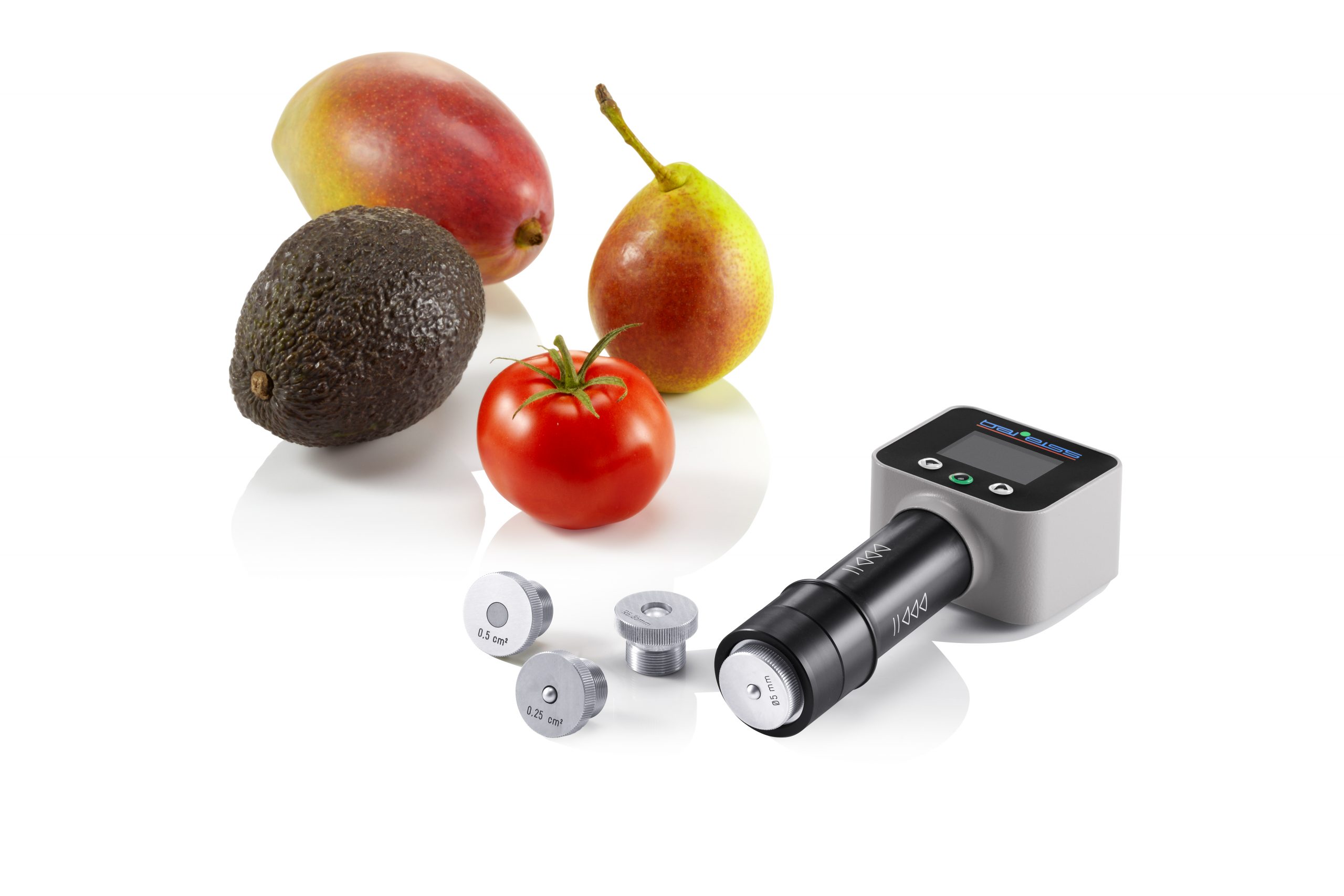
Fruit Firmness Tester
NextGen’s Fruit Firmness Tester is a portable German-manufactured device for measuring firmness in fruits, vegetables, meat, and fish. Interchangeable anvils support applications from berries and tomatoes to apples, avocados, carrots, cucumbers, and other produce. Ergonomic handheld design, digital readout, foam-fitted case, calibration accessories, USB or mobile data options, and objective force-based measurement help growers, distributors, and researchers assess ripeness and quality.
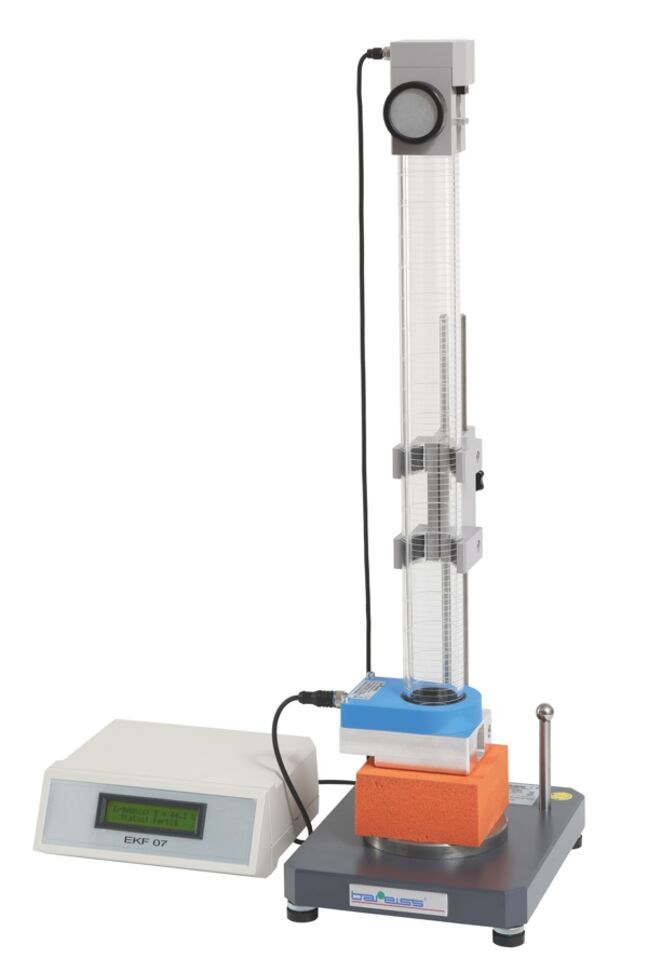
Ball Rebound Tester
The Ball Rebound Tester measures rebound resilience in foam, polyurethane, rubber, and similar materials. Designed for DIN EN ISO 8307 and ASTM D3574 testing, it drops a 16 mm magnetic ball from a controlled 500 mm height and calculates rebound performance through the electronic console. This makes it a practical solution for quality control, material comparison, and repeatable resilience evaluation.
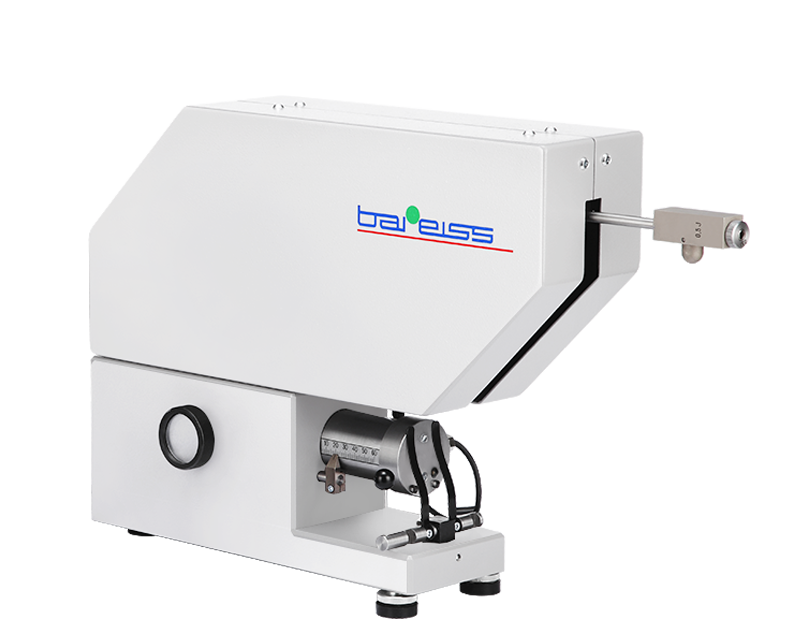
Pendulum Rebound Resilience Tester
NextGen’s Pendulum Rebound Resilience Tester measures the elastic recovery and dynamic behavior of elastomers, foams, and rubber materials. Available in manual and fully automatic versions with a digital display terminal, it supports DIN 53512, ASTM D1054, and ISO 4662 workflows. Optional sample heating up to 100°C helps laboratories compare formulations, aging effects, fatigue changes, and heat-related resilience performance.
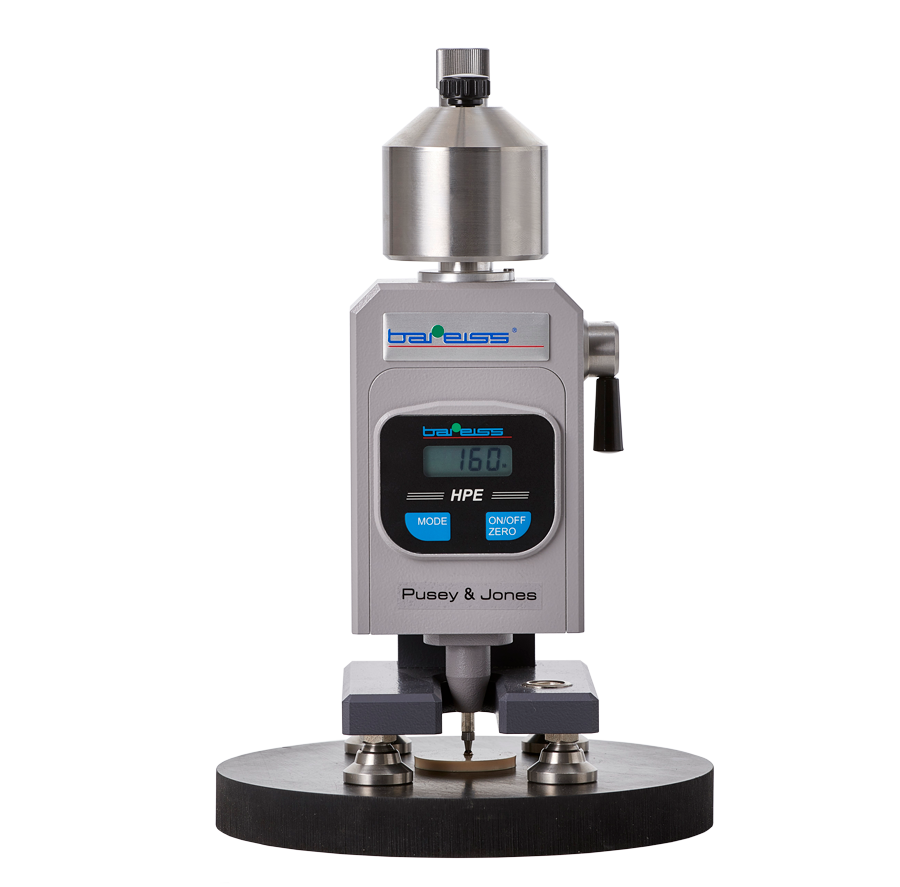
Pusey & Jones Tester
Pusey & Jones Tester is a portable plastometer system for measuring hardness and indentation behavior of rubber and rubber-like materials, especially rubber rollers used in the paper industry. It applies a 9.8 N test load and reads penetration depth after a 60-second test. An electronic dial gauge, zero-setting function, 1 kg load weight, built-in timer, and optional software support repeatable reporting.