NG-EC Series – Environmental Test Chambers (100–1000 L)

Plastic Testing Equipment
Standards
Description
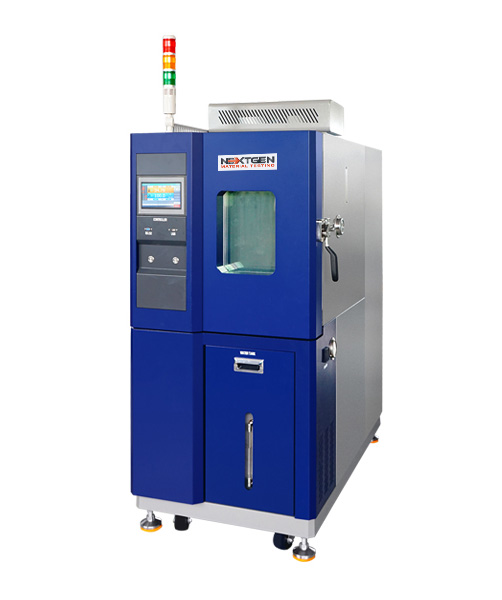
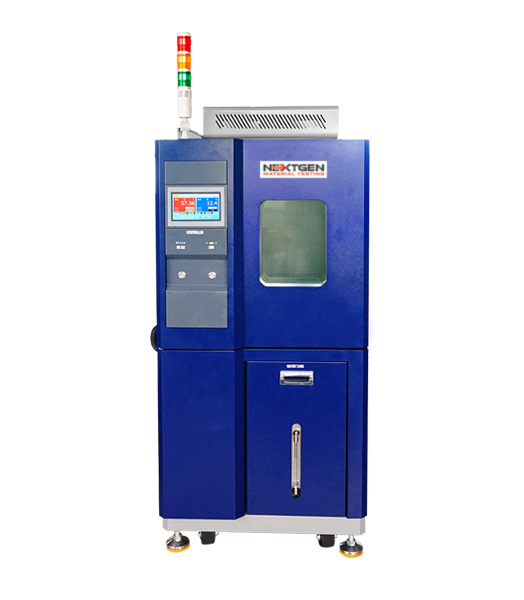
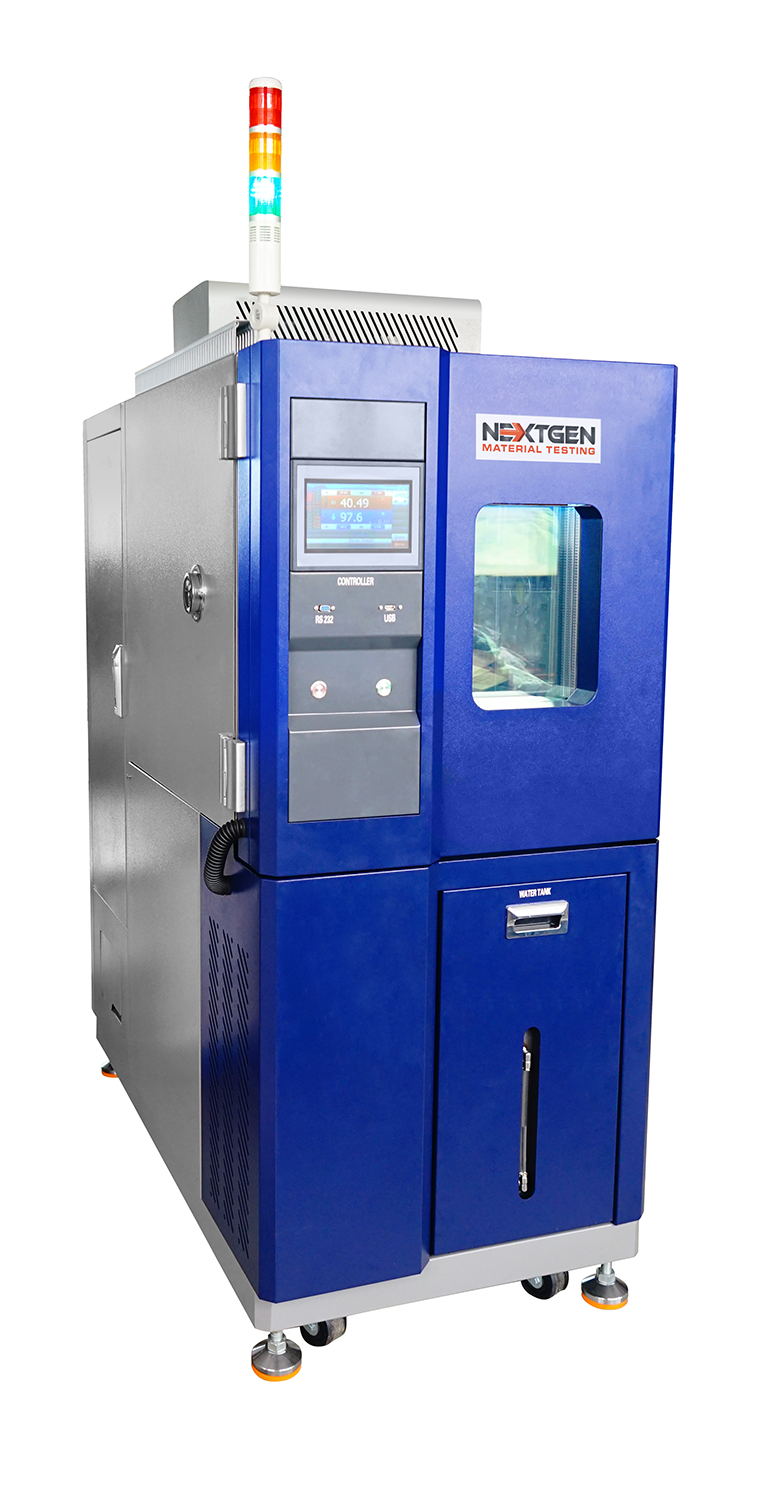
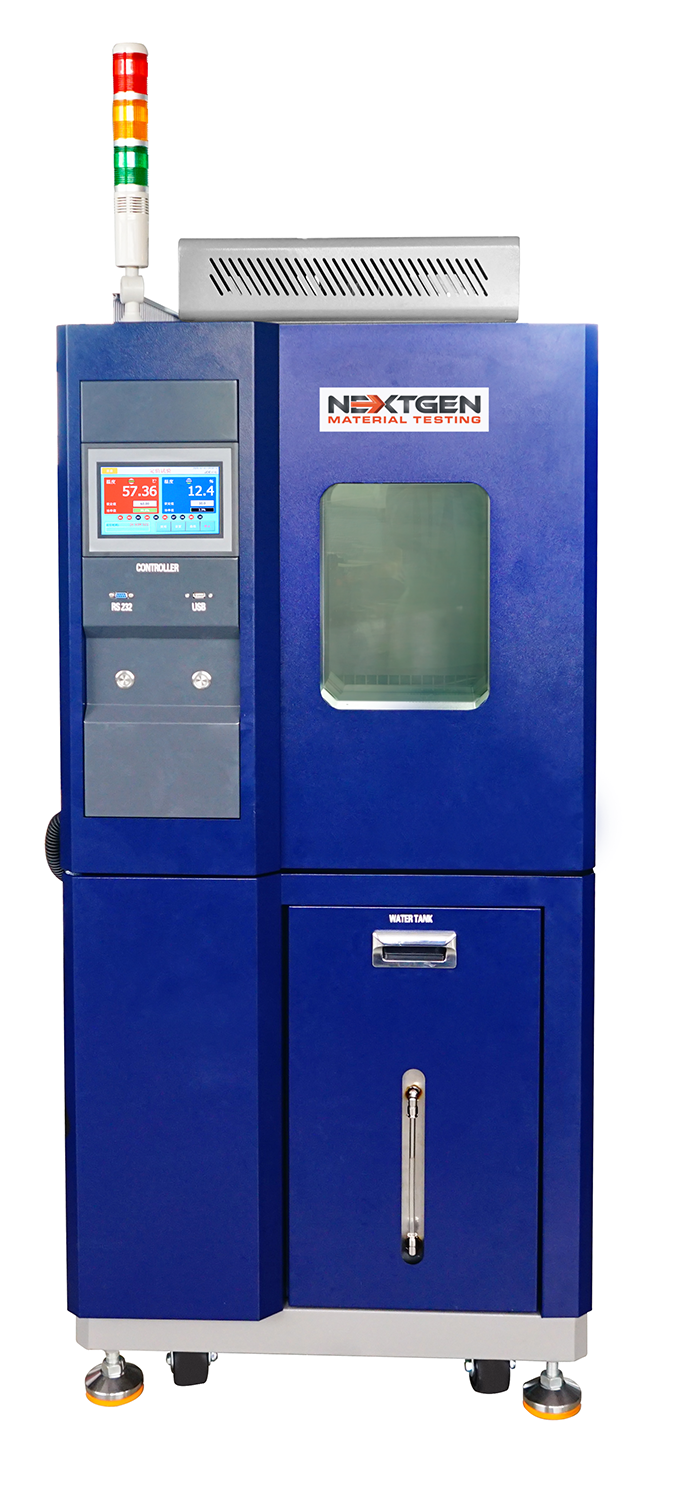
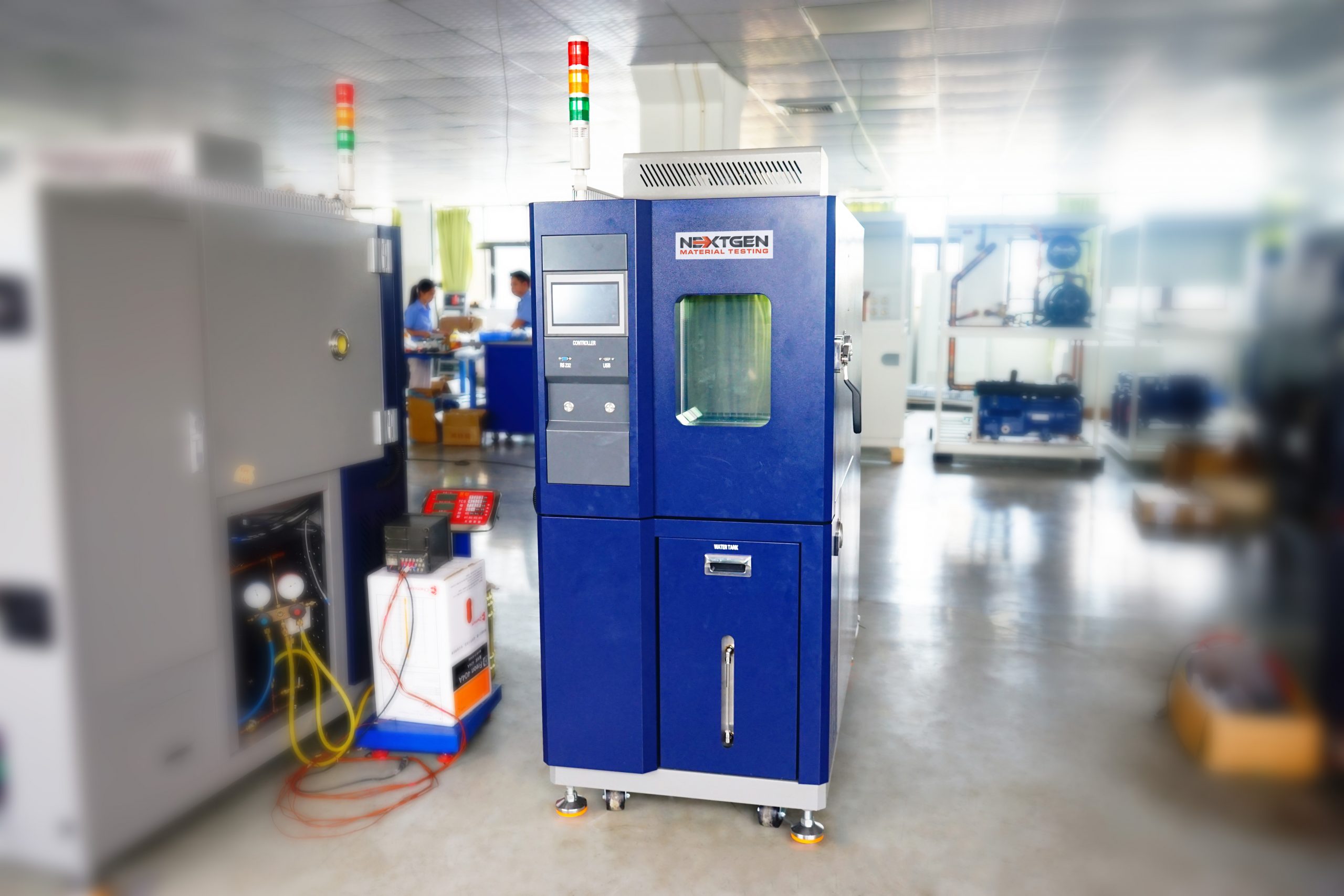
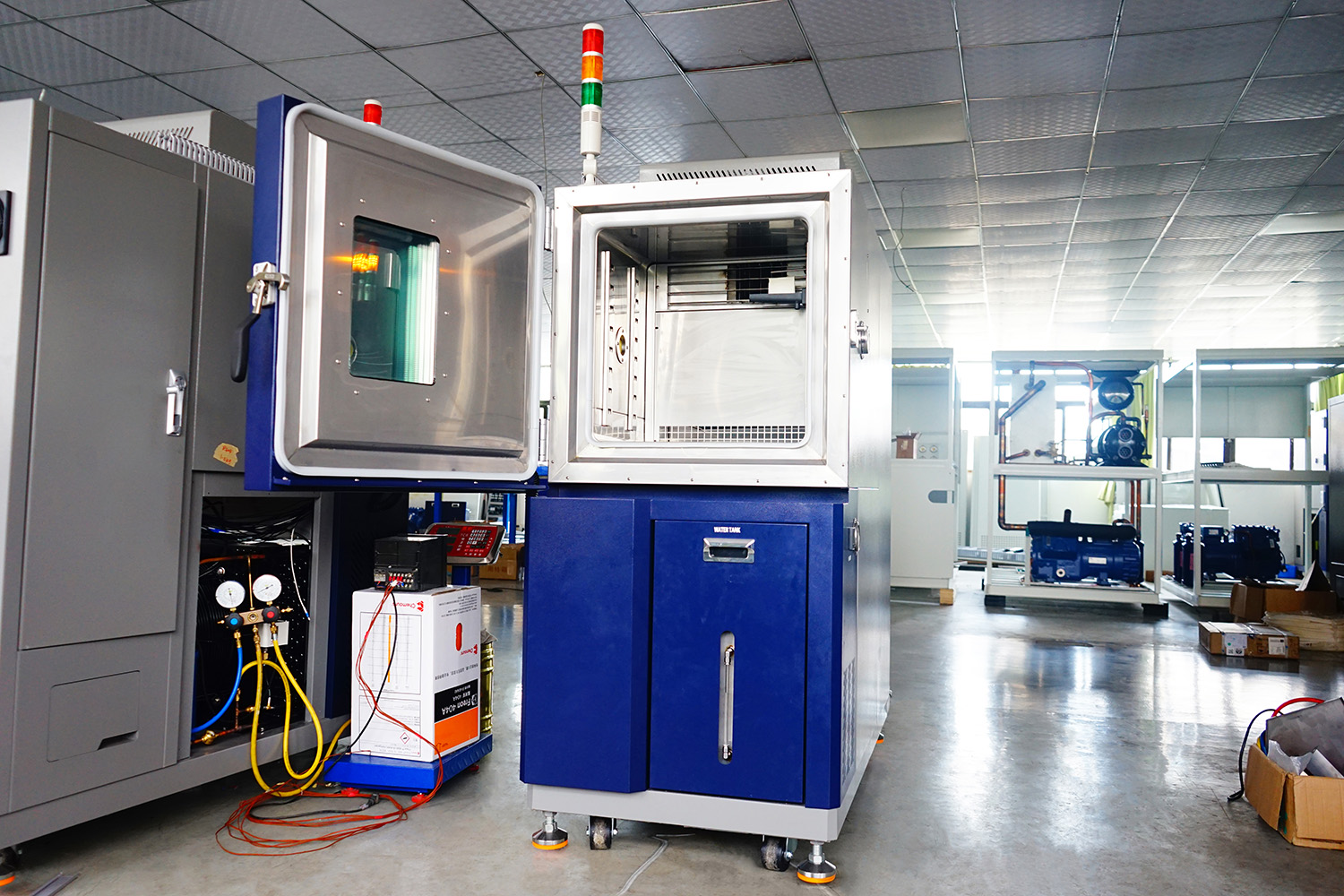
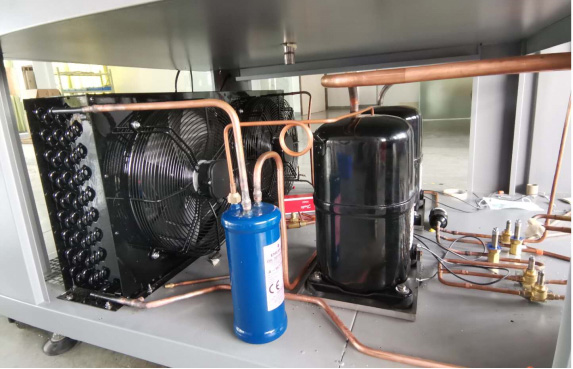
The temperature and humidity NextGen Environmental Chambers feature a sturdy cabinet made of cold-rolled steel and stainless steel, with an insulation layer to prevent frost and dew. The cabinet includes independent temperature control, circulating air ducts, heaters, and cooling systems. It also has a manual, single-opening door with a constant temperature heating belt and a viewing window with moisture-proof lighting fixtures. The chamber uses mechanical compression refrigeration and high-quality refrigeration accessories. It has a 7″ TFT colour touch screen controller with an extensive program capacity and various protection features. The equipment provides two stainless steel sample racks with adjustable spacing and a maximum load of 220 lbs (100 kg).
The chambers are chosen by the volume you need; the climate they hold is the same across the family.
Models5
Temperature Range-40 °F to +302 °F
Humidity Range20% to 98% RH
Temperature Fluctuation≤±0.5 °C
Rack Load220 lbs (100 kg)
Controller7″ TFT touch screen
Models and Dimensions
The five chambers differ in the space inside, the space they take up, and the supply they need.
| Item | NG-EC100 | NG-EC150 | NG-EC225 | NG-EC408 | NG-EC1000 |
|---|---|---|---|---|---|
| Internal dimensions (W x H x D) | 20 x 20 x 16 in | 20 x 24 x 20 in | 24 x 30 x 20 in | 31.5 x 33.5 x 24 in | 39 x 39 x 39 in |
| External dimensions (W x H x D) | 25 x 68 x 52 in | 28 x 72 x 56 in | 35.5 x 75 x 60 in | 42.5 x 82 x 65 in | 51 x 91 x 81 in |
| Power requirements | 1 phase, AC 220 V, 50/60 Hz, approx. 4.5 kW | 1 phase, AC 220 V, 50/60 Hz, approx. 5 kW | 3 phase, AC 380 V, 50/60 Hz, approx. 9 kW | 3 phase, AC 380 V, 50/60 Hz, approx. 9.5 kW | 3 phase, AC 380 V, 50/60 Hz, approx. 14 kW |
Climate Performance
These figures apply to every model in the family and are quoted for an empty chamber.
| Parameter | All models |
|---|---|
| Temperature range | -40 °F to +302 °F (-40 °C to +150 °C) |
| Temperature fluctuations | ≤±0.5 °C (without anything in chamber) |
| Temperature uniformity | ≤4 °C (without anything in chamber) |
| Temperature deviation | ≤±2 °C (without anything in chamber) |
| Heating rate | +25 °C to +150 °C, ≥40 min (without load) |
| Cooling rate | +25 °C to -70 °C, ≥80 min (without load) |
| Humidity range | Temperature +20 °C to +85 °C, humidity 20% to 98% RH |
| Humidity deviation | ≥75% RH: ≤±3% RH; ≤75% RH: ≤±5% RH |
| Noise | ≤75 dB, measured 3 feet in front of the chamber door, at 4 feet in height |
The chart shows how the available humidity depends on the temperature set in the chamber.
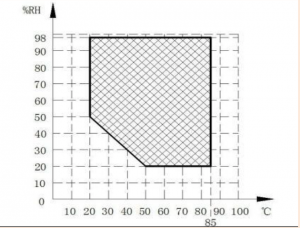
Humidity available across the temperature range.
Structure
The cabinet, the air path, the door and the racks are built around one aim: to hold the set climate without frost on the outside or condensation where it is not wanted.
Cabinet
The cabinet includes independent temperature control with circulating air ducts, heaters, cooling systems, etc. Outer wall: 0.059″ cold-rolled steel plate with plastic-sprayed surface. Insulation layer: 4″ polyurethane foam and ultra-fine glass wool, to ensure that the outer surface of the test chamber does not frost or dew. Inner wall: 0.047″ stainless 304 #4 stainless steel sheet.
Circulation ducting
The circulating air duct is set at the back on the interior of the chamber. Motor, impeller, heater and evaporator are installed in order from top to bottom inside the air duct.
Door
Manual, single-opening door is set on the front of the chamber with quality hinges and door locks. A constant temperature heating belt is installed around the door and is automatically turned on for defrosting depending on the ambient temperature.
Viewing window
Each door is equipped with a three-layer hollow electric vacuum glass observation window. The observation window automatically turns on the defogging function according to the ambient temperature to ensure a clear observation at any state.
Lighting
The observation window is equipped with a set of moisture-proof lighting fixtures to ensure that the test pieces in the box can be clearly observed under any working conditions. The lamp has the function of automatically turning off to prolong the life of the bulb.
Test hole
2″ test hole with side access on the chamber. Test holes are equipped with custom accessories and flexible silicone rubber seals.
Sample racks
The equipment provides 2 stainless steel sample racks with adjustable spacing and a max load of 220 lbs (100 kg). To maintain air pressure balance between the interior of the chamber and the external environment during the test, the box is provided with a set of air pressure balance windows.
Cooling System
Refrigeration is mechanical and the controller keeps heating and cooling from fighting each other.
Refrigeration method
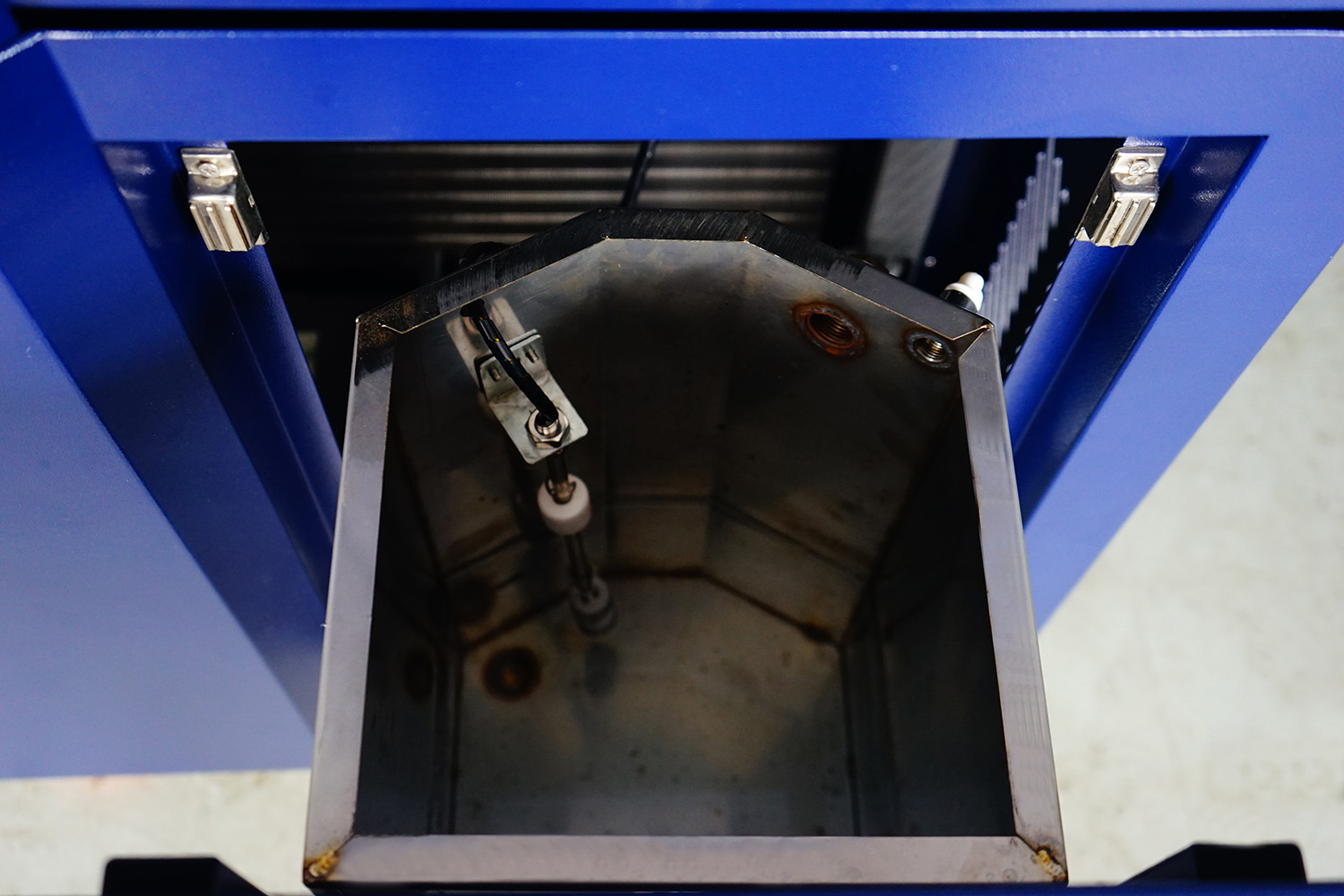
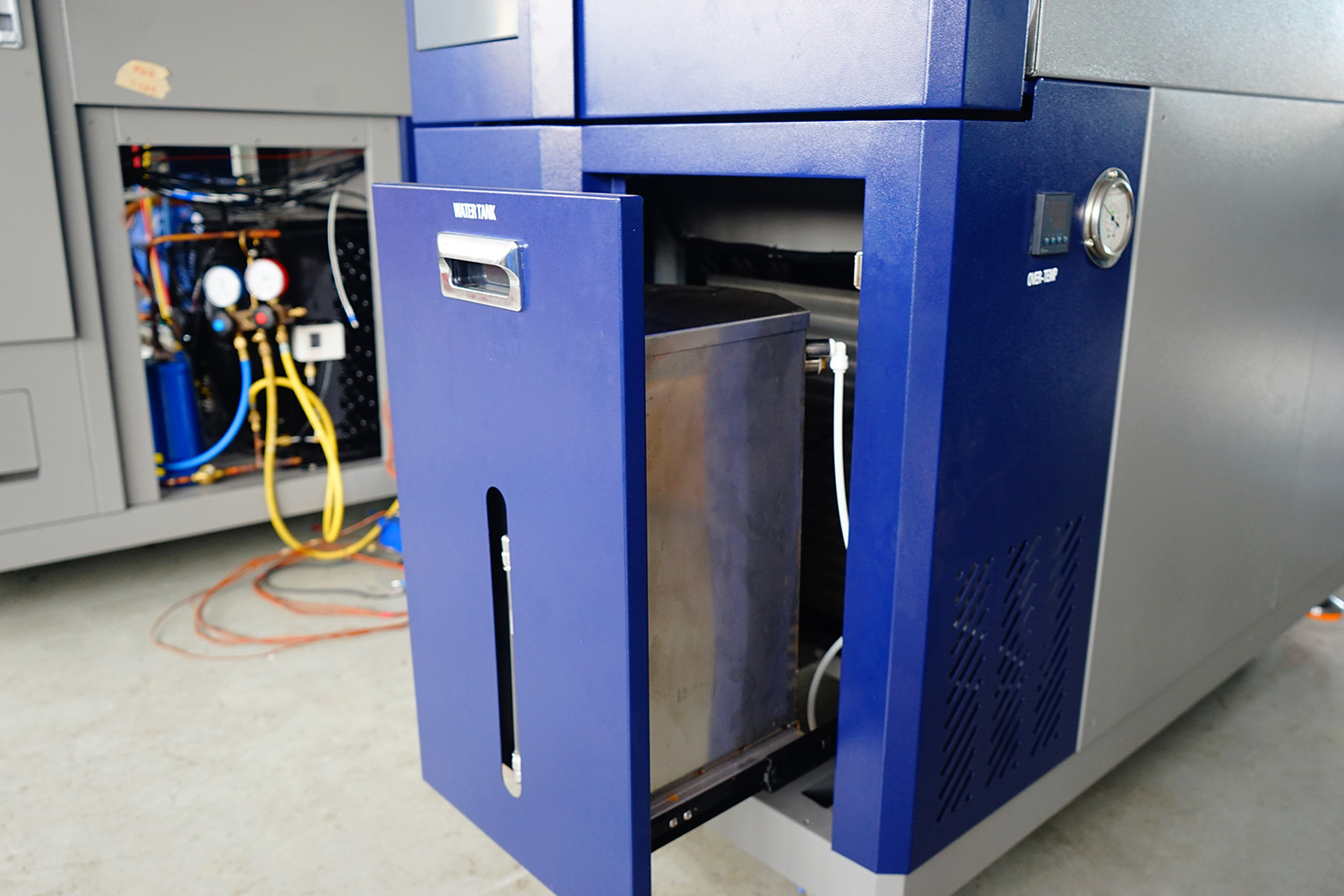
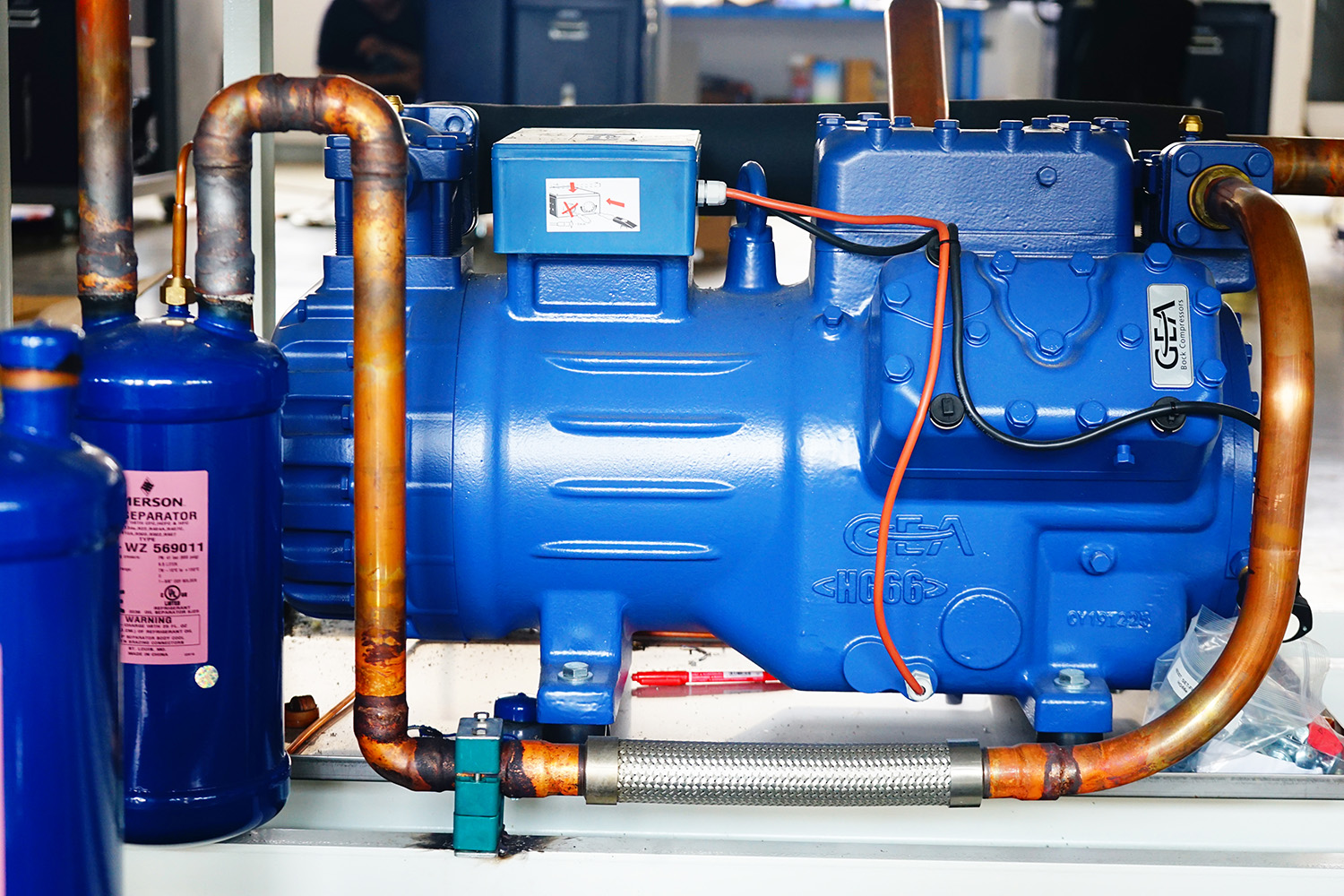
Mechanical compression refrigeration. The compressor starts as needed and at a specific time if desired. The controller works together with the solenoid valve to control the on and off refrigerant flow for cold balance control. This prevents cooling during heating, and heating during cooling cycles.
Cooling method
Air-cooled.
Refrigerant
High temperature class: R404A / R23, DuPont. The above refrigerants are all environmentally friendly and meet international environmental protection requirements.
Reliability
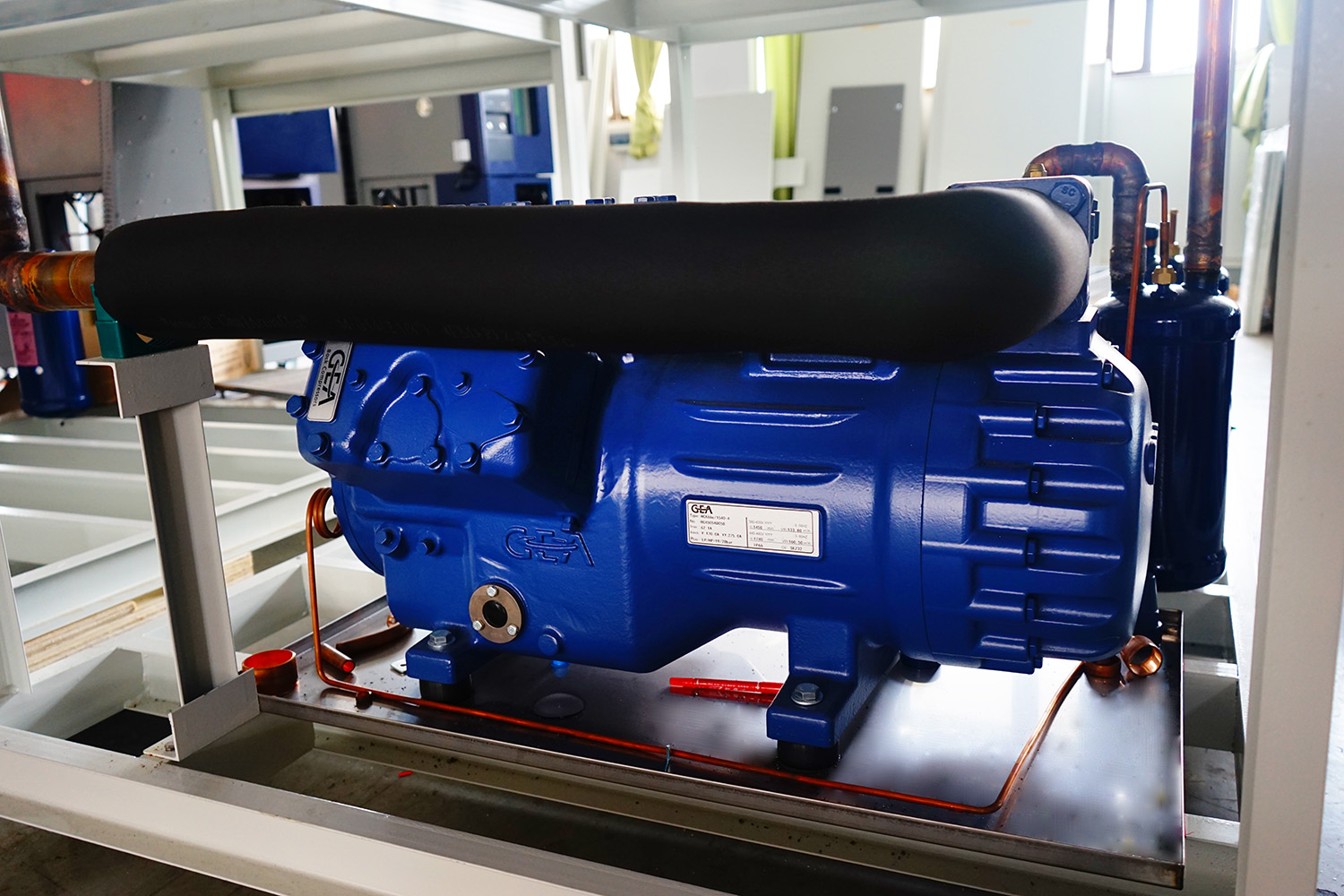
The main refrigeration accessories are assembled with internationally recognized brands including France Tecumseh compressors, Denmark DANFOSS pressure controller, American EMERSON oil separator, American EMERSON or Italian CASTEL solenoid valve, etc. NextGen Material Testing is dedicated to providing a long-lasting solution and uses quality components on the chamber from top to bottom.
Temperature Control
Temperature measurement uses a high-precision A-class PT100 platinum resistance sensor. The controller collects the temperature sensor signal and automatically adjusts the heating power or refrigerant flow through the PID + SSR output to ensure that the air temperature in the chamber reaches a dynamic equilibrium. The heater is a high-quality nickel-cadmium alloy wire heater driven by a non-contact zero-cross triggering solid state controller.
The water vapor condensation on the surface of the evaporator is achieved by the cooling capacity of the previous stage compressor. When the dew point temperature of the air in the chamber is lower than the surface temperature of the dehumidification evaporator, the water vapor in the air will condense on the surface of the evaporation coil.
Control System
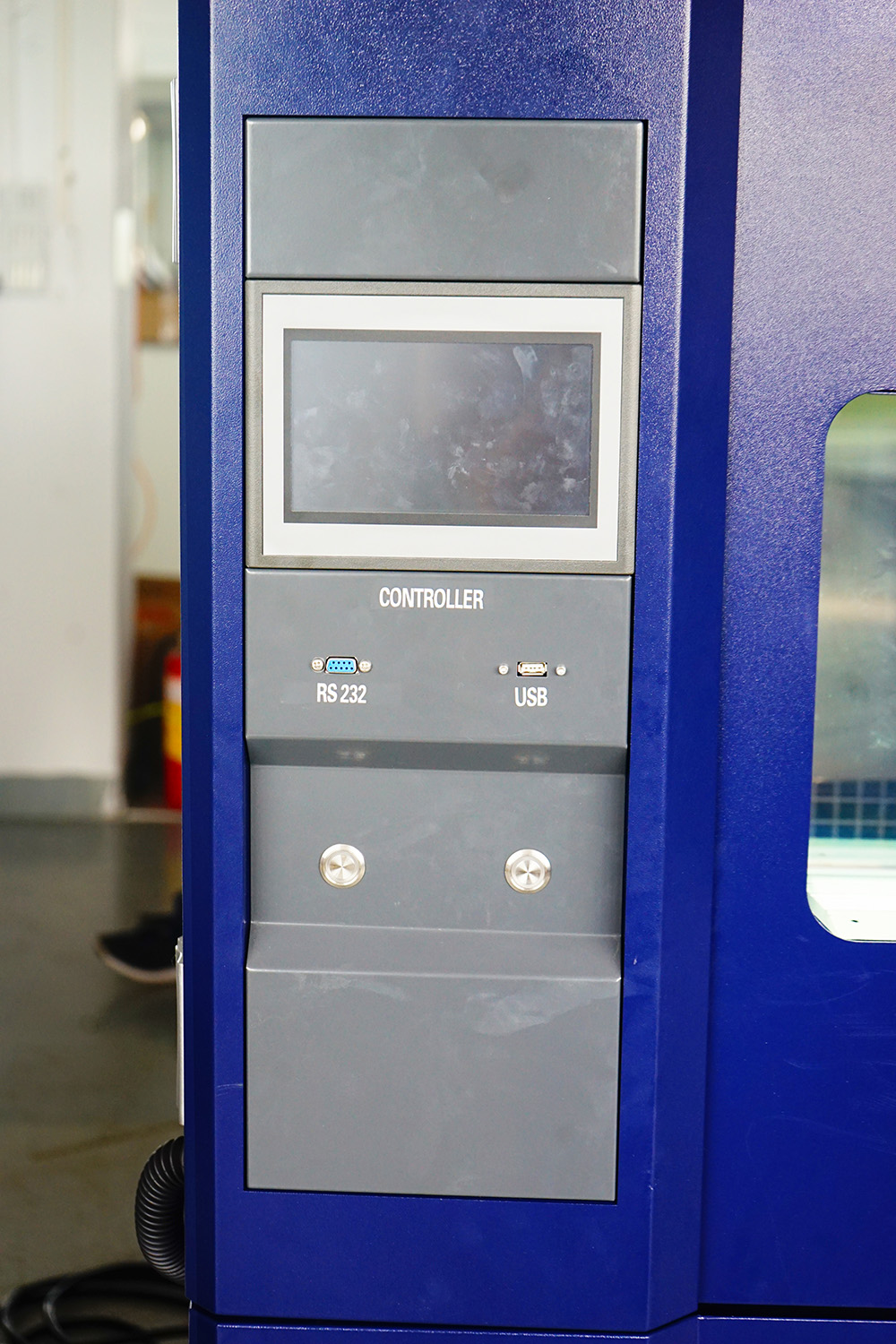
The chamber is driven from a 7-inch touch screen that stores the programs, records the run and hands the data over to a computer.
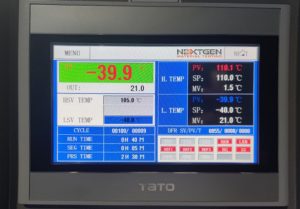
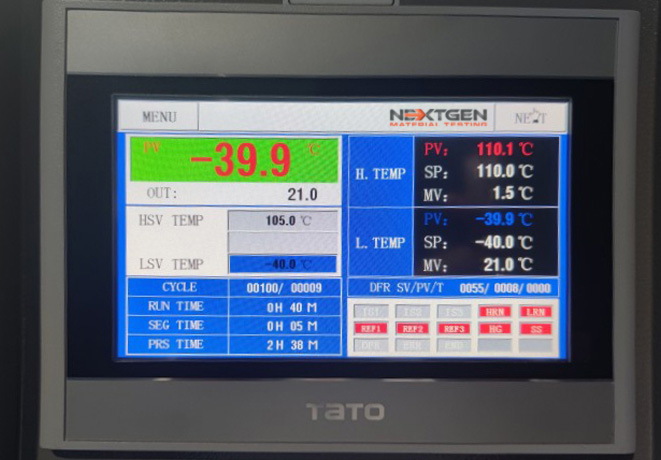
The 7″ TFT colour touch screen controller.
What the controller does, in detail:
Controller
7″ TFT color touch screen controller.
Accuracy
Temperature ±0.1 °C + 1 digit, humidity ±1% R.H + 1 digit.
Resolution
Temperature ±0.01 °C, humidity ±0.1% R.H.
Temperature slope
0.1 to 9.9, can be set.
Control parameters
Temperature input signal PT100 x 1 sensor. P.I.D control parameters: 9 sets of PID control parameters are automatically calculated.
Screen functions
Touch input, display of temperature and humidity set value and measured value, various parameters of program operation, operation timing, equipment operation curve and history curve, fault prompt screen, with adjustable screen brightness.
Program capacity
Available program groups: up to 250 saved patterns. Usable memory capacity: up to 12500 segments. Program editing adopts conversational style, with functions such as editing, clearing, inserting. Segment time setting 0 to 540 hours 59 minutes.
Record function
The controller can save the setting values, sampling values and sampling time of the equipment up to 90 days. Data stored in the controller can be called, analyzed, and processed using office programs such as Microsoft Excel.
Communication
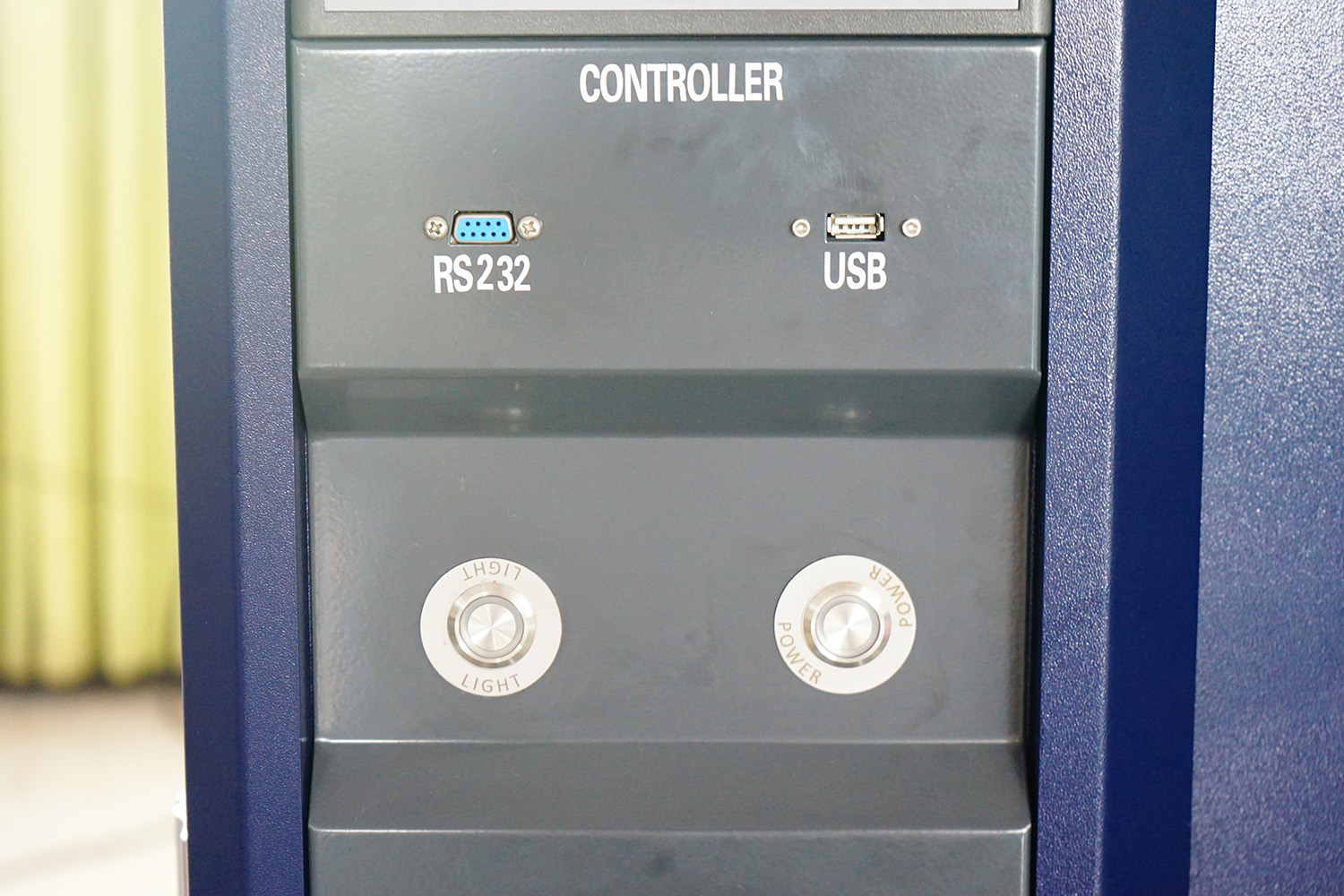
The control system can export the data saved by the device operation through the USB interface, and can communicate with your computer through an RS232 connection or with the optional Ethernet interface.
Protection
Eight independent protections guard the chamber, its heaters and its compressor.
Chamber
Over-temperature protection.
Heater and humidifier
Heater short circuit protection and humidifier short circuit protection.
Fan
Fan overload protection.
Compressor
Compressor overpressure protection and compressor overload protection.
Water
Water cut and water shortage protection.
Electrical
Electrical ground protection.
Have Questions or Need to Confirm a Detail?
If you need to confirm which chamber volume takes your specimens, or whether your supply suits the three-phase models, send us a quick request online. Tell us the specimen size, the temperature and humidity profile you run, and we will confirm the model and the options you need.
For Laboratories
Need Additional Quality Control Equipment to Build Your Laboratory?
Environmental conditioning is only one part of a complete quality control laboratory. NextGen can help you equip your entire lab with universal testing machines, impact and falling weight testers, melt flow indexers, HDT and Vicat systems, hardness and durometer systems, environmental chambers, and other supporting solutions, all coordinated as one complete project.
- One partner to equip your complete laboratory
- Installation, training, calibration
- Support for the life of the equipment
FAQs
Rubber hardness testing is a critical aspect of evaluating the quality of rubber products. Hardness refers to the resistance of rubber to indentation or deformation under the application of a certain force. It is a key property that determines the performance of rubber products in various applications.
The NextGen Environmental Chambers NG-EC is designed to operate within a wide temperature range of -70°C to +180°C, providing flexibility for testing materials at extreme temperatures.
Our chamber uses an advanced control system to maintain temperature stability and uniformity, ensuring accurate and consistent results. The control system features a programmable temperature controller and a high-precision sensor to maintain the desired temperature within a tolerance of ± 0.5°C.
The temperature range of the NG-EC makes it an ideal choice for a range of industries, including plastics, rubber, electronics, and aerospace. It can be used to test the performance of products in extreme environmental conditions, helping manufacturers to develop high-quality and reliable products.
Click here to learn more about the product or here to receive a personalized quote.
Yes, you can export data from the controller of this product. The NextGen Environmental Chambers has a user-friendly touchscreen controller that allows easy data logging and exporting. The controller allows exporting data via USB, Ethernet, or RS-485. This feature allows for the easy transfer of test data to a computer or other device for further analysis and documentation.
The touchscreen controller also has a built-in data logging function that can record and store test data over an extended period. This data can be exported in CSV format, which is easily readable by most spreadsheet software. The controller also allows for inputting test parameters, such as temperature and humidity set points, as well as the test duration.
Click here to learn more about the product or here to receive a personalized quote.
The NextGen Environmental Chambers come with a defrosting function to ensure that frost accumulation does not affect the accuracy of the testing process. The defrosting function is controlled by an automatic system that senses the amount of ice buildup on the evaporator and initiates the defrost cycle as needed. The system uses a programmed microprocessor-based controller to monitor the chamber's temperature and humidity levels and control the defrost cycle.
During the defrost cycle, the system temporarily stops the cooling and heating functions and activates the defrost heater to melt the ice. The water produced from the defrost cycle is then collected in a drain pan and removed from the chamber. The defrost cycle is timed and varies depending on the amount of ice buildup, typically 30 to 45 minutes.
The automatic defrosting function is designed to minimize the need for manual intervention, reducing the risk of errors and ensuring test results' accuracy. The user can also manually initiate the defrost cycle if necessary. Additionally, the system includes a defrost heater safety limit switch to prevent overheating and ensure safe operation.
Click here to learn more about the product or here to receive a personalized quote.
The NextGen Environmental Chambers NG-EC-100/150 series have a highly precise humidity sensor with a resolution of 0.1%RH. The high resolution of the humidity sensor allows users to make precise adjustments to the humidity levels within the test chamber to achieve the desired testing conditions.
The humidity measurement is performed using a capacitive sensor, which operates based on the principle that the electrical capacitance of the sensor varies as a function of the relative humidity. The sensor's built-in microprocessor uses an algorithm to convert the capacitance measurement to a digital signal, which can be read and displayed on the chamber's control panel.
The NG-EC-100/150 series also features a humidity range of 10% to 98%RH, allowing users to test various products under various humidity conditions. The chamber is designed to provide consistent and uniform humidity distribution throughout the test area, ensuring that all samples are subjected to the same testing conditions.
Click here to learn more about the product or here to receive a personalized quote.
The NextGen Environmental Chambers NG-EC features a precise and reliable temperature control system that ensures the internal temperature of the chamber is maintained within the desired range. The chamber uses a microprocessor-based PID controller that constantly monitors and adjusts the temperature to within ±0.2°C of the set point.
The temperature control system in the NG-EC works by circulating chilled air through a refrigeration system that uses R134a refrigerant. The refrigeration system is designed to remove heat from the chamber and maintain the temperature at the desired level. The temperature sensor located inside the chamber sends a signal to the controller, which adjusts the amount of refrigerant flowing through the system to maintain the set temperature.
Our chamber also features a fan system that ensures uniform temperature distribution throughout the chamber. The fan circulates the air, ensuring that the temperature is consistent across all sample racks. Moreover, the NG-EC features a safety thermostat that cuts off the power to the heater and compressor if the temperature exceeds the set limit.
Click here to learn more about the product or here to receive a personalized quote.
The NextGen Environmental Chambers NG-EC has an automatic defrosting function that is designed to remove ice build-up on the evaporator coils. This is necessary to ensure that the unit operates efficiently and maintains consistent temperature control. The defrost cycle is controlled by a microprocessor-based controller that monitors the temperature of the evaporator coils and initiates defrosting when necessary.
The defrosting function is initiated when the controller detects that the evaporator coils have reached a pre-set temperature. When this occurs, the refrigeration cycle is temporarily suspended, and the unit's electric heaters are turned on to melt the ice on the coils. Once the ice has melted, the controller will then turn off the electric heaters and resume the refrigeration cycle. The frequency of defrost cycles is determined by the amount of frost accumulation on the coils, which can be influenced by factors such as humidity levels and the number of door openings.
Click here to learn more about the product or here to receive a personalized quote.
The NextGen Environmental Chambers NG-EC features a high-precision temperature measurement system with a resolution of 0.1°C. The temperature measurement system uses a platinum resistance thermometer (PRT). PRTs are a type of temperature sensor that is known for their excellent accuracy and long-term stability.
A microprocessor-based temperature controller controls the temperature measurement system, which continuously monitors and adjusts the temperature inside the chamber to maintain the set temperature within a tight tolerance range. The temperature controller uses feedback from the PRT to adjust the heating and cooling systems to maintain the set temperature.
The NG-EC also features an optional data logger system that can record temperature and humidity data at user-defined intervals. The data logger system uses a high-precision thermistor sensor with a resolution of 0.01°C to provide accurate temperature measurements, which can be downloaded to a computer for analysis.
Click here to learn more about the product or here to receive a personalized quote.
The NextGen Environmental Chambers NG-EC is designed to meet the needs of rubber and plastic manufacturers who require a reliable and efficient way to perform environmental testing. The chamber is equipped with a spacious interior that can accommodate multiple sample racks.
Each NG-EC chamber comes with one sample rack included in the package. However, additional sample racks can be purchased separately depending on the customer's needs. The sample rack is specifically designed to securely hold samples during testing and ensure consistent exposure to the environmental conditions inside the chamber.
The number of samples that can be tested at once depends on the sample size and the chamber size. The NG-EC chamber has a capacity of 100 litres, which allows for the testing of a significant number of samples at once. The chamber's advanced temperature and humidity control systems ensure accurate and stable conditions for each sample, enabling precise and repeatable results.
Click here to learn more about the product or here to receive a personalized quote.
The insulation material used in the cabinet of this environmental chamber is a critical component that determines its energy efficiency and temperature stability. This product insulates the cabinet with high-quality polyurethane foam that provides excellent thermal insulation properties. Polyurethane foam insulation is widely used in environmental chambers due to its low thermal conductivity, high strength-to-weight ratio, and excellent dimensional stability. The foam insulation is applied to all sides of the cabinet walls, including the doors, to ensure that there are no thermal leaks.
Polyurethane foam insulation has a high R-value, which is a measure of its thermal resistance. The higher the R-value, the better the insulation properties. The R-value of the insulation used in this product is designed to maintain a consistent temperature inside the chamber even when the temperature outside fluctuates. The insulation also helps reduce energy consumption, as the cooling system does not have to work as hard to maintain the desired temperature.
Click here to learn more about the product or here to receive a personalized quote.
NextGen Environmental Chambers uses R134a refrigerant, which is a hydrofluorocarbon (HFC) refrigerant that has become a popular replacement for the older R-12 refrigerant in automotive air conditioning systems. R134a has a much lower ozone depletion potential than R-12, which makes it a more environmentally friendly option. It is also less flammable than other refrigerants, making it a safer choice for use in air conditioning systems.
R134a refrigerant is commonly used in air conditioning systems for both vehicles and buildings. It has good thermodynamic properties and is able to provide efficient cooling. It also has a lower toxicity level compared to other refrigerants, making it a safer option for use in various applications. However, R134a is a greenhouse gas, which means that it has the potential to contribute to climate change if it is not properly contained and disposed of.
Click here to learn more about the product or here to receive a personalized quote.
Related Products
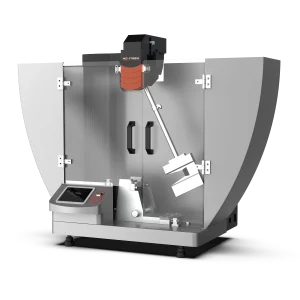
Class J – Automatic Charpy and Izod Impact Tester (1–50 J)
Class J is an automatic Charpy and Izod impact testing system for low-energy impact evaluation of plastics and related materials. It covers 1–50 J for Charpy tests and 1–22 J for Izod tests, with interchangeable pendulums, adjustable spans, controlled striking velocity, and ASTM D6110, ASTM D1822, ISO 179, GB/T 1043, and ISO 9854.1 support for standardized testing.
Read more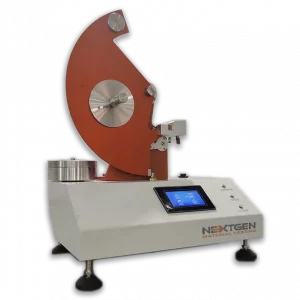
GenElm Series – Elmendorf Tearing Tester (64 N and 128 N)
GenElm Series is an Elmendorf tearing tester for measuring tear resistance of plastic film, sheeting, textiles, paper, board, and other flexible materials. Available with 64 N and 128 N high-capacity pendulum options, it supports ASTM D1922, ASTM D1424, ISO 6383-2, ISO 1974, and related methods. The pendulum-based design helps QC and R&D labs generate clear, repeatable tear-strength data.
Read more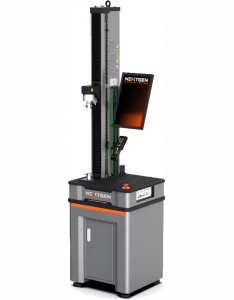
NG-EML Series A – Single-Column Universal Testing Machine (50 N – 5 kN)
NG-EML Series A is a compact single-column benchtop universal testing machine for low-force tensile, compression, and flexural testing. Covering 50 N to 5 kN capacity options, it is suited for rubber, plastics, adhesives, films, foams, wires, metals, composites, and consumer products. Its electromechanical frame, high-speed servo actuation, GenTest software, and standards support make it practical for R&D and routine QC.
Read more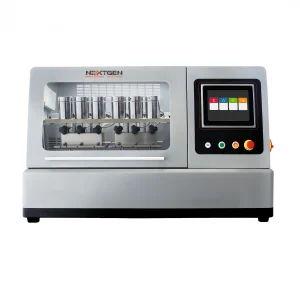
NG-HDT – HDT/Vicat Testing Machine for Plastics
NG-HDT is an HDT/Vicat testing machine for measuring heat deflection temperature and Vicat softening temperature of thermoplastics, including pipes and fittings. Available in 3- and 6-station configurations, it uses a touchscreen industrial PC, Class A temperature sensing, LVDT displacement measurement, controlled linear heating, and an oil bath rated to 300°C to support QA/QC, material development, and standards-based thermal analysis.
Read more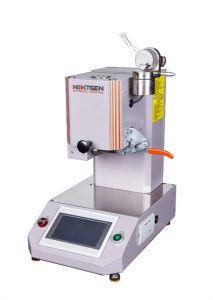
Melt Flow Indexer
The Melt Flow Indexer measures melt flow rate, melt index, and melt volume rate of thermoplastic materials for quality control, research, and material development. With a broad measuring range, 7-inch display, mass or volume method selection, precise temperature control, optical displacement measurement, automatic cutting, microcomputer control, and result printing, it helps labs evaluate viscosity, processability, and batch consistency according to ISO, ASTM, DIN, BS, and JIS methods.
Read more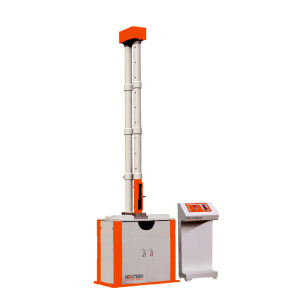
NG-ImpactFall – Falling Weight Impact Tester
NG-ImpactFall is a falling weight impact tester for evaluating external impact resistance of plastic pipes, fittings, boards, and other non-metal materials. Designed around ISO 3127, ISO 4422, and ASTM D2444 methods, it supports controlled drop heights, interchangeable hammer weights, multiple striker noses, and pipe diameters from φ16 to φ4000 mm for reliable QC, durability assessment, and standards-based product validation.
Read more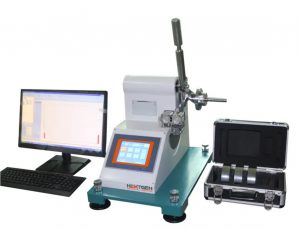
High-Energy Elmendorf Tearing Tester
NG-HE Elmendorf is a high-energy tearing strength tester for plastics, films, textiles, paper, and other flexible materials. It supports tear-force ranges up to 128 N with pneumatic clamping, automatic testing, result calculation, and data reporting. Compliance with standards such as ASTM D1424, DIN 53862, and ISO 13937-1 makes it useful for quality control and material comparison.
Read more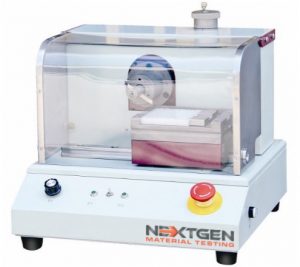
GenNotch 3000 – Motorized Multi-Specimen Notching and Broaching Machine
GenNotch 3000 is a motorized multi-specimen notching and broaching machine for preparing plastic specimens before Charpy and Izod impact testing. It holds up to 20 samples and can process 60 specimens in about 10 minutes, helping laboratories improve throughput. Adjustable feeding, controlled knife movement, ASTM D256, ASTM D6110, ISO 179, and ISO 180 compliance support consistent, standards-ready notches.
Read more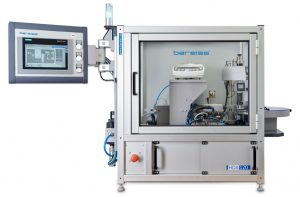
HDA 120 – Hardness and Density Automation System
HDA 120 is a semi-automatic hardness and density automation system for rubber and plastic sample characterization. It can handle up to 20 samples, perform three hardness measurements on a rotary table, and transfer specimens for density determination using a pneumatic gripping system. Data interfaces, touchscreen operation, ISO-compliant methods, and automated handling help improve throughput, traceability, and repeatability.
Read more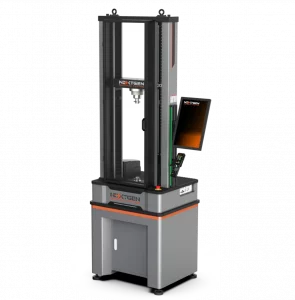
NG-EML Series B – Dual-Column Universal Testing Machine (100 N – 10 kN)
NG-EML Series B is a dual-column benchtop electromechanical universal testing machine for precision testing from 100 N to 10 kN. Built for research and industrial labs, it supports tension, compression, flexural, and component testing of composites, high-strength metals, polymers, films, foams, and rubber. Its compact rigid frame, advanced control accuracy, and GenTest software help deliver repeatable results in limited lab space.
Read more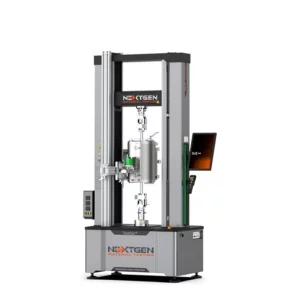
NG-EML Series C – Dual-Column Universal Testing Machine (5–50 kN)
NG-EML Series C is a dual-column electromechanical universal testing machine available in bench-top and floor-standing formats from 5 kN to 50 kN. Built for tension, compression, flexural, shear, and peel testing, it combines Class 0.5 accuracy, a servo direct-drive system, high-rigidity frame, touchscreen control, and GenTest software to support precise testing of metals, composites, rubber, plastics, and polymers.
Read more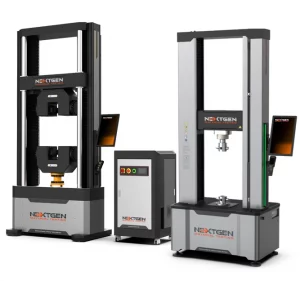
NG-EML Series D – Floor-Standing Universal Testing Machine (50–1000 kN)
NG-EML Series D is a heavy-duty floor-standing electromechanical universal testing machine for high-capacity tensile, compression, and flexural testing. Available from 50 kN to 1000 kN, it is built for high-strength steels, advanced composites, alloys, and challenging research materials. Its rigid dual-column frame, servo direct-drive system, closed-loop control, safety protections, and GenTest software support stable, accurate testing.
Read more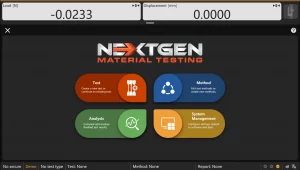
GenTest – Advanced UTM Testing Software
GenTest is NextGen’s advanced UTM testing software for electromechanical universal testing machines, managing test setup, live control, data acquisition, calculations, curves, and reporting from one method-driven environment. Preconfigured ASTM, ISO, DIN, EN, and BS templates help operators load the correct control mode, speeds, gauge length, formulas, and result fields for tensile, compression, and flexural tests.
Read more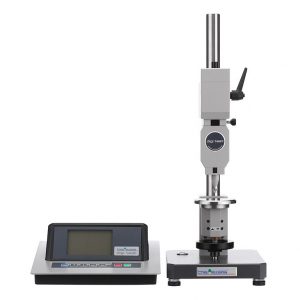
Automatic Shore, IRHD and VLRH Hardness Testing System
Digi Test II is an automatic Shore, IRHD, and VLRH hardness testing system for rubber, plastics, foams, elastomers, O-rings, tubes, hoses, and shaped parts. It combines an electronic control unit, loading module, test stand, and interchangeable measuring heads with automatic range recognition, programmable measuring time, USB output, and low-operator-influence operation. DIN, ISO, ASTM, BS, and DAkkS certificate support strengthen repeatability.
Read more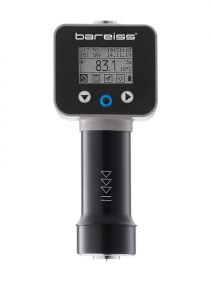
Portable Shore Durometer System with Test Stand
HPE III is an advanced portable Shore durometer system for hardness testing of rubber, plastics, and related materials. It measures hardness while also displaying specimen or environmental temperature and humidity, helping users track conditions during testing. A large LCD display, aluminum casing, patented ergonomic hand grip, USB connection, historical data display, rechargeable operation, and compatible manual or automatic test stands improve repeatability.
Read more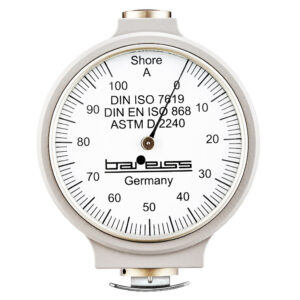
Analogue Shore Durometer with Test Stand
The Classic Analogue Shore Durometer is a German-manufactured hardness tester for rubber and plastic materials, available with manual or automatic test stand options. Known as a long-standing Shore hardness benchmark, it supports portable measurements, ergonomic operation, reference blocks, control rings, calibration accessories, and DAkkS/DKD certificate options. DIN 53505, EN ISO 868, ASTM D2240, and JIS K 6253 compatibility supports reliable verification.
Read more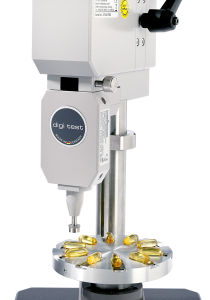
Capsule and Soft Gel Hardness Tester
Gelomat is an automatic capsule and soft gel hardness tester for gelatin capsules, softgels, plasticine, edible gelatin, and similar materials. Available with 0–2 N or 0–20 N measuring heads, it supports non-destructive hardness testing with automatic measurement, clear electronic display, USB data transfer, auto correction, hysteresis function, and optional custom Centrofix holders for precise capsule centering and efficient pharmaceutical-style QC.
Read more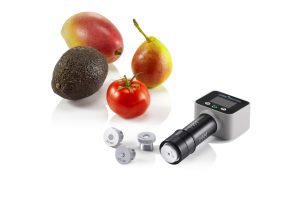
Fruit Firmness Tester
NextGen’s Fruit Firmness Tester is a portable German-manufactured device for measuring firmness in fruits, vegetables, meat, and fish. Interchangeable anvils support applications from berries and tomatoes to apples, avocados, carrots, cucumbers, and other produce. Ergonomic handheld design, digital readout, foam-fitted case, calibration accessories, USB or mobile data options, and objective force-based measurement help growers, distributors, and researchers assess ripeness and quality.
Read more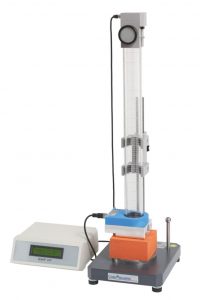
Ball Rebound Tester
The Ball Rebound Tester measures rebound resilience in foam, polyurethane, rubber, and similar materials. Designed for DIN EN ISO 8307 and ASTM D3574 testing, it drops a 16 mm magnetic ball from a controlled 500 mm height and calculates rebound performance through the electronic console. This makes it a practical solution for quality control, material comparison, and repeatable resilience evaluation.
Read more
Pendulum Rebound Resilience Tester
NextGen’s Pendulum Rebound Resilience Tester measures the elastic recovery and dynamic behavior of elastomers, foams, and rubber materials. Available in manual and fully automatic versions with a digital display terminal, it supports DIN 53512, ASTM D1054, and ISO 4662 workflows. Optional sample heating up to 100°C helps laboratories compare formulations, aging effects, fatigue changes, and heat-related resilience performance.
Read more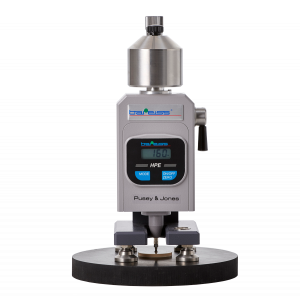
Pusey and Jones Tester
Pusey & Jones Tester is a portable plastometer system for measuring hardness and indentation behavior of rubber and rubber-like materials, especially rubber rollers used in the paper industry. It applies a 9.8 N test load and reads penetration depth after a 60-second test. An electronic dial gauge, zero-setting function, 1 kg load weight, built-in timer, and optional software support repeatable reporting.
Read more