
Metal Testing Equipment
Acceptance of a metal, a weld or a fastener usually comes down to one curve: force against extension. Universal testing machines produce that curve by pulling, compressing, bending and shearing the specimen at a controlled speed. NextGen builds frames for metals, welds, fasteners and wire, and for the plastics, films, composites and textiles that share the same platform, covering ASTM E8 and ISO 6892-1 for metals and ASTM D638 and ISO 527 for polymers.
Capacities run from benchtop electromechanical frames for film and fine wire to floor-standing servo-hydraulic systems for structural steel and fasteners, with grips, fixtures and extensometers chosen for the material rather than treated as a generic accessory. Every machine is installed on site and verified to ISO 7500, your operators are trained on it, and support continues for the life of the frame.
For Laboratories
One partner to equip your complete metals laboratory
Universal testing machines are the centre of a metals laboratory. NextGen equips the rest of it too, from grips and fixtures to impact testing, hardness, metallography and specimen preparation, and stays responsible for it after delivery.
- Equipment, fixtures and software
- Installation, training, calibration
- Lifetime technical support
Sub-categories
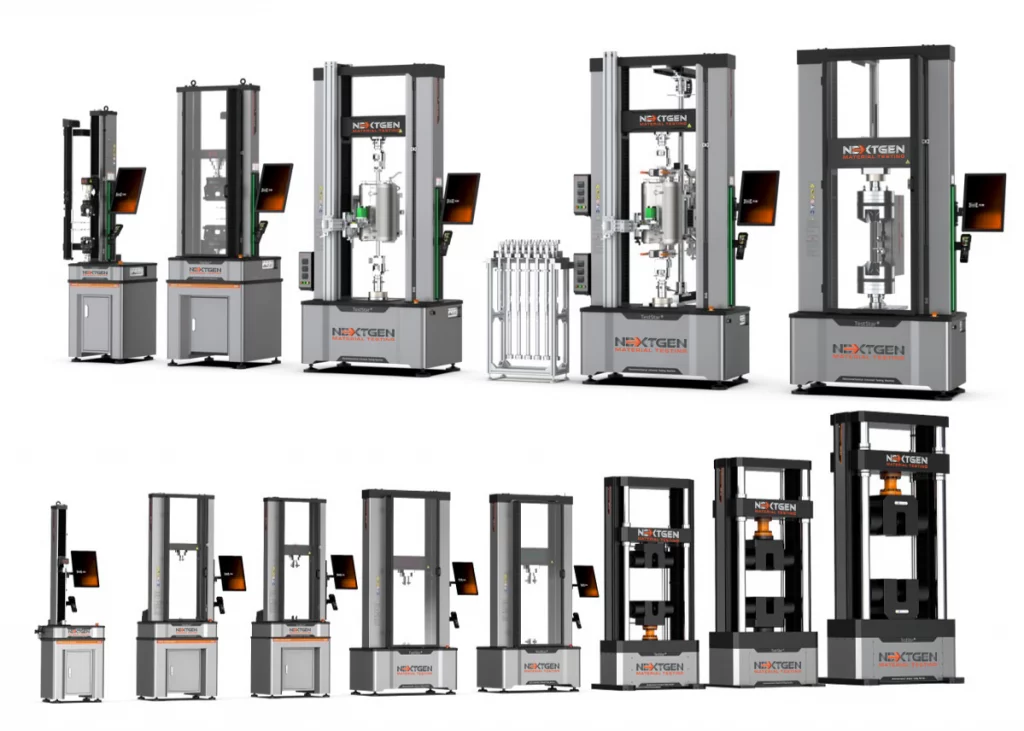 Sub-category · 32 products
Electromechanical Universal Testing Machines
Electromechanical universal testing machines are used for precise tensile, compression, flexural, peel, tear, and other mechanical tests on metals and advanced materials. This category focuses on motor-driven load frames with accurate speed control, stiff construction, and software-guided test methods. They are suitable for laboratories and production facilities that need repeatable results, broad material versatility, and efficient standards-based testing workflows.
Open
Sub-category · 32 products
Electromechanical Universal Testing Machines
Electromechanical universal testing machines are used for precise tensile, compression, flexural, peel, tear, and other mechanical tests on metals and advanced materials. This category focuses on motor-driven load frames with accurate speed control, stiff construction, and software-guided test methods. They are suitable for laboratories and production facilities that need repeatable results, broad material versatility, and efficient standards-based testing workflows.
Open
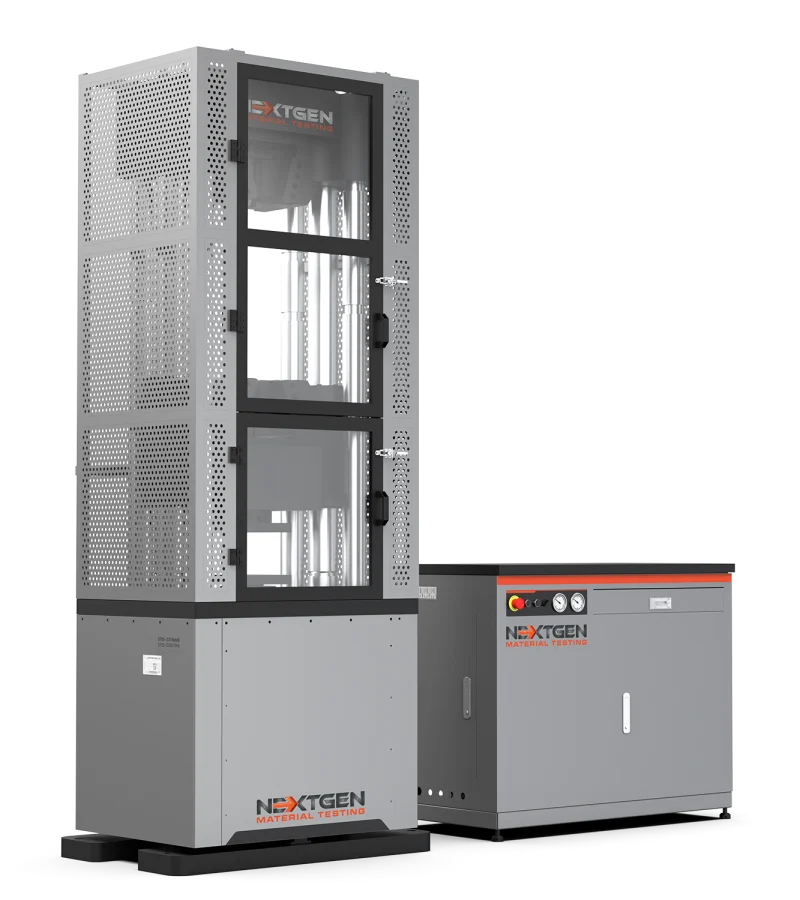 Sub-category · 29 products
Servo-Hydraulic Static Universal Testing Machines
Servo-hydraulic static universal testing machines are built for high-force tensile, compression, flexural, bending, and shear testing of metals, composites, and structural materials. This category supports applications that exceed typical electromechanical frame limits and require stable hydraulic load control. Configurable frames, hydraulic grips, compression platens, fixtures, control software, and certification support make them suitable for heavy industrial and laboratory testing workflows.
Open
Sub-category · 29 products
Servo-Hydraulic Static Universal Testing Machines
Servo-hydraulic static universal testing machines are built for high-force tensile, compression, flexural, bending, and shear testing of metals, composites, and structural materials. This category supports applications that exceed typical electromechanical frame limits and require stable hydraulic load control. Configurable frames, hydraulic grips, compression platens, fixtures, control software, and certification support make them suitable for heavy industrial and laboratory testing workflows.
Open
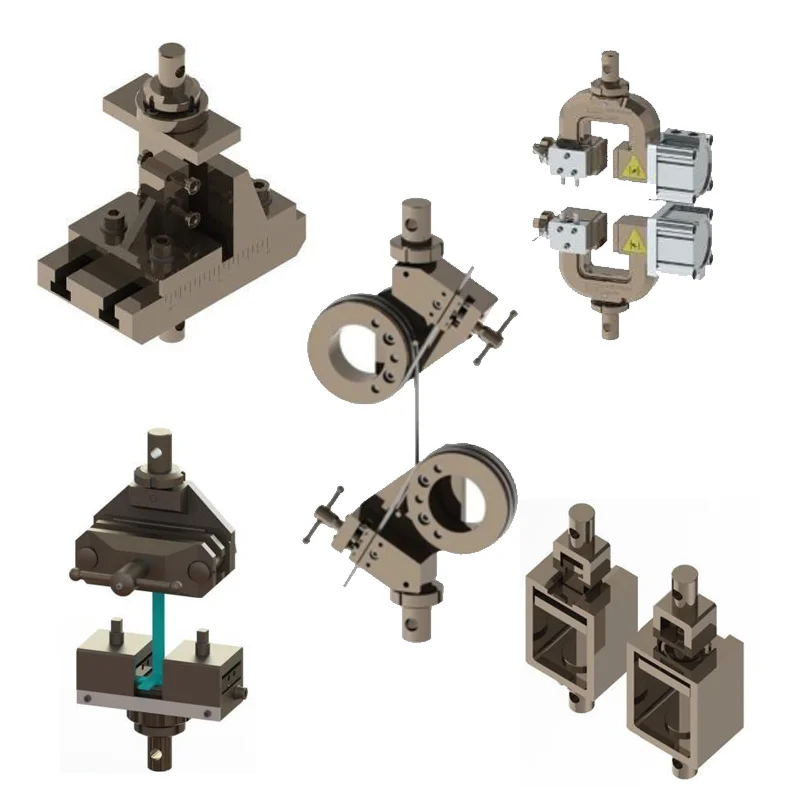 Sub-category · 26 products
Grips and Fixtures for NextGen Universal Testing Machines (UTMs)
UTM grips and fixtures allow universal testing machines to hold specimens securely and apply tensile, compression, flexural, shear, peel, tear, or puncture forces correctly. This category includes accessories for different materials, specimen geometries, load ranges, and testing methods. Proper fixture selection improves alignment, reduces slippage, protects specimens, increases throughput, and helps laboratories achieve accurate, repeatable, standards-compliant mechanical test results.
Open
Sub-category · 26 products
Grips and Fixtures for NextGen Universal Testing Machines (UTMs)
UTM grips and fixtures allow universal testing machines to hold specimens securely and apply tensile, compression, flexural, shear, peel, tear, or puncture forces correctly. This category includes accessories for different materials, specimen geometries, load ranges, and testing methods. Proper fixture selection improves alignment, reduces slippage, protects specimens, increases throughput, and helps laboratories achieve accurate, repeatable, standards-compliant mechanical test results.
Open
1
Electromechanical frames
Screw driven machines for tension, compression and bend
4
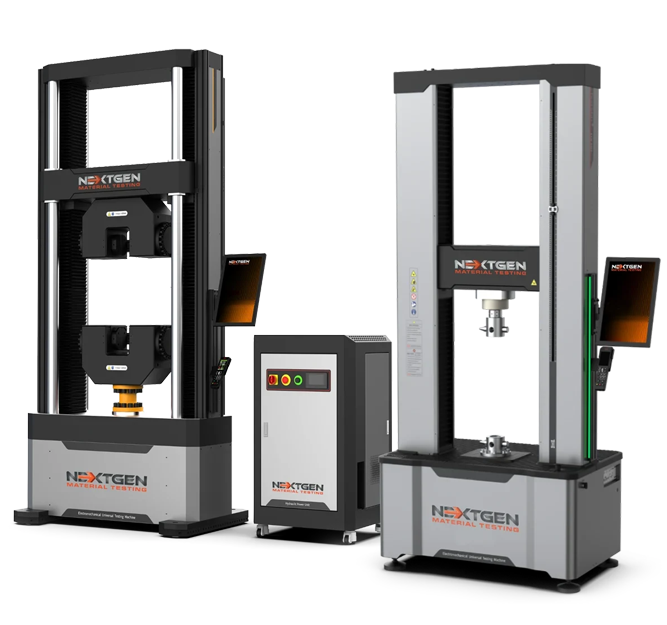 1000 kN
NG-EML Series D – Floor-Standing Universal Testing Machine
NG-EML Series D is a heavy-duty floor-standing electromechanical universal testing machine for high-capacity tensile,…
View product
1000 kN
NG-EML Series D – Floor-Standing Universal Testing Machine
NG-EML Series D is a heavy-duty floor-standing electromechanical universal testing machine for high-capacity tensile,…
View product
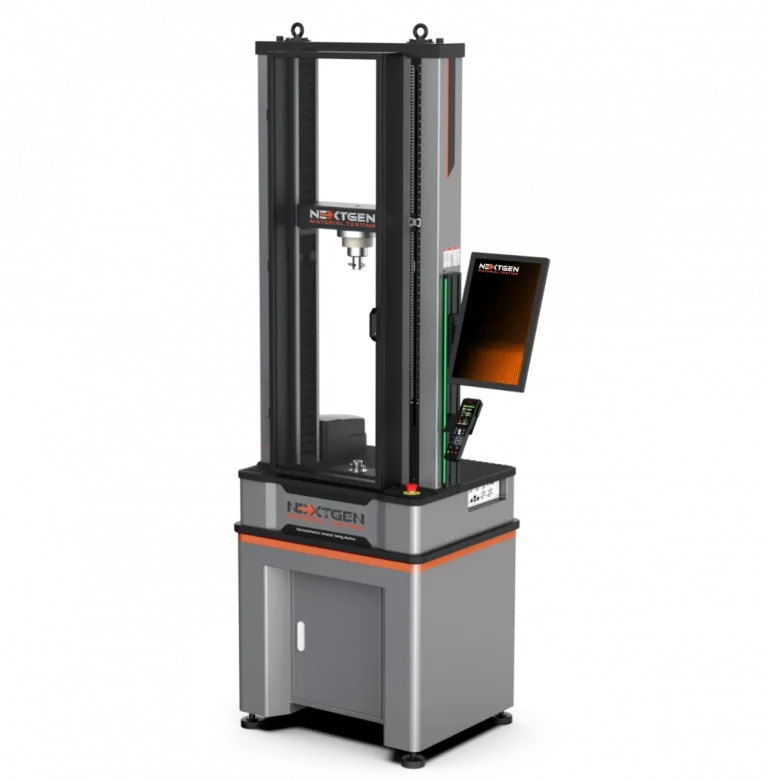 10 kN
NG-EML Series B – Dual-Column Universal Testing Machine
NG-EML Series B is a dual-column benchtop electromechanical universal testing machine for precision testing from 100…
View product
10 kN
NG-EML Series B – Dual-Column Universal Testing Machine
NG-EML Series B is a dual-column benchtop electromechanical universal testing machine for precision testing from 100…
View product
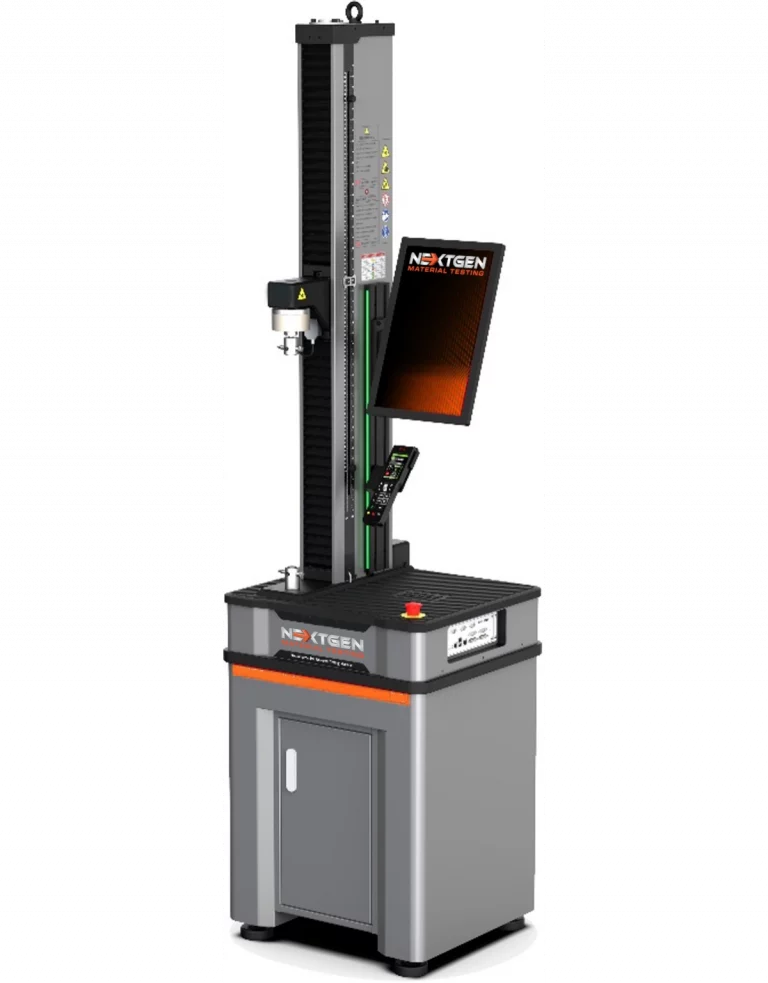 5 kN
NG-EML Series A – Single-Column Universal Testing Machine
NG-EML Series A is a compact single-column benchtop universal testing machine for low-force tensile, compression, and…
View product
5 kN
NG-EML Series A – Single-Column Universal Testing Machine
NG-EML Series A is a compact single-column benchtop universal testing machine for low-force tensile, compression, and…
View product
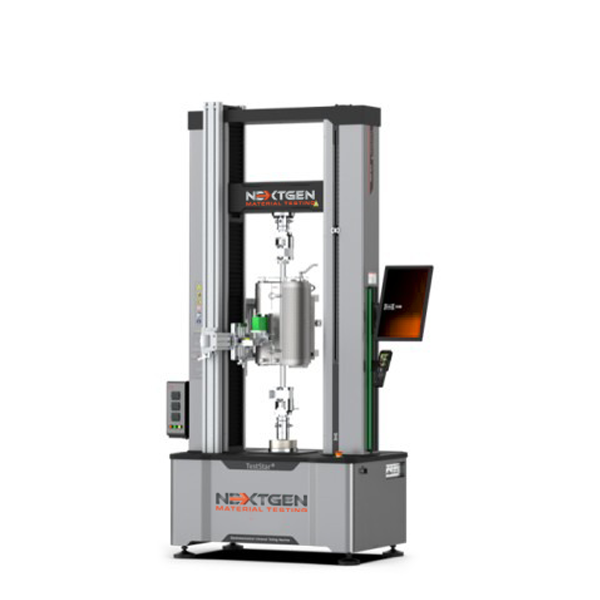 50 kN
NG-EML Series C – Dual-Column Universal Testing Machine
NG-EML Series C is a dual-column electromechanical universal testing machine available in bench-top and…
View product
50 kN
NG-EML Series C – Dual-Column Universal Testing Machine
NG-EML Series C is a dual-column electromechanical universal testing machine available in bench-top and…
View product
2
Servo-hydraulic frames
Hydraulic actuators where the force runs into hundreds of kilonewtons
5
Most requested
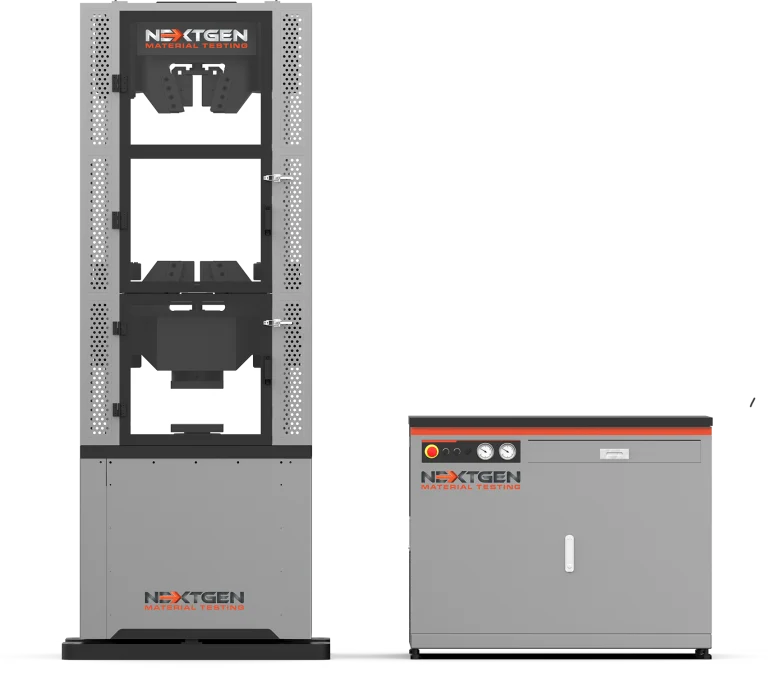 NG-SHM Series A – Servo-Hydraulic Universal Testing Machine
NG-SHM Series A is a high-force servo-hydraulic universal testing machine for static mechanical testing of metals and…
View product
NG-SHM Series A – Servo-Hydraulic Universal Testing Machine
NG-SHM Series A is a high-force servo-hydraulic universal testing machine for static mechanical testing of metals and…
View product
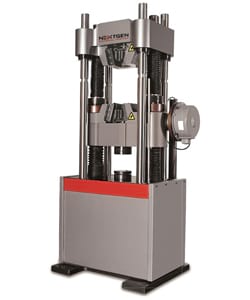 NG-SHM Class B – Servo-Hydraulic Universal Testing Machine
NG-SHM Class B is a high-force servo-hydraulic universal testing machine for tensile, compression, and flexural…
View product
NG-SHM Class B – Servo-Hydraulic Universal Testing Machine
NG-SHM Class B is a high-force servo-hydraulic universal testing machine for tensile, compression, and flexural…
View product
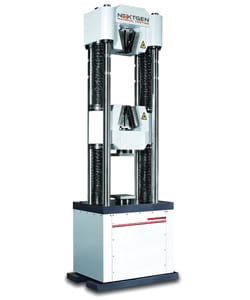 NG-SHM Class C – Servo-Hydraulic Universal Testing Machine
NG-SHM Class C is a servo-hydraulic universal testing machine for high-force metal testing, with capacity options of…
View product
NG-SHM Class C – Servo-Hydraulic Universal Testing Machine
NG-SHM Class C is a servo-hydraulic universal testing machine for high-force metal testing, with capacity options of…
View product
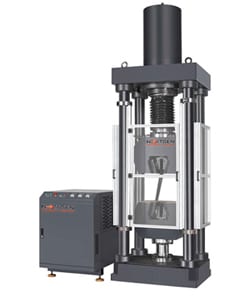 NG-SHM Class D – Servo-Hydraulic Universal Testing Machine
NG-SHM Class D is a servo-hydraulic universal testing machine for high-force mechanical testing of metals and…
View product
NG-SHM Class D – Servo-Hydraulic Universal Testing Machine
NG-SHM Class D is a servo-hydraulic universal testing machine for high-force mechanical testing of metals and…
View product
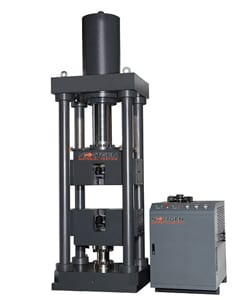 NG-SHM Class DP – Servo-Hydraulic Universal Testing Machine
NG-SHM Class DP is a high-force servo-hydraulic testing machine with an upper actuator, single-zone test space, and…
View product
NG-SHM Class DP – Servo-Hydraulic Universal Testing Machine
NG-SHM Class DP is a high-force servo-hydraulic testing machine with an upper actuator, single-zone test space, and…
View product
NG-SHM Series A – Servo-Hydraulic Universal Testing Machine
NG-SHM Series A is a high-force servo-hydraulic universal testing machine for static mechanical testing of metals and…
View product
NG-SHM Class B – Servo-Hydraulic Universal Testing Machine
NG-SHM Class B is a high-force servo-hydraulic universal testing machine for tensile, compression, and flexural…
View product
NG-SHM Class C – Servo-Hydraulic Universal Testing Machine
NG-SHM Class C is a servo-hydraulic universal testing machine for high-force metal testing, with capacity options of…
View product
NG-SHM Class D – Servo-Hydraulic Universal Testing Machine
NG-SHM Class D is a servo-hydraulic universal testing machine for high-force mechanical testing of metals and…
View product
NG-SHM Class DP – Servo-Hydraulic Universal Testing Machine
NG-SHM Class DP is a high-force servo-hydraulic testing machine with an upper actuator, single-zone test space, and…
View product
3
Bend and compression
Fixtures that turn the frame into a flexural or compression rig
5
Most requested
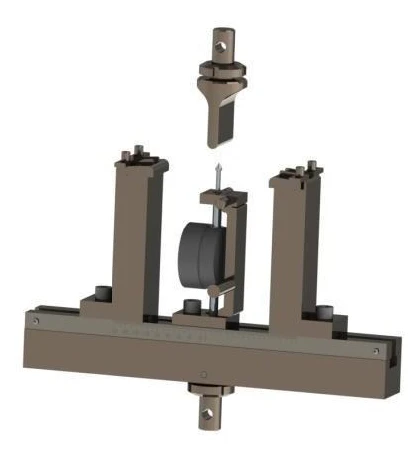 100 kN
3-Point and 4-Point Bending Fixtures for Flexural Testing
These 3-point and 4-point bending fixtures support flexural strength, deformation, and modulus testing of natural…
View product
100 kN
3-Point and 4-Point Bending Fixtures for Flexural Testing
These 3-point and 4-point bending fixtures support flexural strength, deformation, and modulus testing of natural…
View product
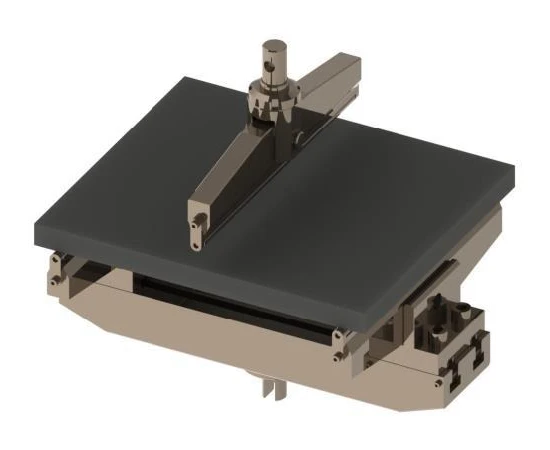 300 kN
3-Point Bending Fixtures for Flexural Testing
These bending fixtures support standard 3-point flexural testing of plastics, composites, metals, ceramics, alloys,…
View product
300 kN
3-Point Bending Fixtures for Flexural Testing
These bending fixtures support standard 3-point flexural testing of plastics, composites, metals, ceramics, alloys,…
View product
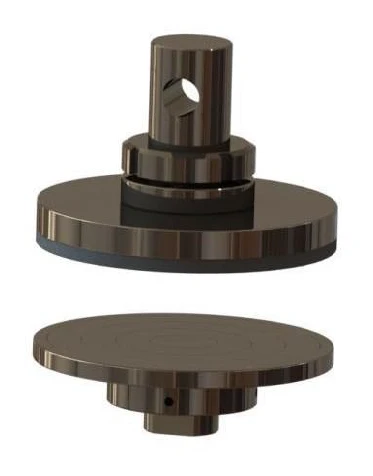 300 kN
Compression Fixtures for Rigid Samples
Compression fixtures provide aligned axial loading for rigid samples tested on NG-EML and SHM universal testing…
View product
300 kN
Compression Fixtures for Rigid Samples
Compression fixtures provide aligned axial loading for rigid samples tested on NG-EML and SHM universal testing…
View product
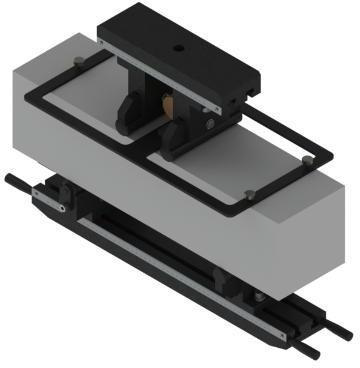 2000 kN
Flexure Fixtures for Large and Brittle Specimens
These flexure fixtures are designed for precise bending tests on large, brittle, or high-strength specimens,…
View product
2000 kN
Flexure Fixtures for Large and Brittle Specimens
These flexure fixtures are designed for precise bending tests on large, brittle, or high-strength specimens,…
View product
 2000 kN
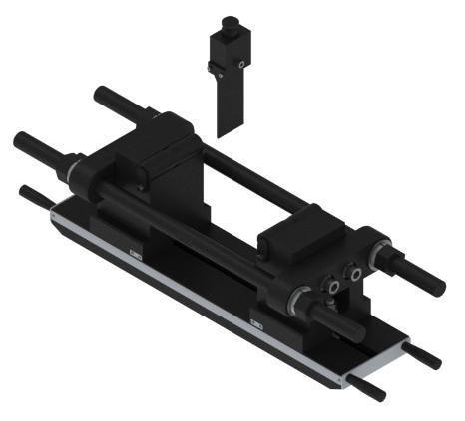
Heavy-Duty Bending Fixtures for Hydraulic Flexural Testing
Heavy-duty bending fixtures support high-force flexural testing of metals, composites, ceramics, reinforcing bars,…
View product
2000 kN
Heavy-Duty Bending Fixtures for Hydraulic Flexural Testing
Heavy-duty bending fixtures support high-force flexural testing of metals, composites, ceramics, reinforcing bars,…
View product
100 kN
3-Point and 4-Point Bending Fixtures for Flexural Testing
These 3-point and 4-point bending fixtures support flexural strength, deformation, and modulus testing of natural…
View product
300 kN
3-Point Bending Fixtures for Flexural Testing
These bending fixtures support standard 3-point flexural testing of plastics, composites, metals, ceramics, alloys,…
View product
300 kN
Compression Fixtures for Rigid Samples
Compression fixtures provide aligned axial loading for rigid samples tested on NG-EML and SHM universal testing…
View product
2000 kN
Flexure Fixtures for Large and Brittle Specimens
These flexure fixtures are designed for precise bending tests on large, brittle, or high-strength specimens,…
View product
2000 kN
Heavy-Duty Bending Fixtures for Hydraulic Flexural Testing
Heavy-duty bending fixtures support high-force flexural testing of metals, composites, ceramics, reinforcing bars,…
View product
4
Grips and fixtures
What holds the specimen decides whether the result is valid
15
Most requested
 20 kN
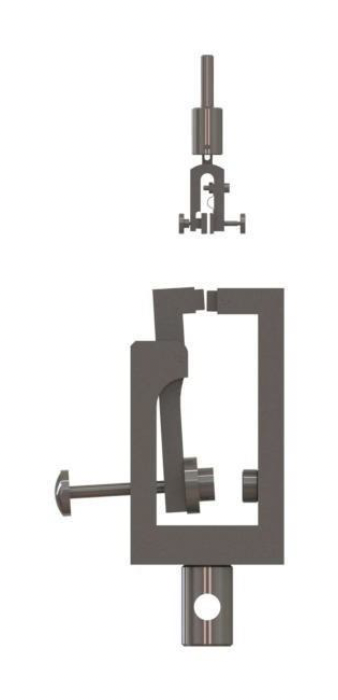
Side-Action Tensile Grips
Side action tensile grips provide quick, secure clamping for films, thin sheets, textiles, fine wires, polymer…
View product
20 kN
Side-Action Tensile Grips
Side action tensile grips provide quick, secure clamping for films, thin sheets, textiles, fine wires, polymer…
View product
 300 kN
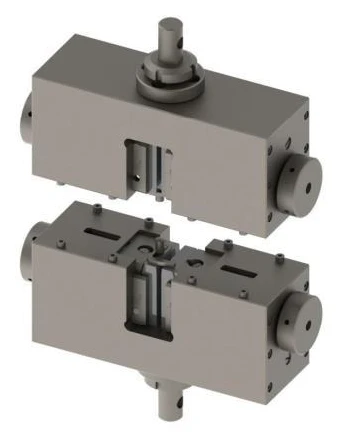
Wedge Tensile Grips for Metals and Composites
Wedge tensile grips are built for high-load tensile testing of flat and round specimens made from metals, composites,…
View product
300 kN
Wedge Tensile Grips for Metals and Composites
Wedge tensile grips are built for high-load tensile testing of flat and round specimens made from metals, composites,…
View product
 10 kN
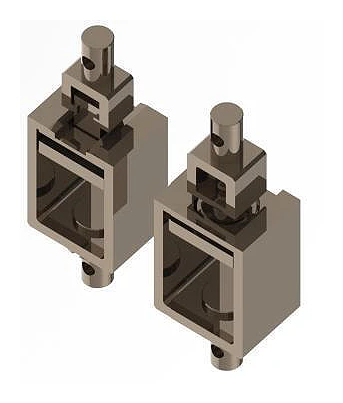
Grips and Fixtures for Wood Testing
These wood testing grips and fixtures support tensile, shear, flexural, internal bond, and fastener-related…
View product
10 kN
Grips and Fixtures for Wood Testing
These wood testing grips and fixtures support tensile, shear, flexural, internal bond, and fastener-related…
View product
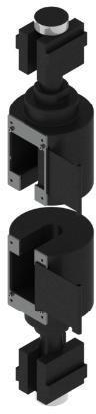 2000 kN
Grips and Fixtures for Hydraulic Universal Testing Machines
Grips and fixtures for hydraulic universal testing machines are built for high-force tensile, shear, proof load,…
View product
2000 kN
Grips and Fixtures for Hydraulic Universal Testing Machines
Grips and fixtures for hydraulic universal testing machines are built for high-force tensile, shear, proof load,…
View product
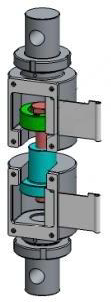 300 kN
Threaded Grips for Bolt and Nut Testing
Threaded grips for bolt and nut tensile testing provide secure axial loading for bolts, studs, nuts, and other…
View product
300 kN
Threaded Grips for Bolt and Nut Testing
Threaded grips for bolt and nut tensile testing provide secure axial loading for bolts, studs, nuts, and other…
View product
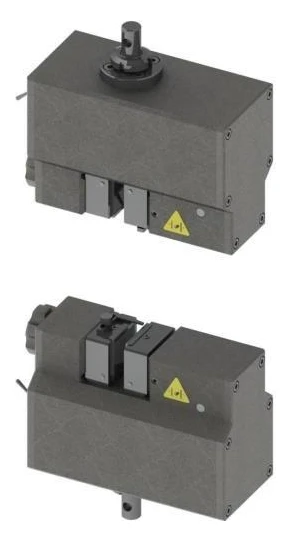 100 kN
Pneumatic Grips for Fast and Repeatable Clamping
Pneumatic grips provide fast, repeatable air-actuated clamping for universal testing machines in high-throughput…
View product
100 kN
Pneumatic Grips for Fast and Repeatable Clamping
Pneumatic grips provide fast, repeatable air-actuated clamping for universal testing machines in high-throughput…
View product
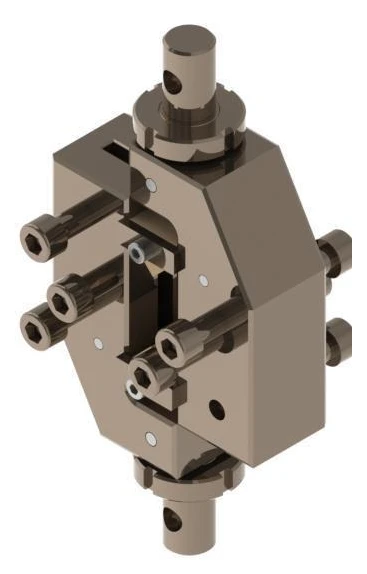 100 kN
Composite Grips and Fixtures for Tensile and Shear Testing
Composite grips and fixtures are engineered for tensile, compression, shear, bending, peel, and delamination testing…
View product
100 kN
Composite Grips and Fixtures for Tensile and Shear Testing
Composite grips and fixtures are engineered for tensile, compression, shear, bending, peel, and delamination testing…
View product
 2000 kN
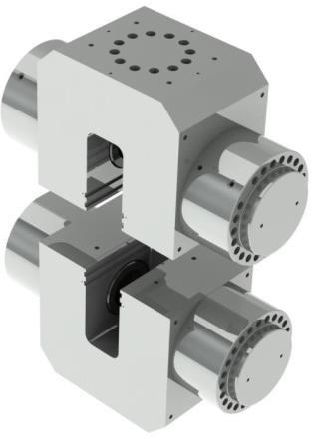
Dual-Action Hydraulic Wedge Grips for High-Capacity Testing
Dual-Action Hydraulic Grips are high-capacity wedge-clamping fixtures for tensile testing on universal testing…
View product
2000 kN
Dual-Action Hydraulic Wedge Grips for High-Capacity Testing
Dual-Action Hydraulic Grips are high-capacity wedge-clamping fixtures for tensile testing on universal testing…
View product
 1 kN
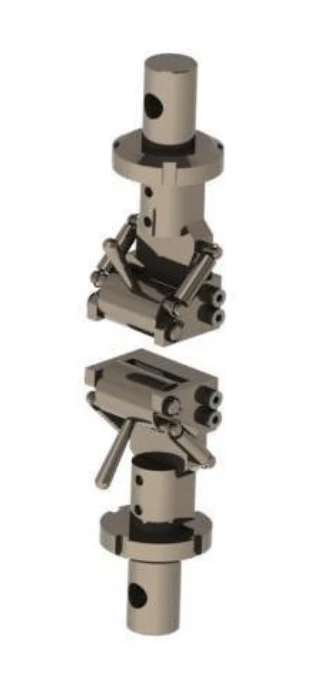
Eccentric Roller Grips for Thin and Flexible Specimens
Eccentric roller grips are built for low-force tensile testing of thin, soft, and flexible specimens such as rubber…
View product
1 kN
Eccentric Roller Grips for Thin and Flexible Specimens
Eccentric roller grips are built for low-force tensile testing of thin, soft, and flexible specimens such as rubber…
View product
 5 kN
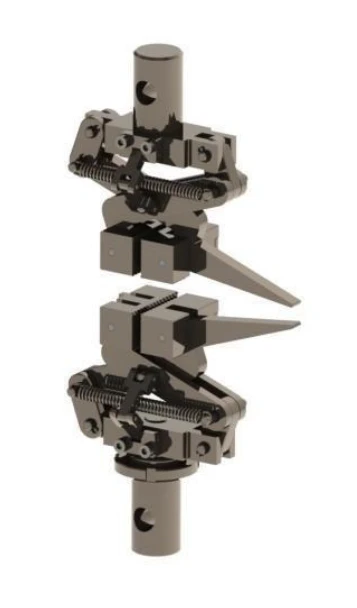
Self-Tightening Grips for Elastic Materials
Self-tightening grips are designed for tensile testing of deformable, elastic, or low-friction materials such as…
View product
5 kN
Self-Tightening Grips for Elastic Materials
Self-tightening grips are designed for tensile testing of deformable, elastic, or low-friction materials such as…
View product
 5 kN
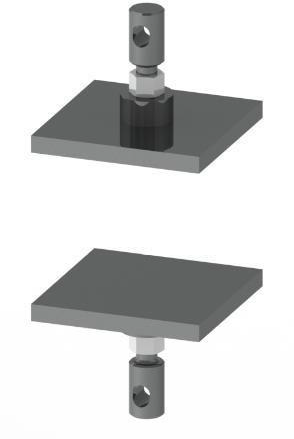
Shoulder Fixtures for Pull-Off Testing
Shoulder fixtures are specialized tensile grips for specimens and components with shoulder geometries, where…
View product
5 kN
Shoulder Fixtures for Pull-Off Testing
Shoulder fixtures are specialized tensile grips for specimens and components with shoulder geometries, where…
View product
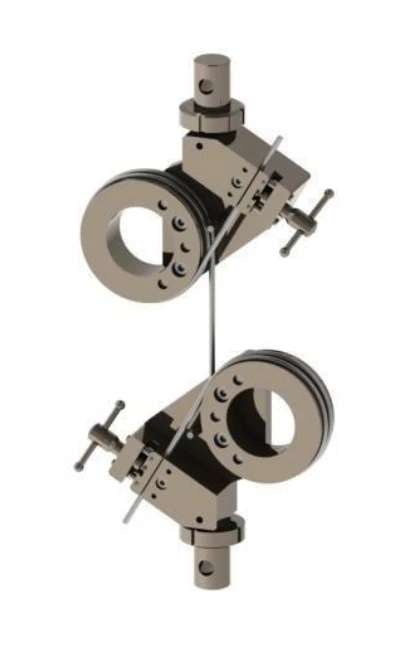 100 kN
Snubbing Grips for Wire and Cable Testing
Snubbing grips, also known as capstan grips, are designed for tensile testing of wires, cables, ropes, textile…
View product
100 kN
Snubbing Grips for Wire and Cable Testing
Snubbing grips, also known as capstan grips, are designed for tensile testing of wires, cables, ropes, textile…
View product
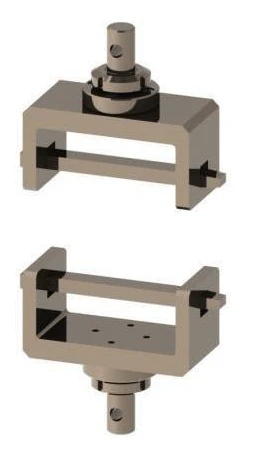 100 kN
Specialized Grips and Fixtures for Tear, Peel and Puncture Testing
These specialized grips and fixtures expand UTM testing capabilities for tear, peel, puncture, shear, and unique…
View product
100 kN
Specialized Grips and Fixtures for Tear, Peel and Puncture Testing
These specialized grips and fixtures expand UTM testing capabilities for tear, peel, puncture, shear, and unique…
View product
 2000 kN
Splitting Fixtures for Rock and Concrete Testing
Splitting fixtures for indirect tensile testing are designed for rock, concrete, and composite specimens tested on…
View product
2000 kN
Splitting Fixtures for Rock and Concrete Testing
Splitting fixtures for indirect tensile testing are designed for rock, concrete, and composite specimens tested on…
View product
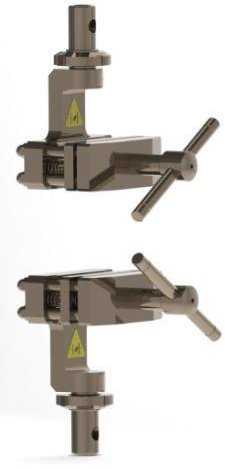 300 kN
TestStar Series Grips and Fixtures for Hydraulic UTMs
TestStar® Series grips and fixtures are high-precision accessories for integrating tensile, snubbing, wedge-action,…
View product
300 kN
TestStar Series Grips and Fixtures for Hydraulic UTMs
TestStar® Series grips and fixtures are high-precision accessories for integrating tensile, snubbing, wedge-action,…
View product
20 kN
Side-Action Tensile Grips
Side action tensile grips provide quick, secure clamping for films, thin sheets, textiles, fine wires, polymer…
View product
300 kN
Wedge Tensile Grips for Metals and Composites
Wedge tensile grips are built for high-load tensile testing of flat and round specimens made from metals, composites,…
View product
10 kN
Grips and Fixtures for Wood Testing
These wood testing grips and fixtures support tensile, shear, flexural, internal bond, and fastener-related…
View product
2000 kN
Grips and Fixtures for Hydraulic Universal Testing Machines
Grips and fixtures for hydraulic universal testing machines are built for high-force tensile, shear, proof load,…
View product
300 kN
Threaded Grips for Bolt and Nut Testing
Threaded grips for bolt and nut tensile testing provide secure axial loading for bolts, studs, nuts, and other…
View product
100 kN
Pneumatic Grips for Fast and Repeatable Clamping
Pneumatic grips provide fast, repeatable air-actuated clamping for universal testing machines in high-throughput…
View product
100 kN
Composite Grips and Fixtures for Tensile and Shear Testing
Composite grips and fixtures are engineered for tensile, compression, shear, bending, peel, and delamination testing…
View product
2000 kN
Dual-Action Hydraulic Wedge Grips for High-Capacity Testing
Dual-Action Hydraulic Grips are high-capacity wedge-clamping fixtures for tensile testing on universal testing…
View product
1 kN
Eccentric Roller Grips for Thin and Flexible Specimens
Eccentric roller grips are built for low-force tensile testing of thin, soft, and flexible specimens such as rubber…
View product
5 kN
Self-Tightening Grips for Elastic Materials
Self-tightening grips are designed for tensile testing of deformable, elastic, or low-friction materials such as…
View product
5 kN
Shoulder Fixtures for Pull-Off Testing
Shoulder fixtures are specialized tensile grips for specimens and components with shoulder geometries, where…
View product
100 kN
Snubbing Grips for Wire and Cable Testing
Snubbing grips, also known as capstan grips, are designed for tensile testing of wires, cables, ropes, textile…
View product
100 kN
Specialized Grips and Fixtures for Tear, Peel and Puncture Testing
These specialized grips and fixtures expand UTM testing capabilities for tear, peel, puncture, shear, and unique…
View product
2000 kN
Splitting Fixtures for Rock and Concrete Testing
Splitting fixtures for indirect tensile testing are designed for rock, concrete, and composite specimens tested on…
View product
300 kN
TestStar Series Grips and Fixtures for Hydraulic UTMs
TestStar® Series grips and fixtures are high-precision accessories for integrating tensile, snubbing, wedge-action,…
View product
5
Alignment and marking
Setting the load train straight and marking the gauge length
2
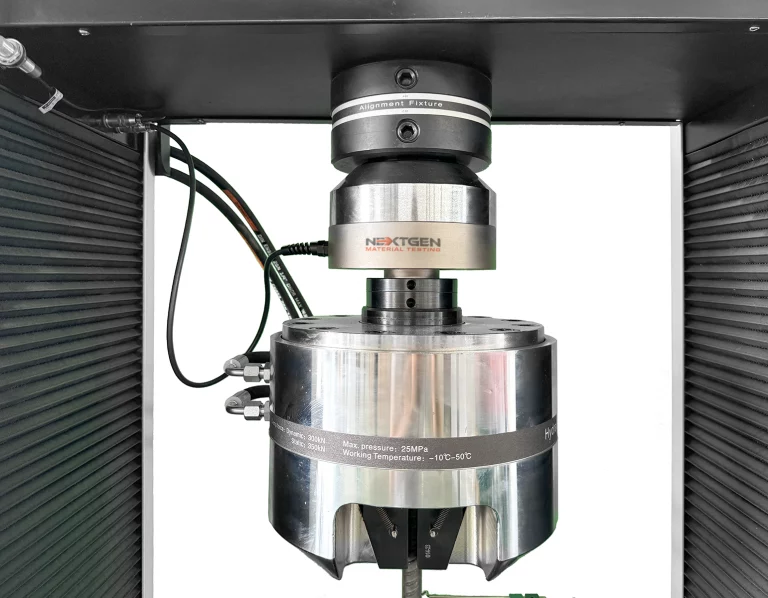 Alignment Device – NADCAP-Ready Precision Fixture
The Alignment Device is a NADCAP-ready precision fixture for verifying and correcting load-frame alignment on…
View product
Alignment Device – NADCAP-Ready Precision Fixture
The Alignment Device is a NADCAP-ready precision fixture for verifying and correcting load-frame alignment on…
View product
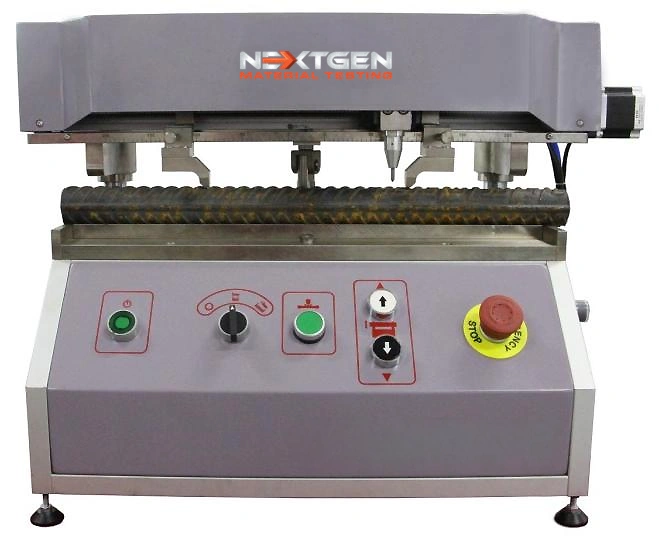 500 mm
GenMark 500 – Automatic Gauge Length Marking Machine
The GenMark 500 is a full-automatic gauge length marking machine for metal bar, rebar and wire rod, applying the…
View product
500 mm
GenMark 500 – Automatic Gauge Length Marking Machine
The GenMark 500 is a full-automatic gauge length marking machine for metal bar, rebar and wire rod, applying the…
View product
6
Software
Running the test and keeping the results
2
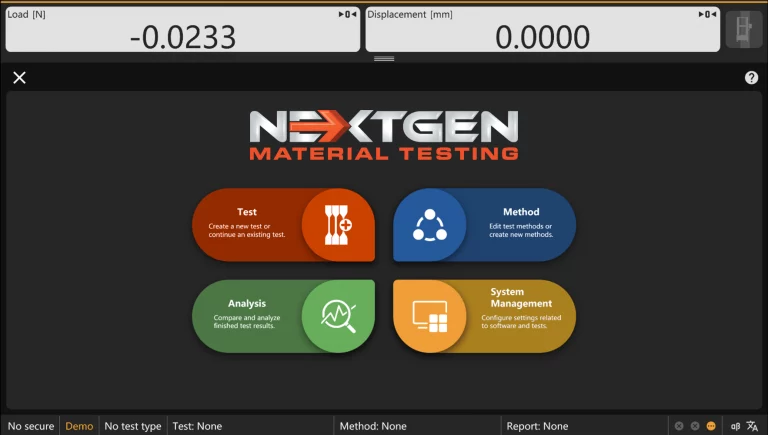 GenTest – Advanced UTM Testing Software
GenTest is NextGen’s advanced UTM testing software for electromechanical universal testing machines, managing test…
View product
GenTest – Advanced UTM Testing Software
GenTest is NextGen’s advanced UTM testing software for electromechanical universal testing machines, managing test…
View product
 GenTest v3.0 Software for Universal Testing Machines
GenTest v3.0 is NextGen’s data acquisition and test control software for universal testing machines, built around…
View product
GenTest v3.0 Software for Universal Testing Machines
GenTest v3.0 is NextGen’s data acquisition and test control software for universal testing machines, built around…
View product
1
Electromechanical frames
Screw driven machines for tension, compression and bend
4
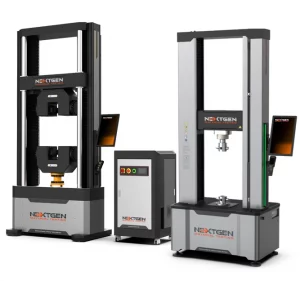 NG-EML Series D – Floor-Standing Universal Testing Machine1000 kN
NG-EML Series D is a heavy-duty floor-standing electromechanical universal testing machine for high-capacity tensile,…
Electromechanical universal testing
NG-EML Series D – Floor-Standing Universal Testing Machine1000 kN
NG-EML Series D is a heavy-duty floor-standing electromechanical universal testing machine for high-capacity tensile,…
Electromechanical universal testing
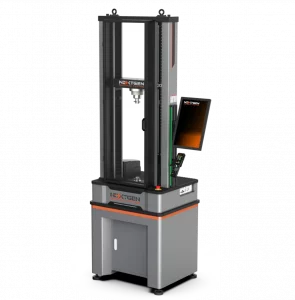 NG-EML Series B – Dual-Column Universal Testing Machine10 kN
NG-EML Series B is a dual-column benchtop electromechanical universal testing machine for precision testing from 100…
Electromechanical universal testing
NG-EML Series B – Dual-Column Universal Testing Machine10 kN
NG-EML Series B is a dual-column benchtop electromechanical universal testing machine for precision testing from 100…
Electromechanical universal testing
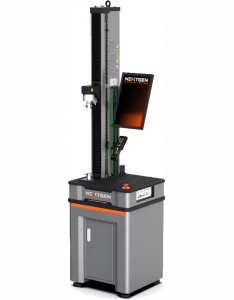 NG-EML Series A – Single-Column Universal Testing Machine5 kN
NG-EML Series A is a compact single-column benchtop universal testing machine for low-force tensile, compression, and…
Electromechanical universal testing
NG-EML Series A – Single-Column Universal Testing Machine5 kN
NG-EML Series A is a compact single-column benchtop universal testing machine for low-force tensile, compression, and…
Electromechanical universal testing
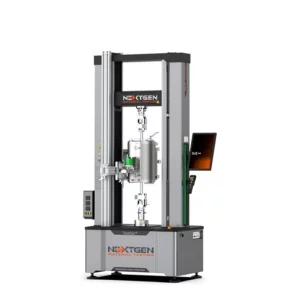 NG-EML Series C – Dual-Column Universal Testing Machine50 kN
NG-EML Series C is a dual-column electromechanical universal testing machine available in bench-top and…
Electromechanical universal testing
NG-EML Series C – Dual-Column Universal Testing Machine50 kN
NG-EML Series C is a dual-column electromechanical universal testing machine available in bench-top and…
Electromechanical universal testing
2
Servo-hydraulic frames
Hydraulic actuators where the force runs into hundreds of kilonewtons
5
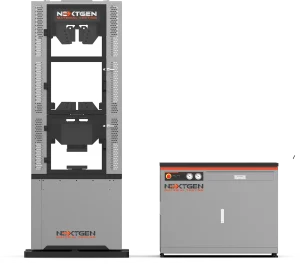 NG-SHM Series A – Servo-Hydraulic Universal Testing Machine
NG-SHM Series A is a high-force servo-hydraulic universal testing machine for static mechanical testing of metals and…
Servo-hydraulic universal testing
NG-SHM Class B – Servo-Hydraulic Universal Testing Machine
NG-SHM Class B is a high-force servo-hydraulic universal testing machine for tensile, compression, and flexural…
Servo-hydraulic universal testing
NG-SHM Class C – Servo-Hydraulic Universal Testing Machine
NG-SHM Class C is a servo-hydraulic universal testing machine for high-force metal testing, with capacity options of…
Servo-hydraulic universal testing
NG-SHM Class D – Servo-Hydraulic Universal Testing Machine
NG-SHM Class D is a servo-hydraulic universal testing machine for high-force mechanical testing of metals and…
Servo-hydraulic universal testing
NG-SHM Class DP – Servo-Hydraulic Universal Testing Machine
NG-SHM Class DP is a high-force servo-hydraulic testing machine with an upper actuator, single-zone test space, and…
Servo-hydraulic universal testing
NG-SHM Series A – Servo-Hydraulic Universal Testing Machine
NG-SHM Series A is a high-force servo-hydraulic universal testing machine for static mechanical testing of metals and…
Servo-hydraulic universal testing
NG-SHM Class B – Servo-Hydraulic Universal Testing Machine
NG-SHM Class B is a high-force servo-hydraulic universal testing machine for tensile, compression, and flexural…
Servo-hydraulic universal testing
NG-SHM Class C – Servo-Hydraulic Universal Testing Machine
NG-SHM Class C is a servo-hydraulic universal testing machine for high-force metal testing, with capacity options of…
Servo-hydraulic universal testing
NG-SHM Class D – Servo-Hydraulic Universal Testing Machine
NG-SHM Class D is a servo-hydraulic universal testing machine for high-force mechanical testing of metals and…
Servo-hydraulic universal testing
NG-SHM Class DP – Servo-Hydraulic Universal Testing Machine
NG-SHM Class DP is a high-force servo-hydraulic testing machine with an upper actuator, single-zone test space, and…
Servo-hydraulic universal testing
3
Bend and compression
Fixtures that turn the frame into a flexural or compression rig
5
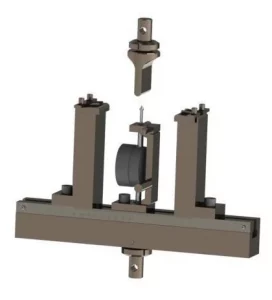 3-Point and 4-Point Bending Fixtures for Flexural Testing100 kN
These 3-point and 4-point bending fixtures support flexural strength, deformation, and modulus testing of natural…
Flexural and bend testing
3-Point and 4-Point Bending Fixtures for Flexural Testing100 kN
These 3-point and 4-point bending fixtures support flexural strength, deformation, and modulus testing of natural…
Flexural and bend testing
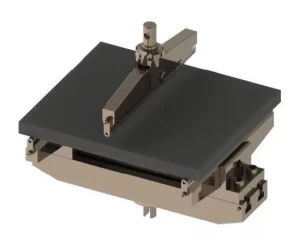 3-Point Bending Fixtures for Flexural Testing300 kN
These bending fixtures support standard 3-point flexural testing of plastics, composites, metals, ceramics, alloys,…
Flexural and bend testing
3-Point Bending Fixtures for Flexural Testing300 kN
These bending fixtures support standard 3-point flexural testing of plastics, composites, metals, ceramics, alloys,…
Flexural and bend testing
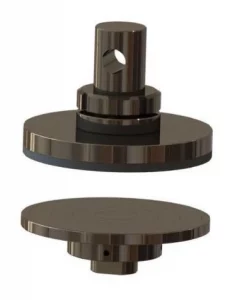 Compression Fixtures for Rigid Samples300 kN
Compression fixtures provide aligned axial loading for rigid samples tested on NG-EML and SHM universal testing…
Compression testing
Compression Fixtures for Rigid Samples300 kN
Compression fixtures provide aligned axial loading for rigid samples tested on NG-EML and SHM universal testing…
Compression testing
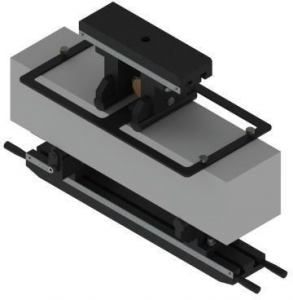 Flexure Fixtures for Large and Brittle Specimens2000 kN
These flexure fixtures are designed for precise bending tests on large, brittle, or high-strength specimens,…
Flexural and bend testing
Flexure Fixtures for Large and Brittle Specimens2000 kN
These flexure fixtures are designed for precise bending tests on large, brittle, or high-strength specimens,…
Flexural and bend testing
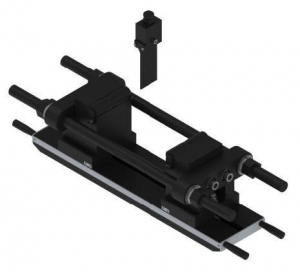 Heavy-Duty Bending Fixtures for Hydraulic Flexural Testing2000 kN
Heavy-duty bending fixtures support high-force flexural testing of metals, composites, ceramics, reinforcing bars,…
Flexural and bend testing
Heavy-Duty Bending Fixtures for Hydraulic Flexural Testing2000 kN
Heavy-duty bending fixtures support high-force flexural testing of metals, composites, ceramics, reinforcing bars,…
Flexural and bend testing
4
Grips and fixtures
What holds the specimen decides whether the result is valid
15
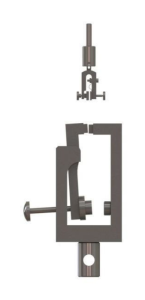 Side-Action Tensile Grips20 kN
Side action tensile grips provide quick, secure clamping for films, thin sheets, textiles, fine wires, polymer…
Gripping and fixturing
Side-Action Tensile Grips20 kN
Side action tensile grips provide quick, secure clamping for films, thin sheets, textiles, fine wires, polymer…
Gripping and fixturing
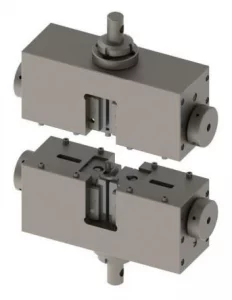 Wedge Tensile Grips for Metals and Composites300 kN
Wedge tensile grips are built for high-load tensile testing of flat and round specimens made from metals, composites,…
Gripping and fixturing
Wedge Tensile Grips for Metals and Composites300 kN
Wedge tensile grips are built for high-load tensile testing of flat and round specimens made from metals, composites,…
Gripping and fixturing
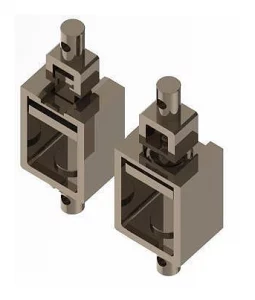 Grips and Fixtures for Wood Testing10 kN
These wood testing grips and fixtures support tensile, shear, flexural, internal bond, and fastener-related…
Gripping and fixturing
Grips and Fixtures for Wood Testing10 kN
These wood testing grips and fixtures support tensile, shear, flexural, internal bond, and fastener-related…
Gripping and fixturing
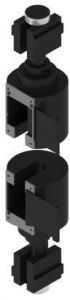 Grips and Fixtures for Hydraulic Universal Testing Machines2000 kN
Grips and fixtures for hydraulic universal testing machines are built for high-force tensile, shear, proof load,…
Gripping and fixturing
Grips and Fixtures for Hydraulic Universal Testing Machines2000 kN
Grips and fixtures for hydraulic universal testing machines are built for high-force tensile, shear, proof load,…
Gripping and fixturing
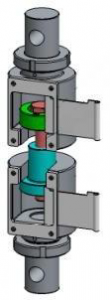 Threaded Grips for Bolt and Nut Testing300 kN
Threaded grips for bolt and nut tensile testing provide secure axial loading for bolts, studs, nuts, and other…
Gripping and fixturing
Threaded Grips for Bolt and Nut Testing300 kN
Threaded grips for bolt and nut tensile testing provide secure axial loading for bolts, studs, nuts, and other…
Gripping and fixturing
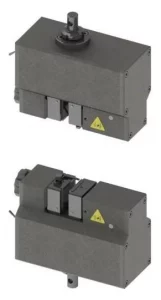 Pneumatic Grips for Fast and Repeatable Clamping100 kN
Pneumatic grips provide fast, repeatable air-actuated clamping for universal testing machines in high-throughput…
Gripping and fixturing
Pneumatic Grips for Fast and Repeatable Clamping100 kN
Pneumatic grips provide fast, repeatable air-actuated clamping for universal testing machines in high-throughput…
Gripping and fixturing
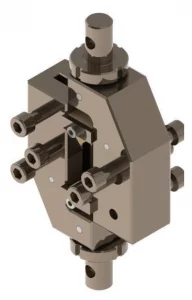 Composite Grips and Fixtures for Tensile and Shear Testing100 kN
Composite grips and fixtures are engineered for tensile, compression, shear, bending, peel, and delamination testing…
Gripping and fixturing
Composite Grips and Fixtures for Tensile and Shear Testing100 kN
Composite grips and fixtures are engineered for tensile, compression, shear, bending, peel, and delamination testing…
Gripping and fixturing
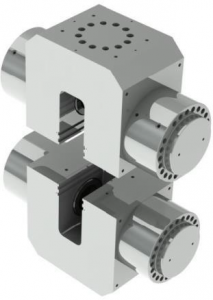 Dual-Action Hydraulic Wedge Grips for High-Capacity Testing2000 kN
Dual-Action Hydraulic Grips are high-capacity wedge-clamping fixtures for tensile testing on universal testing…
Gripping and fixturing
Dual-Action Hydraulic Wedge Grips for High-Capacity Testing2000 kN
Dual-Action Hydraulic Grips are high-capacity wedge-clamping fixtures for tensile testing on universal testing…
Gripping and fixturing
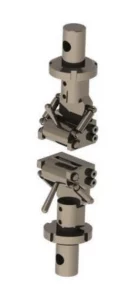 Eccentric Roller Grips for Thin and Flexible Specimens1 kN
Eccentric roller grips are built for low-force tensile testing of thin, soft, and flexible specimens such as rubber…
Gripping and fixturing
Eccentric Roller Grips for Thin and Flexible Specimens1 kN
Eccentric roller grips are built for low-force tensile testing of thin, soft, and flexible specimens such as rubber…
Gripping and fixturing
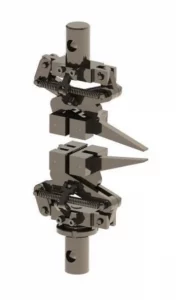 Self-Tightening Grips for Elastic Materials5 kN
Self-tightening grips are designed for tensile testing of deformable, elastic, or low-friction materials such as…
Gripping and fixturing
Self-Tightening Grips for Elastic Materials5 kN
Self-tightening grips are designed for tensile testing of deformable, elastic, or low-friction materials such as…
Gripping and fixturing
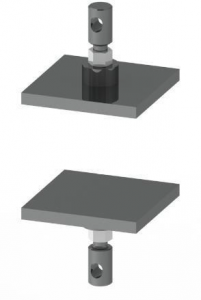 Shoulder Fixtures for Pull-Off Testing5 kN
Shoulder fixtures are specialized tensile grips for specimens and components with shoulder geometries, where…
Gripping and fixturing
Shoulder Fixtures for Pull-Off Testing5 kN
Shoulder fixtures are specialized tensile grips for specimens and components with shoulder geometries, where…
Gripping and fixturing
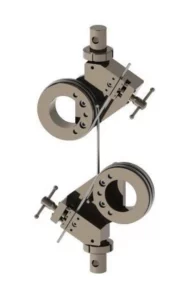 Snubbing Grips for Wire and Cable Testing100 kN
Snubbing grips, also known as capstan grips, are designed for tensile testing of wires, cables, ropes, textile…
Gripping and fixturing
Snubbing Grips for Wire and Cable Testing100 kN
Snubbing grips, also known as capstan grips, are designed for tensile testing of wires, cables, ropes, textile…
Gripping and fixturing
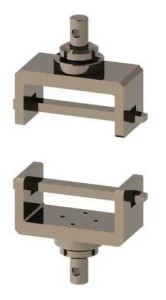 Specialized Grips and Fixtures for Tear, Peel and Puncture Testing100 kN
These specialized grips and fixtures expand UTM testing capabilities for tear, peel, puncture, shear, and unique…
Gripping and fixturing
Splitting Fixtures for Rock and Concrete Testing2000 kN
Splitting fixtures for indirect tensile testing are designed for rock, concrete, and composite specimens tested on…
Gripping and fixturing
Specialized Grips and Fixtures for Tear, Peel and Puncture Testing100 kN
These specialized grips and fixtures expand UTM testing capabilities for tear, peel, puncture, shear, and unique…
Gripping and fixturing
Splitting Fixtures for Rock and Concrete Testing2000 kN
Splitting fixtures for indirect tensile testing are designed for rock, concrete, and composite specimens tested on…
Gripping and fixturing
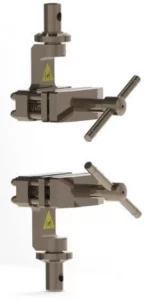 TestStar Series Grips and Fixtures for Hydraulic UTMs300 kN
TestStar® Series grips and fixtures are high-precision accessories for integrating tensile, snubbing, wedge-action,…
Gripping and fixturing
TestStar Series Grips and Fixtures for Hydraulic UTMs300 kN
TestStar® Series grips and fixtures are high-precision accessories for integrating tensile, snubbing, wedge-action,…
Gripping and fixturing
5
Alignment and marking
Setting the load train straight and marking the gauge length
2
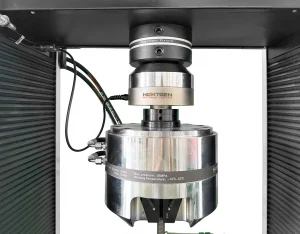 Alignment Device – NADCAP-Ready Precision Fixture
The Alignment Device is a NADCAP-ready precision fixture for verifying and correcting load-frame alignment on…
Alignment
Alignment Device – NADCAP-Ready Precision Fixture
The Alignment Device is a NADCAP-ready precision fixture for verifying and correcting load-frame alignment on…
Alignment
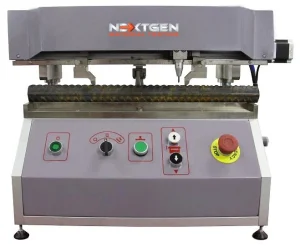 GenMark 500 – Automatic Gauge Length Marking Machine500 mm
The GenMark 500 is a full-automatic gauge length marking machine for metal bar, rebar and wire rod, applying the…
Gauge length marking
GenMark 500 – Automatic Gauge Length Marking Machine500 mm
The GenMark 500 is a full-automatic gauge length marking machine for metal bar, rebar and wire rod, applying the…
Gauge length marking
6
Software
Running the test and keeping the results
2
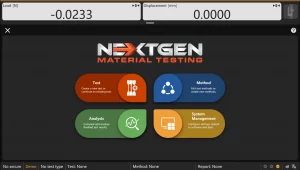 GenTest – Advanced UTM Testing Software
GenTest is NextGen’s advanced UTM testing software for electromechanical universal testing machines, managing test…
Test software
GenTest – Advanced UTM Testing Software
GenTest is NextGen’s advanced UTM testing software for electromechanical universal testing machines, managing test…
Test software
 GenTest v3.0 Software for Universal Testing Machines
GenTest v3.0 is NextGen’s data acquisition and test control software for universal testing machines, built around…
Test software
GenTest v3.0 Software for Universal Testing Machines
GenTest v3.0 is NextGen’s data acquisition and test control software for universal testing machines, built around…
Test software
Nothing matches that filter. Show all products
FAQs
There are a number of benefits of purchasing your ideal universal tensile tester from NextGen:
User-Friendliness:
NextGen stands behind the optimal solutions designed to bring our clients the simplest and most effective systems in the market. Our Tensile Testing systems are easy to operate and maintain. They are developed with the end-user in mind.
Force Resolution:
Accuracy and repeatability is extremely important for the Tensile Testing process. NextGen’s tensile testers offer a minimum force resolution of 1/500,000.
This means that if you are testing 100kN system your force resolution will be exceptional down to 0.2N with 0.2% force accuracy. (100,000N / 500,000FS = 0.2N / FS).
Should you require larger load cells, such as 300kN or higher, an additional sub load cell can be purchased to enhance your force resolution for lower testing capacities even further.
Learn more by contacting us today.
Full Scope of Grips and Fixtures
NextGen offers the full scope of standard and customer grips and fixtures for your universal tensile testing needs. We have you covered for pulling, bending, shearing, compression, and much more.
Though custom grips may take 1-4 weeks to manufacture, most all standard grips are readily available in stock.
Learn more by contacting us today.
Price:
Due to high sales volumes, are pricing are typically tremendously lower than our major competitors.
The quotation always comes standard with all of your desired grips and fixtures included in the price of the main unit. Your units will also come standard with our state-of-the-art tensile testing software, controller, remote control handset, and much more.
Simply confirm your technical needs and ask for quotation today and let NextGen impress you.
Customer Service and Support
NextGen Material Testing's philosophy is to provide the highest quality customer service combined with the best available products and services. This is the reason why thousands of manufacturers, educational facilities, government bodies, N DT facilities, laboratories, etc. utilize NextGen equipment for their most important quality control requirements. NextGen continues to provide high end services in relation to delivering material testing equipment in the market for over 18 years.
Warranty
We are confident in our products, and with our 12-month plus extensive warranty coverage, we know that you will be too. All NextGen machines are backed by a life-time service and support guarantee. This means that as long as you are operating one of our machines, our engineers are always available to help answer your questions, trouble shoot any issues and provide you with the required solutions in the shortest possible amount of time. Whether you are within your warranty terms or outside, NextGen Material Testing, Inc. has got you covered. Our extensive global network of partners offers the option to have a qualified engineer visit your facility virtually anywhere you are. We are only a call or an e-mail away.
Both of our static and the dynamic Tensile Testing systems can have the furnace and the cooling chambers be added at a later time.
We do ask that our clients let us know of their future intentions of purchasing either a furnace or a cooling chamber for their tensile tester so that we can supply the necessary bracket for the job.
NOTE: Adding the furnace or the cooling chamber to the system in a single order is a simpler process than adding them at a later time.
Contact our qualified consultants today to learn more.
Absolutely!
Simply let us know what unit you would like to purchase and how long would you wish the warranty period to be. Our qualified consultants will quote you accordingly.
Due to the simplicity of the Class A, B and C Tensile Testing systems, the training and installation on these units is not mandatory. All you need are the correct cables. We will provide you a clear set of instructions to be able to perform the set up yourself.
Should you require additional support, we would be happy to have one of our engineers offer a remote session for you via an on-line platform. This will help you save on cost and achieve favourable results.
Learn more by contacting us to today.
Different materials can be subjected to the fatigue test, depending on the purpose in which they are intended for. Metals and composites are commonly subjected to fatigue tests because these materials are commonly used in applications where components are repetitively subjected to forces that can either bend or break them. Making sure that these materials have a high fatigue limit is essential for these applications, so they are commonly subjected to such tests. Other materials such as polymers, wood, and ceramics may also be fatigue tested to determine their suitability for specific applications.
There are multiple forms of fatigue testing, but the two most common ones being used in most industries are the load controlled high cycle and the strain controlled low cycle. High cycle testing is usually used to determine an object's ability to withstand elastic forces, while low cycle testing is usually used to determine an object's ability to withstand plastic forces.
The fatigue test is important for nearly all materials testers as performance in this test provide important information on the material's long-term durability for a specific application. Different data from the material can be extracted from these tests, such as fatigue strength, crack resistance, and overall durability. Fatigue life, or is the number of cycles a material can be exposed to before breaking, is also obtained using the fatigue test. Aside from the number of cycles, the amount of force that the object can withstand is also recorded. In contrast to bend tests and compression/tension tests, the object is subjected to fluctuating forces rather than a singular application of force.
A fatigue test is done to determine an object's ability to resist cyclic fatigue loading conditions. In this test, repeated loading and unloading forces are applied into the material, often at least matching the level of forces being applied to the object on where it's planned to be used. The forces can be in the form of tension, torsion, compression, bending, or even a combination of these forces as deemed appropriate. The most common forces applied in fatigue tests is alternating tension and compression. To perform the fatigue test, the material is placed in the testing machine, and then subjected to cycles of loading and unloading, often up to failure is reached.
There are 4 different types of bend tests that is commonly used in most industries. A guided bend test is where the material is placed horizontally in between 2 supports and then the force is applied right in the middle, ideally bending it into a U shape. A semi-guided bend test is done by bending the material to a specific angle or radius. A free bend test is where the ends of the material are pushed towards each other, but no force is applied to the middle. A common fracture toughness test uses a material that is pre-fractured, and then the bending force is applied at the opposite face from the fracture. Any of these tests can be used strategically to obtain specific data about a material's bending characteristics.
The bend test is performed to determine how much a material can bend without breaking and subsequently how much force it would take to bend it to a certain angle. Multiple data about the material can be obtained from the bend test, including ductility, bend strength, fracture strength, and fracture resistance. Conversely, if a material actually breaks during the bend test, the odds are great that such a material may not be the optimal choice for an application where strong bending forces are applied. As such, the information obtained from the bend test is potentially vital for safety reasons.
A bend test is a procedure wherein the force is placed right at the middle of the test material to bend it. The test is usually performed in increasing increments of force until the object finally breaks. In comparison to a flexure test where the goal is to actually break the material, the main objective of doing the bend test is to see how much force is needed to bend a material to a certain shape. The test sample is placed in the machine in such a way that a concave object can be created out of it when a force at midpoint is applied. A specific radius of curvature is set, and the material is bent to that radius if possible by applying force.
There are different variations of the compression test that will help testers get the data they need for specific purposes. The most common version of this test involves the application of 2 opposing forces into the material to create a compressive force. However, different variables can be altered to test different aspects of the material’s overall durability. The most common variation of the compression test is where the compressive forces are placed on multiple axes. The compression test can also be performed in extreme temperatures. These variations allow testers to better understand the characteristics of the material, especially when subjected to extreme compressive force.
A compression test is done to determine the compressive strength of a material, in addition to other material properties related to its ability to withstand compressive forces. With the help of this test, you can determine how a material responds to compressive forces, as well as the properties that explains its behavior in the presence of such forces. With the help of the data obtained from such tests, one can determine if a specific material is optimal to be used for applications where compressive forces are applied.
The compression test is a procedure that tests a number of a material's compressive strength, as well as other properties such as yield strength, ultimate strength, elastic limit, and elastic modulus. To perform this test, the material is subjected to compressive forces that push inward into the material. This force aims to crush, flatten, or squash the material. To perform this test, the material is placed in between 2 plates. The plates then apply increasing force into the material, which aims to flatten the object. The compression test is technically the opposite of the tension test. Because of the compression forces, the object gets shortened on the direction of the forced and stretched at the direction perpendicular to the force.
Compatibility is a must to ensure that testing machines can stay relevant for years. NextGen understands that purchasing testing machines can be a significant investment for any company, and keeping these machines up-to-date for as long as possible is essential for optimal return of investment. NextGen guarantees that all future accessories will be compatible for use with older machines. When designing their products and accessories, they see to it that they can be compatible not just with their new equipment, but also with most of their older machines.
All NextGen products are guaranteed to be compliant with all global testing standards. Engineers of this company stay up to date with all the latest industry standards such as ISO, GB, ASTM, and EIN. Being compliant with these global testing standards means that all NextGen equipment are compliant with the global standards for testing. NextGen even has some pre-made templates designed to replicate the most common global standard tests used in your industry.
Fatigue testing is a procedure wherein a relationship between a material's stress range and the number of times it can be applied before failure is established. In this test, the testing machine is used to apply a specific amount of force in a material for multiple cycles. The force can be applied in the form of tension, compression, torsion, and bending forces, among others. A combination of these forces can also be applied to simulate real-world forces that can lead to material fatigue.
The fatigue limit is the maximum value of repeated stress application to a material before it breaks. The higher the fatigue limit of a material is, the better it can withstand prolonged and repeated stress.
Fatigue is defined as the effect of repeated application of stress to the material. Testing for fatigue is important because its development on the material is more insidious. Before a material actually breaks, it may have less obvious signs of damage such as deformations or cracks. While usually not visible to the naked eye, these localized effects of stress and fatigue can grow larger with time, which can lead to the eventual destruction of the material. Fatigue can be influenced by multiple factors, such as the size, shape, and design of the component, and the level of stress it experiences regularly.
Young's Modulus testing is specifically designed for a material's Young's modulus, also known as the modulus of elasticity. It is defined as the change in rate of strain in a material as a function of stress. It can be referred to as the tensile modulus if measured relative to tensile testing.
This test is made to determine a material's behavior when an axial stretching load is applied. Young's modulus is commonly reported as N/mm2 or PSI (force per unit area), which means its value is similar to the amount of pressure applied to the object. Most tensile strength testing machines provide equipment that allow for Young's modulus testing.
Tensile strength is defined as a material's ability to resist forces that can cause it to deform or break. Also termed as "ultimate tensile strength", it is computed by dividing the peak force that the object is able to withstand with the cross sectional area of the material. In other words, the higher the force that an object can withstand with a given cross sectional area, the higher the tensile strength of the material is.
Tensile strength is tested using a machine called the tensile tester. A load cell is used with the materials tester to determine a specific material's tensile strength. During a tensile strength test, you can also test for other parameters such as the Young's modulus of elasticity, elongation, strain, and yield stress.
A materials tester can play such an important role in a number of industries. Getting the right tester is so important as it can make or break the quality of a particular product. In terms of price, there are many variables to consider when determining the possible price of a materials tester.
When shopping for a materials tester, the first question that you should ask yourself is what types of tests would you actually run. Most testers are capable of running different types of tests, so that can help. They can also have features such as data analysis software and preset testing settings that will make your testing life much easier. Most of the testing machines have features and settings that comply with most international standards. However, these machines can still be upgraded (at a cost) to run specific tests using specific materials.
One thing you should consider when getting a materials tester is to get an appropriate grip for the job. The type of grip you need depends on what material you?ll be testing and the types of tests that you will run. A standard grip is usually sufficient for most purposes, but there are some applications where going for a more customized grip is a must. Getting a grip with a purpose-made size, shape, and material is significantly more expensive than using a standard grip.
NextGen offers both Electromechanical and Servo-Hydraulic systems have various classifications. Depending on the tensile testing machine?s class the unit can either be a bench top or floor standing model. The higher the class, the more complex are the testing capabilities.
For example, most all Electromechanical tensile testing systems are plug-n-play units This means that a customer can order the unit and install it themselves upon delivery with the help of our training and installation video and the operational manual. On the other hand, the Servo-hydraulic tensile testing systems and dynamic tensile testing options are more complex solutions that require formal training and installation.
If training is required, there are a number of options for the customer:
Option 1:
Training and Installation Video - the customer may request a training and installation video to follow in order to set up the tensile tester.
Option 2:
Remote Session - customer may request a remote session which will be offered at no additional fee.
Option 3:
Physical training and installation - this is always an option and can be quoted upon request. The prices for training and installation range depending on the number of training days and customer?s location.
NextGen offers a variety of standard and specialty tensile grips and fixtures that can withstand temperatures up to 1050 degrees Celsius. Provided your materials can withstand the assigned temperature, you can rest assured that the grips will provide you with accurate readings every time.
As long as you are purchasing a tensile testing system that is compatible with the high temperature furnace upgrade, you will be able to acquire the furnace at a later date. Our engineering team will be able to help offer physical or remote support to help you with the process.