
Metal Testing Equipment
Products
Precision sectioning exists to protect the sample. A thin blade turning at low speed under flood cooling takes the cut without the heat and deformation an abrasive wheel leaves behind, which is what coatings, thin sections, brittle materials and electronics need. NextGen supplies precision cutters for that work, for specimens prepared to ASTM E3.
The range runs from manual low-speed cutters for delicate single samples to high-speed automatic machines for routine sectioning, with micrometer feed where the cut has to land in the same place every time. Diamond and CBN blades, clamps and coolant come from the same supplier, machines are installed on site, your team is trained on the parameters, and support continues for the life of the cutter.
For Laboratories
One partner to equip your complete metallography laboratory
Precision sectioning is the first step of metallographic preparation. NextGen equips the rest of the laboratory too, from mounting presses, grinders and polishers to hardness, tensile and impact testing, and stays responsible for it after delivery.
- Equipment, fixtures and software
- Installation, training, calibration
- Lifetime technical support
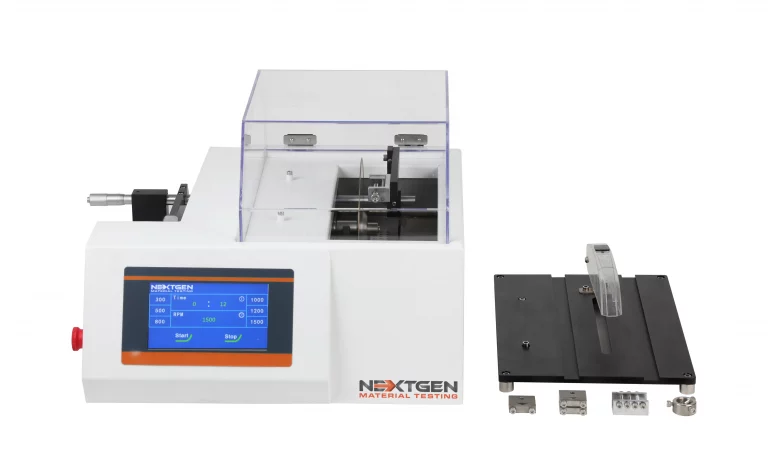 GenCut GL100E – Low-Speed Precision Metallographic Cutter
GenCut GL100E is a low-speed automatic precision cutter for metallographic preparation of small and delicate…
View product
Get quote
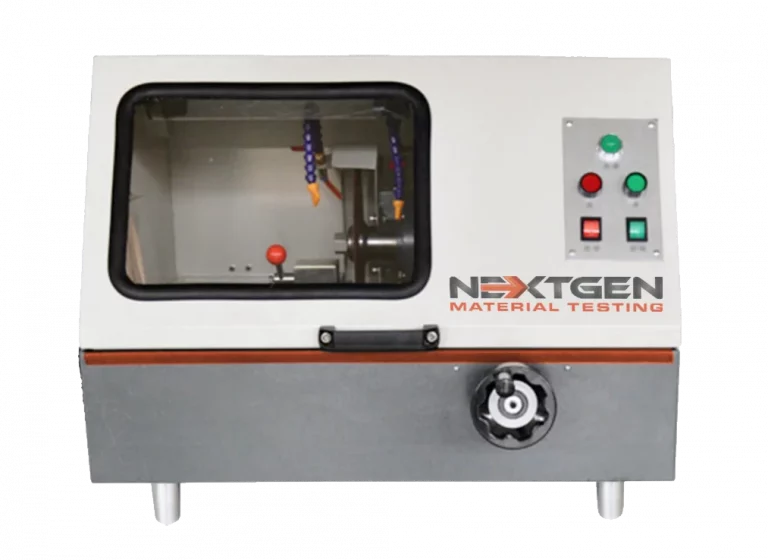 100 mm
GenCut GL100M – Manual Metallographic Cutting Machine
GenCut GL100M is a precision manual metallographic sample cutting machine for clean, controlled preparation of metal…
View product
Get quote
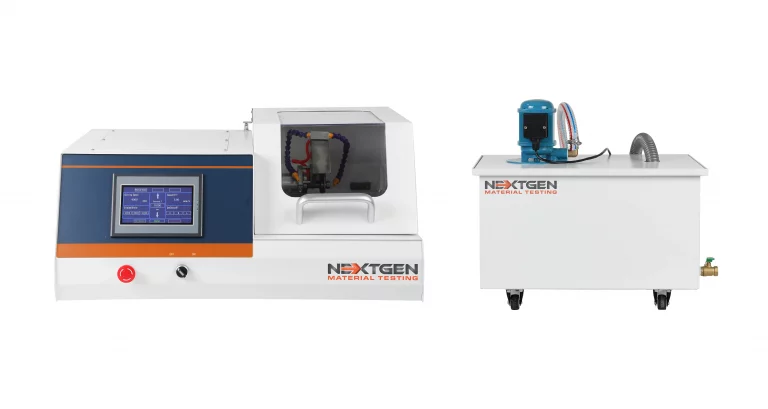 5000 rpm
GenCut GL200E – High-Speed Precision Metallographic Cutter
GenCut GL200E is a high-speed automatic precision metallographic cutter for accurate sectioning of metals, ceramics,…
View product
Get quote
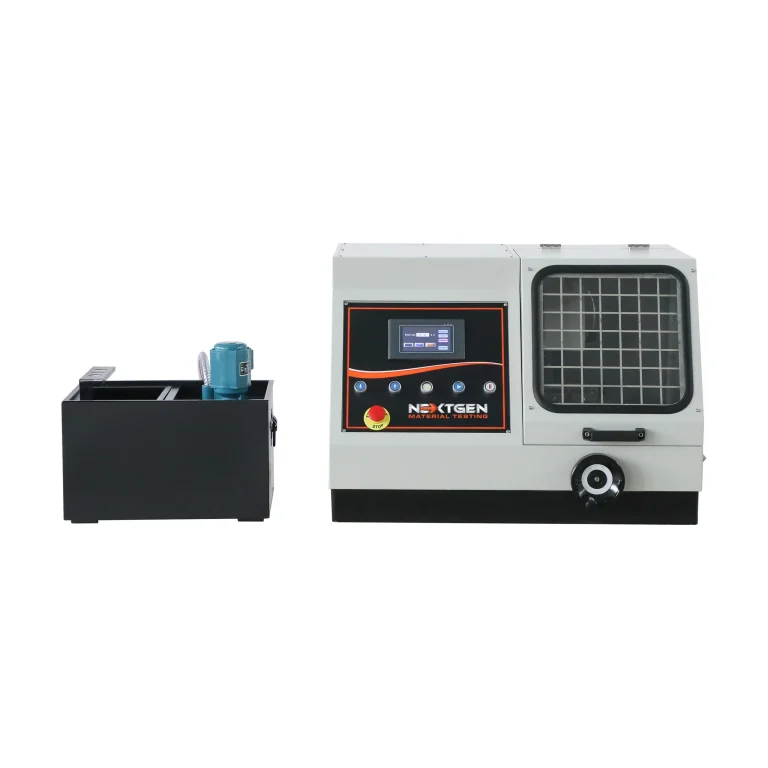 3000 rpm
GenCut GL350 – Metallographic Cutting Machine
GenCut GL350 is a precision metallographic sample cutting machine for larger laboratory and industrial specimens.
View product
Get quote
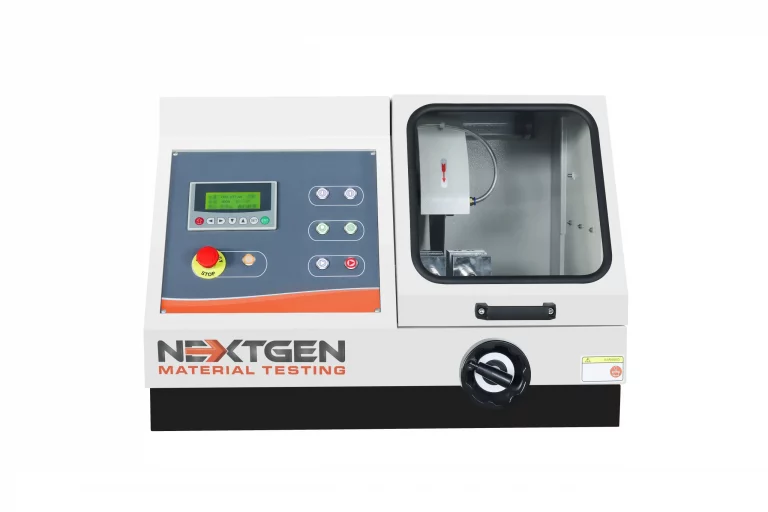 2100 rpm
GenCut GL80A – Precision Metallographic Cutting Machine
GenCut GL80A is a precision metallographic sample cutting machine for preparing metal specimens with a cutting…
View product
Get quote
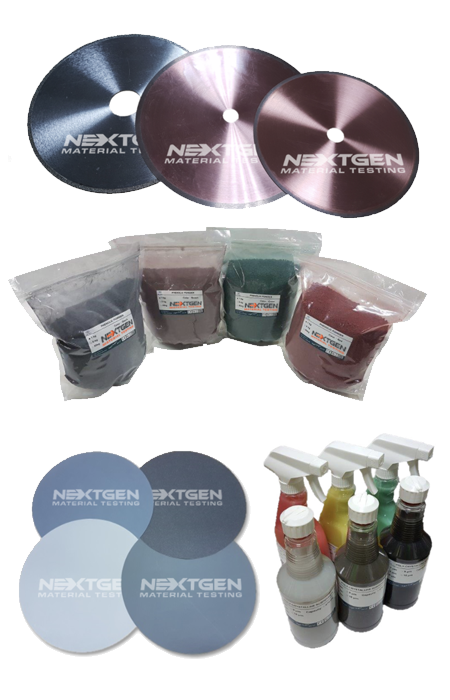 Metallography Consumables
Metallography consumables cover the materials needed for sectioning, mounting, grinding, polishing, etching, and…
View product
Get quote
 GenCut GL100E – Low-Speed Precision Metallographic Cutter
GenCut GL100E is a low-speed automatic precision cutter for metallographic preparation of small and delicate…
Precision sectioning
 GenCut GL100M – Manual Metallographic Cutting Machine100 mm
GenCut GL100M is a precision manual metallographic sample cutting machine for clean, controlled preparation of metal…
Precision sectioning
 GenCut GL200E – High-Speed Precision Metallographic Cutter5000 rpm
GenCut GL200E is a high-speed automatic precision metallographic cutter for accurate sectioning of metals, ceramics,…
Precision sectioning
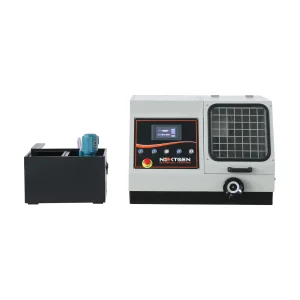 GenCut GL350 – Metallographic Cutting Machine3000 rpm
GenCut GL350 is a precision metallographic sample cutting machine for larger laboratory and industrial specimens.
Precision sectioning
 GenCut GL80A – Precision Metallographic Cutting Machine2100 rpm
GenCut GL80A is a precision metallographic sample cutting machine for preparing metal specimens with a cutting…
Precision sectioning
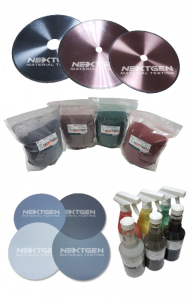 Metallography Consumables
Metallography consumables cover the materials needed for sectioning, mounting, grinding, polishing, etching, and…
Metallography consumables
Nothing matches that filter. Show all products
FAQs
Start from the largest section and how fragile it is. The GL100E (25 mm) and GL200E (60 mm) are the small-section machines, low-speed with micrometer control and high-speed with automatic feed. The GL80A cuts to 80 mm, and the GL350 and the manual GL100M to 100 mm. Send the largest section, the material and its hardness and the team will confirm the model. Request a quote.
The GL80A and GL350 offer automatic and manual work modes, and the GL100M is manual, with a handwheel for the Y axis. On the GL80A the wheel moves automatically in the Y axis and returns on its own, with intermittent cutting for metal workpieces and continuous cutting for non-metal workpieces, at a cutting speed of 0.01 to 1 mm/s. All three have a closed cutting chamber with an observation window and quick clamping.
The product page lists typical applications: pipe up to 3.9 in (100 mm) with a 6 mm wall, solid iron-base bar up to 100 mm in diameter at hardness up to HRC 30, and solid iron-base bar up to 60 mm at hardness up to HRC 60. It also cuts 100 × 100 mm angle steel and channel steel. Feed is set from 1 to 40 mm/min, and extra blades are available for other materials.
The GL200E is built for deformation-free cutting of metals, hard alloys, ceramic materials and crystals, electronic components, rock and ore, concrete, organic materials, and biological materials such as teeth and bone. Its Y-axis feed runs from 0 to 600 mm/min in steps of 0.01 mm and the spindle from 500 to 5,000 rpm. The maximum cutting diameter is 2.36 in (60 mm), and feed can be automatic, manual or pulse.
The GL100E cuts in manual mode or by gravity, using a weight and counterweight. A weight sliding loading system sets the load from 0 to 15.9 oz (0 to 450 g), which limits sample damage so brittle sections survive the cut. A micrometer head with 0.01 mm position accuracy moves the sample, and the cutter ships with single head, double head and irregular sample jigs.