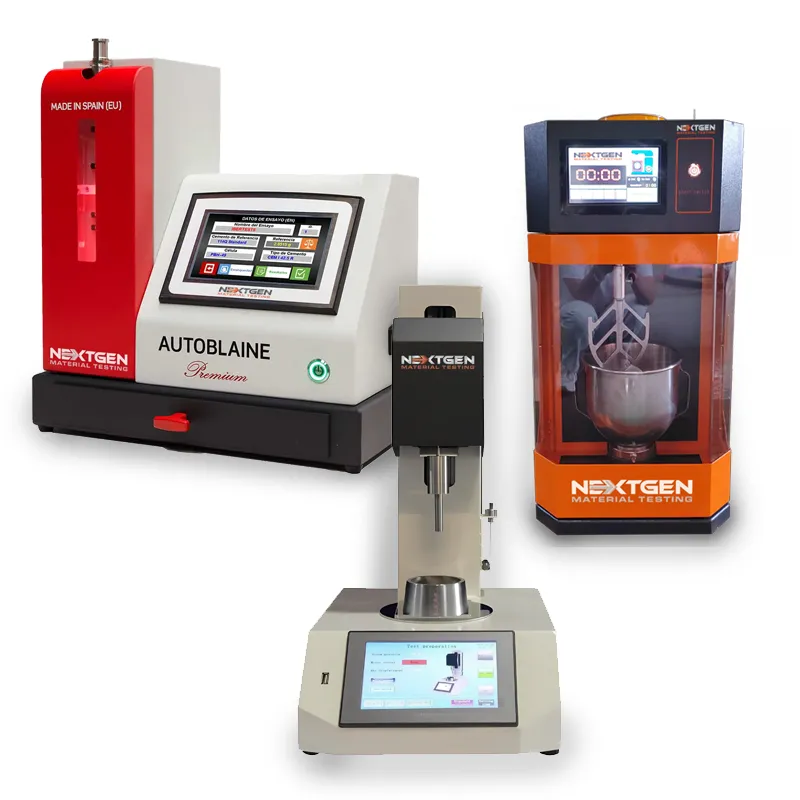
Cement & Concrete Testing Equipment
Cement is judged long before it reaches a structure: how finely it has been ground, when it starts and finishes setting, whether it stays sound, and what strength the mortar reaches. NextGen supplies apparatus for each of those checks, working to EN 196-1 for strength, EN 196-3 for setting time and soundness and EN 196-6 for fineness.
The range covers Blaine fineness apparatus, Vicat needles in manual and automatic form, programmable mortar mixers, climatic curing cabinets and a high pressure autoclave for accelerated soundness, so a cement laboratory can be equipped on a single order. Each unit is installed and calibrated by our engineers, your team is trained on the procedure, and support continues for the life of the instrument. Read More...
For Laboratories
One partner to equip your complete concrete laboratory
Concrete testing rarely stops at one machine. NextGen equips the whole laboratory, from mortar mixing and climatic curing to Blaine fineness, Vicat setting time and autoclave testing, and stays responsible for it after delivery.
- Equipment, fixtures and software
- Installation, training, calibration
- Lifetime technical support
Sub-categories
 Sub-category · 4 products
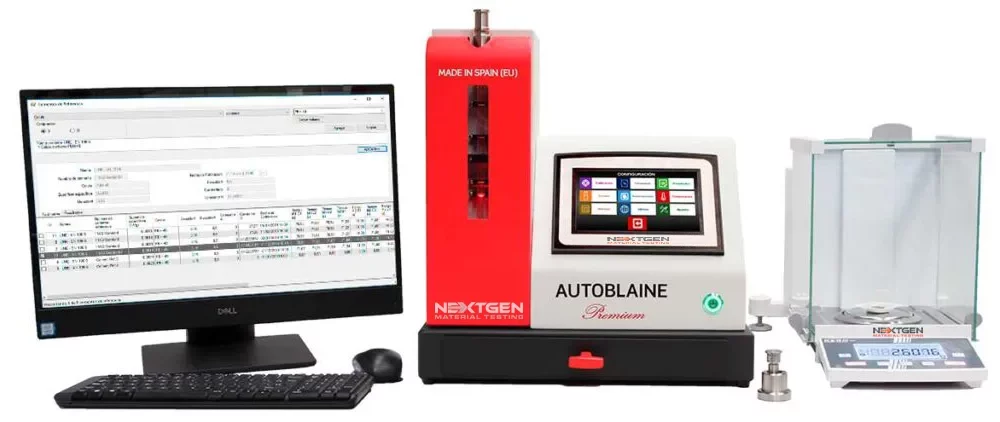
Blaine Apparatus
Blaine apparatus equipment is used to determine cement fineness and specific surface area by measuring air permeability through a compacted powder bed. This category supports testing of Portland cement, lime, and similar powders, helping laboratories understand setting behavior, reaction rate, and strength development. Digital and automated systems improve timing, calculation, repeatability, and standards-based cement quality control workflows.
Open
Sub-category · 4 products
Blaine Apparatus
Blaine apparatus equipment is used to determine cement fineness and specific surface area by measuring air permeability through a compacted powder bed. This category supports testing of Portland cement, lime, and similar powders, helping laboratories understand setting behavior, reaction rate, and strength development. Digital and automated systems improve timing, calculation, repeatability, and standards-based cement quality control workflows.
Open
 Sub-category · 3 products
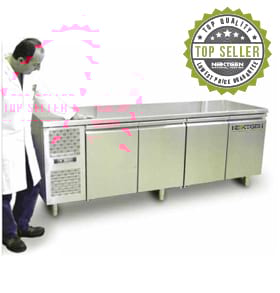
Climatic Curing Chambers
Climatic curing chambers provide controlled temperature and humidity environments for curing cement, mortar, concrete, and related construction material specimens. This category supports stability testing with fixed conditions as well as programmable dynamic cycles for more advanced laboratory workflows. Reliable curing chambers help maintain repeatable specimen conditioning, protect test validity, and support quality control where curing environment directly affects material performance results.
Open
Sub-category · 3 products
Climatic Curing Chambers
Climatic curing chambers provide controlled temperature and humidity environments for curing cement, mortar, concrete, and related construction material specimens. This category supports stability testing with fixed conditions as well as programmable dynamic cycles for more advanced laboratory workflows. Reliable curing chambers help maintain repeatable specimen conditioning, protect test validity, and support quality control where curing environment directly affects material performance results.
Open
 Sub-category · 2 products
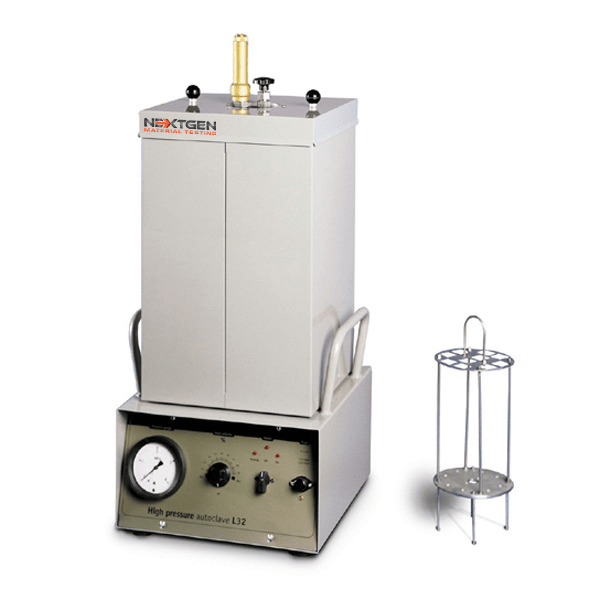
High Pressure Autoclave
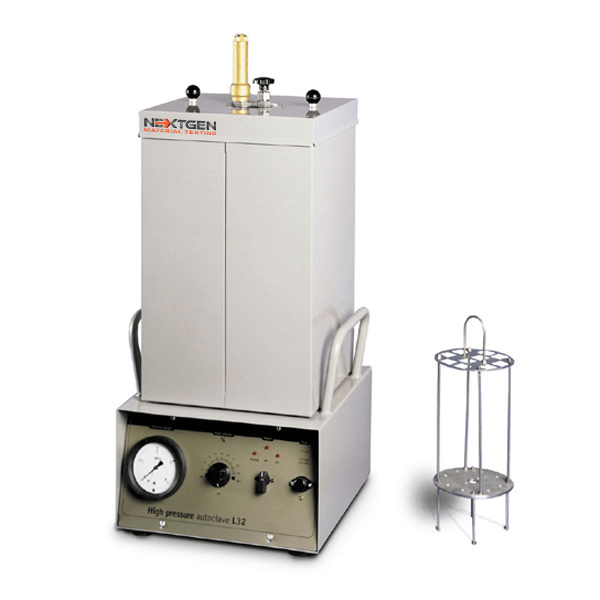
High pressure autoclave equipment is used in cement and concrete laboratories for controlled steam-pressure curing and soundness-related testing. This category supports high-pressure procedures where stable temperature, pressure regulation, safety controls, and secure specimen handling are essential. Autoclave systems help laboratories evaluate cement behavior under accelerated conditions and maintain consistent, protected workflows for routine quality control and standards-based verification.
Open
Sub-category · 2 products
High Pressure Autoclave
High pressure autoclave equipment is used in cement and concrete laboratories for controlled steam-pressure curing and soundness-related testing. This category supports high-pressure procedures where stable temperature, pressure regulation, safety controls, and secure specimen handling are essential. Autoclave systems help laboratories evaluate cement behavior under accelerated conditions and maintain consistent, protected workflows for routine quality control and standards-based verification.
Open
 Sub-category · 5 products
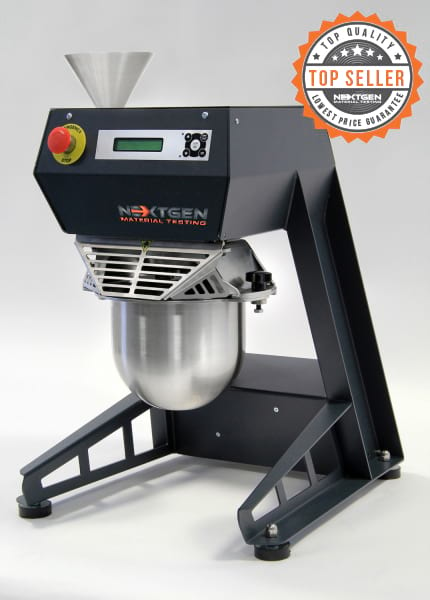
Mortar Mixers
Mortar mixers are used to prepare consistent cement mortar batches for laboratory testing, quality control, and standards-based construction material evaluation. This category includes mixing equipment designed for repeatable blending of cement, sand, water, additives, and related materials. Controlled mixing helps laboratories reduce operator variation, improve specimen consistency, and support reliable testing for setting time, strength, expansion, and other cement performance properties.
Open
Sub-category · 5 products
Mortar Mixers
Mortar mixers are used to prepare consistent cement mortar batches for laboratory testing, quality control, and standards-based construction material evaluation. This category includes mixing equipment designed for repeatable blending of cement, sand, water, additives, and related materials. Controlled mixing helps laboratories reduce operator variation, improve specimen consistency, and support reliable testing for setting time, strength, expansion, and other cement performance properties.
Open
1
Mixing
Mortar mixed to the proportions the method sets
3
 5 L
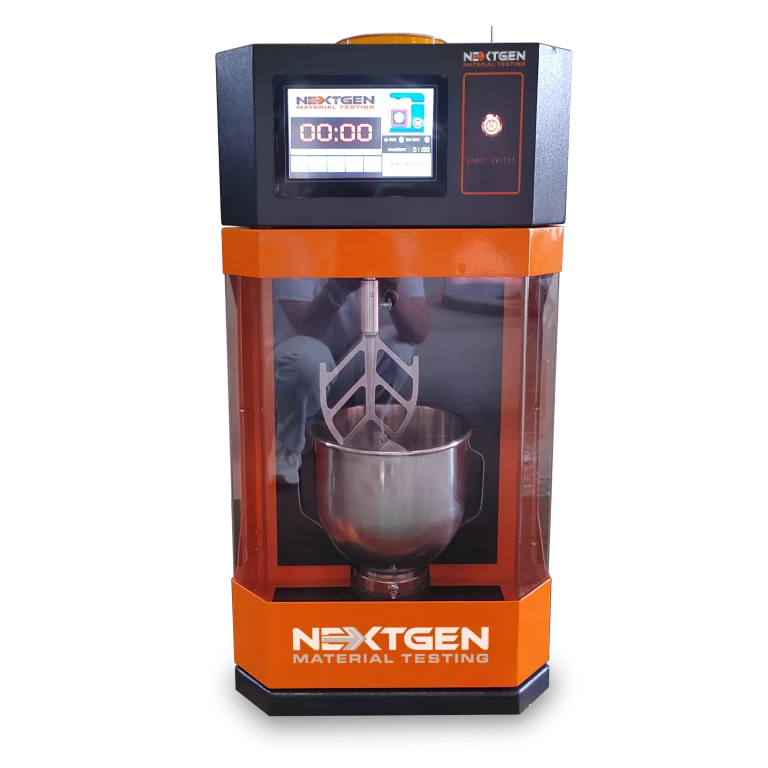
NG-DMM – Digital Mortar Mixer
NG-DMM is a fully automatic digital mortar mixer for precise preparation of cement, sand, water, additives, and…
View product
5 L
NG-DMM – Digital Mortar Mixer
NG-DMM is a fully automatic digital mortar mixer for precise preparation of cement, sand, water, additives, and…
View product
 5 L
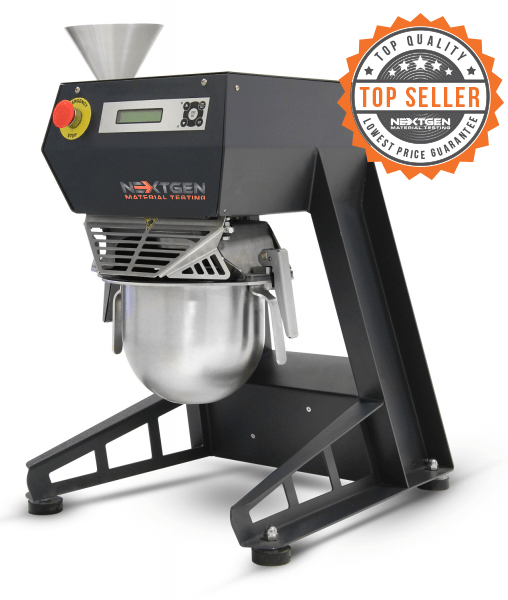
NG-AutoDigiMix - Automatic Programmable Mortar Mixer
NG-AutoDigiMix is an automatic programmable mortar mixer for efficient cement mortar preparation in…
View product
5 L
NG-AutoDigiMix - Automatic Programmable Mortar Mixer
NG-AutoDigiMix is an automatic programmable mortar mixer for efficient cement mortar preparation in…
View product
 5 L
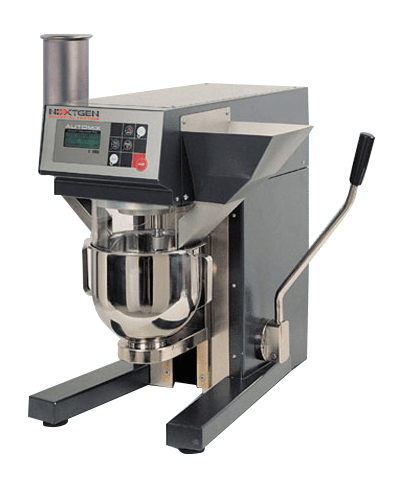
NG-AutoDigiMix 2 - Fully Automatic Programmable Mortar Mixer
NG-AutoDigiMix 2 is a fully automatic programmable mortar mixer for cement, mortar, lime, and research-material…
View product
5 L
NG-AutoDigiMix 2 - Fully Automatic Programmable Mortar Mixer
NG-AutoDigiMix 2 is a fully automatic programmable mortar mixer for cement, mortar, lime, and research-material…
View product
2
Curing
Holding specimens at set temperature and humidity
2
550 L
Curemate 550 – Climatic Curing Cabinet
NextGen Curemate 550 is a 550 L climatic curing cabinet for cement and concrete specimens, built to maintain…
View product
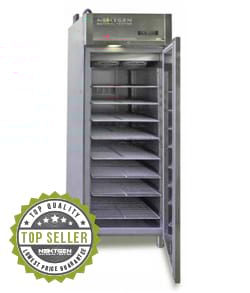 Curemate 750 – Climatic Curing Cabinet
NextGen Curemate 750 is a 750 L climatic curing cabinet for cement and concrete specimens requiring stable…
View product
Curemate 750 – Climatic Curing Cabinet
NextGen Curemate 750 is a 750 L climatic curing cabinet for cement and concrete specimens requiring stable…
View product
3
Fineness
Surface area of the cement powder
2
Most requested
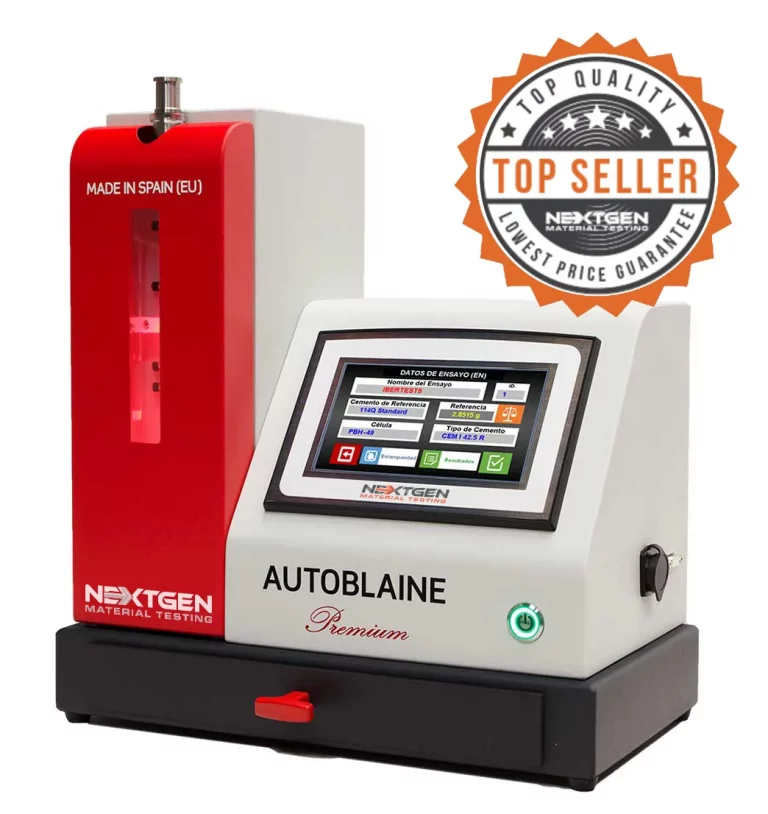 BlaineGen Plus – Automatic Blaine Apparatus
BlaineGen Plus is an automated Blaine apparatus for determining cement fineness by the air permeability method.
View product
BlaineGen Plus – Automatic Blaine Apparatus
BlaineGen Plus is an automated Blaine apparatus for determining cement fineness by the air permeability method.
View product
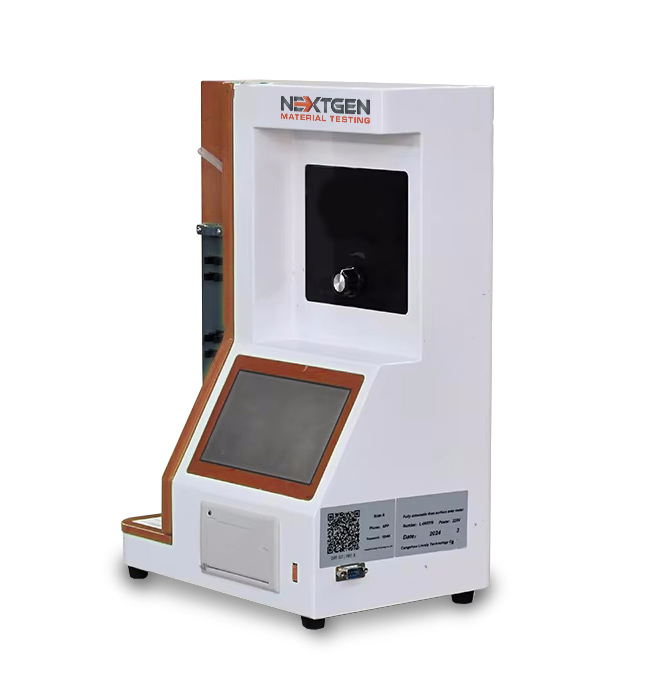 BlaineGen Classic – Digital Blaine Apparatus
BlaineGen Classic is a digital Blaine apparatus for measuring cement, lime, and powder fineness by the air…
View product
BlaineGen Classic – Digital Blaine Apparatus
BlaineGen Classic is a digital Blaine apparatus for measuring cement, lime, and powder fineness by the air…
View product
BlaineGen Plus – Automatic Blaine Apparatus
BlaineGen Plus is an automated Blaine apparatus for determining cement fineness by the air permeability method.
View product
BlaineGen Classic – Digital Blaine Apparatus
BlaineGen Classic is a digital Blaine apparatus for measuring cement, lime, and powder fineness by the air…
View product
4
Soundness
Expansion of the paste under steam pressure
1
5
Strength
Compression and flexure on cubes, cylinders and prisms
2
Most requested
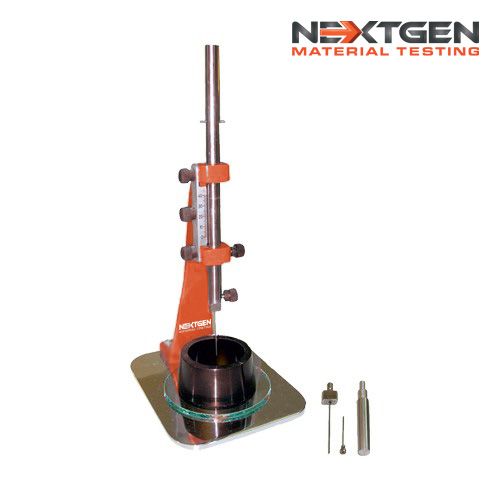 Manual Vicat Apparatus
The Manual Vicat Apparatus is used to determine cement and concrete setting time through controlled penetration of a…
View product
Most requested
Manual Vicat Apparatus
The Manual Vicat Apparatus is used to determine cement and concrete setting time through controlled penetration of a…
View product
Most requested
 Automatic Vicat Apparatus
The Automatic Vicat Apparatus determines cement paste standard consistency and setting time with less operator…
View product
Automatic Vicat Apparatus
The Automatic Vicat Apparatus determines cement paste standard consistency and setting time with less operator…
View product
Manual Vicat Apparatus
The Manual Vicat Apparatus is used to determine cement and concrete setting time through controlled penetration of a…
View product
Most requested
Automatic Vicat Apparatus
The Automatic Vicat Apparatus determines cement paste standard consistency and setting time with less operator…
View product
1
Mixing
Mortar mixed to the proportions the method sets
3
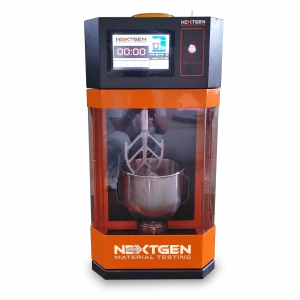 NG-DMM – Digital Mortar Mixer5 L
NG-DMM is a fully automatic digital mortar mixer for precise preparation of cement, sand, water, additives, and…
Mortar mixing
NG-DMM – Digital Mortar Mixer5 L
NG-DMM is a fully automatic digital mortar mixer for precise preparation of cement, sand, water, additives, and…
Mortar mixing
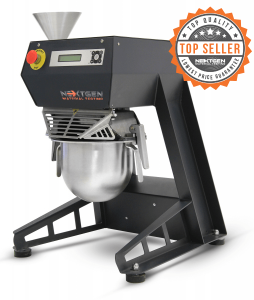 NG-AutoDigiMix - Automatic Programmable Mortar Mixer5 L
NG-AutoDigiMix is an automatic programmable mortar mixer for efficient cement mortar preparation in…
Mortar mixing
NG-AutoDigiMix - Automatic Programmable Mortar Mixer5 L
NG-AutoDigiMix is an automatic programmable mortar mixer for efficient cement mortar preparation in…
Mortar mixing
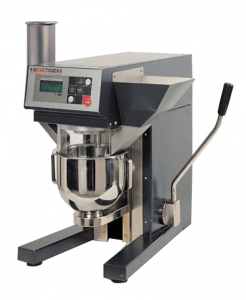 NG-AutoDigiMix 2 - Fully Automatic Programmable Mortar Mixer5 L
NG-AutoDigiMix 2 is a fully automatic programmable mortar mixer for cement, mortar, lime, and research-material…
Mortar mixing
NG-AutoDigiMix 2 - Fully Automatic Programmable Mortar Mixer5 L
NG-AutoDigiMix 2 is a fully automatic programmable mortar mixer for cement, mortar, lime, and research-material…
Mortar mixing
2
Curing
Holding specimens at set temperature and humidity
2
Curemate 550 – Climatic Curing Cabinet550 L
NextGen Curemate 550 is a 550 L climatic curing cabinet for cement and concrete specimens, built to maintain…
Controlled curing
Curemate 750 – Climatic Curing Cabinet
NextGen Curemate 750 is a 750 L climatic curing cabinet for cement and concrete specimens requiring stable…
Controlled curing
3
Fineness
Surface area of the cement powder
2
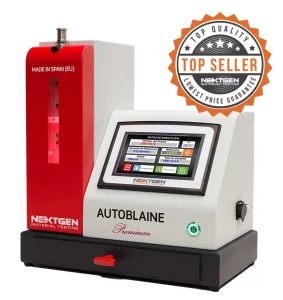 BlaineGen Plus – Automatic Blaine Apparatus
BlaineGen Plus is an automated Blaine apparatus for determining cement fineness by the air permeability method.
Fineness testing
BlaineGen Plus – Automatic Blaine Apparatus
BlaineGen Plus is an automated Blaine apparatus for determining cement fineness by the air permeability method.
Fineness testing
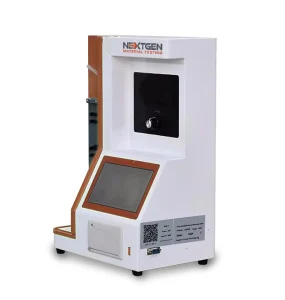 BlaineGen Classic – Digital Blaine Apparatus
BlaineGen Classic is a digital Blaine apparatus for measuring cement, lime, and powder fineness by the air…
Fineness testing
BlaineGen Classic – Digital Blaine Apparatus
BlaineGen Classic is a digital Blaine apparatus for measuring cement, lime, and powder fineness by the air…
Fineness testing
4
Soundness
Expansion of the paste under steam pressure
1
5
Strength
Compression and flexure on cubes, cylinders and prisms
2
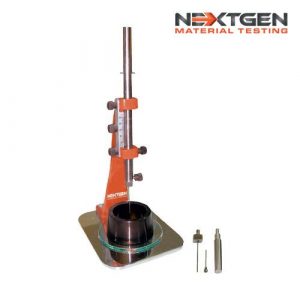 Manual Vicat Apparatus
The Manual Vicat Apparatus is used to determine cement and concrete setting time through controlled penetration of a…
Cement and concrete testing
Manual Vicat Apparatus
The Manual Vicat Apparatus is used to determine cement and concrete setting time through controlled penetration of a…
Cement and concrete testing
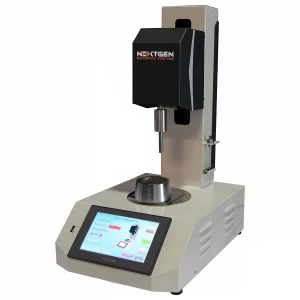 Automatic Vicat Apparatus
The Automatic Vicat Apparatus determines cement paste standard consistency and setting time with less operator…
Cement and concrete testing
Automatic Vicat Apparatus
The Automatic Vicat Apparatus determines cement paste standard consistency and setting time with less operator…
Cement and concrete testing
Nothing matches that filter. Show all products
FAQs
NextGen covers the physical tests a cement lab runs on the binder itself, from raw powder to cured specimen:
- Fineness, with Blaine air-permeability apparatus.
- Setting time, with Vicat apparatus.
- Soundness, with a high-pressure autoclave.
- Curing, with climatic curing cabinets.
- Specimen preparation, with programmable mortar mixers.
Tell us which tests your standard requires and we'll map them to the right systems. Contact our team or request a quote.
Work from the property you report:
- Fineness of the cement powder: a Blaine apparatus.
- How quickly it sets: a Vicat apparatus.
- Soundness (expansion): an autoclave.
- Curing samples under controlled conditions: a curing cabinet.
- Mixing mortar to a standard profile: a programmable mixer.
If you'd like help matching a system to your standards, contact our team.
The equipment is built to the standards cement labs work to, mainly ASTM and EN. Common ones by test:
- Fineness (Blaine): ASTM C204; EN 196-6.
- Setting time (Vicat): ASTM C191; EN 196-3.
- Soundness (autoclave): ASTM C151.
- Mortar mixing: ASTM C305; EN 196-1.
Each product page lists the exact standards a model meets. If your specification names one you don't see, send it over and we'll confirm it.
By the Blaine air-permeability method, which relates how easily air passes through a bed of cement to its specific surface area. NextGen offers the automated BlaineGen Plus and the digital BlaineGen Classic, both of which run the test to ASTM C204 and EN 196-6. To match one to your throughput, request a quote.
With a Vicat apparatus, which tracks how a needle penetrates a paste over time to find the initial and final set. NextGen supplies both an Automatic Vicat Apparatus and a Manual Vicat Apparatus, to ASTM C191 and EN 196-3.
The Manual Vicat Apparatus requires an operator to take readings at set intervals, which suits labs with lower volumes. The Automatic Vicat Apparatus records penetration automatically over the full test, freeing the operator and removing reading-time variation. Both measure the same setting times to the same standards; the choice comes down to throughput and how hands-off you want the test.
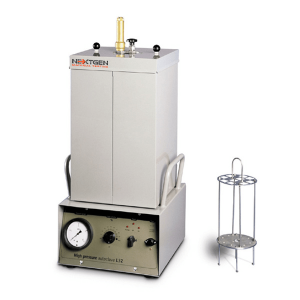
Soundness checks that cement won't expand harmfully after setting. The high-pressure autoclave subjects specimens to high-pressure steam and measures the resulting expansion, to ASTM C151. Excess expansion signals free lime or magnesia that could crack hardened concrete.
Yes. Curing conditions have to be controlled for results to be comparable. The NextGen Curemate climatic curing cabinets hold specimens at set temperature and humidity, in 550 and 750 litre sizes, so mortar and concrete cure under standard conditions before testing. Tell us your capacity and conditions and we'll match a cabinet to them.
NextGen supplies programmable mixers that follow the standard mixing profile automatically: the Digital Mortar Mixer (NG-DMM) and the fully automatic NG-AutoDigiMix. Consistent mixing matters because mixing time and speed affect strength results, and a programmable mixer removes that variation.
Standards such as ASTM C305 and EN 196-1 specify exact mixing speeds, times and rest periods. A programmable mixer runs that sequence the same way every time, so the mortar reaching your setting-time and strength tests is prepared identically batch to batch. Manual timing introduces variation that shows up later as scatter in results.
Yes. Because fineness, setting time, soundness, curing and mixing are all in-house, we can specify, supply, install and train across the physical-testing side of a cement lab as one coordinated package. Request a quote with your scope and we'll build it.
Several are. The automatic Vicat, automated Blaine and programmable mixers run their test sequences on their own and record the results, which reduces operator workload and keeps readings consistent. Manual versions are available where a simpler set-up fits the lab better.
Yes. Installation and hands-on training are done on site, and NextGen provides calibration traceable to recognised standards, spare parts and both remote and on-site service. Support continues for the life of the equipment. To plan an install, contact our team.
Cement producers, ready-mix and precast plants, construction-materials and QC laboratories, and research institutions all use this equipment to meet fineness, setting, soundness and strength specifications. To move forward, request a quote for any product on this page, or contact our team and we can arrange a demonstration. You can also browse the full Cement & Concrete Testing Equipment range.