GenFlex Sole – Whole Footwear Flexing Tester

Textile Testing Equipment
Standards





Description
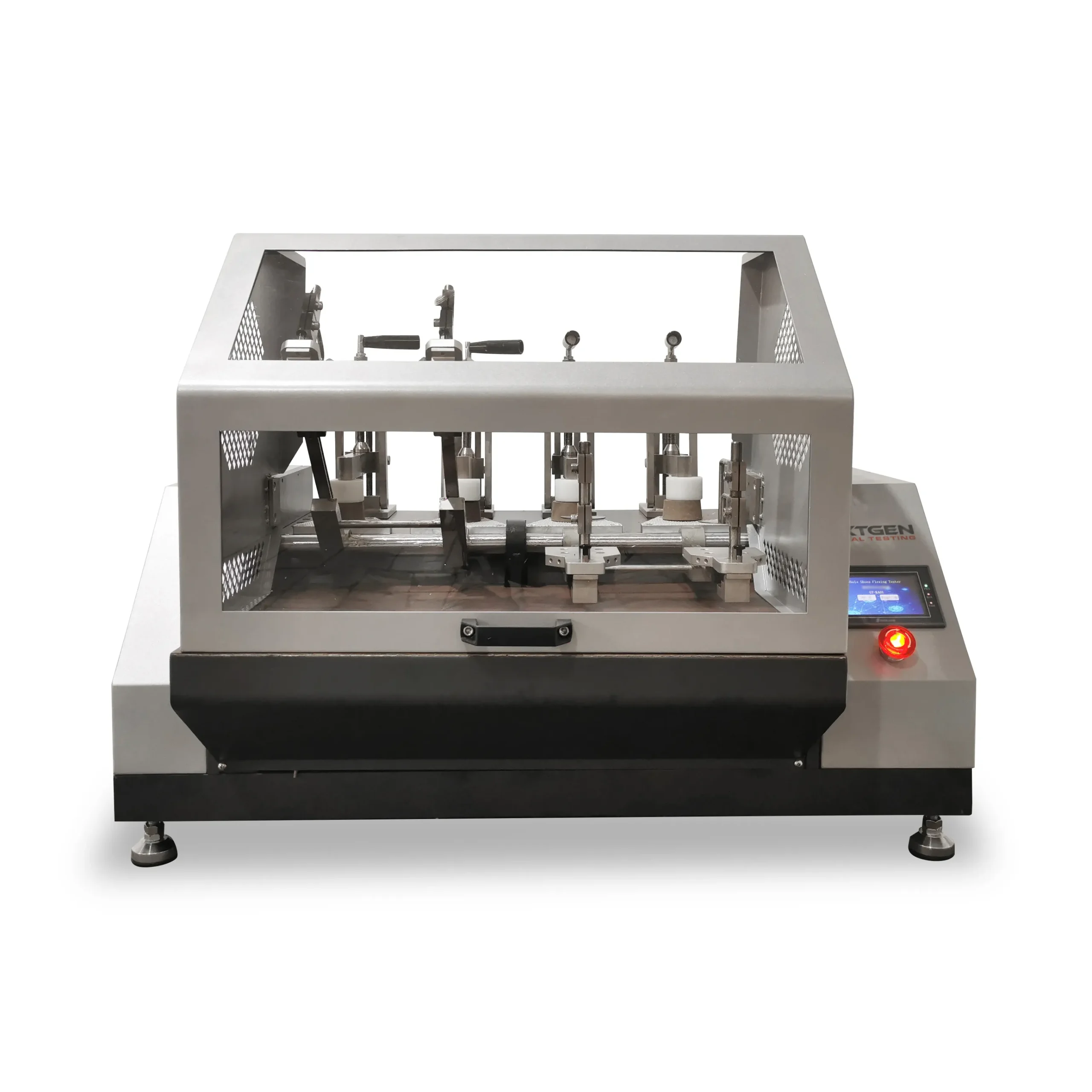
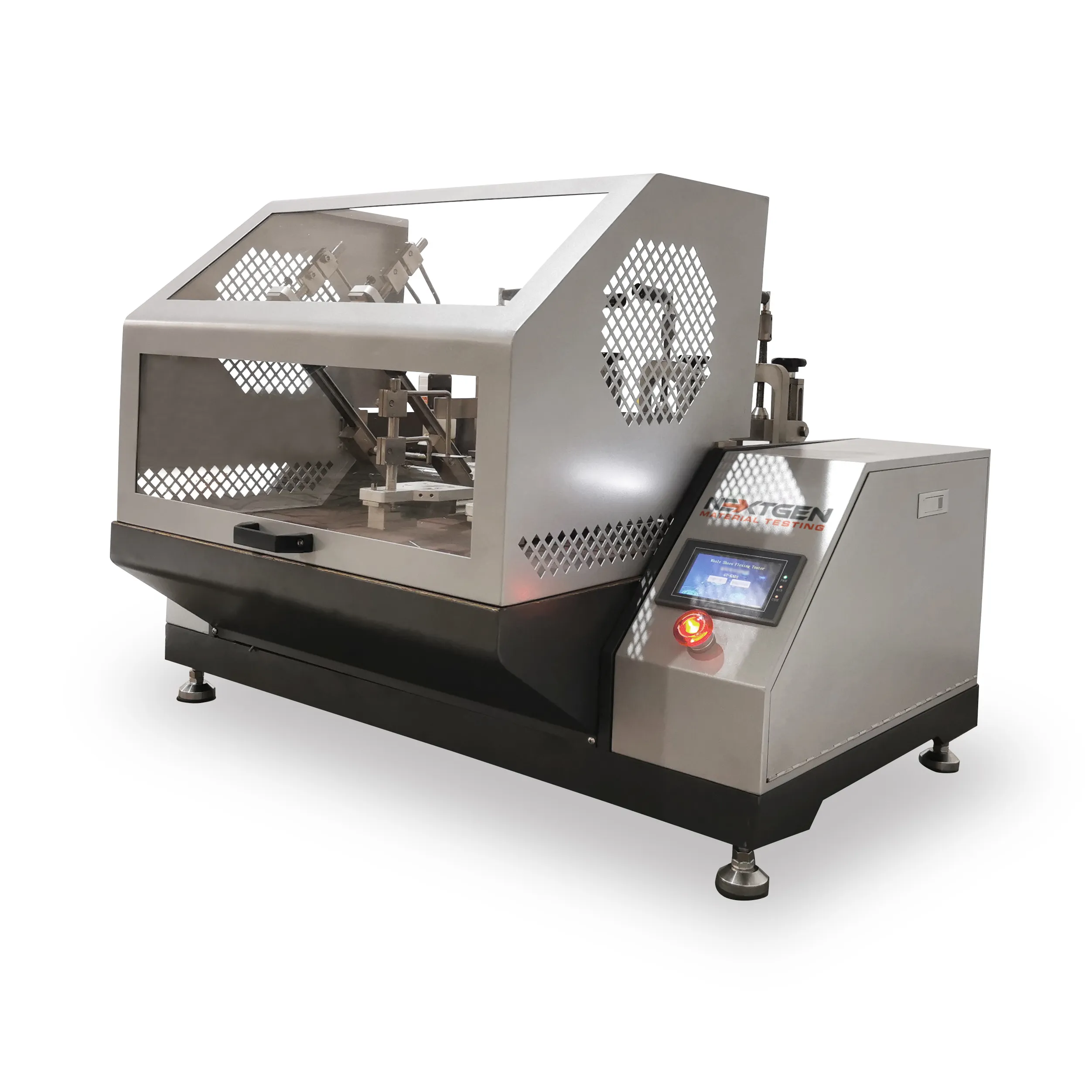
GenFlex Sole is a whole footwear flexing tester designed to evaluate the flex resistance of finished shoes under repeated bending conditions. It is used to assess whether cracking, sole failure, or other visible damage develops during cyclic flexing, making it a practical system for footwear quality control, durability verification, and comparative product testing. Built for sports shoes, casual shoes, and work footwear, the system uses controlled bending angles, adjustable speed settings, touchscreen operation, and dedicated heel and forefoot fixtures to deliver repeatable test conditions in a laboratory environment.
Main Features
GenFlex Sole is built for labs and footwear manufacturers that need controlled whole-shoe flex testing with stable sample holding, repeatable motion, and straightforward day-to-day operation.
- Whole-Shoe Flex Testing: Designed to test finished footwear rather than isolated upper or sole materials, giving labs a more application-focused durability result.
- Crack and Flex Resistance Evaluation: Helps identify cracking or failure in the shoe or sole during repeated reciprocating flexing.
- Adjustable Bending Angle: Supports a bending angle range of 0° to 90°, allowing the test setup to be matched to the intended method or product type.
- Variable Speed Control: Provides adjustable speed ranges for different angle zones to support more controlled flex testing across different footwear constructions.
- Multiple Sample Capacity Options: Available in 2-sample and 4-sample configurations to suit different throughput requirements.
- Touchscreen Control: Uses touchscreen operation for test setup, timing, and cycle control.
- Protective Cover: Built with a protective enclosure to support safer operation and lower noise during testing.
- Purpose-Built Heel and Forefoot Fixtures: Includes purpose-built fixtures that help hold the shoe securely in position throughout repeated flexing cycles for more consistent test setup and evaluation.
- Automatic Stop After Test Completion: The system can be set to stop automatically when the programmed run is complete.
Applications
GenFlex Sole is intended for footwear testing programs where complete shoes must be evaluated under repeated flexing rather than relying only on upper-material or sole-only tests. It is especially relevant when labs need to compare finished product durability, verify manufacturing consistency, or investigate cracking behavior under cyclic bending.
- Sports Footwear: Flex resistance testing for finished athletic shoes.
- Casual Footwear: Repeated bending evaluation for everyday shoe constructions.
- Work and Industrial Footwear: Durability testing for products expected to withstand repeated flexing in service.
- Finished Shoe Quality Control: Useful for lot comparison, process validation, and release testing.
- Product Development and Benchmarking: Helps compare design changes, materials, and construction methods in full-shoe testing programs.
Who This System Is For
GenFlex Sole is well suited for organizations that need repeatable whole-shoe flex testing as part of footwear durability evaluation.
- Footwear manufacturers
- Footwear quality control laboratories
- Product development and wear-test teams
- Materials and construction validation labs
- Third-party footwear testing laboratories
- Brands and sourcing teams reviewing finished shoe durability
Technical Specifications
For labs planning installation or comparing whole-shoe flex testers, the specifications below summarize the main configuration options, operating ranges, and physical requirements of the system.
| Model | GenFlex Sole A | GenFlex Sole B |
|---|---|---|
| Sample Capacity | 4 samples simultaneously | 2 samples simultaneously |
| Control Method | Touchscreen control | |
| Bending Angle | 0° to 90° adjustable | |
| Test Speed | 0° to 50°: adjustable speed range 60 to 230 rpm; 50° to 90°: adjustable speed range 60 to 140 rpm | |
| Counter | 0 to 99,999,99 (7 digits) | |
| Power | 1-phase AC 220 V, 50/60 Hz, 3 A | |
| Dimensions | 37.4 x 29.9 x 27.6 in. (95 x 76 x 70 cm) | 22.8 x 29.1 x 28.3 in. (58 x 74 x 72 cm) |
| Weight | 491.6 lb (223 kg) | Approx. 330.7 lb (about 150 kg) |
Standards
GenFlex Sole supports whole-footwear flex testing methods used for finished shoe durability evaluation. The primary supported standards include:
- SATRA TM92
- ISO 24266 Method A
- HG/T 2871-2022 Method B
Standard Accessories
GenFlex Sole is supplied with the core accessories required for standard setup and routine footwear flex testing.
- Heel Clamp: 1 set
- Plastic Pad: 1 set
- Spanner: 1 set
- Power Line: 1 pc
Optional Accessories
Optional accessories are available for labs that need additional configuration support for specific testing methods.
- HG/T 2871 Press Block: 3 sizes per set, 1 set per working position
Need to Test Finished Footwear Under Repeated Flexing Conditions?
If your team is evaluating full-shoe durability, crack formation, or flex resistance in sports, casual, or industrial footwear, GenFlex Sole can be configured to match your sample throughput and testing method requirements. Share your footwear type, target standards, and lab workflow needs with NextGen Material Testing, and our team will help you review the right setup and prepare a quote for your application.
For Laboratories
Need Additional Quality Control Equipment to Build Your Laboratory?
Footwear and leather testing is only one part of a complete quality control laboratory. NextGen can help you equip your entire lab with color fastness testers, abrasion testers, bursting strength testers, tearing testers, flexing testers, and other supporting solutions, all coordinated as one complete project.
- One partner to equip your complete laboratory
- Installation, training, calibration
- Support for the life of the equipment
FAQs
Footwear durability programs commonly pair this tester with two companion systems that cover failure modes a whole-shoe flex test does not isolate by itself. GenBally Flex is typically used for repeated flexing of leather, coated fabrics, and footwear upper materials, while GenVeslic is used for surface abrasion, finish wear, and staining transfer evaluation. Together, these testers give you a broader view of finished shoe durability, upper cracking behavior, and surface wear performance.
This combination is useful when you need to separate a sole or construction issue from an upper-material or finish issue. GenFlex Sole evaluates the complete shoe under cyclic bending, GenBally Flex focuses on flex resistance in upper materials, and GenVeslic helps assess cosmetic and surface durability under controlled rubbing conditions.
If you’re building out a footwear durability workflow, learn more or request a quote. Share your footwear type and testing goals, and we can help match the right mix of whole-shoe, upper-material, and surface-wear testing.
We recommend checking the system during installation and commissioning, then putting it on a routine verification schedule based on usage and your lab’s quality requirements. Installation support includes setup, physical and electrical connections, fixture and transducer mounting, and operational checks of the instrument. Calibration can be scheduled separately when your procedure calls for it.
For this whole-footwear flexing tester, the right interval is usually driven by test frequency, fixture changes, service events, and the settings you run, since the system is available in 2-sample and 4-sample versions with adjustable bending angle and speed control. If your quality program requires documented calibration, we offer annual calibration support through accredited ISO laboratories.
To align the check and calibration plan with your footwear testing workflow, learn more about this tester or contact us. If you share your method, sample throughput, and QA requirements, we can help define the right verification routine for your setup.
This tester supports an adjustable bending angle range of 0° to 90° for whole-footwear flex resistance testing. That gives you a broad setup window for finished shoe durability evaluation, whether you are checking crack formation, sole failure, or comparative flex performance across different footwear constructions.
The bending range is paired with variable speed control, with one adjustable speed range for 0° to 50° and another for 50° to 90°. That helps you tune the flexing motion to the shoe design, test method, and the level of bending your lab needs to apply during cyclic testing.
To align this with your testing method, learn more or request a quote. If you share your footwear type and target flex conditions, we can help match the right setup.
This system is specifically designed for whole footwear flexing, so it tests finished shoes rather than isolated sole or upper specimens. It evaluates how the complete shoe performs under repeated bending, which gives a more realistic view of durability, crack formation, and sole failure during actual use.
Testing full footwear is especially valuable for quality control and product development because it captures the interaction between components such as the sole, upper, adhesives, and construction methods. This helps identify issues that may not appear when testing materials separately.
If you need to isolate material behavior, separate systems are typically used. For example, the GenBally Flex – Related flexing tester for leather, coated fabrics, and footwear upper materials focuses on upper materials, while other methods target sole compounds independently.
To align this with your testing method, you can learn more or request a quote and we can help confirm the right setup for your footwear types and test standards.
Keep the motion path clean and the shoe-holding components consistent. For stable whole-footwear flexing, inspect the heel clamp, forefoot holding points, and plastic pad for debris, wear, or looseness before each test, then confirm the programmed bending angle, speed, and cycle settings on the touchscreen match your method and sample type.
A short dry run after fixture changes or after moving the tester is also a good habit. It helps verify that the shoe is seated evenly, the flexing action is smooth, and the counter and stop functions are working as expected. If repeatability starts to drift, the first areas to check are fixture alignment, clamp tightness, worn contact surfaces, and setup consistency between operators.
When tightening up your maintenance routine for footwear flex resistance testing, learn more or request a quote. Share your shoe type, method, and lab workflow, and we can help confirm the right setup and support plan.
Consistent whole-shoe flex testing depends on controlling shoe positioning, bending motion, and cycle setup. This tester uses touchscreen control for test setup and run control, adjustable bending angles, and variable speed control so the method can be held consistently from one run to the next. Dedicated heel and forefoot fixtures also help keep the shoe secured in the same test position through repeated flexing, which is important when comparing lots, constructions, or visible failure points.
The built-in cycle counter and automatic stop function further improve repeatability by ending the test at the programmed completion point instead of relying on manual timing. If your lab is balancing throughput with consistency, we can also help you choose the right 2-sample or 4-sample configuration for your workflow.
To align this with your testing method, learn more about the system or request a quote for the configuration that fits your footwear types, sample volume, and lab routine.
Spare parts and long-term service support are available after purchase for this whole-footwear flexing tester. We supply ongoing replacement parts and accessories, provide after-sales technical support, and include warranty coverage that begins when the instrument is delivered. A minimum 12-month warranty is included, with continued support available beyond the initial warranty period.
That support is important for footwear testing programs that run repeated flex resistance testing and need to keep fixtures, clamps, pads, and other service items in working condition. We can also assist with installation and operator training, which helps your team bring the system online faster and maintain consistent day-to-day operation.
If you want to plan post-sale support for your lab, you can learn more about the system or contact us to review your expected usage, spare parts needs, and service requirements.
This whole footwear flexing tester is designed to evaluate complete, finished shoes under repeated bending, so it can accommodate a wide range of footwear types used in real applications. It is suitable for testing everything from lightweight athletic shoes to heavier-duty footwear, as long as the shoe can be securely mounted and flexed through the required motion.
Typical applications include:
- athletic and sports footwear
- casual and fashion shoes
- work and safety boots
- outdoor and hiking footwear
- children’s and specialty footwear
The focus is on evaluating how the full shoe construction performs, including sole durability, bonding integrity, and crack formation during cyclic flexing. If you're working with a specific footwear category or sole construction, learn more about this system or request a quote to confirm fixture compatibility and setup for your samples.
This whole-footwear flexing tester supports SATRA TM 92, ISO 24266 Method A, and HG/T 2871-2022 Method B for finished shoe flex resistance and repeated-bending durability testing. It is designed for whole-footwear flexing work where you need to check crack formation, sole failure, and other visible damage during cyclic bending.
For HG/T 2871-2022 Method B, we can supply the matching press block accessory for the method setup. If your testing program also includes flex cracking evaluation on leather, coated fabrics, or footwear uppers instead of complete shoes, GenBally Flex is the better companion system for that part of the workflow.
To align this with your testing method, learn more about the system or request a quote. Share your footwear type and target standard, and we will help confirm the right configuration for your lab.
Our touchscreen control manages the core settings for whole-footwear flex resistance testing. It gives the operator a direct way to set up the test, control timing, and run the cycle program. The same interface supports the adjustable bending angle and variable speed settings, so the method can be matched to the footwear construction and test requirement.
For cycle counting, this tester uses a seven-digit counter and can be set to stop automatically when the programmed run is complete. That helps keep repeated flexing tests consistent across routine QC, lot comparison, and product development work, whether you select the 2-sample or 4-sample version.
To align the control setup with your footwear test method, learn more or request a quote. If you share your shoe type, target standard, and sample throughput, we can help match the right configuration.
This system is built to check crack formation and sole failure in the same whole-footwear flex test. It runs the finished shoe through repeated bending, so your team can evaluate flex-related damage during one controlled durability cycle rather than splitting the review across separate shoe-level tests.
Because the shoe is secured with dedicated heel and forefoot fixtures and tested with controlled bending angle and speed settings, the same run can be used to review visible cracking, sole failure, and overall finished-shoe flex durability under repeatable conditions. If your focus is upper-material flexing instead of complete footwear, GenBally Flex is the more targeted option.
If you're comparing finished shoe designs or production lots, learn more or request a quote with your footwear type and sample volume, and we will help match the right configuration for your test program.
Operators set test speed by angle zone through the touchscreen controls. This whole-footwear flexing tester lets you program the bending motion in two sections: from 0° to 50°, speed is adjustable from 60 to 230 rpm, and from 50° to 90°, speed is adjustable from 60 to 140 rpm. That gives you more control over the lower and higher portions of the flex cycle instead of relying on one fixed speed across the full stroke.
Combined with the adjustable 0° to 90° bending angle and dedicated heel and forefoot fixtures, this setup helps keep footwear flex resistance testing consistent across different shoe constructions. It is useful when you need to compare finished shoes, check lot-to-lot consistency, or align the motion with your internal durability method.
When refining your flex test parameters, learn more or request a quote. If you share your footwear type and target method, we can help match the right setup.
Sample throughput for whole footwear flex testing depends on how many footwear positions are configured on the tester and how your test cycles are scheduled. This system is designed to run multiple shoes simultaneously, which helps increase daily testing capacity for durability and crack-resistance studies.
The main throughput factors are:
- number of test stations or footwear positions configured on the machine
- test method requirements, including total flex cycles and pass/fail criteria
- whether you run continuous long-cycle tests or shorter comparative batches
- operator workflow, including loading, unloading, and inspection intervals
High-volume QA labs often organize staggered test starts to keep all stations active, while R&D teams may run fewer samples with closer observation during the test. When determining the best setup for your throughput targets, learn more or request a quote to match the configuration to your lab’s workload and test methods.
We provide installation assistance and operator training for this whole-footwear flexing tester. For a GenFlex Sole startup, our team can set up the unit at your facility, complete the required power and hardware connections, fit the supplied fixtures, verify basic operation, and train operators on safe use, touchscreen controls, and routine footwear flex resistance testing.
The introductory training is intended for up to three operators and focuses on day-one use. It covers system components, safe power-up and shutdown, accessory handling, and the reference materials your team needs to begin testing with confidence. Standard installation is focused on setup and functional verification, while calibration can be arranged separately when your lab needs it.
If you are planning a new installation or operator rollout, learn more or request a quote. If you share your site requirements and operator count, we can help align the startup scope to your workflow.
Plan around the machine dimensions first, then leave additional working clearance for loading shoes, setting the heel and forefoot fixtures, and accessing the touchscreen and protective enclosure. The GenFlex Sole A, our 4-sample configuration, measures 37.4 x 29.9 x 27.6 in. (95 x 76 x 70 cm). The GenFlex Sole B, our 2-sample configuration, measures 22.8 x 29.1 x 28.3 in. (58 x 74 x 72 cm).
For whole-footwear flex resistance testing, the final floor space you reserve should also reflect operator access and sample changeover. The 4-sample version takes a larger footprint but supports higher throughput in a single run. The 2-sample version is the better fit where bench or lab space is tighter.
If you're comparing configurations for a new lab or line-side setup, learn more or request a quote. Share your preferred sample capacity and layout constraints, and we can help confirm the best configuration for your space.
Cyclic flex testing on finished footwear is used to check for cracking, sole breakdown, and other visible failure that develops as the shoe is bent through repeated cycles. With this system, you are evaluating how the complete shoe responds at the flex zone, which makes it useful for detecting durability issues in the finished product rather than in a single component alone.
The most useful observations usually come from the area that folds repeatedly, including progressive cracking, loss of integrity in the sole area, and visible damage that becomes more severe as cycling continues. This helps with lot comparison, product development work, and checking whether different footwear constructions hold up consistently under the same bending conditions.
If you’re aligning this with your footwear durability program, you can learn more about this tester or request a quote for the right setup. If you share your shoe construction and damage criteria, we can help tailor the configuration to your workflow.
During training and startup, we provide the core technical documentation your team needs to put this whole-footwear flexing tester into routine use. That includes the operation manual, technical documentation, and any applicable training videos for the operators being trained. Startup also covers system setup, physical and electrical connections, fixture mounting, and operational checks, so the documentation matches the delivered configuration.
For the GenFlex Sole, the documentation and training focus on safe operation, major system components, touchscreen control, and the correct use of supplied fixtures and accessories. We also include a detailed warranty package with the order, along with ongoing after-sales support.
To align the documentation package with your lab setup, you can learn more about this system or request a quote for your required configuration and startup support.
This tester includes an enclosed protective cover around the flexing area, which helps improve operator safety and reduce operating noise during whole-footwear flex resistance testing. That makes it a good fit for footwear QC and development labs running repeated cyclic bending tests on finished shoes.
The enclosure is part of a broader control-focused setup that also includes touchscreen operation and an automatic stop at the end of the programmed run. Together, those features support cleaner day-to-day workflow when you are comparing lots, checking crack formation, or evaluating sole durability over repeated flex cycles.
If you are reviewing fit for your lab workflow, you can learn more or request a quote for the right sample capacity and test setup.
This system is designed to handle a wide range of footwear constructions and categories by testing the entire finished shoe under controlled flexing conditions. It is suitable for evaluating everything from lightweight athletic footwear to more rigid work or safety shoes, as long as the sample can be securely mounted and flexed through the required motion.
That flexibility comes from how the shoe is clamped and driven during the test. Different outsole designs, upper materials, and construction methods can all be assessed because the test focuses on real bending behavior of the complete product rather than isolated components.
Typical applications include:
- sports and running shoes with flexible soles
- casual and fashion footwear with varied materials
- work and safety boots with thicker, more rigid constructions
For upper materials or component-level testing, many labs also use GenBally Flex to isolate flex performance before full-shoe validation. To determine the best setup for your footwear types, learn more or request a quote with your sample details to confirm compatibility.
Choose a whole footwear flexing tester when you need to evaluate the finished shoe as a complete assembly under repeated bending. That is the better choice for whole-footwear flex resistance testing, where the goal is to see how the sole, upper, flex zone, and overall construction behave together during cyclic bending. It is the right fit for crack formation checks, sole failure evaluation, lot comparison, and finished-shoe durability verification. A Bally flex tester is better suited to cut upper materials such as leather, coated fabrics, and textiles before they are built into a shoe.
The main selection point is where you want to measure failure. Use GenBally Flex for upper-material screening and comparative material studies. Use this system when your lab needs product-level data on sports, casual, or work footwear, including how design or production changes affect full-shoe flex durability.
If you’re comparing alternative approaches, learn more about the whole-footwear setup or request a quote. Share your shoe type and test workflow, and we can help match the right configuration to your lab.
This tester uses an adjustable bending angle from 0° to 90°, so you can set the motion to suit the selected flexing method and the type of footwear being evaluated. For whole-footwear flex resistance testing, the angle should be matched to the method you are running and to the shoe construction, since sports, casual, and work footwear can respond differently under repeated bending.
When you are aligning the setup to a specific standard, the angle is part of the overall test configuration, together with fixture setup and test speed. This system supports SATRA TM 92, ISO 24266 Method A, and HG/T 2871-2022 Method B, and optional method-specific accessories are available for certain workflows, including an HG/T 2871 press block setup.
To align this with your testing method, learn more about the system or request a quote. If you share your footwear type and target standard, we can help confirm the right configuration.
This system evaluates finished shoe flex resistance by repeatedly bending the entire footwear through a controlled flexing motion that simulates real walking conditions. The shoe is secured in the tester and flexed at a defined angle and cycle rate, allowing the sole and upper to undergo continuous deformation. As the cycles progress, you can directly observe how the footwear responds to repeated bending, including the onset of cracks, sole separation, or other structural failures.
The test focuses on durability under cyclic stress, which is critical for finished shoe performance. During flexing, the sole is stressed at typical flex points, helping identify weak bonding areas, material fatigue, or design limitations. This makes it especially useful for comparing different constructions, materials, or production batches under consistent conditions.
In practical lab use, teams track performance by monitoring:
- Number of cycles completed before visible cracking or failure
- Location and severity of sole or upper damage
- Changes in flexibility or structural integrity over time
For material-level flex testing before full shoe assembly, many labs also use the GenBally Flex – Related flexing tester for leather, coated fabrics, and footwear upper materials to isolate upper material performance.
To align this with your testing method, you can review the full setup on the GenFlex Sole – Whole Footwear Flexing Tester or request a quote to confirm the right configuration for your footwear types and test standards.
This footwear flexing tester requires a 1-phase AC 220 V, 50/60 Hz, 3 A power supply for installation.
We supply the system with a power line, so the main site check is making sure your lab has the proper single-phase service and outlet arrangement available at the planned installation location. That helps keep whole-footwear flex testing setup straightforward and avoids delays during commissioning.
Need to confirm the right electrical setup for your lab? learn more or request a quote, and we can review your installation requirements before shipment.
Automatic stop is available on this tester, so the machine can end a programmed run on its own when the set test completes. For whole-footwear flex resistance testing, that gives your lab a cleaner, more repeatable endpoint and reduces the need for operator supervision during long cyclic bending runs.
The control system uses a touchscreen for test setup, timing, and cycle control, and the unit includes a 7-digit counter. That is useful when you need to run a defined cycle count for finished shoe durability checks, lot comparison, or development benchmarking under repeated flexing conditions.
To align this with your testing method, learn more or request a quote. If you share your footwear type and throughput target, we can help match the right configuration for your workflow.
This tester is built for consistent heel and forefoot positioning. We use dedicated heel and forefoot fixtures to hold the shoe securely through repeated flexing, which helps keep setup conditions stable from sample to sample and from one test run to the next.
The practical level of repeatability depends on the shoe geometry, the flex point being used, and how your lab standardizes loading across operators and product types. For sports, casual, and work footwear, the strongest repeatability comes from using the same positioning reference each time and matching the fixture setup to the construction under evaluation. That supports cleaner lot comparisons and more dependable durability benchmarking.
Need to confirm the right configuration for your footwear range? learn more or request a quote, and we can help align the fixture setup with your shoe types and test workflow.
This tester is supplied with a minimum 12-month warranty from delivery, covering the instrument as a complete system. For footwear flex resistance testing labs, that gives you baseline protection on the GenFlex Sole while the system is put into routine whole-footwear durability use.
Each order also includes a detailed warranty package, and we continue to support the system with spare parts and accessories after sale. Consumables are not part of lifetime service support, and warranty coverage applies to equipment used under normal operating and maintenance conditions rather than units affected by modification, misuse, abuse, or improper maintenance.
To confirm the exact warranty terms for your configuration, learn more or contact us. We can also review installation, service support, and any application-specific requirements for your lab.
Related Products
GenBally Flex – Resistance Flexing Tester
GenBally Flex is a multi-station resistance flexing tester for evaluating leather, coated fabrics, textiles, and footwear upper materials under repeated bending. Available with 6, 12, or 24 stations, it uses controlled clamping, a 22.5° flexing angle, 100 cycles per minute speed, touchscreen control, and adjustable cycle counting to assess cracking, crease failure, and flex-related durability under recognized SATRA, ISO, EN, and ASTM methods.
Read more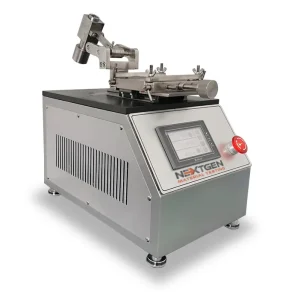
GenVeslic – Leather and Surface Abrasion Tester
GenVeslic is a reciprocating leather and surface abrasion tester for evaluating color fastness, finish wear, fading, and staining transfer under controlled rubbing conditions. It is suitable for leather, textiles, plastic-coated materials, footwear components, and dyed surfaces. Wool felt abrasion heads, defined pressure, dry or wet testing, 1-, 2-, or 4-position configurations, and fixed stroke geometry help laboratories compare surface durability repeatably.
Read more