Fabric strength testing is important because small changes in yarn structure, fabric construction, coating, finishing, thickness, or material direction can affect durability, product safety, and long-term performance. A textile lab may need to evaluate tear resistance, bursting strength, tensile behavior, seam strength, puncture resistance, elongation, and material consistency before fabrics are approved for manufacturing or released to the market.
NextGen Material Testing helps laboratories choose fabric strength testing equipment based on the material, test method, standard, sample type, and required workflow. Whether you are evaluating apparel fabrics, nonwovens, upholstery, coated textiles, technical fabrics, packaging materials, or flexible sheet materials, the right testing system helps improve repeatability, support supplier approval, and reduce the risk of fabric failure in finished products.
Fabric Strength Testing Equipment for Textile Quality Control
Fabric strength is one of the most important indicators of textile performance. A fabric may look acceptable during visual inspection but still fail when exposed to tearing, internal pressure, pulling force, puncture, seam stress, or repeated handling. Laboratory testing helps identify these risks before they affect production, product durability, customer satisfaction, or compliance requirements.
For quality control teams, fabric strength testing equipment supports incoming material inspection, supplier comparison, product development, production verification, and failure analysis. Instead of relying only on fabric weight, appearance, or hand feel, laboratories can use controlled testing to compare mechanical performance under repeatable conditions.
The best equipment choice depends on the material structure, the failure mode being evaluated, and the required test method. A woven fabric may require tear resistance testing, while a knitted or nonwoven fabric may require bursting strength evaluation. Technical textiles, coated materials, and flexible sheet products may require different sample preparation, fixtures, loading conditions, or reporting methods.
What Fabric Strength Testing Evaluates
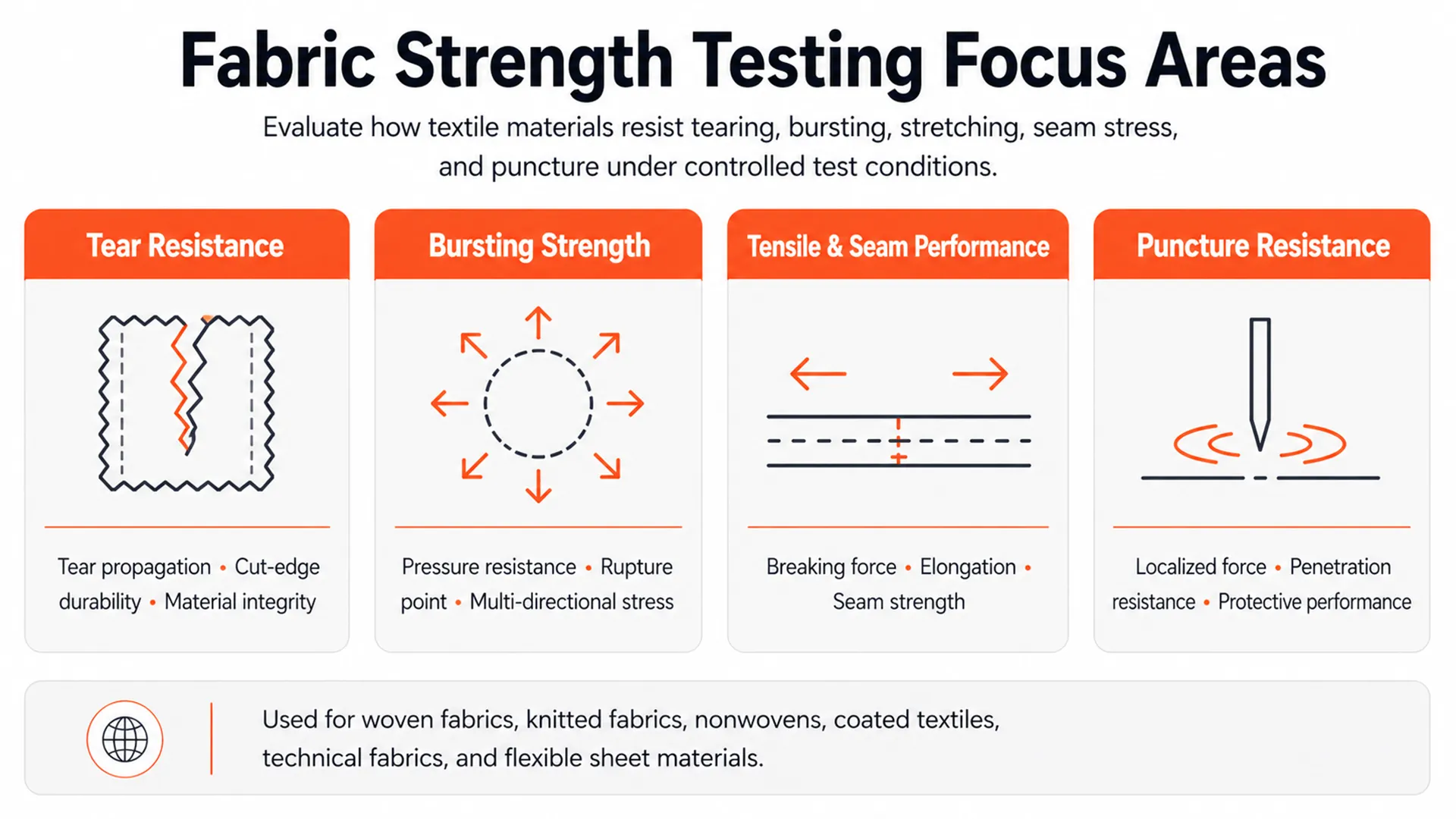
Fabric strength testing focuses on how a textile material behaves when force is applied. The test method may evaluate whether the material tears, bursts, stretches, slips at the seam, punctures, or loses structural integrity under controlled laboratory conditions.
| Strength Property |
What It Measures |
Why It Matters |
| Tear Resistance |
The force required to continue or initiate tearing in a fabric or flexible sheet material |
Helps evaluate durability for apparel, nonwovens, upholstery, packaging, protective materials, and technical textiles |
| Bursting Strength |
The pressure or force required to rupture a fabric when force is applied across an area |
Important for knitted fabrics, nonwovens, coated materials, filtration media, medical textiles, and flexible sheet products |
| Tensile Behavior |
How a fabric responds when pulled, including breaking force, elongation, and load response |
Helps compare material strength, directionality, construction quality, and suitability for demanding applications |
| Seam Strength |
The resistance of a sewn or joined area to opening, slipping, or failure under applied force |
Useful for garments, upholstery, bags, protective products, and finished textile assemblies |
| Puncture Resistance |
The ability of a fabric or flexible material to resist penetration by a concentrated force |
Important for protective textiles, packaging, coated fabrics, technical materials, and industrial applications |
Tear, Burst, Tensile, Seam, and Puncture Performance
Different fabric strength tests evaluate different failure modes. Tear testing focuses on resistance to tearing, burst testing evaluates rupture under pressure, tensile testing measures response to pulling force, seam strength testing examines stitched or joined areas, and puncture testing evaluates resistance to concentrated penetration. Selecting the correct method helps laboratories generate results that match the real performance risk.
Fabric Direction, Construction, and Material Variability
Fabric strength can vary by warp direction, weft direction, knit structure, fiber type, coating, finishing process, and manufacturing batch. Testing helps identify these differences and gives quality teams measurable data for supplier approval, production monitoring, and product development decisions.
Common Fabric Strength Test Methods
Fabric strength test methods are selected according to the fabric type, expected failure mode, sample geometry, and performance requirement. Some methods apply pulling force, while others apply pressure, impact, tearing force, puncture force, or seam stress.
| Testing Area |
What It Evaluates |
Typical Use |
| Elmendorf Tear Testing |
The force required to propagate a tear through a prepared specimen |
Textiles, nonwovens, paper, paperboard, films, and flexible sheet materials |
| Hydraulic Burst Testing |
Bursting strength and burst distension when pressure is applied through a diaphragm |
Woven fabrics, knitted fabrics, nonwovens, coated materials, paper, and board materials |
| Tensile Strength Testing |
Breaking force, elongation, load response, and fabric behavior under pulling force |
Apparel fabrics, industrial textiles, coated fabrics, straps, reinforcements, and technical materials |
| Seam Strength Testing |
Seam slippage, seam opening, stitch failure, and joined-material performance |
Garments, upholstery, bags, protective products, sewn assemblies, and finished textile goods |
| Puncture and Rupture Testing |
Resistance to concentrated penetration, rupture, or localized material failure |
Protective textiles, packaging, technical fabrics, coated materials, and nonwoven products |
Elmendorf Tear Resistance Testing
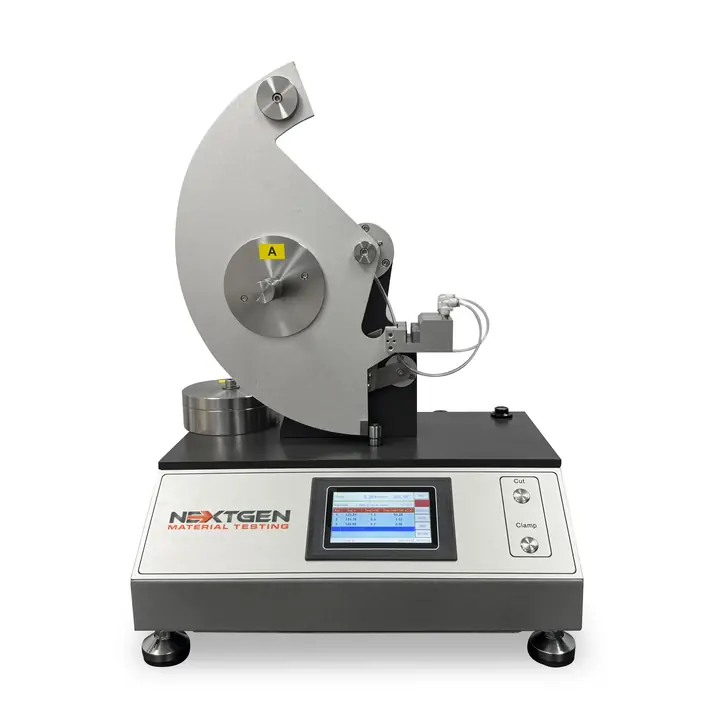
Elmendorf tear testing is used to evaluate the force required to continue tearing a prepared specimen. NextGen’s GenTear Pro Elmendorf Tearing Tester is designed for accurate tear resistance testing of textiles, nonwovens, paper, paperboard, and thin films.
Hydraulic Bursting Strength Testing
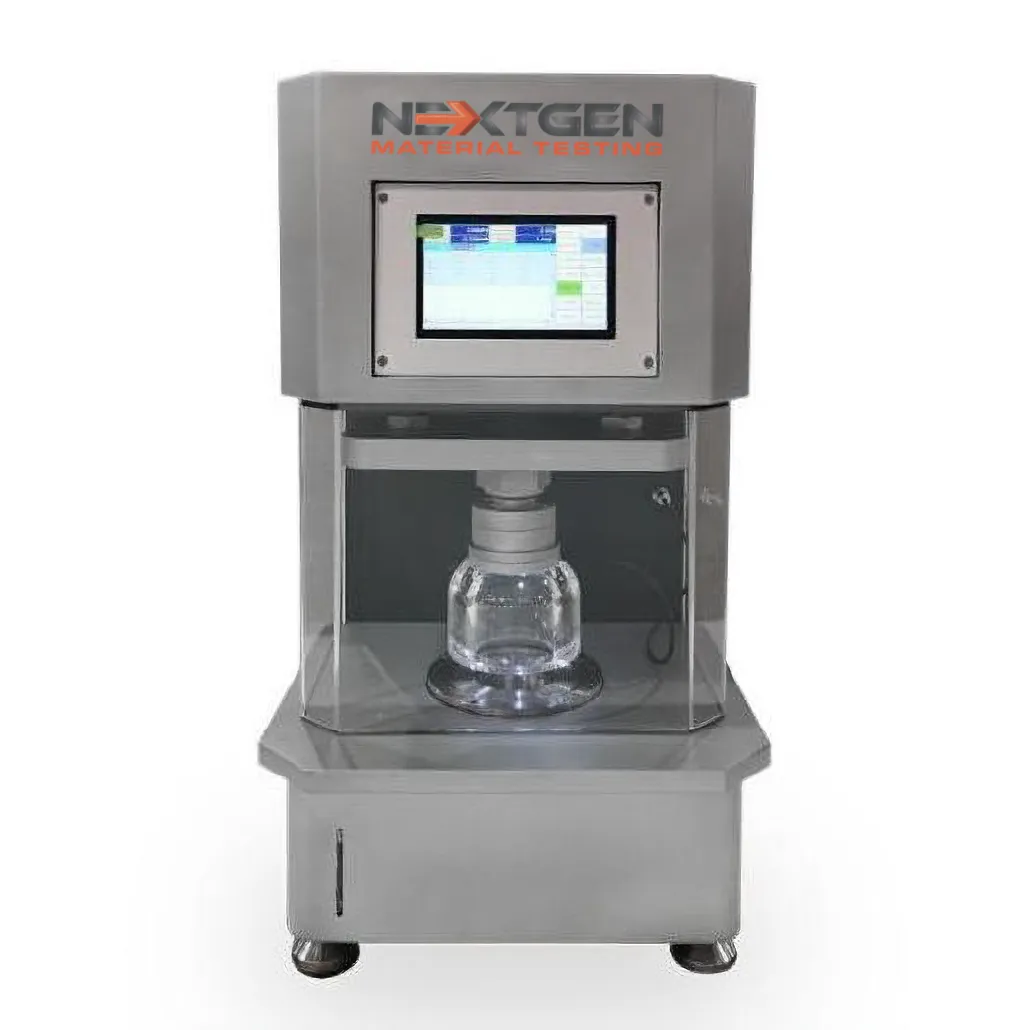
Burst testing evaluates how a material resists rupture when pressure is applied over an area. NextGen’s GenBurst Pro Hydraulic Bursting Strength Tester is designed to measure bursting strength and burst distension in woven, knitted, and nonwoven fabrics, as well as paper and board materials.
Tensile, Seam, and Puncture Testing Considerations
Some fabric strength programs may also include tensile strength, seam strength, elongation, or puncture resistance testing. These methods are selected according to the material, finished product, expected load direction, and customer requirement. When these tests are part of a specification, the equipment, fixtures, specimen preparation, and reporting method should match the applicable standard or internal procedure.
Materials and Products That Require Fabric Strength Testing
Fabric strength testing can be used across many textile and flexible material categories. The right test method depends on the fabric construction, material thickness, coating, end-use condition, and expected failure mode.
| Material or Product |
Common Strength Concern |
Typical Use |
| Woven Fabrics |
Tear resistance, tensile behavior, seam strength, puncture resistance, and direction-dependent performance |
Apparel, workwear, uniforms, bags, upholstery, industrial textiles, and protective materials |
| Knitted Fabrics |
Bursting strength, elongation, rupture behavior, seam performance, and material recovery |
Sportswear, apparel, medical textiles, compression fabrics, and flexible textile products |
| Nonwovens |
Tear resistance, burst strength, puncture resistance, rupture behavior, and batch consistency |
Wipes, hygiene products, filtration media, medical materials, packaging, and industrial nonwovens |
| Coated and Laminated Textiles |
Rupture resistance, puncture behavior, tear propagation, coating-related failure, and flexible sheet performance |
Technical textiles, protective covers, tarps, coated fabrics, upholstery, and industrial materials |
| Paper, Board, and Thin Films |
Tear resistance, burst behavior, rupture, puncture response, and flexible sheet durability |
Packaging, converting, laboratory comparison, product validation, and material development |
Woven and Knitted Fabric Testing
Woven and knitted fabrics can fail in different ways. Woven fabrics may show directional tearing, seam slippage, or tensile failure, while knitted fabrics often require burst testing because their structure stretches and deforms under multidirectional stress. Testing helps laboratories compare construction quality, yarn performance, finishing effects, and batch consistency.
Nonwoven, Coated, and Technical Textile Testing
Nonwovens, coated fabrics, laminated materials, and technical textiles may be used in applications where rupture, puncture, tear propagation, or burst resistance is critical. These materials can be used in hygiene products, filtration media, protective products, packaging, industrial fabrics, and flexible sheet applications where reliable strength data is important for product approval.
Flexible Sheet Materials Beyond Textiles
Some fabric strength instruments can also be used for related flexible sheet materials, such as paper, board, or thin films, depending on the method and equipment configuration. This gives laboratories more flexibility when comparing materials used in packaging, converting, and product development workflows.
Choosing the Right Fabric Strength Testing Equipment
Selecting the right fabric strength testing equipment starts with defining the material, failure mode, specimen format, and test method. A tear resistance test, burst strength test, tensile test, seam test, and puncture test may all require different sample preparation, grips, fixtures, loading direction, test speed, pressure range, or evaluation procedure.
| Testing Need |
Main Objective |
Equipment Direction |
| Tear Resistance |
Evaluate tear propagation in textiles and flexible sheet materials |
Elmendorf Tearing Tester |
| Bursting Strength |
Evaluate rupture resistance under hydraulic diaphragm pressure |
Hydraulic Bursting Strength Tester |
| Tensile or Seam Strength |
Evaluate breaking force, elongation, seam behavior, and load response |
Mechanical Strength Testing Setup |
| Puncture or Rupture Resistance |
Evaluate localized penetration, rupture behavior, or concentrated force resistance |
Appropriate Fixture and Test Method |
Start With the Failure Mode
The first step is to define how the material is expected to fail. If the concern is tear propagation, a tear test may be appropriate. If the concern is rupture under pressure, burst testing may provide more useful data. If the concern is seam failure, elongation, or pulling force, tensile or seam testing may be required.
Match the Test Area, Fixture, and Specimen Preparation
Fabric strength testing depends on specimen dimensions, clamping method, test area, loading direction, pressure range, cutting method, and evaluation procedure. A proper setup helps reduce operator variation and supports better comparison between suppliers, batches, and product designs.
Consider Lab Workflow and Material Range
Laboratories should also consider how many different materials they need to test and how frequently testing will be performed. A routine QC lab may need fast, repeatable workflows for daily production samples, while an R&D lab may need flexible equipment for comparing new fabric constructions, finishes, coatings, and material suppliers.
Fabric Strength Testing Standards and Test Methods
Fabric strength testing may be performed according to ASTM, ISO, EN, DIN, or customer-specific procedures, depending on the material, product type, target market, and brand requirement. These methods can define specimen preparation, test area, loading direction, pressure range, clamping method, speed, conditioning, evaluation criteria, and reporting requirements.
| Standard or Method Family |
Typical Use |
Common Evaluation Areas |
| ASTM |
Mechanical and performance-related test methods for textile and flexible material evaluation |
Tear resistance, bursting strength, tensile strength, seam strength, puncture resistance, and material comparison |
| ISO |
International test methods used to evaluate textile fabric performance across markets |
Fabric strength, bursting properties, tear behavior, tensile behavior, and product performance |
| EN / DIN |
European and regional procedures used for textile, coated fabric, and technical material evaluation |
Strength, rupture resistance, durability, safety performance, and quality verification |
| Customer-Specific Procedures |
Internal brand, retailer, supplier, or product qualification requirements based on expected use conditions |
Supplier approval, production QC, failure analysis, benchmarking, and finished product validation |
Applicable standards and methods vary by material type, test objective, product application, and market requirement.
Standard-Based Testing for Repeatable Results
Standard-based fabric strength testing helps laboratories control variables such as specimen size, conditioning, cutting method, clamping area, loading direction, pressure, force range, test speed, and reporting method. When these conditions are clearly defined and followed, quality teams can compare results more consistently across materials, suppliers, and production batches.
Application-Specific Testing Requirements
Not every fabric or flexible material requires the same strength testing program. A knitted fabric may require more emphasis on bursting strength, while a woven fabric may require tear and tensile evaluation. A technical textile may require puncture, rupture, or seam testing depending on the intended application. The most reliable approach is to select equipment around the exact material, expected use condition, and required test method.
Fabric Strength Testing Equipment from NextGen
NextGen Material Testing provides fabric strength testing equipment for laboratories, textile manufacturers, suppliers, converters, brands, and quality control teams that need dependable data on tear resistance, bursting strength, rupture behavior, and flexible material performance. Current solutions in this category include hydraulic burst testing equipment and digital Elmendorf tear testing equipment for routine QC and product development workflows.
GenBurst Pro is designed for measuring bursting strength and burst distension in woven, knitted, and nonwoven fabrics, as well as paper and board materials. GenTear Pro is designed for accurate tear resistance testing of textiles, nonwovens, paper, paperboard, and thin films.
Contact NextGen Material Testing to discuss your fabric strength testing application, compare available equipment options, and select a system that matches your material, method, standard, and laboratory workflow. You can also request a quote for fabric strength testing equipment configured around your testing needs.