Textile Testing Equipment
Products
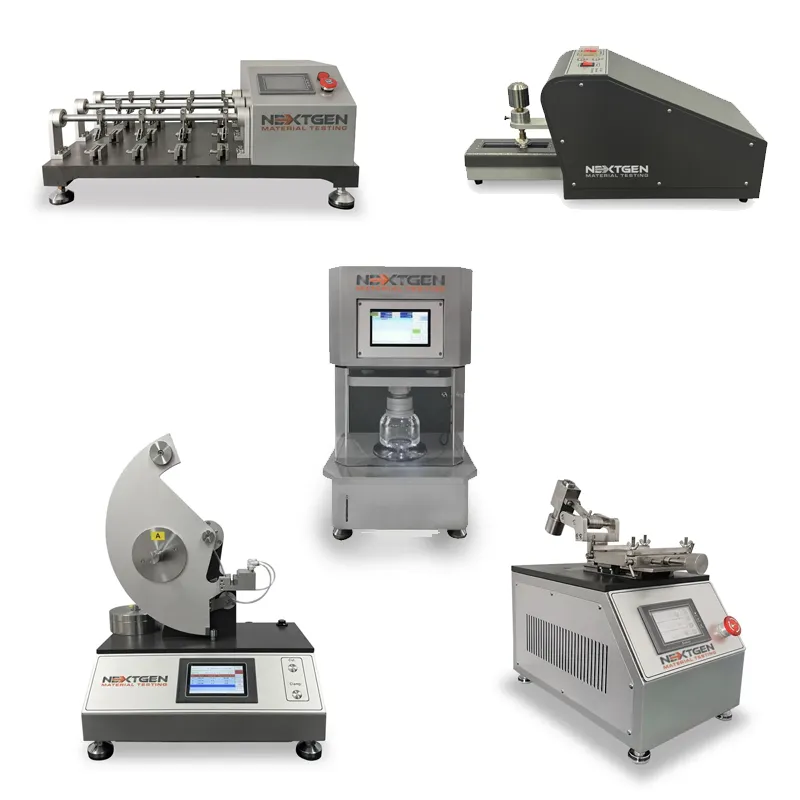
Fabric, leather and footwear are judged by what ordinary use does to them: colour that runs in the wash or under rubbing, a seam that bursts, a sole that cracks after enough flexing, a surface that wears through. NextGen supplies instruments for those checks, working to ISO 105-X12 for rubbing, ISO 105-C06 for washing and ISO 20344 for footwear test methods.
The range covers crockmeters and washing fastness testers, bursting and tearing strength testers to ASTM D3786 and ASTM D1424, and flexing and abrasion equipment for leather, uppers and whole shoes. Instruments are installed and calibrated by our engineers, your team is trained on the procedures, and support continues for the life of the instrument.
For Laboratories
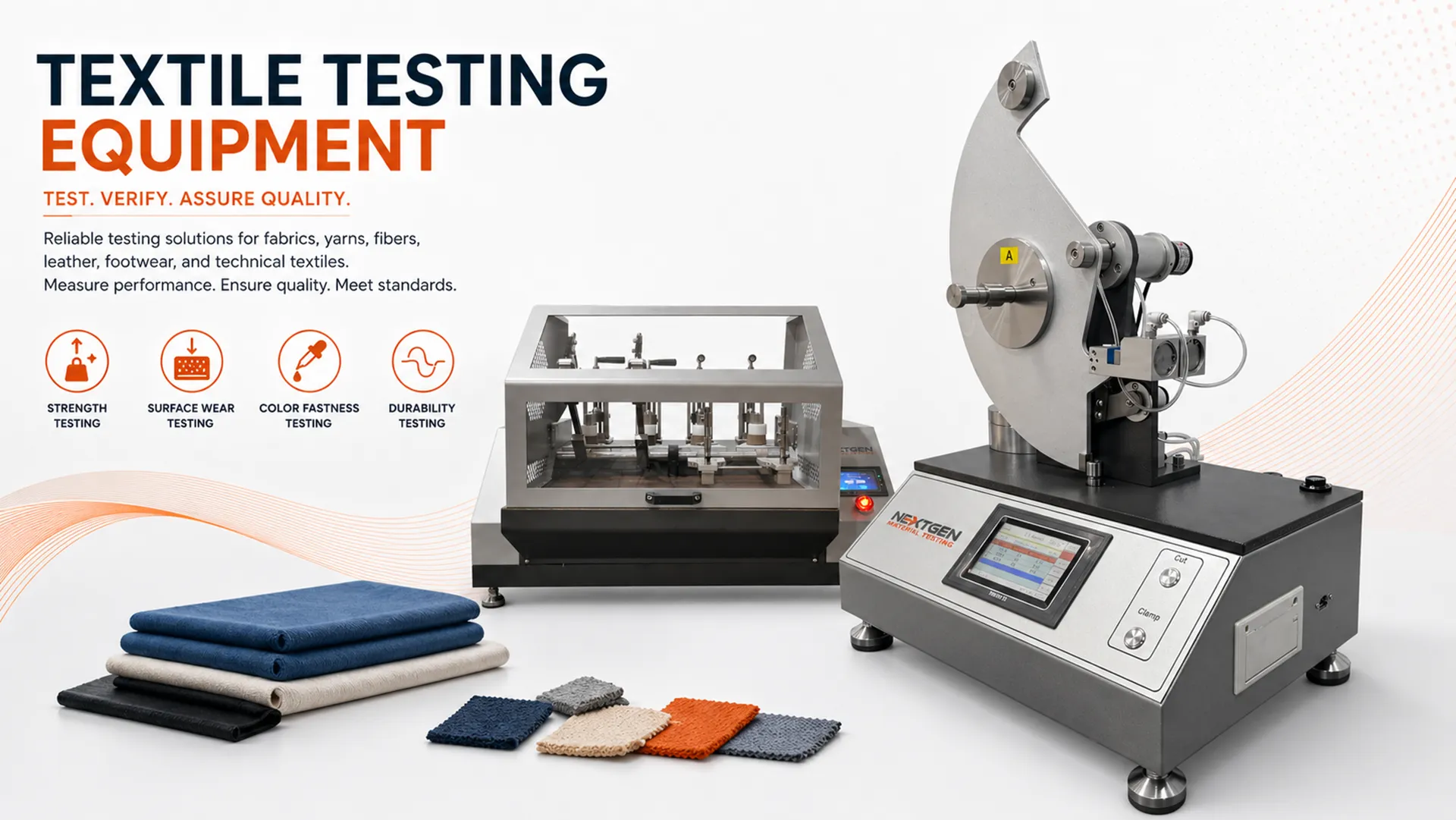
One partner to equip your complete textile laboratory
Textile testing rarely stops at one machine. NextGen equips the whole laboratory, from colour fastness and abrasion to bursting, tearing and flexing systems, and stays responsible for it after delivery.
- Equipment, fixtures and software
- Installation, training, calibration
- Lifetime technical support
Sub-categories
 Sub-category · 4 products
Footwear and Leather Testing Equipment
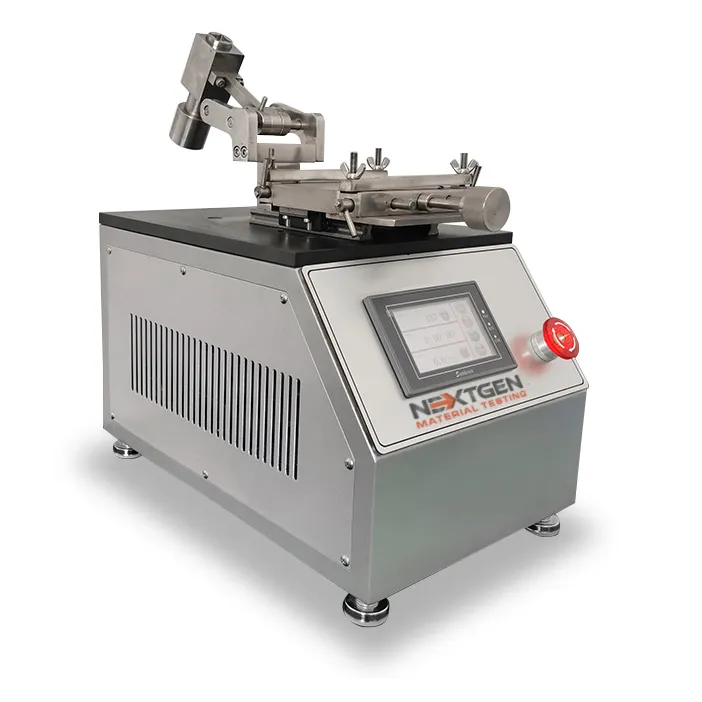
Footwear and leather testing equipment helps laboratories evaluate durability, color stability, abrasion resistance, flexing behavior, burst strength, and material performance in uppers, linings, soles, coatings, and finished footwear. This category supports routine QC, supplier approval, product development, and standards-based testing for leather, coated fabrics, shoe materials, and related textile components exposed to rubbing, bending, wear, and repeated use.
Open
Sub-category · 4 products
Footwear and Leather Testing Equipment
Footwear and leather testing equipment helps laboratories evaluate durability, color stability, abrasion resistance, flexing behavior, burst strength, and material performance in uppers, linings, soles, coatings, and finished footwear. This category supports routine QC, supplier approval, product development, and standards-based testing for leather, coated fabrics, shoe materials, and related textile components exposed to rubbing, bending, wear, and repeated use.
Open
 Sub-category · 2 products
Color Fastness Testing Equipment
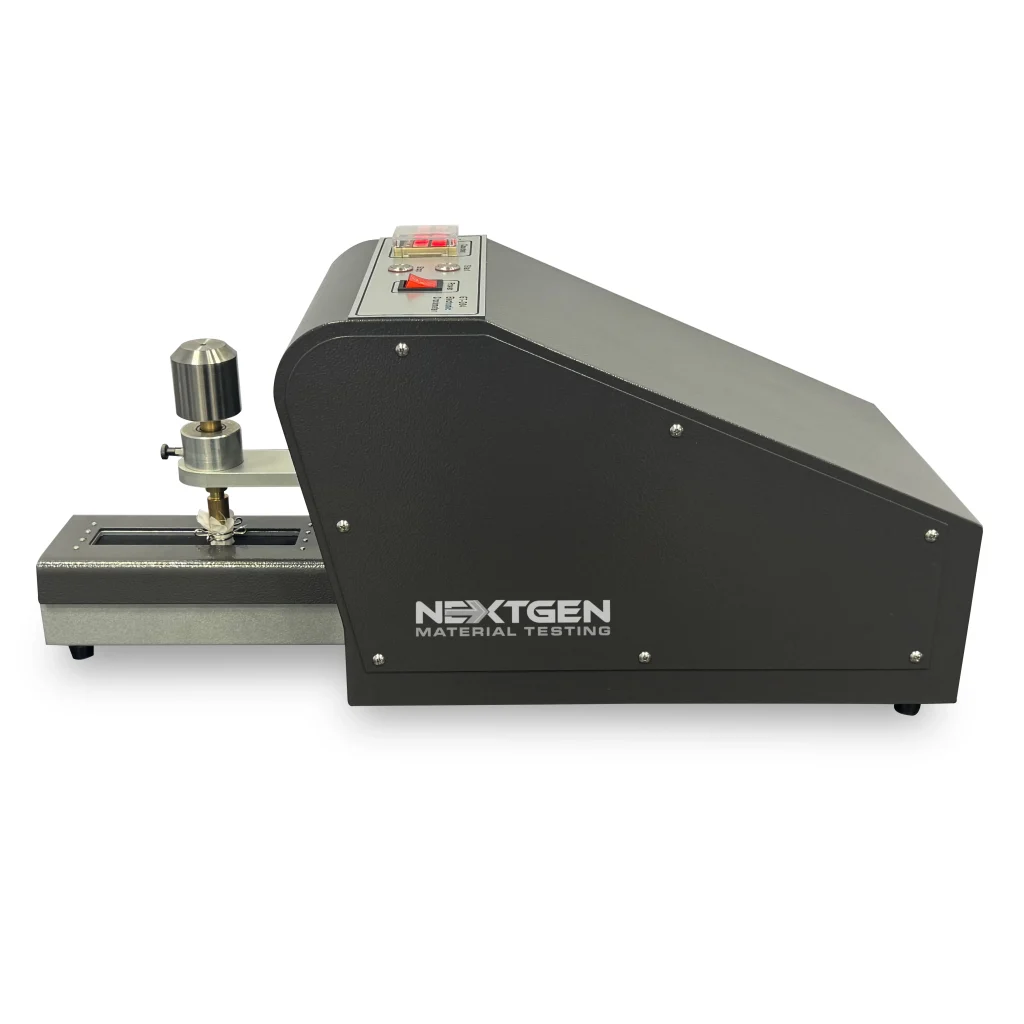
Color fastness testing equipment helps textile laboratories evaluate how well dyed or finished materials resist fading, staining, and color transfer during washing, rubbing, perspiration, light exposure, water contact, and daily use. This category supports garment manufacturers, mills, footwear suppliers, and QC labs that need repeatable testing for shade durability, material approval, supplier comparison, and standards-based textile performance verification.
Open
Sub-category · 2 products
Color Fastness Testing Equipment
Color fastness testing equipment helps textile laboratories evaluate how well dyed or finished materials resist fading, staining, and color transfer during washing, rubbing, perspiration, light exposure, water contact, and daily use. This category supports garment manufacturers, mills, footwear suppliers, and QC labs that need repeatable testing for shade durability, material approval, supplier comparison, and standards-based textile performance verification.
Open
 Sub-category · 3 products
Fabric Strength Testing Equipment
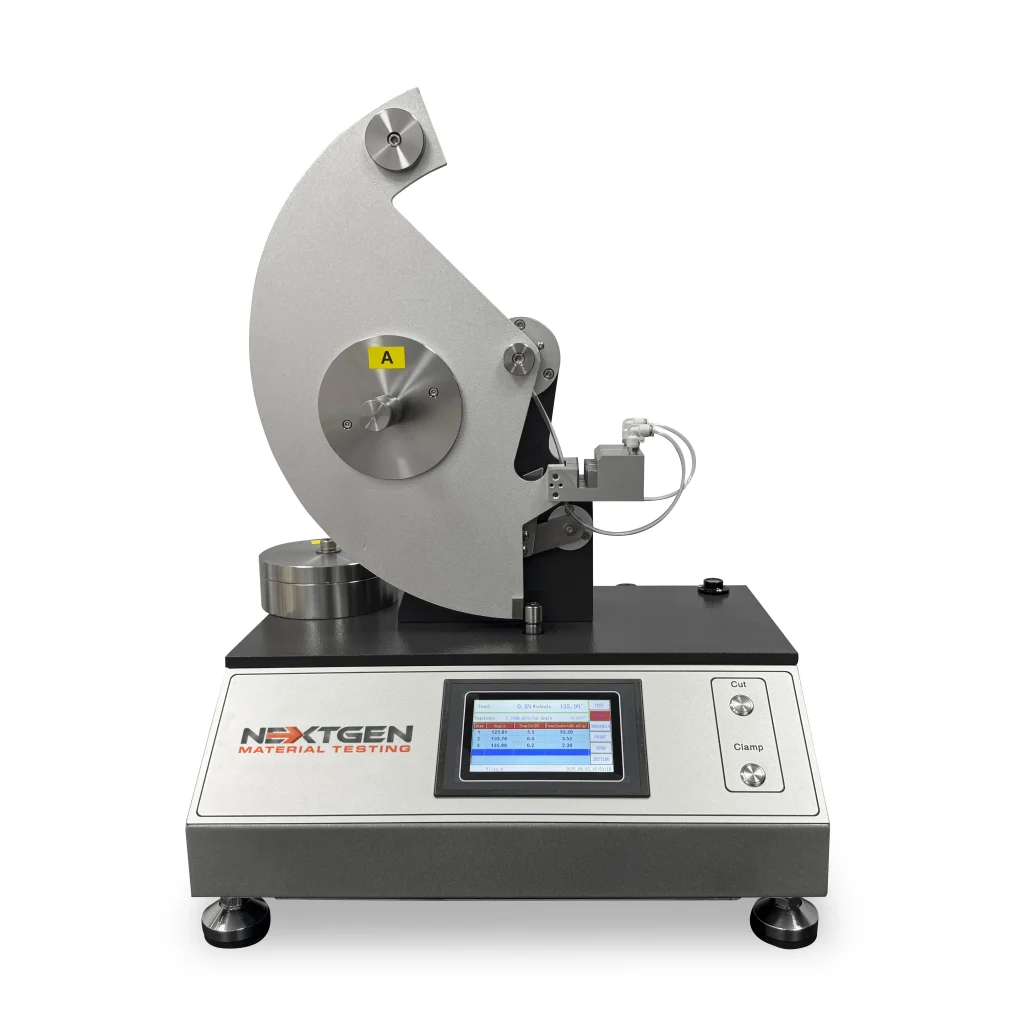
Fabric strength testing equipment measures how textiles and flexible materials perform under tearing, bursting, tensile, seam, puncture, and repeated handling forces. This category supports apparel, nonwoven, upholstery, coated fabric, technical textile, packaging, and flexible sheet testing. It helps manufacturers and laboratories compare suppliers, validate production batches, reduce failure risk, and generate repeatable data for product development and quality control.
Open
Sub-category · 3 products
Fabric Strength Testing Equipment
Fabric strength testing equipment measures how textiles and flexible materials perform under tearing, bursting, tensile, seam, puncture, and repeated handling forces. This category supports apparel, nonwoven, upholstery, coated fabric, technical textile, packaging, and flexible sheet testing. It helps manufacturers and laboratories compare suppliers, validate production batches, reduce failure risk, and generate repeatable data for product development and quality control.
Open
1
Fabric strength
Tensile, tear and bursting behaviour of fabric
2
 10 MPa
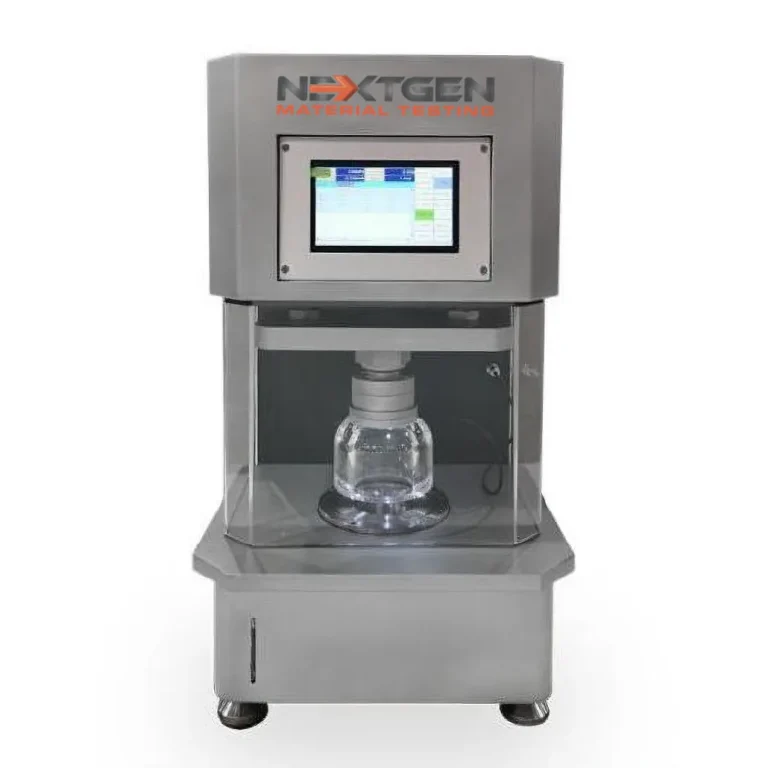
GenBurst Pro – Hydraulic Bursting Strength Tester
GenBurst Pro is a hydraulic bursting strength tester for measuring bursting strength and burst distension in woven…
View product
10 MPa
GenBurst Pro – Hydraulic Bursting Strength Tester
GenBurst Pro is a hydraulic bursting strength tester for measuring bursting strength and burst distension in woven…
View product
 64 N
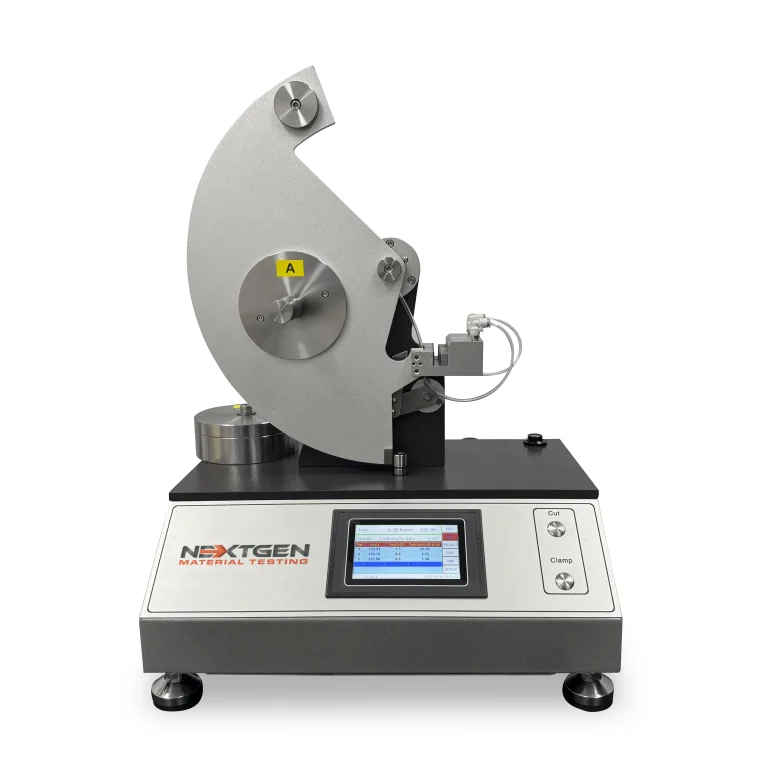
GenTear Pro – Elmendorf Tearing Tester
GenTear Pro is a digital Elmendorf tearing tester for measuring tear propagation resistance in textiles, nonwovens,…
View product
64 N
GenTear Pro – Elmendorf Tearing Tester
GenTear Pro is a digital Elmendorf tearing tester for measuring tear propagation resistance in textiles, nonwovens,…
View product
2
Color fastness
Colour held under light, washing and rubbing
2
Most requested
 GenWashLab – Color Fastness to Washing Tester
GenWashLab is a temperature-controlled wash fastness tester for evaluating color change and staining in dyed textiles…
View product
GenWashLab – Color Fastness to Washing Tester
GenWashLab is a temperature-controlled wash fastness tester for evaluating color change and staining in dyed textiles…
View product
 GenCrock Pro – Electronic Crockmeter
GenCrock Pro is an electronic crockmeter for measuring color fastness to dry and wet rubbing on textiles, leather,…
View product
GenCrock Pro – Electronic Crockmeter
GenCrock Pro is an electronic crockmeter for measuring color fastness to dry and wet rubbing on textiles, leather,…
View product
GenWashLab – Color Fastness to Washing Tester
GenWashLab is a temperature-controlled wash fastness tester for evaluating color change and staining in dyed textiles…
View product
GenCrock Pro – Electronic Crockmeter
GenCrock Pro is an electronic crockmeter for measuring color fastness to dry and wet rubbing on textiles, leather,…
View product
3
Footwear and leather
Wear on finished articles and on the leather itself
3
Most requested
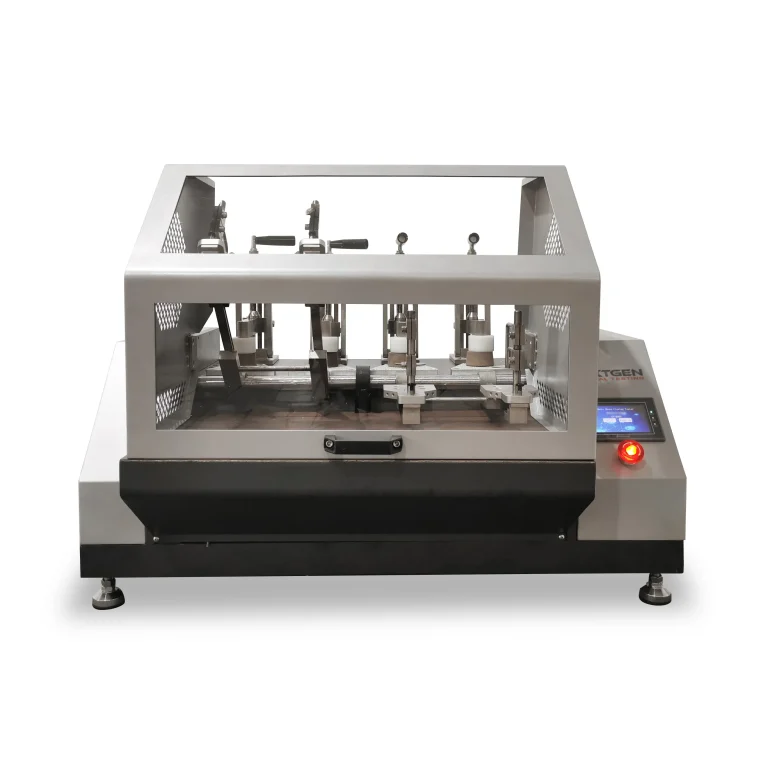 GenFlex Sole – Whole Footwear Flexing Tester
GenFlex Sole is a whole footwear flexing tester for assessing finished shoes under repeated bending conditions.
View product
Most requested
GenFlex Sole – Whole Footwear Flexing Tester
GenFlex Sole is a whole footwear flexing tester for assessing finished shoes under repeated bending conditions.
View product
Most requested
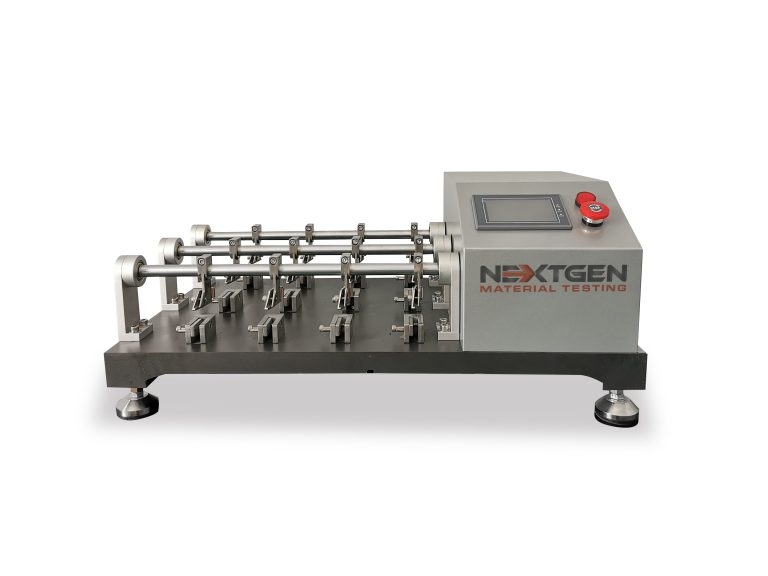 GenBally Flex – Resistance Flexing Tester
GenBally Flex is a multi-station resistance flexing tester for evaluating leather, coated fabrics, textiles, and…
View product
GenVeslic – Leather and Surface Abrasion Tester
GenVeslic is a reciprocating leather and surface abrasion tester for evaluating color fastness, finish wear, fading,…
View product
GenBally Flex – Resistance Flexing Tester
GenBally Flex is a multi-station resistance flexing tester for evaluating leather, coated fabrics, textiles, and…
View product
GenVeslic – Leather and Surface Abrasion Tester
GenVeslic is a reciprocating leather and surface abrasion tester for evaluating color fastness, finish wear, fading,…
View product
GenFlex Sole – Whole Footwear Flexing Tester
GenFlex Sole is a whole footwear flexing tester for assessing finished shoes under repeated bending conditions.
View product
Most requested
GenBally Flex – Resistance Flexing Tester
GenBally Flex is a multi-station resistance flexing tester for evaluating leather, coated fabrics, textiles, and…
View product
GenVeslic – Leather and Surface Abrasion Tester
GenVeslic is a reciprocating leather and surface abrasion tester for evaluating color fastness, finish wear, fading,…
View product
1
Fabric strength
Tensile, tear and bursting behaviour of fabric
2
 GenBurst Pro – Hydraulic Bursting Strength Tester10 MPa
GenBurst Pro is a hydraulic bursting strength tester for measuring bursting strength and burst distension in woven…
Fabric strength testing
GenBurst Pro – Hydraulic Bursting Strength Tester10 MPa
GenBurst Pro is a hydraulic bursting strength tester for measuring bursting strength and burst distension in woven…
Fabric strength testing
 GenTear Pro – Elmendorf Tearing Tester64 N
GenTear Pro is a digital Elmendorf tearing tester for measuring tear propagation resistance in textiles, nonwovens,…
Fabric strength testing
GenTear Pro – Elmendorf Tearing Tester64 N
GenTear Pro is a digital Elmendorf tearing tester for measuring tear propagation resistance in textiles, nonwovens,…
Fabric strength testing
2
Color fastness
Colour held under light, washing and rubbing
2
 GenWashLab – Color Fastness to Washing Tester
GenWashLab is a temperature-controlled wash fastness tester for evaluating color change and staining in dyed textiles…
Color fastness testing
GenWashLab – Color Fastness to Washing Tester
GenWashLab is a temperature-controlled wash fastness tester for evaluating color change and staining in dyed textiles…
Color fastness testing
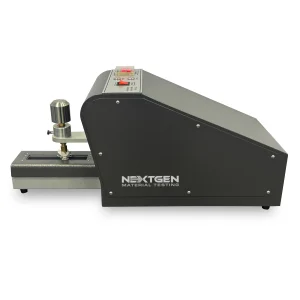 GenCrock Pro – Electronic Crockmeter
GenCrock Pro is an electronic crockmeter for measuring color fastness to dry and wet rubbing on textiles, leather,…
Color fastness testing
GenCrock Pro – Electronic Crockmeter
GenCrock Pro is an electronic crockmeter for measuring color fastness to dry and wet rubbing on textiles, leather,…
Color fastness testing
3
Footwear and leather
Wear on finished articles and on the leather itself
3
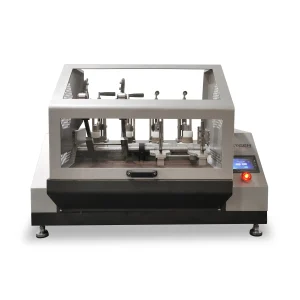 GenFlex Sole – Whole Footwear Flexing Tester
GenFlex Sole is a whole footwear flexing tester for assessing finished shoes under repeated bending conditions.
Footwear and leather testing
GenFlex Sole – Whole Footwear Flexing Tester
GenFlex Sole is a whole footwear flexing tester for assessing finished shoes under repeated bending conditions.
Footwear and leather testing
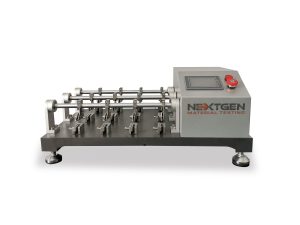 GenBally Flex – Resistance Flexing Tester
GenBally Flex is a multi-station resistance flexing tester for evaluating leather, coated fabrics, textiles, and…
Footwear and leather testing
GenBally Flex – Resistance Flexing Tester
GenBally Flex is a multi-station resistance flexing tester for evaluating leather, coated fabrics, textiles, and…
Footwear and leather testing
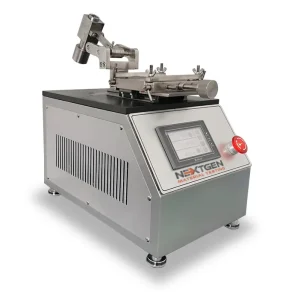 GenVeslic – Leather and Surface Abrasion Tester
GenVeslic is a reciprocating leather and surface abrasion tester for evaluating color fastness, finish wear, fading,…
Footwear and leather testing
GenVeslic – Leather and Surface Abrasion Tester
GenVeslic is a reciprocating leather and surface abrasion tester for evaluating color fastness, finish wear, fading,…
Footwear and leather testing
Nothing matches that filter. Show all products
FAQs
NextGen's textile range covers the three areas most fabric and material labs report on:
- Fabric strength: bursting, tearing and tensile strength.
- Colour fastness: resistance to washing and rubbing.
- Footwear and leather: flexing and abrasion of soles, uppers and leather.
Tell us which properties you test and we'll point you to the right systems. Contact our team or request a quote.
Start from the property in your specification:
- How much pressure a fabric takes before it bursts: a bursting strength tester.
- Resistance to tearing: a tearing tester.
- Whether colour transfers in washing or rubbing: colour fastness testers.
- Durability of shoes and leather: footwear and leather testers.
If you'd like help matching a system to your standards, contact our team.
The equipment is built to the standards textile labs work to, including ISO, AATCC, ASTM and EN. Common ones by test:
- Bursting strength: ISO 13938; ASTM D3786.
- Tear strength: ISO 13937, Elmendorf ISO 1974; ASTM D1424.
- Colour fastness to washing: ISO 105-C06; AATCC 61.
- Colour fastness to rubbing (crocking): ISO 105-X12; AATCC 8.
Each product page lists the exact standards a model meets. If your customer names one you don't see, send it over and we'll confirm it.
Three ways, depending on how the fabric fails in use. NextGen supplies a bursting strength tester for pressure resistance, a tearing tester for tear resistance, and universal testing machines for tensile and seam strength. To pick the right method for your product, contact our team.
With the GenBurst Pro Hydraulic Bursting Strength Tester. It applies increasing hydraulic pressure to a clamped area of fabric until it bursts, and reports the pressure at failure. It's the standard test for knits, nonwovens and technical fabrics, where load isn't applied in a single direction.
With the GenTear Pro Elmendorf Tearing Tester, which uses the Elmendorf method: a pendulum tears a pre-slit specimen and the energy absorbed gives the tear strength. It's the common test for woven fabrics, films and paper, where resistance to tearing is a key quality metric.
Colour fastness measures how well a fabric keeps its colour under real-world stresses. NextGen covers the two most requested: fastness to washing with the GenWashLab, and fastness to rubbing with the GenCrock Pro crockmeter. Both are essential for apparel and home textiles, where colour loss or transfer is a common complaint.
The GenWashLab Colour Fastness to Washing Tester reproduces standard laundering conditions, agitating specimens with detergent at set temperatures and times. Afterwards the colour change and any transfer to adjacent fabric are assessed against a grey scale, to ISO and AATCC methods.
The GenCrock Pro Electronic Crockmeter rubs a specimen with a standard cloth under controlled pressure and strokes, both dry and wet, then the colour transferred to the rubbing cloth is graded. It's the standard check for whether a fabric's colour rubs off in wear.
NextGen's footwear and leather range covers the durability tests shoe and leather makers rely on: whole-shoe and sole flexing, and surface abrasion. These show how footwear and leather hold up to repeated wear rather than a single load.
By flexing the part many thousands of times and checking for cracks. The GenFlex Sole Whole Footwear Flexing Tester flexes a complete shoe, and the GenBally Flex Resistance Flexing Tester tests soling and flexing resistance on the material. Both reveal cracking and separation that only appear over many cycles.
With the GenVeslic Leather and Surface Abrasion Tester, which rubs the surface under controlled load and counts the cycles to a defined level of wear. It's used for leather, coated fabrics and finished surfaces where abrasion resistance is specified.
Yes. Installation and hands-on training are done on site, and NextGen provides calibration traceable to recognised standards, spare parts and both remote and on-site service. Support continues for the life of the equipment, so your systems stay accurate and productive. To plan an install, contact our team.
Fabric mills, apparel and home-textile brands, technical and nonwoven manufacturers, footwear and leather producers, and independent testing labs all use this equipment to meet strength and colour-fastness specifications. To move forward, request a quote for any product on this page, or contact our team and we can arrange a demonstration or a sample test on your own material. You can also browse the full Textile Testing Equipment range.