Ball Rebound Tester

Plastic Testing Equipment
Standards



Certified



Description
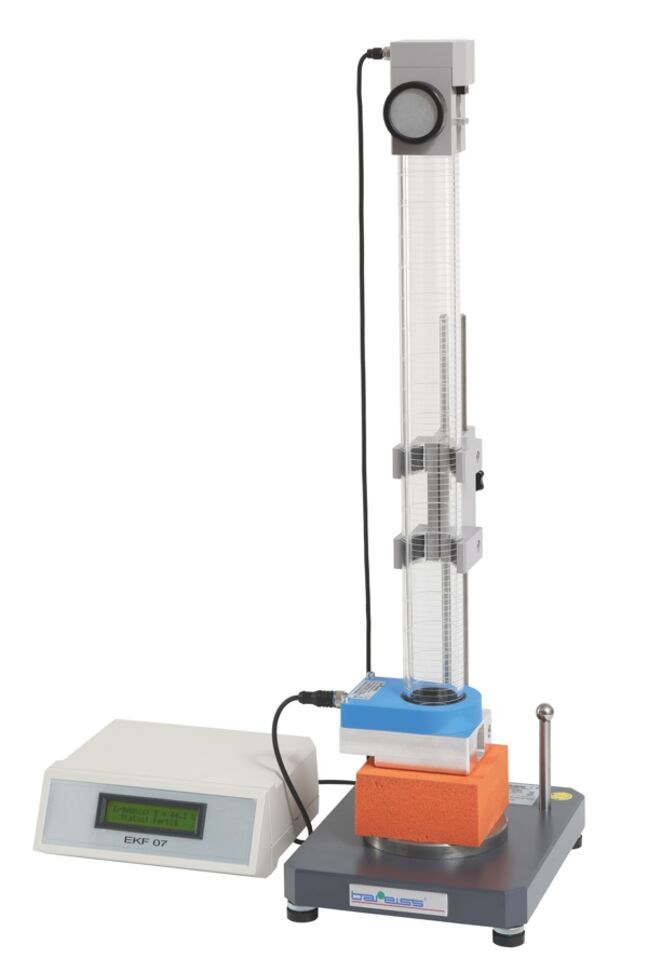
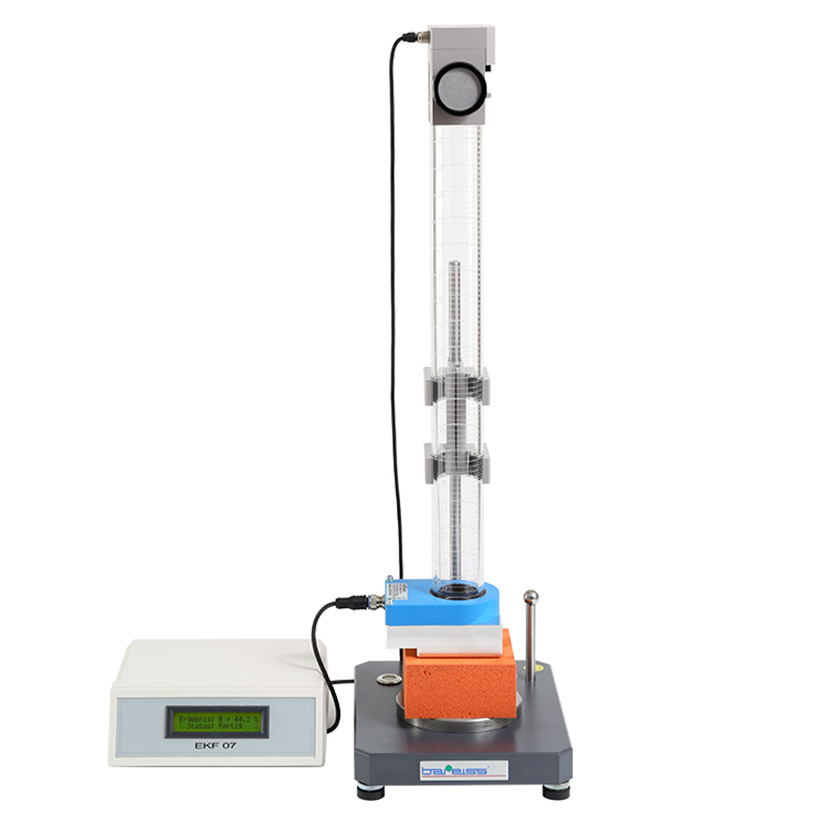
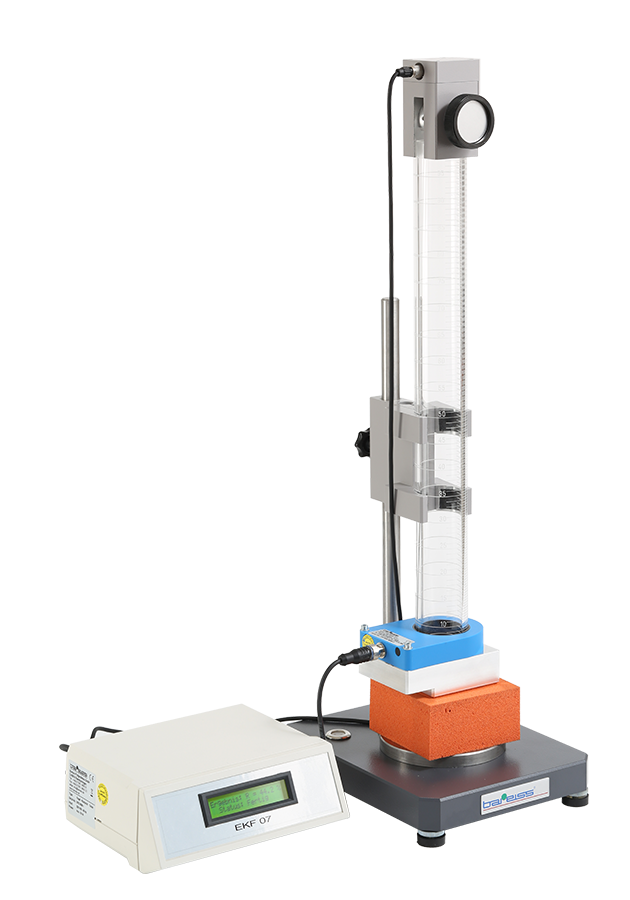
Ball Rebound Tester is a device designed to test resilience of materials such as foam, polyurethane and other similar materials. The unit comes certified in accordance with DIN EN ISO 8307 and ASTM D3574 industry standards. The test consists of a 0.63 in (16 mm) magnetic ball dropping freely onto a sample from a specified height of 19.7 in (500 mm). The electronic console unit that comes standard with this instrument will show the measured value and calculate the proportion of the average value in %. After the test completion, a sensor placed close to the holder ensures that the ball returns to the home position.
A rebound test from ball release to the reading on the console.
A rebound result is defined by three things: the ball, the height it falls from, and the specimen it lands on.
Drop Height19.7 in (500 mm)
Ball Diameter0.63 in (16 mm)
Ball Mass16.3 ± 0.2 g
Sample Size3.94 x 3.94 in, 1.97 in high
StandardsDIN EN ISO 8307, ASTM D3574
Data OutputRS232, USB
Features
The instrument is built to be switched on and used: the console does the arithmetic, and there is nothing to calibrate between tests.
Plug and play
Extremely easy to learn to operate, with a short measuring cycle.
4-line LCD
Test cycle, measured values, median value in %, status and operating instructions are output to the display.
USB port
For transferring results off the instrument.
No calibration
No calibration requirements in normal use.
Technical Specifications
The full specification of the instrument, its ball, the specimen it accepts and the two units it ships as.
| Specification | Ball Rebound Tester |
|---|---|
| Steel ball | 16.3 ± 0.2 g |
| Ball diameter | 0.63 in (16 ± 0.2 mm) |
| Sample size | 3.94 x 3.94 in (100 x 100 mm), height 1.97 in (50 mm) |
| Standards | DIN EN ISO 8307 and ASTM D3574 |
| Power supply | 100-240 VAC; 50 / 60 Hz |
| IP code | Electronic unit IP 30, down pipe IP 20 |
| Data output | V24 RS 232 - 9600 baud, 1 start bit, 8 data bits, 1 stop bit |
| Test stand dimensions | 7.87 x 9.84 x 23.6 in (200 x 250 x 600 mm) |
| Electronic unit dimensions | 7.87 x 6.73 x 3.54 in (200 x 171 x 90 mm) |
Standard Configuration and Accessories
The instrument ships with the 19.7″ (500 mm) down-pipe and its calibration certificate. The 18.1″ (460 mm) pipe, the cables and the software are ordered when the method or the reporting calls for them.
Supplied as standard
Main unit test stand, electronic console, EKF 19.7″ (500 mm) down-pipe with a magnetic system, and a works calibration certificate for 19.7″ (500 mm) ball rebound.
Available as accessories
EKF 18.1″ (460 mm) down-pipe with a magnetic system, works calibration certificate for 18.1″ (460 mm) ball rebound, data output cable, USB adapter, and GKB03 software for data transmission to Excel.
System Dimensions
The drawing gives the footprint and height of the test stand together with the electronic unit.

Size and weight of the test stand and the electronic unit.
Have Questions or Need to Confirm a Detail?
If you need the 18.1″ (460 mm) drop height as well as the 19.7″ (500 mm) one, or you want the results in Excel rather than on the display, send us a quick request online. Tell us the foam you test and the standard you report to, and we will confirm the pipe, the certificate and the software you need.
For Laboratories
Need Additional Quality Control Equipment to Build Your Laboratory?
Rebound resilience testing is only one part of a complete quality control laboratory. NextGen can help you equip your entire lab with universal testing machines, impact and falling weight testers, melt flow indexers, HDT and Vicat systems, hardness and durometer systems, environmental chambers, and other supporting solutions, all coordinated as one complete project.
- One partner to equip your complete laboratory
- Installation, training, calibration
- Support for the life of the equipment
FAQs
Here are the technical specifications of NextGen’s Ball Rebound Tester:
|
Model # |
Ball Rebound Tester |
|
Steel Ball |
16.3±0.2g |
|
Ball Diameter |
16±0.2 |
|
Sample Size |
100mm×100mm, height 50mm |
|
Standards |
|
|
Power Supply |
100 – 240 VAC; 50 / 60 Hz |
|
IP Code |
Electronic Unit IP 30 |
|
Data Output |
V24 RS 232 – 9600 baud, 1 start bit, 8 data bits, 1 stop bit |
|
Dimensions |
Test Stand: |
Click here to learn more about the product or here to receive a personalized quote.
Yes, the Ball Rebound Tester from NextGen Test Solutions can be used for research and development (R&D) purposes. In fact, the Ball Rebound Tester is designed to provide accurate and reliable results, making it an ideal tool for R&D applications where precise measurements and consistent performance are required.
Materials are typically tested under various settings in R&D applications to identify their qualities and performance characteristics. The Ball Rebound Tester can be used to assess the resilience of foam and polyurethane materials under a variety of situations such as temperature, humidity, and compression pressures.
Furthermore, researchers can utilize the Ball Rebound Tester to analyze the performance of various foam and polyurethane materials, allowing them to determine the optimum materials for certain applications. This is especially important for R&D projects that involve the development of new products or the improvement of existing ones.
Click here to learn more about the product or here to receive a personalized quote.
The Ball Rebound Tester is a device used to assess the resilience of materials such as foam, polyurethane, and others. The unit is certified in compliance with the industry standards DIN EN ISO 8307 and ASTM D3574. A 16mm magnetic ball is dropped freely onto a sample from a set height of 500mm. The instrument's standard electronic console unit will display the measured value and calculate the percentage of the average value in %. After the test, a sensor next to the holder guarantees that the ball returns to its original location.
Here are some available accessories for NextGen’s Ball Rebound Tester:
- EKF 460 mm down-pipe with a magnetic system
- Works calibration certificate for 460 mm ball rebound
- Data Output Cable
- USB adapter
- GKB03 software for data transmission to Excel
Click here to learn more about the product or here to receive a personalized quote.
The time required to perform a test with the Ball Rebound Tester depends on the type of material being tested, the number of samples to be tested, and the specific test method being used.
The Ball Rebound Tester is a versatile piece of equipment that may be used to assess the resilience of various materials such as plastic, rubber, and elastomers. Dropping a ball from a given height onto the material and measuring the height of the ball rebound is the testing procedure. A test can take anywhere from a few seconds to many minutes to perform, depending on the precise testing needs.
With the Ball Rebound Tester, the ASTM D-5276 standard is often used to assess the rebound resilience of polymers. The ball shall be dropped from a height of 50 inches onto the material being tested, and the rebound height should be measured within 5 seconds of the impact, according to this specification. This testing method is completed in less than a minute.
The time required to perform a test depends on the number of samples being tested. For instance, if several samples need to be tested, the time required will increase accordingly.
Click here to learn more about the product or here to receive a personalized quote.
The Ball Rebound Tester is a device used to assess the resilience of materials such as foam, polyurethane, and other similar materials. The unit is approved in compliance with DIN EN ISO 8307 and ASTM D3574 industrial standards. A 16mm magnetic ball is dropped freely onto a sample from a height of 500mm. The electronic console unit that comes standard with this instrument will display the measured value and calculate the percentage of the average value in %. After the test, a sensor near the holder guarantees that the ball returns to its original location.
Ball Rebound Tester Standard Configurations:
- Main Unit Test stand
- Electronic Console
- EKF 500 mm down-pipe with a magnetic system
- Works calibration certificate for 500 mm ball rebound
Ball Rebound Tester Features:
- Plug-n-Play System
- Extremely Easy to Learn to Operate
- Short Measuring Cycle
- USB Port
- Test cycle, measured values, median value in %, status and operating instructions output to 4-line LCD
- No Calibration Requirements
Click here to learn more about the product or here to receive a personalized quote.
The Ball Rebound Tester from Nextgen Material Testing is designed to measure the rebound height of a ball after being dropped onto a test material. However, the accuracy of the tester can be affected by various factors, including the properties of the material being tested, the height from which the ball is dropped, and the calibration of the equipment.
The Ball Rebound Tester typically has a measuring range between 0 and 100 percent rebound height. The accuracy of the tester is expressed as a percentage of the full-scale range. For instance, a tester with an accuracy of ±1 percent of the full-scale range can measure the rebound height within a range of ±1 unit for every 100 units of the full-scale range.
Equipment calibration is crucial to ensure the accuracy of the Ball Rebound Tester. Calibration involves adjusting the tester to ensure it provides accurate and consistent results. The calibration procedure typically involves dropping the ball onto a standard reference material with a known rebound height and adjusting the tester to match the known value.
Click here to learn more about the product or here to receive a personalized quote.
The Ball Rebound Tester is used to test the rebound resilience of plastic materials. It is commonly used in industries such as toy manufacturing, automotive parts, and sports equipment.
Elastomers, rubbers, and composite materials are among the materials that can be tested by Ball Rebound Tester. These materials are known for their resilience and ability to recover their shape after being subjected to external forces. By testing the rebound properties of these materials, manufacturers can ensure that their products meet the required quality standards and are fit for their intended use.
Nevertheless, Ball Rebound Tester is not appropriate for testing materials that are too soft or too hard, as the rebound height may not be accurately measured. Ball Rebound Tester from NextGen material Testing is It is a valuable tool for manufacturers looking to ensure the quality and performance of their products.
Click here to learn more about the product or here to receive a personalized quote.
The ability of a foam or polyurethane material to bounce back to its original shape after being squeezed or distorted is measured by foam and polyurethane resilience testing. This is a test for materials that will be subjected to repetitive compressive forces over time in applications such as furniture, bedding, and automobile components.
The ball rebound test is one of the most used procedures for measuring the durability of foam and polyurethane. This test is dropping a certain weight ball onto the material and measuring the height of the rebound. The height of the rebound is used to calculate the material's resilience.
In addition to the ball rebound test, other foam and polyurethane resilience testing methods include the constant-force indentation test and the compression set test. Each method has its advantages and disadvantages, and the choice of testing method will depend on the application's specific needs.
NextGen’s Ball Rebound Tester Ball Diameter is 16±0.2
Click here to learn more about the product or here to receive a personalized quote.
ASTM D 3574 international standard defines the procedure for determining the indentation force deflection (IFD) of a material by applying a specified amount of force to a circular indenter foot, which compresses the material to a specified thickness. The amount of force required to compress the material is measured and used to calculate the IFD value.
The ASTM D 3574 standard provides specific guidelines for the preparation of test samples, the selection of test equipment, and the testing procedure to ensure accurate and consistent results. The test method is useful in determining the load-bearing characteristics of a material, such as its ability to support weight and resist deformation.
This standard is widely used in various industries, including the automotive, furniture, and bedding industries, where flexible cellular materials are commonly used. The IFD values obtained through this standard are used to determine the appropriate level of firmness for a particular application.
NextGen’s Ball Rebound Tester complies with ASTM D 3574 standard.
Click here to learn more about the product or here to receive a personalized quote.
NextGen’s Ball Rebound Tester complies with the DIN EN ISO 8307 standard. This standard is also known as the "Rubber, vulcanized or thermoplastic - Determination of resilience by vertical rebound," and it is used to measure the resilience of rubber and plastic materials.
The DIN EN ISO 8307 standard defines the test method for determining the rebound resilience of rubber and plastic materials by measuring the height of a rebounding ball dropped from a specific height onto a sample of the material. The height of the rebound is used to calculate the rebound resilience of the material, which measures its ability to recover its original shape after deformation.
The Ball Rebound Tester from NextGen Test Solutions is designed and manufactured to comply with DIN EN ISO 8307 standard. The tester is designed to be accurate, precise, and reliable, and it is calibrated to ensure that it provides consistent and repeatable results.
Click here to learn more about the product or here to receive a personalized quote.
Related Products
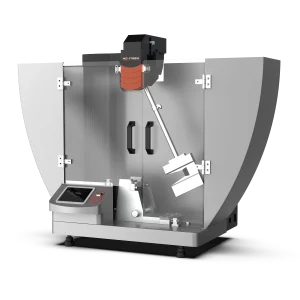
Class J – Automatic Charpy and Izod Impact Tester (1–50 J)
Class J is an automatic Charpy and Izod impact testing system for low-energy impact evaluation of plastics and related materials. It covers 1–50 J for Charpy tests and 1–22 J for Izod tests, with interchangeable pendulums, adjustable spans, controlled striking velocity, and ASTM D6110, ASTM D1822, ISO 179, GB/T 1043, and ISO 9854.1 support for standardized testing.
Read more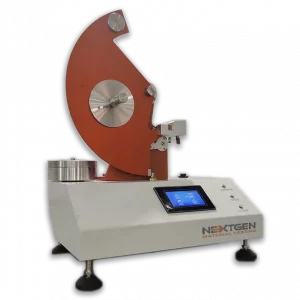
GenElm Series – Elmendorf Tearing Tester (64 N and 128 N)
GenElm Series is an Elmendorf tearing tester for measuring tear resistance of plastic film, sheeting, textiles, paper, board, and other flexible materials. Available with 64 N and 128 N high-capacity pendulum options, it supports ASTM D1922, ASTM D1424, ISO 6383-2, ISO 1974, and related methods. The pendulum-based design helps QC and R&D labs generate clear, repeatable tear-strength data.
Read more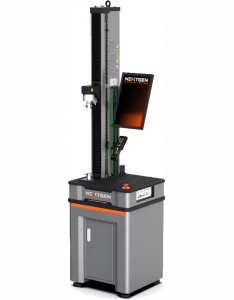
NG-EML Series A – Single-Column Universal Testing Machine (50 N – 5 kN)
NG-EML Series A is a compact single-column benchtop universal testing machine for low-force tensile, compression, and flexural testing. Covering 50 N to 5 kN capacity options, it is suited for rubber, plastics, adhesives, films, foams, wires, metals, composites, and consumer products. Its electromechanical frame, high-speed servo actuation, GenTest software, and standards support make it practical for R&D and routine QC.
Read more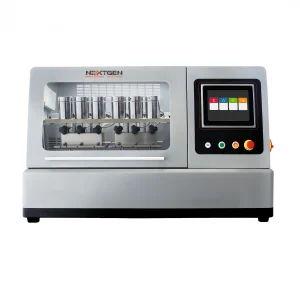
NG-HDT – HDT/Vicat Testing Machine for Plastics
NG-HDT is an HDT/Vicat testing machine for measuring heat deflection temperature and Vicat softening temperature of thermoplastics, including pipes and fittings. Available in 3- and 6-station configurations, it uses a touchscreen industrial PC, Class A temperature sensing, LVDT displacement measurement, controlled linear heating, and an oil bath rated to 300°C to support QA/QC, material development, and standards-based thermal analysis.
Read more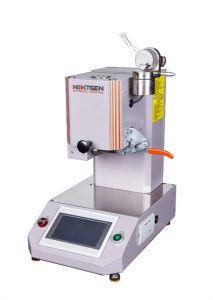
Melt Flow Indexer
The Melt Flow Indexer measures melt flow rate, melt index, and melt volume rate of thermoplastic materials for quality control, research, and material development. With a broad measuring range, 7-inch display, mass or volume method selection, precise temperature control, optical displacement measurement, automatic cutting, microcomputer control, and result printing, it helps labs evaluate viscosity, processability, and batch consistency according to ISO, ASTM, DIN, BS, and JIS methods.
Read more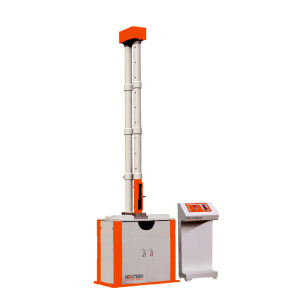
NG-ImpactFall – Falling Weight Impact Tester
NG-ImpactFall is a falling weight impact tester for evaluating external impact resistance of plastic pipes, fittings, boards, and other non-metal materials. Designed around ISO 3127, ISO 4422, and ASTM D2444 methods, it supports controlled drop heights, interchangeable hammer weights, multiple striker noses, and pipe diameters from φ16 to φ4000 mm for reliable QC, durability assessment, and standards-based product validation.
Read more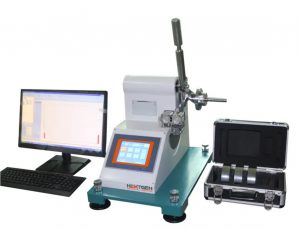
High-Energy Elmendorf Tearing Tester
NG-HE Elmendorf is a high-energy tearing strength tester for plastics, films, textiles, paper, and other flexible materials. It supports tear-force ranges up to 128 N with pneumatic clamping, automatic testing, result calculation, and data reporting. Compliance with standards such as ASTM D1424, DIN 53862, and ISO 13937-1 makes it useful for quality control and material comparison.
Read more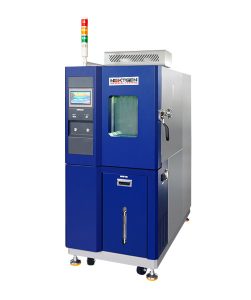
NG-EC Series – Environmental Test Chambers (100–1000 L)
NextGen NG-EC Environmental Chambers provide controlled temperature and humidity conditions for material, product, and quality-control testing. Available in 100, 150, 225, 408, and 1000 L sizes, they feature insulated steel construction, stainless interior walls, mechanical compression refrigeration, circulating air ducts, adjustable sample racks, a viewing window, and 7-inch touchscreen control to support stable, repeatable environmental simulation.
Read more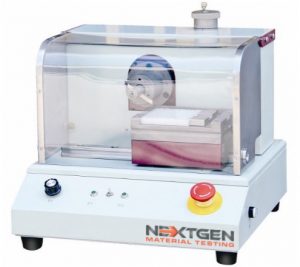
GenNotch 3000 – Motorized Multi-Specimen Notching and Broaching Machine
GenNotch 3000 is a motorized multi-specimen notching and broaching machine for preparing plastic specimens before Charpy and Izod impact testing. It holds up to 20 samples and can process 60 specimens in about 10 minutes, helping laboratories improve throughput. Adjustable feeding, controlled knife movement, ASTM D256, ASTM D6110, ISO 179, and ISO 180 compliance support consistent, standards-ready notches.
Read more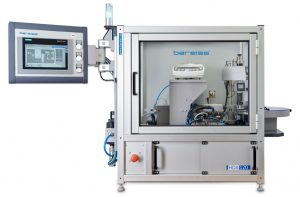
HDA 120 – Hardness and Density Automation System
HDA 120 is a semi-automatic hardness and density automation system for rubber and plastic sample characterization. It can handle up to 20 samples, perform three hardness measurements on a rotary table, and transfer specimens for density determination using a pneumatic gripping system. Data interfaces, touchscreen operation, ISO-compliant methods, and automated handling help improve throughput, traceability, and repeatability.
Read more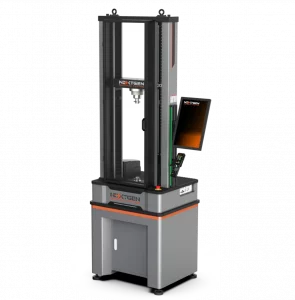
NG-EML Series B – Dual-Column Universal Testing Machine (100 N – 10 kN)
NG-EML Series B is a dual-column benchtop electromechanical universal testing machine for precision testing from 100 N to 10 kN. Built for research and industrial labs, it supports tension, compression, flexural, and component testing of composites, high-strength metals, polymers, films, foams, and rubber. Its compact rigid frame, advanced control accuracy, and GenTest software help deliver repeatable results in limited lab space.
Read more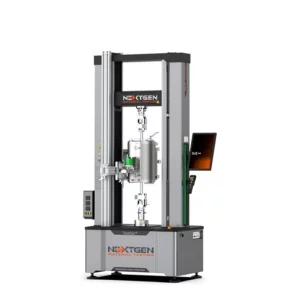
NG-EML Series C – Dual-Column Universal Testing Machine (5–50 kN)
NG-EML Series C is a dual-column electromechanical universal testing machine available in bench-top and floor-standing formats from 5 kN to 50 kN. Built for tension, compression, flexural, shear, and peel testing, it combines Class 0.5 accuracy, a servo direct-drive system, high-rigidity frame, touchscreen control, and GenTest software to support precise testing of metals, composites, rubber, plastics, and polymers.
Read more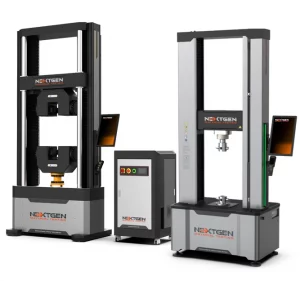
NG-EML Series D – Floor-Standing Universal Testing Machine (50–1000 kN)
NG-EML Series D is a heavy-duty floor-standing electromechanical universal testing machine for high-capacity tensile, compression, and flexural testing. Available from 50 kN to 1000 kN, it is built for high-strength steels, advanced composites, alloys, and challenging research materials. Its rigid dual-column frame, servo direct-drive system, closed-loop control, safety protections, and GenTest software support stable, accurate testing.
Read more
GenTest – Advanced UTM Testing Software
GenTest is NextGen’s advanced UTM testing software for electromechanical universal testing machines, managing test setup, live control, data acquisition, calculations, curves, and reporting from one method-driven environment. Preconfigured ASTM, ISO, DIN, EN, and BS templates help operators load the correct control mode, speeds, gauge length, formulas, and result fields for tensile, compression, and flexural tests.
Read more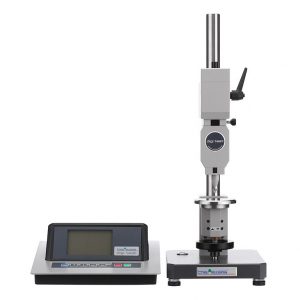
Automatic Shore, IRHD and VLRH Hardness Testing System
Digi Test II is an automatic Shore, IRHD, and VLRH hardness testing system for rubber, plastics, foams, elastomers, O-rings, tubes, hoses, and shaped parts. It combines an electronic control unit, loading module, test stand, and interchangeable measuring heads with automatic range recognition, programmable measuring time, USB output, and low-operator-influence operation. DIN, ISO, ASTM, BS, and DAkkS certificate support strengthen repeatability.
Read more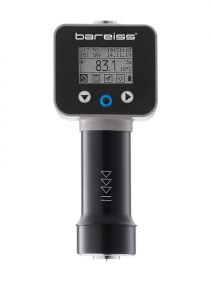
Portable Shore Durometer System with Test Stand
HPE III is an advanced portable Shore durometer system for hardness testing of rubber, plastics, and related materials. It measures hardness while also displaying specimen or environmental temperature and humidity, helping users track conditions during testing. A large LCD display, aluminum casing, patented ergonomic hand grip, USB connection, historical data display, rechargeable operation, and compatible manual or automatic test stands improve repeatability.
Read more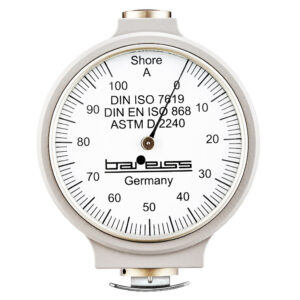
Analogue Shore Durometer with Test Stand
The Classic Analogue Shore Durometer is a German-manufactured hardness tester for rubber and plastic materials, available with manual or automatic test stand options. Known as a long-standing Shore hardness benchmark, it supports portable measurements, ergonomic operation, reference blocks, control rings, calibration accessories, and DAkkS/DKD certificate options. DIN 53505, EN ISO 868, ASTM D2240, and JIS K 6253 compatibility supports reliable verification.
Read more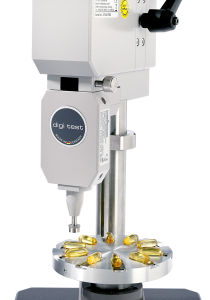
Capsule and Soft Gel Hardness Tester
Gelomat is an automatic capsule and soft gel hardness tester for gelatin capsules, softgels, plasticine, edible gelatin, and similar materials. Available with 0–2 N or 0–20 N measuring heads, it supports non-destructive hardness testing with automatic measurement, clear electronic display, USB data transfer, auto correction, hysteresis function, and optional custom Centrofix holders for precise capsule centering and efficient pharmaceutical-style QC.
Read more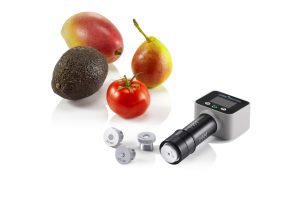
Fruit Firmness Tester
NextGen’s Fruit Firmness Tester is a portable German-manufactured device for measuring firmness in fruits, vegetables, meat, and fish. Interchangeable anvils support applications from berries and tomatoes to apples, avocados, carrots, cucumbers, and other produce. Ergonomic handheld design, digital readout, foam-fitted case, calibration accessories, USB or mobile data options, and objective force-based measurement help growers, distributors, and researchers assess ripeness and quality.
Read more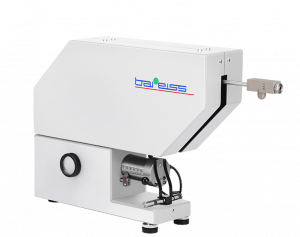
Pendulum Rebound Resilience Tester
NextGen’s Pendulum Rebound Resilience Tester measures the elastic recovery and dynamic behavior of elastomers, foams, and rubber materials. Available in manual and fully automatic versions with a digital display terminal, it supports DIN 53512, ASTM D1054, and ISO 4662 workflows. Optional sample heating up to 100°C helps laboratories compare formulations, aging effects, fatigue changes, and heat-related resilience performance.
Read more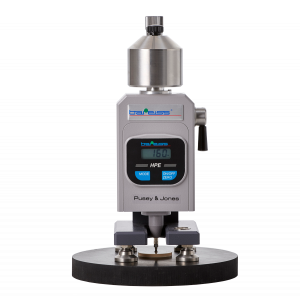
Pusey and Jones Tester
Pusey & Jones Tester is a portable plastometer system for measuring hardness and indentation behavior of rubber and rubber-like materials, especially rubber rollers used in the paper industry. It applies a 9.8 N test load and reads penetration depth after a 60-second test. An electronic dial gauge, zero-setting function, 1 kg load weight, built-in timer, and optional software support repeatable reporting.
Read more