Plastics absorb an impact very differently from metals, and the energies are small enough that the notch and the conditioning of the specimen dominate the result. NextGen supplies pendulum, falling weight and notching equipment for polymer specimens, working to ISO 179 for Charpy, ISO 180 for Izod and ASTM D2444 for falling weight tests on pipes and fittings.
The pendulum tester covers the low energy range polymers call for, with interchangeable hammers for Charpy and Izod on one frame. The falling weight tester drops interchangeable weights and strikers onto pipes, fittings and boards, and a motorised notching machine cuts several specimens at a time to the profile the method specifies. Equipment is installed and verified on site, your team is trained on the notch and the conditioning, and support continues for its life.
For Laboratories
One partner to equip your complete plastics laboratory
Impact testing is one station of a plastics laboratory. NextGen equips the rest of it too, from tensile and flexural testing to melt flow, HDT and Vicat systems, and stays responsible for it after delivery.
- Equipment, fixtures and software
- Installation, training, calibration
- Lifetime technical support
Most requested
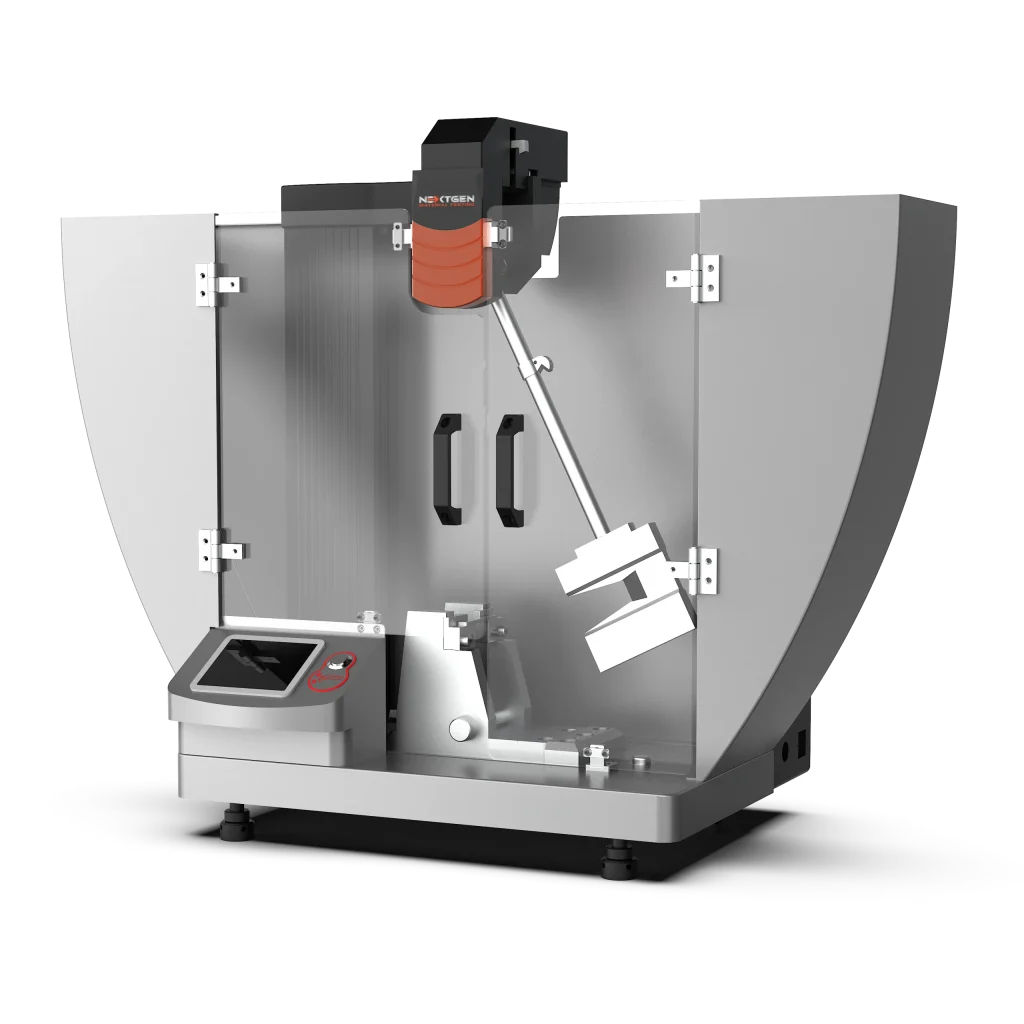
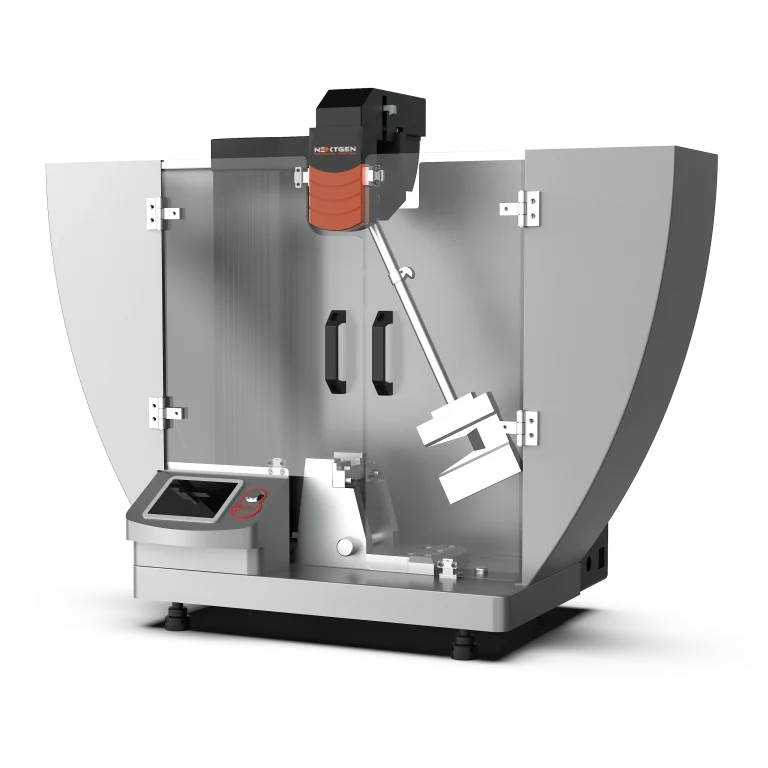 Class J – Automatic Charpy and Izod Impact Tester
Class J is an automatic Charpy and Izod impact testing system for low-energy impact evaluation of plastics and…
View product
Get quote
Most requested
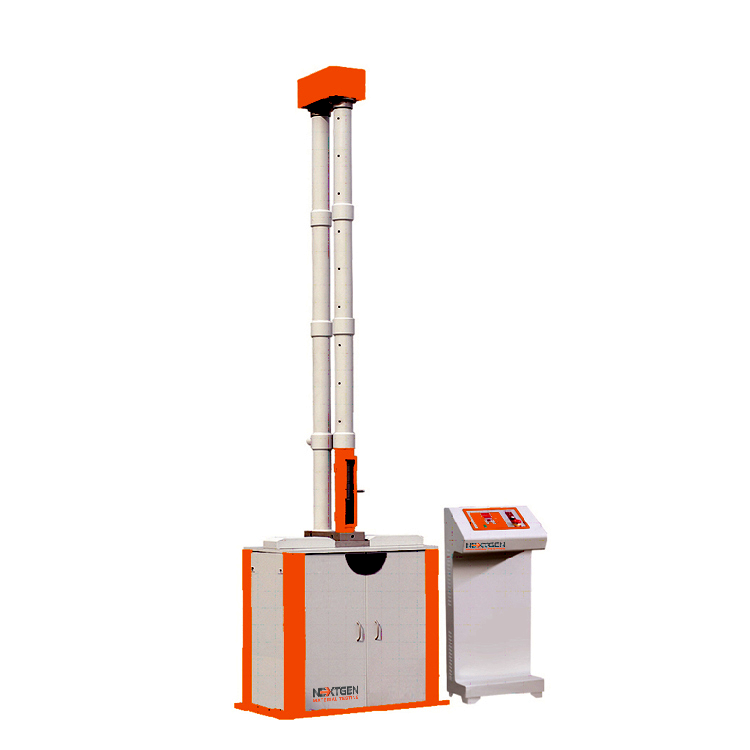 NG-ImpactFall – Falling Weight Impact Tester
NG-ImpactFall is a falling weight impact tester for evaluating external impact resistance of plastic pipes, fittings,…
View product
Get quote
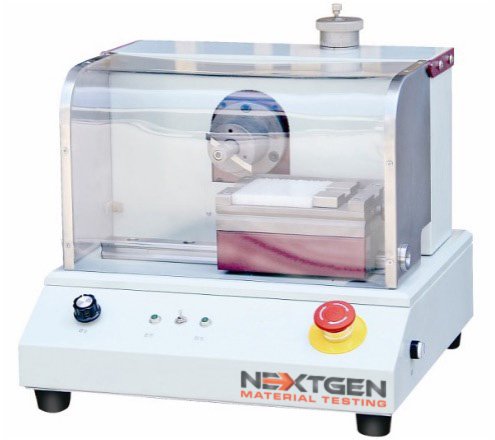 GenNotch 3000 – Motorized Multi-Specimen Notching and Broaching Machine
GenNotch 3000 is a motorized multi-specimen notching and broaching machine for preparing plastic specimens before…
View product
Get quote
Class J – Automatic Charpy and Izod Impact Tester
Class J is an automatic Charpy and Izod impact testing system for low-energy impact evaluation of plastics and…
View product
Get quote
Most requested
NG-ImpactFall – Falling Weight Impact Tester
NG-ImpactFall is a falling weight impact tester for evaluating external impact resistance of plastic pipes, fittings,…
View product
Get quote
GenNotch 3000 – Motorized Multi-Specimen Notching and Broaching Machine
GenNotch 3000 is a motorized multi-specimen notching and broaching machine for preparing plastic specimens before…
View product
Get quote
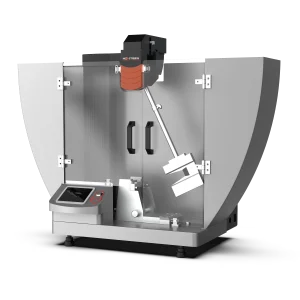 Class J – Automatic Charpy and Izod Impact Tester
Class J is an automatic Charpy and Izod impact testing system for low-energy impact evaluation of plastics and…
Impact testing
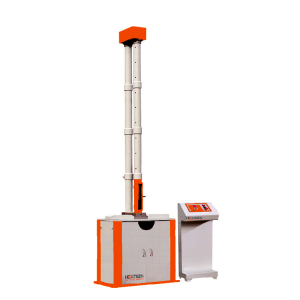 NG-ImpactFall – Falling Weight Impact Tester
NG-ImpactFall is a falling weight impact tester for evaluating external impact resistance of plastic pipes, fittings,…
Falling weight impact testing
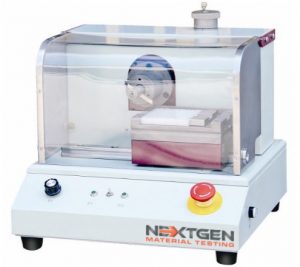 GenNotch 3000 – Motorized Multi-Specimen Notching and Broaching Machine
GenNotch 3000 is a motorized multi-specimen notching and broaching machine for preparing plastic specimens before…
Specimen notching
Nothing matches that filter. Show all products
FAQs
Follow the method your specification names. Charpy rests the specimen on supports and is covered by ISO 179 and ASTM D6110. Izod clamps the specimen in a vise and is covered by ISO 180 and ASTM D256. On the Class J, switching tests means changing the pendulum and its fixtures, not the frame.
Each standard has its own pendulum set on the Class J. Charpy pendulums for ISO 179 run at 1, 2, 4, 7.5, 15, 25 and 50 J, and Izod pendulums for ISO 180 run from 2.75 to 22 J. The ranges overlap, so one energy can often be reached from two pendulums, and one machine should carry fewer than five pendulums because more of them complicate calibration.
The GenNotch 3000 cuts the notch for ISO 179 and ISO 180 specimens at a 45 degree angle. The A knife supplied as standard has a 0.25 mm root radius, and the optional B and C knives have 1.0 mm and 0.1 mm. It holds 20 specimens in a setup and notches 60 in ten minutes.
The NG-ImpactFall drops a hammer onto plastic pipes, fittings and boards, and the specimen is then examined for rupture. It is built to ISO 3127, ISO 4422 and ASTM D2444, with up to 300 J of energy, hammers from 0.5 to 16 kg and drop heights up to 3,000 mm, depending on the configuration. The ISO 3127 and ASTM D2444 versions use different strikers.
Yes, with a tensile impact pendulum. The specimen is clamped between the pendulum head and a crosshead, and the Class J covers this with 7.5, 15 and 25 J pendulums for ISO 8256 and ASTM D1822. That brings film and sheet within reach of the frame that also runs Charpy and Izod.
Impact results are sensitive to specimen preparation and temperature, so the notch and the conditioning matter as much as the machine. The standard also fixes the striking velocity, the span and the specimen: for Charpy, ISO 179 uses an 80 x 10 x 4 mm bar and ASTM D6110 a 127 x 12.7 mm bar. Results from the two methods are therefore reported separately.