Automatic Shore, IRHD and VLRH Hardness Testing System

Plastic Testing Equipment

Standards
- ASTM D1415
- ASTM D2240
- BS 903 Part. A 26
- DIN EN ISO 868
- DIN ISO 48
- DIN ISO 7619
- DIN ISO 27588
- NF EN ISO 868
- NF T 46-003



Certified



Description
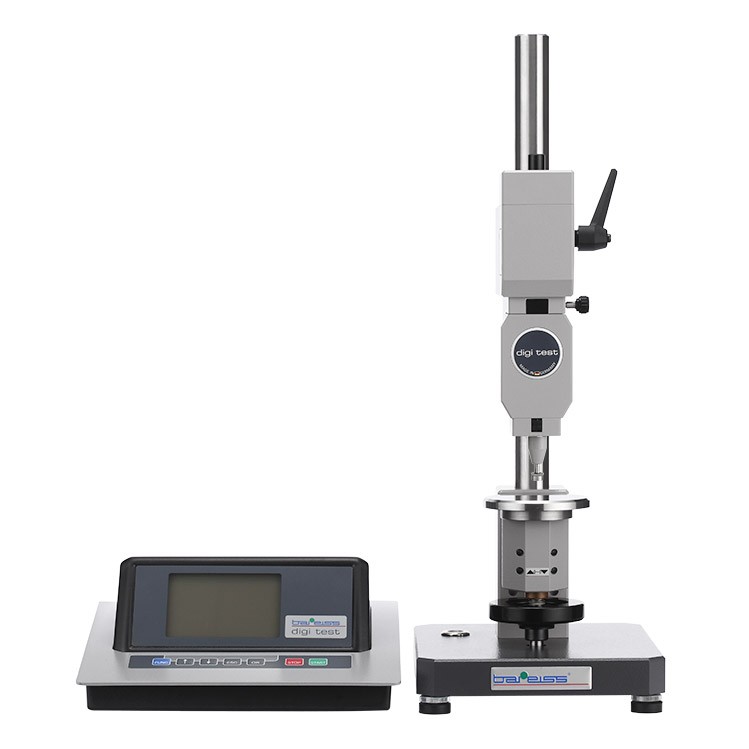
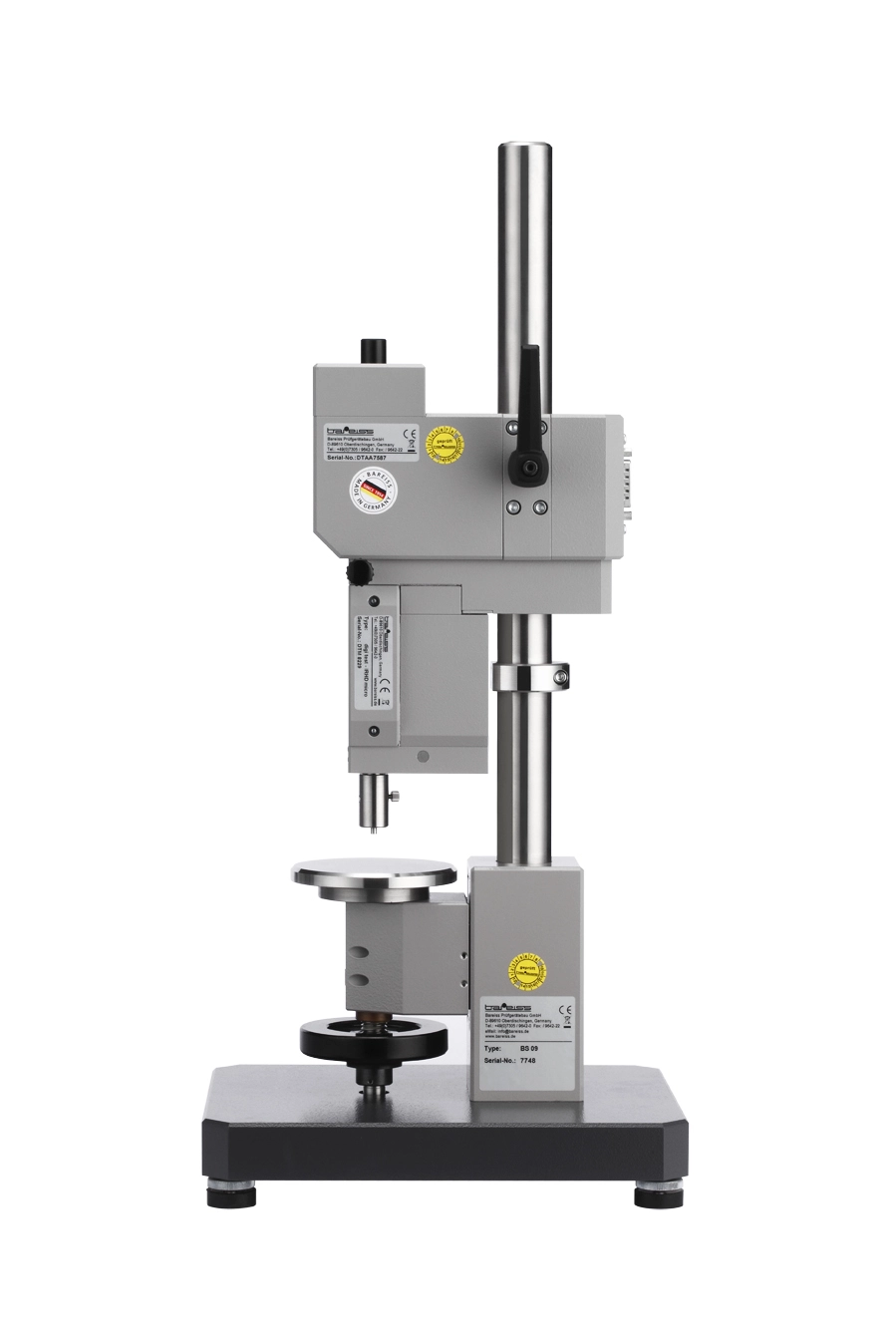
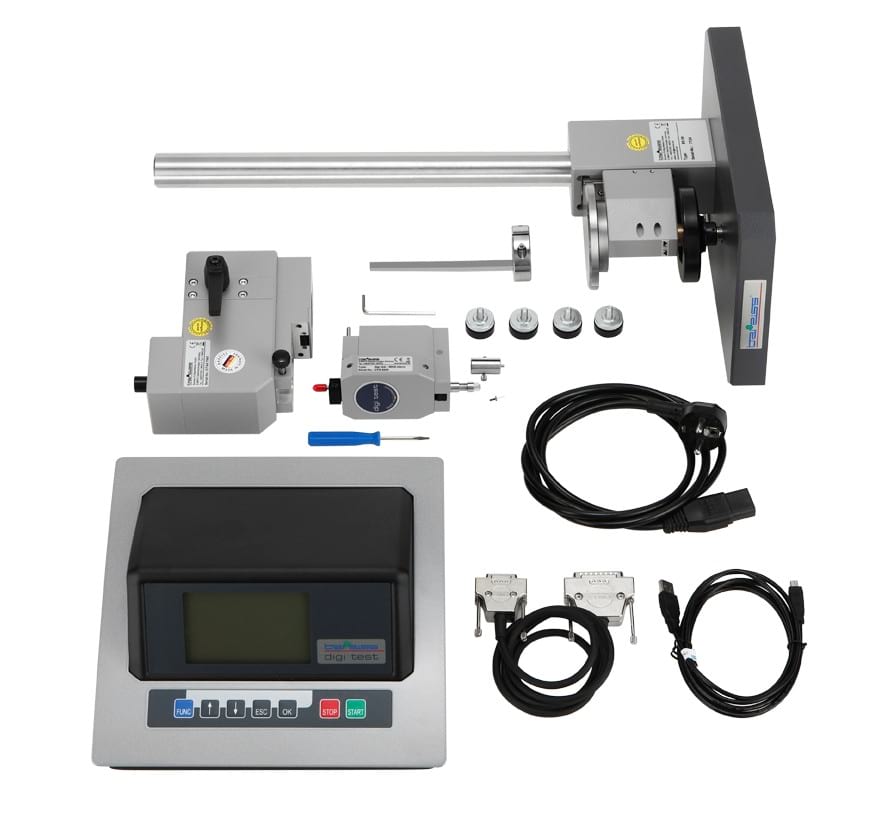
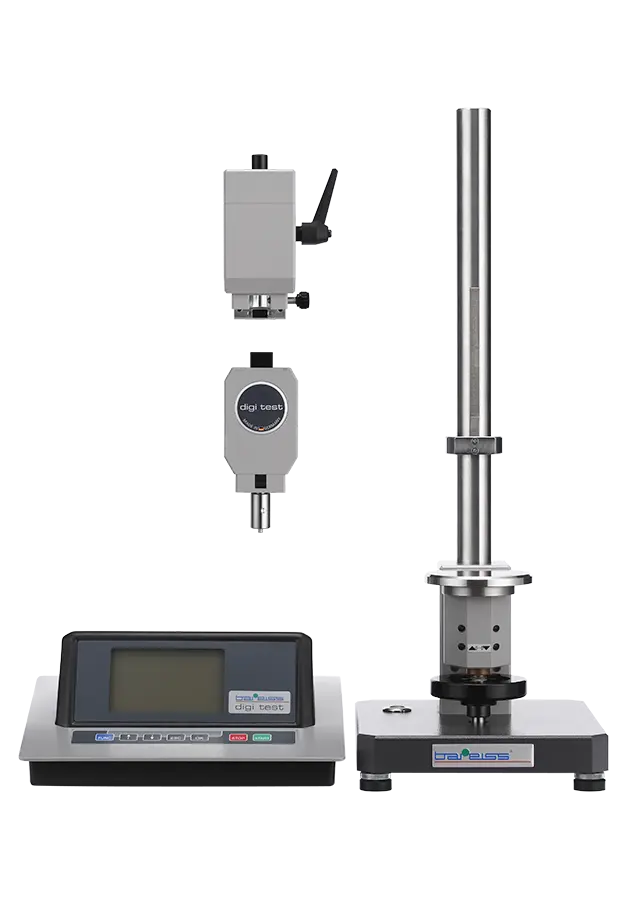
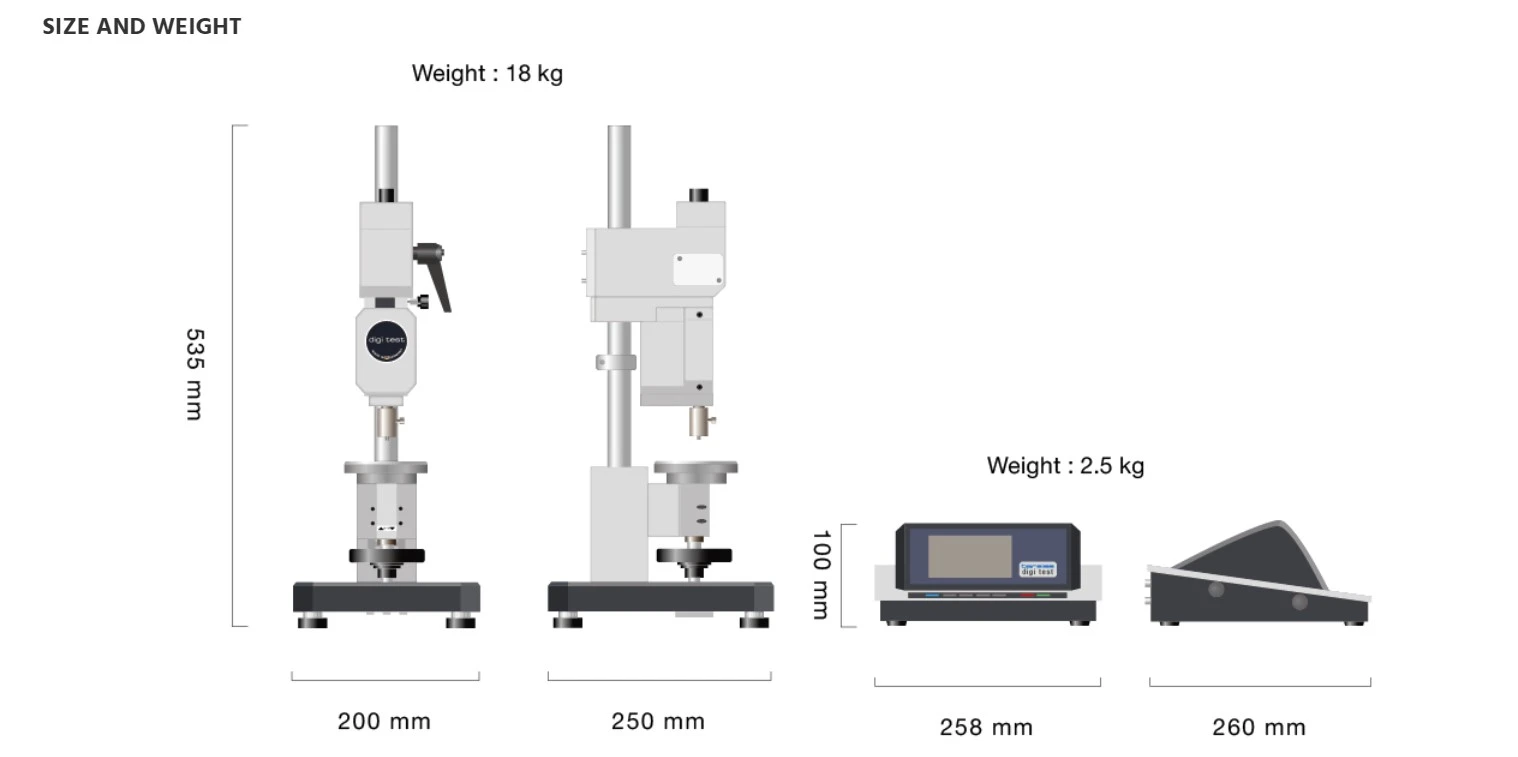
Digi Test II is an automatic Shore, IRHD and VLRH hardness testing system. The unit comes equipped with 4 main components: electronic unit, the loading module (pick-up bracket), the test stand, and the interchangeable measuring unit for methods of Shore, IRHD and VLRH.
The Digi Test II is a smart device equipped with an electronic unit that functions as the main control for the display of user information, measurement of method and time, the selection of various features and the whole system. This automatic Shore / IRHD system is the preferred solution for the automotive industry, rubber and plastic industry, defense and aerospace industry, and more.
The instrument is defined by the measuring unit fitted to it, and by how little the operator can influence the reading.
Measuring Time1-99 seconds
Accuracy0.1 Shore
ComplianceASTM D2240
Data TransferUSB
Measuring UnitsInterchangeable
SurfacesFlat, concave, convex
The System in Use
Four short films show the system measuring, the automatic centering ring for IRHD and the centering device for tubes and hoses.
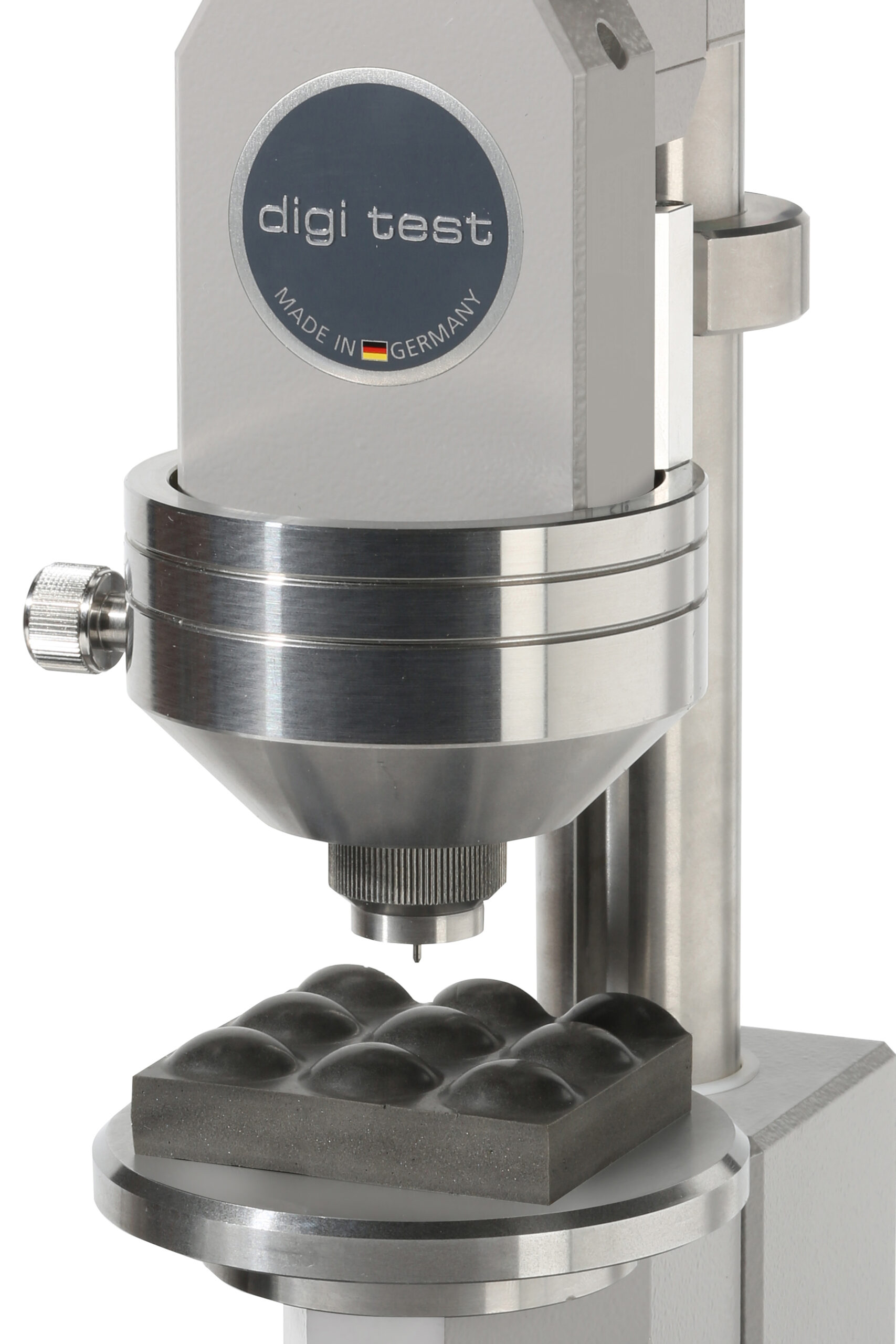
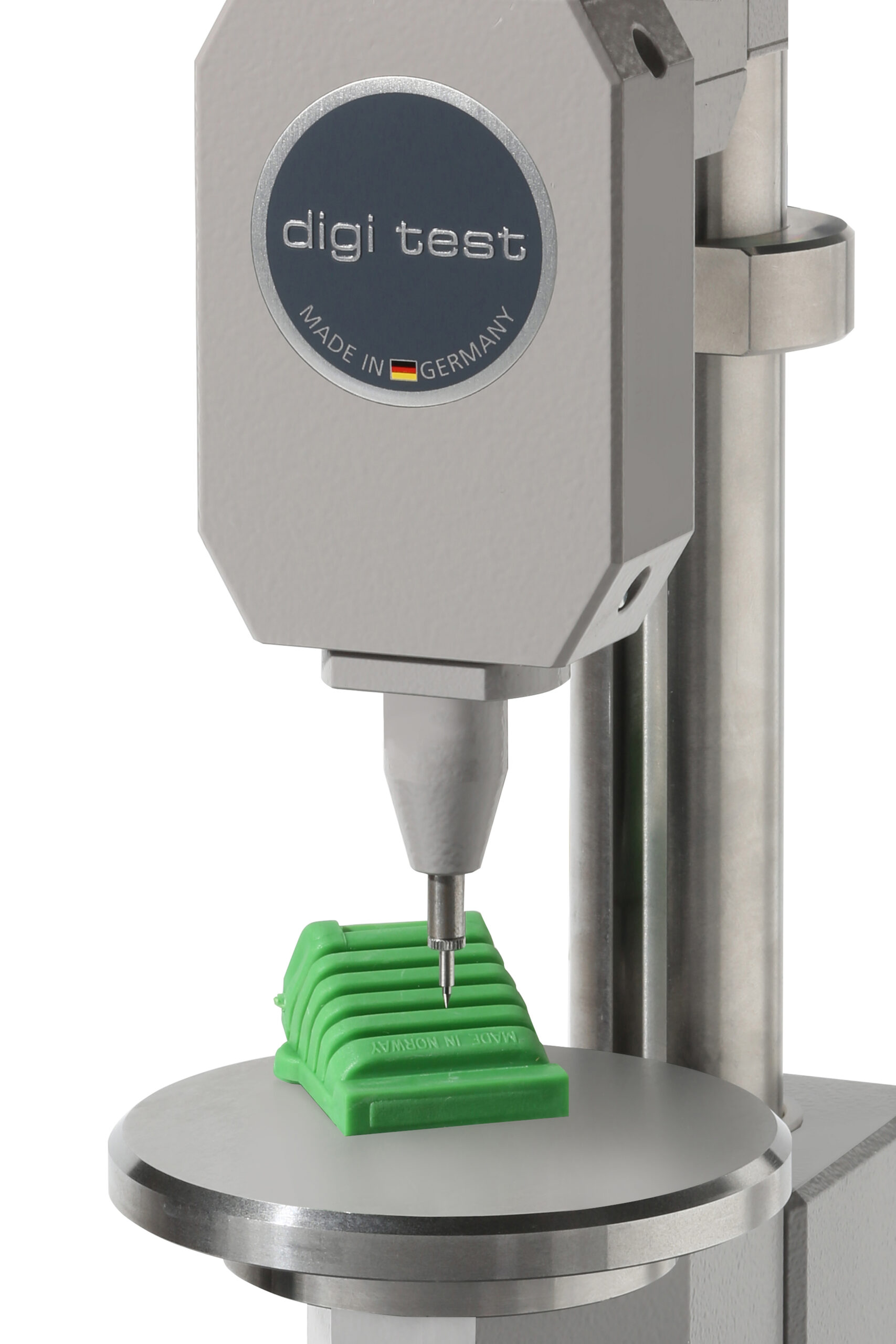
The Digi Test II taking an automatic hardness reading.
Changing the interchangeable measuring unit.
And the two centering devices in operation:
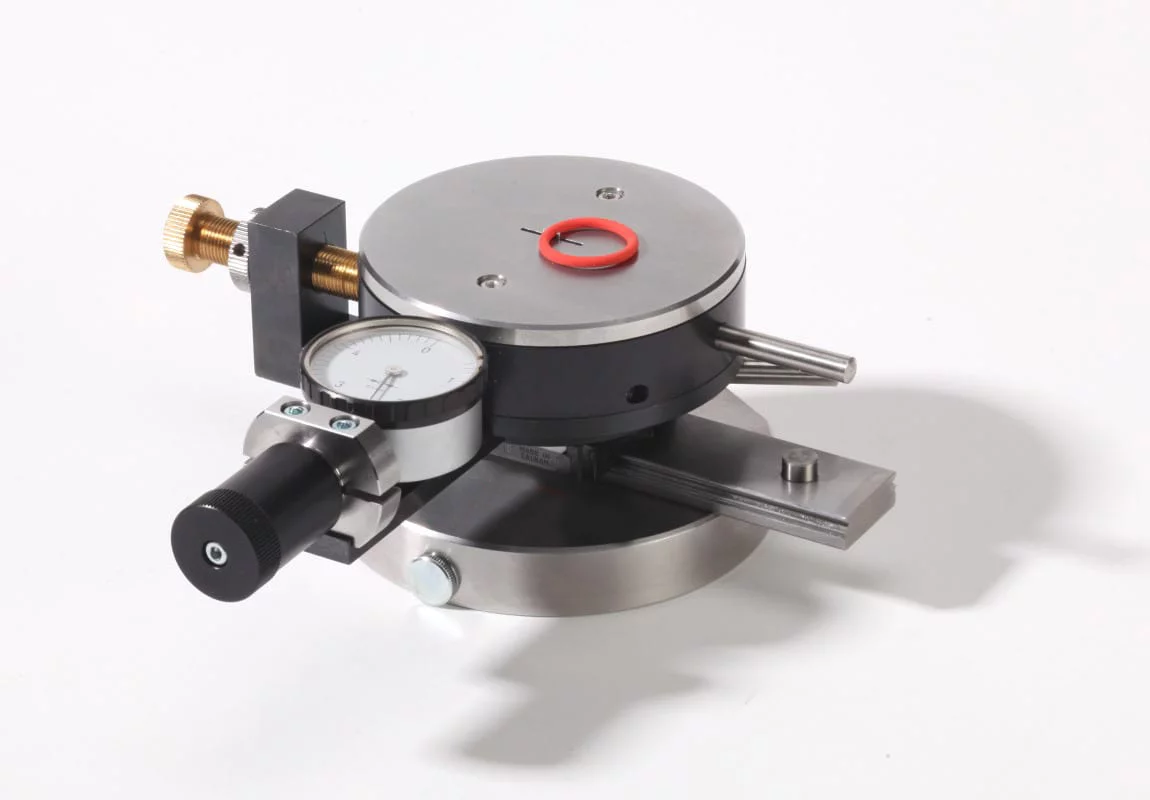
Automatic centering ring for IRHD - Barofix.
Centering device for quick centering of rubber tubes or hoses.
The system on its test stand:
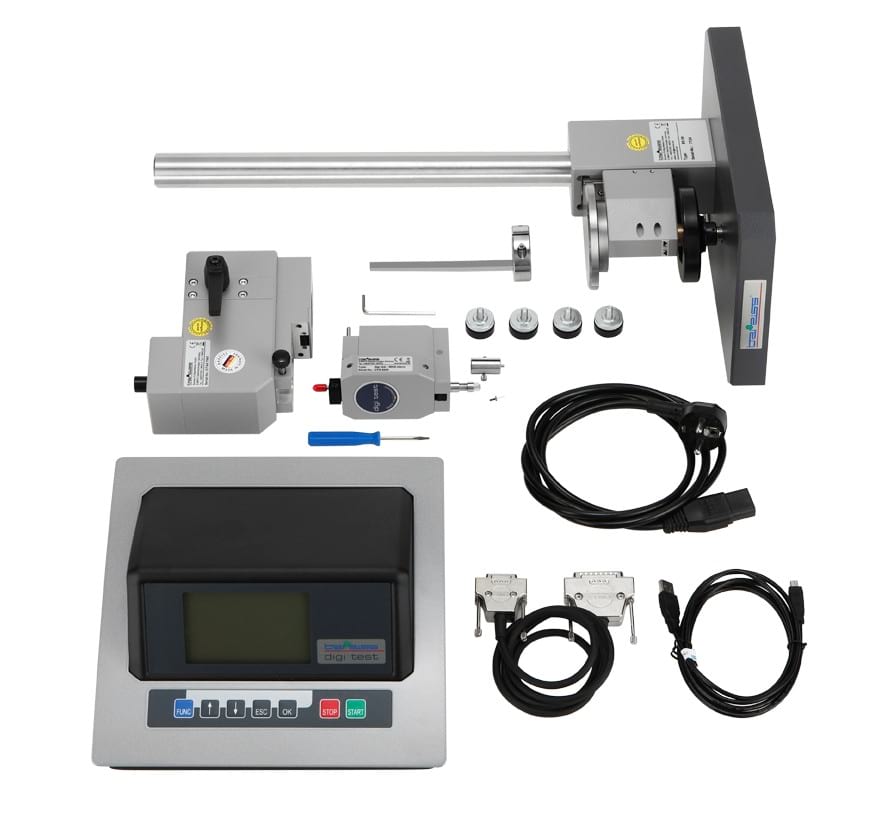
The electronic unit, the loading module and the test stand.
Features and Benefits
Everything below is standard, from the programmable dwell to the automatic recognition of the measuring unit that is fitted.
Measuring time
Programmable measuring time, 1-99 seconds.
Accuracy
Accuracy of 0.1, that is one tenth of a Shore value, in compliance with ASTM D2240.
Electronic unit
Provides clear display of measured value, navigation menu and data output.
Operator influence
Easy to use with limited operator influence to guarantee accurate and repeatable hardness test results every time.
Range assistance
The reading in the display gives assistance for the correct selection of the measuring device during your measurement when the measured value is above or below the limit value.
Data transfer
USB interface for data transfer.
Modularity
Modular, digital hardness testing system with interchangeable measuring units offering flexibility of testing to be performed on a single system, and automatic identification of the measuring range and of the measuring time.
Production line
Integrable in an automatic production process.
Hysteresis
Certificates

The DAkkS certificate supplied with the measuring devices.
Official DKD/DAkkS certificates are offered for the exchangeable measuring devices. The certificate states the deviation found during calibration and the measurement uncertainty behind it, and it refers to the national standards the references are held to.
Hardness Testing on Concave and Convex Surfaces
Different from the usual hardness testers that can only measure flat-surfaced samples, NextGen’s Digi Test II measures hardness on every surface by making use of an automatic surface detection technology. The indenter length is also customizable, making it extendable to any point on the sample that is to be measured.
Measuring on a curved surface with automatic surface detection.
Sample Holders and Positioning Devices
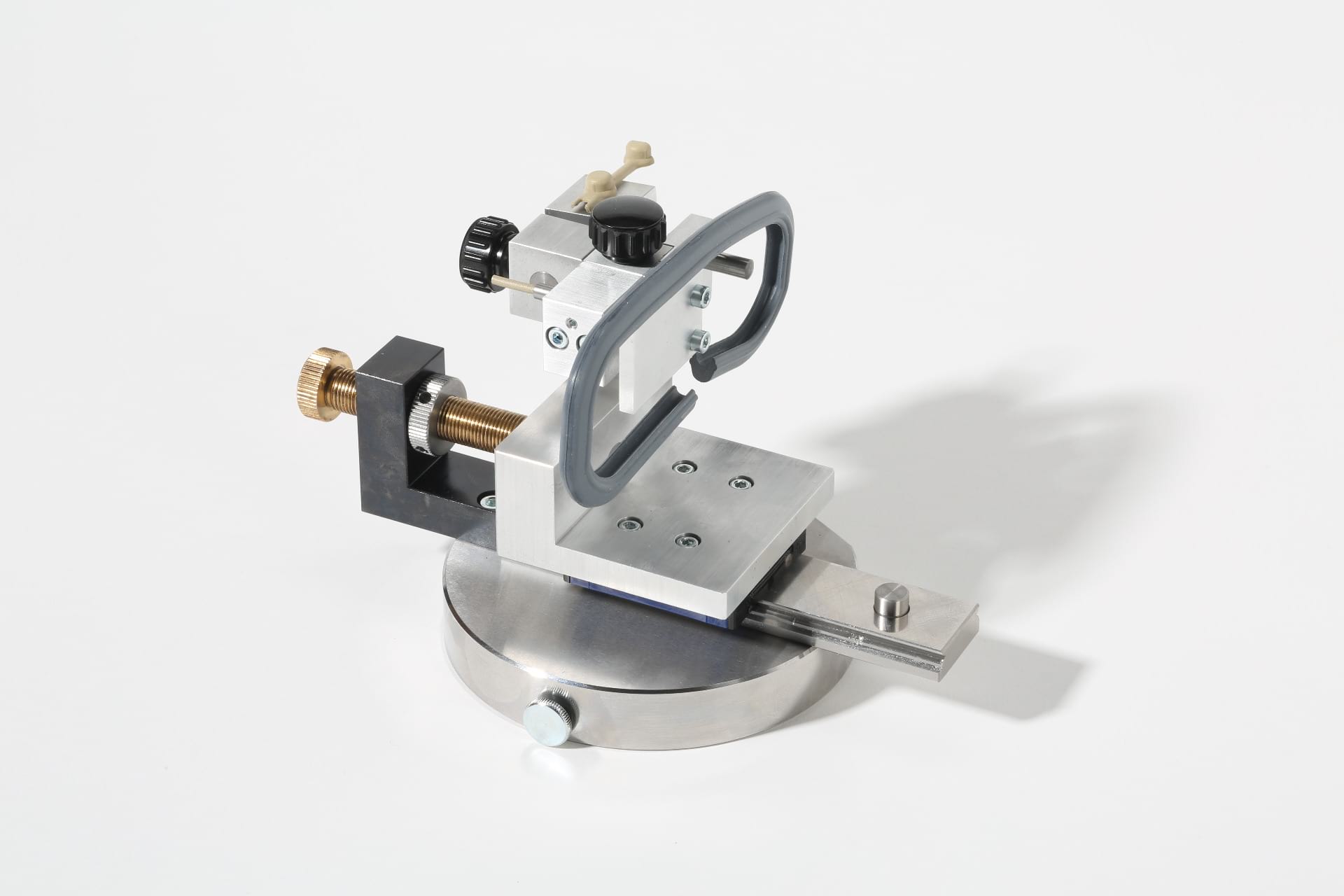
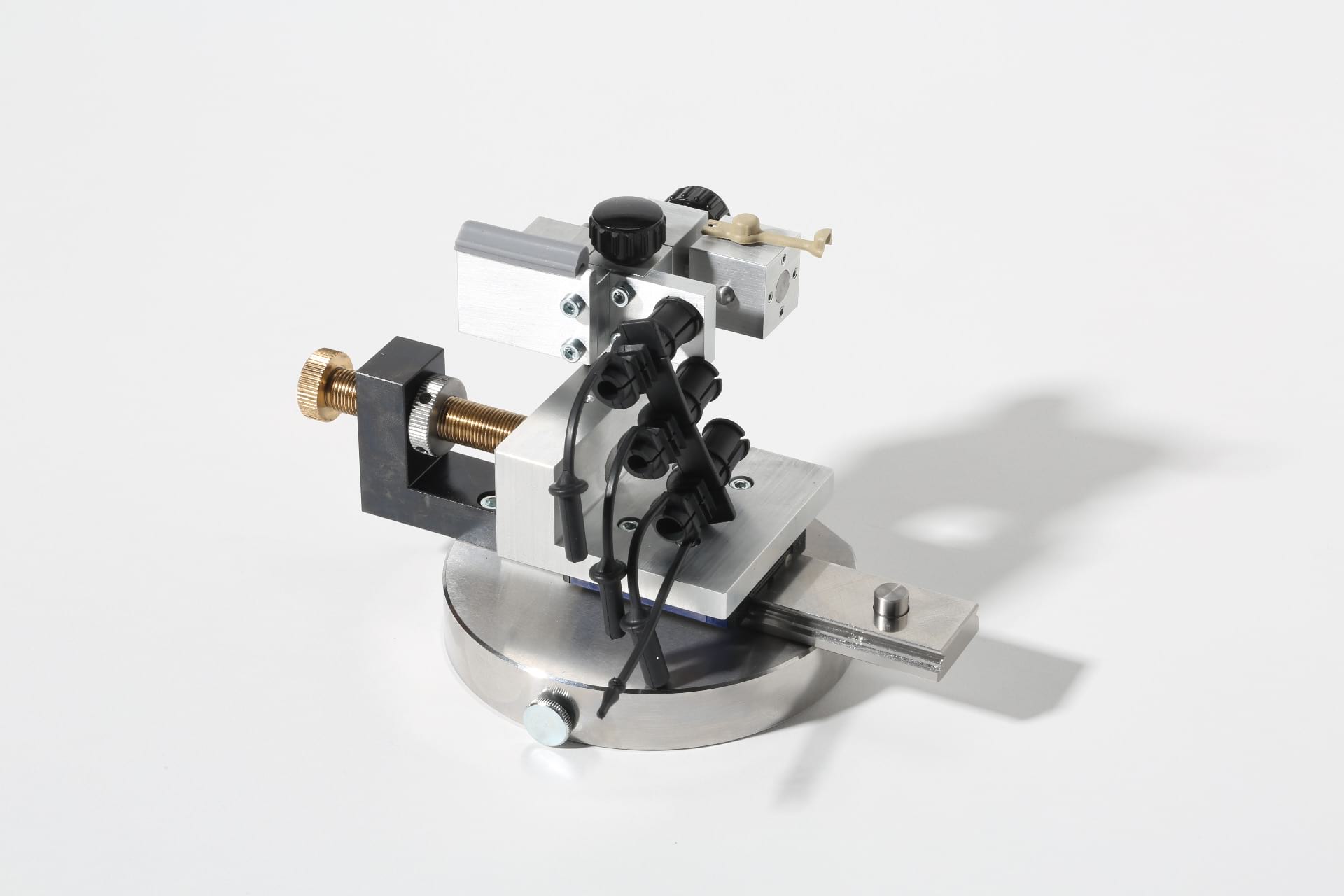
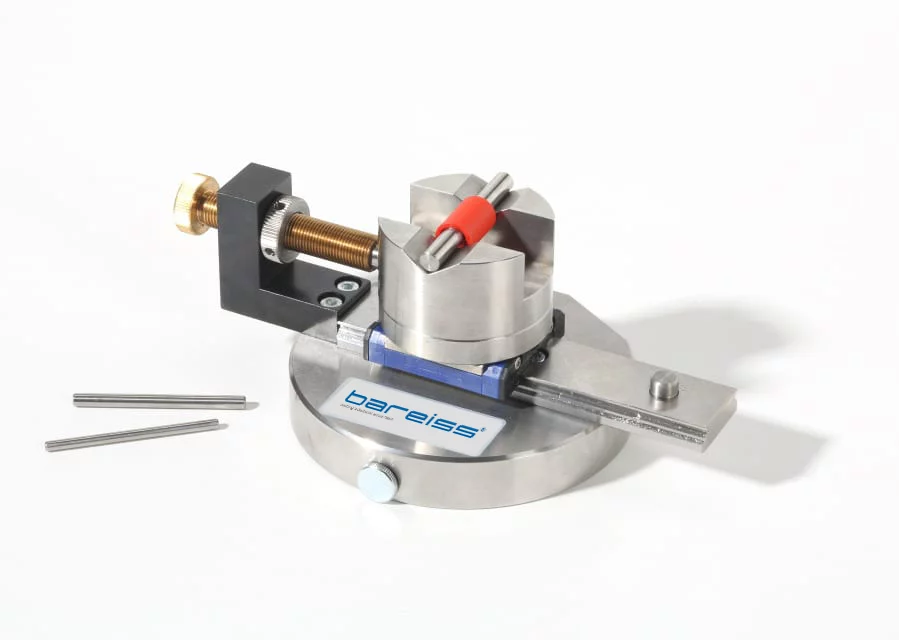
NextGen offers several standard sample holders; we are also committed to offering you customized holders that suit your product. Kindly contact the sales team for bespoke solutions. Below are some of the standard positioning devices for tubes and O-rings.
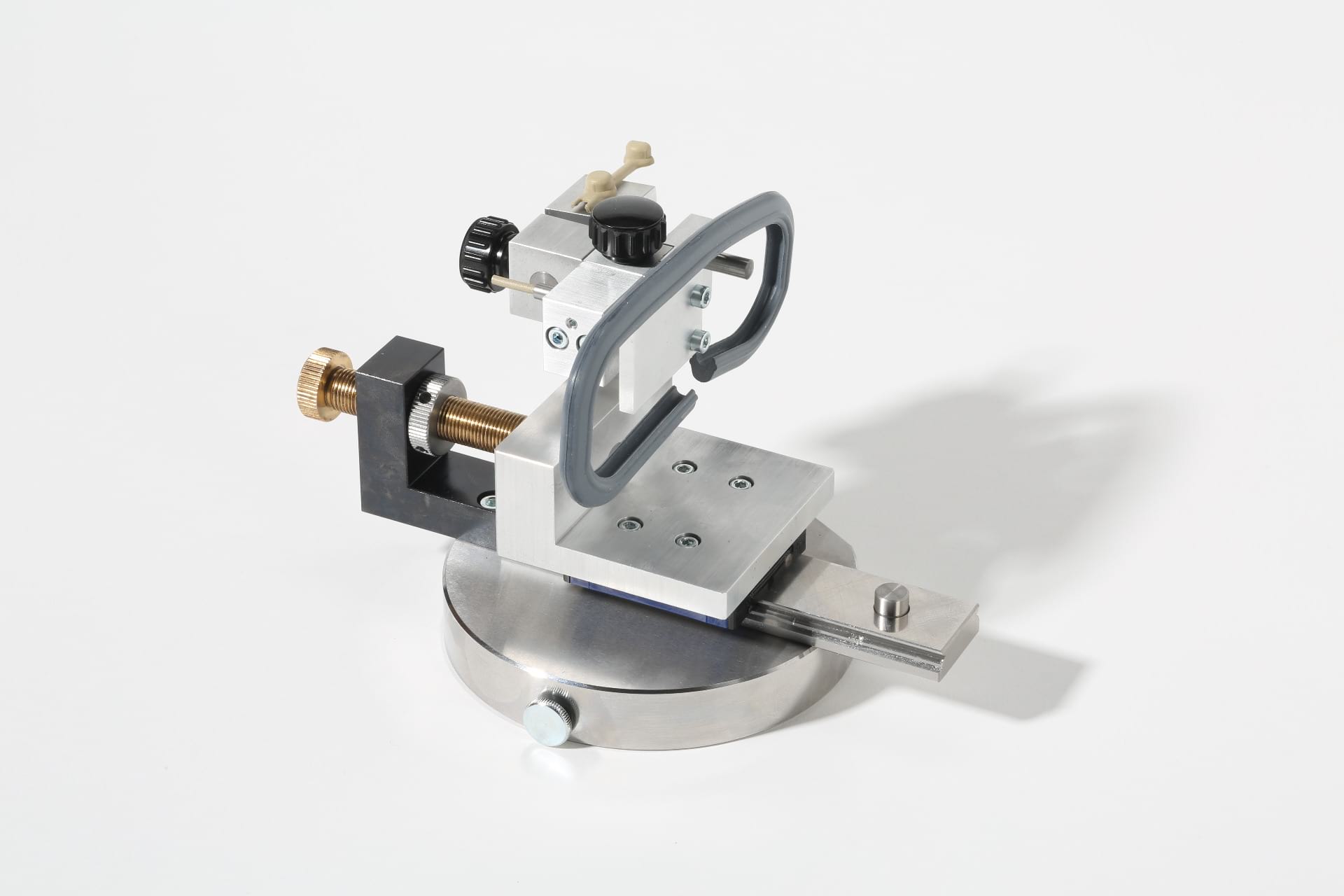
Standard sample holders.
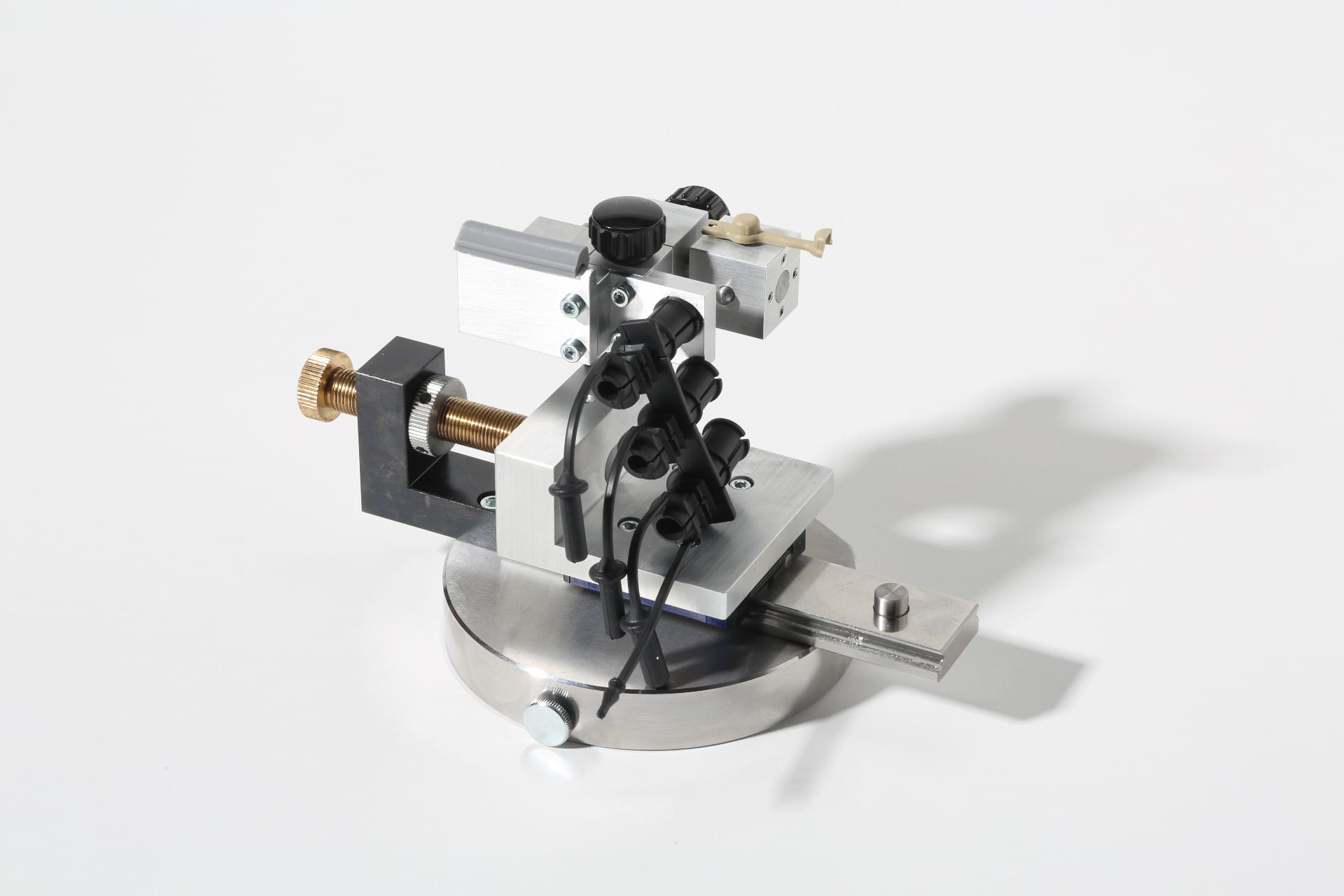
Positioning devices for tubes.
And for O-rings:
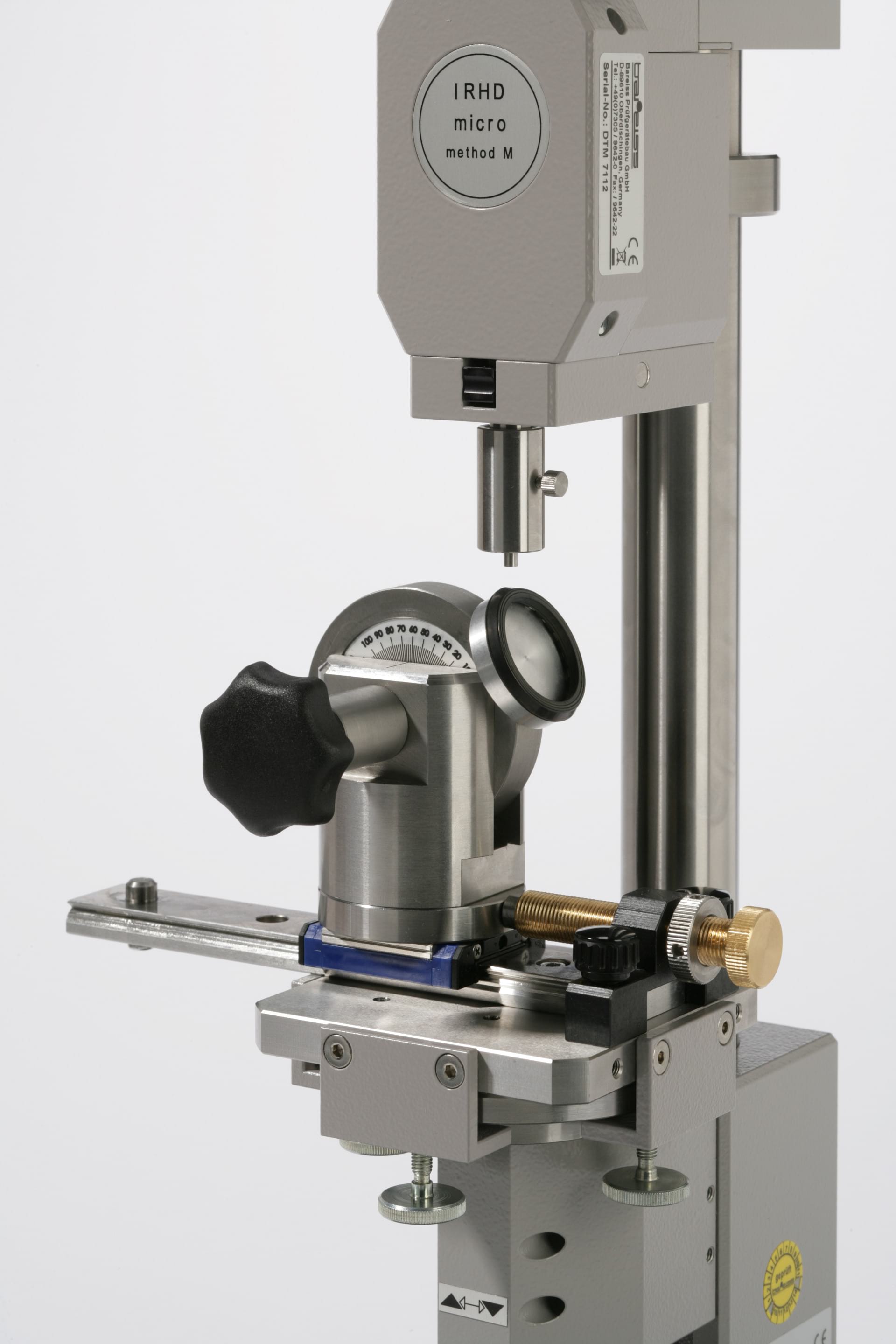
Positioning devices for O-rings.
Measuring Devices
There is no need for setting up since it is plug and play. To install the measuring unit, simply fasten the knurl nut; after this the electronic unit automatically detects the type of the installed method of measurement and the time according to the standards.
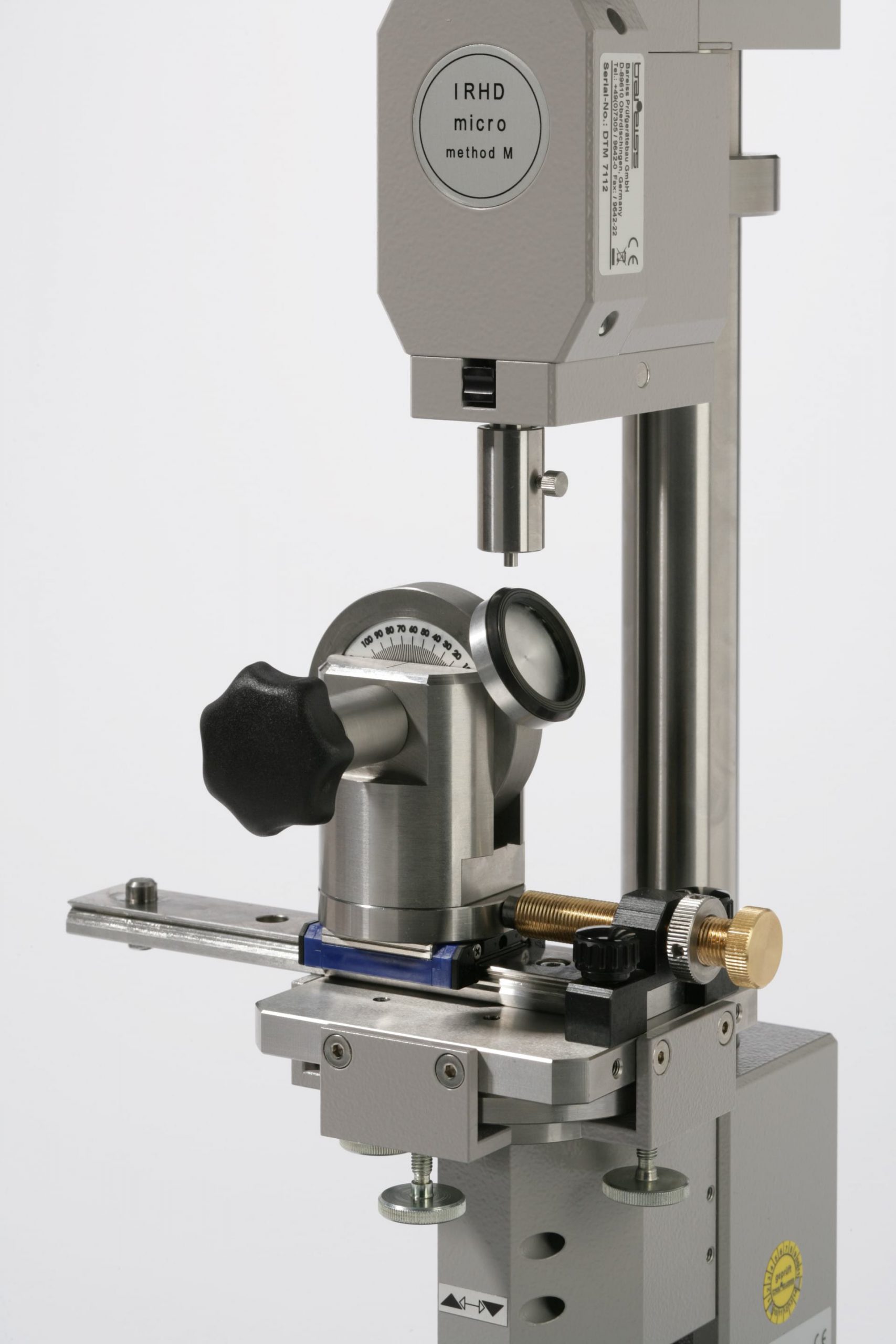
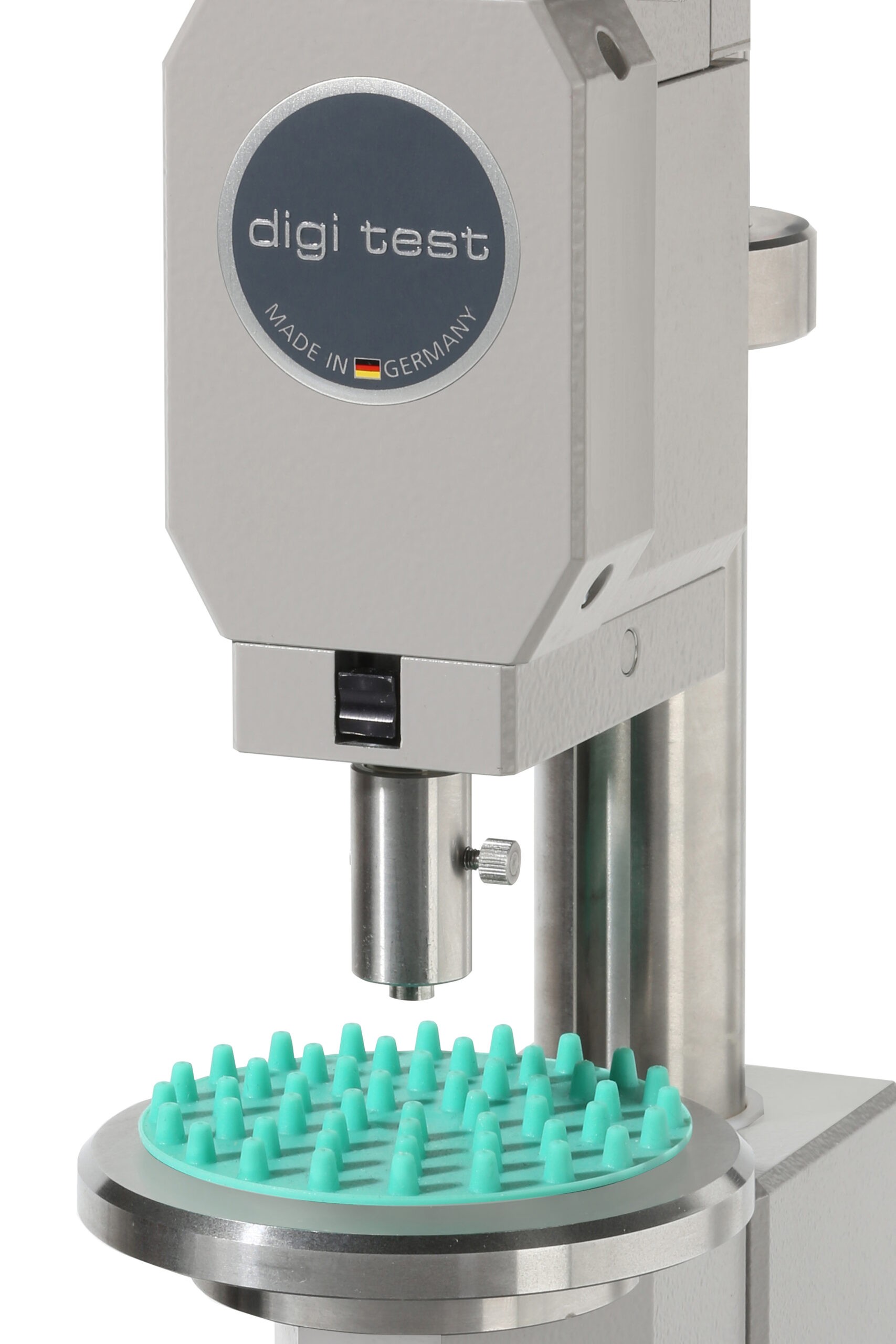
IRHD N/H/L
Suitable for plastically deformable materials from 6 up to 10 mm, highly elastic materials and soft rubbers.
IRHD L
Suitable for the hysteresis function from 10 up to 12 mm.
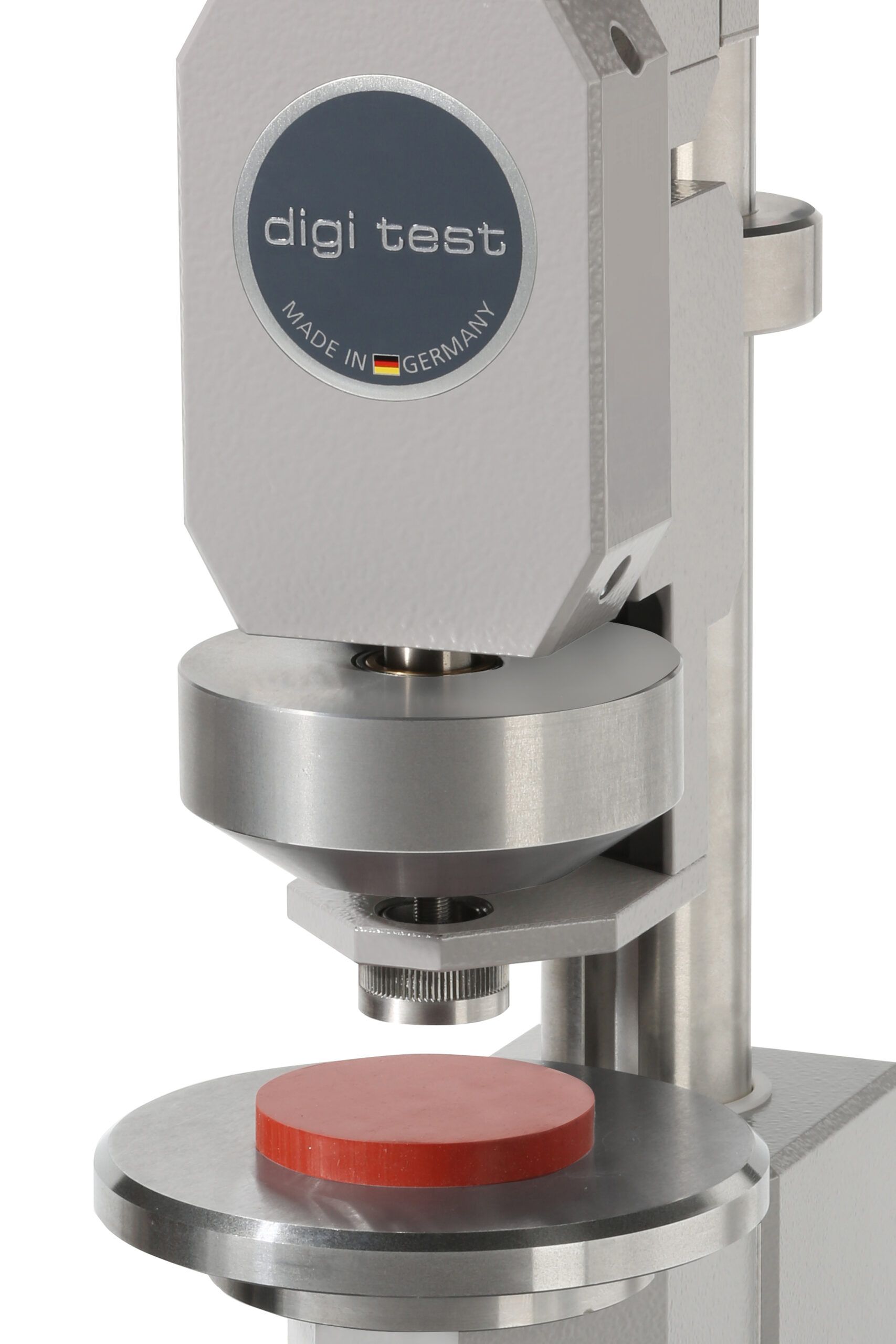
Shore 00/000
Suitable for foam rubber, silicone, sponge and cellular rubber, and gel-like materials with material thickness of 6 mm. Hysteresis function.
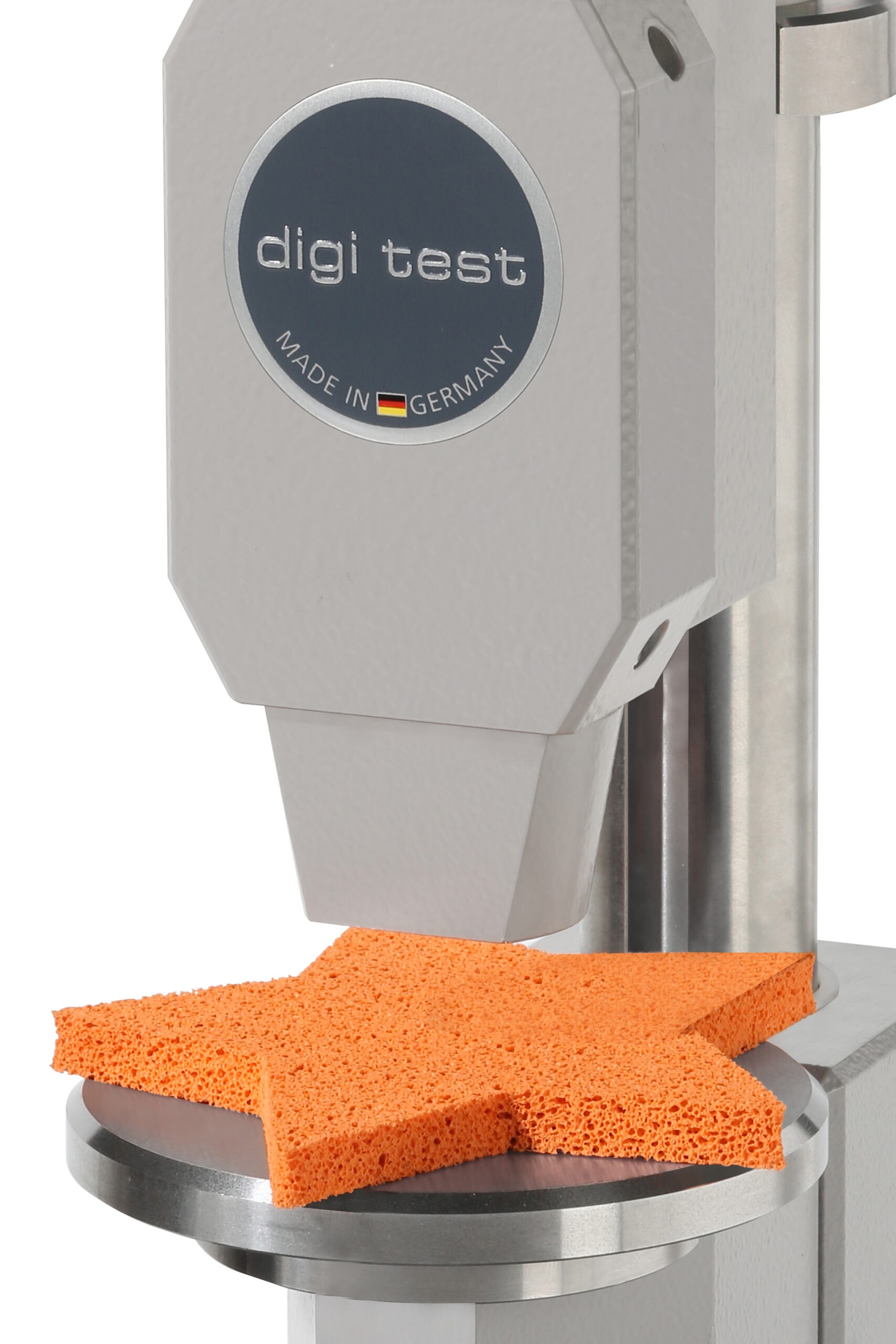
VLRH
Suitable for foam rubber, silicone, sponge and cellular rubber, and gel-like materials with material thickness of 1 mm. Hysteresis function.
Shore A/B/0
Suitable for convex and concave shaped parts of a material thickness of 4 or 6 mm.
Micro Shore A
Suitable for materials with minimum material thickness of 1 mm.
Shore D/C/D0
Suitable for shaped parts with thickness of up to 4 or 6 mm.
Micro Shore D
Suitable for those with minimum thickness of 1 mm.
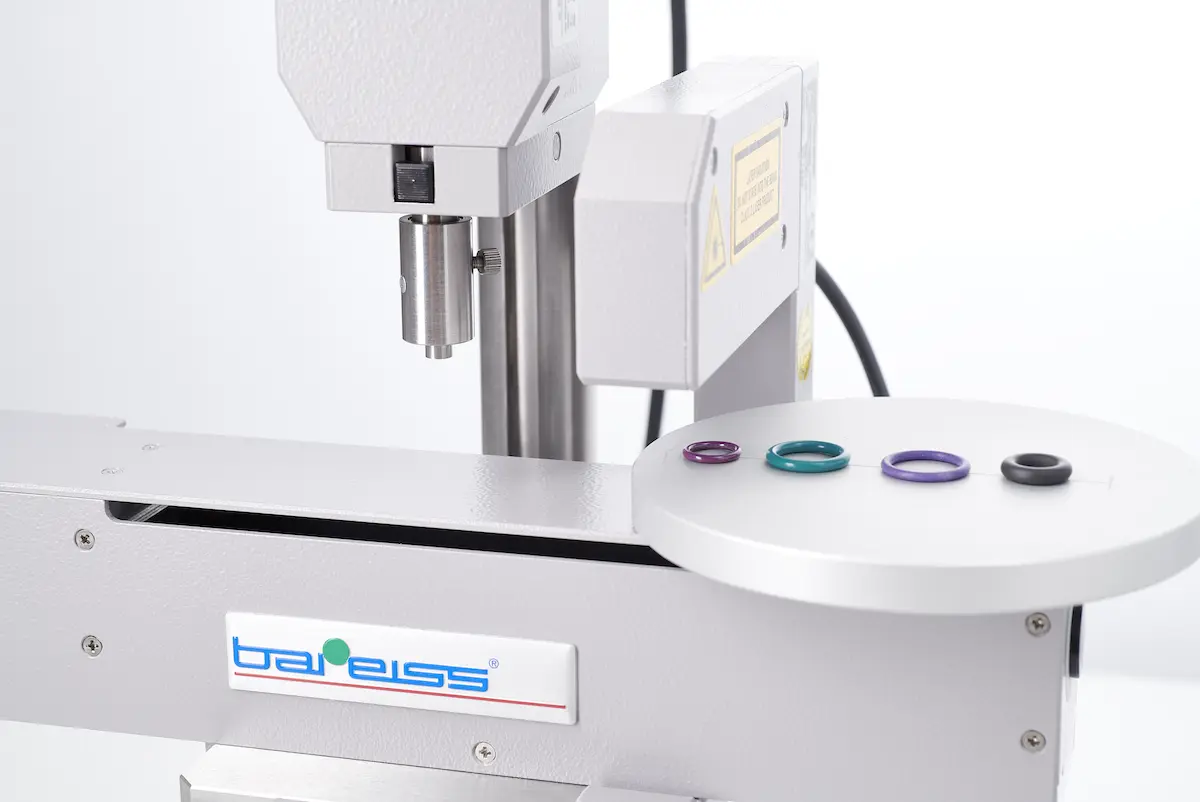
O-ring device
Fully automated laser measuring device for precise O-ring hardness testing.
The measuring units themselves, in the order described above:

IRHD N/H/L.

IRHD L.
The Shore and VLRH units:

Shore 00/000.

VLRH.
And the hard-scale unit together with the O-ring device:

Shore A/B/0 and Micro Shore A.

The automated O-ring measuring device.
Test Methods
Each method has its own materials, its own standards, its own minimum specimen thickness and its own indenter.
| Test method | Range of application | Standard | Minimum material thickness | Indenter |
|---|---|---|---|---|
| Shore A | Soft rubber, elastomers, natural rubber products, neoprene, casting resin, polyester, soft PVC, leather, pressure rollers, etc. | DIN EN ISO 868; DIN ISO 7619, ASTM D 2240, NFT 51-174, BS903 Part A 26 | 4 mm (DIN EN ISO 868), 6 mm (other standards) | 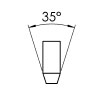 |
| Asker C | See Shore A. | SRIS 0101, ABNT NBR 14455 | 6 mm | 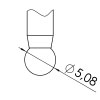 |
| Shore A0 | See Shore A. | DIN ISO 7619, ASTM D 2240 | 6 mm | 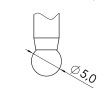 |
| Shore A0 | See Shore A. | DIN ISO 7619, ASTM D 2240 | 6 mm | 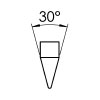 |
| Shore D | Hard rubber, hard plastics, acrylic glass, polystyrene, rigid thermoplastics, Resopal, pressure rollers, vinyl plates, cellulose-acetate, etc. | DIN EN ISO 868; DIN ISO 7619, ASTM D 2240, NFT 51-174, BS903 Part A 26 | 4 mm (DIN EN ISO 868), 6 mm (other standards) | 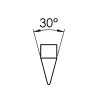 |
| Shore B | Middle hard materials from rubber, typewriter roles, flat materials. | ASTM D 2240 | 6 mm | 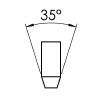 |
| Shore C | Plastics and middle hard rubber materials. | ASTM D 2240 | 6 mm | 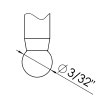 |
| Shore D0 | Plastics and middle hard rubber materials. | ASTM D 2240 | 6 mm | 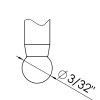 |
| Shore 0 | Soft elastic materials, pressure rolls, middle firm, textile fabrics, nylon, orlon, perlon, rayon. | ASTM D 2240 | 6 mm | 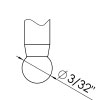 |
| Shore 00 | Sponge- and foam rubber, cellular rubber, silicone. | ASTM D 2240 | 6 mm | 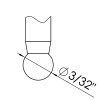 |
| Shore 000 | Sponge- and foam rubber, cellular rubber, silicone. | ASTM D 2240 | 6 mm | 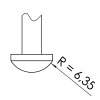 |
| Shore A0, Shore E | See Shore A. | DIN ISO 7619, ASTM D 2240 | 6 mm | 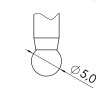 |
| Asker CS | See Shore D. | SRIS 0101 | 6 mm | 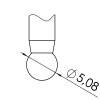 |
| Shore 000 S | See Shore 00 / 000. | ASTM D 2240 | 6 mm | 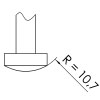 |
| Barcol (metal hardness) | Fibre-glass reinforced plastics, thermosetting plastics, hard thermoplastics, aluminum. | DIN EN 59, ASTM D 2583 | 1.5 mm | — |
Sample Holders, Positioning Devices and Accessories
The centering devices take the operator out of the measurement on O-rings, hoses and oil seals; the reference plates and the certificate keep the instrument traceable.
Barofix
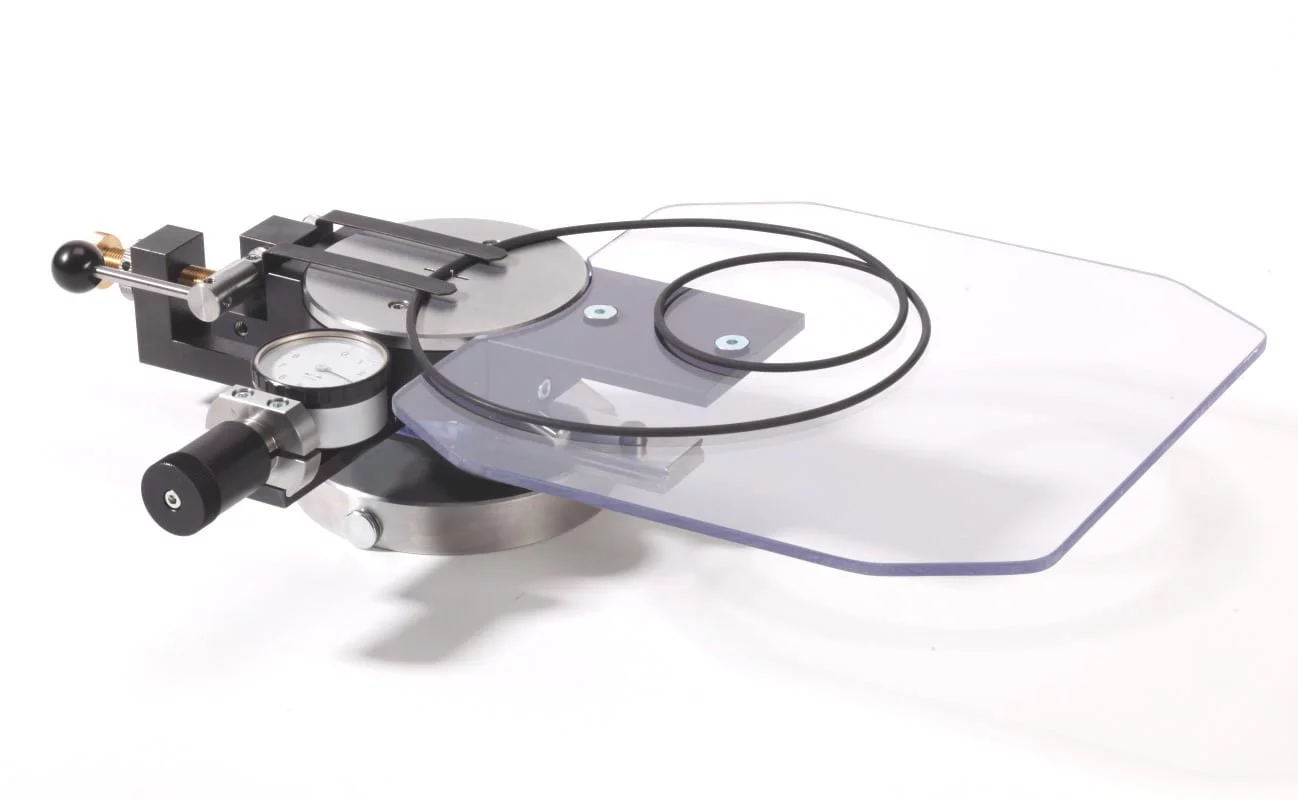
A device for centering in O-rings with outer diameter of 7.9″ (200 mm) and cord diameter falling between 0.6 and 5.0 mm. Comes with a sample clamping device and plexiglas plate of 7.9 × 7.9″ (200 x 200 mm) dimension.
Barofix II / III / IV
Automatic centering device for fast centering of O-rings to enable a reduction in the influence of operators. Compatible with Digi Test II only. Read more about the latest Barofix 4 centering device in our blog.
Centrofix
Centering device for speedy centering of hose or rubber tubes.
Centrofix for oil seals
Centering device that makes measurement possible at every part of the oil seal.
Reference plates
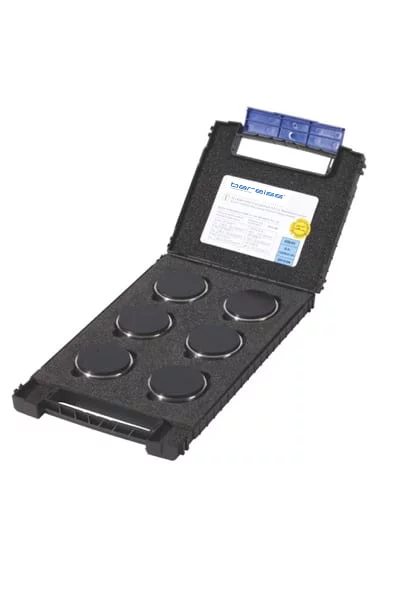
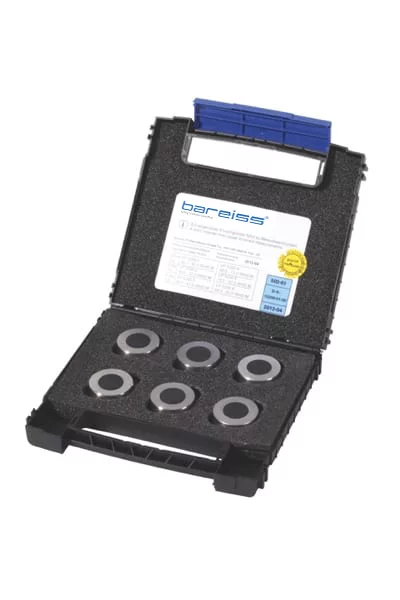
Due to possible frequent recalibration, standard rubber blocks are used to maintain the metrological capability of the measuring device according to IRHD. The rubber blocks are embedded in a stainless steel holder.
Hardtest software
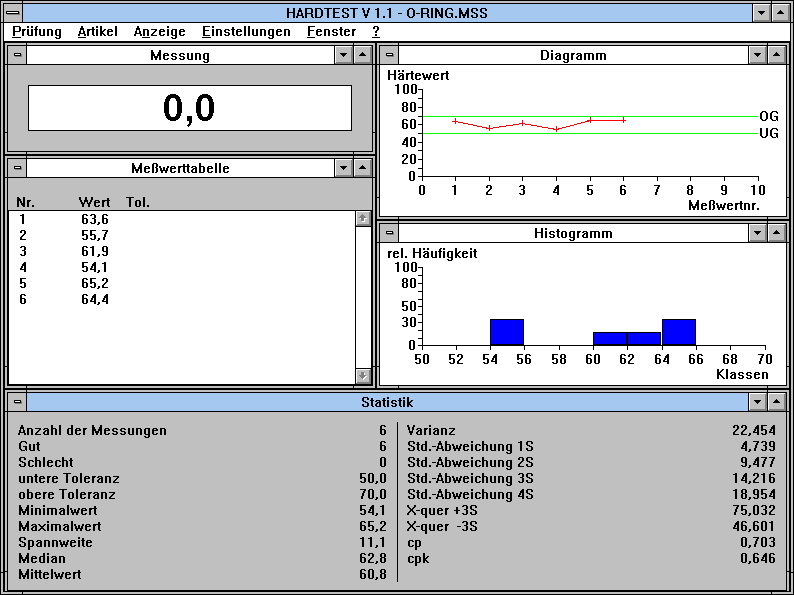
The test and evaluation software program can be applied on every NextGen testing device that has a serial interface. Every function needed for a fault free process is embedded in the program.
DAkkS/DKD certificate
Several measurements and standard references are used to determine the given deviation during the calibration of a measuring instrument. After this, a calibration certificate will be issued showing the measuring results and the resulting measurement uncertainties, and the instrument is ticked as calibrated. The calibration certificate as well as all the documents reflects the national standards.
The centering devices and the reference equipment:
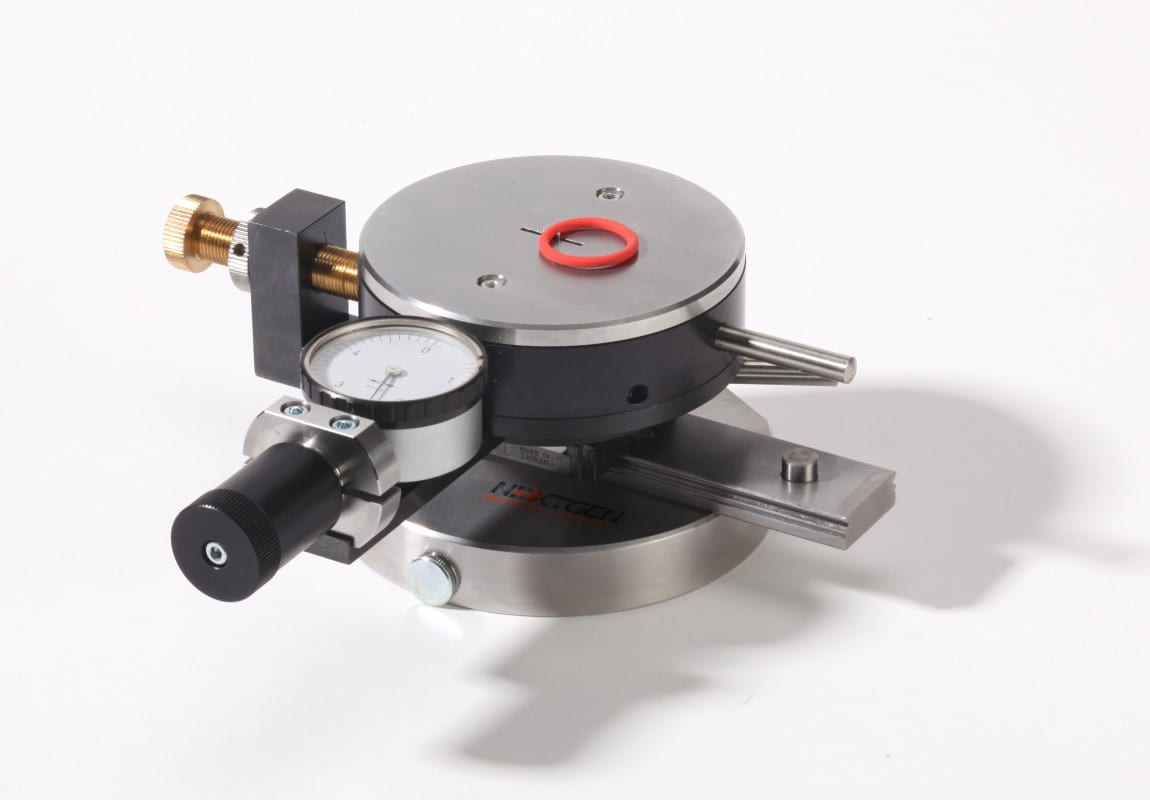
Barofix.
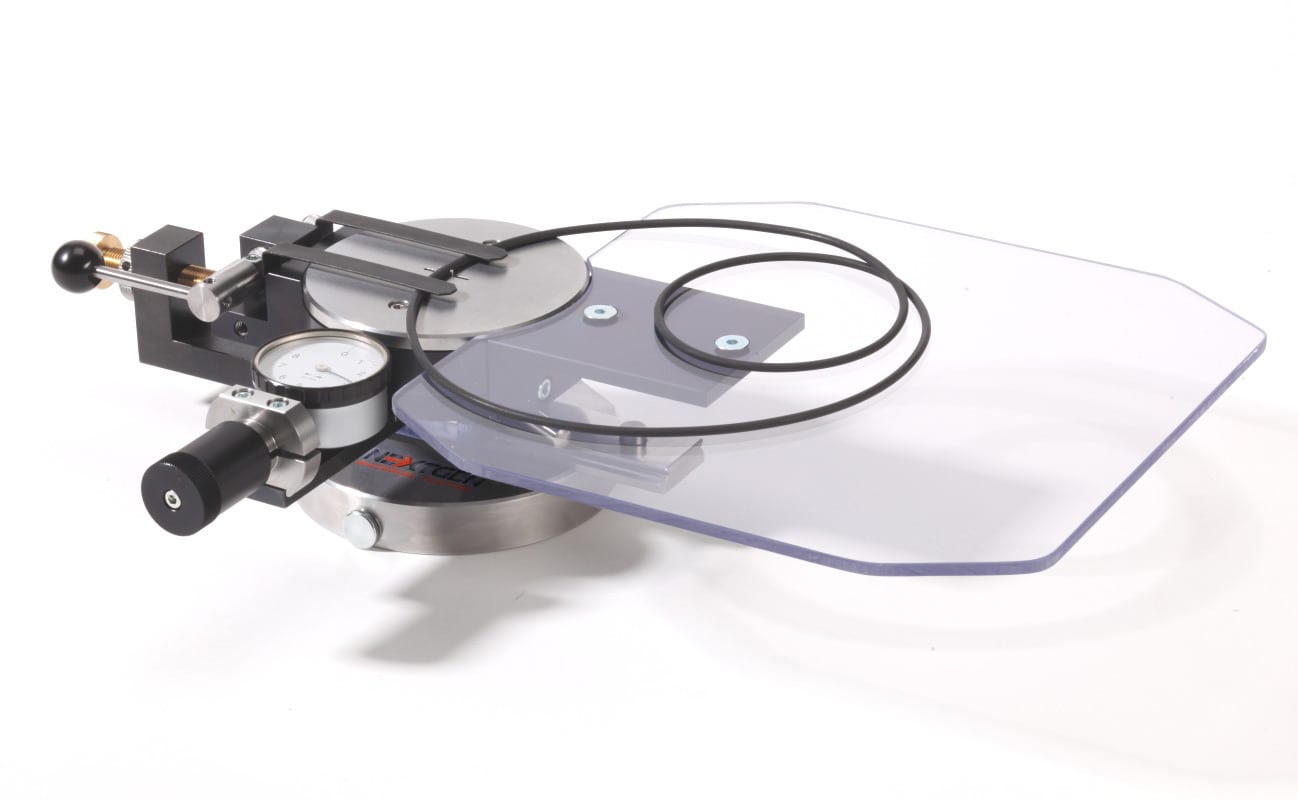
Barofix II / III / IV.
The centering devices for hoses and oil seals:
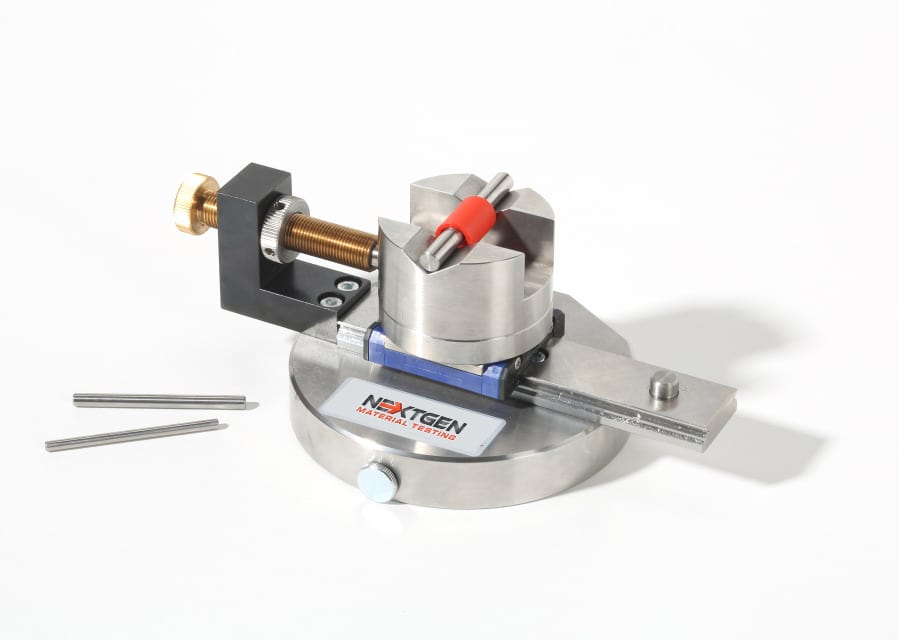
Centrofix.
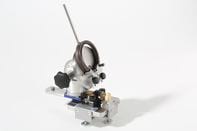
Centrofix for oil seals.
The reference plates and the software:
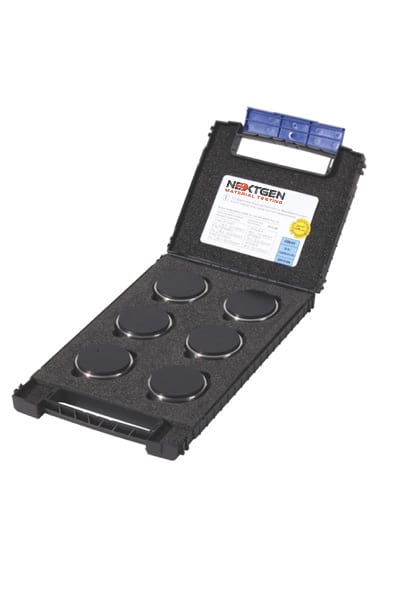
Reference plates.
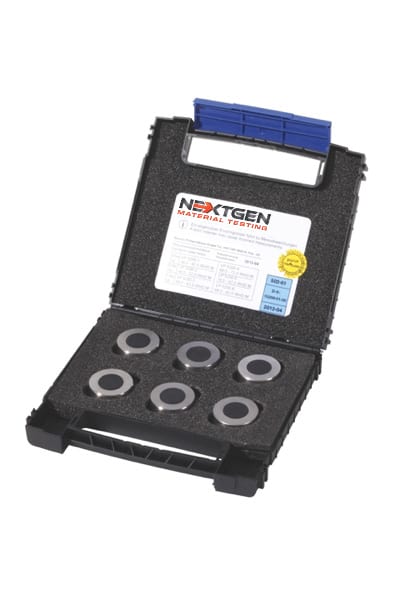
Reference plates in the stainless steel holder.
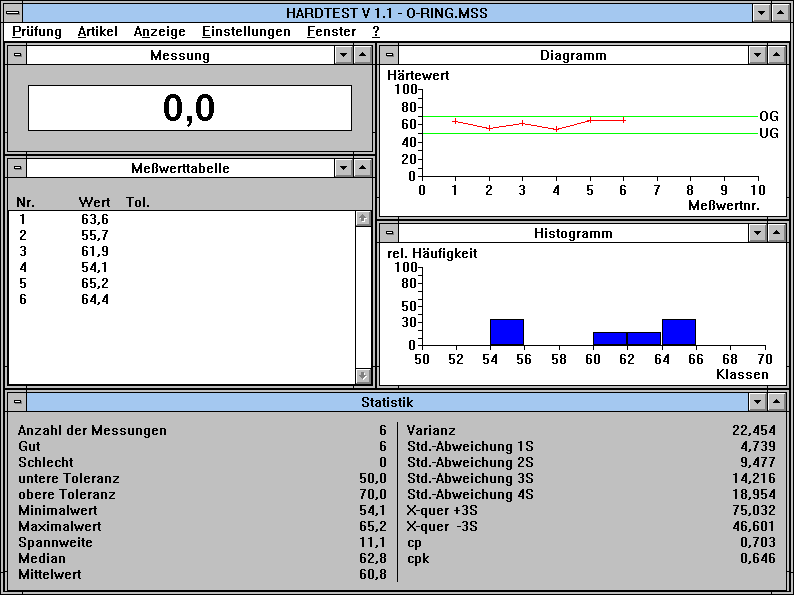
The Hardtest software.
Methods by Standard and Minimum Thickness
The same methods again, this time split by the standard they are run to and the minimum specimen thickness each standard requires.
| Test method | Range of application | Standards | Minimum thickness |
|---|---|---|---|
| Shore A | Soft rubber, elastomers, natural rubber products, neoprene, casting resin, polyester, soft PVC, leather, pressure rollers, etc. | DIN EN ISO 868 | 4 mm |
| Shore A | See above. | DIN ISO 7619, DIN 53505, ASTM D 2240, NFT 51-174, BS903 Part A 26 | 6 mm |
| Asker C | See Shore A. | SRIS 0101, ABNT NBR 14455 | 6 mm |
| Shore A0, Shore E | See Shore A. | DIN ISO 7619, ASTM D 2240 | 6 mm |
| M Shore A | See Shore A. | Bareiss standard | 0.5 mm |
| Shore D | Hard rubber, hard plastics, acrylic glass, polystyrene, rigid thermoplastics, Resopal, pressure rollers, vinyl plates, cellulose-acetate, etc. | DIN EN ISO 868 | 4 mm |
| Shore D | See above. | DIN ISO 7619, ASTM D 2240, NFT 51-174, BS903 Part A 26 | 6 mm |
| Asker CS | See Shore D. | SRIS 0101 | 6 mm |
| M Shore D/C/D0 | See Shore D, 0.5. | Bareiss standard | 1.5 mm |
| M Shore D/C/D0 | See Shore D, 0.2. | Bareiss standard | 1.5 mm |
| Shore B | Middle hard materials from rubber, typewriter roles, flat materials. | ASTM D 2240 | 6 mm |
| Shore C | Plastics and middle hard rubber materials. | ASTM D 2240 | 6 mm |
| Shore D0 | Plastics and middle hard rubber materials. | ASTM D 2240 | 6 mm |
| Shore 0 | Soft elastic materials, pressure rolls, middle firm, textile fabrics, nylon, orlon, perlon, rayon. | ASTM D 2240 | 6 mm |
| Shore 00 | Sponge- and foam rubber, cellular rubber, silicone. | ASTM D 2240 | 6 mm |
| Shore 000 | Sponge- and foam rubber, cellular rubber, silicone. | ASTM D 2240 | 6 mm |
| Shore 000 S | See Shore 00 / 000. | ASTM D 2240 | 6 mm |
| Type AM/M | See Shore A. | DIN ISO 7619, ASTM D 2240 | 1.5 mm |
| IRHD M | Thin walled O-rings, moulded parts, standard plates. | DIN ISO 48, ASTM D 1415, NFT 46-003, BS903 Part A 26 | 0.6 mm |
| IRHD H | See Shore D. | DIN ISO 48, ASTM D 1415, NFT 46-003, BS903 Part A 26 | 6 mm |
| IRHD N | Soft rubber, high elastic materials, plastic ductile materials. | DIN ISO 48, ASTM D 1415, NFT 46-003, BS903 Part A 26 | 6 mm |
| IRHD L | Sponge- and foam rubber, cellular rubber, silicone. | DIN ISO 48, ASTM D 1415, NFT 46-003, BS903 Part A 26 | 10 mm |
| VLRH | Sponge- and foam rubber, cellular rubber, silicone. | DIN ISO 27588 | 2 mm |
| Pusey & Jones | Rubber- or rubberlike materials, rubber rollers for the paper industry. | ISO 7267-3, ASTM D 531 | 13 mm |
Services
The instrument is supported after the sale.
Testing service
Send us your specimens and we will measure them on the system.
Calibration service
Recalibration with the corresponding certificate.
Training
Training on the instrument and the methods it runs.
Devices on loan
Testing devices on loan during recalibration.
Maintenance
Maintenance contract.
Have Questions or Need to Confirm a Detail?
If you need to confirm which measuring unit suits your material and its thickness, or you need a holder cut for your part, send us a quick request online. Tell us the material, the standard you report to and the shape of the specimen, and we will confirm the unit, the holder and the certificate you need.
For Laboratories
Need Additional Quality Control Equipment to Build Your Laboratory?
Hardness testing is only one part of a complete quality control laboratory. NextGen can help you equip your entire lab with universal testing machines, impact and falling weight testers, melt flow indexers, HDT and Vicat systems, hardness and durometer systems, environmental chambers, and other supporting solutions, all coordinated as one complete project.
- One partner to equip your complete laboratory
- Installation, training, calibration
- Support for the life of the equipment
FAQs
Hysteresis is a well-known phenomenon in materials science, where a material's response to a stimulus depends on its previous history. In the context of rubber and plastic hardness testing, hysteresis refers to the energy loss that occurs when a material is subjected to cyclic stress or strain. This energy loss is represented by a hysteresis loop, which depicts the difference between the energy input and output during the deformation and recovery process.
Hysteresis can significantly impact the measurement of a material's hardness and elasticity in rubber and plastic hardness testing. Under cyclic loading, the material undergoes repeated deformation and recovery, decreasing its stiffness and hardness over time, particularly in materials that experience repeated loading and unloading cycles, such as those used in engineering applications.
To account for hysteresis in rubber and plastic hardness testing, you need to consider the material's dynamic properties, such as its storage and loss modulus, representing its ability to store and dissipate energy. These properties can be measured using sophisticated equipment, such as a dynamic mechanical analyzer (DMA). They can be utilized to quantify the material's hysteresis and predict its behaviour under various loading conditions.
NextGen’s Digitest II is the industry leading Shore and IRHD hardness tester capable of doing Hysteresis and will be very useful for rubber manufacturers.
Click here to learn more about the product or here to receive a personalized quote.
Hysteresis is the phenomenon where the response of a material to a stimulus depends not only on the magnitude of the stimulus but also on the history of the material.
Static Hysteresis occurs when a material is subjected to cyclic stress or strain at a constant rate. The deformation of the material during each cycle is proportional to the stress or pressure applied, and the material returns to its original shape once the stress or strain is removed. However, the material does not follow the same path during the unloading phase as during the loading phase, resulting in a hysteresis loop. This loop represents the energy loss during the deformation and recovery process.
Dynamic Hysteresis occurs when a material is subjected to cyclic stress or strain at a varying rate. Hence, the material's response depends on the stimulus's frequency and amplitude. As the frequency increases, the material's ability to dissipate energy decreases, resulting in a smaller hysteresis loop.
NextGen’s Digitest II is the industry leading Shore and IRHD hardness tester capable of doing Hysteresis and will be very useful for rubber manufacturers.
Click here to learn more about the product or here to receive a personalized quote.
Yes, hysteresis measurements can be used to determine the durability of a material. Hysteresis measures the energy lost during deformation and recovery, which can be directly related to the material's ability to withstand repeated loading and unloading cycles. Therefore, a material with low hysteresis and high elastic recovery is generally considered to be more durable than one with high hysteresis and low elastic recovery.
In rubber and plastic hardness testing, hysteresis measurements can be used to evaluate the durability of materials under various loading conditions, including fatigue and creep. Fatigue testing involves subjecting the material to cyclic loading until it fails, while creep testing measures the material's deformation over time under a constant load. Both types of testing can provide insights into the material's durability and its ability to maintain its mechanical properties over time.
In addition, hysteresis measurements can be used to assess the effectiveness of material modifications or treatments designed to improve durability. For example, a material that has been modified to reduce hysteresis and increase elastic recovery may be expected to have better long-term durability than an unmodified material.
NextGen’s Digitest II is the industry leading Shore and IRHD hardness tester capable of doing Hysteresis and will be very useful for rubber manufacturers.
Click here to learn more about the product or here to receive a personalized quote.
Hysteresis and elasticity are two key properties of materials that are closely related to each other. Elasticity is the ability of a material to deform under stress and return to its original shape once the stress is removed. Hysteresis, on the other hand, is the energy lost during the deformation and recovery process.
In materials with high elasticity, such as rubber or some types of plastics, the deformation under stress is reversible and the material returns to its original shape with minimal energy loss. But, materials with low elasticity, such as metals, have a more permanent deformation under stress and a higher energy loss during the recovery process.
Hysteresis affects the elasticity of a material by reducing its ability to store and recover energy. The energy lost during the deformation and recovery process can decrease the material's elasticity over time. This effect is particularly pronounced in materials that undergo cyclic loading, where the energy loss accumulates with each cycle.
NextGen’s Digitest II is the industry leading Shore and IRHD hardness tester capable of doing Hysteresis and will be very useful for rubber manufacturers.
Click here to learn more about the product or here to receive a personalized quote.
The VLRH (Very Low Rubber Hardness) testing scale is unique to the DigiTest II system. It follows the DIN ISO 27588 principle and is typically used for thin sponge-like material including: sponge- and foam rubber, cellular rubber, silicone, etc. The primary differences between the scales is that the VLRH can do indentations on thinner specimens of 2mm. It is kind of like a Micro Test Head for Shore 00 and 000, except that it offers added versatility of being able to test on concave and convex surfaces.
The measuring ranges are comparable based on their corresponding standards ASTM D2240 (Shore 00/000) and DIN ISO 27588 (VLRH).
Normally, the calibration of shore hardness tester takes place annually, however this may vary based on your laboratory requirements. Some of our customers wait a few years before official calibration of their shore hardness testing heads because the unit still provides the exact same reading as the certified test blocks.
Provided you require calibration, you will have two options:
Option #1: Shipping Your Unit to NextGen
It is important to note that you do not need to ship the entire unit back to us for calibration. All that is required are the Shore/IRHD test heads.
Simply reach out to us at [email protected] and please provide your serial number. We will offer the instructions to you.
Option #2: Loaner Program during Calibration
In order to avoid any production interruptions, we provide a loaner program option. This allows you to continue testing while your equipment is being calibrated. NextGen will send you 'loaner' calibrated test heads before you send yours out to us!
Here is what you do:
STEP 1:
Please provide details on the measuring head(s) you wish to have evaluated, calibrated and certified. We recommend doing this 45-60 days before the required calibration time.
Please provide the serial No. of the machine.
You may send request by e-mail to [email protected]
STEP 2:
NextGen will outline the estimate for the loaner, the cost of a calibration service and the turnaround time. We will additionally offer all the shipping and logistics instructions for your convenience.
STEP 3:
Follow our instruction from step 2!
Should you have any further questions or require additional clarification, feel free to call us to speak with a qualified representative.
With the correct accessories, your Digi-test can absolutely double as an IRHD hardness tester.
For Shore D testing, a complete system includes the electronic unit and interface, a pick-up bracket with loading device, the Shore D measuring device, the indenter, the additional loading weights and any required certificates required to maintain your records.
With some additional sample holders such as the Barofix or Centrofix, measuring O-rings has never been more simple!
The Digi-test is commonly found in the rubber and plastics processing industries, automotive, chemical, cosmetics, food, aerospace, research centers and institutes, pharmaceuticals, medical technologies and optical industries.
Besides Shore A, the Digi-test with separate accessories can test Shore scales A, A0, B, 0, C, D, D0, 00, 000, 000 S, E, micro Shore A, micro Shore D, C, D0, IRHD/DIDC M, N, H, L, and VLRH.
The Digi-Test can accurately test Shore A as well as Micro Shore A. Shore A is designed for concave and convex molded parts of a material thickness of 4 to 6 millimeter. Micro Shore A is beneficial for those samples with a minimum thickness of 1mm.
The Digi-Test can test Shore D for measuring hard rubbers, semi rigid plastics and hard plastics. It also has the function of micro Shore D testing for samples with a minimum thickness of 1mm.
The Digi-test is commonly used for testing flexible mold rubbers that range in hardness from very soft and flexible through to hard materials with limited flexibility.
With Shore D, the recommended thickness of parts is 4 to 6 millimeter as it applies a very heavy load while measuring resistance to indentation.
The Digi-Test is a complete all in one solution, removing all human elements from your testing results, to provide the highest accuracy in quality assurance.
Shore hardness testing equipment is designed to measure a materials ability to resist indentation.
We happily provide calibration support, testing devices on loan during recalibration, testing services, maintenance contracts and in depth training.
There are a variety of scales for rubber testing with the Digi-test rubber shore hardness tester. Shore A, Shore D, Shore B, Shore C, Shore D0, Shore 00 and Shore 000. The specific scale will vary based on your specific material properties.
Besides exceptional support from pre-sale to after sale, we are happy to offer the official DKD/DAkks-Certificates for all exchangeable measuring devices on our Digi-test system.
The Digi-test meets the following international industry standards: DIN ISO 7619, DIN ISO 48, DIN EN ISO 868, NF EN ISO 868, ASTM D 2240, BS 903 Part. A 26, NF T 46-003, ASTM D 1415, DIN ISO 27588
The purpose of the IRHD hardness tester is to be able to conduct tests on O-rings. Simply let us know the type of materials and the diameter of your O-rings and we will be able to suggest the optimal IRHD head to meet and surpass your quality standard expectations.
The Digi Test is our bread and butter of automatic bench top durometer systems. This unit manufactured in accordance to the latest industry standards and quality manufacturing processes. The simple-to-use interface, exceptional accuracy, and unit's robust built designed to last for decades to come is the reason the Digi Test is currently the absolute global market leader in its field.
The current approximate lead time for the IRHD durometer system is 3 - 4 weeks. Depending on the production cycle and times of the year these lead time ranges may vary. Request quotation today to ask us for the current lead time.
The digital rubber hardness tester can accommodate rubbers, polymers, plastics and more. It can do virtually all materials other than metals.
The German DAkkS certificate offered with each digital shore hardness tester. NextGen is partnered with the only company in Germany which has double identities, manufacturer and DAkkS calibration lab. This allows for a one-stop solution for your manufacturing and certification needs.
The purpose of shore hardness testing equipment is to give a hardness result of a rubber or plastic specimen. Here is how do we compare to other manufacturers of shore hardness testers:
*Reproducible and reliable measuring results
*Robust and light-weight aluminum chassis (again good production quality)
*Does not break (except the wearable parts like the indenter)
Our automatic shore hardness testers are different from other manufacturing suppliers due to the production quality. What makes a Swatch different from a Rolex? After all, both give you very precise time indication.
Though we are not comparing ourselves to Rolex by price, we would like to make the bold statement that our equipment is the superior leader in quality production in the marketplace. All units are built with accuracy, user-friendliness, and maximum longevity in mind.
The IRHD and Shore Hardness Tester follow a variety of industry standards including:
DIN ISO 7619 / DIN EN ISO 868 / NF EN ISO 868 / ASTM D 2240 / JISK 6253 and more.
The display accuracy of the digital shore durometer system is to 1 digit after the decimal. Every machine comes standard with a DAkkS certificate which does a great job explaining all the mechanical tolerances. The superior accuracy of the unit gives our customers a peace of mind and the ability to achieve optimal measuring results every time.
Related Products
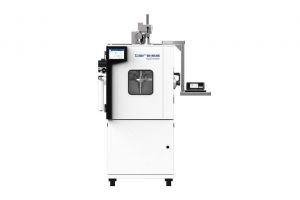
digiChamber – Temperature-Controlled Hardness Tester
digiChamber is a temperature-controlled rubber hardness testing system designed by Bareiss for Shore A and IRHD N testing under extreme environmental conditions. It combines an automatic test sequence, large 200-liter chamber, 7-inch touchscreen, digiCenter software, and multi-sample tray handling to evaluate rubber parts at controlled temperatures, helping automotive, tire, and quality-control labs verify hardness performance under realistic thermal stress.
Read more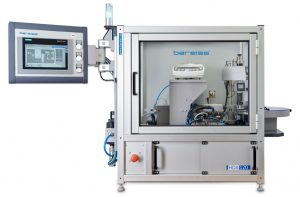
HDA 120 – Hardness and Density Automation System
HDA 120 is a semi-automatic hardness and density automation system for rubber and plastic sample characterization. It can handle up to 20 samples, perform three hardness measurements on a rotary table, and transfer specimens for density determination using a pneumatic gripping system. Data interfaces, touchscreen operation, ISO-compliant methods, and automated handling help improve throughput, traceability, and repeatability.
Read more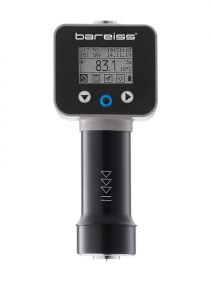
Portable Shore Durometer System with Test Stand
HPE III is an advanced portable Shore durometer system for hardness testing of rubber, plastics, and related materials. It measures hardness while also displaying specimen or environmental temperature and humidity, helping users track conditions during testing. A large LCD display, aluminum casing, patented ergonomic hand grip, USB connection, historical data display, rechargeable operation, and compatible manual or automatic test stands improve repeatability.
Read more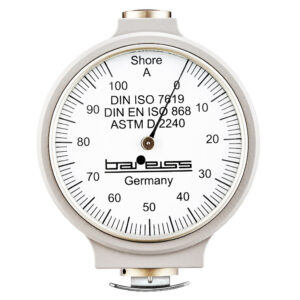
Analogue Shore Durometer with Test Stand
The Classic Analogue Shore Durometer is a German-manufactured hardness tester for rubber and plastic materials, available with manual or automatic test stand options. Known as a long-standing Shore hardness benchmark, it supports portable measurements, ergonomic operation, reference blocks, control rings, calibration accessories, and DAkkS/DKD certificate options. DIN 53505, EN ISO 868, ASTM D2240, and JIS K 6253 compatibility supports reliable verification.
Read more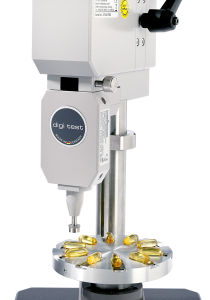
Capsule and Soft Gel Hardness Tester
Gelomat is an automatic capsule and soft gel hardness tester for gelatin capsules, softgels, plasticine, edible gelatin, and similar materials. Available with 0–2 N or 0–20 N measuring heads, it supports non-destructive hardness testing with automatic measurement, clear electronic display, USB data transfer, auto correction, hysteresis function, and optional custom Centrofix holders for precise capsule centering and efficient pharmaceutical-style QC.
Read more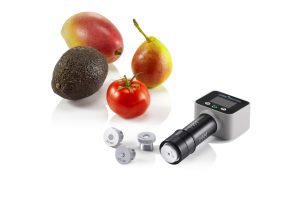
Fruit Firmness Tester
NextGen’s Fruit Firmness Tester is a portable German-manufactured device for measuring firmness in fruits, vegetables, meat, and fish. Interchangeable anvils support applications from berries and tomatoes to apples, avocados, carrots, cucumbers, and other produce. Ergonomic handheld design, digital readout, foam-fitted case, calibration accessories, USB or mobile data options, and objective force-based measurement help growers, distributors, and researchers assess ripeness and quality.
Read more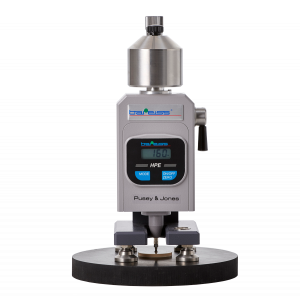
Pusey and Jones Tester
Pusey & Jones Tester is a portable plastometer system for measuring hardness and indentation behavior of rubber and rubber-like materials, especially rubber rollers used in the paper industry. It applies a 9.8 N test load and reads penetration depth after a 60-second test. An electronic dial gauge, zero-setting function, 1 kg load weight, built-in timer, and optional software support repeatable reporting.
Read more