GenWashLab – Color Fastness to Washing Tester

Textile Testing Equipment
Standards
- AATCC 3, 61, 62, 86, 132, 151, 190
- BS 1006 NEXT 2, 3, 5
- FTMS 191 Method 5610 / 5622
- GB/T 3921-1 to 5
- GB/T 5711
- GB/T 12490
- ISO 105-C01
- ISO 105-C02
- ISO 105-C03
- ISO 105-C04
- ISO 105-C05
- ISO 105-C06
- ISO 105-C08
- ISO 105-C09
- ISO 105-C10
- ISO 105-D01
- ISO 105-E03
- ISO 105-E12
- IWSTM 7, 115, 177, 193, 240, 241
- JIS L 0844
- JIS L 0860
- JIS L 0879





Description
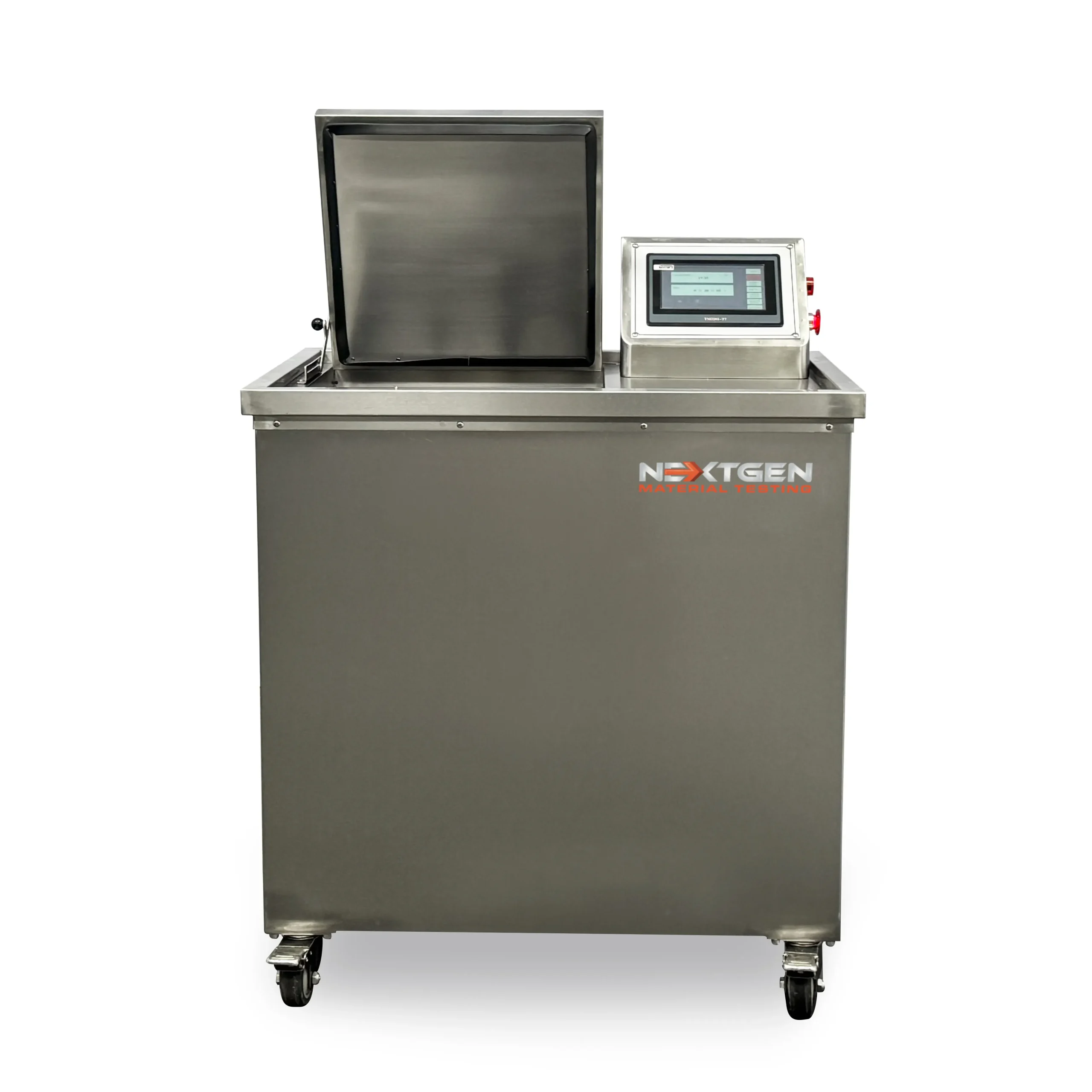
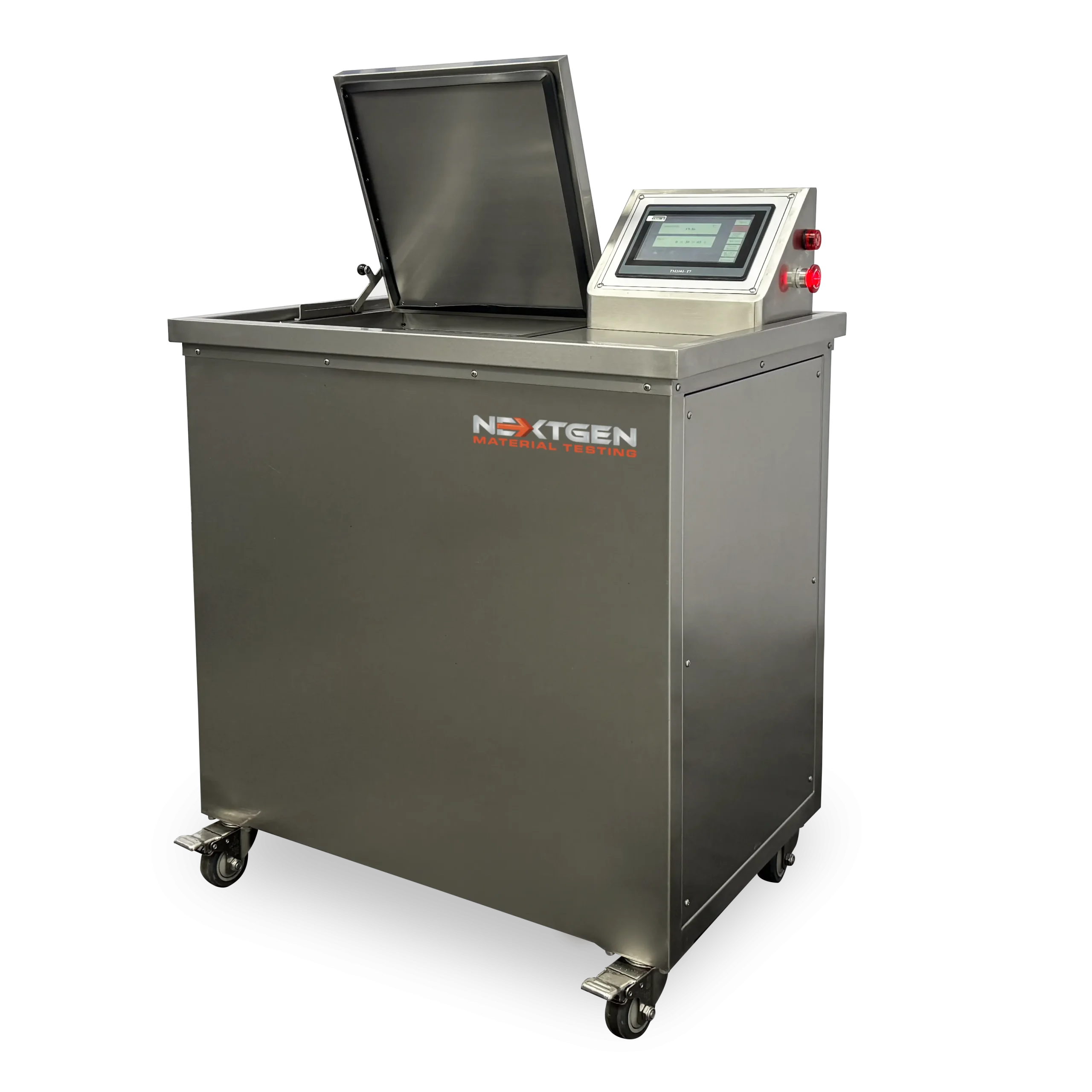
GenWashLab is a temperature-controlled color fastness to washing tester designed to evaluate color change and staining performance of dyed textiles after laundering and dry-cleaning procedures. Built for standards-based laboratory testing, it combines controlled heating, timed wash cycles, stainless steel test vessels, and configurable cup arrangements in one system for repeatable day-to-day operation. It is well suited for textile mills, dye houses, quality laboratories, and development teams that need reliable wash fastness data for product approval, process control, and specification verification. Its positioning is also consistent with how established laundering fastness testers are presented in the market, where support for both ISO and AATCC workflows, vessel flexibility, and controlled bath conditions are central requirements.
Main Features
GenWashLab is designed for labs that need repeatable wash fastness testing, broad standards coverage, and practical flexibility across different vessel configurations and workflows.
- Washing and Dry-Cleaning Fastness Testing: Designed to evaluate the change in color fastness of dyed textiles after washing and also supports dry-cleaning color fastness procedures.
- Controlled Temperature and Time Settings: Uses automatic temperature and time control to support consistent wash cycle conditions in routine laboratory testing.
- Touchscreen Operation: Provides a simple operator interface for setup and day-to-day test control.
- Configurable Cup Arrangements: Available in multiple cup composite modes to suit different test volumes and lab throughput requirements.
- Stainless Steel Construction: The cabinet and test cups are made from stainless steel for durability and resistance to heat, corrosion, and chemical exposure.
- Door Safety Switch: Built with a safety interlock feature to help protect operators during heated testing cycles.
- Alarm Notification at Test Completion: Provides an end-of-test alert to improve lab workflow and reduce the chance of missed cycles.
- Broad Standards Alignment: Designed around ISO, BS, AATCC, JIS, and SDC-based wash fastness requirements, which is consistent with how competing laundering fastness systems are positioned for textile testing labs.
Applications
GenWashLab is intended for textile laboratories that need controlled laundering and dry-cleaning tests to assess how dyed or finished materials perform after exposure to standardized wash conditions. It is especially useful where color change, staining, and finish durability must be evaluated before release, qualification, or comparison. James Heal's GyroWash, for example, is positioned similarly for color fastness to laundering testing of textiles and leather according to AATCC and ISO methods.
- Dyed Textile Testing: Evaluation of color stability after washing cycles.
- Dry-Cleaning Fastness Assessment: Suitable for procedures requiring dry-cleaning fastness evaluation.
- Quality Control Programs: Supports lot approval, production monitoring, and internal specification checks.
- Product Development and Finishing Trials: Useful when comparing dyes, detergents, auxiliaries, finishes, and fabric constructions.
- Standards-Based Laboratory Work: Supports washing fastness workflows used in textile compliance, sourcing, and validation programs.
Who This System Is For
GenWashLab is well suited for organizations that need dependable washing fastness data as part of a structured textile testing workflow.
- Textile manufacturers
- Dye houses and finishing operations
- Quality control and quality assurance laboratories
- Product development and technical service teams
- Third-party textile testing laboratories
- Brands, retailers, and sourcing teams reviewing wash fastness performance
Technical Specifications
For labs comparing wash fastness systems or planning installation, the specifications below summarize the main operating parameters, vessel configurations, and physical requirements of GenWashLab.
| Parameter | Value |
|---|---|
| Model Options | D07A / D07B / D07C / D07D / D07E / D07F / D07G / D07X |
| Cup Composite Mode | 2A+2B / 4A+4B / 6A+6B / 8A+8B / 12A+12B / 12A / 8B / Customized |
| AATCC Cup Volume (A) | 40.6 fl oz (1200 mL) |
| ISO Cup Volume (B) | 18.6 fl oz (550 mL) |
| Control Mode | Touchscreen |
| Rotation Speed | 40 +/- 2 rpm |
| Temperature Control Range | Room temperature to 212F (100C) |
| Heating Method | Electrical heating |
| Stainless Steel Balls | Dia. 6 mm |
| Stainless Steel Dry-Cleaning Discs | Dia. 30 mm, thickness 3 mm, mass 20 g |
| Power Supply | 3-phase AC 380 V, 50/60 Hz |
Standards
GenWashLab supports a broad range of wash fastness methods used in textile testing laboratories across North American and international markets. The primary supported standards include:
- ISO 105-C01, C02, C03, C04, C05, C06, C08, C09, C10, D01, E03, E12
- GB/T 5711
- GB/T 3921-1 to 5
- GB/T 12490
- AATCC 3, 61, 62, 86, 132, 151, 190
- JIS L 0860
- JIS L 0844
- JIS L 0879
- M&S C4A, C5, C37, P3B
- BS 1006 NEXT 2, 3, 5
- IWSTM 7, 115, 177, 193, 240, 241
- FTMS 191 Method 5610 / 5622
Standard Accessories
GenWashLab is supplied with the core items required to begin routine wash fastness testing in the lab.
- Washing Cups: 1 set
- Stainless Steel Balls: 200 pcs
Optional Accessories
A wide range of optional consumables and reference materials are available to support different methods, detergents, adjacent fabrics, and result evaluation workflows.
- SDC ECE Non-Phosphate Detergent (A)
- SDC ECE Phosphate Reference Detergent (B)
- SDC Soap Powder
- SDC TAED Powder
- SDC Sodium Perborate Tetrahydrate
- SDC ISO 105 F10 Multifibre Adjacent Fabric
- SDC ISO 105 F01 Wool Adjacent Fabric
- SDC ISO 105 F02 Viscose Rayon Adjacent Fabric
- SDC ISO 105 F03 Polyamide Adjacent Fabric
- SDC ISO 105 F04 Polyester Adjacent Fabric
- SDC ISO 105 F05 Acrylic Adjacent Fabric
- SDC ISO 105 F06 Silk Adjacent Fabric
- SDC ISO 105 F07 Secondary Acetate Adjacent Fabric
- Stainless Steel Dry-Cleaning Discs
- Gray Scale for Color Change
- Gray Scale for Staining
Need a Washing Fastness Tester That Fits Your Lab Workflow?
If your team is reviewing wash fastness equipment for dyed textiles, dry-cleaning procedures, or standards-based laundering tests, GenWashLab can be configured around your vessel requirements, method preferences, and lab throughput needs. Share your test standards, sample types, and workflow goals with NextGen Material Testing, and we will help you identify the right setup and prepare a quote for your application.
For Laboratories
Need Additional Quality Control Equipment to Build Your Laboratory?
Color fastness testing is only one part of a complete quality control laboratory. NextGen can help you equip your entire lab with color fastness testers, abrasion testers, bursting strength testers, tearing testers, flexing testers, and other supporting solutions, all coordinated as one complete project.
- One partner to equip your complete laboratory
- Installation, training, calibration
- Support for the life of the equipment
FAQs
Yes, this tester is set up for long-term lab use with stocked consumables, spare parts, and replacement testing accessories. It ships with the core items needed to start routine wash fastness testing, and it also supports optional consumables and reference materials for different wash methods and evaluation workflows.
For ongoing color fastness to washing work, the practical difference usually comes down to your test method, detergent or reference fabric needs, and how often you run the instrument. That makes it easier to plan replenishment around your lab’s workflow instead of treating the tester as a one-time setup.
For a quick verification of the right consumable and replacement package for your wash fastness workflow, learn more or request a quote.
This tester runs at a rotation speed of 40 ± 2 rpm during wash fastness testing. That gives labs a consistent operating condition for routine textile washing evaluations.
For color fastness to washing work, that fixed speed helps keep the method repeatable across lab runs, specimen types, and operator shifts.
Looking to confirm the right setup for your method? learn more about this tester, or request a quote for a configuration that fits your workflow.
We provide training and installation support, and that can cover method setup, day-to-day operation, and standards-based wash fastness workflows for this tester. The system also uses a straightforward operator interface for setup and routine test control, which helps make onboarding practical for lab teams.
That support is usually tailored to your wash or dry-cleaning method, specimen type, and lab procedure, so operators can run the same sequence consistently from loading through result review. The system also supports multiple ISO, AATCC, GB/T, JIS, M&S, BS, IWSTM, and FTMS methods, so the method review can be matched to the standards you use most often.
To align the training with your workflow, learn more about GenWashLab or request a quote with your target standards and sample details.
The touchscreen gives operators a simple, direct way to set up wash fastness runs and manage day-to-day testing. For textile labs, that makes method setup more practical and helps keep washing and dry-cleaning evaluations consistent from one batch to the next.
In use, the interface supports the settings that matter most in routine work, including the test configuration, temperature control, and run control. The system is also offered with multiple cup arrangements, so the touchscreen fits a workflow where method details need to be matched to the standard and the sample load.
To align this with your testing method, learn more about the system and request a quote. If you share your standard, specimen type, and cup arrangement, we can help confirm the best setup for your lab.
GenWashLab covers wash fastness, while a crockmeter covers rubbing fastness, so they answer different parts of a complete color fastness program. This tester is built for laundering and dry-cleaning evaluation, with controlled heat, timed cycles, stainless steel test vessels, and configurable cup setups for repeatable lab work. GenCrock Pro fills the rubbing side of the workflow when you need dry and wet color transfer results.
Used together, they give textile labs a fuller picture of dyed or finished material performance. GenWashLab is the better fit for color change and staining after washing, while GenCrock Pro – Electronic Crockmeter is the better fit for surface transfer under dry or wet rubbing. That pairing is useful for QC, development trials, and supplier lot comparison.
For a full color fastness workflow, the right setup depends on your method set, sample type, and throughput needs. If you are mapping the program for laundering, rubbing, or both, learn more about GenWashLab or request a quote with your standards and workflow details.
Stable temperature and fixed cycle timing reduce the main sources of run-to-run variation in wash fastness testing. On this system, automatic temperature and time control, controlled heating, and a touchscreen-managed test cycle help keep each laundering run closer to the same conditions, so color change and staining results are easier to compare from one test to the next.
That matters when labs are checking dyed lots, finishing trials, or compliance samples. When the bath reaches the same set condition and the exposure time stays consistent, operator influence drops and repeatability improves across shifts and technicians. The stainless steel test vessels and configurable cup arrangements also support a more consistent workflow across different sample loads.
Need to align the cycle setup with your method or sample mix? learn more about the system and request a quote so the temperature, timing, and cup configuration can be matched to your workflow.
This system offers a practical set of wash fastness consumables and reference materials for laundering and dry-cleaning workflows. The optional items cover detergents, adjacent fabrics for staining assessment, and evaluation accessories for color change and staining checks.
Available options include:
- SDC ECE Non-Phosphate Detergent (A)
- SDC ECE Phosphate Reference Detergent (B)
- SDC Soap Powder
- SDC TAED Powder
- SDC Sodium Perborate Tetrahydrate
- SDC ISO 105 F10 Multifibre Adjacent Fabric
- SDC ISO 105 F01 Wool Adjacent Fabric
- SDC ISO 105 F02 Viscose Rayon Adjacent Fabric
- SDC ISO 105 F03 Polyamide Adjacent Fabric
- SDC ISO 105 F04 Polyester Adjacent Fabric
- SDC ISO 105 F05 Acrylic Adjacent Fabric
- SDC ISO 105 F06 Silk Adjacent Fabric
- SDC ISO 105 F07 Secondary Acetate Adjacent Fabric
- Stainless Steel Dry-Cleaning Discs
- Gray Scale for Color Change
- Gray Scale for Staining
The standard package also includes washing cups and stainless steel balls, so many labs can get started with routine testing right away and then add the method-specific consumables they need for their standards and specimen types.
For guidance on the right detergent, adjacent fabric set, or evaluation accessories for your method, learn more or request a quote with your test standard and sample details.
This tester requires a 3-phase AC 380 V, 50/60 Hz supply for installation. Plan the site connection around that utility, especially if the wash fastness station is being added to a shared textile testing room or production area.
For a smoother install, confirm the phase service and local electrical setup before delivery so the unit can be placed and commissioned without delays. The standard package already includes the washing cups and stainless steel balls, so the main site requirement is matching the power feed to the tester.
Need help validating the installation setup for your wash fastness lab? You can learn more about this tester or request a quote for a configuration review.
Review the electrical service, installation space, and room conditions before setting up this system. The key utility to confirm is 3-phase AC 380 V, 50/60 Hz, since the tester is designed around that power supply and uses controlled heating and timed wash cycles for repeatable laundering and dry-cleaning fastness work.
For the site itself, plan for a stable indoor lab location with enough clearance for loading, cleaning, and routine operator access. It also helps to keep the area dry, clean, and free from heavy vibration or unnecessary temperature swings, since wash fastness testing is most consistent when the environment stays steady. If your workflow includes nearby detergent handling, specimen conditioning, or wash-area logistics, review those support spaces at the same time.
If your lab also runs rubbing fastness work, GenCrock Pro is worth reviewing during layout planning. To align the installation with your utility layout and test method needs, learn more or request a quote and share your site conditions, sample types, and method requirements.
For this tester, the most practical approach is to verify temperature and rotation speed before routine testing, then repeat the check after any service, relocation, or any unexplained shift in test results. The unit is designed around automatic temperature control and a set rotation speed, so those are the two parameters your lab should watch most closely.
In day-to-day textile lab work, the exact verification interval usually depends on your SOP, accreditation requirements, specimen mix, and how heavily the machine is used. If your wash fastness program supports release decisions, incoming QC, or method compliance, many labs include these checks within their regular calibration or verification schedule.
To align this with your method setup, learn more about the tester or request a quote if you want help confirming the right verification schedule for your workflow.
This tester supports wash-cycle temperatures from room temperature up to 212°F (100°C) for standards-based laundering tests.
That range covers routine textile color fastness work where controlled heating and timed cycles are needed for repeatable laundering and dry-cleaning evaluations. The exact test setup should still match the method, specimen type, and vessel arrangement you are running.
To align this with your laundering method and lab workflow, learn more about the system or request a quote for the configuration that fits your standards and throughput needs.
Yes. We provide post-installation support for this system, including training, installation assistance, calibration guidance, warranty follow-up, and technical service, so your lab is supported after commissioning.
For color fastness to washing work, that support is especially useful when you are confirming the test setup, validating method conditions, or working through day-to-day troubleshooting in a textile lab, dye house, or QA environment.
Need help aligning the right support path for your workflow? Review the product details and request a quote, then share your setup, sample type, or service question so the team can guide the next step.
This system comes with a comprehensive warranty package on each order and is supported with ongoing after-sales and warranty service. GenWashLab is designed for long-term lab use with continued product support beyond delivery.
For long-term use, the support options include training and installation, general service help, technical support, and stocked consumables and spares. General service inquiries are typically answered within 24 hours, with phone support available when faster assistance is needed.
Need to confirm the right support setup for your lab? learn more about the system or request a quote with your test methods, sample types, and service expectations so the right path can be confirmed.
For routine use, keep the stainless steel cups clean and fully dry, verify the heater reaches and holds the set temperature, and confirm the rotating assembly turns smoothly at the specified speed. This tester uses stainless steel test vessels, electrical heating, and a touchscreen-controlled 40 +/- 2 rpm rotation, so the main upkeep is preventing residue buildup and catching drift early.
Wipe the cups after each run, remove detergent or finish carryover, and inspect the cup surfaces, balls, and dry-cleaning discs for contamination before the next method. Periodically check the heating area for buildup, and watch for any wobble, noise, or binding in the rotating assembly so laundering cycles stay consistent from test to test.
To align the upkeep plan with your lab workflow, learn more about this tester or request a quote if you want help confirming the best configuration and service setup for your washing fastness program.
This tester is offered with several cup arrangements so you can match the setup to your lab throughput. The available composite modes are 2A+2B, 4A+4B, 6A+6B, 8A+8B, 12A+12B, plus 12A, 8B, and customized options.
In practical terms, the smaller cup counts suit lower-volume or method-specific workflows, while the larger arrangements are better for labs that need to run more samples per cycle. The platform also supports both AATCC and ISO cup volumes, so the final configuration can be chosen around specimen mix, test method, and daily sample load.
When determining the right setup for your washing fastness workflow, it helps to confirm your sample volume, method mix, and desired turnaround time. You can learn more about the system or request a quote for a configuration matched to your lab.
This tester is designed for textile wash fastness workflows where labs need to check how dyed fabrics hold up after laundering or dry-cleaning. It supports color change assessment, staining evaluation, and routine day-to-day testing in quality control, production monitoring, product development, and standards-based compliance work.
It is well suited to labs comparing dyes, detergents, auxiliaries, finishes, and fabric constructions, or labs that need repeatable results for release and qualification decisions. The touchscreen control, temperature control, and configurable cup arrangements support structured lab methods where consistency matters across repeated runs.
To align this with your workflow, learn more about GenWashLab or request a quote. If you share your standards, specimen type, and lab throughput needs, we can help confirm the right setup.
This system runs standardized color fastness testing for washing and dry-cleaning on dyed textiles. It supports controlled, timed cycles with touchscreen operation, temperature control from room temperature to 212°F, and the vessel and accessory setup needed for repeatable lab work.
Supported methods include ISO 105-C01 through C06, C08 through C10, D01, E03, and E12, along with GB/T 5711, GB/T 3921-1 to 5, GB/T 12490, AATCC 3, 61, 62, 86, 132, 151, and 190, plus JIS, M&S, BS, IWSTM, and FTMS methods supported by the system.
You can use it for laundering checks for color change and staining, then compare results against the selected adjacent fabrics and gray scales. For dry-cleaning procedures, the setup also supports stainless steel dry-cleaning discs and the related wash fastness consumables used to match the method requirements.
Need to match the right method to your lab workflow? learn more about the system or request a quote with your standard, specimen type, and vessel configuration.
This tester is built for wash fastness work and can be set up for SDC-based procedures as well as brand-specific laundering methods, as long as the exact method calls for the right vessel arrangement, detergents, adjacent fabrics, and evaluation steps. It is also positioned for both washing and dry-cleaning fastness workflows.
For SDC-style programs, available accessories and consumables include SDC ECE detergents, soap powder, TAED, sodium perborate, adjacent fabrics, and gray scales, which makes the system practical for method-driven lab routines. It also supports a broad set of ISO, AATCC, JIS, M&S, BS 1006 NEXT, IWSTM, and FTMS 191 wash fastness methods, so brand protocols can usually be matched to the right setup when the procedure is clearly defined.
Need to confirm the right method setup for your workflow? learn more or request a quote so the configuration can be matched to your standards, specimen type, and detergent system.
This tester can be configured for mixed AATCC and ISO vessel setups. Its cup arrangement supports composite modes that combine A and B vessels, making it suitable for laboratories that run both method families within the same workflow.
The exact setup depends on the test methods you run, how many positions you need, and whether you require a standard or customized vessel combination. Available options include multiple model configurations, an AATCC cup volume of 1200 mL, an ISO cup volume of 550 mL, and several composite arrangements, including customized layouts, so the system can be matched to mixed-method wash fastness programs.
Need to confirm the right vessel mix for your methods? learn more about the system, or request a quote and share your target standards and vessel layout.
Stainless steel dry-cleaning discs are available as an optional accessory on this tester, so the system can be set up for dry-cleaning fastness methods when that procedure is part of your workflow.
The exact package depends on your method, vessel arrangement, and the reference materials you use for evaluation. Washing cups and stainless steel balls are standard items, while dry-cleaning discs are available separately when your method requires them.
Need to confirm the right dry-cleaning setup for your lab? learn more or request a quote if you want help matching the accessory set to your method.
This system evaluates color fastness to washing and dry-cleaning by running dyed textile samples through controlled laundering cycles, then checking how much the color changes and whether it stains adjacent fabrics. It is built for repeatable lab use, so temperature, time, and rotation stay consistent from test to test.
The tester uses stainless steel test vessels, configurable cup arrangements, and a touchscreen interface to support routine wash fastness work. That makes it practical for QA labs, dye houses, and development teams comparing finishes, dyes, detergents, or fabric constructions under standardized conditions.
Looking to match the setup to your method and sample type? learn more about this tester or request a quote for the configuration that fits your washing fastness workflow.
The main operator-protection feature on this heated wash-cycle tester is the door safety switch interlock, which helps prevent access while the system is running hot. Its automatic temperature and time control, plus an end-of-test alarm, also help keep wash cycles predictable and reduce the chance of opening the unit too early.
The stainless steel cabinet and test cups are built for heat and chemical exposure, which supports durable daily use in a textile lab. For wash fastness work, that matters because the equipment is handling repeated heated cycles, detergents, and routine loading and unloading.
Need to confirm the right setup for your wash fastness workflow? learn more or request a quote, and share your method standard, vessel arrangement, and sample mix so the configuration can be matched to your lab.
This tester uses an AATCC cup volume of 1200 mL, which is 40.6 fl oz, and an ISO cup volume of 550 mL, which is 18.6 fl oz.
The system also offers multiple cup composite modes, so the final setup can be matched to your wash fastness method and lab throughput needs. That makes it easier to align the vessel configuration with the standards your team runs most often.
Need to confirm the right configuration for your wash fastness workflow? learn more or request a quote for the cup arrangement and method setup that fits your lab.
This tester is suited for dyed textiles and other finished textile materials that need washing fastness verification. It is useful when you want to compare color change and staining performance across different fabric constructions after laundering or dry-cleaning exposure.
It fits routine textile QC, product approval, and finishing trials where consistent wash fastness data matters. The exact specimen setup depends on the material type, the construction being compared, and the method being followed. Labs use the appropriate adjacent fabrics and rating scales to judge staining and color change in a repeatable way.
Need to confirm the best setup for your materials? learn more or request a quote and share your specimen type, fabric construction, and method requirements so the configuration can be matched to your workflow.
This tester uses touchscreen control for setup and day-to-day test operation. It also uses automatic temperature and time control, with an end-of-test alarm to support a repeatable washing fastness workflow.
If your lab needs software-based data handling, the right setup depends on how you want to manage results, such as local recording, reporting, or integration with your internal quality records. For wash fastness programs, those details are usually tied to the exact configuration and your method requirements.
Need to confirm the best setup for your workflow? learn more about the tester or request a quote with your preferred method, data handling needs, and lab throughput.
GenWashLab supports a broad wash fastness method set. Across the main families, supported standards include ISO 105-C01 to C06, C08 to C10, D01, E03, and E12, GB/T 5711, GB/T 3921-1 to 5, GB/T 12490, AATCC 3, 61, 62, 86, 132, 151, and 190, JIS L 0860, L 0844, and L 0879, BS 1006 NEXT 2, 3, and 5, and FTMS 191 Method 5610 / 5622.
The supported standards also include M&S C4A, C5, C37, P3B and IWSTM 7, 115, 177, 193, 240, 241, which is useful if your lab also runs retailer-specific or internal brand methods alongside core ISO and AATCC programs.
To align this with your testing method, learn more about the system and request a quote. If you share your test standards, sample types, and workflow goals, the setup can be matched to your lab's method requirements.
Related Products
GenCrock Pro – Electronic Crockmeter
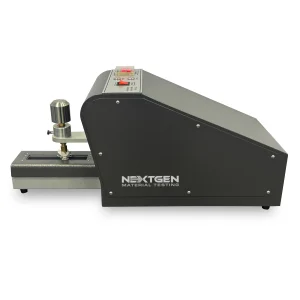
GenCrock Pro is an electronic crockmeter for measuring color fastness to dry and wet rubbing on textiles, leather, and coated materials. It uses a 16 mm rubbing head, 9 N vertical pressure, 104 mm rubbing track, electronic stroke counter, and 60 rpm motion to create repeatable crocking conditions. The compact bench-top design supports textile QC, finishing validation, lot comparison, and product development.
Read more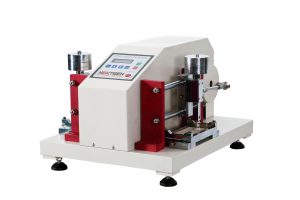
GenCrock – Electric Crocking Tester
GenCrock is an electric crocking tester for evaluating color transfer and fading on fabric, leather, and dyed surfaces after dry or wet rubbing. The specimen is fixed to the base and rubbed with a controlled abrasive hammer carrying wet or dry cloth. This repeatable setup helps laboratories rate dyeing quality, colorfastness, and surface durability for textile, leather, and product QC.
Read more