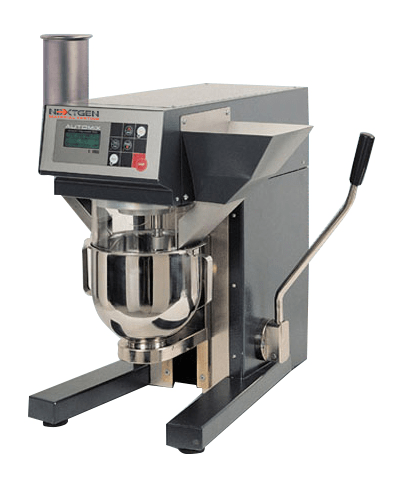
NG-AutoDigiMix 2 – Fully Automatic Programmable Mortar Mixer

Cement & Concrete Testing Equipment
Standards


Description
The NG-AutoDigiMix 2 is a fully automatic programmable mortar mixer for laboratories that run mortar batches all day and want the sand dosed by the machine rather than by hand. It adheres to the mixing standards while leaving room for research work on other materials.
Its distinguishing feature is the cycle memory: mixing cycles can be formulated and stored, so a laboratory keeps its own procedures alongside the standard ones and recalls them without setting the machine up again.
There is a fuller write-up of the mixer in our blog.
Bowl Capacity1.32 gal (5 litres)
Mixing Speeds140 ±5 and 285 ±10 rpm
Programmable Cycles4 standard, 10 operator
Weight128 lbs (58 kg)
NG-AutoDigiMix 2 Main Features
What separates this machine from the manual-hopper models is dosing and memory.
Automatic testing cycles
The cycle runs from start to finish under program control.
Two dispensers
An automatic sand dispenser, plus an extra dispenser that allows water or admixtures to be added manually during mixing.
Standard cycles
Four programmable cycles that meet the DIN and EN standards.
Operator cycles
Ten mixing cycles programmable by the operator.
Acoustic signals
Harmonized with the steps of each cycle, so the operator knows where the batch is without watching the display.
Design
Safe and ergonomic, on a stable frame that holds the drive steady through a full cycle.
NG-AutoDigiMix 2 Technical Specifications
The measurable side of the machine, including the clearance that has to hold through the whole cycle.
| Item | NG-AutoDigiMix 2 |
|---|---|
| Bowl capacity | 1.32 gal (5 litres) |
| Mixing speeds | 140 ±5 and 285 ±10 rpm |
| Beater to bowl distance | 3 ±1 mm, held through the whole cycle |
| Beater and bowl | Stainless steel, with easy and fast bowl mounting and removal |
| Sand dispenser | Electronically controlled |
| Programmable cycles | 4 conforming to EN 196-1, EN 196-3, DIN 1164-5 and DIN 1164-7, plus 10 programmable by the operator |
| Display | Alphanumeric, 4 × 20 characters |
| Acoustic signals | Synchronised with the test cycles |
| Safety | Micro-switch prevents operation when the bowl is removed; transparent safety bowl cover |
| Dimensions (L × W × H) | 24 × 18 × 24″ (600 × 450 × 600 mm) |
| Weight | 128 lbs (58 kg) |
The NG-AutoDigiMix is the same class of machine with a manual sand hopper, and the NG-DMM adds a touchscreen, a servo drive and an integrated cleaning cycle.
Have Questions or Need to Confirm a Detail?
Tell us how many batches a day you mix and whether your procedures are standard or your own, and we will confirm the dispenser configuration. Start with a quick request online.
For Laboratories
Need Additional Quality Control Equipment to Build Your Laboratory?
Mortar mixing is only one part of a complete quality control laboratory. NextGen can help you equip your entire lab with mortar mixers, climatic curing cabinets, Blaine fineness apparatus, Vicat setting-time apparatus, autoclaves, and other supporting solutions, all coordinated as one complete project.
- One partner to equip your complete laboratory
- Installation, training, calibration
- Support for the life of the equipment
FAQs
The NG-AutoDigiMix 2 doses the sand itself through an electronically controlled sand dispenser. The operator loads the sand, starts the cycle, and the program releases it into the bowl at the step the procedure calls for.
The whole cycle runs from start to finish under program control, so the sand goes in at the same moment and in the same way on every batch. In mortar testing the strength of a specimen depends partly on how its mortar was mixed, and a repeatable addition removes one source of difference between operators and between shifts.
We built this model for laboratories that mix mortar batches all day. Once a batch is running, the technician can weigh out the next one or prepare moulds while the dispenser and the drive finish the job, which is where the time saving on a busy bench comes from.
The NG-AutoDigiMix 2 carries four standard cycles, programmed to conform to EN 196-1, EN 196-3, DIN 1164-5 and DIN 1164-7. Each cycle runs the mixing sequence of its standard, so the operator selects the method instead of timing the steps.
EN 196-1 is the European method for the compressive and flexural strength of cement mortar, and its specimens begin in the mixer. EN 196-3 covers standard consistency, setting times and soundness of cement paste. The two DIN cycles serve laboratories whose specifications still cite the German methods.
Because the sequence lives in the program, two technicians running the same standard on different days get the same speeds and the same timing. That makes results from one week directly comparable with the next, which is what a quality control record needs.
Yes. Cycle memory is the feature that sets the NG-AutoDigiMix 2 apart: the operator formulates a mixing cycle, stores it, and recalls it later without setting the machine up again. Your own procedures sit in memory alongside the four standard ones.
This matters when a client specification or an internal method departs from the standard sequence, or when the laboratory takes on research work with materials other than standard cement mortar. The mixer adheres to the mixing standards and still leaves room for that work.
A stored cycle also protects the method. Once a procedure has been agreed and written into memory, every technician runs it the same way, and nobody has to rebuild it from a sheet of notes pinned beside the bench. When the method changes, the laboratory updates one stored cycle and the next batch follows it.
Next to the automatic sand dispenser, the NG-AutoDigiMix 2 has an extra dispenser through which water or admixtures are added by hand during mixing. The machine doses the sand, and the liquid additions stay under the operator's control.
That division suits work on modified mortars. A laboratory evaluating a plasticizer, a retarder or another admixture can introduce it at the point its own procedure calls for, while the stored cycle carries on with its speeds and timing.
Admixtures change how a mortar sets as well as how strong it becomes, so admixture studies rarely stop at the mixer. Laboratories running them usually check setting time on a Vicat apparatus from the same batches, and we supply both as part of one cement laboratory.
The NG-AutoDigiMix 2 runs two mixing speeds, 140 ±5 rpm and 285 ±10 rpm. These are the low and high speeds of the standard mortar mixing sequence in EN 196-1, and the tolerances set how far the drive may move away from them.
Low speed brings the water and cement together and takes in the sand without throwing material out of the bowl. High speed completes the dispersion. The standard cycles switch between the two at the times the method sets, so speed changes happen on schedule without anyone reaching for a control.
Holding speed matters because mixing energy affects the air content and workability of the mortar, and through them the strength of the specimens cast from it. The machine sits on a stable frame that holds the drive steady through a full cycle, so the speed the program asks for is the speed the beater turns.
The gap between beater and bowl decides how much of the mortar the beater actually works. On the NG-AutoDigiMix 2 it is 3 ±1 mm and is held through the whole cycle, not only at the start.
If the gap opens, a layer of material stays on the bowl wall and floor without being mixed. If it closes, the beater scrapes the bowl and grinds the sand. Either way the batch changes, and so do the specimens cast from it, which is why the mortar standards control this distance.
The beater and bowl are stainless steel, and the bowl mounts and comes off quickly and easily, so cleaning between batches does not disturb the setup. The same attention to clearance runs through all of our mortar mixers, from manual-hopper machines to the fully automatic models.
Acoustic signals on the NG-AutoDigiMix 2 are synchronised with the test cycle, so each step is marked by a sound and the operator knows where the batch is without watching the display.
This is useful in a busy mortar room, where the technician is often at the balance or the moulding table while the mixer runs. When an addition has to go in by hand through the extra dispenser, the signal marks the change of step and the technician returns to the machine at the right moment.
The display is alphanumeric, with 4 × 20 characters, and it is where the operator chooses a standard or stored cycle and follows its progress. Between the signals and the display, one person can keep track of the mixer while doing other work within earshot of it.
A micro-switch prevents the NG-AutoDigiMix 2 from operating when the bowl is removed, and a transparent safety cover closes over the bowl while it runs.
The micro-switch protects the moment of greatest risk in daily use, which is putting the bowl on and taking it off between batches. That happens many times a day on a production schedule, and the interlock means a start command cannot drive the beater while the bowl is out.
The cover is transparent, so the operator can follow the mix through it during the high speed stage. The overall design is safe and ergonomic, which counts on a machine that one technician may load, run and empty from morning to evening.
Plan for a footprint of 600 × 450 mm and a height of 600 mm (24 × 18 × 24″). The mixer weighs 58 kg (128 lbs), so it needs a solid, level bench rather than a light workstation.
Leave working room at the front for mounting and removing the bowl, and access to the top for loading sand into the dispenser. A position near the balance and the mould table shortens the walk between weighing, mixing and casting on every batch.
The bowl holds 5 litres (1.32 gal), leaving space above a standard mortar batch so material stays in the bowl at high speed, and the bowl itself lifts out for emptying and cleaning at the bench.
The NG-AutoDigiMix 2 doses the sand automatically, while the NG-AutoDigiMix is the same class of machine with a manual sand hopper. That is the main choice between the two: automatic dosing for a full daily schedule, or manual pouring where the operator stays with each batch.
The NG-DMM takes a different route. It adds a touchscreen, a servo drive and an integrated cleaning cycle, for laboratories that want those features on the mixer itself.
For a laboratory where mortar mixing is a full-time task, the automatic dispenser is what earns the NG-AutoDigiMix 2 its place: the batch runs to the end without a technician standing at the hopper, and the stored cycles keep every batch on the same procedure.
Two facts decide the configuration: how many mortar batches you mix in a day, and whether your procedures follow the standards or your own methods. With those, our team confirms how the dispensers and stored cycles should be set up.
A laboratory working only to the standards runs mainly from the programmed cycles. One that runs its own procedures or admixture studies will lean on the operator cycles and the extra dispenser, so those are set up from the first day.
We supply the mixer with installation, training and calibration, and support it for the life of the equipment. Mortar specimens then move on to curing, and we can supply climatic curing chambers in the same project.
Describe your daily batch count and methods in a short online request, and we will come back with the dispenser setup that fits.
Related Products
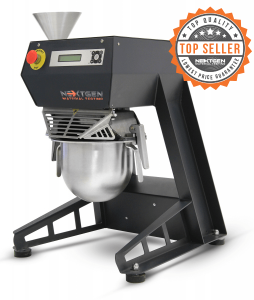
NG-AutoDigiMix - Automatic Programmable Mortar Mixer
NG-AutoDigiMix is an automatic programmable mortar mixer for efficient cement mortar preparation in construction-materials laboratories. It uses planetary mixing action, a stainless steel bowl, open sand hopper, EN beater, keyboard display, variable-speed control, and standard-guided procedures for manual sand addition. Compliance with EN 196-1, EN ISO 679, EN 196-3, ASTM C305, and ASTM C451 supports repeatable testing workflows.
Read more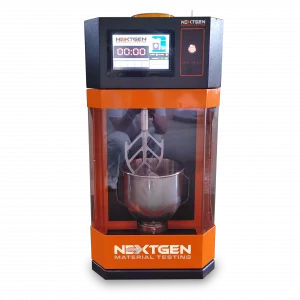
NG-DMM – Digital Mortar Mixer
NG-DMM is a fully automatic digital mortar mixer for precise preparation of cement, sand, water, additives, and construction blends. Its 5 L stainless steel bowl, 7-inch LCD touchscreen, programmable cycles, electric lifting system, planetary and rotational mixing action, safety features, and ASTM C305, EN 196-1, EN 196-3, ISO 679, and AASHTO T 162 compliance support consistent laboratory mortar preparation.
Read more