Rubber Testing Equipment
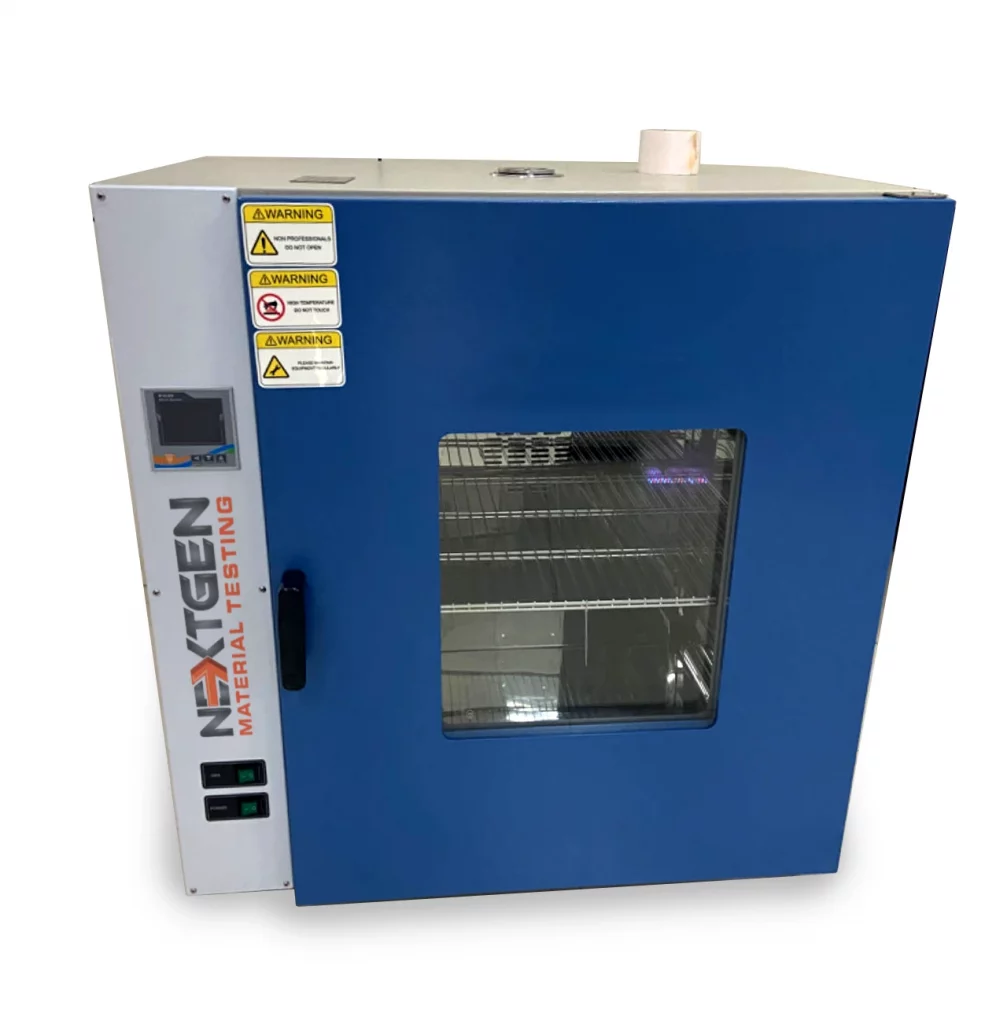
Rubber changes with time: heat hardens it, cold stiffens it and light fades it, and a part that passes on the day it is made may fail after a season in service. Aging and environmental tests bring that exposure forward into the laboratory, so compounds can be compared before parts are released. NextGen works to ASTM D573 and ISO 188 for heat aging in air.
The range covers high-temperature aging ovens with forced convection and programmable cycles, temperature and humidity chambers for conditioning, a freezing tester for cold resistance and a UV discoloration meter for fading. Equipment is installed and calibrated on site, your team is trained on exposure cycles, and support continues for the life of the equipment.
For Laboratories
One partner to equip your complete rubber laboratory
Aging and conditioning is one station of an elastomer laboratory. NextGen equips the rest of it too, from tensile frames to cure testing, hardness, abrasion and specimen preparation, and stays responsible for it after delivery.
- Equipment, fixtures and software
- Installation, training, calibration
- Lifetime technical support
 300 °C
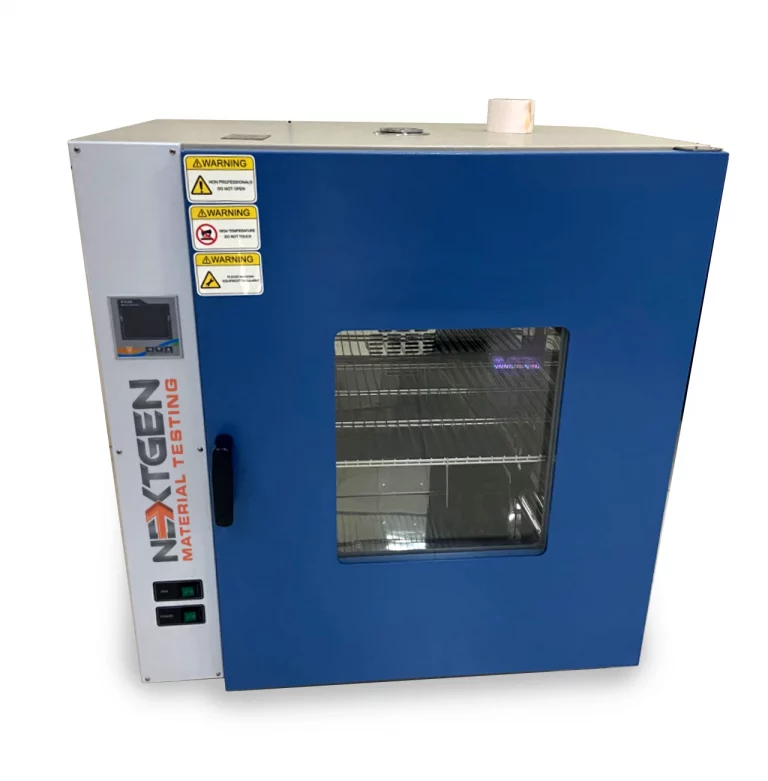
NG-AGOV-ADV – High-Temperature Aging Oven
NG-AGOV-ADV is a high-temperature aging oven for testing how rubber, plastics, elastomers, insulating materials, and…
View product
Get quote
Most requested
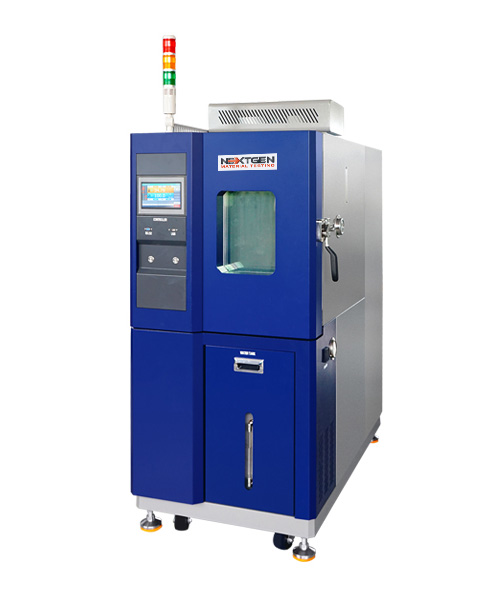 NG-EC Series – Environmental Test Chambers
NextGen NG-EC Environmental Chambers provide controlled temperature and humidity conditions for material, product,…
View product
Get quote
 GenFreeze – Freezing Tester
GenFreeze is a freezing tester for evaluating rubber, leather, plastics, PU leather, footwear materials, and related…
View product
Get quote
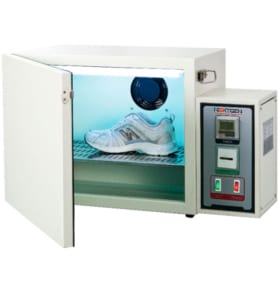 Discoloration Meter
The Discoloration Meter simulates sunlight and heat exposure to evaluate how fabrics, rubber, plastics, and other…
View product
Get quote
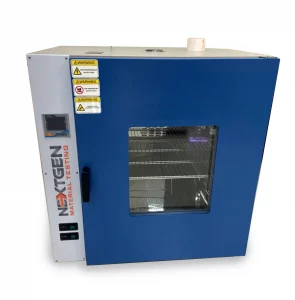 NG-AGOV-ADV – High-Temperature Aging Oven300 °C
NG-AGOV-ADV is a high-temperature aging oven for testing how rubber, plastics, elastomers, insulating materials, and…
Accelerated aging
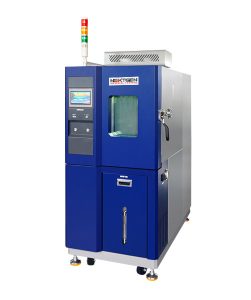 NG-EC Series – Environmental Test Chambers
NextGen NG-EC Environmental Chambers provide controlled temperature and humidity conditions for material, product,…
Environmental conditioning
GenFreeze – Freezing Tester
GenFreeze is a freezing tester for evaluating rubber, leather, plastics, PU leather, footwear materials, and related…
Low-temperature testing
Discoloration Meter
The Discoloration Meter simulates sunlight and heat exposure to evaluate how fabrics, rubber, plastics, and other…
Discoloration testing
Nothing matches that filter. Show all products
FAQs
The NG-AGOV-ADV page lists the static air method of ISO 188, ASTM D573, BS 903 and GB/T 3512 for rubber, along with IEC 60216-4-1 and UL 1581 for insulation and ASTM E145 for laboratory ovens. State the standard, the temperature and the number of specimens in a quote request and the model is confirmed.
The NG-AGOV-ADV circulates air by forced convection through an internal duct and regulates temperature with a PID controller and a platinum resistance sensor. Accuracy is ±0.1 °C, and uniformity is ±2 °C at 100 °C. Air exchange is adjustable from 3 to 10 per hour, and over-temperature protection and alarms are built in. The chamber is 600 × 500 × 750 mm.
Pick the volume that takes your specimens and racks. The NG-EC chambers come in 100, 150, 225, 408 and 1000 L, with interiors from 20 × 20 × 16 in to 39 × 39 × 39 in. Two stainless steel racks carry a maximum load of 100 kg. The two smaller sizes run on a single-phase 220 V supply, and the larger sizes need three-phase 380 V, so check your supply too.
The NG-EC series holds -40 °C to +150 °C, with humidity from 20% to 98% RH between +20 °C and +85 °C, and temperature fluctuation of ±0.5 °C or less in an empty chamber. A 7-inch touchscreen stores up to 250 programs, saves run data for 90 days and exports it over USB. The humidity available depends on the temperature set.
The GenFreeze holds a low temperature while a beater and flexing grip work the specimen, so the part is bent at the temperature it will meet in service. GenFreeze-H is a horizontal cabinet and GenFreeze-V is an upright unit. Both come with a range down to -30 °C or to -50 °C, with uniformity of ±1 °C and fixtures for sole, leather and shoe flexing.
The discoloration meter places a specimen under two germicidal UV lamps at temperatures from room temperature to 200 °C and counts the exposure on an LED counter. NG-DISCO-A is the bench unit with a 50 × 30 × 35 cm interior. NG-DISCO-B is a floor-standing unit with a 150 L chamber, the one to consider for large specimens or several at once.