Soles, tires and seals lose material every time they rub against a surface, and abrasion testing puts a number on that loss before the part goes into service. NextGen supplies abrasion testers for vulcanized rubber and thermoplastic elastomers, working to ASTM D5963 and ISO 4649 for the rotating drum method and ASTM D1630 for NBS abrasion.
The range covers drum, Akron, NBS and rotary wheel testers that report volume or weight loss under controlled load and speed, a linear tester for abrasion, scratch and color transfer, and Martindale and Wyzenbeek testers for rubber-coated fabrics, linings and footwear materials. Testers are installed and calibrated on site, your team is trained on specimen preparation and abrasive changes, and support continues for the life of the instrument.
For Laboratories
One partner to equip your complete rubber laboratory
Abrasion testing is one station of an elastomer laboratory. NextGen equips the rest of it too, from tensile frames to cure testing, hardness, flex and specimen preparation, and stays responsible for it after delivery.
- Equipment, fixtures and software
- Installation, training, calibration
- Lifetime technical support
1
Rubber abrasion
Volume or weight loss of rubber and elastomers
5
Most requested
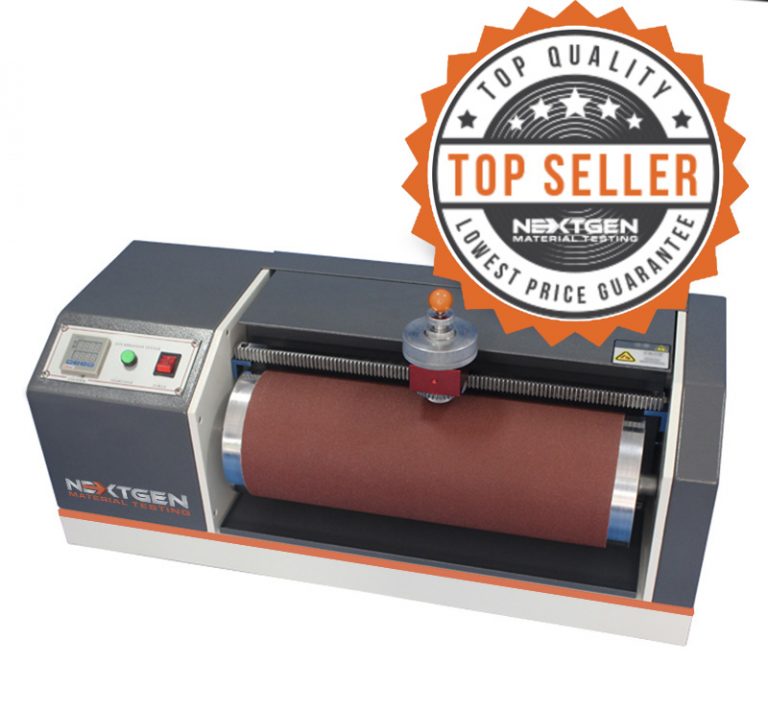 DIN Abrasion Tester
GenDin is a DIN abrasion tester for measuring abrasion resistance of vulcanized rubber, thermoplastic elastomers,…
View product
Get quote
 Akron Abrasion Tester
GenKron Akron Abrasion Tester measures abrasion resistance by tracking volumetric loss from a rotating specimen…
View product
Get quote
 GenNBS – NBS Rubber Abrasion Tester
GenNBS is an NBS rubber abrasion tester for evaluating abrasion resistance of vulcanized rubber and related…
View product
Get quote
Most requested
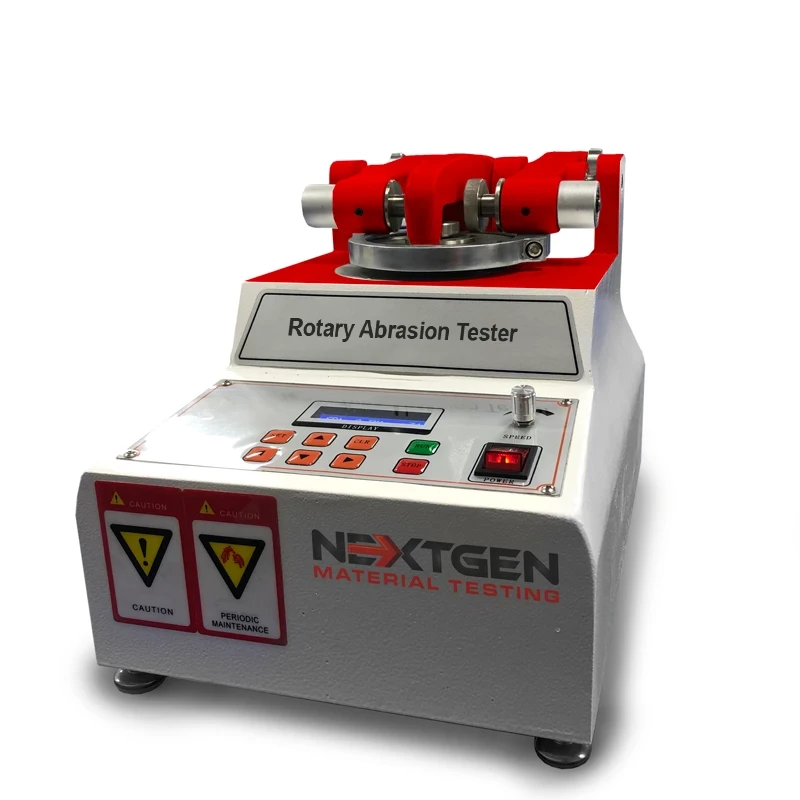
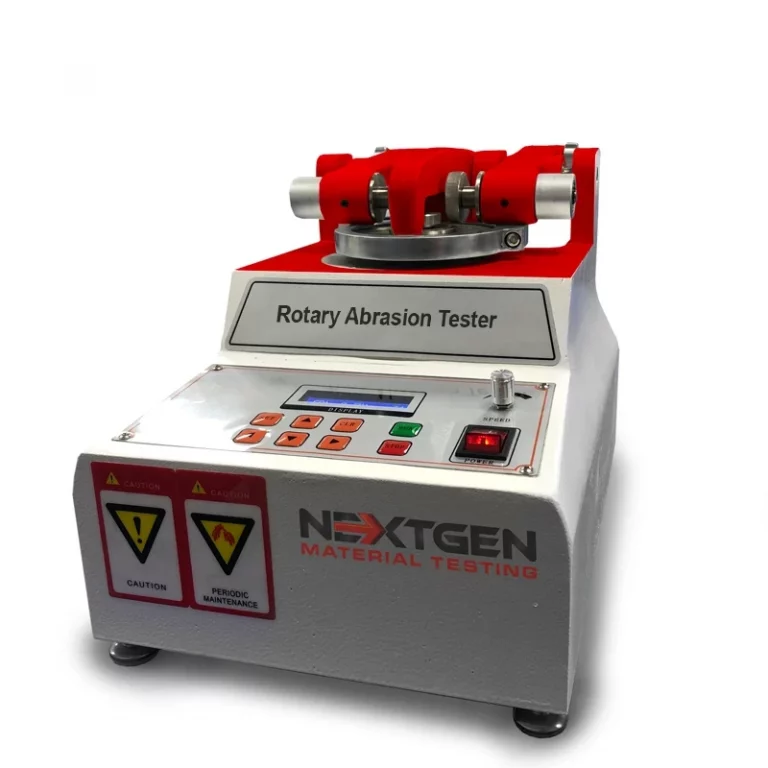 Rotary Abrasion Tester
NextGen’s Rotary Abrasion Tester is available in single- and dual-wheel configurations for evaluating surface wear…
View product
Get quote
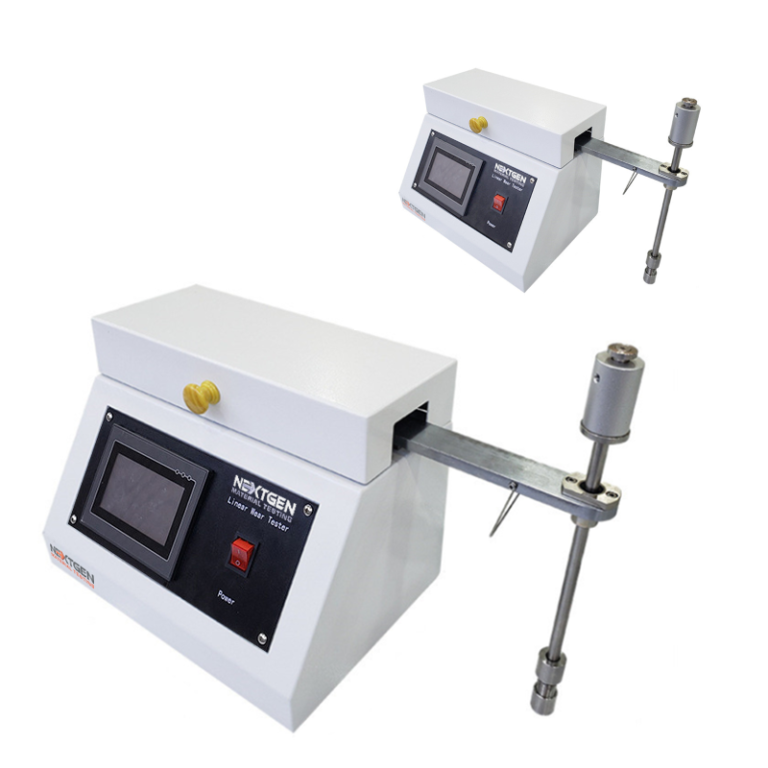 Linear Abrasion Tester
The Linear Abrasion Tester evaluates abrasion resistance, scratch resistance, and color transfer performance under…
View product
Get quote
DIN Abrasion Tester
GenDin is a DIN abrasion tester for measuring abrasion resistance of vulcanized rubber, thermoplastic elastomers,…
View product
Get quote
Akron Abrasion Tester
GenKron Akron Abrasion Tester measures abrasion resistance by tracking volumetric loss from a rotating specimen…
View product
Get quote
GenNBS – NBS Rubber Abrasion Tester
GenNBS is an NBS rubber abrasion tester for evaluating abrasion resistance of vulcanized rubber and related…
View product
Get quote
Most requested
Rotary Abrasion Tester
NextGen’s Rotary Abrasion Tester is available in single- and dual-wheel configurations for evaluating surface wear…
View product
Get quote
Linear Abrasion Tester
The Linear Abrasion Tester evaluates abrasion resistance, scratch resistance, and color transfer performance under…
View product
Get quote
2
Coated fabric and footwear materials
Cross-listed testers for rubber-coated fabrics and linings
3
Most requested
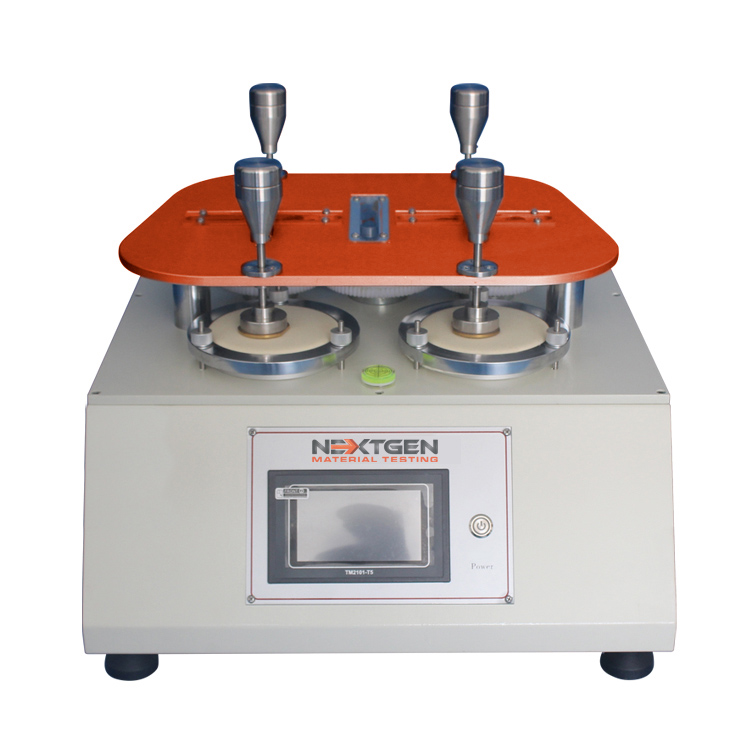 GenDale – Martindale Abrasion Tester
GenDale is a Martindale abrasion tester for evaluating abrasion resistance and visible wear in shoe fabrics, linings,…
View product
Get quote
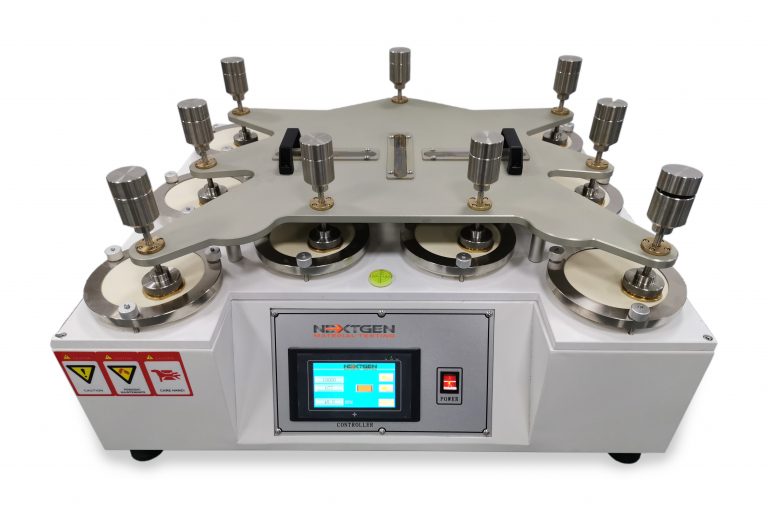 9-Station Martindale Abrasion Tester
GenDale 9-Station Martindale Abrasion Tester measures abrasion resistance and appearance change in shoe fabrics,…
View product
Get quote
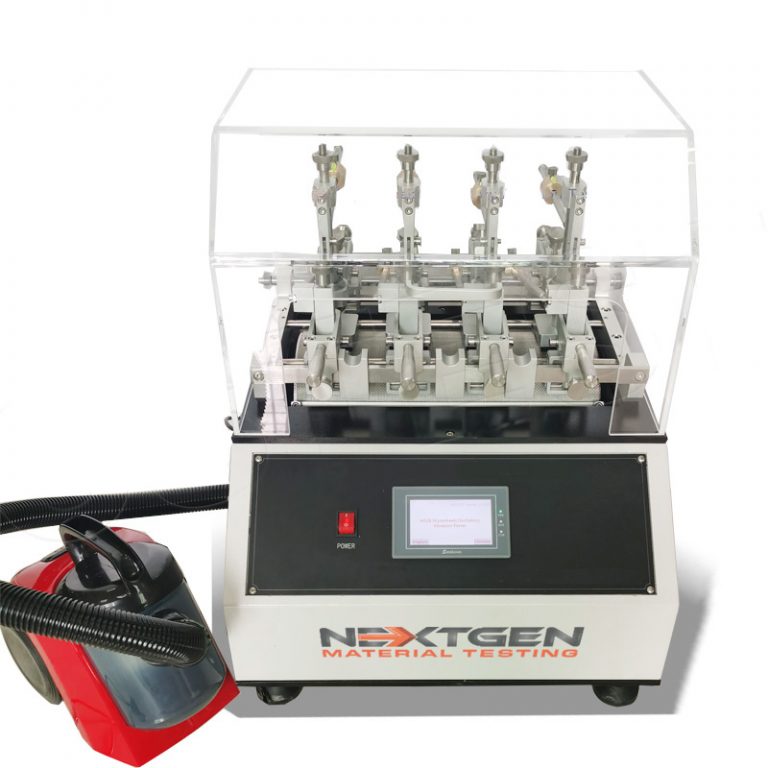 GenWyze – Wyzenbeek Abrasion Tester
GenWyze is a certified Wyzenbeek abrasion tester for measuring abrasion resistance of fabrics, upholstery materials,…
View product
Get quote
GenDale – Martindale Abrasion Tester
GenDale is a Martindale abrasion tester for evaluating abrasion resistance and visible wear in shoe fabrics, linings,…
View product
Get quote
9-Station Martindale Abrasion Tester
GenDale 9-Station Martindale Abrasion Tester measures abrasion resistance and appearance change in shoe fabrics,…
View product
Get quote
GenWyze – Wyzenbeek Abrasion Tester
GenWyze is a certified Wyzenbeek abrasion tester for measuring abrasion resistance of fabrics, upholstery materials,…
View product
Get quote
1
Rubber abrasion
Volume or weight loss of rubber and elastomers
5
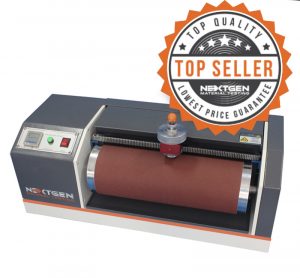 DIN Abrasion Tester
GenDin is a DIN abrasion tester for measuring abrasion resistance of vulcanized rubber, thermoplastic elastomers,…
Abrasion testing
Akron Abrasion Tester
GenKron Akron Abrasion Tester measures abrasion resistance by tracking volumetric loss from a rotating specimen…
Abrasion testing
GenNBS – NBS Rubber Abrasion Tester
GenNBS is an NBS rubber abrasion tester for evaluating abrasion resistance of vulcanized rubber and related…
Abrasion testing
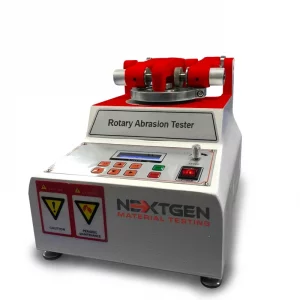 Rotary Abrasion Tester
NextGen’s Rotary Abrasion Tester is available in single- and dual-wheel configurations for evaluating surface wear…
Abrasion testing
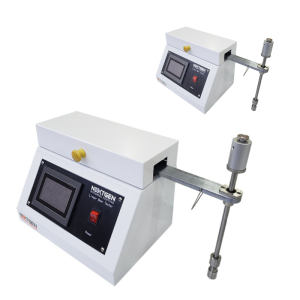 Linear Abrasion Tester
The Linear Abrasion Tester evaluates abrasion resistance, scratch resistance, and color transfer performance under…
Abrasion testing
2
Coated fabric and footwear materials
Cross-listed testers for rubber-coated fabrics and linings
3
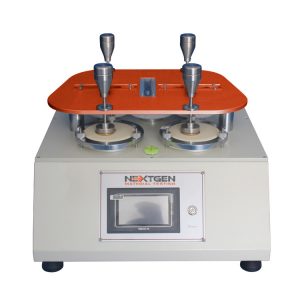 GenDale – Martindale Abrasion Tester
GenDale is a Martindale abrasion tester for evaluating abrasion resistance and visible wear in shoe fabrics, linings,…
Abrasion testing
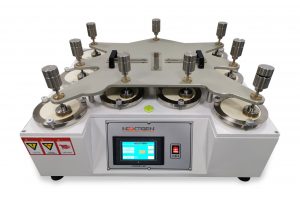 9-Station Martindale Abrasion Tester
GenDale 9-Station Martindale Abrasion Tester measures abrasion resistance and appearance change in shoe fabrics,…
Abrasion testing
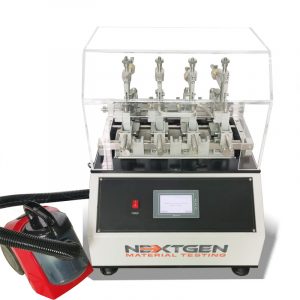 GenWyze – Wyzenbeek Abrasion Tester
GenWyze is a certified Wyzenbeek abrasion tester for measuring abrasion resistance of fabrics, upholstery materials,…
Abrasion testing
Nothing matches that filter. Show all products
FAQs
Treat them as related but separate methods. NextGen's standard pages advise confirming the exact method, conditioning and reporting format when a requirement cites both, and avoiding the assumption that results are equivalent. ASTM D5963 and ISO 4649 both use a rotating drum, and the DIN abrasion tester is listed under both. Contact our team if your customer cites both.
The GenDIN moves a 16 mm diameter specimen, 6 to 16 mm thick, across abrasive paper on a drum turning at 40 ±1 rpm for 40 m, and the result is volume loss in cubic millimeters or an abrasion resistance index. Consumables include abrasive paper, a circular cutting device and standard rubber slabs, and they can be ordered with the machine.
The GenNBS holds three specimens of 25.4 × 25.4 × 6.35 mm against a normalized abrasive medium on a cylinder turning at 45 ±5 rpm under a 2,265 g load, and the result is read as volumetric loss. It recovers its count after a power failure and is used most often for soles and heels. ASTM D1630 is the related method.
Both Akron models share the drive, the counter and the frame, with a rubber wheel speed of 76 ±2 rpm and a grinding speed of 34 ±1 rpm. GenKron-A uses a granularity 36 grinding wheel and a 26.7 N load. GenKron-B uses granularity 40 and loads of 4 lb and 12 lb. The method suits harder materials such as shoe soles and tires.
They serve rubber-coated fabrics, linings and footwear materials. The GenDale rubs up to four specimens and counts the cycles before a hole appears, and the 9-station version runs nine at once. The Wyzenbeek tester rubs a specimen over a curved frame and rates it in double rubs until visible wear appears.
The rotary abrasion tester abrades a rotating specimen with wheels under 250, 500 or 1000 g loads at 60 or 72 rpm, takes material from 6.35 to 40 mm thick, and calculates a wear index as weight loss divided by turnovers times 1000. The linear abrasion tester rubs back and forth in a straight line, so it suits shaped parts and also measures scratch resistance and color transfer.