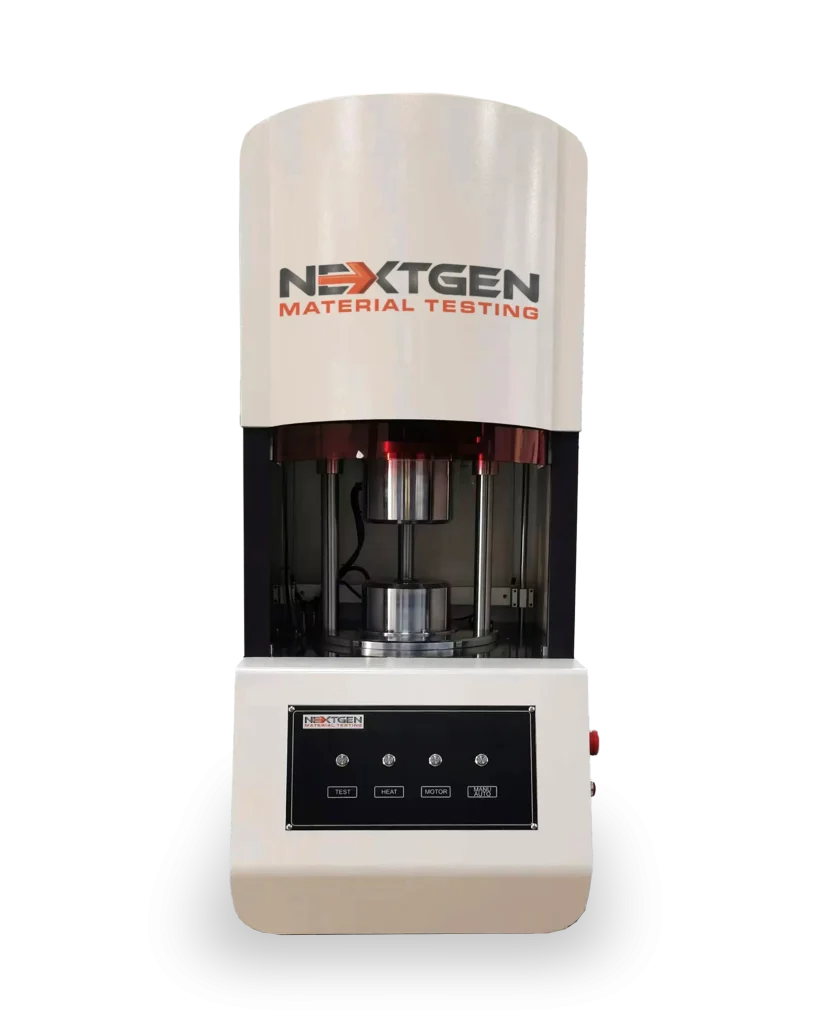
Rubber Testing Equipment
How a compound flows in the mill and how fast it cures in the mold decide whether a batch can be released, long before a finished part can be tested. NextGen supplies rheometers and viscometers for unvulcanized and compounded rubber, working to ASTM D5289 and ISO 6502 for cure curves and ASTM D1646 for Mooney viscosity.
The range covers a rotorless moving die rheometer and an oscillating disc rheometer that record torque through the cure, a process analyzer that adds dynamic properties such as modulus and tan δ, and a Mooney viscometer for viscosity, scorch and stress relaxation. Instruments are installed and calibrated on site, your team is trained on test methods and data, and support continues for the life of the instrument.
For Laboratories
One partner to equip your complete rubber laboratory
Cure and process testing is one station of an elastomer laboratory. NextGen equips the rest of it too, from tensile frames to hardness, abrasion, aging and specimen preparation, and stays responsible for it after delivery.
- Equipment, fixtures and software
- Installation, training, calibration
- Lifetime technical support
Most requested
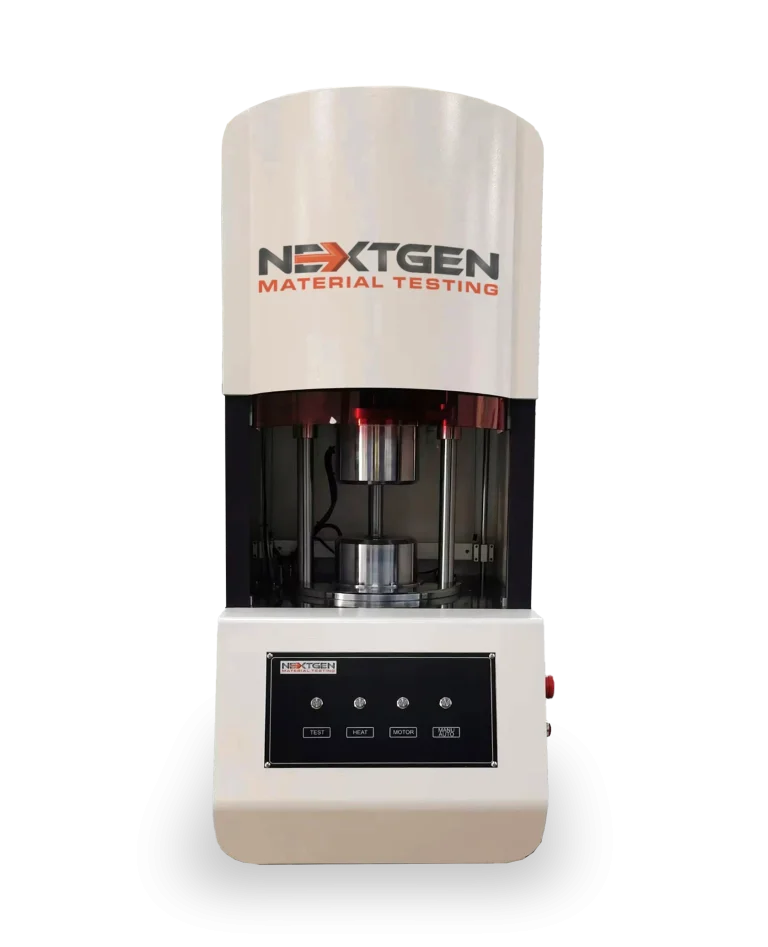
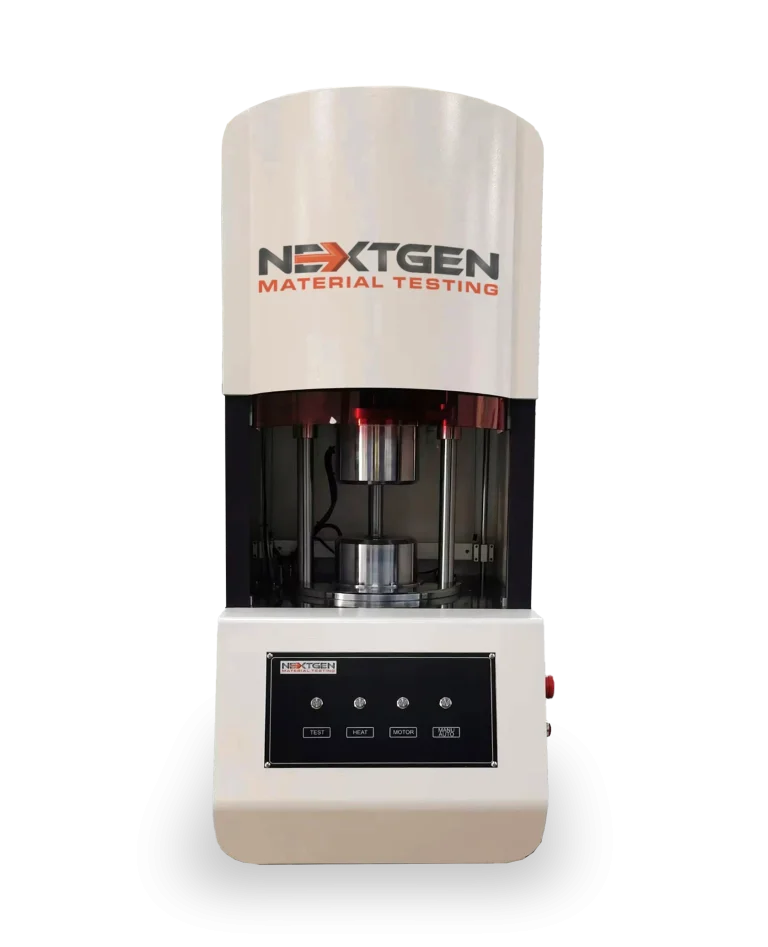 Moving Die Rheometer
The Moving Die Rheometer is a rotorless rubber rheometer for assessing curing and processing characteristics of…
View product
Get quote
Most requested
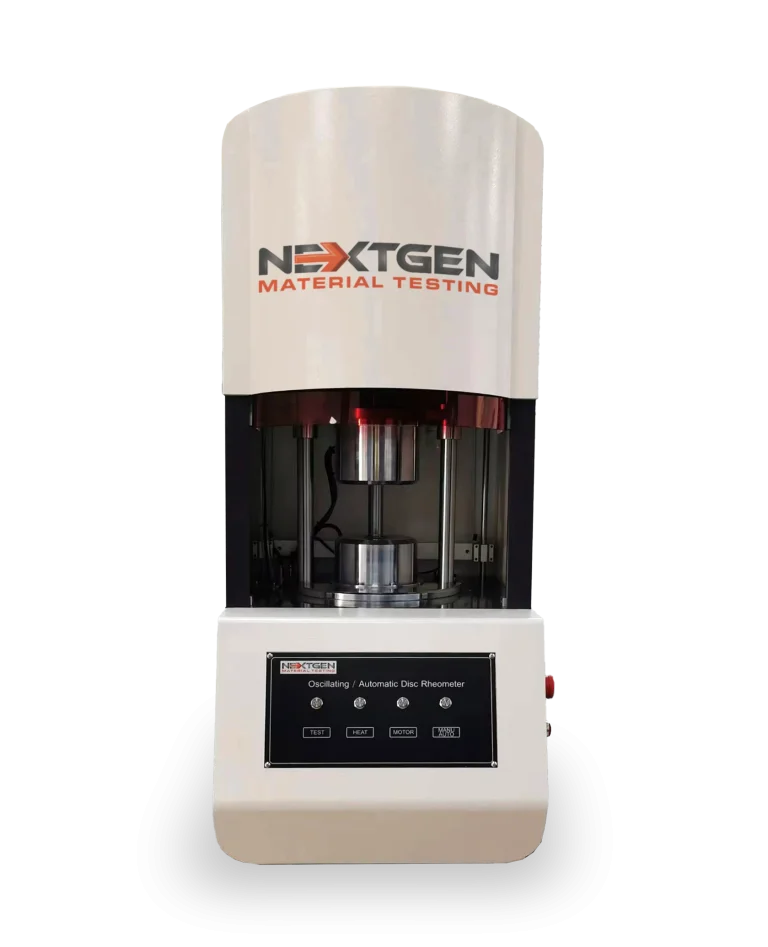 Oscillating Disc Rheometer
NG-ODR is an oscillating disc rheometer for measuring curing and processing characteristics of rubber compounds.
View product
Get quote
Most requested
 250 dNm
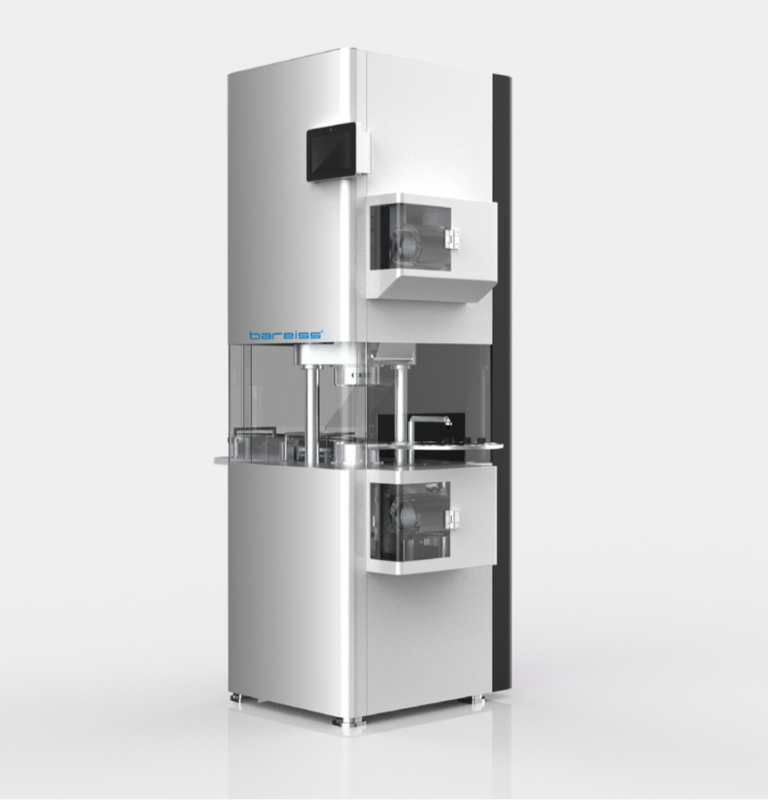
RPA Ultra – Rubber Process Analyzer
RPA Ultra is an advanced rubber process analyzer rheometer for measuring dynamic and static properties of raw rubber…
View product
Get quote
 200 °C
GenMooney – Mooney Viscosity Testing Machine
GenMooney is a Mooney viscosity testing machine for measuring viscosity, scorch behavior, and stress relaxation in…
View product
Get quote
Moving Die Rheometer
The Moving Die Rheometer is a rotorless rubber rheometer for assessing curing and processing characteristics of…
View product
Get quote
Most requested
Oscillating Disc Rheometer
NG-ODR is an oscillating disc rheometer for measuring curing and processing characteristics of rubber compounds.
View product
Get quote
Most requested
250 dNm
RPA Ultra – Rubber Process Analyzer
RPA Ultra is an advanced rubber process analyzer rheometer for measuring dynamic and static properties of raw rubber…
View product
Get quote
200 °C
GenMooney – Mooney Viscosity Testing Machine
GenMooney is a Mooney viscosity testing machine for measuring viscosity, scorch behavior, and stress relaxation in…
View product
Get quote
 Moving Die Rheometer
The Moving Die Rheometer is a rotorless rubber rheometer for assessing curing and processing characteristics of…
Rheological testing
 Oscillating Disc Rheometer
NG-ODR is an oscillating disc rheometer for measuring curing and processing characteristics of rubber compounds.
Rheological testing
 RPA Ultra – Rubber Process Analyzer250 dNm
RPA Ultra is an advanced rubber process analyzer rheometer for measuring dynamic and static properties of raw rubber…
Rheological testing
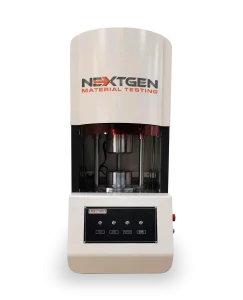 GenMooney – Mooney Viscosity Testing Machine200 °C
GenMooney is a Mooney viscosity testing machine for measuring viscosity, scorch behavior, and stress relaxation in…
Mooney viscosity testing
Nothing matches that filter. Show all products
FAQs
ASTM D5289 covers rotorless cure meters such as the moving die rheometer, while ASTM D2084 covers the oscillating disk cure meter, and D5289 names D2084 as an alternative method. Because the two instrument types may not give the same numbers, use the one your specification names. ISO 6502 is a guide, and its 2016 edition is marked withdrawn, so confirm which edition your customer cites. Contact our team if the callout is unclear.
ML is the minimum torque in dNm and describes the viscosity of the unvulcanized sample. MH is the maximum torque and describes the shear modulus, or rigidity, of the fully vulcanized sample. The Ts values are times at which torque has risen a set share of the way from ML to MH, for example Ts10, Ts30, Ts60 and Ts90, and Ts90 reflects optimum vulcanization.
Choose the RPA Ultra when you need more than a cure curve. Its rotating lower die gives unlimited oscillation strain, so it runs steady shear viscosity, wall slip tests with a polished die, strain sweeps such as the Payne test for filler dispersion, frequency sweeps and cure kinetics. Shear rates up to 500 1/s can imitate extrusion.
The MDR and ODR software keeps curves, drawings and results in a database for printing at any time, exports results to Excel and offers statistics, deviation setting, standard curve setting and CPK calculations. The interface zooms into a curve and compares curves, any vulcanization time or range can be selected, and earlier test data can be reanalyzed with modified reports.
The MDR and ODR need 65 psi (4.6 bar) of compressed air, not including the compressor, and a 110 V/60 Hz or 220 V/50 Hz supply at 1000 W. The MDR weighs 498 lbs (226 kg), and the GenMooney weighs 770 lbs (350 kg) on the same air supply. The RPA Ultra needs 400 V/16 A and a minimum of 4.5 bar of pneumatics.