Rubber Testing Equipment
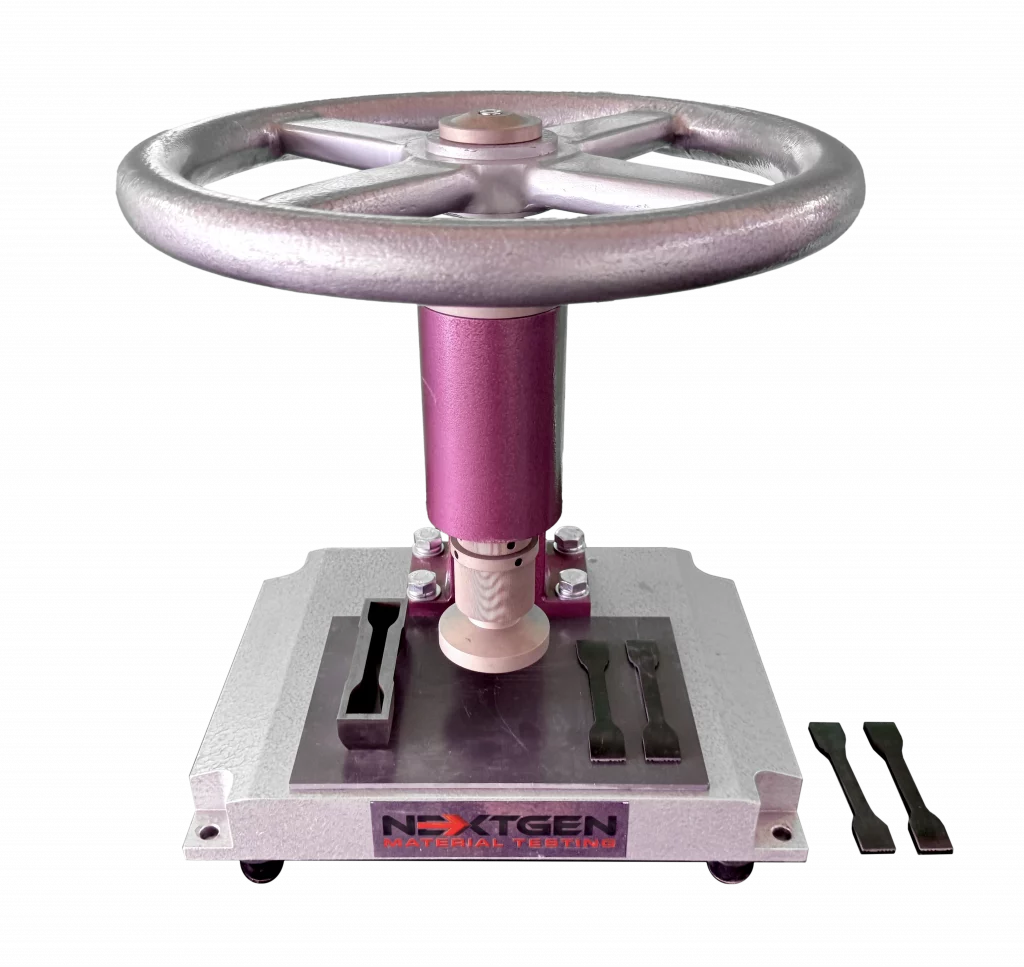
Many questionable tensile results on rubber start at the specimen: a ragged edge or an uneven width moves the break before the test begins. A clean, repeatable cut is what lets results from different shifts and laboratories be compared. NextGen supplies cutting presses that punch dumbbells and other shapes from sheet to the dimensions the method sets, including ASTM D412 for rubber tensile specimens.
Presses take interchangeable cutting knives for different standards, so one press serves several methods as the laboratory adds tests. Presses are installed on site, your team is trained on knife changes and specimen checks, and support continues for the life of the equipment.
For Laboratories
One partner to equip your complete rubber laboratory
Specimen preparation is where an elastomer laboratory starts. NextGen equips the rest of it too, from tensile frames to cure testing, hardness and abrasion, and stays responsible for it after delivery.
- Equipment, fixtures and software
- Installation, training, calibration
- Lifetime technical support
Nothing matches that filter. Show all products
FAQs
Optional knives comply with ASTM D412, ASTM E8, ASTM B557 and ASTM A370, and extra ASTM D412 knives with dies B, C, D, E and F are available on request. Tell us the specimen shape and the standard it is cut to, and we will confirm the knife. Request a quote and include the standard.
The NG-T-Press M Series EML102 gives a maximum punching force of 30 kN with a 25 mm stroke and a punching head 84 mm in diameter. It measures 500 × 400 × 400 mm, weighs 85 kg (187 lbs) and cuts rubber, tape and special materials. A chart on the product page gives the dimensions of the standard dumbbell dies.
ASTM D412 Test Method A uses dumbbell and straight section specimens, which are cut from sheet with a die. Test Method B uses cut ring specimens. The two methods do not produce identical results, so the method belongs in the report and in any acceptance criteria. The standard is not intended for hard, low-elongation materials such as ebonite.
The DIN abrasion tester takes a 16 mm diameter specimen cut with a circular cutting device sold as a consumable, and the Ross flex tester ships with a standard die mold and a hole puncher. The NBS tester uses 25.4 × 25.4 × 6.35 mm specimens, and the HDA 120 takes plates 35 to 38 mm or 39 to 42 mm in diameter and 6 ±0.5 mm thick.