Plastic Testing Equipment
Plastics soften, deform and age with heat long before they melt, and the temperature at which a part stops carrying load is often what decides where it can be used. NextGen supplies thermal and environmental equipment for thermoplastics and polymer parts, working to ASTM D648 and ISO 75 for heat deflection and ASTM D1525 for Vicat softening.
Heat deflection and Vicat softening run on one machine with an oil bath, a constant load and a controlled heating rate, and each method has its own page below. Aging ovens hold specimens at high temperature for long-term heat exposure, and temperature and humidity chambers condition specimens before testing. Equipment is installed and calibrated on site, your team is trained on methods and maintenance, and support continues for its life.
For Laboratories
One partner to equip your complete plastics laboratory
Thermal testing is one station of a plastics laboratory. NextGen equips the rest of it too, from tensile and flexural testing to impact, hardness and melt flow systems, and stays responsible for it after delivery.
- Equipment, fixtures and software
- Installation, training, calibration
- Lifetime technical support
Sub-categories
 Sub-category · 2 products
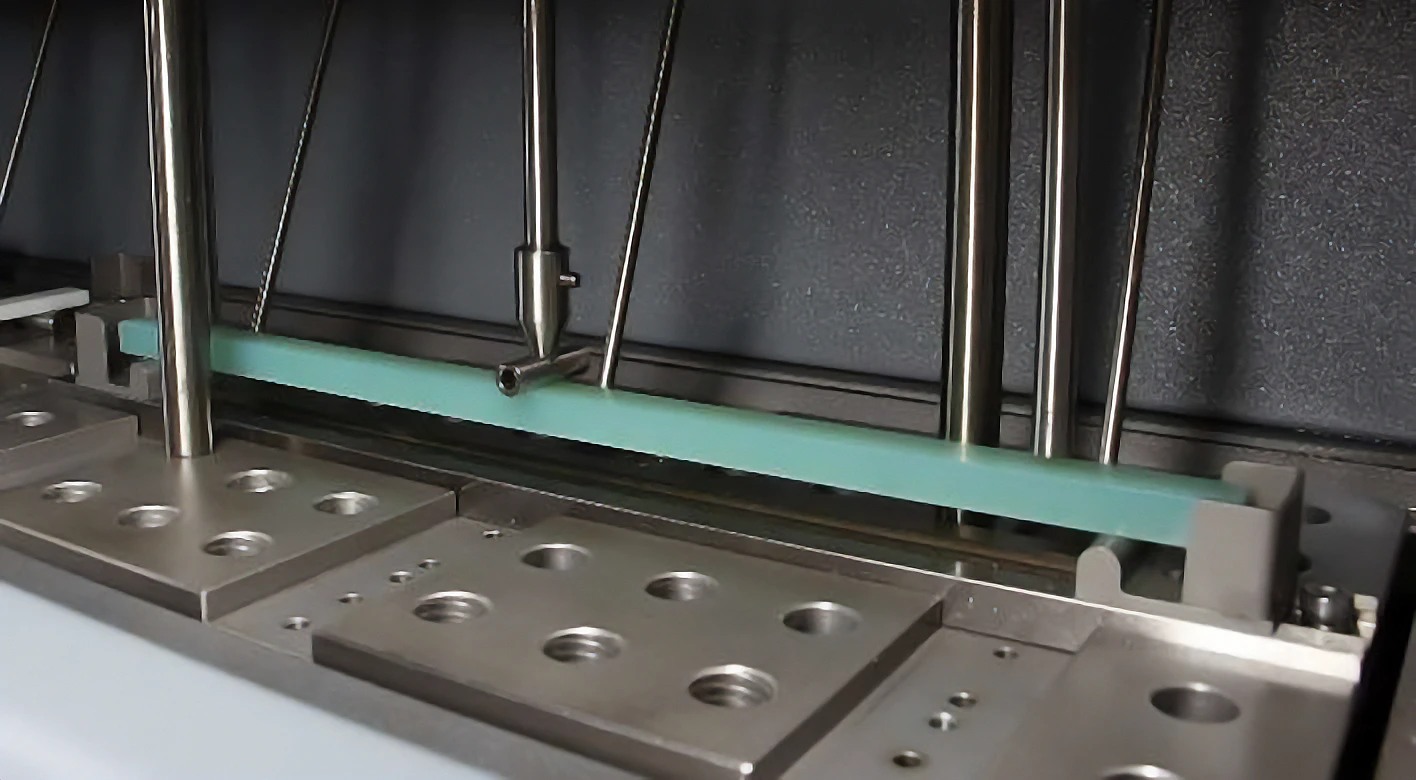
Heat Deflection Temperature (HDT) Testing Equipment
Heat deflection temperature (HDT) testing equipment measures the temperature at which a plastic bar bends under a set flexural load as it is heated. HDT is run to ASTM D648 and ISO 75 on the NG-HDT HDT/Vicat testing machine.
Open
 Sub-category · 2 products
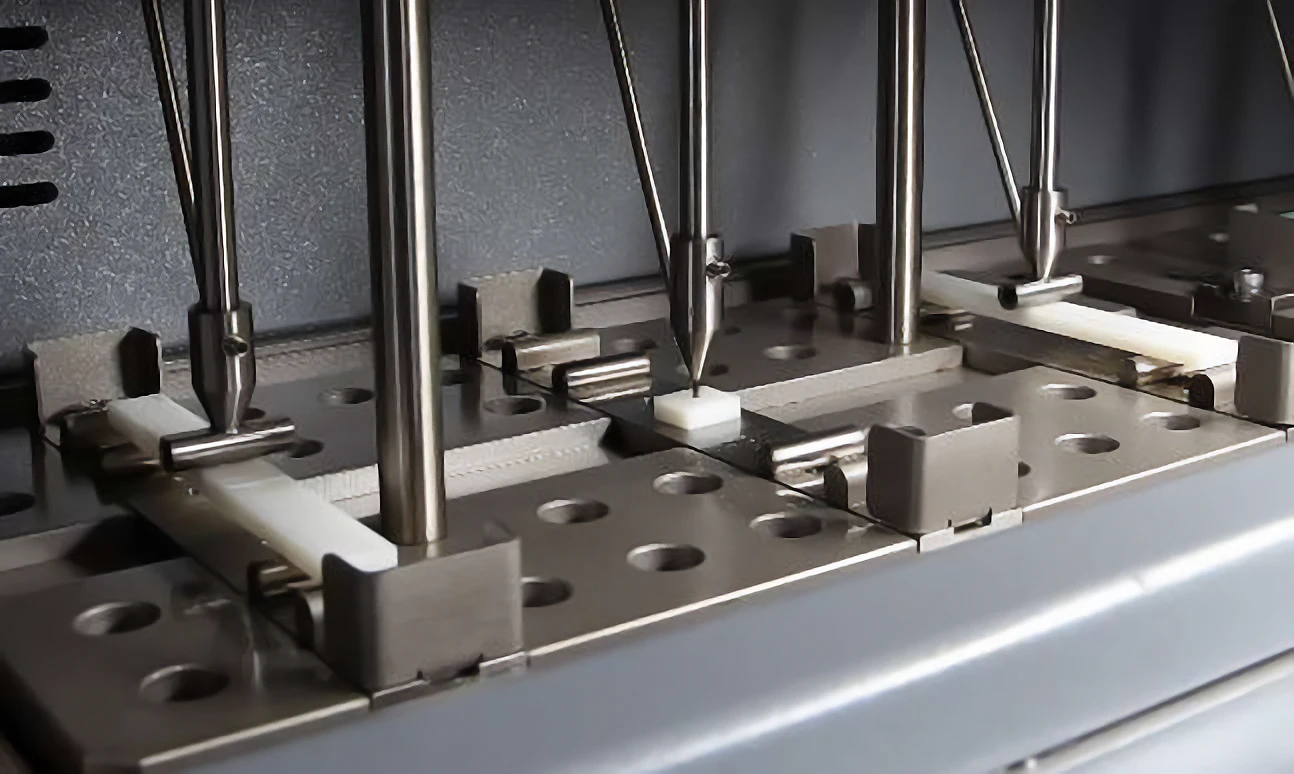
Vicat Softening Temperature (VST) Testing Equipment
Vicat softening temperature (VST) testing equipment measures the temperature at which a loaded needle penetrates a thermoplastic specimen as it is heated. Vicat is run to ASTM D1525, ISO 306 and ISO 2507 on the NG-HDT HDT/Vicat testing machine.
Open
Most requested
 NG-HDT – HDT/Vicat Testing Machine for Plastics
NG-HDT is an HDT/Vicat testing machine for measuring heat deflection temperature and Vicat softening temperature of…
View product
Get quote
 300 °C
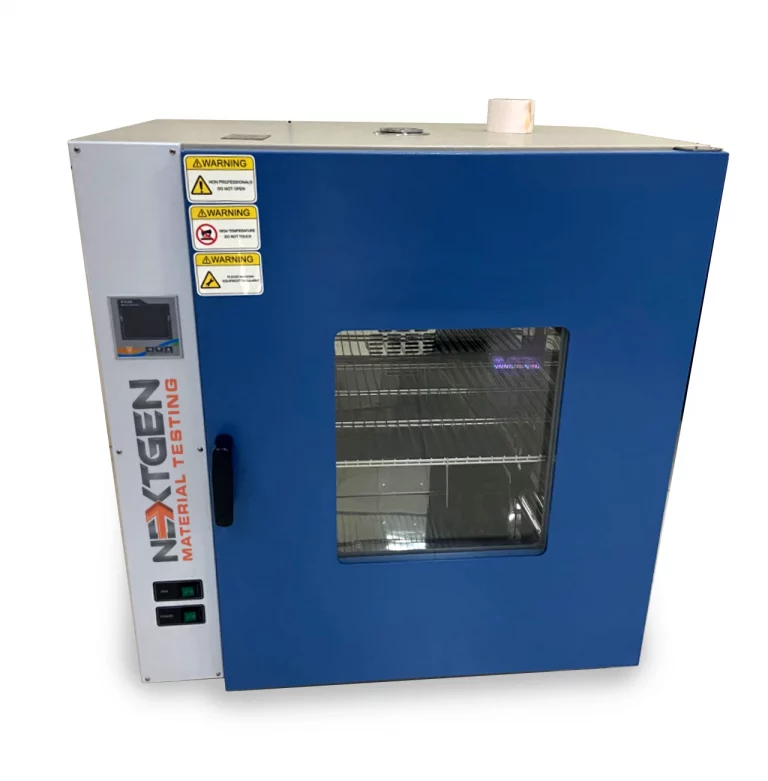
NG-AGOV-ADV – High-Temperature Aging Oven
NG-AGOV-ADV is a high-temperature aging oven for testing how rubber, plastics, elastomers, insulating materials, and…
View product
Get quote
Most requested
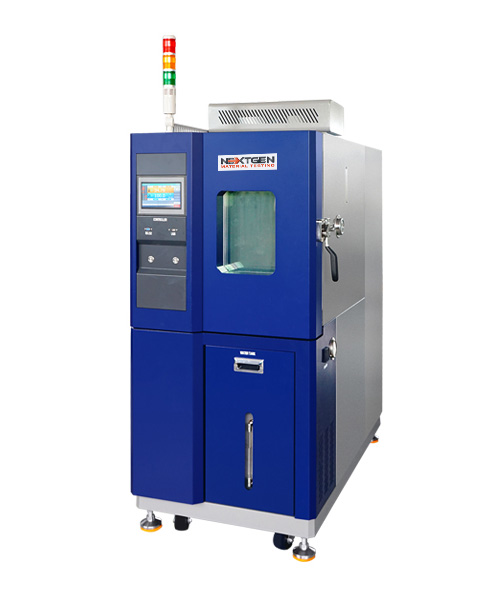
NG-EC Series – Environmental Test Chambers
NextGen NG-EC Environmental Chambers provide controlled temperature and humidity conditions for material, product,…
View product
Get quote
NG-HDT – HDT/Vicat Testing Machine for Plastics
NG-HDT is an HDT/Vicat testing machine for measuring heat deflection temperature and Vicat softening temperature of…
View product
Get quote
300 °C
NG-AGOV-ADV – High-Temperature Aging Oven
NG-AGOV-ADV is a high-temperature aging oven for testing how rubber, plastics, elastomers, insulating materials, and…
View product
Get quote
Most requested
NG-EC Series – Environmental Test Chambers
NextGen NG-EC Environmental Chambers provide controlled temperature and humidity conditions for material, product,…
View product
Get quote
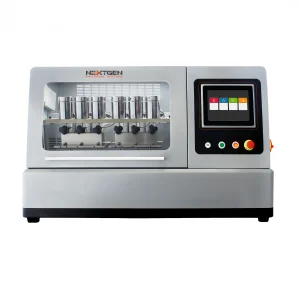 NG-HDT – HDT/Vicat Testing Machine for Plastics
NG-HDT is an HDT/Vicat testing machine for measuring heat deflection temperature and Vicat softening temperature of…
HDT and Vicat testing
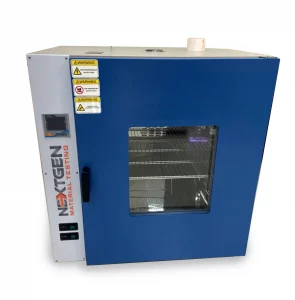 NG-AGOV-ADV – High-Temperature Aging Oven300 °C
NG-AGOV-ADV is a high-temperature aging oven for testing how rubber, plastics, elastomers, insulating materials, and…
Accelerated aging
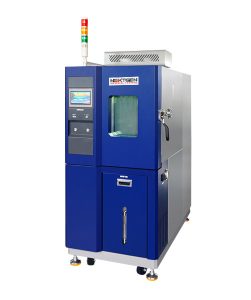 NG-EC Series – Environmental Test Chambers
NextGen NG-EC Environmental Chambers provide controlled temperature and humidity conditions for material, product,…
Environmental conditioning
Nothing matches that filter. Show all products
FAQs
Heat deflection and Vicat softening each have a subcategory of their own, HDT and Vicat, because each method has its own standards and test conditions. Both run on the NG-HDT, which tests three or six specimens at once in an oil bath.
Request a quote for a configuration matched to your methods.
The NG-AGOV-ADV supports the static air method of ISO 188 and ASTM D573 for heat aging, IEC 60216-4-1 for thermal endurance of electrical insulating materials and UL 1581 for thermal conditioning of wire and cable insulation. ASTM E145 sets the temperature uniformity and control a laboratory oven must hold.
The NG-EC series comes in five sizes, from 100 to 1000 liters. The NG-EC100 and NG-EC150 run on a single-phase 220 V supply, while the NG-EC225, NG-EC408 and NG-EC1000 need three-phase 380 V. Each chamber has two stainless steel sample racks with a maximum load of 100 kg and a 2 inch test hole with side access.
The NG-HDT oil bath runs from ambient to 300°C, and the NG-AGOV-ADV aging oven reaches 300°C with forced convection. The NG-EC environmental chambers cover -40°C to +150°C, with humidity of 20% to 98% RH between +20°C and +85°C. The oven states a temperature accuracy of ±0.1°C.
HDT shows the temperature at which a plastic bar bends by a set amount under flexural load, and Vicat shows where a loaded needle penetrates a thermoplastic. Both run on the NG-HDT. Heat aging holds specimens at high temperature for long exposure in an oven such as the NG-AGOV-ADV, and an environmental chamber brings specimens to a set temperature and humidity before testing.