Plastic Testing Equipment
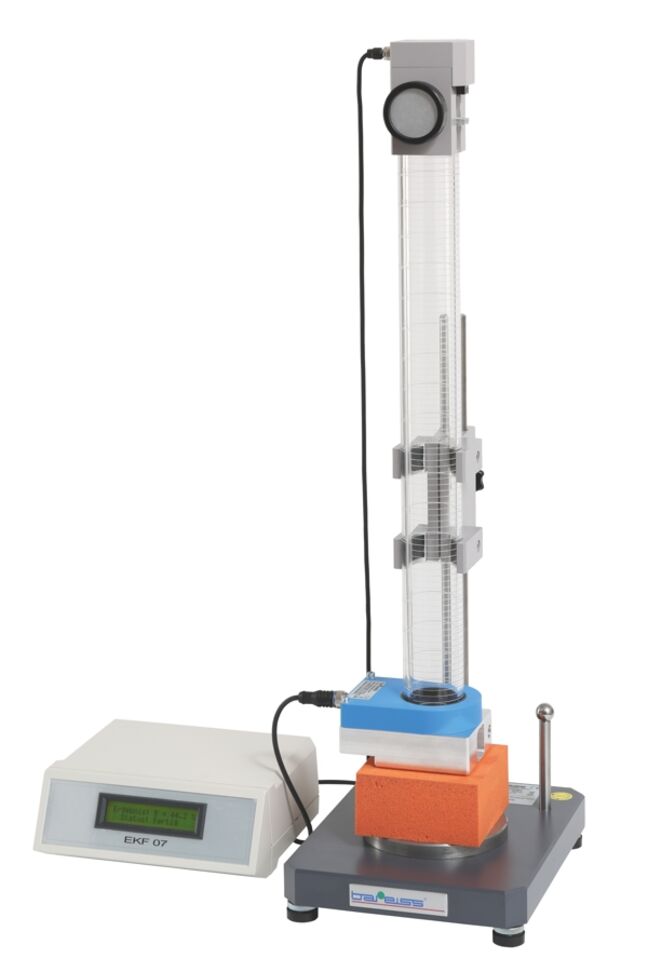
Foams and soft polymers are judged by how much energy they return, and rebound resilience measures that directly, which is why it sits apart from fracture testing. NextGen supplies rebound testers for flexible foam, polyurethane, elastomers and rubber, working to ASTM D3574 and DIN EN ISO 8307 for ball rebound and ISO 4662 for pendulum tests.
The ball rebound tester drops a magnetic ball onto the specimen from a fixed height and calculates resilience in its console, while the pendulum tester measures elastic recovery and dynamic behavior, with optional specimen heating. Instruments are installed and calibrated on site, your team is trained on conditioning and reading results, and support continues for the life of the instrument.
For Laboratories
One partner to equip your complete plastics laboratory
Resilience testing is one station of a plastics laboratory. NextGen equips the rest of it too, from tensile and flexural testing to impact, melt flow, HDT and Vicat systems, and stays responsible for it after delivery.
- Equipment, fixtures and software
- Installation, training, calibration
- Lifetime technical support
Most requested
Ball Rebound Tester
The Ball Rebound Tester measures rebound resilience in foam, polyurethane, rubber, and similar materials.
View product
Get quote
Most requested
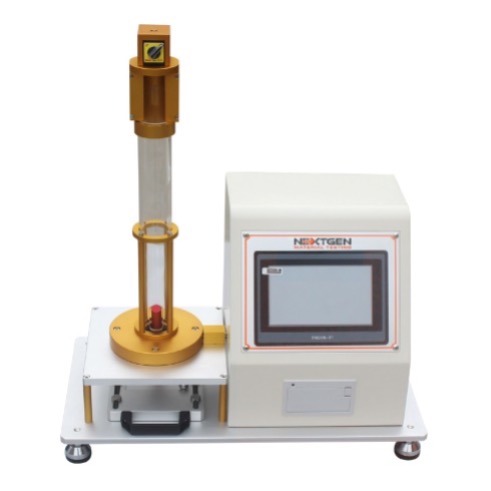 GenRebound – Vertical Rebound Resilience Tester
GenRebound is a vertical rebound resilience tester for measuring the elasticity and rebound behavior of hard rubber…
View product
Get quote
Most requested
 Pendulum Rebound Resilience Tester
NextGen’s Pendulum Rebound Resilience Tester measures the elastic recovery and dynamic behavior of elastomers, foams,…
View product
Get quote
Ball Rebound Tester
The Ball Rebound Tester measures rebound resilience in foam, polyurethane, rubber, and similar materials.
View product
Get quote
Most requested
GenRebound – Vertical Rebound Resilience Tester
GenRebound is a vertical rebound resilience tester for measuring the elasticity and rebound behavior of hard rubber…
View product
Get quote
Most requested
Pendulum Rebound Resilience Tester
NextGen’s Pendulum Rebound Resilience Tester measures the elastic recovery and dynamic behavior of elastomers, foams,…
View product
Get quote
 Ball Rebound Tester
The Ball Rebound Tester measures rebound resilience in foam, polyurethane, rubber, and similar materials.
Rebound resilience testing
 GenRebound – Vertical Rebound Resilience Tester
GenRebound is a vertical rebound resilience tester for measuring the elasticity and rebound behavior of hard rubber…
Rebound resilience testing
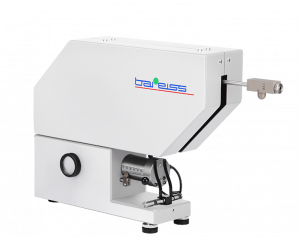 Pendulum Rebound Resilience Tester
NextGen’s Pendulum Rebound Resilience Tester measures the elastic recovery and dynamic behavior of elastomers, foams,…
Rebound resilience testing
Nothing matches that filter. Show all products
FAQs
The ball rebound tester suits foam, polyurethane and similar materials: a 16 mm magnetic ball falls from 500 mm onto the specimen, and the console reports the rebound as a percentage to DIN EN ISO 8307 and ASTM D3574. The pendulum tester suits elastomers and soft elastic materials to DIN 53512, ASTM D1054 and ISO 4662.
It shows how much of the impact energy a material returns instead of absorbing. A purely elastic material stores the energy and releases it, and a purely plastic one absorbs it completely, so the result places a foam or elastomer between the two. The pendulum test also identifies material changes after aging and fatigue, which makes it useful for quality assurance during production.
The ball rebound tester takes a 100 x 100 mm specimen that is 50 mm high. The pendulum tester takes round specimens 29 to 53 mm in diameter and about 12 mm thick, and the stand adjusts for specimen thickness from 0 to 60 mm. Prepare the specimen to the dimensions your standard sets before the test.
Yes, on the pendulum rebound tester. An optional heating module sets the contact surface of the specimen between 10 and 100°C, which simulates the effect of heat on the elasticity of different formulations. A second specimen can be preconditioned at the same time, and a 200 N clamping device holds the specimen against the anvil.
Both testers have an electronic console that calculates the result, and the ball tester shows the median value as a percentage. Results leave the instruments over RS232, and the ball tester also has a USB port. The ball tester needs no calibration in normal use and ships with a works certificate for 500 mm ball rebound. A DAkkS calibration certificate and software for data transfer are available for the pendulum tester.