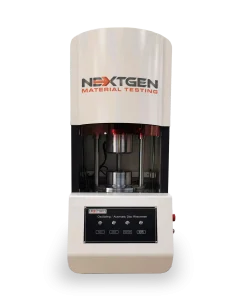
ASTM D2084 is a test method used to characterize the vulcanization (cure) behavior of vulcanizable rubber compounds using an oscillating disk cure meter (ODR). It is commonly used to generate a torque-versus-time cure curve that supports compound development, incoming material checks, and production quality control.
If you need help matching your compound type, temperature range, or reporting needs to an ODR configuration, talk with our team about your application before selecting an instrument.
ASTM D2084 — Standard Test Method for Rubber Property—Vulcanization Using Oscillating Disk Cure Meter
ASTM D2084 is an ASTM International standard that defines a standardized ODR-based approach for determining selected vulcanization characteristics of vulcanizable rubber compounds.
This method is widely referenced when labs and manufacturing sites need consistent cure-curve generation for comparing lots, monitoring process stability, or screening formulation changes.
Quick definition
ASTM D2084 is an ODR cure test method for vulcanizable rubber compounds that evaluates cure behavior by measuring torque response over time at controlled temperature in a closed die.
What this standard covers
ASTM D2084 covers the use of an oscillating disk cure meter to determine selected vulcanization characteristics of vulcanizable rubber compounds.
In practical terms, the standard is used to produce a repeatable cure curve (torque vs. time) and associated cure indicators derived from that curve. Exact definitions, calculation details, and reporting requirements depend on the cited edition of the standard.
Why this standard matters in testing
ODR cure testing is often used as a fast, production-relevant check on how a rubber compound is expected to process and cure. It supports lot-to-lot comparison and helps detect changes in raw materials, mixing, or storage that can shift cure rate and cure state.
Because cure-curve results can be sensitive to temperature control, instrument condition, and sample preparation discipline, ASTM D2084 is frequently cited to standardize how measurements are run and compared across shifts, labs, and sites.
Common materials, product types, or applications covered
ASTM D2084 applies to vulcanizable rubber compounds, including production and development compounds evaluated before or during manufacturing.
Common use cases: Manufacturing quality control, R&D formulation work, evaluation of raw materials used in rubber compounding, and process troubleshooting when cure behavior shifts from baseline.
Common test or verification workflow
ASTM D2084 is typically run as an instrumented cure test where a prepared rubber compound specimen is placed into a heated, closed die in an ODR instrument and the torque response is recorded as the sample cures.
- Prepare and identify the rubber compound specimen(s) for the planned conditions.
- Run the ODR test at the specified temperature and instrument settings required by the controlling specification, internal procedure, or customer requirement.
- Generate the torque-versus-time curve and report the cure indicators required for acceptance, comparison, or process control.
Practical note: If your customer or internal spec calls out specific cure indicators or acceptance limits, align the exact ASTM D2084 edition and reporting format before comparing historical data.
Equipment commonly used for this standard
ASTM D2084 points to an oscillating disk cure meter (ODR) setup capable of controlling die temperature and recording torque response over time with suitable resolution and repeatability.
Common equipment families: ODR cure meter (oscillating disk rheometer-style instrument), heated dies/platens, temperature control and calibration tools, and data acquisition/software for curve generation and reporting.
Quoting and configuration cautions: Confirm whether the requirement is specifically for an ODR method (ASTM D2084) versus rotorless cure methods used in other standards, and confirm the temperature range, control tolerance expectations, and reporting outputs required by your acceptance criteria. If you are selecting a new instrument or replacing an older unit, you can request a detailed quote for an ODR configuration aligned to your cure temperatures and reporting needs.
How to read this designation or revision
Base designation: “ASTM D2084” identifies the test method number within ASTM’s D-series standards.
Year suffix and letter: A two-digit year (for example, “-19”) indicates the year of the last revision or adoption, and a letter suffix (for example, “a”) indicates more than one revision within the same year.
Parentheses year: A year in parentheses (for example, “(2026)”) indicates the year of the last reapproval.
Revision sensitivity: Test conditions, calculations, and reporting requirements can vary by edition. When results are used for acceptance, certification, or customer reporting, cite the full designation (including year and any parenthetical reapproval year) required by the contract or governing document.
Related standards, methods, or frameworks when useful
ISO 3417 is commonly referenced as a closely related method to ASTM D2084, but it is not automatically interchangeable. When cross-referencing cure data between organizations, confirm which document is required and whether any procedural differences matter for your product and acceptance criteria.
Get help selecting an ASTM D2084 ODR setup
If you are outfitting a lab for ODR cure testing, replacing an older cure meter, or need to align your setup to a customer-mandated edition, you can contact our team to discuss temperature range, reporting outputs, calibration expectations, and day-to-day QC workflow.