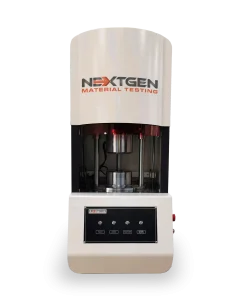
ISO 289-1:2015 is an ISO test method for determining Mooney viscosity of unvulcanized rubber using a shearing-disc (Mooney) viscometer. Mooney viscosity is widely used for incoming material checks and batch-to-batch control because it correlates with processing behavior in mixing, extrusion, and molding.
If you need help confirming whether ISO 289-1 is the right reference for your rubber type, compound state, or reporting format, talk with our team about your application and the edition you’re citing.
ISO 289-1:2015 — Rubber, unvulcanized — Determinations using a shearing-disc viscometer — Part 1: Determination of Mooney viscosity
ISO 289-1 defines a standardized Mooney viscosity measurement for uncompounded or compounded, unvulcanized rubber using a shearing-disc viscometer. The method is commonly used as a practical viscosity index for manufacturing control and material acceptance.
Quick definition
What it is: A Mooney-viscometer method that reports a viscosity value derived from the torque required to rotate a shearing disc in a temperature-controlled test chamber filled with rubber.
What it’s used for: Comparing processability and consistency of raw rubber and rubber compounds before vulcanization.
What this standard covers
ISO 289-1 focuses on measuring Mooney viscosity under defined instrument and temperature conditions using a shearing-disc viscometer. It is intended for unvulcanized rubbers and rubber compounds where Mooney viscosity is used as a control metric.
Primary output: A Mooney viscosity result (reported in Mooney units) suitable for specifications, internal control limits, and supplier/customer reporting.
Why this standard matters in testing
Mooney viscosity is a fast, production-friendly indicator that helps teams control mixing uniformity and processing stability. When Mooney viscosity drifts, it can show up as issues such as unstable extrusion output, inconsistent fill behavior in molding, or variation in downstream cure performance.
Using a recognized ISO method helps make viscosity results more comparable across plants, suppliers, and multi-site quality systems—especially when acceptance criteria are contractually tied to a specific standard and edition.
Common materials, product types, or applications covered
ISO 289-1 is used broadly in rubber materials testing for unvulcanized material control.
Common materials: Natural rubber and synthetic rubbers (as supplied or compounded), including filled and unfilled compounds prior to cure.
Common applications: Incoming inspection of rubber bales or compound slabs, in-process checks during compounding, and final compound release prior to extrusion/calendering/molding.
Common test or verification workflow
Most labs run ISO 289-1 as a routine QC method with tight controls on instrument temperature stability and sample handling.
Typical workflow: Prepare and condition the unvulcanized rubber specimen, load it into the Mooney viscometer chamber, run the standard test sequence for Mooney viscosity, and record the reported Mooney result for comparison to specification limits or historical control charts.
Practical caution: Mooney viscosity is sensitive to temperature control, specimen history (e.g., storage, prior shear), and instrument condition. For supplier/customer comparisons, align on the exact cited edition and reporting requirements.
Equipment commonly used for this standard
ISO 289-1 centers on a shearing-disc (Mooney) viscometer and supporting tools that keep sample preparation and temperature control consistent.
Common equipment: Mooney (shearing-disc) viscometer with temperature-controlled dies/chamber, appropriate rotor/disc configuration, and computerized control/data acquisition for timing and torque-based output.
Common accessories: Sample cutting tools and thickness control aids (as applicable), cleaning tools for dies/rotor surfaces, and calibration/verification items used by the lab’s quality system.
If you’re equipping a lab for Mooney viscosity testing or replacing an older viscometer, you can request a detailed quote for a configuration matched to your throughput, temperature range needs, and reporting workflow.
How to read this designation or revision
ISO 289 is a multi-part series under the general topic of unvulcanized rubber measurements using a shearing-disc viscometer.
ISO 289-1 identifies Part 1 of the series, focused on determination of Mooney viscosity.
:2015 indicates the publication year of that edition. When Mooney values are used for acceptance, the cited year/edition matters because apparatus requirements and reporting details can vary by edition.
Related standards, methods, or frameworks
Depending on whether you are measuring viscosity only or also checking processing safety and elastic response, other parts of the ISO 289 series may be referenced alongside ISO 289-1.
Common related references: ISO 289-2 (pre-vulcanization characteristics), ISO 289-3 (Delta Mooney for specific oil-extended emulsion SBR), and ISO/TS 289-4 (Mooney stress-relaxation rate).
Get help selecting Mooney viscosity test equipment
If you’re standardizing Mooney viscosity testing across sites or writing equipment requirements into a purchase spec, contact our team to discuss throughput targets, temperature control expectations, and the exact ISO 289-1 edition you need to support.