BlaineGen Classic – Digital Blaine Apparatus

Cement & Concrete Testing Equipment
Standards
Description
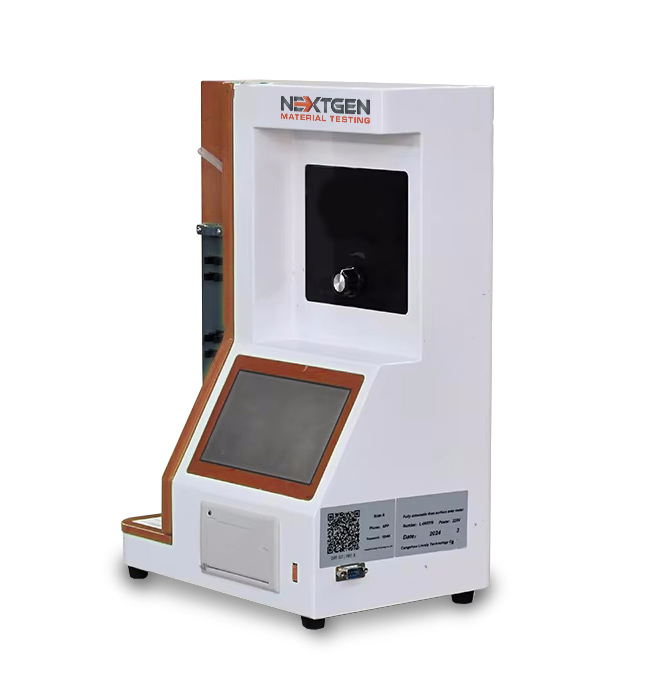
BlaineGen Classic is a digital Blaine apparatus for routine determination of cement fineness in laboratories that need a straightforward, cost-effective solution. It applies the Blaine air permeability method to evaluate the specific surface area of Portland cement, lime and similar powders, and it is intended for quality control and technical teams that need reliable fineness data without the cost and complexity of a fully automatic platform.
The instrument is manufactured in accordance with EN 196-6, ASTM C204, GB/T 8074 and NF P15-403, with correlation to ISO 9277 for specific surface area evaluation. That alignment lets a laboratory keep its procedures consistent with established cement industry practice and compare results between sites and instruments.
MethodBlaine air permeability
Time Range0.1 s to 500 s
Timing Accuracy<0.1 s
Measurement Accuracy≤1%
The clip below shows the apparatus running a fineness test.
Cement fineness testing on the BlaineGen Classic.
How the Measurement Works
The sequence is the same one written into the standards, carried out with digital timing rather than a stopwatch.
A prepared cement sample is compacted into a permeability cell to form a porous bed of defined porosity. A fixed volume of air is then drawn through the bed, and the instrument measures the time the air takes to pass between two reference levels. From that transit time the system calculates the specific surface area, in m²/kg, and presents the Blaine fineness value on the digital interface, ready for reporting.
BlaineGen Classic follows the same physical principle as the automatic systems in a simpler configuration: digital timing and calculation combined with conventional sample handling. That makes it a practical primary instrument in a smaller laboratory, or a second unit alongside automated Blaine equipment where throughput is shared.
BlaineGen Classic Features and Advantages
The instrument combines digital timing with a conventional Blaine cell, which is what keeps both the purchase and the training practical for a routine laboratory.
Digital time measurement
Air transit time is recorded electronically, which removes the timing variation of a manual stopwatch.
Consistent calculations
A fixed calculation routine for Blaine fineness supports comparable results between tests.
Straightforward controls
A basic control layout and a clear test sequence let new users become comfortable with the instrument quickly.
Classic cell design
Conventional cell geometry and packing steps allow the unit to fit existing Blaine procedures with minimal adjustment.
Reference cement checks
Regular checks against a reference cement keep the instrument aligned with the method.
5-year warranty
Limited-time offer: BlaineGen Classic ships with a 5-year (60-month) manufacturer warranty at no additional cost. Request a quote to confirm the offer terms.
How a BlaineGen Classic Test Runs
The workflow is the familiar Blaine sequence used in cement laboratories, which is what allows the instrument to drop into an existing internal procedure without rewriting it.
Sample preparation
A representative cement sample is weighed and introduced into the permeability cell, then compacted with a plunger to the porosity the selected standard requires. The cell is assembled with its caps and seals and placed into the main unit.
Reference calibration
Laboratories run a reference cement of known specific surface area and use its measured time to confirm that the instrument and the procedure are behaving as expected. Routine samples then follow the same preparation steps.
Measurement and result
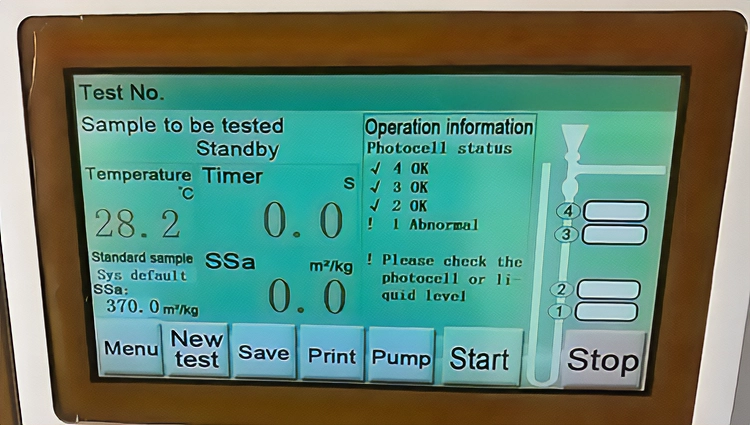
A defined volume of air is drawn through the compacted bed and the transit time between two reference levels is recorded. The system calculates specific surface area by the Blaine method and shows the fineness value on the display, ready for the laboratory log, a quality system or process control.
BlaineGen Classic Scope of Supply
The instrument is supplied as a complete test set for routine fineness measurements. A typical configuration includes the following.
| Item | Detail |
|---|---|
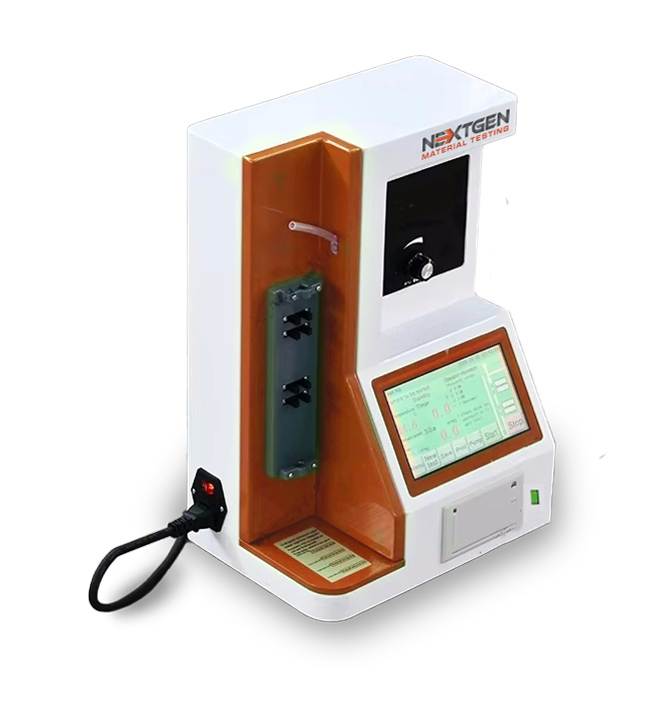
| Main unit | BlaineGen Classic digital Blaine apparatus with integrated timing and display for air permeability tests |
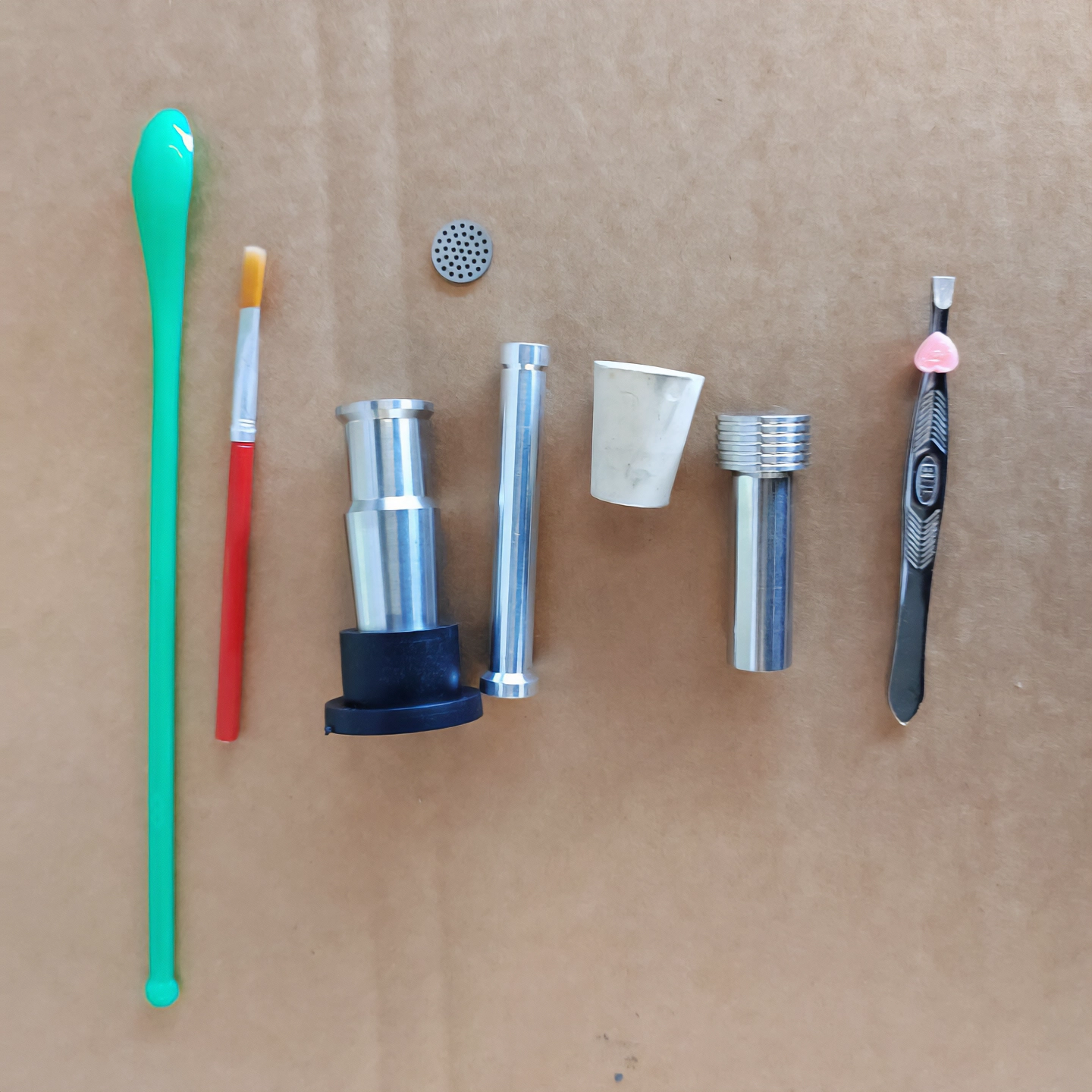
| Permeability cell and accessories | Blaine permeability cell with matching caps and base, perforated plates, filter papers, plunger, and the connecting tubing and fittings needed to assemble the air path |
| Reference materials and tools | Recommended reference cement when ordered as part of the package, with basic tools for sample handling and packing: powder scoop, spatula and compaction rod |
| Documentation | Operational manual with installation and operating instructions, and a conformity or calibration certificate under the relevant order terms |
BlaineGen Classic Technical Specifications
The operating temperature range is worth checking against the room the instrument will stand in: air permeability is temperature dependent, and the standards assume a stable environment.
| Parameter | Value |
|---|---|
| Measurement principle | Blaine air permeability method |
| Time range | 0.1 s to 500 s |
| Timing accuracy | <0.1 s |
| Measurement accuracy | ≤1% |
| Power supply | 220 V ±10%, 50 Hz |
| Operating temperature range | 46 to 93 °F (8 to 34 °C) |
| Recommended laboratory environment | Indoor conditions with a stable temperature in that range and no strong air draughts around the instrument |
Have Questions or Need to Confirm a Detail?
If you are choosing between the classic and the automated Blaine, tell us how many determinations a day your laboratory runs and which standard you report to. Send a quick request online and we will set the two side by side for your case.
For Laboratories
Need Additional Quality Control Equipment to Build Your Laboratory?
Fineness testing is only one part of a complete quality control laboratory. NextGen can help you equip your entire lab with mortar mixers, climatic curing cabinets, Blaine fineness apparatus, Vicat setting-time apparatus, autoclaves, and other supporting solutions, all coordinated as one complete project.
- One partner to equip your complete laboratory
- Installation, training, calibration
- Support for the life of the equipment
FAQs
The fixed calculation routine keeps each Blaine fineness result moving through the same calculation path every time, so the air-time reading is converted into a result in a uniform way. That reduces variation in the reporting step and helps repeated cement fineness checks stay comparable.
In day-to-day lab work, that consistency is reinforced by the digital timing and by running reference cement checks before routine samples. Together, those steps make it easier to track instrument behavior, compare current batches with past results, and support internal control charts for cement grinding consistency.
Looking to confirm the right setup for your workflow? Review the BlaineGen Classic, compare it with the Automated Blaine Apparatus - BlaineGen Plus if you want more automation, and request a quote for your lab requirements.
For routine Blaine testing, the practical setup is centered on the permeability cell assembly and a small stock of day-to-day consumables. This system is typically used with the cell, matching caps and base, perforated plates, filter papers, the plunger, and the tubing and fittings needed to build the air path. Many labs also keep reference cement on hand for internal checks.
A typical routine kit usually includes:
- permeability cell, caps, base, perforated plates, tubing, and fittings
- filter papers for regular test runs
- basic sample-handling tools, such as a scoop, spatula, and compaction rod
- reference cement, when you run control checks alongside production samples
Need to confirm the right accessory package for your Blaine workflow? Learn more on the product page, or request a quote with your test method and lab routine so the setup can be matched correctly.
Repeatability in Blaine air permeability measurements is driven mainly by how consistently the sample is prepared and packed, how well the permeability cell is assembled and sealed, and how stable the test conditions are. This system’s digital timing helps reduce stopwatch variation, but the biggest gains still come from disciplined sample handling, fixed calculation routines, and a steady laboratory environment.
In practice, labs get the best consistency by weighing a representative cement sample, compacting it to the specified porosity, and using the same preparation steps every time. Periodic checks with a reference cement also help confirm that the instrument and method are staying in control over time. Stable indoor conditions, especially without strong air drafts, support more dependable Blaine fineness results.
To align this with your testing method, review the BlaineGen Classic setup, or request a quote if you want help matching the right configuration and reference material to your lab workflow. If you are comparing higher-automation options for tighter operator control, the Automated Blaine Apparatus - BlaineGen Plus is worth a look.
This system is most commonly used for Portland cement, lime, and similar fine powders that need a Blaine air permeability check for specific surface area. In cement labs, it is typically used for routine fineness control, grinding consistency checks, and reference sample verification.
The best fit is usually powders that can be packed into a consistent bed and tested with a repeatable preparation method. For that reason, the final material list often depends on the testing method, the way the sample is prepared, and whether the lab is running production QC or internal control work.
Looking to confirm whether your material is a good fit for Blaine testing? learn more about this system or request a quote for your setup. If you are comparing automation levels, you can also review the Automated Blaine Apparatus – BlaineGen Plus.
Check it on a routine basis, not only when results look unusual. For this system, the normal practice is to run a reference cement with a known specific surface area to confirm that the instrument and test procedure are still behaving as expected, then move back to routine samples once the check is acceptable.
The exact interval is usually set by your lab’s QC plan and method requirements. In practice, many cement laboratories verify the Blaine setup after maintenance, after any change to the cell or packing process, and whenever control results begin to drift, so the fineness data stays comparable from batch to batch.
To align this with your cement fineness workflow, review the Digital Blaine Apparatus – BlaineGen Classic page and request a quote. If you share your test cadence and reference cement setup, the check interval can be matched more closely to your procedure.
This system is backed by NextGen’s warranty package, which is included with each order and supported through their after-sales service. The coverage is presented as part of the overall purchase support, so the exact terms should be confirmed against your specific quote and order details.
For a cement fineness testing setup like this, warranty expectations usually come down to the final configuration, delivery scope, and any installed options or accessories. NextGen also offers training and installation support, which can be helpful if you want the instrument commissioned and handed over with clear operating guidance.
Need to confirm the right coverage for your lab setup? learn more about the system, or request a quote so the warranty terms can be matched to your configuration.
Use a representative dry cement powder sample, weigh it, and compact it into the permeability cell so it forms a uniform porous bed with the porosity specified by your chosen method. For accurate Blaine testing, consistent powder handling and packing matter more than a loose fill or an unevenly packed bed.
The sample should be prepared the same way each time, then assembled with the cell caps and seals before measurement. That consistency is important because Blaine fineness is calculated from air flow through the packed bed, so the sample form, packing force, and porosity all influence repeatability.
To align the sample prep with your workflow, learn more about this system or request a quote if you want help matching the packing routine to your test method.
Operator training is available for this system, including basic use and practical familiarization with the test procedure. It is a good fit when your team needs a clear start-up walkthrough for cement fineness work, routine lab checks, or day-to-day operation.
Training and installation support can be tailored to your setup, so the depth of instruction depends on your workflow, user experience, and the way your lab plans to run the Blaine method. That typically makes it easier to get operators comfortable with sample handling, routine operation, and repeatable use in the lab.
To align this with your testing workflow, learn more about this system or request a quote and note that you want operator training included. If you share your lab setup and test method needs, we can help narrow the right support scope.
This system is mainly used for routine cement fineness testing. It measures the specific surface area of Portland cement, lime, and similar powders with the Blaine air permeability method, so quality control teams can verify grinding consistency and track batch-to-batch changes.
In practice, a prepared sample is packed into the permeability cell, air is drawn through the powder bed, and the instrument converts that airflow timing into a Blaine fineness result on the display. That makes it a practical fit for lab checks, reference cement comparisons, and day-to-day process control.
Need to confirm whether this fits your workflow? Learn more about the system, or request a quote for the configuration that matches your testing method.
This system is built around the standard Blaine cell workflow, so there is not a separate specimen size limit beyond proper powder preparation. The sample is weighed, packed into the permeability cell, and compacted to the porosity required by the selected method, which makes it suitable for cement, lime, and similar powders.
In practice, the key factors are sample form, packing consistency, and whether the material can be prepared to the target porosity without bridging or uneven packing. The page also notes routine reference cement checks, which helps labs keep results consistent from one run to the next.
To align this with your testing method, learn more about BlaineGen Classic or request a quote with your sample type and standard. If you are comparing automation levels, Automated Blaine Apparatus – BlaineGen Plus is the higher-automation option in the same family.
Electronic timing matters in Blaine fineness testing because the result comes from the air transit time through the packed cement bed. Recording that interval electronically reduces operator-to-operator variation and gives a more consistent Blaine fineness reading from test to test.
For routine cement fineness work, that consistency helps with QC checks, reference cement verification, and tracking grinding changes over time. On this system, the measured transit time is used to calculate specific surface area and present the Blaine value on the digital interface, so the lab can log results quickly and keep the workflow straightforward.
To align this with your testing workflow, learn more about the Digital Blaine Apparatus – BlaineGen Classic or request a quote if you want help confirming the best setup for your samples. If you are comparing automation levels, the Automated Blaine Apparatus – BlaineGen Plus is a useful alternative to review.
This system is built for Blaine air permeability testing, and the product page states that it is manufactured in accordance with ASTM C204 and EN 196-6. In practical terms, it fits routine cement fineness and specific surface area work.
It is a good match for the classic Blaine workflow used on cement, lime, and similar powders, with digital timing, calculation, and a displayed Blaine fineness result. The page also notes ISO 9277 correlation for specific surface area evaluation.
Need to confirm the right setup for your lab method? Review the product page or request a quote for configuration guidance. If you are comparing workflow options, you can also look at Automated Blaine Apparatus - BlaineGen Plus.
This system is designed to measure specific surface area in m²/kg using the Blaine air permeability method, which makes it a practical fit for routine cement fineness checks on Portland cement, lime, and similar powders.
In normal operation, the test tracks air flow through a packed powder bed and converts that transit time into a Blaine fineness value on the digital display. It is listed against ASTM C204, EN 196-6, GB/T 8074, and NF P15-403, with correlation to ISO 9277 for specific surface area evaluation.
Need to confirm the right setup for your cement lab? You can learn more on the product page or request a quote for help matching the configuration to your method and workflow. If you are comparing a more automated option, the Automated Blaine Apparatus – Alternative higher-automation model in the same product family is the natural next step.
The Blaine air permeability method determines cement fineness by packing a prepared cement sample into a permeability cell, drawing a fixed volume of air through the compacted powder bed, and measuring how long that air takes to pass between reference levels. That transit time is then converted into a Blaine fineness value, which reflects the material’s specific surface area.
In practical terms, a finer powder creates more resistance to airflow, so the measured time changes with the surface area of the sample. Labs usually verify the setup with a reference cement, then repeat the same preparation steps for routine checks, batch comparison, and process control. The method on this page is aligned with ASTM C204, EN 196-6, GB/T 8074, and NF P15-403, with correlation to ISO 9277.
Need to confirm the right setup for your cement fineness workflow? Learn more about this system, or request a quote if you want help matching the configuration to your test method or lab routine.
In practical terms, the ISO 9277 correlation means the Blaine result should be treated as a specific surface area value that is aligned with a recognized reference framework, not as a separate measurement philosophy. For routine cement fineness work, it helps laboratories compare Blaine air permeability results more consistently across batches, instruments, and locations when the test method is kept under control.
That interpretation depends on method discipline, sample preparation, and internal calibration practice. If your lab is testing Portland cement, lime, or similar powders, the key is to keep packing, porosity, reference checks, and environmental conditions consistent so the correlation remains useful for quality control and trend monitoring.
Need to align this with your cement fineness workflow? Review the Digital Blaine Apparatus – BlaineGen Classic details, and if you want help confirming the right setup for your method, request a quote.
Yes. This system is supplied as a complete test set, with the permeability cell components and the routine accessories needed for Blaine testing, so it is built for day-to-day lab use rather than a one-off setup.
For long-term support, the practical approach is to keep the wear items and operating extras matched to your method, such as cell parts, seals, filter papers, tubing, and reference tools. NextGen also backs its equipment with warranty support, training and installation, and technical service channels, which helps keep cement fineness testing on track over time.
Need to plan a support package for your lab? learn more about the system, or request a quote so you can confirm the spare parts and accessory set that fits your testing workflow.
For routine Blaine fineness testing, this unit runs from its built-in digital interface, so separate software is not required for normal operation. The timing and Blaine calculations are handled on the instrument itself.
That keeps the cement lab workflow straightforward for Portland cement, lime, and similar powders. If your team wants data export, custom reporting, or a more automated workflow, that depends on the setup you want around the tester, not on day-to-day operation of the base unit.
To align the setup with your testing method, review the Digital Blaine Apparatus - BlaineGen Classic details or request a quote. If you are comparing automation levels, the Automated Blaine Apparatus - BlaineGen Plus is a useful next step.
Yes. For the Blaine air permeability workflow on this digital Blaine apparatus, NextGen has a clear support path for troubleshooting, service inquiries, and setup guidance, and the product page covers the core operating details, technical specs, and standards used with the unit.
If you are working through a cement fineness issue, the most relevant support routes are training and installation, warranty support, general service inquiry, and technical support inquiry. NextGen also says its technical team is reachable by phone or email, with typical responses within 24 hours for technical questions.
To align this with your lab workflow, use the product page for the BlaineGen Classic and then send the issue through contact us for faster routing. If you share the symptom, sample type, and whether you need service, documentation, or setup help, the team can guide the next step.
Yes. This system uses a classic Blaine cell design with conventional geometry, so it follows the standard sample packing and air-permeability workflow many cement labs already use. That makes it a practical fit when you want routine Blaine fineness testing without changing your established method.
In daily use, the sample is packed into the permeability cell, air is drawn through the bed, and the instrument calculates fineness from the measured transit time. It is a straightforward setup for cement, lime, and similar powders when consistency and repeatability matter more than high automation.
Looking to confirm whether this setup matches your method or compare it with a higher-automation option? learn more or request a quote. If you want a side-by-side comparison, the Automated Blaine Apparatus is a useful reference.
Operators should treat Blaine sample preparation as a dust-control task. Wear eye protection, gloves, and any respiratory protection required by your site program, and avoid skin or eye contact with cement powder. Because this tester uses a prepared sample packed into a permeability cell, careful weighing, filling, and compaction also helps keep the work area clean and the result consistent.
Keep the bench tidy, dry, and away from strong drafts, then assemble the cell, caps, seals, filter papers, and tubing before starting the test. Handle the plunger and packing tools deliberately, keep hands clear of pinch points, and clean up spilled powder promptly so dust does not spread through the lab.
Need to align the setup with your lab SOP? learn more about the Digital Blaine Apparatus – BlaineGen Classic, or request a quote if you want help matching the configuration to your sample type and method.
Review the power supply, room conditions, and test setup before putting this Blaine apparatus into service. This model is built for 220 V ±10%, 50 Hz, and it should be installed in an indoor lab with stable temperature and no strong air drafts. Also confirm that the permeability cell, packing tools, reference materials, and the installation manual are on hand, along with any calibration paperwork supplied with the order.
For a cement lab, the next check is method fit. Make sure your team is aligned on the Blaine workflow, including sample packing and reference cement checks, and verify that your procedure matches the standard you plan to run, such as EN 196-6, ASTM C204, GB/T 8074, or NF P15-403.
If you’re setting up a new cement lab, learn more or request a quote so the installation package and training support can be matched to your workflow.
This system is usually preferred in routine cement laboratories, smaller QC rooms, and plant labs that want dependable Blaine fineness checks without the added complexity of full automation. It fits well when operators already follow a familiar Blaine workflow, when the instrument will be used as a primary fineness tester, or when it serves as a secondary check unit beside a higher-automation platform.
It is also a practical choice for reference cement checks, internal control charts, and day-to-day verification of grinding consistency. Many labs choose this style of setup when they want digital timing and calculation, but still prefer conventional sample handling, a simpler training curve, and a more cost-conscious configuration. If unattended operation or very high sample turnover is the main goal, compare it with the Automated Blaine Apparatus.
For a quick verification of the best fit, compare your sample volume, operator workflow, and reporting needs against this setup. You can learn more or request a quote for the configuration that matches your lab.
NextGen does provide installation support for Blaine testing equipment. For this BlaineGen Classic system, the Support section specifically includes Training and Installation services, and those services are described as covering setup, calibration, and helping your team get comfortable using the equipment.
For a cement fineness lab, that kind of support is useful when you want the new setup to fit your workflow, sample handling routine, and internal test method. The exact scope is usually confirmed around your site layout, utilities, and whether you need installation only or a fuller handoff.
Need to line up the right installation package for your Blaine testing setup? learn more about this system or request a quote so NextGen can confirm the best setup for your lab.
Both systems are built for Blaine air permeability testing of cement fineness and specific surface area, but they serve different lab styles. The BlaineGen Classic is the simpler, more cost-conscious option with digital timing and calculation plus conventional sample handling. The automated BlaineGen Plus adds a touchscreen workflow, automatic sample-weight calculation, automatic liquid handling, data storage, and PC export, so it is better suited to labs that want fewer operator steps and more standardized testing.
In practical terms, choose Classic when you want an easy-to-adopt instrument for routine cement fineness checks, reference cement comparisons, and existing Blaine procedures. Choose Plus when you want more automation, onboard memory for many test records, selectable methods and cement types, and built-in warnings for temperature control.
If you’re comparing the right setup for your lab, review Digital Blaine Apparatus – BlaineGen Classic and Automated Blaine Apparatus – BlaineGen Plus, then request a quote so we can match the workflow to your sample volume, reporting needs, and method requirements.
Long-term Blaine test stability depends most on the permeability cell, the air path, and repeatable sample packing. For this digital Blaine apparatus, the best maintenance focus is keeping the cell clean and sealed, the tubing and fittings tight, the filter papers in good condition, and the lab environment steady so results stay comparable over time.
In practice, the items that matter most are clean permeability-cell parts, leak-free tubing and fittings, fresh filter papers and packing tools, and regular checks with reference cement to confirm the method is still tracking as expected. The product page also notes a stable indoor temperature range and minimal drafts, which helps protect Blaine fineness repeatability.
Need to tighten up your cement fineness workflow? Review the Digital Blaine Apparatus – BlaineGen Classic page for the test set and operating workflow, then request a quote if you want help matching the setup to your lab procedure.
This system is well suited for routine Portland cement fineness control. It uses the Blaine air permeability method to report specific surface area for Portland cement and similar powders, which is exactly the kind of check many QC labs use for day-to-day milling control.
It is positioned as a straightforward, cost-effective option for laboratories that want consistent fineness data, digital timing and calculation, and regular reference cement checks without moving to a fully automatic platform. The page lists ASTM C204, EN 196-6, GB/T 8074, ISO 9277 and NF P15-403, so it fits established cement lab workflows.
Need to match the setup to your plant or lab workflow? Compare it with the Automated Blaine Apparatus – BlaineGen Plus, then request a quote if you want help confirming the best fineness-testing configuration.
This system does not need a special climate room, but it does perform best in a clean, stable laboratory setting. For Blaine fineness testing, repeatability improves when the bench area is free from drafts, vibration, and unnecessary temperature swings, and when sample preparation is kept consistent from test to test.
In practice, the biggest factors are the way the cement sample is prepared, the condition of the permeability cell and accessories, and how consistently your lab follows the same reference-check routine. A steady work area helps technicians compare current batches against previous results with more confidence, especially in routine cement fineness and quality control work.
To align this with your testing workflow, learn more about the system and request a quote. If you share your lab setup and method requirements, we can help confirm the best configuration for reliable Blaine testing.
This system is aligned with the main Blaine air-permeability standards used for cement fineness work: ASTM C204, EN 196-6, GB/T 8074, and NF P15-403, with correlation to ISO 9277 for specific surface area evaluation. For routine Blaine fineness checks on cement, lime, and similar powders, that is the standards set most labs will care about.
In practice, the exact method setup still depends on your site procedure, reference material, and reporting format. Labs usually confirm the required porosity target, calibration routine, and whether the result will be used for QC release, inter-lab comparison, or internal control charts.
To align this with your method requirements, review the Digital Blaine Apparatus – BlaineGen Classic page and request a quote if you want help matching the standard, workflow, and documentation to your lab. If you are comparing automation levels, the Automated Blaine Apparatus – BlaineGen Plus is the natural alternative to evaluate.
Air transit time is the measured time it takes a fixed volume of air to pass through the prepared powder bed between two reference levels. The apparatus uses that timing, together with the test setup, to calculate the material’s specific surface area and report the Blaine fineness value.
In practical terms, the transit time is the permeability signal. A longer time generally means the packed bed is resisting airflow more, which points to a finer cement sample, while a shorter time indicates easier airflow and a coarser sample. That is why consistent sample packing and porosity matter from one test to the next.
Need to match the timing method to your lab workflow? learn more about this system, or request a quote if you want help confirming the right setup for your cement fineness testing.
This system handles the core Blaine test digitally by timing the air flow through the packed powder bed, calculating the specific surface area, and showing the Blaine fineness result on the display. It is set up for routine cement fineness work in the lab.
In practice, that means the digital functions focus on faster, more consistent readings for Blaine air permeability testing, plus straightforward result output for Portland cement, lime, and similar powders. The same workflow also supports routine reference checks for internal control, which helps keep day-to-day fineness testing steady.
To align this with your lab workflow, compare it with the Automated Blaine Apparatus if you want more automation, or request a quote to confirm the best setup for your sample type and testing volume.
This system is designed to slot into a familiar Blaine air permeability workflow, so most labs can keep their current sample preparation, packing, measurement, and reporting steps with only minor adjustment. It uses the classic Blaine approach rather than a radically different test sequence.
The main change is in the timing and calculation side, since the instrument handles those steps digitally while still using conventional cell handling. That makes it a practical fit for routine cement fineness testing, reference cement checks, and day-to-day quality control where consistency matters more than full automation.
To align this with your lab method, review the standard you follow and the way you handle sample packing and reference checks. You can learn more about the Digital Blaine Apparatus, BlaineGen Classic or request a quote for a setup review.
Confirm a 220 V ±10%, 50 Hz power supply before installation, along with an indoor lab location that stays within 8 to 34 °C. This Blaine fineness tester is intended for a stable laboratory environment, so the setup point should also be away from strong air drafts that can disturb air-permeability measurements.
For a cement fineness workflow, it also helps to place the unit where sample preparation and routine reference checks can be done consistently. That is especially useful in QC labs running Portland cement, lime, or similar powders, where steady conditions support repeatable Blaine results and smoother day-to-day operation.
To verify the right installation setup for your lab, learn more about this system and request a quote. If you share your lab voltage, room conditions, and intended test workflow, the configuration can be reviewed more precisely.
For a Blaine test, operators first weigh a representative cement sample and place it into the permeability cell. The powder bed is then compacted with the plunger until it reaches the porosity required by the test method, so the bed is uniform and repeatable before airflow measurement starts.
Good powder bed preparation is mostly about consistency. The sample should be packed evenly, the cell parts should be clean and dry, and the caps, seals, and filter papers should be assembled so air can pass through the bed in a controlled way. Since Blaine results depend on airflow resistance, the packing step has to match the standard or internal lab procedure being used.
Need to confirm the best setup for your Blaine workflow? learn more about the BlaineGen Classic, or request a quote if you want help matching the packing tools and test configuration to your method.
Reference cement checks give you a stable benchmark. By running a sample with a known specific surface area, the lab can confirm that the Blaine timing, calculation routine, and overall test sequence are behaving as expected. That is a practical way to verify instrument performance and keep internal control charts aligned with routine cement fineness testing.
In day-to-day use, the reference result is compared with current batches and historical data. If the reading starts to drift, that is a useful sign to review the setup and sample-prep steps before relying on production results. The digital timing and classic Blaine cell workflow on this system make that kind of QC check straightforward.
Need to confirm the right reference check routine for your lab? learn more about the Digital Blaine Apparatus – BlaineGen Classic, or request a quote to review your method setup and reference cement needs.
This system can serve as the main Blaine fineness instrument in a smaller cement laboratory when your work is centered on routine checks for cement, lime, and similar powders. The product is positioned as a practical, cost-conscious choice for labs that want digital timing and calculation without full automation, and it is specifically described as suitable for a primary fineness role in smaller labs.
It fits best when your workflow includes standard sample preparation, reference cement checks, and regular quality control reporting. If your lab later needs more hands-off operation or higher throughput, the more automated BlaineGen Plus is the natural upgrade path.
For a smaller lab setup, review the Digital Blaine Apparatus – BlaineGen Classic details, then request a quote to match the configuration to your sample volume and testing method. If you are comparing automation levels, take a look at the Automated Blaine Apparatus – BlaineGen Plus.
This system is intended for dry powdered materials tested by the Blaine air permeability method, especially Portland cement, lime, and similar powders. It is used to determine cement fineness and specific surface area in routine lab work, so it fits well for QC checks, reference cement verification, and general powder consistency monitoring.
In practice, the material needs to be prepared as a packed powder bed in the permeability cell so the air-flow measurement can be taken consistently. That makes it a strong fit for cement laboratory workflows where fineness data matters more than broad multi-material testing. For teams working with routine cement production samples, the result supports internal control and batch comparison.
Need to confirm whether your powder fits this Blaine workflow? Review the Digital Blaine Apparatus – BlaineGen Classic details, or request a quote for a configuration check. If you are comparing automation levels, you can also look at the Automated Blaine Apparatus – BlaineGen Plus.
The instrument calculates the Blaine fineness result from the airflow timing and then shows that value on the digital interface. In practice, the operator reads the displayed fineness directly, then saves it in the lab record, a quality system, or a production report depending on the site workflow.
For cement fineness checks, this makes the handoff from test to documentation straightforward. A reference cement check can be used to confirm the setup before routine samples are run, which helps keep results comparable across shifts and batches.
To align this with your reporting setup, review the product page and request a quote if you want help confirming the best configuration for your lab. If you are comparing automation levels, the Automated Blaine Apparatus – BlaineGen Plus is a useful alternative.
Related Products

BlaineGen Plus – Automatic Blaine Apparatus
BlaineGen Plus is an automated Blaine apparatus for determining cement fineness by the air permeability method. Built for EN 196-6 and ASTM C204 workflows, it automates fluid aspiration, timing, K-constant calibration, and result calculation while using four level sensors for precise manometric fluid control. A 7-inch touchscreen, balance integration, data storage, multilingual interface, and standalone operation improve lab efficiency.
Read more