Standards
Precision 3-Point and 4-Point Bending Fixtures for NextGen Universal Testing Machines
NextGen’s bending fixtures are precision-engineered to enable accurate flexural testing of various materials, including metals, ceramics, composites, concrete, bricks, and construction products. These accessories are optimized for integration with NG-EML and other universal testing machines in our product line, for compatibility, durability, and repeatable results. All fixtures are compliant with international testing standards such as ASTM C1609, ASTM C78, ASTM C293, ISO 178, and EN 12808, so they are suitable for both R&D and quality control environments.
Each fixture is built for specific bending test applications such as 3-point or 4-point configurations, enabling laboratories to meet the most demanding flexural strength, deformation, and modulus testing requirements.
Bending Fixture Models
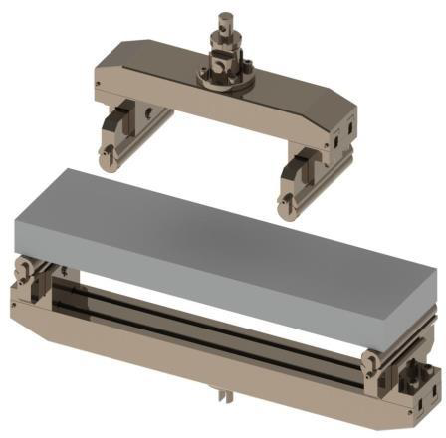
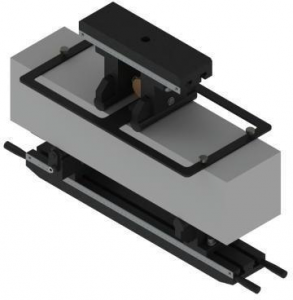
Eight fixtures split into two groups. The first two do four-point bending, where the load is shared by two rollers and the middle of the specimen sees a constant moment. This one holds 30 kN and is meant for natural stone and ceramics.
Model NGB304
Bending Fixture
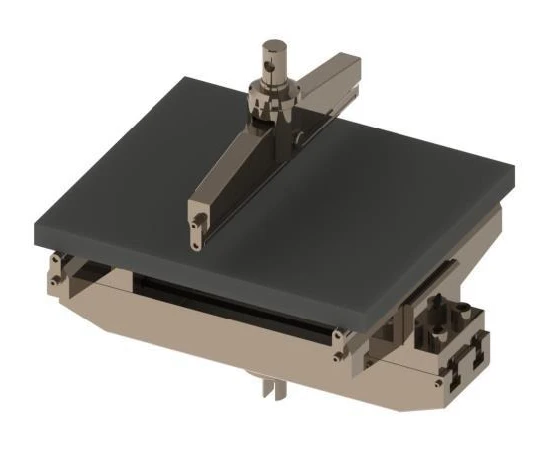
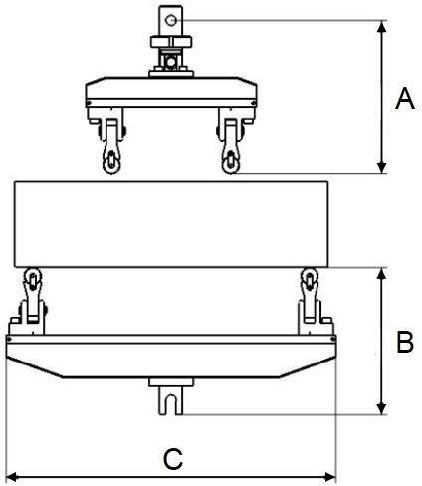
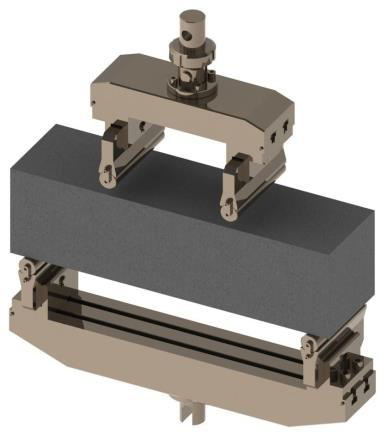
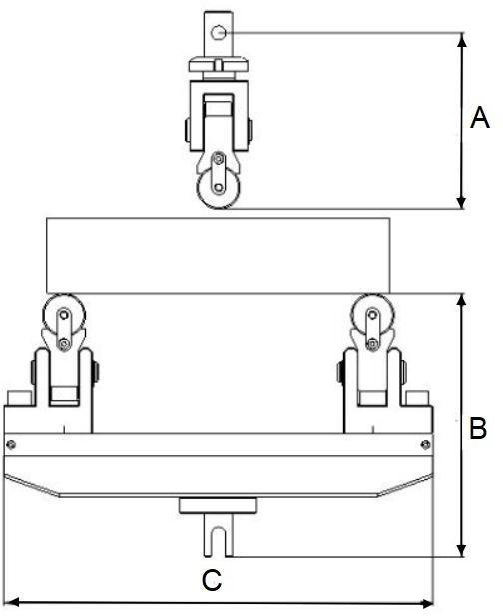
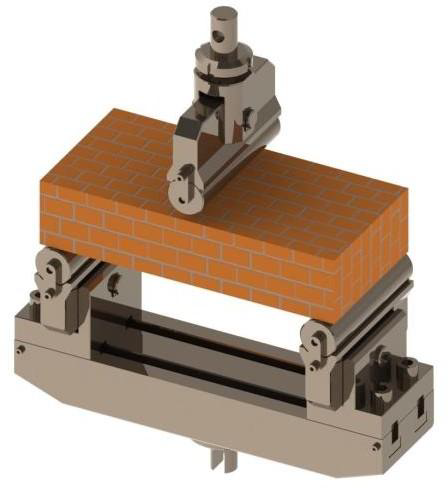
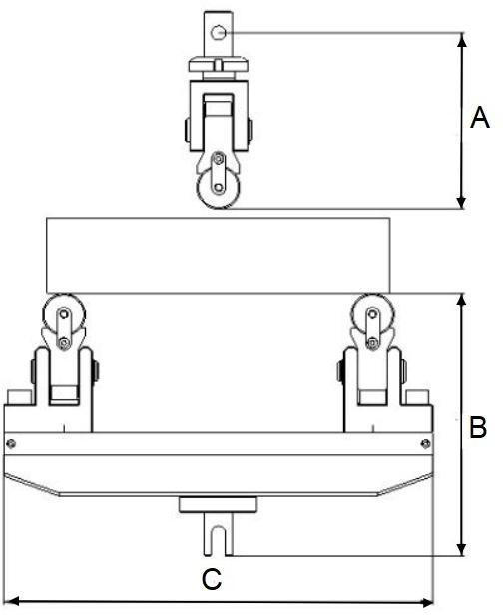
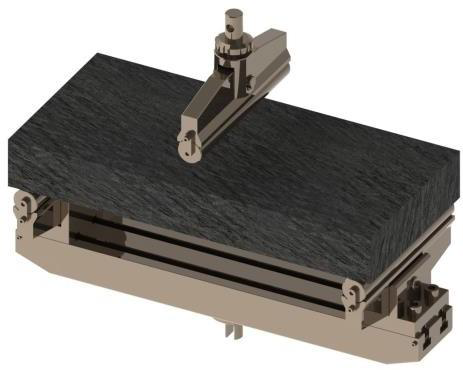
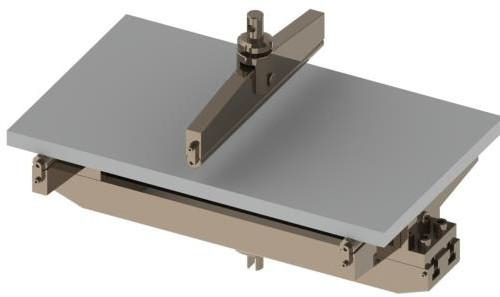
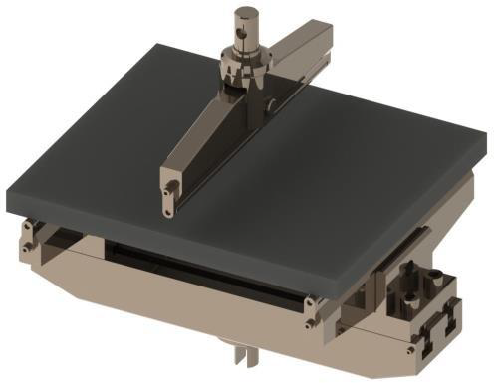
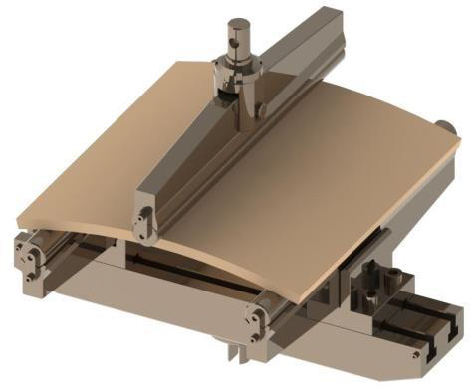
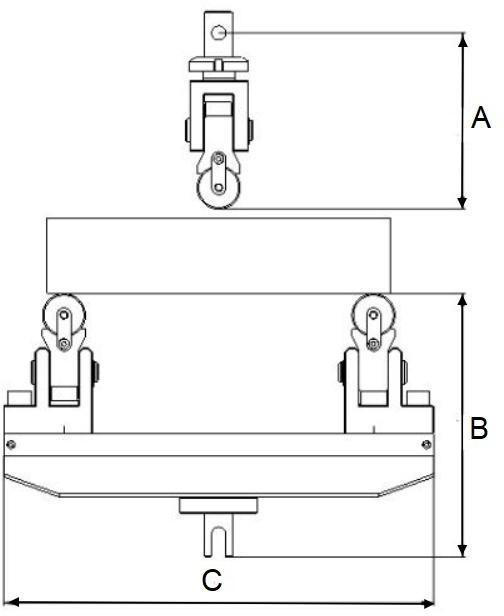
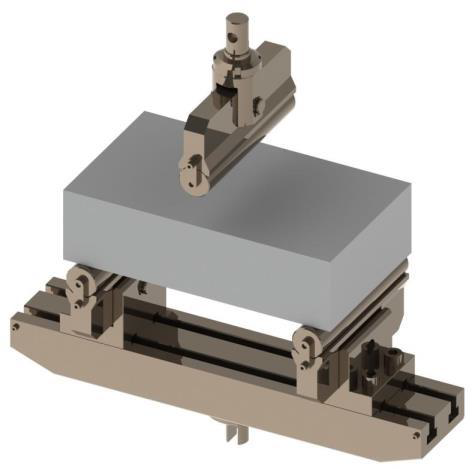
The NGB304 Bending Fixture series is built for accurate 4-point bending tests on natural stone, ceramics, and composite materials. With three model variations - NGB304A, NGB304B, and NGB304C - this system accommodates many specimen sizes and load requirements. Each fixture includes adjustable upper and lower spans, precision rollers, and is compatible with standard UTM systems.
Table 1. NGB304 4-Point Bending Fixture
| Parameter |
NGB304A |
NGB304B |
NGB304C |
| Application |
- Bending test for natural stone, ceramic, composite materials |
| Maximum Force Capacity |
≤ 30 kN |
≤ 30 kN |
≤ 30 kN |
| Upper Grip Weight |
33 lbs (15 kg) |
42 lbs (19 kg) |
49 lbs (22 kg) |
| Lower Grip Weight |
53 lbs (24 kg) |
77 lbs (35 kg) |
105 lbs (47.5 kg) |
| Working Temperature |
Ambient |
| Connection - Upper Grip |
Φ10 mm pin |
Φ10 mm pin |
Φ10 mm pin |
| Connection - Lower Grip |
Φ10 mm pin |
Φ10 mm pin |
Φ10 mm pin |
| Upper Span (Adjustable) |
≤ 9.8″ (250 mm) |
≤ 15.7″ (400 mm) |
≤ 19.7″ (500 mm) |
| Lower Span (Adjustable) |
≤ 19.7″ (500 mm) |
≤ 31.5″ (800 mm) |
≤ 39.4″ (1000 mm) |
| Maximum Specimen Width |
6.3″ (160 mm) |
6.3″ (160 mm) |
6.3″ (160 mm) |
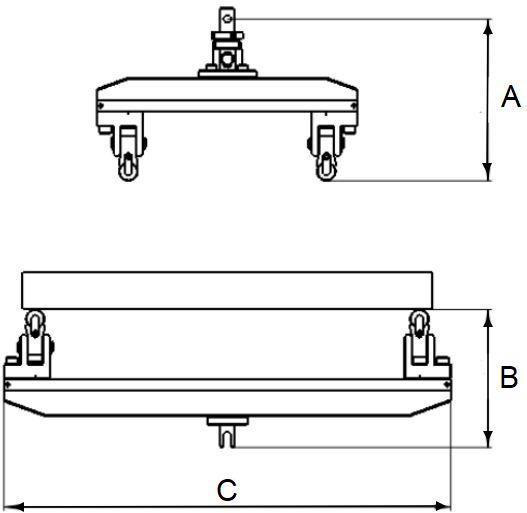
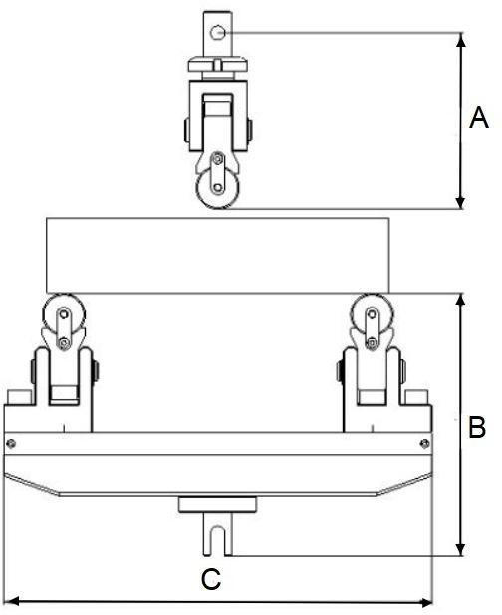
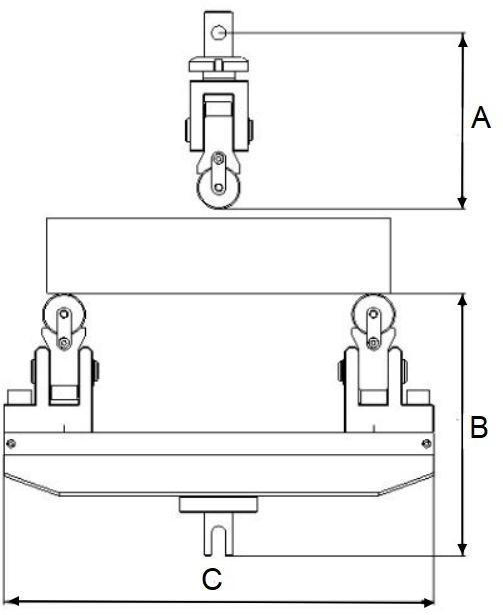
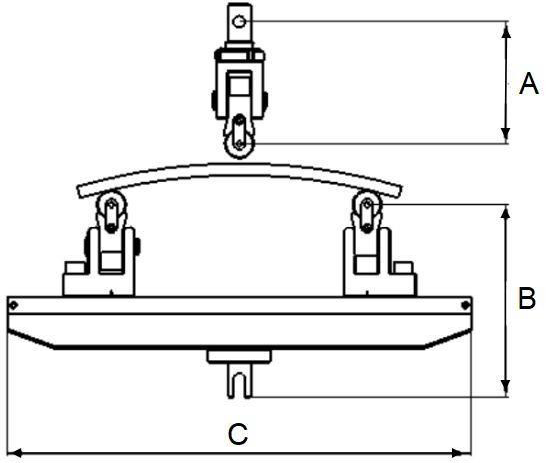
| Upper Grip Height (A) |
8.6″ (218 mm) |
8.6″ (218 mm) |
8.8″ (223 mm) |
| Lower Grip Height (B) |
7.3″ (185 mm) |
7.7″ (195 mm) |
8.1″ (205 mm) |
| Base Width (C) |
23.6″ (600 mm) |
35.4″ (900 mm) |
43.3″ (1100 mm) |
| Roller Diameter |
Φ25 mm |
Φ25 mm |
Φ25 mm |
The second four-point fixture takes 100 kN, which is concrete territory. Its optional rollers and supports are listed in the two tables after its own.
Model NGB105A
Bending Fixture
The NGB105A Bending Fixture is engineered for high-capacity 4-point bending tests on ordinary concrete, metal, ceramic, and composite specimens. With heavy-duty Φ18 mm pin connections and a 100 kN force capacity, this fixture is well-suited for laboratories performing strength analysis on large structural materials. It supports both standard and non-standard specimen sizes.
Table 2. NGB105A 4-Point Bending Fixture
| Parameter |
Specification |
| Application |
Bending test for ordinary concrete, metal, ceramic, composite |
| Maximum Force Capacity |
≤ 100 kN |
| Upper Grip Weight |
47 lbs (21.3 kg) |
| Lower Grip Weight |
86 lbs (38.9 kg) |
| Working Temperature |
Ambient |
| Connection - Upper Grip |
Φ18 mm pin |
| Connection - Lower Grip |
Φ18 mm pin |
| Upper Span (Adjustable) |
≤ 7.9″ (200 mm) |
| Lower Span (Adjustable) |
≤ 18.9″ (480 mm) |
| Maximum Specimen Width |
6.3″ (160 mm) |
| Upper Grip Height (A) |
10.6″ (270 mm) |
| Lower Grip Height (B) |
10.2″ (259 mm) |
| Base Width (C) |
22.8″ (580 mm) |
| Roller Diameter |
Φ30 mm |
| Standard Specimen |
5.9″ (150 mm) × 5.9″ (150 mm) × 600/21.7″ (550 mm) |
| Non-standard Specimen |
3.9″ (100 mm) × 3.9″ (100 mm) × 15.7″ (400 mm) |
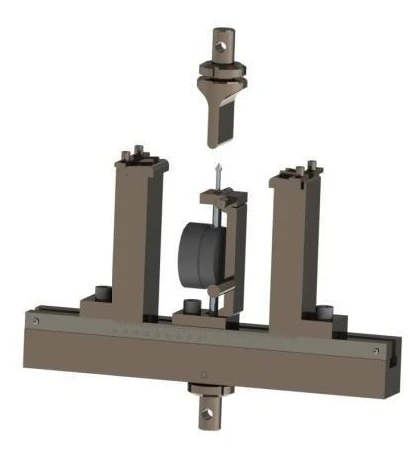
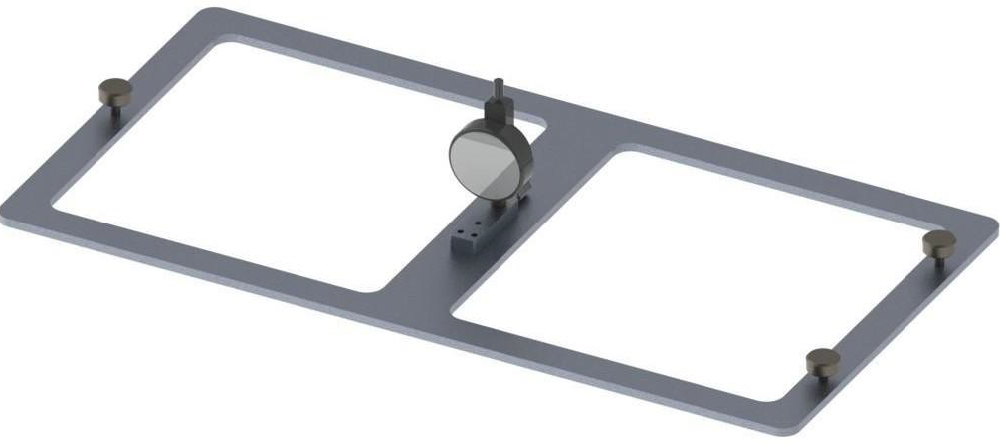 Accessories, NGB105A Bending Fixture
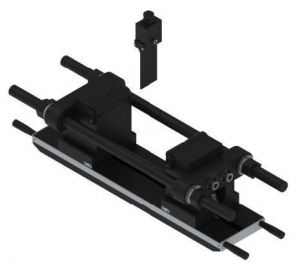
Deformation Measurement Device (Optional) This device allows real-time monitoring of specimen deformation during 4-point bending tests. It collects bending displacement data and enables calculation of the elastic modulus of the specimen for accurate mechanical property evaluation.
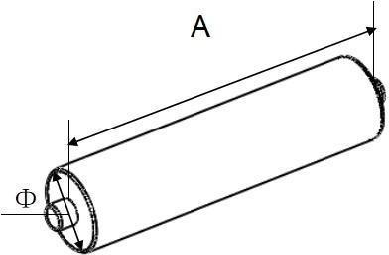
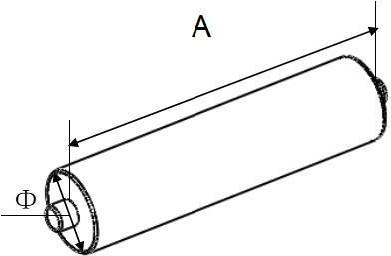
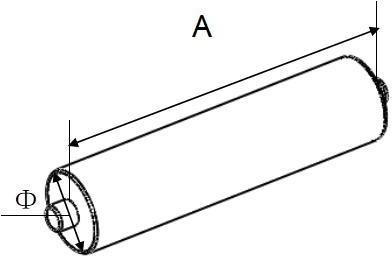
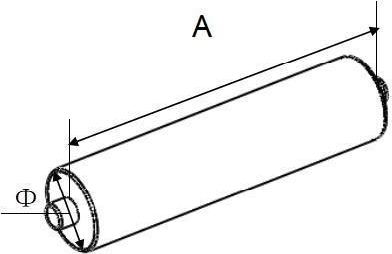
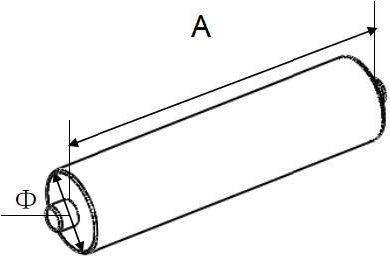
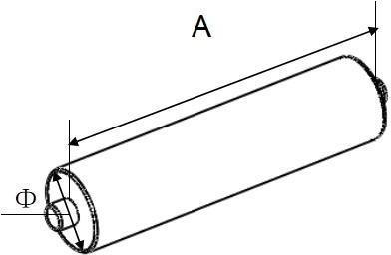
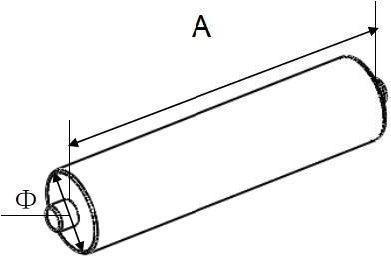
Roller (Optional)
Table 3. Optional Accessories - NGB105A Bending Fixture
| No. |
Diameter (mm) |
Width A (mm) |
| NGB105A-12 |
30 |
160 |
Accessories, NGB105A Bending Fixture
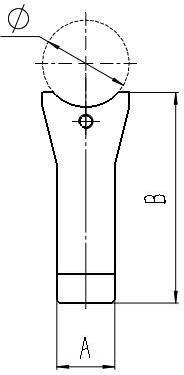
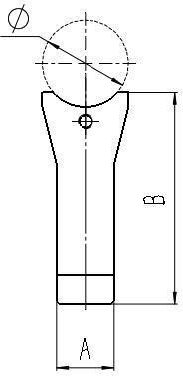
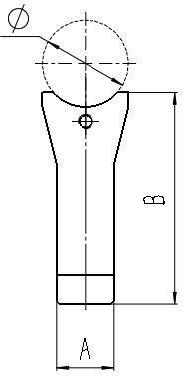
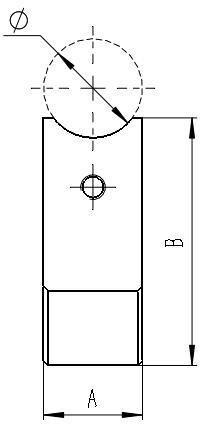
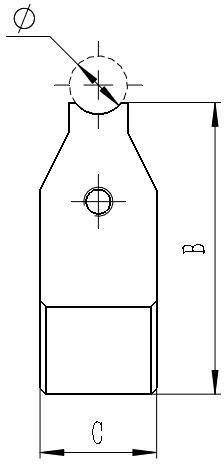
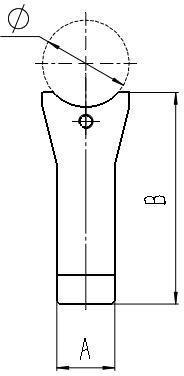
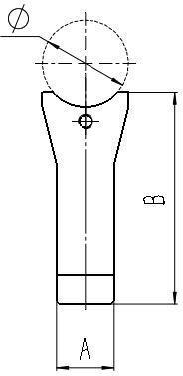
Roller Support (Optional)
Table 4. Optional Accessories - NGB105A Bending Fixture
| No. |
Diameter (mm) |
Width A (mm) |
Height B (mm) |
| NGB105A-05 |
3 |
20 |
73 |
The remaining six are three-point fixtures, all rated to 20 kN, and they differ only in what they are set up to hold. Each comes with its own accessory tables. This one is for wall bricks.
Model NGD204A
Bending Fixture
The NGD204A 3-Point Bending Fixture is specifically developed for testing wall bricks, metal, ceramics, and composite materials under flexural load. Its compact form and adjustable span up to 7.9″ (200 mm) make it suited to laboratories conducting strength evaluation of structural and brittle materials. The fixture supports both small and medium-sized specimens and operates under ambient temperature.
Table 5. NGD204A 3-Point Bending Fixture
| Parameter |
Specification |
| Application |
Bending test for wall bricks, metal, ceramic, composite |
| Maximum Force Capacity |
≤ 20 kN |
| Upper Grip Weight |
7.1 lbs (3.2 kg) |
| Lower Grip Weight |
28 lbs (12.7 kg) |
| Working Temperature |
Ambient |
| Connection - Upper Grip |
Φ10 mm pin |
| Connection - Lower Grip |
Φ10 mm pin |
| Span (Adjustable) |
≤ 7.9″ (200 mm) |
| Maximum Specimen Width |
90 mm |
| Upper Grip Height (A) |
4.8″ (123 mm) |
| Lower Grip Height (B) |
7.2″ (184 mm) |
| Base Width (C) |
11.8″ (300 mm) |
| Roller Diameter |
Φ30 mm |
| Standard Specimen |
7.5″ (190 mm) × 35 mm × 90 mm
9.4″ (240 mm) × 4.5″ (115 mm) × 53 mm |
Roller (Optional)
Table 6. Optional Accessories - NGD204A Bending Fixture
| No. |
Diameter (mm) |
Width A (mm) |
| WZWD204A-03 |
30 |
120 |
Accessories, NGD204A Bending Fixture
Roller Support (Optional)
Table 7. Optional Accessories - NGD204A Bending Fixture
| No. |
Diameter (mm) |
Width A (mm) |
Height B (mm) |
| NGD204A-04 |
30 |
20 |
50 |
The same fixture arranged for precast concrete paving units.
Model NGD204B
Bending Fixture
The NGD204B 3-Point Bending Fixture is optimized for testing precast concrete paving bricks as well as metals, ceramics, and composite materials. With a span adjustable up to 15.7″ (400 mm) and a high-strength lower grip, it accommodates larger specimens under medium-load bending. Its structure ensures stability and compatibility with standard UTM systems.
Table 8. NGD204B 3-Point Bending Fixture
| Parameter |
Specification |
| Application |
Bending test for precast concrete paving bricks, metal, ceramic, composite |
| Maximum Force Capacity |
≤ 20 kN |
| Upper Grip Weight |
7.1 lbs (3.2 kg) |
| Lower Grip Weight |
44 lbs (20 kg) |
| Working Temperature |
Ambient |
| Connection - Upper Grip |
Φ10 mm pin |
| Connection - Lower Grip |
Φ10 mm pin |
| Span (Adjustable) |
≤ 15.7″ (400 mm) |
| Maximum Specimen Width |
4.8″ (123 mm) |
| Upper Grip Height (A) |
7.3″ (185 mm) |
| Lower Grip Height (B) |
19.7″ (500 mm) |
| Base Width (C) |
90 mm |
| Roller Diameter |
Φ30 mm |
Roller (Optional)
Table 9. Optional Accessories - NGD204B Bending Fixture
| No. |
Diameter (mm) |
Width A (mm) |
| WZWD204B-02 |
30 |
210 |
Accessories, NGD204B Bending Fixture
Roller Support (Optional)
Table 10. Optional Accessories - NGD204B Bending Fixture
| No. |
Diameter (mm) |
Width A (mm) |
Height B (mm) |
| NGD204B-01 |
30 |
20 |
50 |
For gypsum plasterboard, where the specimen is wide, thin and easy to crack.
Model NGD204C
Bending Fixture
The NGD204C 3-Point Bending Fixture is built for flexural strength testing of gypsum plasterboard, metal, ceramics, and composite materials. Featuring a wide specimen compatibility (up to 12.2″ (310 mm)) and lightweight upper grip, this fixture is suited to testing fragile and large-format specimens under low to medium force. Its compact roller system and stable base design ensure reliable and repeatable results.
Table 11. NGD204C 3-Point Bending Fixture
| Parameter |
Specification |
| Application |
Bending test for gypsum plasterboard, metal, ceramic, composite |
| Maximum Force Capacity |
≤ 20 kN |
| Upper Grip Weight |
7.5 lbs (3.4 kg) |
| Lower Grip Weight |
44 lbs (20 kg) |
| Working Temperature |
Ambient |
| Connection - Upper Grip |
Φ10 mm pin |
| Connection - Lower Grip |
Φ10 mm pin |
| Span (Adjustable) |
≤ 15.7″ (400 mm) |
| Maximum Specimen Width |
12.2″ (310 mm) |
| Upper Grip Height (A) |
4.5″ (114 mm) |
| Lower Grip Height (B) |
6.9″ (176 mm) |
| Base Width (C) |
13.8″ (350 mm) |
| Roller Diameter |
Φ20 mm |
Roller (Optional)
Table 12. Optional Accessories - NGD204C Bending Fixture
| No. |
Diameter (mm) |
Width A (mm) |
| NGD204C-02 |
20 |
310 |
Accessories, NGD204C Bending Fixture
Roller Support (Optional)
Table 13. Optional Accessories - NGD204C Bending Fixture
| No. |
Diameter (mm) |
Width A (mm) |
Height B (mm) |
| NGD204C-01 |
20 |
20 |
50 |
For fibre cement products.
Model NGD204D
Bending Fixture
The NGD204D 3-Point Bending Fixture is engineered for testing fiber cement products, metals, ceramics, and composite materials. It supports specimen widths up to 10.2″ (260 mm) and features a compact roller system. With a lightweight upper grip and a strong base, it provides a stable and efficient setup for mid-range bending applications in ambient conditions.
Table 14. NGD204D 3-Point Bending Fixture
| Parameter |
Specification |
| Application |
Bending test for fiber cement products, metal, ceramic, composite |
| Maximum Force Capacity |
≤ 20 kN |
| Upper Grip Weight |
5.1 lbs (2.3 kg) |
| Lower Grip Weight |
32 lbs (14.4 kg) |
| Working Temperature |
Ambient |
| Connection - Upper Grip |
Φ10 mm pin |
| Connection - Lower Grip |
Φ10 mm pin |
| Span (Adjustable) |
≤ 9.4″ (240 mm) |
| Maximum Specimen Width |
10.2″ (260 mm) |
| Upper Grip Height (A) |
4.2″ (106 mm) |
| Lower Grip Height (B) |
6.6″ (168 mm) |
| Base Width (C) |
13.8″ (350 mm) |
| Roller Diameter |
Φ10 mm |
Roller (Optional)
Table 15. Optional Accessories - NGD204D Bending Fixture
| No. |
Diameter (mm) |
Width A (mm) |
| NGD204D-02 |
10 |
260 |
Accessories, NGD204D Bending Fixture
Roller Support (Optional)
Table 16. Optional Accessories - NGD204D Bending Fixture
| No. |
Diameter (mm) |
Width A (mm) |
Height B (mm) |
| NGD204D-01 |
10 |
20 |
50 |
For fired roofing tiles, which are curved rather than flat.
Model NGD204E
Bending Fixture
The NGD204E 3-Point Bending Fixture is built for testing fired roofing tiles, metals, ceramics, and composite materials. With a wide specimen accommodation of up to 13.8″ (350 mm) and durable Φ10 mm pin-mounted grips, this fixture is suited to evaluating the flexural strength of brittle and structural materials under ambient conditions.
Table 17. NGD204E 3-Point Bending Fixture
| Parameter |
Specification |
| Application |
Bending test for fired roofing tiles, metal, ceramic, composite |
| Maximum Force Capacity |
≤ 20 kN |
| Upper Grip Weight |
9.5 lbs (4.3 kg) |
| Lower Grip Weight |
43 lbs (19.5 kg) |
| Working Temperature |
Ambient |
| Connection - Upper Grip |
Φ10 mm pin |
| Connection - Lower Grip |
Φ10 mm pin |
| Span (Adjustable) |
≤ 11.8″ (300 mm) |
| Maximum Specimen Width |
13.8″ (350 mm) |
| Upper Grip Height (A) |
4.1″ (105 mm) |
| Lower Grip Height (B) |
6.6″ (168 mm) |
| Base Width (C) |
15.7″ (400 mm) |
| Roller Diameter |
Φ20 mm |
Roller (Optional)
Table 18. Optional Accessories - NGD204E Bending Fixture
| No. |
Diameter (mm) |
Width A (mm) |
| NGD204C-04 |
25 |
350 |
Accessories, NGD204E Bending Fixture
Roller Support (Optional)
Table 19. Optional Accessories - NGD204E Bending Fixture
| No. |
Diameter (mm) |
Width A (mm) |
Height B (mm) |
| NGD204C-01 |
25 |
20 |
50 |
And the last for inorganic rigid thermal insulation boards.
Model NGD204F
Bending Fixture
The NGD204F 3-Point Bending Fixture is optimized for evaluating the flexural behavior of inorganic rigid thermal insulation foam, metals, ceramics, and composite materials. With a medium-width capacity and balanced grip design, it provides accurate and reliable support for low-to-medium force bending tests under ambient conditions.
Table 20. NGD204F 3-Point Bending Fixture
| Parameter |
Specification |
| Application |
Bending test for inorganic rigid thermal insulation foam, metal, ceramic, composite |
| Maximum Force Capacity |
≤ 20 kN |
| Upper Grip Weight |
6 lbs (2.7 kg) |
| Lower Grip Weight |
36 lbs (16.3 kg) |
| Working Temperature |
Ambient |
| Connection - Upper Grip |
Φ10 mm pin |
| Connection - Lower Grip |
Φ10 mm pin |
| Span (Adjustable) |
≤ 11.8″ (300 mm) |
| Maximum Specimen Width |
6.3″ (160 mm) |
| Upper Grip Height (A) |
4.8″ (123 mm) |
| Lower Grip Height (B) |
7.3″ (185 mm) |
| Base Width (C) |
15.7″ (400 mm) |
| Roller Diameter |
Φ30 mm |
Roller (Optional)
Table 21. Optional Accessories - NGD204F Bending Fixture
| No. |
Diameter (mm) |
Width A (mm) |
| NGD304A-09 |
30 |
160 |
Accessories, NGD204F Bending Fixture
Roller Support (Optional)
Table 22. Optional Accessories - NGD204F Bending Fixture
| No. |
Diameter (mm) |
Width A (mm) |
Height B (mm) |
| NGD304A-06 |
30 |
20 |
50 |
NextGen’s wide array of bending fixtures allows laboratories and manufacturers to conduct standardized flexural testing across a range of materials and specimen geometries. Whether you need a compact solution for classroom training or a heavy-duty fixture for industrial-grade testing, we offer the right product for your universal testing machine. All bending fixtures are precision-calibrated, quality-verified, and available with rapid shipping across North America.
Contact our team today to request a quote, verify compatibility with your system, or schedule a demonstration.
For Laboratories
Need Additional Quality Control Equipment to Build Your Laboratory?
Flexural and bend testing is only one part of a complete quality control laboratory. NextGen can help you equip your entire lab with impact testers, notching and broaching systems, cooling chambers, tensile testers, hardness testers, specimen preparation equipment, and other supporting solutions, all coordinated as one complete project.
- One partner to equip your complete laboratory
- Installation, training, calibration
- Support for the life of the equipment