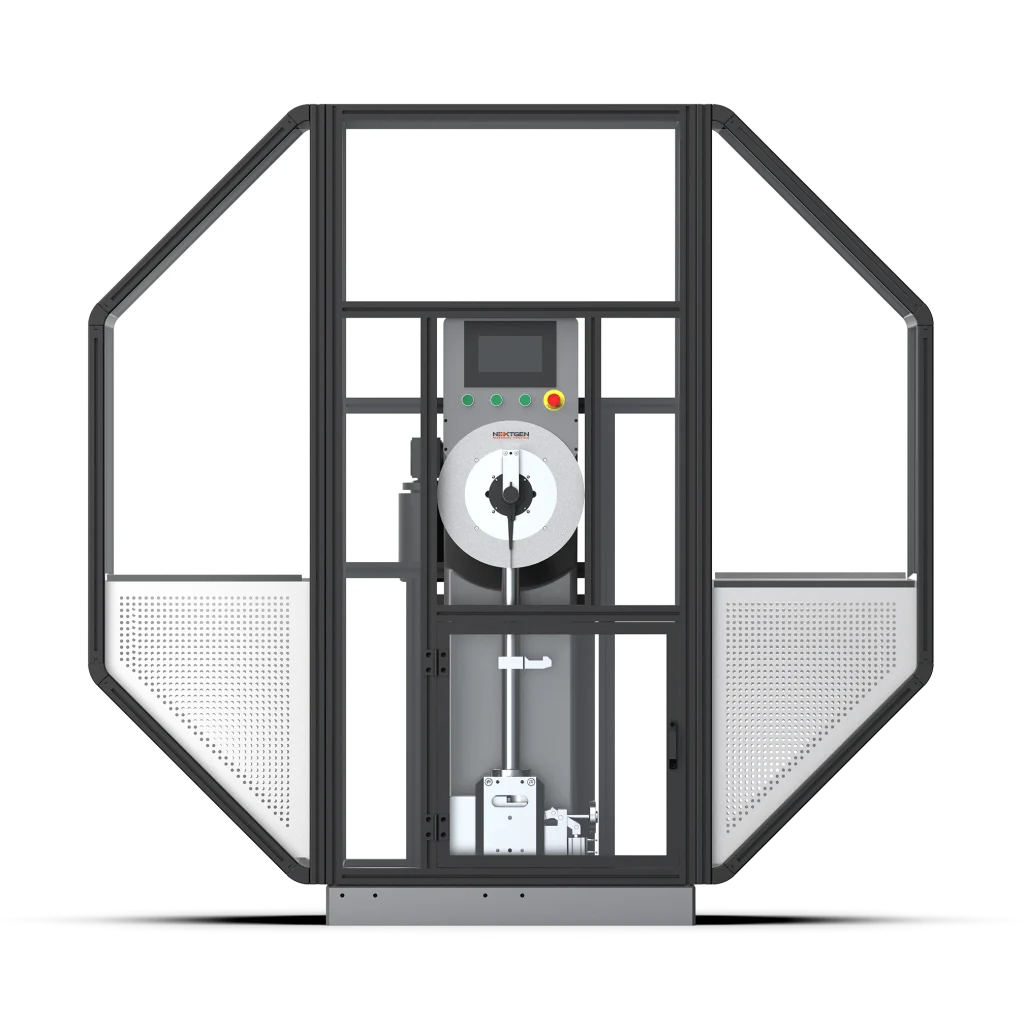
A Charpy or Izod test answers one question quickly: how much energy does a notched specimen absorb when it is struck at speed. A pendulum swings from a known height, breaks the specimen at the bottom of its arc, and the energy lost from the swing is the result. A Charpy specimen is supported at both ends like a simple beam, while an Izod specimen is clamped upright as a cantilever. Metals are tested to ASTM E23 and ISO 148, with a standard specimen measuring 55 by 10 by 10 millimeters, and results are usually compared across test temperatures to see where a steel turns from tough to brittle.
NextGen pendulum testers for metals come in 450 J and 750 J frames, with a fully enclosed test area, a cast iron base and a motor-driven pendulum that returns automatically. Options add a computer for semi-automatic operation, automatic specimen feeding, cooling for tests down to -180°C and instrumented pendulums that record force as well as energy. A lower-energy automatic tester covers Charpy, Izod and tensile impact on plastics and rubber. Machines are installed and verified on site, operators are trained, and support continues for the life of the equipment. New to the method? Read what the Charpy and Izod impact tests involve.
For Laboratories
One partner to equip your complete metals laboratory
Impact testing is one station of a metals quality control laboratory. NextGen equips the rest of it too, from notching and specimen preparation to tensile testing, hardness and metallography, and stays responsible for it after delivery.
- Equipment, fixtures and software
- Installation, training, calibration
- Lifetime technical support
Most requested
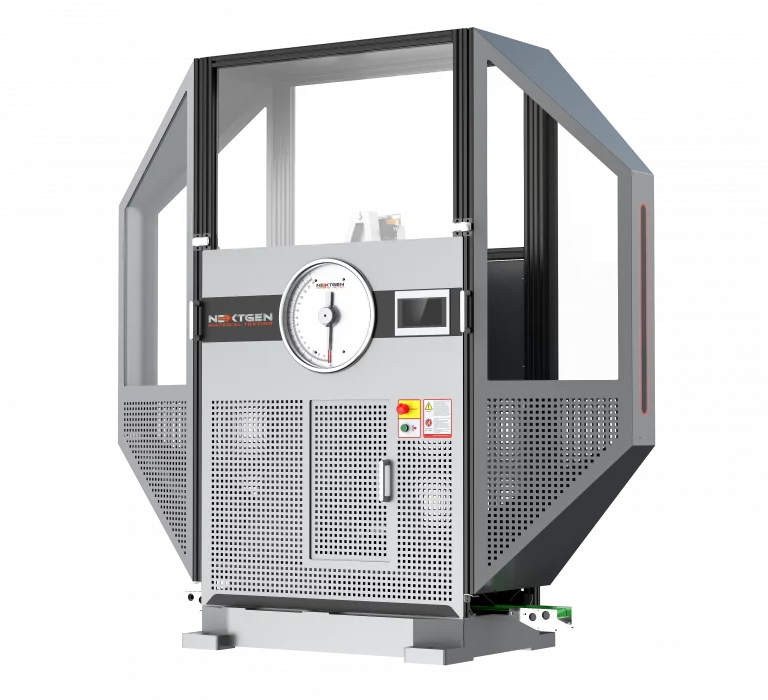 Class D – Single-Column Charpy Impact Tester
Class D is a single-column Charpy impact tester for high-energy pendulum testing of metallic specimens up to 750 J.
View product
Get quote
Most requested
Class D – Single-Column Charpy Impact Tester
Class D is a single-column Charpy impact tester for high-energy pendulum testing of metallic specimens up to 750 J.
View product
Get quote
Most requested
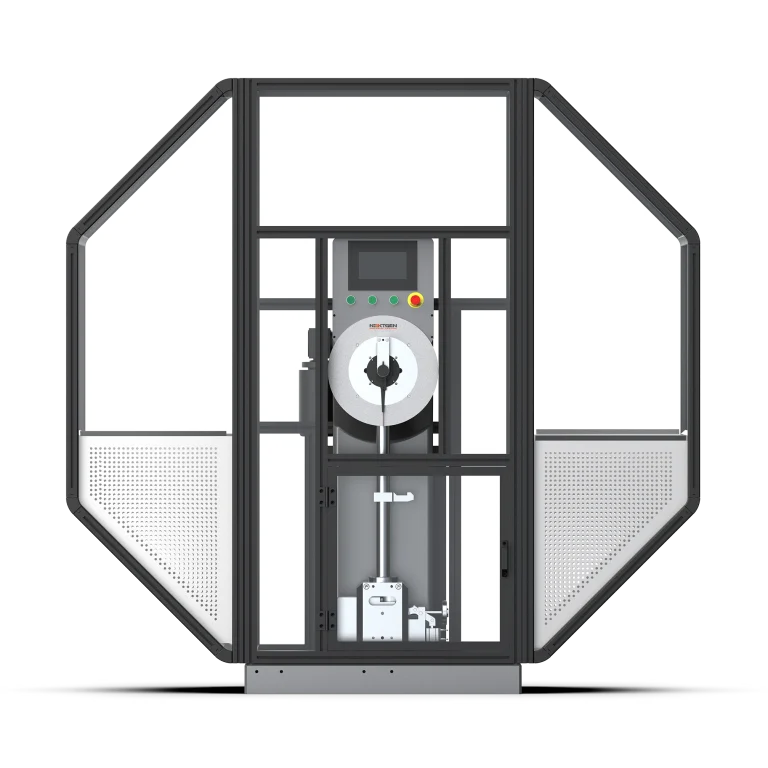 Class G – Single-Column Charpy and Izod Impact Tester
Class G is a single-column Charpy and Izod impact tester for high-precision pendulum testing of metals and…
View product
Get quote
Class G – Single-Column Charpy and Izod Impact Tester
Class G is a single-column Charpy and Izod impact tester for high-precision pendulum testing of metals and…
View product
Get quote
 750 J
Class H – Dual-Column Charpy Impact Tester
Class H is a servo-motor dual-column Charpy impact tester for high-volume metal impact testing of hard materials.
View product
Get quote
Most requested
750 J
Class H – Dual-Column Charpy Impact Tester
Class H is a servo-motor dual-column Charpy impact tester for high-volume metal impact testing of hard materials.
View product
Get quote
Most requested
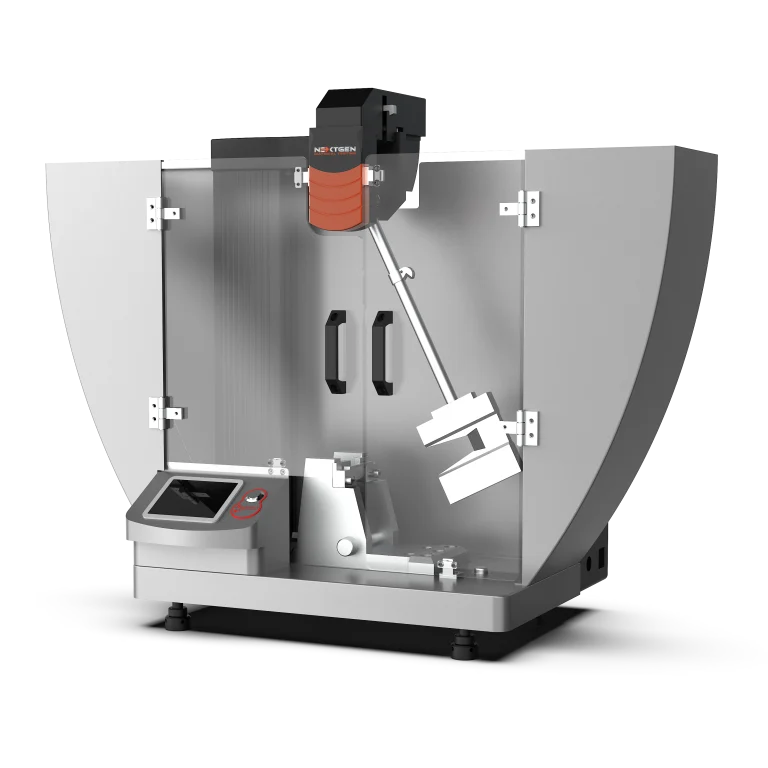 Class J – Automatic Charpy and Izod Impact Tester
Class J is an automatic Charpy and Izod impact testing system for low-energy impact evaluation of plastics and…
View product
Get quote
Class J – Automatic Charpy and Izod Impact Tester
Class J is an automatic Charpy and Izod impact testing system for low-energy impact evaluation of plastics and…
View product
Get quote
Class D – Single-Column Charpy Impact Tester
Class D is a single-column Charpy impact tester for high-energy pendulum testing of metallic specimens up to 750 J.
View product
Get quote
Most requested
Class G – Single-Column Charpy and Izod Impact Tester
Class G is a single-column Charpy and Izod impact tester for high-precision pendulum testing of metals and…
View product
Get quote
750 J
Class H – Dual-Column Charpy Impact Tester
Class H is a servo-motor dual-column Charpy impact tester for high-volume metal impact testing of hard materials.
View product
Get quote
Most requested
Class J – Automatic Charpy and Izod Impact Tester
Class J is an automatic Charpy and Izod impact testing system for low-energy impact evaluation of plastics and…
View product
Get quote
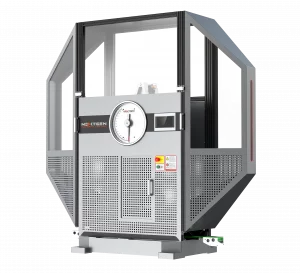 Class D – Single-Column Charpy Impact Tester
Class D is a single-column Charpy impact tester for high-energy pendulum testing of metallic specimens up to 750 J.
Impact testing
Class D – Single-Column Charpy Impact Tester
Class D is a single-column Charpy impact tester for high-energy pendulum testing of metallic specimens up to 750 J.
Impact testing
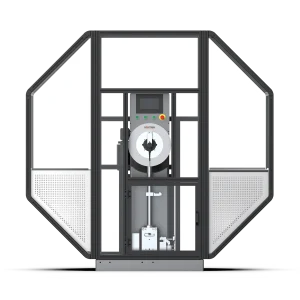 Class G – Single-Column Charpy and Izod Impact Tester
Class G is a single-column Charpy and Izod impact tester for high-precision pendulum testing of metals and…
Impact testing
Class G – Single-Column Charpy and Izod Impact Tester
Class G is a single-column Charpy and Izod impact tester for high-precision pendulum testing of metals and…
Impact testing
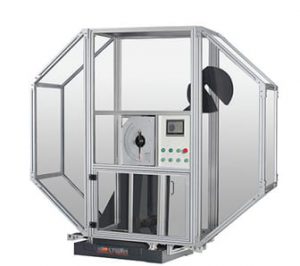 Class H – Dual-Column Charpy Impact Tester750 J
Class H is a servo-motor dual-column Charpy impact tester for high-volume metal impact testing of hard materials.
Impact testing
Class H – Dual-Column Charpy Impact Tester750 J
Class H is a servo-motor dual-column Charpy impact tester for high-volume metal impact testing of hard materials.
Impact testing
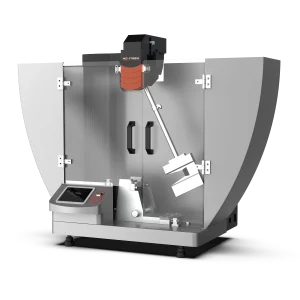 Class J – Automatic Charpy and Izod Impact Tester
Class J is an automatic Charpy and Izod impact testing system for low-energy impact evaluation of plastics and…
Impact testing
Class J – Automatic Charpy and Izod Impact Tester
Class J is an automatic Charpy and Izod impact testing system for low-energy impact evaluation of plastics and…
Impact testing
Nothing matches that filter. Show all products
FAQs
Use the Class J for plastics and rubber. It runs Charpy from 1 J to 50 J and Izod from 1 J to 22 J, plus tensile impact from 7.5 J to 25 J for film and sheet, with the pendulum changed to switch tests. The Class D, G and H frames are built for metals at higher energies, working to ASTM E23 and ISO 148.
Choose by the toughest material you expect to break, not the one you test most often, because a pendulum working near its limit loses accuracy. The 450 J frame is commonly used in schools, government facilities and R&D laboratories. The 750 J frame is typical in steel production, heat treating and aerospace, and optional lighter pendulums are available on both frames. Send us your material and standard for a recommendation.
The Class D, G and H frames are each offered in three build levels. The -2 build is the mechanical machine with PLC control and touchscreen. The -3 build adds GenTest software and an RS232 connection to a computer, and on the Class D also the pendulum motor. The -4 build adds the instrumented pendulum, with a force transducer that records the force-time curve and gives access to more test parameters in the software.
The Class D, G and H frames take 55 x 10 x 10 mm Charpy specimens, along with 7.5 mm and 5 mm thick variants. The support span is 40 mm, the supports have a 1 mm radius and the striking edge is 2 mm at a striking angle of 150°. The Class H adds an 8 mm striking edge and an adjustable angle, and the striker can be exchanged for ISO or ASTM requirements.
The Class G is described for both Charpy and Izod testing to ASTM E23, ISO 148 and EN 10045. The Class D and the Class H are described as Charpy testers, so the Class G is the one to specify if your method includes Izod on metals. For Izod on plastics and rubber, NextGen offers the separate Class J tester.