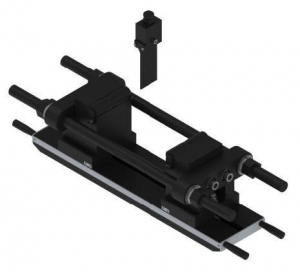
3-Point Bending Fixtures for Flexural Testing

Trust
3-Point Bending Fixtures for Flexural Testing

Standards

3-Point and Marker Bending Fixtures for Flexural Testing

3-Point Bending Fixtures for UTM

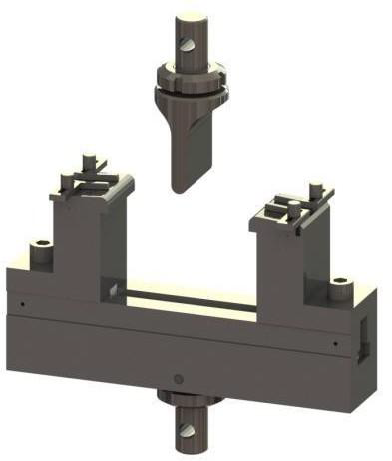
NextGen's bending fixtures are engineered for precision flexural testing of various materials, including thermoplastics, composites, metals, and laminated structures. Designed to operate with NG-EML and SHM Universal Testing Machines, these fixtures offer compliant and repeatable setups for standardized 3-point and marker bending tests. 

Supported testing standards include: 

  • ASTM D790 (Flexural Properties of Plastics) 
  • ISO 178 (Plastics - Flexural Properties) 
  • ISO 14125 (Fiber-Reinforced Plastic Composites) 
  • ASTM E290 (Bend Testing for Ductility) 
  • GB/T 9341 (Flexural Properties of Plastics) 

Fixtures are available in multiple capacities, support spans, and loading configurations, allowing labs to perform accurate testing in compliance with global standards. 


3-Point Bending Fixture Models

Eight fixtures do the same test and differ in two numbers: how much force they take and how far apart the supports can go. Force and span rise together, because a longer specimen needs both. This one covers 20 kN over a span up to 7.9″ (200 mm).

Model NGA204A

3-Point Bending Fixture

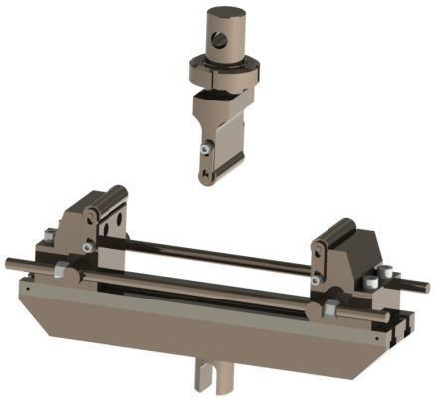
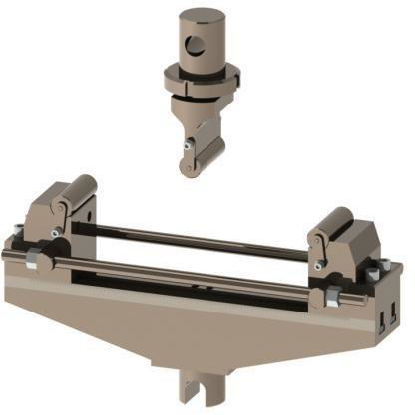
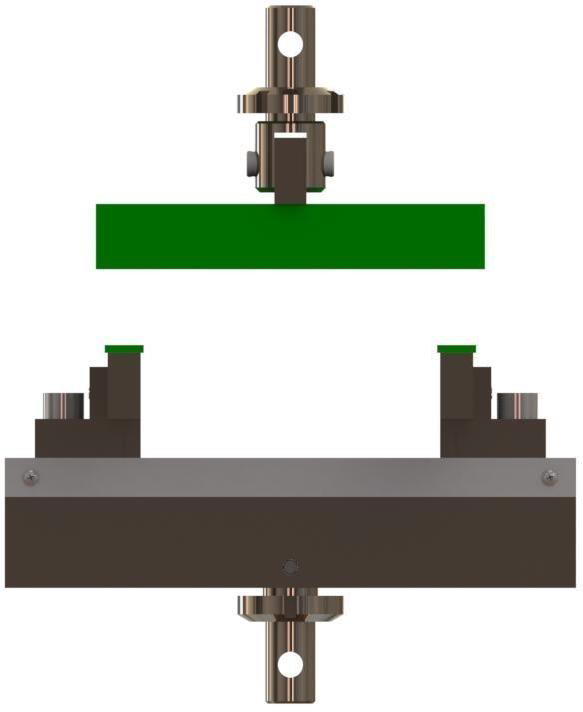
The NGA204A 3-Point Bending Fixture is built for accurate flexural testing of many materials including plastics, alloys, composites, and ceramics. Built to support forces up to 20 kN, this fixture features an adjustable span up to 7.9″ (200 mm), making it suitable for various specimen sizes. The system includes interchangeable loading noses and support rollers, allowing customization for specific test standards and applications. With high stability and heavy-duty construction, NGA204A delivers consistent, repeatable results across quality control and research environments.

NextGen Bending fixture - 3-point bending - NGA204A -sizeNextGen Bending fixture - 3-point bending - NGA204A
  • Application: Bending tests for plastic, alloy, composite, ceramic, and other rigid materials.
  • Maximum Capacity: Up to 20 kN load.
  • Connection: Ø10 mm pin mount (upper and lower), compatible with standard UTMs.
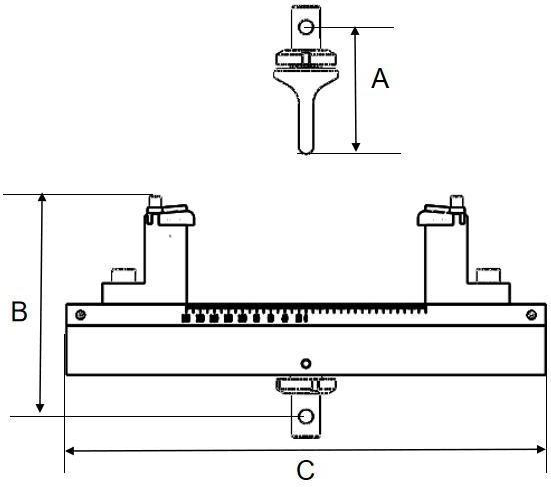
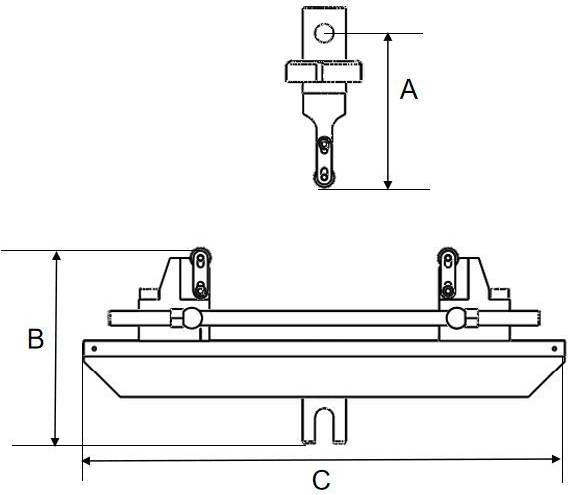
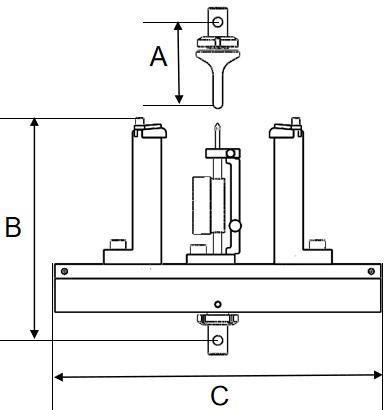
  • Dimensions: Height 85 mm; Grip body width 6.2″ (157 mm); Overall width 9.1″ (231 mm).
  • Span: Adjustable up to 7.9″ (200 mm).
  • Specimen Range: Supports specimens up to 30 mm wide.
  • Loading Nose: R5 (customizable).
  • Support Roller: R2, R5 (customizable).
  • Grip Weight: 0.5 kg (upper grip), 12 lbs (5.3 kg) (lower grip).
  • Working Temperature: Ambient.
  • Note: NextGen can provide various loading noses and support rollers according to client requirements.
Table 1. NGA204A 3-Point Bending Fixture
Parameter Specification
Application Bending test for plastic, alloy, composite, ceramic, etc.
Maximum Force Capacity ≤ 20 kN
Connection Type Upper Grip: Ø10 mm pin
Lower Grip: Ø10 mm pin
Span (Adjustable) ≤ 7.9″ (200 mm)
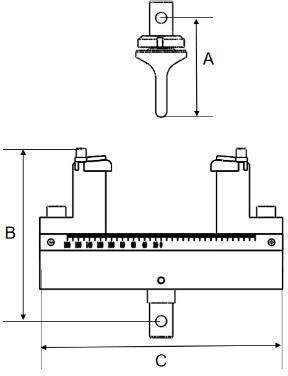
Overall Height (A) 85 mm
Grip Body Width (B) 6.2″ (157 mm)
Overall Width (C) 9.1″ (231 mm)
Working Temperature Ambient
Grip Weight Upper Grip: 0.5 kg
Lower Grip: 12 lbs (5.3 kg)
Compatible Specimen Width ≤ 30 mm
Loading Nose R5 (custom options available)
Support Roller R2, R5 (custom options available)

Next step up: 50 kN and 11″ (280 mm) of span, which is where metal and construction samples start rather than plastics.

Model NGA504A

3-Point Bending Fixture

The NGA504A 3-Point Bending Fixture is a heavy-duty solution for flexural testing of high-strength materials, including metals, advanced composites, ceramics, and construction-grade materials. Built to handle forces up to 50 kN, it features an adjustable span up to 11″ (280 mm), with a heavy-duty steel body designed for long-term reliability. The fixture includes Ø20 mm loading and support rollers, with the flexibility to accommodate various roller sizes upon request. The NGA504A is suited to structural material evaluation in demanding industrial and research environments.

NextGen Bending fixture - 3-point bending - NGA504A - sizeNextGen Bending fixture - 3-point bending - NGA504A
  • Application: Bending tests for metal, alloy, composite, ceramic, and structural materials.
  • Maximum Capacity: Up to 50 kN load.
  • Connection: Ø18 mm pin mount (upper and lower), suitable for heavy-load UTMs.
  • Dimensions: Height 4.8″ (123 mm); Grip body width 7.5″ (190 mm); Overall width 15.7″ (400 mm).
  • Span: Adjustable up to 11″ (280 mm).
  • Specimen Range: Accommodates specimens up to 80 mm wide.
  • Rollers: Ø20 mm loading and support rollers (custom sizes available).
  • Grip Weight: 5.5 lbs (2.5 kg) (upper grip), 41 lbs (18.5 kg) (lower grip).
  • Working Temperature: Ambient.
  • Note: NextGen can provide various loading and support rollers according to client requirements.
Table 2. NGA504A 3-Point Bending Fixture
Parameter Specification
Application Bending test for metal, alloy, composite, ceramic, construction material etc.
Maximum Force Capacity ≤ 50 kN
Connection Type Upper Grip: Ø18 mm pin
Lower Grip: Ø18 mm pin
Span (Adjustable) ≤ 11″ (280 mm)
Overall Height (A) 4.8″ (123 mm)
Grip Body Width (B) 7.5″ (190 mm)
Overall Width (C) 15.7″ (400 mm)
Working Temperature Ambient
Grip Weight Upper Grip: 5.5 lbs (2.5 kg)
Lower Grip: 41 lbs (18.5 kg)
Compatible Specimen Width ≤ 80 mm
Loading Roller Ø20 mm
Support Roller Ø20 mm

At 100 kN the span reaches 13.4″ (340 mm).

Model NGA105A

3-Point Bending Fixture

The NGA105A 3-Point Bending Fixture is a high-capacity fixture engineered for flexural testing of strong and rigid materials, including metal, ceramic, composite, and construction materials. With a load capacity of up to 100 kN and an adjustable span up to 13.4″ (340 mm), it is suited to evaluating large specimens and high-strength materials under demanding testing conditions. The system features Ø20 mm loading and support rollers, with custom roller options available upon request. Designed for compatibility with high-force universal testing machines, NGA105A delivers heavy-duty and repeatable performance in both industrial and laboratory settings.

NextGen Bending fixture - 3-point bending - NGA105A - sizeNextGen Bending fixture - 3-point bending - NGA105A
  • Application: Bending tests for metal, alloy, composite, ceramic, and structural materials.
  • Maximum Capacity: Up to 100 kN load.
  • Connection: Ø18 mm pin mount (upper and lower), built for high-load test frames.
  • Dimensions: Height 5.7″ (145 mm); Grip body width 7.5″ (190 mm); Overall width 18.3″ (464 mm).
  • Span: Adjustable up to 13.4″ (340 mm).
  • Specimen Range: Supports specimens up to 80 mm wide.
  • Rollers: Ø20 mm loading and support rollers (customizable).
  • Grip Weight: 5.5 lbs (2.5 kg) (upper grip), 45 lbs (20.6 kg) (lower grip).
  • Working Temperature: Ambient.
  • Note: NextGen can provide various loading and support rollers according to client requirements.
Table 3. NGA105A 3-Point Bending Fixture
Parameter Specification
Application Bending test for metal, alloy, composite, ceramic, construction material etc.
Maximum Force Capacity ≤ 100 kN
Connection Type Upper Grip: Ø18 mm pin
Lower Grip: Ø18 mm pin
Span (Adjustable) ≤ 13.4″ (340 mm)
Overall Height (A) 5.7″ (145 mm)
Grip Body Width (B) 7.5″ (190 mm)
Overall Width (C) 18.3″ (464 mm)
Working Temperature Ambient
Grip Weight Upper Grip: 5.5 lbs (2.5 kg)
Lower Grip: 45 lbs (20.6 kg)
Compatible Specimen Width ≤ 80 mm
Loading Roller Ø20 mm
Support Roller Ø20 mm

The heaviest of the series - 300 kN across up to 15.7″ (400 mm). Beyond this point the frame, not the fixture, becomes the limit.

Model NGA305A

3-Point Bending Fixture

The NGA305A 3-Point Bending Fixture is built for high-capacity flexural testing of tough and dense materials, such as metals, ceramics, composites, and structural-grade construction materials. With a maximum force capacity of 300 kN and a span adjustable up to 15.7″ (400 mm), it handle demanding test conditions and large specimen sizes. The system features Ø30 mm loading and support rollers and offers customization options to suit specific standards. With an extremely durable construction and precise alignment, the NGA305A is a reliable solution for advanced material testing.

NextGen Bending fixture - 3-point bending - NGA305A - sizeNextGen Bending fixture - 3-point bending - NGA305A
  • Application: Bending tests for metal, alloy, composite, ceramic, and construction materials.
  • Maximum Capacity: Up to 300 kN load.
  • Connection: Ø18 mm pin mount (upper and lower), compatible with heavy-duty universal testing machines.
  • Dimensions: Height 6.1″ (156 mm); Grip body width 10.5″ (267 mm); Overall width 19.7″ (500 mm).
  • Span: Adjustable up to 15.7″ (400 mm).
  • Specimen Range: Supports specimens up to 90 mm wide.
  • Rollers: Ø30 mm loading and support rollers (customizable).
  • Grip Weight: 13 lbs (6.0 kg) (upper grip), 79 lbs (36.0 kg) (lower grip).
  • Working Temperature: Ambient.
  • Note: NextGen can provide various loading and support rollers according to client requirements.
Table 4. NGA305A 3-Point Bending Fixture
Parameter Specification
Application Bending test for metal, alloy, composite, ceramic, construction material etc.
Maximum Force Capacity ≤ 300 kN
Connection Type Upper Grip: Ø18 mm pin
Lower Grip: Ø18 mm pin
Span (Adjustable) ≤ 15.7″ (400 mm)
Overall Height (A) 6.1″ (156 mm)
Grip Body Width (B) 10.5″ (267 mm)
Overall Width (C) 19.7″ (500 mm)
Working Temperature Ambient
Grip Weight Upper Grip: 13 lbs (6.0 kg)
Lower Grip: 79 lbs (36.0 kg)
Compatible Specimen Width ≤ 90 mm
Loading Roller Ø30 mm
Support Roller Ø30 mm

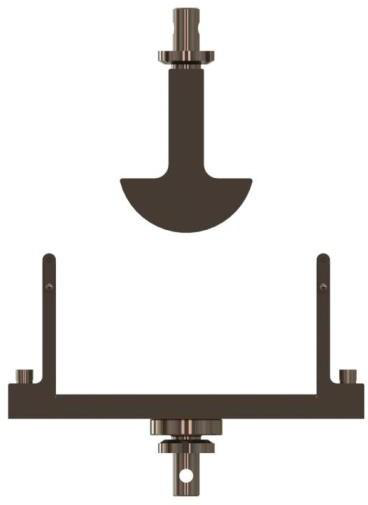
The remaining four are not a continuation of the ladder but fixtures for particular jobs. This one is the compact 10 kN version on a 7.9″ (200 mm) span.

Model NGA104A

3-Point Bending Fixture

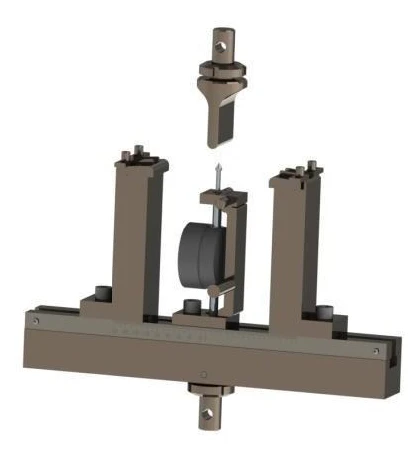
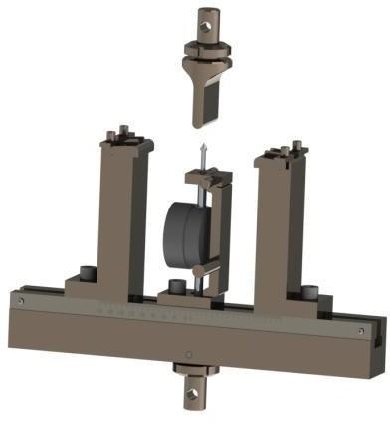
The NGA104A 3-Point Bending Fixture is a precise and lightweight system developed for low-force bending tests on plastics, alloys, ceramics, and composite materials. With a force capacity of up to 10 kN and an adjustable span up to 7.9″ (200 mm), it is suited to testing smaller specimens with accuracy. The fixture includes Ø5 mm loading and support rollers and is equipped with a digital indicator to measure specimen deformation during testing. Compact yet capable, the NGA104A is well-suited for research, education, and quality control environments.

NextGen Bending fixture - 3-point bending - NGA104A - sizeNextGen Bending fixture - 3-point bending - NGA104A
  • Application: Bending tests for plastic, alloy, composite, ceramic, and structural materials.
  • Maximum Capacity: Up to 10 kN load.
  • Connection: Ø10 mm pin mount (upper and lower), suitable for small-frame universal testing machines.
  • Dimensions: Height 90 mm; Grip body width 9.1″ (230 mm); Overall width 13.4″ (340 mm).
  • Span: Adjustable up to 7.9″ (200 mm).
  • Specimen Range: Supports specimens up to 90 mm wide.
  • Rollers: Ø5 mm loading and support rollers.
  • Grip Weight: 0.5 kg (upper grip), 21 lbs (9.7 kg) (lower grip).
  • Working Temperature: Ambient.
  • Note: Equipped with digital indicator to measure deformation of the specimen during test.
Table 5. NGA104A 3-Point Bending Fixture
Parameter Specification
Application Bending test for plastic, alloy, composite, ceramic, construction material etc.
Maximum Force Capacity ≤ 10 kN
Connection Type Upper Grip: Ø10 mm pin
Lower Grip: Ø10 mm pin
Span (Adjustable) ≤ 7.9″ (200 mm)
Overall Height (A) 90 mm
Grip Body Width (B) 9.1″ (230 mm)
Overall Width (C) 13.4″ (340 mm)
Working Temperature Ambient
Grip Weight Upper Grip: 0.5 kg
Lower Grip: 21 lbs (9.7 kg)
Compatible Specimen Width ≤ 90 mm
Loading Nose R5
Support Roller R5
Additional Feature Equipped with digital indicator to measure deformation during test

The same 10 kN, but the span is fixed at 7.9″ (200 mm) because the test it serves - adhesive under ceramic tile - is run at one span by the standard.

Model NGA104B

3-Point Bending Fixture

The NGA104B 3-Point Bending Fixture is specially designed for low-force flexural testing of ceramic tile adhesive specimens. With a load capacity of up to 10 kN and a fixed 7.9″ (200 mm) span, it supports standardized evaluation of bonding performance and durability. This fixture accommodates specimens with dimensions commonly used in tile adhesive testing and is equipped with R50×60 mm loading and support rollers to ensure stable and even load application. The NGA104B provides dependable performance in laboratory environments requiring precise mechanical testing of bonding materials.

NextGen Bending fixture - 3-point bending - NGA104B - sizeNextGen Bending fixture - 3-point bending - NGA104B
Table 6. NGA104B 3-Point Bending Fixture
Parameter Specification
Application Bending test for adhesive of ceramic tile
Maximum Force Capacity ≤ 10 kN
Connection Type Upper Grip: Ø10 mm pin
Lower Grip: Ø10 mm pin
Span (Adjustable) ≤ 7.9″ (200 mm) (Fixed span used: 7.9″ (200 mm))
Overall Height (A) 5.9″ (150 mm)
Grip Body Width (B) 6.7″ (170 mm)
Overall Width (C) 10.2″ (260 mm)
Working Temperature Ambient
Grip Weight Upper Grip: 5.7 lbs (2.6 kg)
Lower Grip: 13 lbs (6.0 kg)
Specimen Size 11 × 1.8 × 0.2″ (280×45×5 mm) and 11.8 × 1.8 × 0.1″ (300×45×3 mm) (L×W×T)
Loading Nose R50×60 mm
Support Roller R50×60 mm
Span 7.9″ (200 mm)

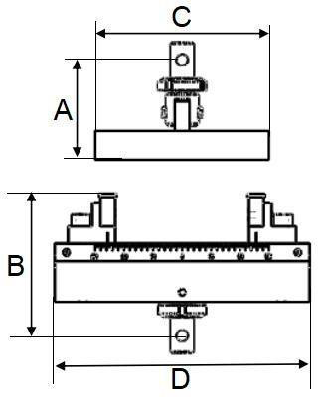
This fixture is shaped for raised pavement markers, which sit on the supports quite unlike a flat bar. It holds 20 kN over a 7.9″ (200 mm) span.

Model NGA204A

Marker Bending Fixture

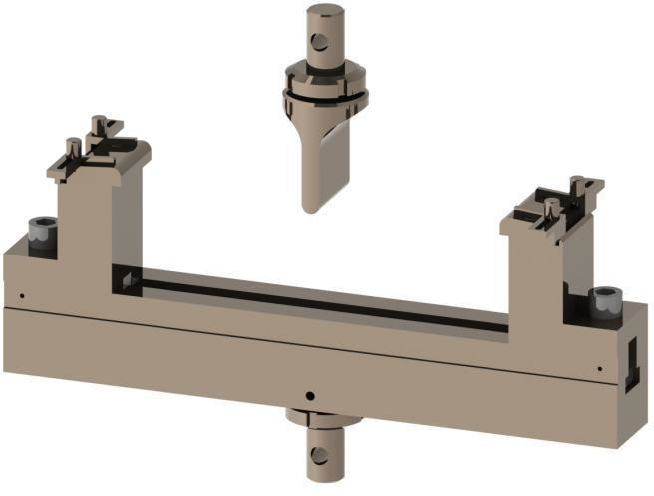
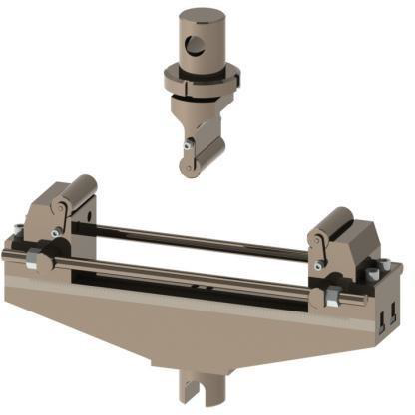
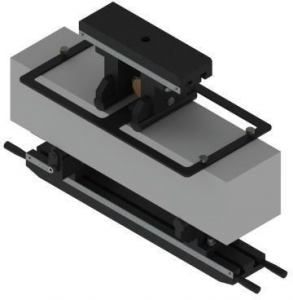
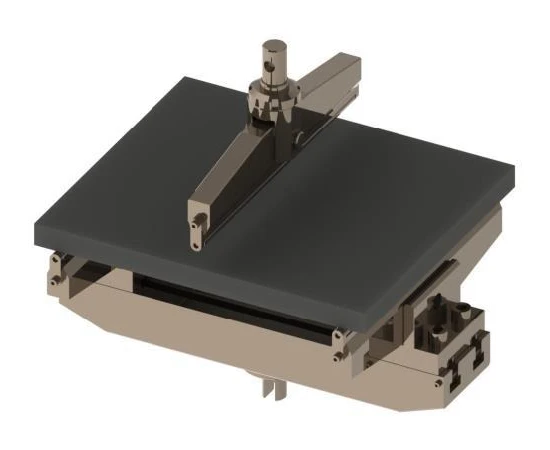
The NGA204A Marker Bending Fixture is purpose-built for the mechanical evaluation of raised pavement markers. With a load capacity of up to 20 kN and an adjustable span up to 7.9″ (200 mm), it enables reliable flexural testing of roadway safety products. Its dual-height and dual-width design ensures compatibility with many marker sizes. The fixture features a sturdy construction and is suitable for standard universal testing machines in laboratory environments focused on transportation and infrastructure material performance.

NextGen Bending fixture - Marker bending - NGA204A - sizeNextGen Bending fixture - Marker bending - NGA204A
Table 7. NGA204A Marker Bending Fixture
Parameter Specification
Application Bending test for raised pavement markers
Maximum Force Capacity ≤ 20 kN
Connection Type Upper Grip: Ø10 mm pin
Lower Grip: Ø10 mm pin
Span (Adjustable) ≤ 7.9″ (200 mm)
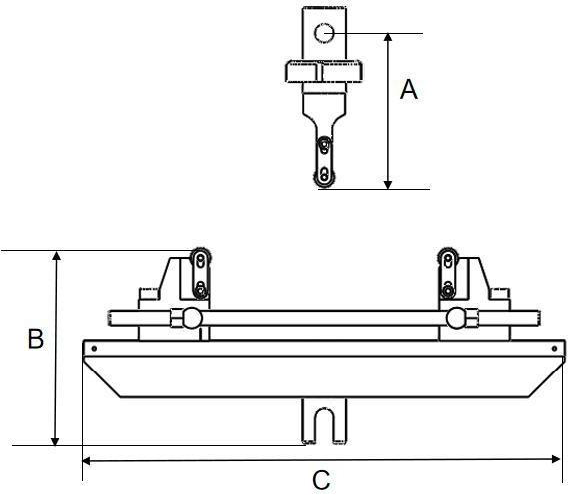
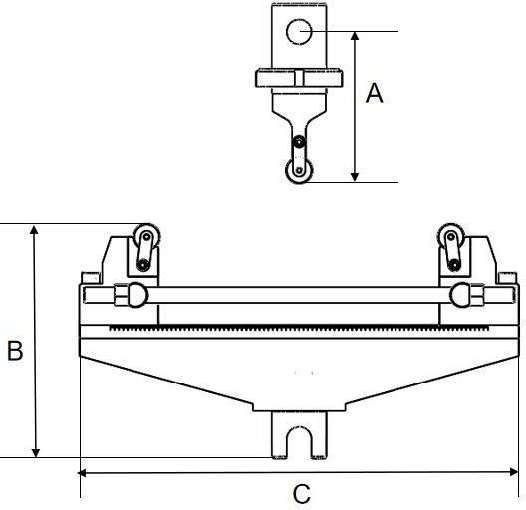
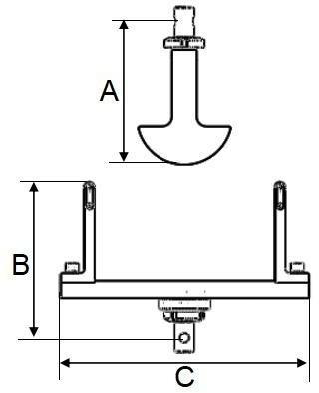
Height Upper Grip (A): 85 mm
Lower Grip (B): 4.7″ (120 mm)
Width Upper Grip (C): 5.9″ (150 mm)
Lower Grip (D): 8.7″ (220 mm)
Working Temperature Ambient
Grip Weight 14 lbs (6.5 kg)

The last is the short one: 10 kN over no more than 90 mm, for small specimens where a wide span would simply not touch them.

Model NGA104G

3-Point Bending Fixture

The NGA104G 3-Point Bending Fixture is built for flexural testing of plastics, composites, and ceramic construction materials under extreme temperature conditions. Supporting a wide temperature range from -70 °C to +350 °C, it is suited to thermal performance evaluation and environmental simulation. With a 90 mm adjustable span and compact footprint, this fixture features precision-aligned R5 loading and support rollers for smooth, consistent load distribution. NGA104G is the preferred solution for material testing in research labs and thermal chambers.

NextGen Bending fixture - 3-point bending - NGA104G - sizeNextGen Bending fixture - 3-point bending - NGA104G
  • Application: Bending tests for plastic, composite, and ceramic materials.
  • Maximum Capacity: Up to 10 kN load.
  • Connection: Ø10 mm pin mount (upper and lower), compatible with most UTMs.
  • Span: Adjustable up to 90 mm.
  • Height: 86 mm (upper grip), 6.2″ (157 mm) (lower grip).
  • Base Width: 7.5″ (190 mm).
  • Specimen Range: Supports specimens up to 30 mm wide.
  • Rollers: R5 loading roller; R5 and R2 support rollers (customizable).
  • Grip Weight: 0.4 kg (upper grip), 11 lbs (5.2 kg) (lower grip).
  • Working Temperature: -70 °C to +350 °C.
  • Note: NextGen can provide various loading and support rollers according to client requirements.
Table 8. NGA104G 3-Point Bending Fixture
Parameter Specification
Application Bending test for plastic, composite, ceramic construction material etc.
Maximum Force Capacity ≤ 10 kN
Connection Type Upper Grip: Ø10 mm pin
Lower Grip: Ø10 mm pin
Span (Adjustable) ≤ 90 mm
Height Upper Grip (A): 86 mm
Lower Grip (B): 6.2″ (157 mm)
Base Width (C) 7.5″ (190 mm)
Working Temperature -70 °C to +350 °C
Grip Weight Upper Grip: 0.4 kg
Lower Grip: 11 lbs (5.2 kg)
Compatible Specimen Width ≤ 30 mm
Loading Roller R5
Support Roller R5, R2

NextGen’s complete bending fixture line ensures compatibility with universal testing machines while providing consistent performance in flexural testing. Whether for industrial QA or academic research, each fixture meets strict ISO and ASTM standards. Contact NextGen for expert assistance in selecting the right fixture for your testing system or to request a formal quotation.

For Laboratories

Need Additional Quality Control Equipment to Build Your Laboratory?

Flexural and bend testing is only one part of a complete quality control laboratory. NextGen can help you equip your entire lab with impact testers, notching and broaching systems, cooling chambers, tensile testers, hardness testers, specimen preparation equipment, and other supporting solutions, all coordinated as one complete project.

  • One partner to equip your complete laboratory
  • Installation, training, calibration
  • Support for the life of the equipment
FAQs

Choose by the force your specimens need and the span your method calls for, because the four main fixtures in the range rise in both at once: 20 kN over a span of up to 200 mm, 50 kN over 280 mm, 100 kN over 340 mm and 300 kN (67,443 lbf) over 400 mm.

Specimen width steps up with them. The 20 kN fixture takes specimens up to 30 mm wide; from 50 kN, where metal and construction samples take over from plastics, the limit is 80 mm, and 90 mm at 300 kN.

Tile adhesive, raised pavement markers and chamber testing each have a dedicated fixture, and for those jobs the specimen decides the model rather than the force.

Share the specimen size, material and expected peak force on our quote request form, and we will match the fixture and roller set to your frame.

The range is built to five standards: ASTM D790, ISO 178 and GB/T 9341 for the flexural properties of plastics, ISO 14125 for fiber-reinforced plastic composites, and ASTM E290 for bend tests that check ductility. It covers thermoplastics, composites, metals and laminated structures.

The plastics and composite methods load a bar at mid-span between two supports and calculate flexural strength and modulus from the force and the deflection. They set the span from the specimen thickness, so an adjustable span lets one fixture serve several thicknesses.

ASTM E290 works differently. The specimen, usually metal, is bent through a specified angle and the outside of the bend is then checked for cracks, so the result shows whether the material has the ductility its specification requires.

The fixtures connect through pins at the upper and lower grip. The 10 kN and 20 kN fixtures use Ø10 mm pins, and the 50 kN, 100 kN and 300 kN fixtures use Ø18 mm pins for heavy-load frames. The compact 10 kN version is sized for small frames.

Weight rises with capacity. The lower half of the 20 kN fixture weighs 5.3 kg (12 lbs), while the lower half of the 300 kN fixture weighs 36.0 kg (79 lbs) and is 500 mm wide overall, so plan how it will be lifted into place.

The fixtures are designed for our NG-EML and SHM universal testing machines. The fixture and the frame both have to cover your peak force, so check the rating of the load cell as well as the fixture when you plan a test.

Roller size grows with capacity. The 20 kN fixture uses an R5 loading nose with R2 and R5 support rollers, the 50 kN and 100 kN fixtures use Ø20 mm loading and support rollers, and the 300 kN fixture uses Ø30 mm rollers.

The loading nose and supports carry the whole test force along narrow contact lines, so their radius affects the result. Plastics standards such as ISO 178 fix the radius of the loading edge and supports and change the support radius with specimen thickness; the R2 and R5 support rollers of the 20 kN fixture cover both cases.

Metal and construction samples at 50 kN and above need larger rollers to spread a much higher force without denting the specimen at the contact points. Noses and rollers can be changed, and we make other radii and diameters to order, so one fixture can follow the geometry of a different standard.

The short-span fixture is rated from -70°C to +350°C for bending plastics, composites and ceramic materials inside a thermal chamber. It carries up to 10 kN, while the rest of the range is built for ambient conditions.

Testing at temperature matters because polymers stiffen in the cold and soften as they warm, so a modulus measured at room temperature says little about a part that works in a freezer or next to a heat source.

The span adjusts up to 90 mm on a base 190 mm wide, a compact footprint for a chamber, and the short span suits small specimens too short to bridge a longer one. Specimens up to 30 mm wide fit, with an R5 loading roller and R5 and R2 support rollers, and we can supply other roller sizes to your requirements.

It bends a thin strip of cured tile adhesive in three-point loading over a 200 mm span, and it is rated to 10 kN (2,248 lbf).

The deflection the strip reaches before it cracks is how the deformability of a tile adhesive is judged. That property matters wherever the substrate moves with temperature or shrinkage, because an adhesive that cannot follow the movement lets the tiles crack or debond.

The fixture takes the strip sizes commonly used in tile adhesive testing, 280 × 45 × 5 mm and 300 × 45 × 3 mm, and its loading nose and support rollers apply the load evenly across the strip width.

It holds the marker in a support shaped for its body and loads it in bending, at up to 20 kN (4,496 lbf) over a span that adjusts to 200 mm. Raised pavement markers are the small reflective markers bonded to the road surface, and their shape calls for a support made for the marker rather than the flat rollers used for a bar.

A dual-height, dual-width design fits many marker sizes. The upper grip is 85 mm high and 150 mm wide, and the lower grip is 120 mm high and 220 mm wide.

Markers carry wheel loads for years once they are on the road, so a flexural test on the finished product is a practical check for transportation and infrastructure laboratories. The fixture weighs 6.5 kg (14 lbs) and suits standard universal testing machines.

Related Products

Flexure Fixtures for Large and Brittle Specimens

Flexure Fixtures for Large and Brittle Specimens

These flexure fixtures are designed for precise bending tests on large, brittle, or high-strength specimens, including metals, ceramics, composites, concrete, and construction materials. Compatible with hydraulic universal testing machines, they support single-point, three-point, and four-point bending configurations with adjustable spans and roller supports. Capacities up to 2000 kN help laboratories evaluate flexural strength, deformation behavior, and structural integrity.

Read more
Threaded Grips for Bolt and Nut Testing

Threaded Grips for Bolt and Nut Testing

Threaded grips for bolt and nut tensile testing provide secure axial loading for bolts, studs, nuts, and other threaded fasteners. Designed for universal testing machines, they help prevent slippage, thread stripping, and misalignment during high-force tests. Compatibility with ASTM F606, ISO 898, DIN 50125, and multiple metric thread sizes makes them useful for construction, automotive, aerospace, manufacturing, and fastener QC applications.

Read more
Dual-Action Hydraulic Wedge Grips for High-Capacity Testing

Dual-Action Hydraulic Wedge Grips for High-Capacity Testing

Dual-Action Hydraulic Grips are high-capacity wedge-clamping fixtures for tensile testing on universal testing machines. Designed for metals, plastics, and composite specimens, they apply uniform hydraulic pressure to reduce slippage, deformation, and grip-end failures during demanding tests. Interchangeable jaw faces, hydraulic power-unit actuation, UTM compatibility, and support for ASTM, ISO, DIN, JIS, and GB/T workflows help laboratories improve safety and repeatability.

Read more
Specialized Grips and Fixtures for Tear, Peel and Puncture Testing

Specialized Grips and Fixtures for Tear, Peel and Puncture Testing

These specialized grips and fixtures expand UTM testing capabilities for tear, peel, puncture, shear, and unique tensile applications. They are suitable for plastic films, nonwovens, geotextiles, footwear components, waterproof roll materials, safety nets, buckles, eyes, and sandwich structures. ASTM D624, ASTM D1004, ISO 34, ISO 3303, and related standards support reliable force measurement across packaging, textile, construction, and materials testing workflows.

Read more
TestStar Series Grips and Fixtures for Hydraulic UTMs

TestStar Series Grips and Fixtures for Hydraulic UTMs

TestStar® Series grips and fixtures are high-precision accessories for integrating tensile, snubbing, wedge-action, pneumatic, compression, and bending setups with hydraulic and electromechanical universal testing machines. Built for metals, polymers, composites, geotextiles, and demanding industrial specimens, the series emphasizes rigid construction, quick interchangeability, ergonomic handling, and compatibility with ASTM, ISO, DIN, and related standards for repeatable mechanical testing.

Read more
Composite Grips and Fixtures for Tensile and Shear Testing

Composite Grips and Fixtures for Tensile and Shear Testing

Composite grips and fixtures are engineered for tensile, compression, shear, bending, peel, and delamination testing of fiber-reinforced plastics, carbon composites, laminates, and hybrid materials. Designed for NextGen universal testing machines, they support standards such as ASTM D3039, ISO 527, ASTM D2344, ISO 14125, and DIN EN 2562. These fixtures help labs generate repeatable data for R&D, QA, and compliance testing.

Read more
Grips and Fixtures for Wood Testing

Grips and Fixtures for Wood Testing

These wood testing grips and fixtures support tensile, shear, flexural, internal bond, and fastener-related evaluation of engineered wood, panels, boards, and structural assemblies. Designed for use with NextGen NG-EML and NG-SHM universal testing machines, they help laboratories characterize wood behavior under standardized loading conditions. ASTM D198, ISO 3349, ISO 3340, and GB/T 1936.1 compatibility supports reliable research and QC workflows.

Read more
3-Point and 4-Point Bending Fixtures for Flexural Testing

3-Point and 4-Point Bending Fixtures for Flexural Testing

These 3-point and 4-point bending fixtures support flexural strength, deformation, and modulus testing of natural stone, ceramics, composites, concrete, metals, bricks, and other structural or brittle materials. Adjustable upper and lower spans, roller-supported loading, multiple capacity options, and optional deformation measurement help laboratories perform standardized bending tests with stable support conditions and repeatable force application.

Read more
Wedge Tensile Grips for Metals and Composites

Wedge Tensile Grips for Metals and Composites

Wedge tensile grips are built for high-load tensile testing of flat and round specimens made from metals, composites, and plastics. Their wedge-action mechanism increases gripping pressure as tensile force rises, helping minimize slippage and maintain alignment during demanding tests. Available models support force capacities from lower-force laboratory work up to 300 kN, with interchangeable flat and vee jaw inserts for different specimen sizes.

Read more
Pneumatic Grips for Fast and Repeatable Clamping

Pneumatic Grips for Fast and Repeatable Clamping

Pneumatic grips provide fast, repeatable air-actuated clamping for universal testing machines in high-throughput tensile and compression workflows. Designed for wires, composites, polymers, films, fabrics, and other materials, they apply uniform gripping pressure while reducing operator fatigue and sample loading time. Side-action, wedge-action, and snubbing configurations, plus interchangeable jaw faces, support secure holding across varied specimen geometries and standards.

Read more
Shoulder Fixtures for Pull-Off Testing

Shoulder Fixtures for Pull-Off Testing

Shoulder fixtures are specialized tensile grips for specimens and components with shoulder geometries, where alignment and secure seating are essential for reliable pull-off or tensile testing. Compatible with NG-EML and SHM universal testing machines, they help laboratories reduce bending effects, improve repeatability, and support standardized ASTM and ISO workflows in research, production, and quality-control environments.

Read more
Compression Fixtures for Rigid Samples

Compression Fixtures for Rigid Samples

Compression fixtures provide aligned axial loading for rigid samples tested on NG-EML and SHM universal testing machines. They are suited for metals, polymers, elastomers, foams, composites, and construction materials where stable force distribution and specimen alignment are critical. High-rigidity construction, secure contact surfaces, and compatibility with ASTM D695, ISO 604, ASTM E9, and GB/T 14485 support repeatable compression testing.

Read more
Eccentric Roller Grips for Thin and Flexible Specimens

Eccentric Roller Grips for Thin and Flexible Specimens

Eccentric roller grips are built for low-force tensile testing of thin, soft, and flexible specimens such as rubber sheets, plastic film, and deformable materials. Their cam-driven roller mechanism increases clamping pressure as tensile load rises, helping prevent slippage without damaging delicate surfaces. Compatible with NextGen NG-EML and SHM systems, they support repeatable alignment and accurate testing of narrow specimens.

Read more
Self-Tightening Grips for Elastic Materials

Self-Tightening Grips for Elastic Materials

Self-tightening grips are designed for tensile testing of deformable, elastic, or low-friction materials such as rubber, plastics, foams, textiles, and biomedical specimens. As tensile force increases, the gripping mechanism automatically increases clamping pressure, helping compensate for thinning or elongation during the test. This reduces slippage, limits specimen damage, and improves repeatability without frequent manual adjustment.

Read more
Snubbing Grips for Wire and Cable Testing

Snubbing Grips for Wire and Cable Testing

Snubbing grips, also known as capstan grips, are designed for tensile testing of wires, cables, ropes, textile strips, and geogrids that can slip or break in standard clamps. By wrapping the specimen around curved surfaces, they increase friction and reduce grip-end failures. These fixtures help laboratories achieve safer, more repeatable axial loading for high-strength or flexible materials.

Read more
Side-Action Tensile Grips

Side-Action Tensile Grips

Side action tensile grips provide quick, secure clamping for films, thin sheets, textiles, fine wires, polymer strips, and other flexible specimens on universal testing machines. Available in manual lever and screw-action configurations, they support different force ranges, jaw surfaces, and specimen sizes. Their side-clamping design helps improve alignment, reduce slippage, and speed up routine tensile testing in QC and R&D labs.

Read more
NG-EML Series A – Single-Column Universal Testing Machine (50 N – 5 kN)

NG-EML Series A – Single-Column Universal Testing Machine (50 N – 5 kN)

NG-EML Series A is a compact single-column benchtop universal testing machine for low-force tensile, compression, and flexural testing. Covering 50 N to 5 kN capacity options, it is suited for rubber, plastics, adhesives, films, foams, wires, metals, composites, and consumer products. Its electromechanical frame, high-speed servo actuation, GenTest software, and standards support make it practical for R&D and routine QC.

Read more
NG-EML Series B – Dual-Column Universal Testing Machine (100 N – 10 kN)

NG-EML Series B – Dual-Column Universal Testing Machine (100 N – 10 kN)

NG-EML Series B is a dual-column benchtop electromechanical universal testing machine for precision testing from 100 N to 10 kN. Built for research and industrial labs, it supports tension, compression, flexural, and component testing of composites, high-strength metals, polymers, films, foams, and rubber. Its compact rigid frame, advanced control accuracy, and GenTest software help deliver repeatable results in limited lab space.

Read more
NG-EML Series C – Dual-Column Universal Testing Machine (5–50 kN)

NG-EML Series C – Dual-Column Universal Testing Machine (5–50 kN)

NG-EML Series C is a dual-column electromechanical universal testing machine available in bench-top and floor-standing formats from 5 kN to 50 kN. Built for tension, compression, flexural, shear, and peel testing, it combines Class 0.5 accuracy, a servo direct-drive system, high-rigidity frame, touchscreen control, and GenTest software to support precise testing of metals, composites, rubber, plastics, and polymers.

Read more
NG-EML Series D – Floor-Standing Universal Testing Machine (50–1000 kN)

NG-EML Series D – Floor-Standing Universal Testing Machine (50–1000 kN)

NG-EML Series D is a heavy-duty floor-standing electromechanical universal testing machine for high-capacity tensile, compression, and flexural testing. Available from 50 kN to 1000 kN, it is built for high-strength steels, advanced composites, alloys, and challenging research materials. Its rigid dual-column frame, servo direct-drive system, closed-loop control, safety protections, and GenTest software support stable, accurate testing.

Read more
GenTest – Advanced UTM Testing Software

GenTest – Advanced UTM Testing Software

GenTest is NextGen’s advanced UTM testing software for electromechanical universal testing machines, managing test setup, live control, data acquisition, calculations, curves, and reporting from one method-driven environment. Preconfigured ASTM, ISO, DIN, EN, and BS templates help operators load the correct control mode, speeds, gauge length, formulas, and result fields for tensile, compression, and flexural tests.

Read more
GenMark 500 – Automatic Gauge Length Marking Machine

GenMark 500 – Automatic Gauge Length Marking Machine

The GenMark 500 is a full-automatic gauge length marking machine for metal bar, rebar and wire rod, applying the reference marks used to determine elongation after fracture. A servo-driven lead screw sets 5 mm or 10 mm spacing and a pneumatic tungsten steel needle marks specimens up to 500 mm gauge length, supporting ISO 6892-1 and ASTM E8/E8M workflows. Adjustable marking force, quick needle changes, and fixtures for both round and flat samples keep specimen preparation consistent across operators and shifts.

Read more