Shoulder Fixtures for Pull-Off Testing

Trust
Shoulder Fixtures for Pull-Off Testing

Standards

Precision Shoulder Grips for Tensile Testing on NG-EML and SHM Series UTMs

Shoulder Fixtures for Pull-Off and Component Testing

NextGen’s shoulder fixtures are specialized tensile grips designed to accommodate specimens with shoulder geometries. These fixtures are critical for standardized testing in accordance with ISO and ASTM protocols where alignment, clamping precision, and repeatability are essential. Compatible with NG-EML and SHM UTMs, these fixtures ensure high-reliability results in both R&D and production environments. 

Typical standards supported include: 

  • ASTM D638 (Tensile Properties of Plastics) 
  • ISO 527 (Tensile Testing of Plastics) 
  • GB/T 1040 (Plastic Tensile Test Methods) 

Applications range across polymer composites, machined plastic components, and metals formed to shoulder profiles. All models support safe and rigid clamping under increasing loads. 


Shoulder Fixture Models

Five fixtures share the shoulder clamping principle and split by what they hold. The first stands apart from the rest: it is the only one for cement mortar, and it is rated to 2 kN.

Model NGB203A

Tension Grip

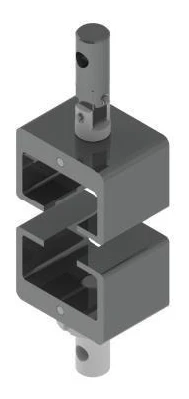
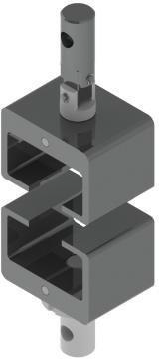
The NGB203A Tension Grip is built for low-force tensile testing of cement mortar specimens. With a load capacity of up to 2 kN, this fixture is suited to evaluating the tensile strength of brittle, cement-based materials. It features a compact yet durable design, Ø10 mm pin connections, and is suitable for use with universal testing machines in ambient environments. The precision alignment and reliable clamping surface ensure accurate and repeatable results in material strength verification.

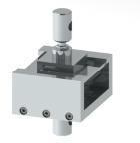
Shoulder fixture for pull-off testingNextGen Tension grip NGB203A
Table 1. NGB203A Tension Grip for Cement Mortar
Parameter Specification
Application Tension test for cement mortar
Maximum Force Capacity ≤ 2 kN
Upper Grip Weight 2.6 lbs (1.18 kg)
Lower Grip Weight 2.2 lbs (1.0 kg)
Working Temperature Ambient
Connection Type Ø10 mm pin (upper and lower)
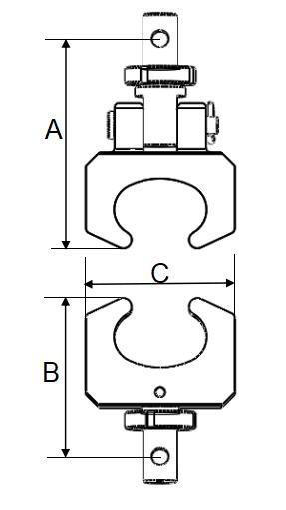
Upper Grip Height (A) 4.7″ (120 mm)
Lower Grip Height (B) 88 mm
Width (C) 88 mm

The four that follow are for adhesive bonds, and the substrate decides which one you need. This is the base fixture: 1 kN, square 50 x 50 mm substrates.

Model NGC103A

Tension Grip

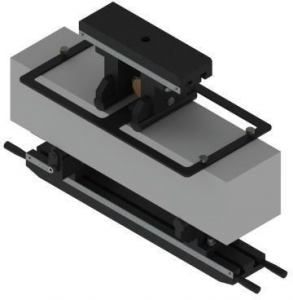
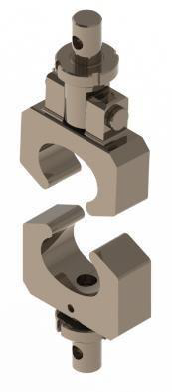
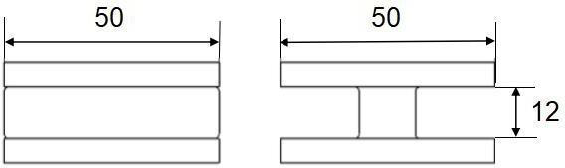
The NGC103A Tension Grip is purpose-built for low-force adhesive tensile testing. With a force capacity of up to 1 kN, it is suited to evaluating adhesive bond strength between substrates under controlled laboratory conditions. This compact fixture features a shoulder clamping mode and is built for substrates measuring 50 × 50 mm and adhesives up to 12 mm thick. Standard Ø10 mm pin connections and stable construction make NGC103A a reliable choice for quality control and material development labs.

NextGen Tension grip - sizeNextGen Tension grip - NGC103A
Table 2. NGC103A Tension Grip for Adhesive Testing
Parameter Specification
Application Tension test for adhesives
Maximum Force Capacity ≤ 1 kN
Upper Grip Weight 0.75 kg
Lower Grip Weight 0.8 kg
Working Temperature Ambient
Connection Type Ø10 mm pin (upper and lower)
Upper Grip Height (A) 3.9″ (100 mm)
Lower Grip Height (B) 80 mm
Width (C) 70 mm
Clamping Mode Shoulder
Specimen Size Substrate: 50 × 50 mm
Adhesive: 50 × 12 mm

The same 1 kN rating, but a longer and narrower substrate - 75 x 12 mm instead of square. It is the one to take when the bonded joint runs along the specimen rather than across it.

Model NGC103B

Tension Grip

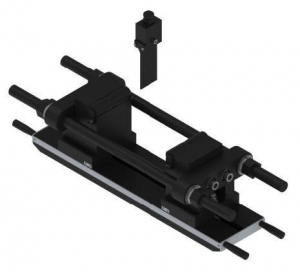
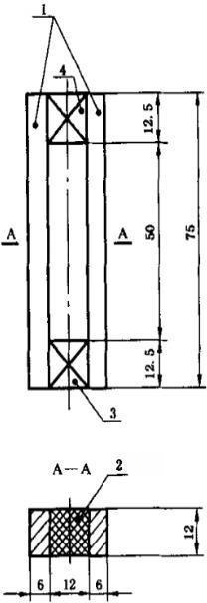
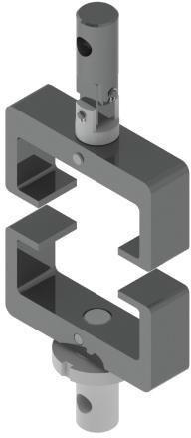
The NGC103B Tension Grip is optimized for adhesive tensile testing where larger substrates or longer bonded joints are involved. With a 1 kN maximum load capacity and a shoulder clamping mechanism, it ensures stable and precise specimen alignment during testing. Designed for substrates up to 75 mm long and adhesives 12 mm thick, this fixture is well-suited for laboratories performing repeatable adhesive strength evaluations. Standard Ø10 mm pin compatibility makes it suited to use with most tabletop universal testing systems.

NextGen Tension grip - NGC103B - size 2NextGen Tension grip -  NGC103B - sizeNextGen Tension grip - NGC103B
Table 3. NGC103B Tension Grip for Adhesive Testing
Parameter Specification
Application Tension test for adhesives
Maximum Force Capacity ≤ 1 kN
Upper Grip Weight 0.5 kg
Lower Grip Weight 0.6 kg
Working Temperature Ambient
Connection Type Ø10 mm pin (upper and lower)
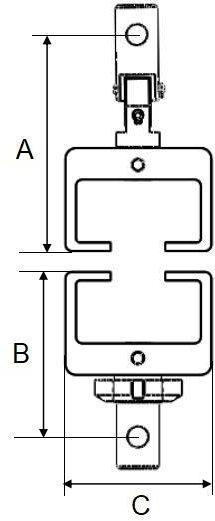
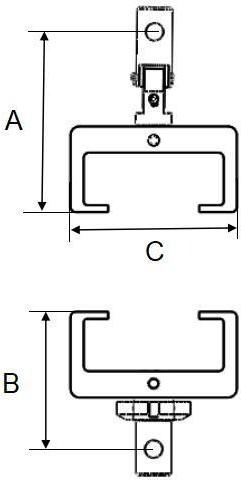
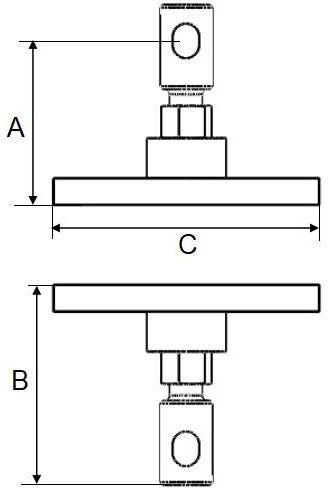
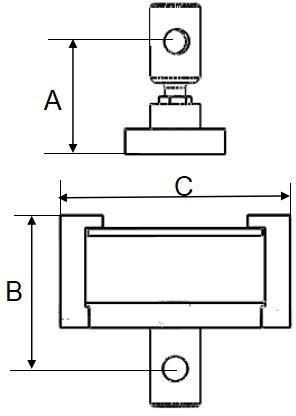
Upper Grip Height (A) 4.3″ (110 mm)
Lower Grip Height (B) 80 mm
Width (C) 95 mm
Clamping Mode Shoulder
Specimen Size Substrate: 75 × 12 mm
Adhesive: 50 × 12 mm
NextGen Tension grip - NGC103B - size 3Dimensions A, B and C used in Table 3.

Where the bonded area itself is large, the NGC203 comes as a series. All three sizes hold 2 kN; what changes is the seat, from 50 mm square up to 7.9″ (200 mm) square.

Model NGC203

Tension Grip Series

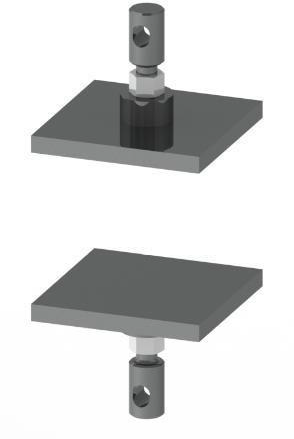
The NGC203 Tension Grip Series is developed for adhesive strength testing across many specimen sizes. Available in three models - NGC203B, NGC203C, and NGC203E - this series supports test blocks from 50 × 50 mm to 7.9 × 7.9″ (200 × 200 mm), all within a 2 kN maximum force range. These grips feature a modular design that allows the number of bonding blocks to be tailored to specific testing requirements. Constructed for reliability and repeatability in ambient conditions, all models are equipped with Ø10 mm pin connections and standardized dimensions for integration with universal testing systems.

NextGen Tension grip -  NGC203 - sizeNextGen Tension grip -  NGC203
  • Application: Tension tests for adhesive strength.
  • Models: NGC203B, NGC203C, NGC203E.
  • Maximum Capacity: Up to 2 kN load.
  • Specimen Sizes: 50 × 50 mm (B), 3.9 × 3.9″ (100 × 100 mm) (C), 7.9 × 7.9″ (200 × 200 mm) (E).
  • Connection: Ø10 mm pin (upper and lower), compatible with standard UTMs.
  • Height: 60 mm (both upper and lower grips).
  • Widths: 50 mm (B), 3.9″ (100 mm) (C), 7.9″ (200 mm) (E).
  • Grip Weight: See model-specific table below.
  • Working Temperature: Ambient.
  • Note: The number of bonding blocks can be customized based on client requirements.
Table 4. NGC203 Tension Grip Series for Adhesive Strength Testing
Model NGC203B NGC203C NGC203E
Specimen Size 50 mm × 50 mm 3.9″ (100 mm) × 3.9″ (100 mm) 7.9″ (200 mm) × 7.9″ (200 mm)
Maximum Force ≤ 2 kN ≤ 2 kN ≤ 2 kN
Upper Grip Weight 0.36 kg 0.95 kg 7.3 lbs (3.32 kg)
Lower Grip Weight 0.36 kg 0.95 kg 7.3 lbs (3.32 kg)
Working Temp. Ambient
Connection Ø10 mm pin (upper and lower)
Upper Grip Height (A) 60 mm 60 mm 60 mm
Lower Grip Height (B) 60 mm 60 mm 60 mm
Width (C) 50 mm 3.9″ (100 mm) 7.9″ (200 mm)
Bonding Block Count Customizable per client request

The last fixture takes the highest load of the group, 5 kN, on a 70 x 70 mm substrate with a 40 x 40 mm bonded area. It closes the range where an adhesive is strong enough to pull past the 2 kN fixtures.

Model NGC503A

Tension Grip

The NGC503A Tension Grip is a compact fixture designed for precise adhesive strength testing under moderate tensile loads. Supporting forces up to 5 kN, this grip is suited to small-scale bonded specimens, such as those with substrate dimensions of 70 × 70 mm and adhesive layers of 40 × 40 mm. The grip features a shoulder-type clamping mechanism for secure and repeatable alignment during testing. Its lightweight construction and Ø10 mm pin compatibility make it suitable for most tabletop universal testing machines operating in ambient environments.

Tension grip for pull-off testingComponent pull-off fixture
Table 5. NGC503A Tension Grip for Adhesive Testing
Parameter Specification
Application Tension test for adhesives
Maximum Force Capacity ≤ 5 kN
Upper Grip Weight 0.03 kg
Lower Grip Weight 0.16 kg
Working Temperature Ambient
Connection Type Ø10 mm pin (upper and lower)
Upper Grip Height (A) 45 mm
Lower Grip Height (B) 60 mm
Width (C) 90 mm
Clamping Mode Shoulder
Specimen Size Substrate: 70 × 70 mm
Adhesive: 40 × 40 mm

NextGen’s shoulder grip solutions are crafted for high-performance tensile testing where shoulder-type samples are standard. Their modular compatibility with NG-EML and SHM UTM machines ensures maximum utility across labs and testing departments. Contact us today to discuss your testing needs or to request a formal quotation for these fixtures. 

For Laboratories

Need Additional Quality Control Equipment to Build Your Laboratory?

Gripping and fixturing is only one part of a complete quality control laboratory. NextGen can help you equip your entire lab with impact testers, notching and broaching systems, cooling chambers, tensile testers, hardness testers, specimen preparation equipment, and other supporting solutions, all coordinated as one complete project.

  • One partner to equip your complete laboratory
  • Installation, training, calibration
  • Support for the life of the equipment

Related Products

Flexure Fixtures for Large and Brittle Specimens

Flexure Fixtures for Large and Brittle Specimens

These flexure fixtures are designed for precise bending tests on large, brittle, or high-strength specimens, including metals, ceramics, composites, concrete, and construction materials. Compatible with hydraulic universal testing machines, they support single-point, three-point, and four-point bending configurations with adjustable spans and roller supports. Capacities up to 2000 kN help laboratories evaluate flexural strength, deformation behavior, and structural integrity.

Read more
Threaded Grips for Bolt and Nut Testing

Threaded Grips for Bolt and Nut Testing

Threaded grips for bolt and nut tensile testing provide secure axial loading for bolts, studs, nuts, and other threaded fasteners. Designed for universal testing machines, they help prevent slippage, thread stripping, and misalignment during high-force tests. Compatibility with ASTM F606, ISO 898, DIN 50125, and multiple metric thread sizes makes them useful for construction, automotive, aerospace, manufacturing, and fastener QC applications.

Read more
Dual-Action Hydraulic Wedge Grips for High-Capacity Testing

Dual-Action Hydraulic Wedge Grips for High-Capacity Testing

Dual-Action Hydraulic Grips are high-capacity wedge-clamping fixtures for tensile testing on universal testing machines. Designed for metals, plastics, and composite specimens, they apply uniform hydraulic pressure to reduce slippage, deformation, and grip-end failures during demanding tests. Interchangeable jaw faces, hydraulic power-unit actuation, UTM compatibility, and support for ASTM, ISO, DIN, JIS, and GB/T workflows help laboratories improve safety and repeatability.

Read more
Specialized Grips and Fixtures for Tear, Peel and Puncture Testing

Specialized Grips and Fixtures for Tear, Peel and Puncture Testing

These specialized grips and fixtures expand UTM testing capabilities for tear, peel, puncture, shear, and unique tensile applications. They are suitable for plastic films, nonwovens, geotextiles, footwear components, waterproof roll materials, safety nets, buckles, eyes, and sandwich structures. ASTM D624, ASTM D1004, ISO 34, ISO 3303, and related standards support reliable force measurement across packaging, textile, construction, and materials testing workflows.

Read more
TestStar Series Grips and Fixtures for Hydraulic UTMs

TestStar Series Grips and Fixtures for Hydraulic UTMs

TestStar® Series grips and fixtures are high-precision accessories for integrating tensile, snubbing, wedge-action, pneumatic, compression, and bending setups with hydraulic and electromechanical universal testing machines. Built for metals, polymers, composites, geotextiles, and demanding industrial specimens, the series emphasizes rigid construction, quick interchangeability, ergonomic handling, and compatibility with ASTM, ISO, DIN, and related standards for repeatable mechanical testing.

Read more
Composite Grips and Fixtures for Tensile and Shear Testing

Composite Grips and Fixtures for Tensile and Shear Testing

Composite grips and fixtures are engineered for tensile, compression, shear, bending, peel, and delamination testing of fiber-reinforced plastics, carbon composites, laminates, and hybrid materials. Designed for NextGen universal testing machines, they support standards such as ASTM D3039, ISO 527, ASTM D2344, ISO 14125, and DIN EN 2562. These fixtures help labs generate repeatable data for R&D, QA, and compliance testing.

Read more
Grips and Fixtures for Wood Testing

Grips and Fixtures for Wood Testing

These wood testing grips and fixtures support tensile, shear, flexural, internal bond, and fastener-related evaluation of engineered wood, panels, boards, and structural assemblies. Designed for use with NextGen NG-EML and NG-SHM universal testing machines, they help laboratories characterize wood behavior under standardized loading conditions. ASTM D198, ISO 3349, ISO 3340, and GB/T 1936.1 compatibility supports reliable research and QC workflows.

Read more
3-Point and 4-Point Bending Fixtures for Flexural Testing

3-Point and 4-Point Bending Fixtures for Flexural Testing

These 3-point and 4-point bending fixtures support flexural strength, deformation, and modulus testing of natural stone, ceramics, composites, concrete, metals, bricks, and other structural or brittle materials. Adjustable upper and lower spans, roller-supported loading, multiple capacity options, and optional deformation measurement help laboratories perform standardized bending tests with stable support conditions and repeatable force application.

Read more
Wedge Tensile Grips for Metals and Composites

Wedge Tensile Grips for Metals and Composites

Wedge tensile grips are built for high-load tensile testing of flat and round specimens made from metals, composites, and plastics. Their wedge-action mechanism increases gripping pressure as tensile force rises, helping minimize slippage and maintain alignment during demanding tests. Available models support force capacities from lower-force laboratory work up to 300 kN, with interchangeable flat and vee jaw inserts for different specimen sizes.

Read more
Pneumatic Grips for Fast and Repeatable Clamping

Pneumatic Grips for Fast and Repeatable Clamping

Pneumatic grips provide fast, repeatable air-actuated clamping for universal testing machines in high-throughput tensile and compression workflows. Designed for wires, composites, polymers, films, fabrics, and other materials, they apply uniform gripping pressure while reducing operator fatigue and sample loading time. Side-action, wedge-action, and snubbing configurations, plus interchangeable jaw faces, support secure holding across varied specimen geometries and standards.

Read more
Compression Fixtures for Rigid Samples

Compression Fixtures for Rigid Samples

Compression fixtures provide aligned axial loading for rigid samples tested on NG-EML and SHM universal testing machines. They are suited for metals, polymers, elastomers, foams, composites, and construction materials where stable force distribution and specimen alignment are critical. High-rigidity construction, secure contact surfaces, and compatibility with ASTM D695, ISO 604, ASTM E9, and GB/T 14485 support repeatable compression testing.

Read more
3-Point Bending Fixtures for Flexural Testing

3-Point Bending Fixtures for Flexural Testing

These bending fixtures support standard 3-point flexural testing of plastics, composites, metals, ceramics, alloys, and construction materials. Designed for use with NG-EML and SHM universal testing machines, they offer adjustable spans, multiple capacity options, and repeatable roller-supported loading. Compatibility with ASTM D790, ISO 178, ISO 14125, ASTM E290, and GB/T 9341 helps laboratories perform consistent standards-based flexural evaluations.

Read more
Eccentric Roller Grips for Thin and Flexible Specimens

Eccentric Roller Grips for Thin and Flexible Specimens

Eccentric roller grips are built for low-force tensile testing of thin, soft, and flexible specimens such as rubber sheets, plastic film, and deformable materials. Their cam-driven roller mechanism increases clamping pressure as tensile load rises, helping prevent slippage without damaging delicate surfaces. Compatible with NextGen NG-EML and SHM systems, they support repeatable alignment and accurate testing of narrow specimens.

Read more
Self-Tightening Grips for Elastic Materials

Self-Tightening Grips for Elastic Materials

Self-tightening grips are designed for tensile testing of deformable, elastic, or low-friction materials such as rubber, plastics, foams, textiles, and biomedical specimens. As tensile force increases, the gripping mechanism automatically increases clamping pressure, helping compensate for thinning or elongation during the test. This reduces slippage, limits specimen damage, and improves repeatability without frequent manual adjustment.

Read more
Snubbing Grips for Wire and Cable Testing

Snubbing Grips for Wire and Cable Testing

Snubbing grips, also known as capstan grips, are designed for tensile testing of wires, cables, ropes, textile strips, and geogrids that can slip or break in standard clamps. By wrapping the specimen around curved surfaces, they increase friction and reduce grip-end failures. These fixtures help laboratories achieve safer, more repeatable axial loading for high-strength or flexible materials.

Read more
Side-Action Tensile Grips

Side-Action Tensile Grips

Side action tensile grips provide quick, secure clamping for films, thin sheets, textiles, fine wires, polymer strips, and other flexible specimens on universal testing machines. Available in manual lever and screw-action configurations, they support different force ranges, jaw surfaces, and specimen sizes. Their side-clamping design helps improve alignment, reduce slippage, and speed up routine tensile testing in QC and R&D labs.

Read more
NG-EML Series A – Single-Column Universal Testing Machine (50 N – 5 kN)

NG-EML Series A – Single-Column Universal Testing Machine (50 N – 5 kN)

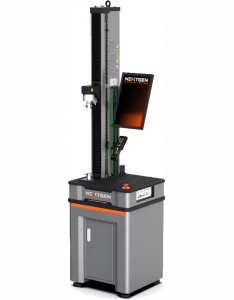
NG-EML Series A is a compact single-column benchtop universal testing machine for low-force tensile, compression, and flexural testing. Covering 50 N to 5 kN capacity options, it is suited for rubber, plastics, adhesives, films, foams, wires, metals, composites, and consumer products. Its electromechanical frame, high-speed servo actuation, GenTest software, and standards support make it practical for R&D and routine QC.

Read more
NG-EML Series B – Dual-Column Universal Testing Machine (100 N – 10 kN)

NG-EML Series B – Dual-Column Universal Testing Machine (100 N – 10 kN)

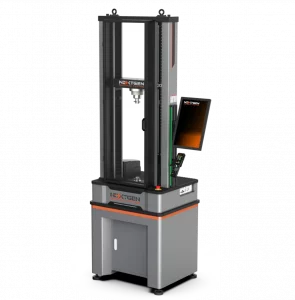
NG-EML Series B is a dual-column benchtop electromechanical universal testing machine for precision testing from 100 N to 10 kN. Built for research and industrial labs, it supports tension, compression, flexural, and component testing of composites, high-strength metals, polymers, films, foams, and rubber. Its compact rigid frame, advanced control accuracy, and GenTest software help deliver repeatable results in limited lab space.

Read more
NG-EML Series C – Dual-Column Universal Testing Machine (5–50 kN)

NG-EML Series C – Dual-Column Universal Testing Machine (5–50 kN)

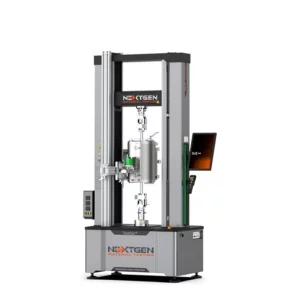
NG-EML Series C is a dual-column electromechanical universal testing machine available in bench-top and floor-standing formats from 5 kN to 50 kN. Built for tension, compression, flexural, shear, and peel testing, it combines Class 0.5 accuracy, a servo direct-drive system, high-rigidity frame, touchscreen control, and GenTest software to support precise testing of metals, composites, rubber, plastics, and polymers.

Read more
NG-EML Series D – Floor-Standing Universal Testing Machine (50–1000 kN)

NG-EML Series D – Floor-Standing Universal Testing Machine (50–1000 kN)

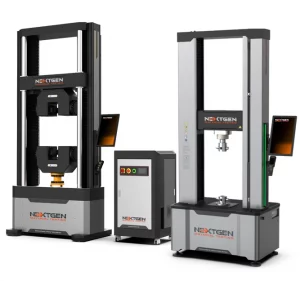
NG-EML Series D is a heavy-duty floor-standing electromechanical universal testing machine for high-capacity tensile, compression, and flexural testing. Available from 50 kN to 1000 kN, it is built for high-strength steels, advanced composites, alloys, and challenging research materials. Its rigid dual-column frame, servo direct-drive system, closed-loop control, safety protections, and GenTest software support stable, accurate testing.

Read more
GenTest – Advanced UTM Testing Software

GenTest – Advanced UTM Testing Software

GenTest is NextGen’s advanced UTM testing software for electromechanical universal testing machines, managing test setup, live control, data acquisition, calculations, curves, and reporting from one method-driven environment. Preconfigured ASTM, ISO, DIN, EN, and BS templates help operators load the correct control mode, speeds, gauge length, formulas, and result fields for tensile, compression, and flexural tests.

Read more
GenMark 500 – Automatic Gauge Length Marking Machine

GenMark 500 – Automatic Gauge Length Marking Machine

The GenMark 500 is a full-automatic gauge length marking machine for metal bar, rebar and wire rod, applying the reference marks used to determine elongation after fracture. A servo-driven lead screw sets 5 mm or 10 mm spacing and a pneumatic tungsten steel needle marks specimens up to 500 mm gauge length, supporting ISO 6892-1 and ASTM E8/E8M workflows. Adjustable marking force, quick needle changes, and fixtures for both round and flat samples keep specimen preparation consistent across operators and shifts.

Read more