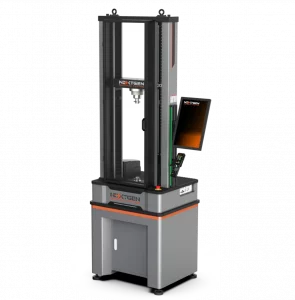
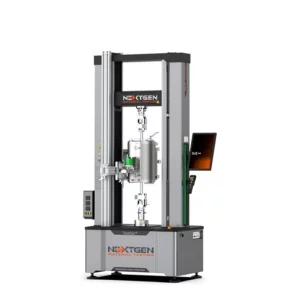
ISO 7500-1:2018 defines how to calibrate and verify the force-measuring system of static uniaxial tension/compression testing machines used for metallic materials. It is commonly referenced when a lab needs documented confidence that a machine’s indicated force meets a specified accuracy class.
If you need help mapping this standard to your current test frames, load cells, and verification tools (or matching an accredited calibration workflow to your lab), talk with our team.
ISO 7500-1:2018 — Metallic materials — Calibration and verification of static uniaxial testing machines — Part 1: Tension/compression testing machines — Calibration and verification of the force-measuring system
ISO 7500-1 is a calibration and verification standard focused on the machine’s force-measuring system and the supporting inspection activities needed to classify performance for static loading. It is typically used for universal testing machines (UTMs) and other tension/compression frames performing routine metal testing where force accuracy must be controlled and auditable.
This document is centered on static verification; results and calibration values are not necessarily applicable to high-speed or dynamic testing conditions.
Quick Definition
What it is: A standard procedure for inspecting, calibrating, and verifying the force-measuring system of a static tension/compression testing machine.
What it’s used for: Demonstrating that a machine’s indicated force performance meets the limits of a specified class for static testing.
What it does not do: It does not replace a material test method (for example, a tensile test method); it focuses on the machine’s force measurement capability that those test methods rely on.
What This Standard Covers
ISO 7500-1 addresses the calibration and verification of a testing machine’s force-measuring system for tension and compression. In practice, it is used to evaluate the relationship between applied reference force and the machine’s indicated force over defined ranges, and to document whether the system meets class-based performance limits.
The verification approach includes a general inspection of the testing machine and relevant accessories for force application, followed by calibration of the force-measuring system and confirmation of performance against the selected class.
Why This Standard Matters in Testing
Force accuracy is foundational for any strength or proof-load decision based on a static test frame. When ISO 7500-1 is cited, the expectation is that the machine’s force indication is traceable and controlled, so tensile/compression results and compliance decisions are not undermined by force-measurement error.
Because many tensile and compression material tests depend directly on force readings (and derived values like stress), ISO 7500-1 verification is often part of quality systems, audit readiness, supplier qualification, and ongoing equipment control programs.
Common Materials, Product Types, or Applications Covered
ISO 7500-1 is written under the general context of metallic materials and is commonly applied wherever static tension/compression force is measured on a calibrated test frame, such as:
- Metals tensile testing programs where machine force indication must be classified and maintained
- Compression testing of metallic components or coupons (within the capabilities of the frame and compression tooling)
- Production and incoming inspection environments that require periodic force-system verification for UTMs
- Calibration and metrology workflows supporting mechanical test labs
Common Test or Verification Workflow
ISO 7500-1 is typically executed as a machine verification activity rather than a specimen test. A common workflow includes:
- General inspection of the machine and force-application accessories used in normal operation
- Use of a suitable reference force-proving system to apply known forces through the machine (tension and/or compression as applicable)
- Evaluation of force indication performance across the required force ranges
- Documentation of results and assignment/confirmation of the specified class (as applicable)
Practical note: Verification outcomes can depend on the exact force ranges used, the machine configuration (e.g., load cell capacity and installed hardware), and how force is introduced through grips/platens. If your machine is used across multiple capacity ranges, planning the verification points up front avoids gaps in coverage.
Equipment Commonly Used for This Standard
ISO 7500-1 points to an equipment pathway focused on controlled force generation and traceable force reference measurement. Commonly used equipment includes:
- Tension/compression testing machine (UTM or static test frame): The system being confirmed, including its force-measuring system and related hardware used for force application
- Force-proving / reference force measurement device(s): Traceable force transducers or other reference standards used to calibrate and verify the machine’s force indication (selected to cover the required force range)
- Appropriate loading hardware: Grips, fixtures, compression platens, and adapters that safely introduce the reference force through the same load path used in normal testing
- Data acquisition / controller and software: Used to capture indicated force values and support reporting as required by your quality system and calibration provider
If you are selecting a new frame or upgrading a force-measuring system to support ISO 7500-1 class-based verification across your working range, you can request a detailed quote for a configuration matched to your capacities, fixtures, and verification plan.
How to Read This Designation or Revision
ISO 7500-1 identifies Part 1 of the ISO 7500 series and is specific to tension/compression testing machines and their force-measuring systems.
:2018 indicates the publication year of the cited edition. When ISO 7500-1 is referenced in a contract, internal procedure, or accreditation scope, the exact year matters because acceptance limits, required verification steps, and reporting expectations can be edition-sensitive.
Related Standards, Methods, or Frameworks
ISO 7500-1 is part of a broader metrology framework around static mechanical testing. Depending on your workflow, you may also encounter standards for calibrating the force-proving instruments used during verification, and other parts of the ISO 7500 series that address different components of the measurement chain.
Practical caution: A machine can be “in calibration” for force per ISO 7500-1 and still produce poor material test results if other elements (alignment, gripping, extensometry, specimen issues, method requirements) are not controlled by the applicable test method and lab procedures.
Get help matching ISO 7500-1 to your machine and verification plan
If you need to align a specific machine capacity range, load cell strategy, or verification schedule to the edition of ISO 7500-1 cited by your customer or quality system, contact our team and we’ll help you map a practical equipment and calibration path.