Standards
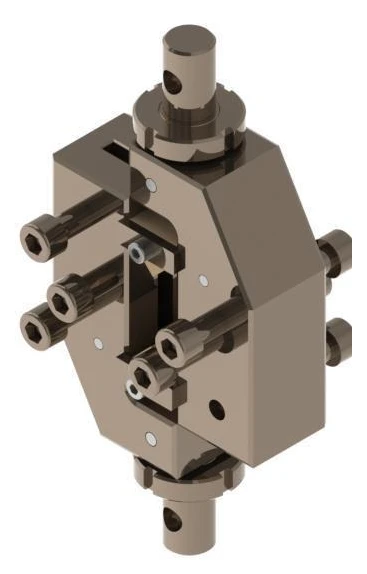
NextGen Material Testing, Inc. offers a complete portfolio of advanced grips and fixtures specifically engineered for composite material testing with universal testing machines. These solutions meet a wide array of international testing standards including ASTM D3039, ISO 527, ASTM D2344, ISO 14125, and DIN EN 2562. Designed for high-precision tensile, compression, shear, bending, and peel testing, our composite fixtures enable reliable evaluation of fiber-reinforced plastics, carbon composites, laminates, and hybrid materials. Whether you’re conducting R&D, quality assurance, or regulatory compliance testing, NextGen’s grip systems are essential tools for for repeatable and accurate material behavior analysis.
Composite Testing Fixtures
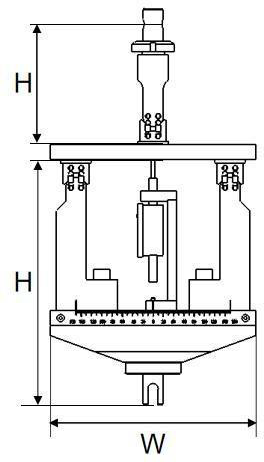
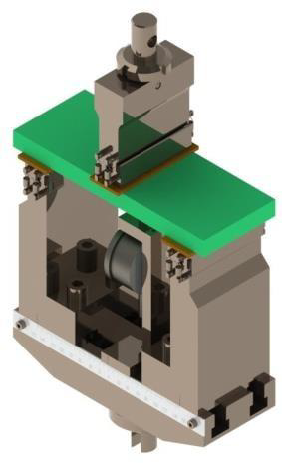
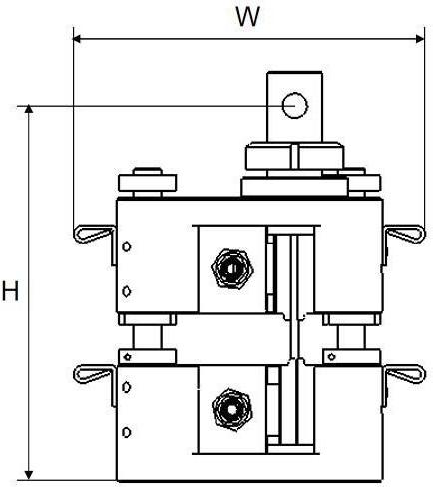
Thirty-one fixtures cover composite testing, and the page runs through them by test method: first tension, then shear, then peel, then bending, then compression, and puncture last. Tension comes first because it is where most composite programmes start. This grip is the heavy end of it.
Model NGC105B
Tensile Grip
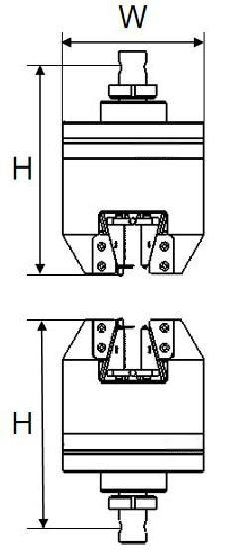
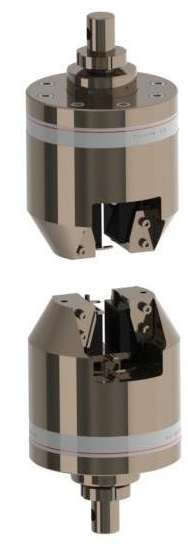
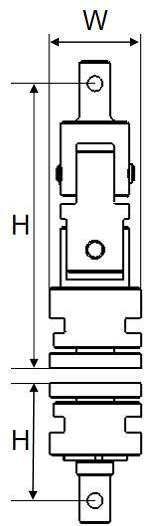
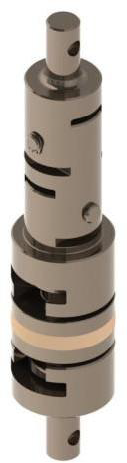
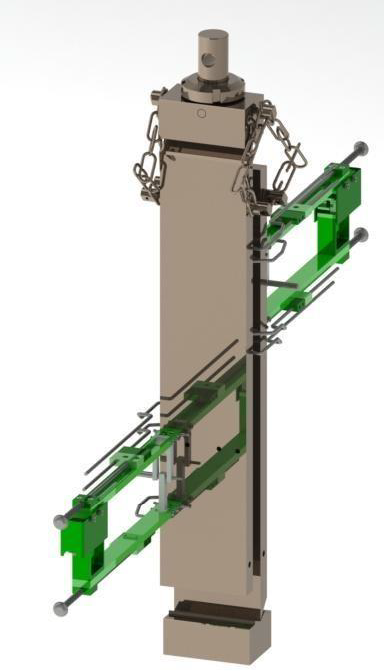
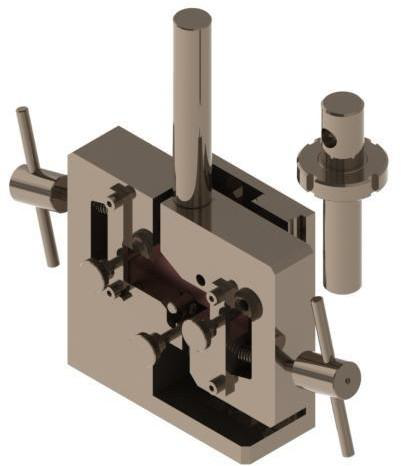
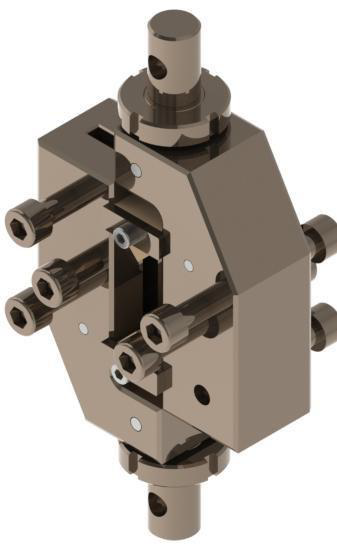
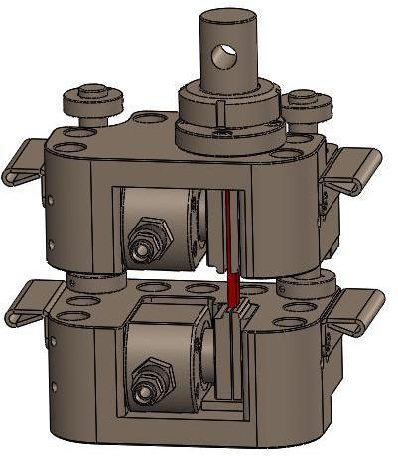
The NGC105B Hydraulic Wedge Grip is engineered for high-capacity tensile testing of metals and composite materials. Designed for reliability under force loads up to 100 kN, this grip system provides stable clamping with uniform hydraulic wedge action. Featuring heavy-duty construction and Φ18 mm pin connection, it is suitable for industrial environments operating between 0°C and 40°C.
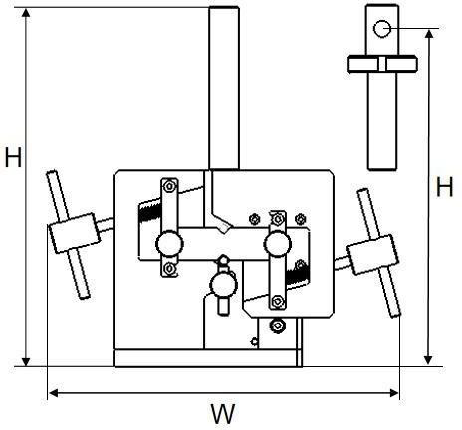
Table 1. NGC105B Hydraulic Wedge Grip
| Parameter |
Specification |
| Application |
Tension test for metal, composite |
| Maximum Force Capacity |
≤ 100 kN |
| Upper Grip Weight |
126 lbs (57 kg) |
| Lower Grip Weight |
126 lbs (57 kg) |
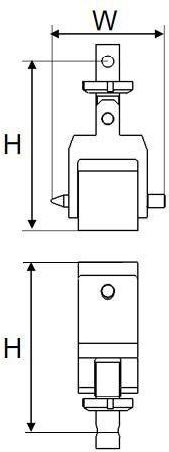
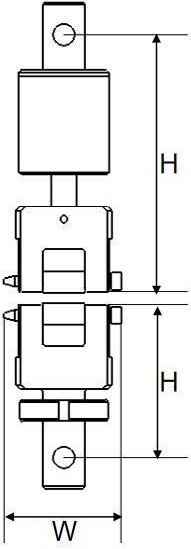
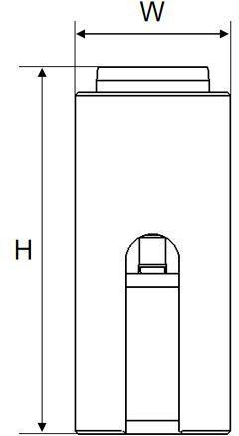
| Upper Grip Height (H) |
12.2″ (310 mm) |
| Lower Grip Height (H) |
12.2″ (310 mm) |
| Grip Width (W) |
8.5″ (215 mm) |
| Working Temperature |
0°C - 40°C |
| Connection - Upper Grip |
Φ18 mm pin |
| Connection - Lower Grip |
Φ18 mm pin |
Jaw Faces (Optional)
Table 2. Optional Accessories - NGC105B Hydraulic Wedge Grip
| No. |
Type |
Specimen Size (mm) |
Height A (mm) |
Width B (mm) |
Thickness C (mm) |
| NGC105B-11 |
VEE |
Φ4 - Φ12 |
65 |
50 |
35 |
| NGC105B-12 |
VEE |
Φ12 - Φ20 |
65 |
50 |
32 |
| NGC105B-13 |
Flat |
0 - 12 |
65 |
50 |
34 |
| NGC105B-14 |
Flat |
12 - 24 |
65 |
50 |
28 |
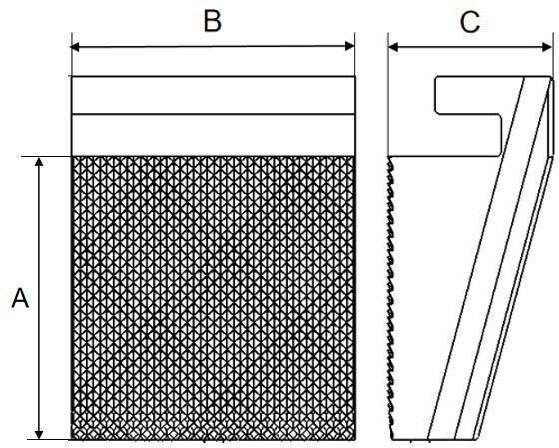
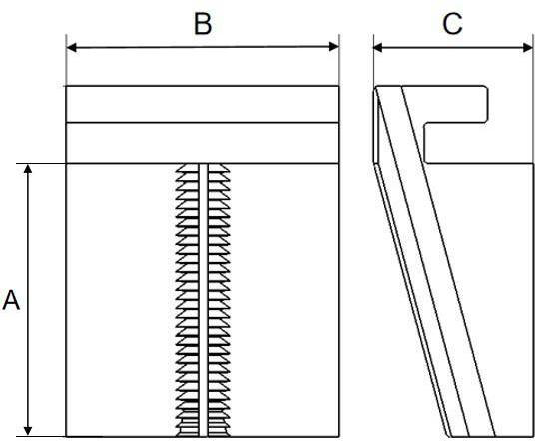 Accessories, NGC105B Hydraulic Wedge Grip
The same grip in the G body, with its own jaw faces.
Model NGC105G
Tensile Grip
The NGC105G Hydraulic Wedge Grip is built for high-capacity tensile testing of metal and composite materials, especially under extreme temperature conditions. With a wide working range from −70°C to +350°C and strong clamping force up to 100 kN, this grip is suited to harsh testing environments. Heavy-duty construction and Φ18 mm pin compatibility ensure stable and precise test setups.
Table 3. NGC105G Hydraulic Wedge Grip
| Parameter |
Specification |
| Application |
Tension test for metal, composite |
| Maximum Force Capacity |
≤ 100 kN |
| Upper Grip Weight |
223 lbs (101 kg) |
| Lower Grip Weight |
187 lbs (85 kg) |
| Upper Grip Height (H) |
33.1″ (840 mm) |
| Lower Grip Height (H) |
21.8″ (554 mm) |
| Grip Width (W) |
9.4″ (238 mm) |
| Working Temperature |
−70°C to +350°C |
| Connection - Upper Grip |
Φ18 mm pin |
| Connection - Lower Grip |
Φ18 mm pin |
| Specimen Hardness |
≤ HRC24 |
Jaw Faces (Optional)
Table 4. Optional Accessories - NGC105G Hydraulic Wedge Grip
| No. |
Type |
Specimen Size (mm) |
Height A (mm) |
Width B (mm) |
Thickness C (mm) |
| NGC105G-16 |
VEE |
Φ4 - Φ12 |
65 |
50 |
35 |
| NGC105G-17 |
VEE |
Φ12 - Φ20 |
65 |
50 |
32 |
| NGC105G-18 |
Flat |
0 - 12 |
65 |
50 |
34 |
| NGC105G-19 |
Flat |
12 - 24 |
65 |
50 |
28 |
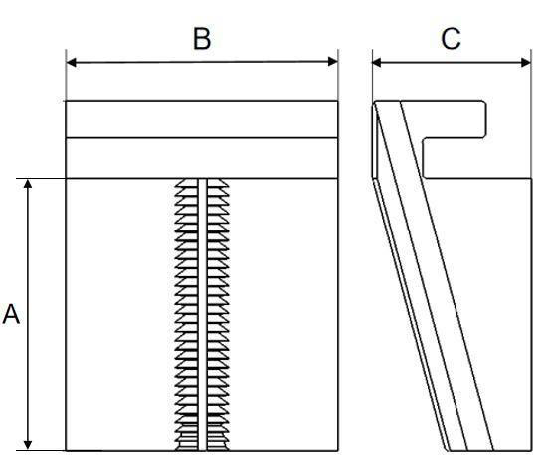
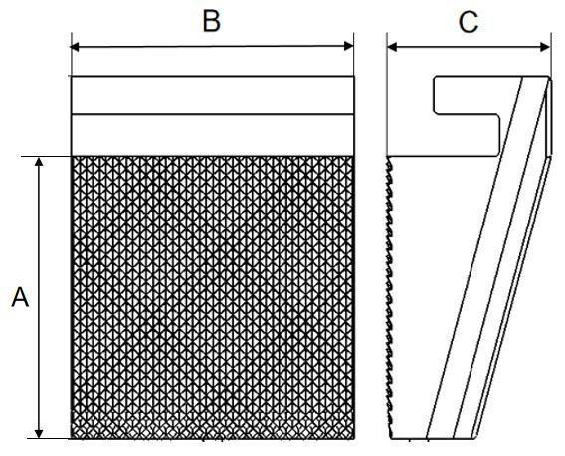 Accessories, NGC105G Hydraulic Wedge Grip
A lighter tensile grip for thin laminates and film.
Model NGA502A
Tensile Grip
The NGA502A Node Tensile Grip is specifically designed for tensile testing of honeycomb core materials according to ASTM C363. Featuring lightweight upper and lower grips, the system supports a maximum force of 500 N and operates within 0°C to 40°C. It accommodates precise clamping of thin materials with a clamping range of up to 20 mm and is compatible with Φ10 mm UTM pin connections.
Table 5. NGA502A Node Tensile Grip
| Parameter |
Specification |
| Application |
Tension test for honeycomb core materials |
| Maximum Force Capacity |
500 N |
| Upper Grip Weight |
2.2 lbs (1 kg) |
| Lower Grip Weight |
2.2 lbs (1 kg) |
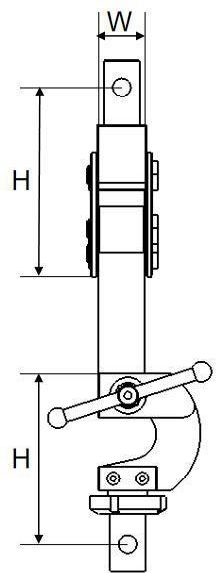
| Upper Grip Height (H) |
4.3″ (110 mm) |
| Lower Grip Height (H) |
4.3″ (110 mm) |
| Grip Width (W) |
5.7″ (145 mm) |
| Working Temperature |
0°C - 40°C |
| Standard |
ASTM C363 |
| Connection - Upper Grip |
Φ10 mm pin |
| Connection - Lower Grip |
Φ10 mm pin |
| Specimen Size |
260 (L) × 130 (W) × 12(16) (T) mm |
| Pin Diameter |
Φ4.5 mm |
| Clamping Range |
0 - 20 mm |
Another light grip, sized for narrow coupons.
Model NGB103A
Tensile Grip
The NGB103A Plane Tensile Grip is engineered for plane tensile testing of bonded honeycomb sandwich structures. Designed for extreme environments, it functions within a wide temperature range from −70°C to +350°C. With compact dimensions and lightweight construction, it meets the requirements of QJ 1123 standard and fits universal testing machines using Φ10 mm pin connections.
Table 6. NGB103A Plane Tensile Grip
| Parameter |
Specification |
| Application |
Plane tension test for bonded honeycomb sandwich structure |
| Maximum Force Capacity |
1 kN |
| Upper Grip Weight |
4.9 lbs (2.2 kg) |
| Lower Grip Weight |
0.7 kg |
| Upper Grip Height (H) |
7.4″ (188 mm) |
| Lower Grip Height (H) |
78 mm |
| Grip Width (W) |
60 mm |
| Working Temperature |
−70°C to +350°C |
| Standard |
QJ 1123 |
| Connection - Upper Grip |
Φ10 mm pin |
| Connection - Lower Grip |
Φ10 mm pin |
And a mid-range grip for standard tensile coupons.
Model NGA104C
Tensile Grip
The NGA104C Platwise Tensile Grip is purpose-built for flatwise tensile testing of sandwich constructions in accordance with ASTM C297. This grip system features symmetric upper and lower grips, a compact footprint, and a working range of 0°C to 40°C, making it suited to structural testing of bonded core materials.
Table 7. NGA104C Platwise Tensile Grip
| Parameter |
Specification |
| Application |
Flatwise tension test for sandwich constructions |
| Maximum Force Capacity |
10 kN |
| Upper Grip Weight |
4.9 lbs (2.2 kg) |
| Lower Grip Weight |
4.9 lbs (2.2 kg) |
| Upper Grip Height (H) |
5.6″ (143 mm) |
| Lower Grip Height (H) |
5.6″ (143 mm) |
| Grip Width (W) |
95 mm |
| Working Temperature |
0°C - 40°C |
| Standard |
ASTM C297 |
| Connection - Upper Grip |
Φ10 mm pin |
| Connection - Lower Grip |
Φ10 mm pin |
| Specimen Size |
50 (H) × 50 (W) mm |
The last tensile fixture works over a wide temperature range, which is what an environmental chamber test needs.
Model NGA202A
Tensile Grip
The NGA202A Loading Block Grip is built for precise testing of interlaminar fracture toughness (Mode I) in unidirectional fiber-reinforced polymer matrix composites. It complies with ASTM D5528 and ISO 15024 standards and is optimized for use with small-scale specimens. Lightweight and compact, it operates reliably at ambient and sub-zero temperatures.
Table 8. NGA202A Loading Block Grip
| Parameter |
Specification |
| Application |
Mode I fracture toughness test for unidirectional fiber-reinforced composites |
| Maximum Force Capacity |
200 N |
| Upper Grip Weight |
0.8 kg |
| Lower Grip Weight |
0.4 kg |
| Upper Grip Height (H) |
4.8″ (121 mm) |
| Lower Grip Height (H) |
72 mm |
| Grip Width (W) |
55 mm |
| Working Temperature |
0°C - 40°C |
| Standard |
ASTM D5528, ISO 15024 |
| Connection - Upper Grip |
Φ10 mm pin |
| Connection - Lower Grip |
Φ10 mm pin |
| Specimen Size |
125 (L) × 25 (W) mm |
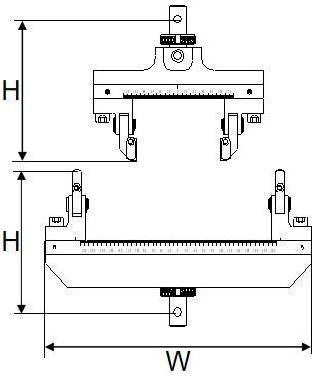
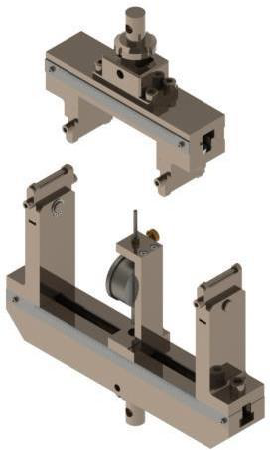
Delamination is not tension or shear alone but a mix of the two, and the mixed mode I and II fixture sets the ratio between them.
Model NGA502B
Mixed Mode I & II Test Fixture
The NGA502B Mixed Mode I & II Test Fixture is engineered for evaluating the interlaminar fracture toughness of unidirectional fiber-reinforced polymer matrix composites under combined loading. Designed in accordance with ASTM D6671, it enables accurate measurement of Mode I and Mode II fracture behavior. This fixture features separate upper and lower grip assemblies and is suited to testing under ambient laboratory conditions.
Table 9. NGA502B Mixed Mode I & II Test Fixture
| Parameter |
Specification |
| Application |
Mixed mode (I & II) fracture testing of fiber-reinforced polymer matrix composites |
| Maximum Force Capacity |
500 N |
| Upper Grip Weight |
3.7 lbs (1.7 kg) |
| Lower Grip Weight |
9.3 lbs (4.2 kg) |
| Upper Grip Height (H) |
6.3″ (160 mm) |
| Lower Grip Height (H) |
74 mm |
| Upper Grip Width (W) |
8.5″ (216 mm) |
| Lower Grip Width (W) |
10″ (254 mm) |
| Working Temperature |
0°C - 40°C |
| Standard |
ASTM D6671 |
| Connection - Upper Grip |
Φ10 mm pin |
| Connection - Lower Grip |
Φ10 mm pin |
| Specimen Size |
125 (L) × 25 (W) mm |
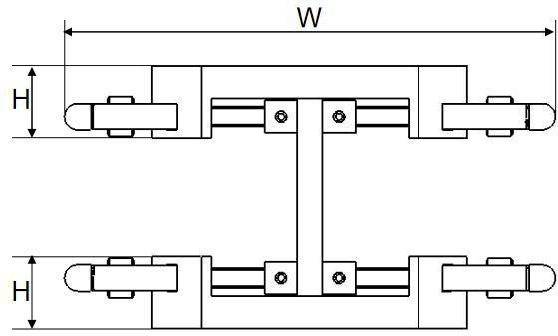
Shear follows, and composites are sheared in more ways than metals are. The picture frame loads a square panel through its four edges so the whole face shears at once.
Model NGA502A
Picture Frame Shear Fixture
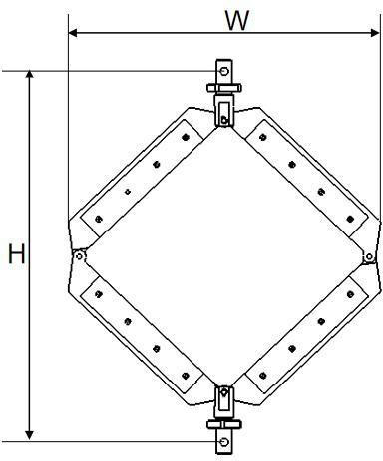
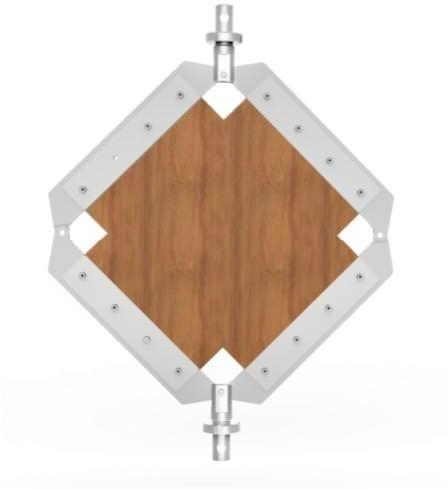
The NGA502A Picture Frame Shear Fixture is specifically designed for evaluating the in-plane shear strength and stiffness of flat sandwich panels with composite face sheets. Compliant with ASTM D8067, this fixture supports a wide testing temperature range, making it suited to both ambient and extreme thermal environments. It features compact construction with precision pin-mount connections and a secure clamping mechanism.
Table 10. NGA502A Picture Frame Shear Fixture
| Parameter |
Specification |
| Application |
In-plane shear strength and stiffness testing of flat sandwich composite panels |
| Maximum Force Capacity |
≤ 500 N |
| Weight |
2.9 lbs (1.3 kg) |
| Working Temperature |
- 70°C to +200°C |
| Standard |
ASTM D8067 |
| Connection - Upper Grip |
Φ10 mm pin |
| Connection - Lower Grip |
Φ10 mm pin |
| Fixture Height (H) |
18.5″ (469 mm) |
| Fixture Width (W) |
15.4″ (392 mm) |
| Clamping Range |
0 - 5 mm |
| Specimen Size |
180 (H) × 180 (W) mm |
Tensile shear pulls a bonded overlap until the joint fails.
Model NGA104D
Tensile Shear Fixture
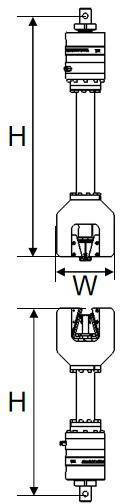
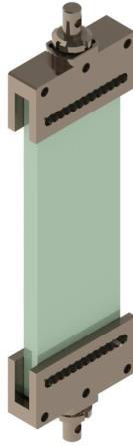
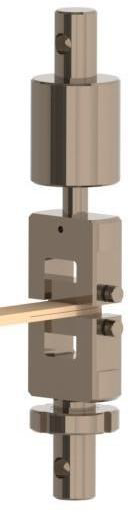
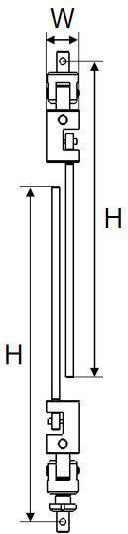
The NGA104D Tensile Shear Fixture is built for evaluating the shear properties of sandwich core materials under tension, following international testing standards such as ASTM C273 and GB/T 1455. Built with precision-ground grip surfaces and shoulder clamping, this fixture supports testing at ambient and controlled temperatures with stable axial alignment.
Table 11. NGA104D Tensile Shear Fixture
| Parameter |
Specification |
| Application |
Shear property testing for sandwich core materials |
| Maximum Force Capacity |
10 kN |
| Weight - Upper Grip |
6.6 lbs (3 kg) |
| Weight - Lower Grip |
6.6 lbs (3 kg) |
| Height - Upper Grip |
15.7″ (400 mm) |
| Height - Lower Grip |
15.7″ (400 mm) |
| Grip Width (W) |
50 mm |
| Working Temperature |
0°C to +40°C |
| Standards |
ASTM C273, GB/T 1455 |
| Connection - Upper |
Φ10 mm pin |
| Connection - Lower |
Φ10 mm pin |
| Clamping Range |
5 - 20 mm |
| Clamping Mode |
Shoulder |
| Specimen Size |
150 (H) × 50 (W) mm |
Compression shear does the same while the joint is held under load.
Model NGB104C
Compression Shear Fixture
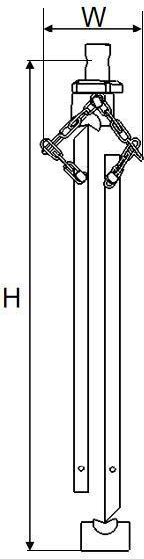
The NGB104C Compression Shear Fixture is engineered to evaluate the shear properties of sandwich core materials under compressive loading. Built for accurate axial alignment and compliance with international testing standards, it delivers precise and repeatable results within controlled laboratory environments.
Table 12. NGB104C Compression Shear Fixture
| Parameter |
Specification |
| Application |
Shear testing for sandwich core materials |
| Maximum Force Capacity |
10 kN |
| Fixture Weight |
11 lbs (5 kg) |
| Height (H) |
16.3″ (413 mm) |
| Grip Width (W) |
77 mm |
| Working Temperature |
0°C to +40°C |
| Standards |
ASTM C273, GB/T 1455 |
| Connection - Upper |
Φ10 mm pin |
| Connection - Lower |
Φ10 mm pin |
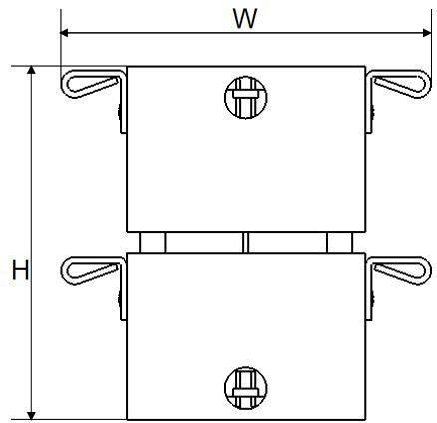
The V-notched beam concentrates the shear in a narrow section cut into the specimen, which is how ASTM D5379 measures it.
Model NGB204E
V-Notched Beam Shear Fixture
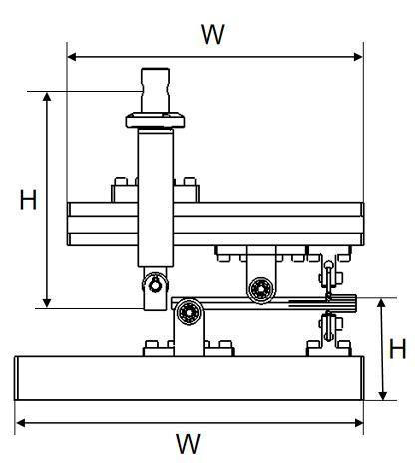
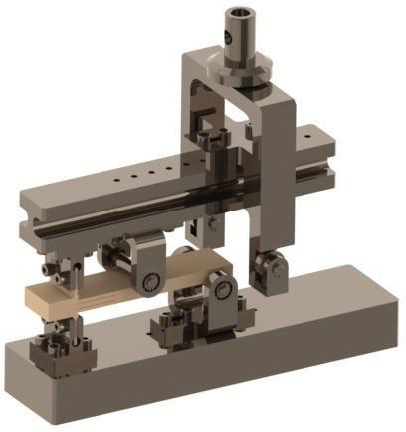
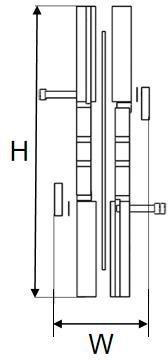
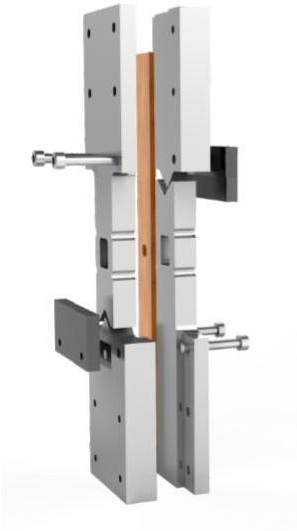
The NGB204E V-Notched Beam Shear Fixture evaluate the shear properties of unidirectional laminates and fabric fiber composites. Compliant with ASTM D5379, this fixture ensures accurate alignment and secure clamping of thin specimens under high and low temperature conditions. It supports testing in extreme environments and is suited to precision composite material characterization.
Table 13. NGB204E V-Notched Beam Shear Fixture
| Parameter |
Specification |
| Application |
Testing shear properties of unidirectional laminates or fabric fiber composites |
| Maximum Force |
20 kN |
| Fixture Weight |
7.9 lbs (3.6 kg) |
| Height (Left) |
8.7″ (220 mm) |
| Height (Right) |
8.1″ (206 mm) |
| Grip Width (W) |
8.5″ (215 mm) |
| Working Temperature |
-70°C to +350°C |
| Standard |
ASTM D5379 |
| Connection |
Φ10 mm pin (upper and lower) |
| Clamping Range |
0 - 6 mm |
| Specimen Size |
76(L) × 19(W) × (3 - 4)(T) mm |
The V-notched rail loads the same notch through rails instead of a beam.
Model NGB204F
V-Notched Rail Shear Fixture
The NGB204F V-Notched Rail Shear Fixture is built for precise shear property determination of fiber-reinforced composite materials. Compliant with ASTM D7078 and GB/T 28889, this fixture supports accurate clamping, consistent load distribution, and high-temperature resistance. Its heavy-duty construction is suited to challenging composite testing environments, both in research and industrial quality control.
- Application: V-notched shear testing of composite laminates.
- Maximum Capacity: 20 kN.
- Standards: ASTM D7078, GB/T 28889.
- Working Temperature: -70°C to +350°C.
- Connection: Φ10 mm pin.
- Clamping Range: 1 - 6 mm.
Table 14. NGB204F V-Notched Rail Shear Fixture
| Parameter |
Specification |
| Application |
Testing shear properties of unidirectional laminates or fabric fiber composites |
| Maximum Force |
20 kN |
| Fixture Weight |
7.9 lbs (3.6 kg) |
| Height (Left) |
8.7″ (220 mm) |
| Height (Right) |
8.1″ (206 mm) |
| Grip Width (W) |
8.5″ (215 mm) |
| Working Temperature |
-70°C to +350°C |
| Standard |
ASTM D5379 |
| Connection |
Φ10 mm pin (upper and lower) |
| Clamping Range |
0 - 6 mm |
| Specimen Size |
76(L) × 19(W) × (3 - 4)(T) mm |
In-plane shear works on the laminate as it lies, without a notch to force the failure plane.
Model NGB204F
In-Plane Shear Fixture
The NGB204F In-Plane Shear Fixture is engineered for evaluating the in-plane shear strength and stiffness of fiber-reinforced composite materials. Compliant with GB/T 5258 Type C, it is suitable for high-precision material testing within a wide thermal range. Its compact yet heavy-duty design supports repeatable testing in research laboratories and composite manufacturing facilities.
Table 15. NGB204F In-Plane Shear Fixture
| Parameter |
Specification |
| Application |
In-plane shear test for fiber-reinforced composite materials |
| Maximum Force |
20 kN |
| Weight |
13 lbs (5.9 kg) |
| Height (H) |
5.7″ (145 mm) |
| Grip Width (W) |
80 mm |
| Working Temperature |
-70°C to +350°C |
| Standard |
GB/T 5258 Type C |
| Specimen Size |
25(L) × 25(W) × 4 - 10(T) mm |
| Connection |
Φ10 mm pin (upper and lower) |
| Clamping Range |
0 - 6 mm |
| Specimen Size |
76(L) × 19(W) × (3 - 4)(T) mm |
A second in-plane fixture in a different body.
Model NGB204J
In-Plane Shear Fixture
The NGB204J In-Plane Shear Fixture is built for precision testing of fiber-reinforced composite materials under in-plane shear conditions. Compliant with ASTM D695, it supports high-temperature applications and is suited for both research and production environments. Its lightweight construction allows for easy integration and handling across various testing systems.
Table 16. NGB204J In-Plane Shear Fixture
| Parameter |
Specification |
| Application |
In-plane shear test for fiber-reinforced composite materials |
| Maximum Force |
20 kN |
| Weight |
0.8 kg |
| Height (H) |
90 mm |
| Grip Width (W) |
60 mm |
| Working Temperature |
-70°C to +350°C |
| Standard |
ASTM D695 |
| Specimen Size |
75 - 80 (L) × 12.5 (W) × 2 - 6 (T) mm |
| Connection |
Φ10 mm pin (upper and lower) |
| Clamping Range |
0 - 6 mm |
| Specimen Size |
76(L) × 19(W) × (3 - 4)(T) mm |
The wedge compression fixture closes the shear group: the wedge converts the frame load into shear across the specimen.
Model NGB304K
Wedge Compression Fixture
The NGB304K Wedge Compression Fixture is built for in-plane compression testing of polymer matrix composites. Conforming to EN 2850 (Type A1) and ISO 14126 (Type A, Method 1), this fixture supports standardized evaluation of composite compressive behavior. Its compact and lightweight build allows for accurate testing under controlled ambient conditions.
Table 17. NGB304K Wedge Compression Fixture
| Parameter |
Specification |
| Application |
In-plane compression test of polymer matrix composites |
| Maximum Force |
30 kN |
| Weight |
2.9 lbs (1.3 kg) |
| Height (H) |
5.4″ (138 mm) |
| Grip Width (W) |
60 mm |
| Working Temperature |
0°C to +40°C |
| Standard |
EN 2850 (Type A1), ISO 14126 (Type A, Method 1) |
| Specimen Size |
110 (L) × 10 (W) × 2 (T) mm |
Peel is next. A floating roller keeps the peel angle constant as the bond line advances, so the number means the same thing from start to finish.
Model NGB202A
Floating Roller Peel Test Fixture
The NGB202A Floating Roller Peel Test Fixture is built for peel testing of flexible adhesives and bonded structures in accordance with ASTM D3167. Rated for forces up to 200 N, it features precision alignment and a stable clamping system, making it suited to evaluating the peel strength of sandwich panel facings, films, or composite layers. The fixture accommodates specimens up to 25.4 mm wide and supports ambient testing within 0°C - 40°C.
Table 18. NGB202A Floating Roller Peel Test Fixture
| Parameter |
Specification |
| Application |
High suitability for peel testing applications |
| Maximum Force |
200 N |
| Weight (Upper Grip) |
0.6 kg |
| Weight (Lower Grip) |
0.5 kg |
| Height (Upper Grip) |
4.1″ (105 mm) |
| Height (Lower Grip) |
95 mm |
| Grip Width (W) |
25.4 mm |
| Working Temperature |
0°C to 40°C |
| Standard |
ASTM D3167 |
| Connection (Upper) |
Φ10 mm pin |
| Connection (Lower) |
Φ10 mm pin |
| Clamping Range |
≤25.4 mm |
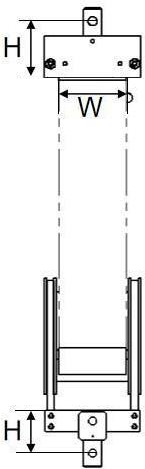
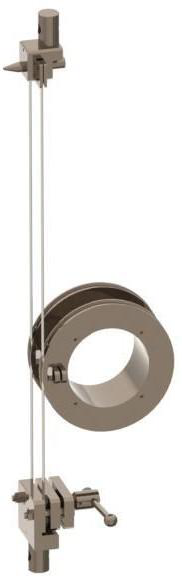
The climbing drum does the same by rolling up the specimen, which suits honeycomb and sandwich panels.
Model NGB303A
Climbing Drum Peel Test Fixture
The NGB303A Climbing Drum Peel Test Fixture is built for evaluating the peel resistance of sandwich structures in compliance with ASTM D1781. With a force capacity of up to 3 kN, it features a Φ4″ (102 mm) drum for controlled peeling, offering accurate data on adhesion performance in composite or layered materials. It operates within an ambient temperature range of 0°C to 40°C and connects via standard Φ10 mm pins.
Table 19. NGB303A Climbing Drum Peel Test Fixture
| Parameter |
Specification |
| Application |
Determination of the peel resistance of sandwich structure |
| Maximum Force |
3 kN |
| Weight (Upper Grip) |
0.7 kg |
| Weight (Lower Grip) |
0.4 kg |
| Height (Upper Grip) |
64 mm |
| Height (Lower Grip) |
48 mm |
| Grip Width (W) |
4.3″ (108 mm) |
| Working Temperature |
0°C to 40°C |
| Standard |
ASTM D1781 |
| Connection (Upper) |
Φ10 mm pin |
| Connection (Lower) |
Φ10 mm pin |
| Drum Diameter |
Φ4″ (102 mm) |
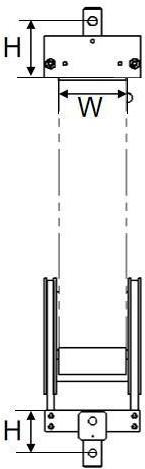
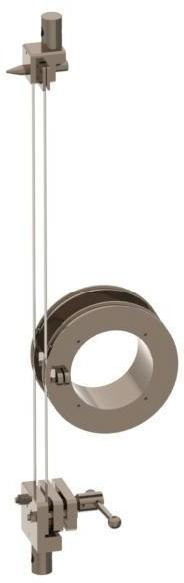
The same drum principle in a larger frame.
Model NGB303F
Climbing Drum Peel Test Fixture
The NGB303F Climbing Drum Peel Test Fixture is built for accurate evaluation of peel resistance in sandwich structures, in accordance with GB/T 1457. With a maximum capacity of 3 kN, the fixture includes a Φ3.9″ (100 mm) drum and standard Φ10 mm pin connections. This lightweight fixture supports testing under ambient conditions ranging from 0°C to 40°C, making it suited to standard lab testing of bonded materials.
Table 20. NGB303F Climbing Drum Peel Test Fixture
| Parameter |
Specification |
| Application |
Determination of the peel resistance of sandwich structure |
| Maximum Force |
3 kN |
| Weight (Upper Grip) |
0.7 kg |
| Weight (Lower Grip) |
0.4 kg |
| Height (Upper Grip) |
64 mm |
| Height (Lower Grip) |
48 mm |
| Grip Width (W) |
4.3″ (108 mm) |
| Working Temperature |
0°C to 40°C |
| Standard |
GB/T 1457 |
| Connection (Upper) |
Φ10 mm pin |
| Connection (Lower) |
Φ10 mm pin |
| Drum Diameter |
Φ3.9″ (100 mm) |
Bending comes next, starting with plain three-point loading.
Model NGA104A
3-Point Bending Fixture
The NGA104A 3-Point Bending Fixture is built for precise flexural testing of polymer matrix composite materials and reinforced plastic specimens. Engineered to support ASTM and ISO standards, this fixture provides a stable and adjustable platform for three-point bending tests with high accuracy. It includes an upper loading nose and two support rollers, allowing users to vary the span from 10 to 200 mm. The fixture's durable structure and modular grip system make it suited to standardized and repeatable bending tests in ambient conditions.
- Application: Three-point bending tests of polymer matrix composite materials and reinforced plastic samples.
- Maximum Capacity: Up to 10 kN load.
- Weight: 0.5 kg (upper grip), 20 lbs (9.2 kg) (lower grip).
- Dimensions: Height - 90 mm (upper grip), 9.1″ (232 mm) (lower grip); Grip width - 340 mm.
- Working Temperature: 0°C to 40°C.
- Standards: ASTM D7264, ISO 14125, GB/T 9341.
- Connection Type: Φ10 mm pin mount (upper and lower), compatible with UTM fittings.
- Span (Adjustable): 10 - 200 mm, allowing flexibility for different specimen lengths.
- Loading Nose: R5 mm.
- Support Rollers: R2 and R5 mm sizes included.
Note: The bending deformation of the samples can be directly measured with an optional digital indicator and other devices.
Table 21. NGA104A 3-Point Bending Fixture
| Parameter |
Specification |
| Application |
Three-point bending test of polymer matrix composite materials and reinforced plastic samples |
| Maximum Force Capacity |
10 kN |
| Weight |
Upper Grip: 0.5 kg
Lower Grip: 20 lbs (9.2 kg) |
| Height (H) |
Upper Grip: 90 mm
Lower Grip: 9.1″ (232 mm) |
| Grip Width (W) |
13.4″ (340 mm) |
| Working Temperature |
0°C - 40°C |
| Standard |
ASTM D7264, ISO 14125, GB/T 9341 |
| Connection Type |
Upper Grip: Φ10 mm pin
Lower Grip: Φ10 mm pin |
| Span (Adjustable) |
10 - 200 mm |
| Loading Nose |
R5 mm |
| Support Roller |
R2 mm, R5 mm |
Shortening the span turns a bending test into a shear test: the short-beam fixture measures interlaminar shear strength that way.
Model NGA204D
Short-Beam Shear Test Fixture
The NGA204D Short-Beam Shear Test Fixture is purpose-built for evaluating the interlaminar shear strength of high-modulus fiber-reinforced composite materials. It features a compact structure with a rigid support system, capable of testing within a wide temperature range of -70°C to +350°C. This fixture is compatible with multiple international standards, offering adjustable span lengths and precise loading through a rounded nose. Its heavy-duty design makes it suited to high-load applications in composite materials research and quality control.
Table 22. NGA204D Short-Beam Shear Test Fixture
| Parameter |
Specification |
| Application |
Determination of interlaminar shear strength of high-modulus fiber-reinforced composite materials |
| Maximum Force Capacity |
20 kN |
| Weight |
20 lbs (8.9 kg) |
| Height (H) |
7.9″ (200 mm) |
| Grip Width (W) |
10.2″ (260 mm) |
| Working Temperature |
-70°C to +350°C |
| Standard |
ASTM D2344, ISO 14130, EN 2563, EN 2377, JC/T 773 |
| Connection Type |
Φ10 mm pin |
| Specimen Width |
≤ 40 mm |
| Span (Adjustable) |
6 mm - 50 mm |
| Loading Nose |
R3 mm |
| Support |
R1.5 mm |
Table 23. Optional Spare Parts - NGA204D
| No. |
Description |
Radius |
| NGA204D-14 |
Support roller 2 |
R3 mm |
| NGA204D-15 |
Loading nose |
R5 mm |
A second three-point fixture for a different specimen size.
Model NGA204E
3-Point Bending Fixture
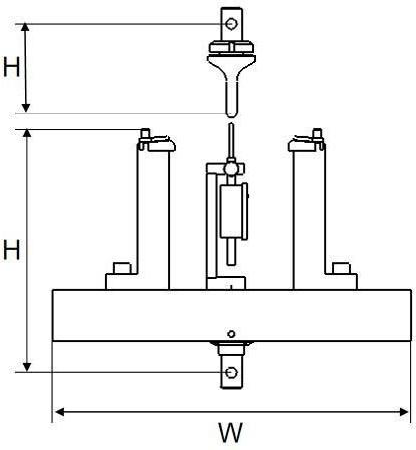
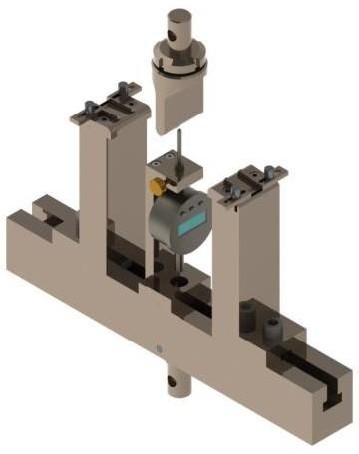
The NGA204E 3-Point Bending Fixture is built for shear testing of sandwich constructions made from composite materials. Built to comply with ASTM C393, this fixture supports high-load conditions and accommodates large specimen sizes. With adjustable span and optional digital indicators, the system enables accurate and repeatable flexural performance evaluation under standard ambient conditions.
Note: The bending deformation of the samples can be directly measured with an optional digital indicator and other devices.
Table 24. NGA204E 3-Point Bending Fixture
| Parameter |
Specification |
| Application |
Determination of shear properties of sandwich constructions of composite materials |
| Maximum Force Capacity |
20 kN |
| Weight |
Upper Grip: 3.1 lbs (1.4 kg)
Lower Grip: 23 lbs (10.3 kg) |
| Height (H) |
Upper Grip: 4.6″ (117 mm)
Lower Grip: 9.4″ (240 mm) |
| Grip Width (W) |
7.9″ (200 mm) |
| Working Temperature |
0°C - 40°C |
| Standard |
ASTM C393 |
| Connection Type |
Upper Grip: Φ10 mm pin
Lower Grip: Φ10 mm pin |
| Span (Adjustable) |
5.9″ (150 mm) |
| Specimen Size |
7.9″ (200 mm) (L) × 75 mm (W) |
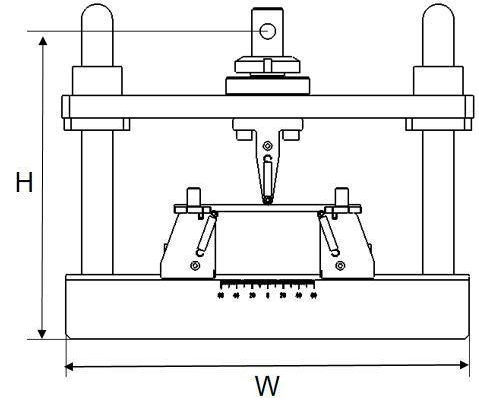
And a fixture that does both three- and four-point bending, so the constant-moment arrangement is available without a second setup.
Model NGC204A
3/4-Point Bending Fixture
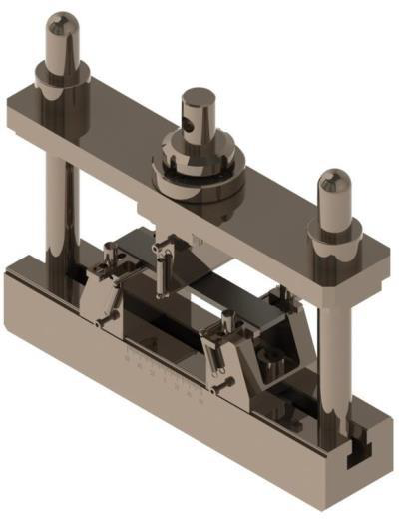
The NGC204A 3/4-Point Bending Fixture is engineered for high-accuracy flexural testing of fiber-reinforced plastic composites. This system supports both three-point and four-point bending configurations, providing flexibility in standard-compliant testing. Designed for many spans and loads up to 20 kN, it includes precision-machined loading noses and support rollers to ensure stable, repeatable deformation measurements. Optional digital indicators can be integrated for enhanced precision.
Note: The bending deformation of the samples can be directly measured with an optional digital indicator and other devices.
Table 25. NGC204A 3/4-Point Bending Fixture
| Parameter |
Specification |
| Application |
Determination of flexural properties of fiber-reinforced plastic composites |
| Maximum Force Capacity |
20 kN |
| Weight |
15 lbs (7 kg) |
| Height (H) |
Upper Grip: 6.1″ (154 mm)
Lower Grip: 8.7″ (220 mm) |
| Grip Width (W) |
12.2″ (310 mm) |
| Working Temperature |
0°C - 40°C |
| Standard |
ASTM D7264, ASTM D6272, ISO 14125 |
| Support Width |
40 mm |
| Connection Type |
Upper Grip: Φ10 mm pin
Lower Grip: Φ10 mm pin |
| Upper Span |
30 - 200 mm |
| Lower Span |
30 - 280 mm |
| Loading Nose & Support (3-Point Bending) |
R3 mm, R5 mm |
| Loading Nose & Support (4-Point Bending) |
R3 mm |
Table 26. Optional Spare Parts - NGC204A
| No. |
Description |
Radius |
| NGC204A-02 |
Support |
R2 mm |
| NGC204A-14 |
Support roller |
R2 mm |
The compression group is the largest on the page, because a laminate can fail in compression in several different ways. Edgewise compression loads the panel through its edge.
Model NGB303A
Edgewise Compression Fixture
The NGB303A Edgewise Compression Fixture is engineered for testing the edgewise compressive strength of sandwich composite constructions. Designed in accordance with ASTM C364, this fixture offers reliable results under controlled ambient conditions. With symmetrical upper and lower grip designs, it supports uniform clamping and stable load application, making it suited to lightweight composite structure evaluation.
Table 27. NGB303A Edgewise Compression Fixture
| Parameter |
Specification |
| Application |
Determination of edgewise compressive strength of sandwich composite constructions |
| Maximum Force Capacity |
3 kN |
| Weight |
Upper Grip: 0.9 kg
Lower Grip: 0.9 kg |
| Height (H) |
Upper Grip: 22 mm
Lower Grip: 22 mm |
| Grip Width (W) |
5.9″ (150 mm) |
| Working Temperature |
0°C - 40°C |
| Standard |
ASTM C364 |
| Connection Type |
Upper Grip: Φ10 mm pin
Lower Grip: Φ10 mm pin |
| Clamping Range |
0 - 40 mm |
| Specimen Size |
≥ 40 mm (L) × ≤ 75 mm (W) × ≤ 40 mm (T) |
The wedge fixture transfers load through friction on tapered faces.
Model NGB204A
Wedge Compression Fixture
The NGB204A Wedge Compression Fixture is purpose-built for evaluating the compressive properties of polymer matrix composite materials. Compliant with ASTM D3410 and GB/T 5258 Type A2 standards, the fixture features a secure wedge-type design that enables precise alignment and strong clamping of specimens. It accommodates demanding temperature ranges and offers compatibility with a range of specimen dimensions for standardized material testing.
Table 28. NGB204A Wedge Compression Fixture
| Parameter |
Specification |
| Application |
Determination of compressive properties of polymer matrix composite materials |
| Maximum Force Capacity |
20 kN |
| Weight |
20 lbs (9.2 kg) |
| Height (H) |
7.9″ (200 mm) |
| Grip Width (W) |
4.5″ (115 mm) |
| Working Temperature |
-70°C to +350°C |
| Standard |
ASTM D3410, GB/T 5258 Type A2 |
| Clamping Range |
0 - 8 mm |
| Specimen Size |
5.5″ (140 mm) (L) × 12 mm (W) × 1 - 2 mm (T)
4.3″ (110 mm) (L) × 10 mm (W) × 2 mm (T) |
The hydraulic fixture holds the specimen with hydraulic pressure rather than screws, which keeps the alignment through the run.
Model NGB105A
Hydraulic Compression Fixture
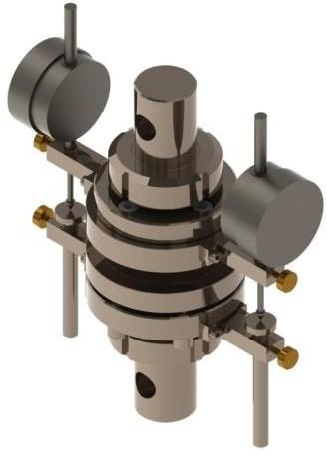
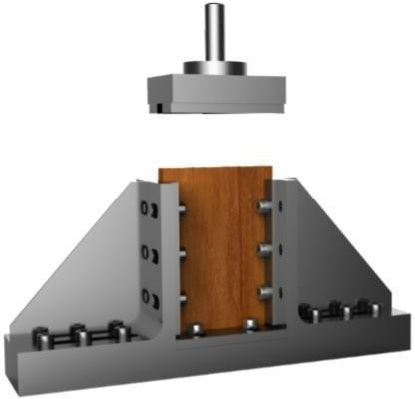
The NGB105A Hydraulic Compression Fixture is a high-force testing tool specifically designed for the compressive strength evaluation of polymer matrix composite materials. Compliant with major international standards, this heavy-duty fixture accommodates up to 100 kN force and features heavy-duty Φ18 mm pin connections. Its solid construction and integrated flat jaws offer secure clamping for medium-sized composite specimens, making it suited to routine and advanced mechanical testing in ambient conditions.
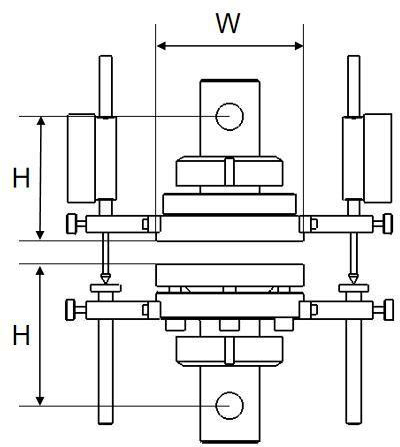
Table 29. NGB105A Hydraulic Compression Fixture
| Parameter |
Specification |
| Application |
Determination of compressive properties of polymer matrix composite materials |
| Maximum Force Capacity |
100 kN |
| Weight |
64 lbs (29 kg) |
| Height (H) |
10.8″ (275 mm) |
| Grip Width (W) |
10.2″ (260 mm) |
| Working Temperature |
0°C - 40°C |
| Standard |
ASTM D6641, ASTM D3410, ISO 14126 (Method 1, 2), GB/T 5258 (Specimen 1) |
| Connection Type |
Φ18 mm pin |
| Flat Jaw Range |
4 - 8 mm |
| Specimen Hardness |
Less than HRC24 |
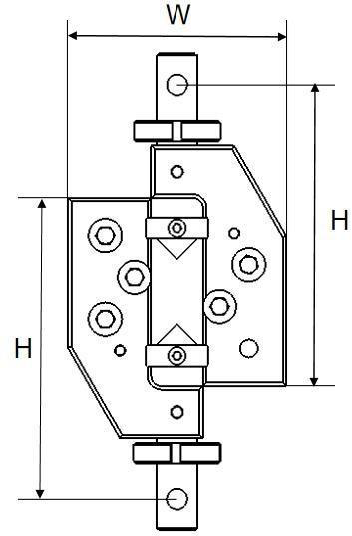
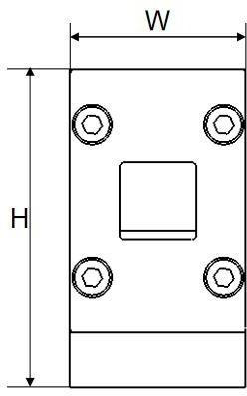
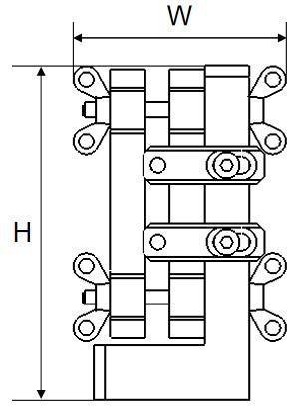
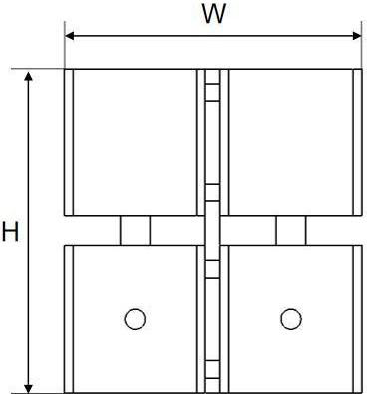
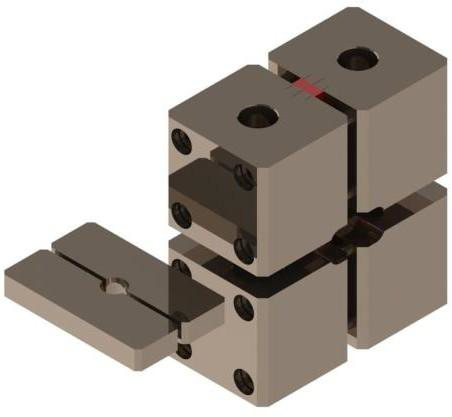
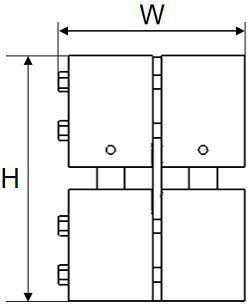
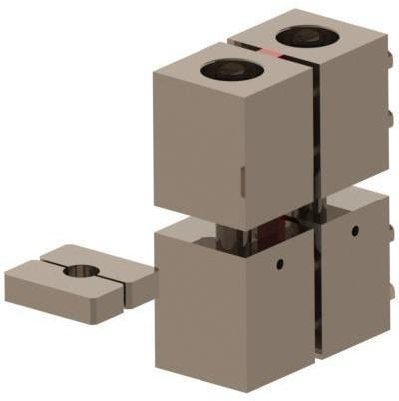
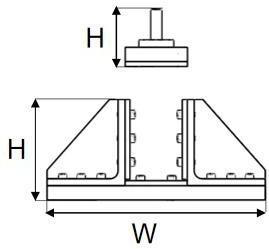
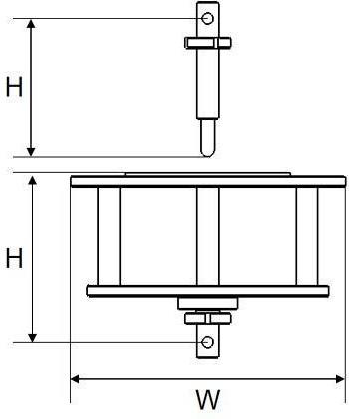
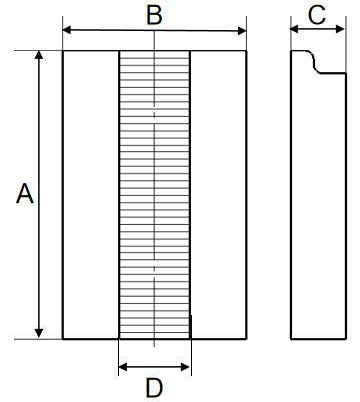 Dimensions H and W used in Table 29.
Table 30. Optional Jaw Faces - NGB105A
| No. |
Description |
Height A (mm) |
Width B (mm) |
Thickness C (mm) |
Specimen Width D (mm) |
| NGB105A-08 |
Fixed jaw face 2 |
63.5 |
40 |
12 |
10 |
| NGB105A-09 |
Fixed jaw face 3 |
63.5 |
40 |
12 |
12 |
A general-purpose compression fixture.
Model NGA105G
Compression Fixture
The NGA105G Compression Fixture is built for high-precision compression testing of composite materials under controlled laboratory conditions. With a force capacity of up to 100 kN and a spherical seat design for self-alignment, this fixture ensures accurate load distribution across the specimen. It features dual Φ18 mm pin connections and a compact structure, making it suited to integration with standard universal testing machines.
Note: The compression deformation of the samples can be directly measured with optional digital indicators and other devices.
Table 31. NGA105G Compression Fixture
| Parameter |
Specification |
| Application |
Compression test for composite materials |
| Maximum Force Capacity |
100 kN |
| Weight |
Upper Grip: 7.3 lbs (3.3 kg)
Lower Grip: 7.3 lbs (3.3 kg) |
| Height (H) |
Upper Grip: 85 mm
Lower Grip: 96 mm |
| Grip Width (W) |
Φ3.9″ (100 mm) |
| With Spherical Seat |
Yes |
| Working Temperature |
0°C - 40°C |
| Connection Type |
Upper Grip: Φ18 mm pin
Lower Grip: Φ18 mm pin |
In-plane compression, loading the laminate along its own plane.
Model NGB204H
In-Plane Compression Fixture
The NGB204H In-Plane Compression Fixture evaluate the in-plane compressive strength of fiber-reinforced plastics. With its compact design and compatibility with GB/T 5258 standards, this fixture is suited to assessing material resistance under compressive stress in elevated temperatures. The fixture accommodates standard rectangular specimens and offers dependable performance in controlled environments.
Table 32. NGB204H In-Plane Compression Fixture
| Parameter |
Specification |
| Application |
Determination of in-plane compression properties of fiber-reinforced plastic |
| Maximum Force Capacity |
20 kN |
| Weight |
8.6 lbs (3.9 kg) |
| Height (H) |
4.3″ (110 mm) |
| Grip Width (W) |
4″ (101 mm) |
| Working Temperature |
Ambient - 80°C |
| Standard |
GB/T 5258 |
| Specimen Size |
4.3″ (110 mm) (L) × 10 mm (W) × 2 - 10 mm (T) |
A second compression fixture for a different coupon.
Model NGB204I
Compression Fixture
The NGB204I Compression Fixture is developed for testing the compressive strength of polymer matrix composite materials under a wide temperature range. With compliance to ASTM D6641, this fixture provides secure clamping, a stable base, and excellent thermal endurance for demanding testing environments. It supports specimens of standard dimensions and is well-suited for quality assurance and R&D applications.
Table 33. NGB204I Compression Fixture
| Parameter |
Specification |
| Application |
Determination of compressive properties of polymer matrix composite materials |
| Maximum Force Capacity |
20 kN |
| Weight |
11 lbs (5.2 kg) |
| Height (H) |
5.5″ (140 mm) |
| Grip Width (W) |
3.9″ (100 mm) |
| Working Temperature |
-70°C to +350°C |
| Standard |
ASTM D6641 |
| Specimen Size |
5.5″ (140 mm) (L) × 12 mm (W) × 1 - 4 mm (T) |
| Clamping Range |
0 - 12.7 mm |
An open hole changes everything about how a laminate fails in compression, and this fixture is built for that specimen.
Model NGA104A
Open-Hole Compression Fixture
The NGA104A Open-Hole Compression Fixture is developed for testing the open-hole compressive strength of polymer matrix composite specimens. Designed in accordance with ASTM D5961 and ASTM D6484 standards, the fixture supports testing under extreme temperature conditions and accommodates standardized rectangular specimens. Its durable structure and reliable performance make it suited to high-precision aerospace and structural testing applications.
Table 34. NGA104A Open-Hole Compression Fixture
| Parameter |
Specification |
| Application |
Determination of open-hole compressive strength of polymer matrix composite |
| Maximum Force Capacity |
≤ 10 kN |
| Weight |
11 lbs (4.8 kg) |
| Height (H) |
11.8″ (300 mm) |
| Grip Width (W) |
3.9″ (100 mm) |
| Working Temperature |
-70°C to +350°C |
| Standard |
ASTM D5961, ASTM D6484 |
| Specimen Size |
11.8″ (300 mm) (L) × 36 mm (W) × 4 mm (T) |
| Clamping Range |
0 - 12.7 mm |
Compression after impact measures what is left once the panel has already been struck - the number that decides whether damage is tolerable.
Model NGB104A
Compression Fixture After Impact
The NGB104A Compression Fixture After Impact is specifically designed to measure the residual compressive strength of polymer matrix composite plates following impact. It conforms to ASTM D7137 and is optimized for evaluating damage tolerance and post-impact performance under extreme temperature conditions. The fixture accommodates large specimens and offers a secure clamping range suitable for high-reliability strength assessment.
Table 35. NGB104A Compression Fixture After Impact
| Parameter |
Specification |
| Application |
Determination of compressive residual strength of damaged polymer composite plates |
| Maximum Force Capacity |
≤ 10 kN |
| Weight |
Upper Grip: 4 lbs (1.8 kg)
Lower Grip: 21 lbs (9.5 kg) |
| Height (H) |
Upper Grip: 95 mm
Lower Grip: 6.3″ (160 mm) |
| Grip Width (W) |
13.8″ (350 mm) |
| Working Temperature |
-70°C to +350°C |
| Standard |
ASTM D7137 |
| Specimen Size |
5.9″ (150 mm) (H) × 3.9″ (100 mm) (W) × 4 - 6 mm (T) |
| Clamping Range |
0 - 18 mm |
The page ends with puncture, where a probe is driven through the laminate rather than loading it in the plane.
Model NGP502E
Puncture Fixture
The NGP502E Puncture Fixture is engineered for evaluating the puncture resistance of carbon fiber-reinforced plastic materials under controlled force and temperature conditions. Designed for use with Φ12 mm probes and large-diameter specimens, this fixture supports high-precision puncture testing up to 500 N in accordance with demanding environmental ranges. Its heavy-duty design accommodates a wide specimen range with consistent results across varying thicknesses.
Table 36. NGP502E Puncture Fixture
| Parameter |
Specification |
| Application |
Determination of puncture resistance for carbon fiber-reinforced plastic |
| Maximum Force Capacity |
≤ 500 N |
| Weight |
19 lbs (8.5 kg) |
| Height (H) |
Upper Grip: 5″ (126 mm)
Lower Grip: 6.1″ (155 mm) |
| Grip Width (W) |
9.8″ (250 mm) |
| Working Temperature |
-70°C to +350°C |
| Connection Type |
Upper Grip: Φ10 mm pin
Lower Grip: Φ10 mm pin |
| Specimen Diameter |
≤ 9.8″ (250 mm) |
| Specimen Thickness |
0 - 18 mm |
| Probe Diameter |
Φ12 mm |
NextGen’s extensive suite of composite grips and fixtures ensures precision, consistency, and compliance in universal testing machine applications. Whether performing routine quality assurance or advanced failure analysis, our catalog supports every major composite testing protocol. Contact our technical sales team to configure the ideal testing solution for your lab or production floor.
For Laboratories
Need Additional Quality Control Equipment to Build Your Laboratory?
Gripping and fixturing is only one part of a complete quality control laboratory. NextGen can help you equip your entire lab with impact testers, notching and broaching systems, cooling chambers, tensile testers, hardness testers, specimen preparation equipment, and other supporting solutions, all coordinated as one complete project.
- One partner to equip your complete laboratory
- Installation, training, calibration
- Support for the life of the equipment