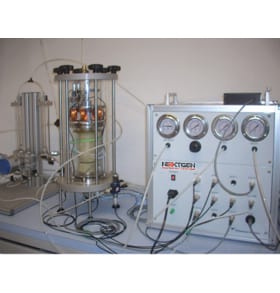
Resonant Column and Torsional Shear Tester

Soil Mechanics Testing Equipment
Application
For the determination of:
- RC test
- shear wave velocity
- secant shear modulus G
- damping ratio D
- ratio from free-vibrations
- TSS test
- Secant shear modulus from stress-strain response
- damping ratio from hysteresis loops
- Automatic calculation of:
- Resonant Frequency
- Shear wave velocity
- Shear modulus
- Shear strain
- Damping ratio from half power bandwidth
- Damping ratio from free vibration decay
Operating principle
RESONANT COLUMN combines the features of both resonant column and torsional shear into a single unit including the current driven motor to apply torsional load to sample, a series of transducers with signal conditioning, a cell and back pressure electro-pneumatic control system and a data logger.
The SHEARMATIC 300 automatic machine is ideal for testing geosyntetics and also soil and other materials that contain large particles of up to 20 mm largest dimension. Sample size up to 300 mm square can be tested, with inserts allowing the testing of smaller sample sizes. See accessories.
RESONANT COLUMN combines the features of both resonant column and torsional shear into a single unit including the current driven motor to apply torsional load to sample, a series of transducers with signal conditioning, a cell and back pressure electro-pneumatic control system and a data logger.
RESONANT COLUMN combines the features of both resonant column and torsional shear into a single unit including the current driven motor to apply torsional load to sample, a series of transducers with signal conditioning, a cell and back pressure electro-pneumatic control system and a data logger.
Main Features
- Combined Resonant Column / Torsional Simple Shear device
- Automatic detection of fundamental frequency
- RC: damping ratio from half power bandwidth and from free vibration data
- TSS: damping ratio from hysteresis loops
- Internal floating frame for large angular and axial deformation
- Confining pressure up to 1 MPa
- Suitable for 50 mm dia. specimen (or 38 mm on request)
- Integrated signal generator and oscilloscope
Specifications
The RESONANT COLUMN consists of:
- aluminium cell with stainless steel columns and acrylic transparent cylinder with 170 mm int. dia. x 200 mm ext. dia., including channels for bottom drainage;
- test accessories for 50 mm ( 38 mm) dia. specimens;
- Internal floating frame for assembling the electrical motor that applies the torsional loads; this motor has four NeFeB 10 x 25 x 40 mm magnets and eight coils.
- main control box including:
- power supply
- current amplifier
- 8 channels signal conditioning unit
- USB data acquisition and signal generation board
- two electro-pneumatic converters for cell & back pressure
- sensor kit containing:
- axial LVDT transducer
- automatic volume change apparatus with flow inversion
- three Pressure transducers
- two Eddy current displacement sensors (with miniaturised driving system)
- PC and software
| NG-ResoColumn | |
|---|---|
| Maximum Torque | 1 Nm |
| Maximum Angular Deformation | 10° |
| Maximum Cell and Back Pressure | 1 MPa |
| Excitation Frequency | - Dynamic (RC) 1-300 Hz - Cyclic (TS) from 0 to 50 Hz maximum |
| Optional Sensor | MEMS accelerometer |
| Optional Calibration Kit | N°2 calibration bars kit + N°2 calibration weights |
Related Products
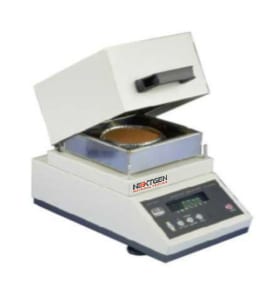
Moisture Determination Balance - GenMoist
GenMoist is designed to automatically and simultaneously dry and weight a solid sample for the determination of moisture content. The machine provides a continuous direct readout for both the weight and the percentage moisture loss through the entire cycle. It has a build-in timer.
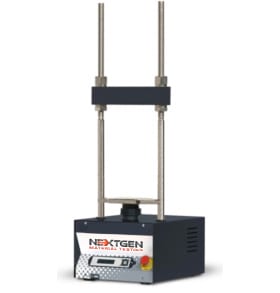
MULTISPEED Digital Automatic Universal Tester for Displacement Controlled Tests
The new MULTISPEED tester is the ideal solution for Road testing laboratory. The 50 kN capacity and the fully variable test speed of 0.2 to 51 mm/min make it possible to perform not only the CBR and Marshall tests, but many other applications as for instance Indirect Tensile test, Quick Triaxial tests, Unconfined and Uniaxial soil testing and, in general, all test to be performed under displacement control. The machine can be equipped with analogical or digital load/displacement measurement systems as well as with the specific accessories, to suit either the field or central laboratory requirement.
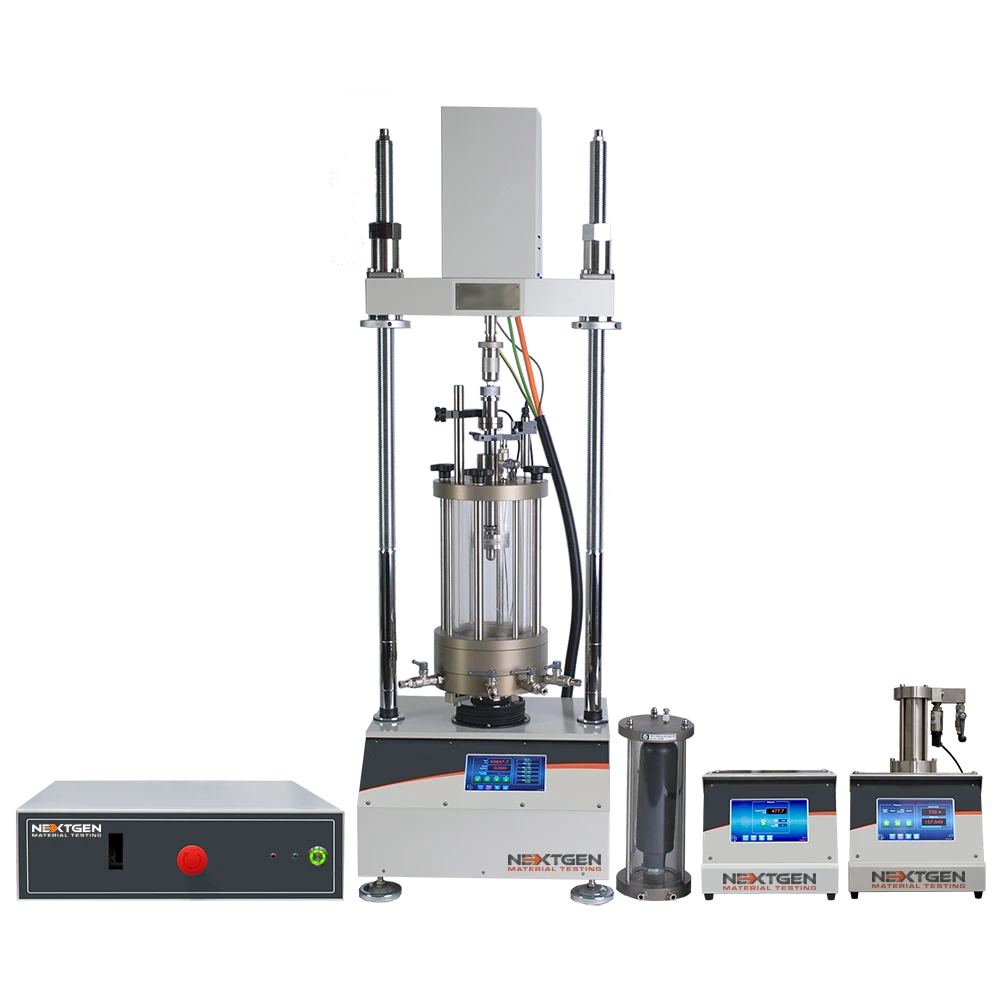
Dynamic Triaxial Systems 1000 kPa
Dynatriax systems are ideal for commercial and research laboratories for the following applications: Liquefaction potential, Strength degradation due to cyclic loading, Shear modulus and damping ratio, resilient modulus, Effects of blasting in mines and quarries, Effect of ocean waves on costal and off shore structures.
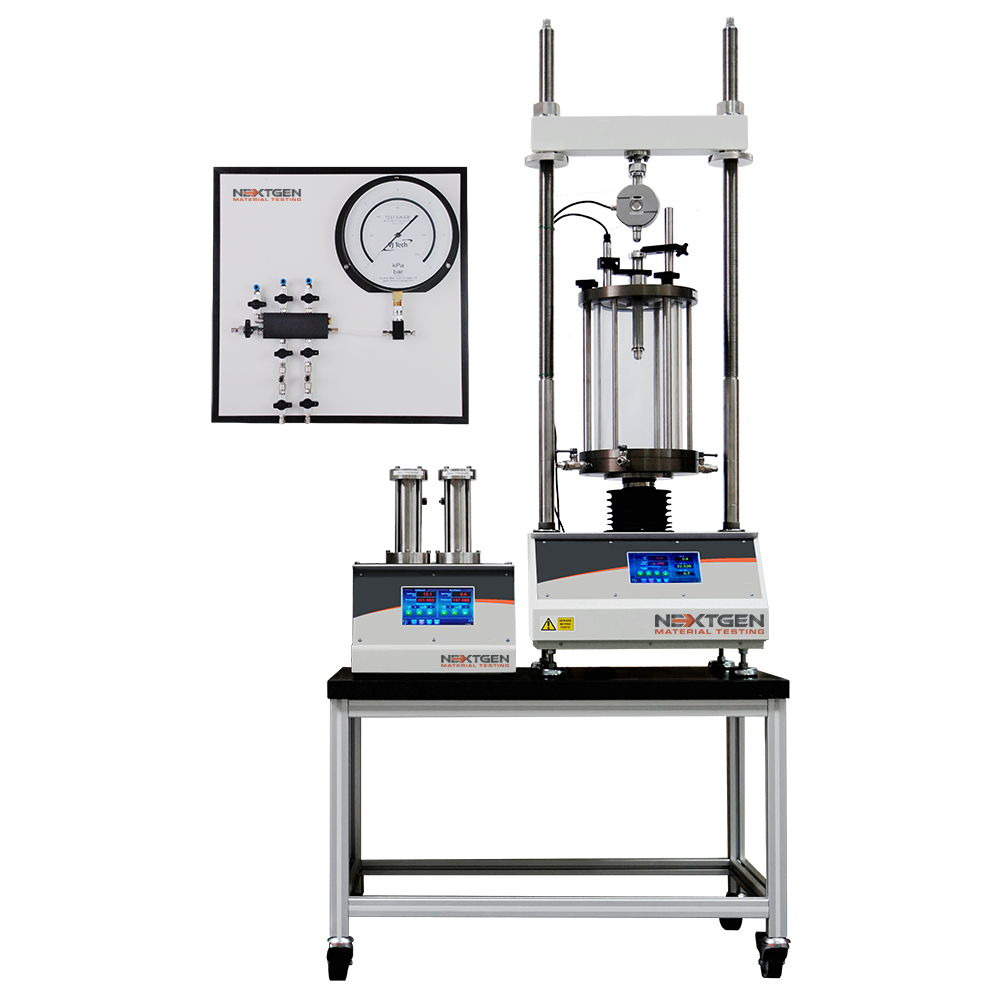
Automatic Triaxial Testing System
Automatic Triaxial Testing System for soil mechanics laboratory testing in compliance with the latest industry standards.
NG-Oedometer - Front Loading Oedometers - Consolidation Test
This test determines the rate and magnitude of consolidation of a soil specimen restrained laterally and subjected to a number of successive increments of vertical loads.
ACE - Automatic Computerized Oedometer
ACE - is the most advanced automatic computerized oedometer for testing soil consolidation that can measure the response of soil specimens.
Shearmatic 300 - Large Shear Testing Machine
The SHEARMATIC 300 automatic machine is ideal for testing geosyntetics and also soil and other materials that contain large particles of up to 20 mm largest dimension. Sample size up to 300 mm square can be tested, with inserts allowing the testing of smaller sample sizes. See accessories.
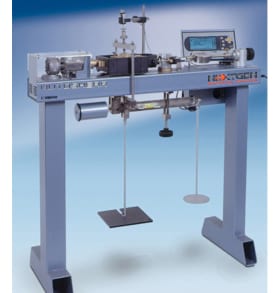
Automatic Shear Testing Machine
The microprocessor control system, therefore, allows the machine to work as an automatic stand-alone unit: the test measurements (force and displacements) a re directly displayed and stored in memory according to pre-set recording modes. The PC is only temporary required to download the test data via the RS 232 port once the test is completed. The data can be processed by the Direct and residual shear Geo-Analysis templates. See accessories.
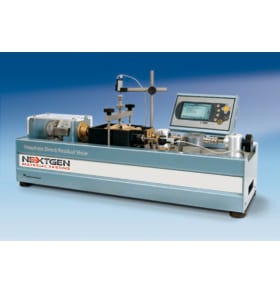
Shearmatic - Automatic Shear Testing Machine
This microprocessor based advanced model, is a stand-alone machine, driven by a high-resolution stepper motor with epicyclical reduction gear with reduced backlash. Incorporate a pneumatic closed loop system for the automatic application of the axial pressure by a high performance pressure regulator, with the main advantage of eliminating the manual loading of the dead weights. Excellent and high resistance techno-polymeric material has been adopted for the carriage of the shear box. It offers excellent resistance to corrosion, wear and tear and is resistant to all chemicals found in a soil specimen. The carriage is lightweight and easy to clean.
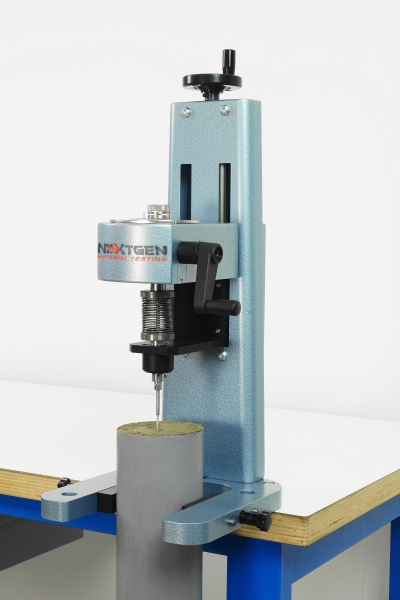
Laboratory Vane Apparatus
The laboratory vane apparatus is based on an original concept of the Transport and Road Research Laboratory of the United Kingdom. It offers versatility with a variety of vane sizes available. Typically it comes with the standard 12.7 mm square vane along with a set of four calibrated springs. Testing can be conducted either directly on the sample or within the sampling tube. For the latter, the NG-WF1738 Attachment for 38 and 100 mm diameter sampling tubes is recommended for optimal performance.