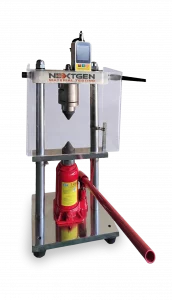
ASTM D5731 is a rock mechanics test method for determining the point load strength index of rock using concentrated loading through opposed platens. It is commonly used as a fast, practical index test for rock strength classification and comparative characterization of cores, blocks, or irregular rock pieces.
Because this method is often run on portable equipment in the field (as well as in a lab), details like specimen size range, moisture condition handling, and how results are reported can affect comparability across projects. If you need help mapping your sample type and reporting needs to the right setup, talk with our team.
ASTM D5731 — Standard Test Method for Determination of the Point Load Strength Index of Rock and Application to Rock Strength Classifications
ASTM D5731 describes an index-strength procedure that loads a rock specimen at points (via hardened platens) to produce a point load strength index value. The method is widely used for classification, screening, and comparative characterization of rock materials where rapid results and minimal specimen preparation are important.
This standard is typically referenced in geotechnical investigation programs, mining and exploration work, quarry and aggregate evaluations, and research workflows where many samples must be characterized efficiently before selecting specimens for more time-intensive strength testing.
Quick definition
What it is: A rock mechanics index test that applies concentrated load through opposed platens to determine the point load strength index.
What it’s used for: Rock strength classification and comparative characterization (not a substitute for full design-strength testing).
Where it’s run: Commonly in the field with portable testers, or in a lab for controlled handling and documentation.
What This Standard Covers
ASTM D5731 provides guidelines, requirements, and procedures for determining the point load strength index of rock specimens. It allows testing of multiple specimen forms, including rock cores, cut blocks, and irregular lumps.
The standard includes a defined test diameter range for applicable specimens (commonly cited as 30 to 85 mm), supporting more consistent comparisons between samples of different shapes when the method’s sizing approach is followed.
Why This Standard Matters in Testing
Point load testing is frequently chosen when teams need timely strength classification data without the cost and preparation time required for uniaxial compressive strength testing. It is especially useful during exploration and early-stage investigations where many specimens must be screened and prioritized.
In many programs, D5731 results are used to support rock strength classification and to guide follow-on testing plans. For most engineering decisions, teams pair index results with additional rock testing and project-specific interpretation rather than treating the index value as a direct design input.
Common Materials, Product Types, or Applications Covered
ASTM D5731 is used for intact rock materials where a point load index is a practical classification tool.
Common specimen types: Rock core, cut rock blocks, and irregular rock lumps.
Common application areas: Geotechnical site investigations, mining and exploration core logging support, quarry evaluations, and comparative rock characterization programs where rapid index testing is beneficial.
Common Test or Verification Workflow
A typical ASTM D5731 workflow focuses on selecting an appropriate specimen form, documenting relevant condition information, applying load through opposed platens until failure, and recording the maximum load and dimensional information needed to calculate the index value.
Common workflow elements: Specimen selection (core/block/lump), dimensional measurement (diameter or equivalent diameter approach), point loading to failure, calculation and reporting of the point load strength index, and (when required) evaluation of anisotropy using results from tests oriented differently relative to rock fabric.
Equipment Commonly Used for This Standard
ASTM D5731 is commonly associated with portable point load test systems and supporting measurement tools. The exact configuration depends on specimen form (core, block, or irregular lump), expected strength level, and whether testing will be conducted in the field or under controlled laboratory conditions.
- Point load testing frame: A loading frame designed for point loading rock specimens.
- Hardened loading platens: Opposed platens used to apply the concentrated load to the specimen.
- Load measurement: A calibrated load indication system appropriate for the expected failure loads.
- Specimen measurement tools: Calipers or rules for measuring specimen dimensions needed for index calculations.
- Optional data capture: Digital readouts and logging to improve traceability when running larger test programs.
If you are selecting a point load system for different specimen forms or a wide range of expected strengths, matching frame capacity, platen condition, and load measurement range is typically the most important quoting and configuration step.
How to Read This Designation or Revision
ASTM standards are commonly cited using the base designation plus a suffix year (for example, D5731-08), where the year identifies the referenced edition. Some catalogs may also show an administrative status note (such as “Withdrawn”) for specific editions.
Because edition changes can affect details like applicability limits, reporting expectations, and referenced companion documents, procurement documents and test reports should cite the exact ASTM D5731 edition being used.
Related Standards, Methods, or Frameworks
ASTM D5731 is often discussed alongside other rock testing standards when programs need a mix of index testing and higher-fidelity strength measurements.
Commonly referenced companion documents in D5731 contexts include: ASTM D7012 (rock compressive strength testing), ASTM D5079 (rock specimen handling guidance where moisture/condition control matters), and ASTM D3740 (general guidance on minimum requirements for agencies performing soil and rock testing).
Get help configuring point load testing for ASTM D5731
If you’re outfitting a field kit or lab station for point load testing, we can help match frame capacity, load indication, and accessories to your specimen types and documentation needs. For equipment selection and pricing, request a detailed quote.