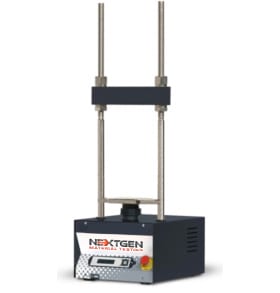
ASTM D6927 is a standard test method for determining Marshall stability (peak load resistance) and Marshall flow (deformation at/near peak) on compacted asphalt mixture specimens using the Marshall apparatus.
It is commonly used in asphalt mix design and evaluation, and it may also be used for process monitoring and comparative assessments when mix composition, conditioning, or production variables change. If you need help matching the standard to your specimen type, lab workflow, or data requirements, talk with our team.
ASTM D6927 — Standard Test Method for Marshall Stability and Flow of Asphalt Mixtures
ASTM D6927 describes a Marshall stability and flow procedure performed on cylindrical asphalt mixture specimens loaded perpendicular to the specimen axis in a Marshall loading head. The results are typically used alongside volumetric and density-related properties as part of a broader asphalt mixture design or evaluation program.
This page summarizes practical testing and equipment implications for buyers and lab teams. The official ASTM document governs the requirements, acceptance of results, and reporting details.
Quick Definition
Document type: Test method.
In simple terms: Loads a compacted asphalt cylinder in a Marshall press to measure maximum resistance to plastic flow (stability) and the corresponding deformation (flow).
Common use: Mix design/evaluation and comparative monitoring of asphalt mixture performance indicators.
What This Standard Covers
ASTM D6927 covers measurement of resistance to plastic flow for 4 in. (102 mm) cylindrical specimens of asphalt mixture using the Marshall apparatus. It is intended for dense-graded asphalt mixtures with asphalt binder (modified or unmodified) and aggregate up to 1 in. (25 mm) maximum size.
The standard recognizes different instrumentation approaches, including a more traditional setup using a load ring and deformation/flow gauge and an automated approach using a load cell with a displacement transducer and recording system.
Why This Standard Matters in Testing
Marshall stability and flow are widely referenced mixture characteristics that support decision-making in asphalt mixture design and evaluation. They are often considered together with mixture density and void-related properties to help compare binder contents, gradations, material sources, or conditioning effects.
For quality programs, stability/flow trends can also help flag potential production shifts (for example, aggregate structure changes, binder content changes, or inconsistent sampling/testing technique) that warrant follow-up.
Common Materials, Product Types, or Applications Covered
ASTM D6927 is primarily associated with dense-graded asphalt paving mixtures prepared with asphalt binder. Typical use cases include laboratory-prepared mixtures for design work and plant-produced mixtures that are compacted into specimens for monitoring or comparative evaluation.
Because applicability depends on mixture type, specimen preparation approach, and the purpose of the data (design, information, or production monitoring), the cited edition and the agency/specification context should be reviewed before adopting the workflow.
Common Test or Verification Workflow
In many labs, ASTM D6927 is used as part of a broader Marshall-based mix design or evaluation sequence rather than as a standalone test.
Common workflows: Prepare/compact Marshall specimens to the required geometry (often using ASTM D6926); condition specimens as required by the project or agency; run the stability/flow test and capture load–deformation behavior; report stability and flow and use them alongside volumetric/density properties for comparisons and decisions.
Practical caution: Results can be sensitive to specimen geometry compliance, conditioning control, loading rate/control, and instrument calibration. When stability/flow data is being used for decisions, align the setup and reporting with the exact cited edition and any governing agency criteria.
Equipment Commonly Used for This Standard
ASTM D6927 points to a Marshall stability and flow testing setup capable of applying compressive loading through a Marshall head while measuring maximum load and deformation/flow using either traditional gauges or automated sensors.
Common equipment: Marshall stability testing machine/loading frame; Marshall breaking head/loading head for the specified specimen size; force measurement (load ring or load cell); deformation/flow measurement (flow meter/dial gauge or LVDT/linear displacement transducer); data acquisition/load–deformation recorder (for automated setups); specimen handling/conditioning accessories as required by the project; calibration/verification tools appropriate to the force and displacement measurement approach.
If you are comparing traditional versus automated Marshall configurations (or need to match sensors, capacity, and reporting outputs to your project requirements), you can request a detailed quote for an equipment package aligned to your workflow.
How to Read This Designation or Revision
ASTM standards are commonly cited in the form “ASTM D6927-22,” where the suffix year identifies the year of the most recent revision or reapproval for that edition.
In some citations, an added “e” suffix (for example, “e1”) may appear to indicate an editorial change issued after a revision/reapproval. For procurement, compliance, or dispute-sensitive work, it is best to match the exact designation shown in the project specification, including any suffixes.
Related Standards, Methods, or Frameworks
ASTM D6927 is frequently used alongside specimen preparation and broader QA/QC requirements.
- ASTM D6926 — Practice for preparing/compacting asphalt mixture specimens using the Marshall apparatus (commonly used to produce specimens that meet geometry requirements for Marshall testing).
- ASTM D3666 — Specification that provides minimum requirements for agencies testing and inspecting road and paving materials (often referenced for competence and quality system expectations).
- ASTM D5581 — Test method for Marshall-type resistance to plastic flow using a 6 in. diameter specimen (used when a larger specimen format is required by the governing method/specification).
Get help selecting a Marshall stability & flow test setup
For quoting and configuration, the key details are usually the specimen size, the measurement approach (traditional gauges versus automated load–deformation recording), expected force range, and how you need to capture and export results. Share your cited ASTM D6927 edition and your reporting requirements, and we can help scope a system—request pricing for a Marshall stability and flow setup.