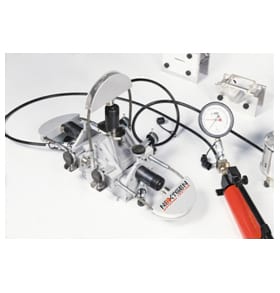
ASTM D5607 is a laboratory direct shear test method used to measure the shear strength behavior of rock (and concrete) specimens when the normal load is held constant during shearing. It is commonly applied to intact rock testing and to specimens containing a single plane of weakness (natural or artificial discontinuity), where sliding friction and peak/residual shear behavior are important.
Because ASTM D5607 has been marked withdrawn by ASTM, many labs encounter it as a legacy requirement inside project specifications or historical datasets. If you need help determining whether ASTM D5607 is the right reference for your discontinuity or interface shear program, talk with our team about your specimen type, boundary condition, and reporting needs.
ASTM D5607 — Standard Test Method for Performing Laboratory Direct Shear Strength Tests of Rock Specimens Under Constant Normal Force
ASTM D5607 is a test method focused on direct shear strength testing of rock specimens under a constant normal load boundary condition. The method is used to characterize shear resistance as the specimen is displaced in shear while a fixed normal force is maintained.
This standard is typically referenced in rock mechanics and geotechnical design contexts where shear strength data are used to support engineering decisions for slopes, foundations, underground openings, and interfaces where rock-to-rock or rock-to-concrete slip is a concern.
Quick definition
In plain terms: a lab direct shear test for rock (and concrete) where the specimen is pushed in shear while the normal force is held constant, producing shear strength versus normal stress and shear stress versus displacement behavior.
What this standard covers
ASTM D5607 establishes laboratory procedures for performing direct shear strength tests on rock specimens under constant normal force.
Typical specimen conditions covered include: intact rock, and specimens containing a single discontinuity (including natural joints or artificial interfaces such as rock–concrete). Discontinuities may be open, healed, or filled.
Typical results supported by the method include: shear strength measured at different applied normal stress levels, and shear stress versus shear displacement (useful for interpreting peak and post-peak behavior and shear stiffness trends).
Why this standard matters in testing
Direct shear strength of rock is strongly dependent on normal loading, surface condition, roughness, and discontinuity characteristics. ASTM D5607 is widely cited when a project needs repeatable, documented lab procedures for generating shear strength parameters under a constant normal load condition.
This standard is also commonly used when comparing materials, preparation approaches, or interface treatments (for example, evaluating whether an interface promotes sliding at lower normal loads).
Common materials, product types, or applications covered
Materials: hard rock, medium/soft rock, and concrete (including rock–concrete interfaces when prepared as a single shear plane).
Common applications: rock discontinuity friction characterization, intact rock shear behavior studies, interface shear evaluation for liners or concrete pours against rock, and geotechnical/rock mechanics programs where lab shear data support stability and design assumptions.
Common test or verification workflow
ASTM D5607 is typically run as a series of direct shear tests at multiple normal load levels to develop a shear strength relationship as a function of normal stress. Depending on the project goal, testing may emphasize peak strength, residual strength after displacement, and/or shear stress–displacement behavior.
Common workflow: define the shear plane (intact or discontinuity), condition and document the specimen condition (including any filling or moisture condition as required by the project), apply a selected constant normal load, shear the specimen monotonically while recording loads and displacements, and repeat across normal load levels needed for interpretation.
Equipment commonly used for this standard
ASTM D5607 is equipment-intensive compared with many routine lab tests because it requires controlled application of normal force while shearing a rock specimen and recording displacement accurately.
Common equipment families: rock direct shear frames or shear boxes capable of maintaining constant normal force, shear loading system (hydraulic or electromechanical), normal loading system, specimen holding fixtures (rings/holders appropriate to specimen geometry), and instrumentation for load and displacement.
Common instrumentation and accessories: load measurement for both normal and shear forces (for example, load cells or pressure-based measurement where appropriate), displacement measurement across the shear plane (often using LVDTs or equivalent), and data acquisition/control suitable for quasi-static monotonic shearing.
How to read this designation or revision
Designation: “ASTM D5607” identifies the standard number within ASTM Committee D18 (soil and rock). A suffix such as “-16” indicates the edition year (for example, ASTM D5607-16).
Status sensitivity: ASTM identifies D5607-16 as withdrawn (with no replacement). When a contract or customer requirement cites ASTM D5607, confirm whether they expect historical compliance to a specific year/edition, and align reporting and boundary condition expectations accordingly.
Related standards, methods, or frameworks when useful
ASTM D5607 is often considered alongside other rock mechanics and geotechnical shear methods, depending on whether the project needs a different boundary condition (for example, approaches that better represent field behavior for specific discontinuity conditions) or a different material category (for example, soils versus rock).
For lab planning, it is also common to coordinate direct shear testing with companion rock characterization work (for example, documenting moisture condition and specimen handling requirements specified by the project), since specimen condition can strongly influence shear results.
Get help selecting a direct shear setup
If you are configuring a rock direct shear system (frame capacity, normal-load control approach, displacement measurement, and fixtures for intact rock vs. discontinuity/interface testing), you can request a detailed quote matched to your specimen size range and reporting requirements.