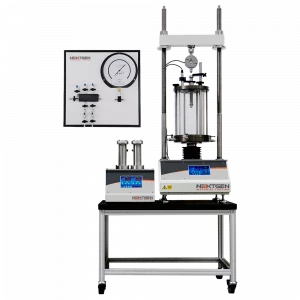
ASTM D2166 / D2166M is a standard test method for measuring the unconfined compressive strength of cohesive soils by applying axial load under strain-controlled conditions. It is commonly used for quick strength characterization of clays and other cohesive materials that can stand without lateral confinement during loading.
If you are unsure whether unconfined compression is appropriate for your soil type (or whether a laterally confined method is a better match), you can talk with our team about your material behavior and the test setup typically used in geotechnical labs.
ASTM D2166 / D2166M: Standard Test Method for Unconfined Compressive Strength of Cohesive Soil
ASTM D2166 / D2166M describes an unconfined compression test performed on a cylindrical specimen of cohesive soil. The method is intended for soils that retain intrinsic strength after removal of confinement and that will not expel or bleed water during the loading portion of the test.
This is a geotechnical strength test method (not a material specification). Because outcomes and reporting expectations can vary by the edition cited in a project, the exact version referenced in your contract or agency requirement matters.
Quick Definition
What it is: A strain-controlled axial compression test on an unconfined (no lateral pressure) cohesive soil specimen.
What it provides: An approximate compressive strength value expressed in terms of total stresses, suitable for quick characterization when the soil can be tested in an unconfined state.
What This Standard Covers
The standard covers determining unconfined compressive strength for cohesive soils in intact/undisturbed, remolded, or reconstituted conditions using a strain-controlled application of axial load.
It is limited to materials that can be tested without lateral confinement and that do not bleed water during loading. Materials such as dry/crumbly soils, fissured or varved materials, silts, peats, and sands are not expected to yield valid unconfined compression strength values under this method.
Why This Standard Matters in Testing
In many geotechnical programs, the unconfined compression test is used as a fast way to obtain compressive strength for cohesive soils that can stand unsupported during testing. It is often selected when a simple, repeatable lab strength number is needed without the additional complexity of lateral confinement.
The standard also supports sensitivity evaluation when tests are run on the same soil in both intact and remolded states (when the remolded soil can still retain a stable specimen shape).
Common Materials, Product Types, or Applications Covered
ASTM D2166 / D2166M is most commonly associated with cohesive soils that maintain shape and strength in an unconfined condition, including:
- Clays and clay-rich cohesive soils that can be trimmed and handled as a stable cylinder
- Cemented or structured cohesive soils that retain intrinsic strength after removal of confining pressure
- Lab-prepared cohesive specimens where unconfined testing is appropriate for the project need
Because the method is not intended for sands and other non-cohesive materials, soil classification and observed behavior during trimming/handling are practical indicators of whether this standard is a good fit.
Common Test or Verification Workflow
While project details and editions may vary, a typical ASTM D2166 / D2166M workflow includes preparing a cylindrical cohesive-soil specimen (intact or remolded/reconstituted), measuring specimen dimensions, then compressing the specimen axially under strain control while recording load and deformation.
Common workflow elements: Specimen preparation and measurement, strain-controlled axial loading, load/deformation data capture, calculation and reporting of unconfined compressive strength and the associated test conditions.
For soils where lateral confinement is needed to better represent undrained behavior, many projects instead reference a laterally confined unconsolidated-undrained triaxial method.
Equipment Commonly Used for This Standard
ASTM D2166 / D2166M typically points labs toward a compression loading system capable of applying axial load under controlled strain while measuring force and deformation accurately.
Common equipment families: Strain-controlled load frame (or universal testing system) with compression platens, calibrated force measurement (load cell or proving ring as applicable), axial deformation measurement, and data acquisition/control suitable for strain-controlled testing.
Common accessories: Specimen trimming and handling tools for cohesive soil cylinders, dimensional measurement tools, and supporting lab equipment used for documenting specimen condition and basic physical measurements as required by the cited test program.
If you are specifying a load frame for cohesive-soil UCS work and need help aligning capacity, control mode, and instrumentation to your lab throughput, you can request a detailed quote for a configuration matched to your workflow.
How to Read This Designation or Revision
Designation format: “D2166 / D2166M” identifies the standard number within ASTM’s soil and rock standards series.
Year suffix: ASTM standards are commonly cited with a year (for example, “-16” or “-24”). The year indicates the year of original adoption or the most recent revision for that cited edition.
Editorial changes and reapproval: Some ASTM designations also include markers for editorial changes or reapproval history. When your contract documents are edition-sensitive, match the exact designation (including any suffixes) to avoid differences in procedure or reporting expectations.
Related Standards, Methods, or Frameworks
ASTM D2166 / D2166M is often discussed alongside other geotechnical methods and practices that address different strength conditions, data handling, or quality expectations.
- ASTM D2850: A laterally confined unconsolidated-undrained triaxial compression method that is commonly referenced when confinement is needed for undrained shear strength evaluation.
- ASTM D3740: A practice commonly used in geotechnical programs for evaluating/establishing minimum requirements for agencies performing testing and inspection services.
- ASTM D6026: A practice commonly referenced for guidance on significant digits and rounding in geotechnical data reporting.
Discuss ASTM D2166 / D2166M equipment and setup
If you are equipping a geotechnical lab for cohesive-soil unconfined compression work, we can help you choose a strain-controlled loading system, instrumentation, and accessories that fit the capacity range and reporting needs in your cited edition. To compare configurations and pricing, request pricing for an ASTM D2166 / D2166M-ready setup.