ASTM D1151 is an ASTM practice that defines controlled moisture and temperature exposure conditions for evaluating how well an adhesive bond retains strength after conditioning.
Instead of prescribing a single bond-strength test, ASTM D1151 is commonly used alongside an appropriate strength method or product specification to compare “as-made” strength versus strength after environmental exposure. If you need help aligning exposure conditions and a companion strength test to your bonded assembly, talk with our team.
ASTM D1151 – Standard Practice for Effect of Moisture and Temperature on Adhesive Bonds
ASTM D1151 defines a practical conditioning approach for adhesive-bonded specimens exposed continuously to specified moisture and temperature conditions. Results are typically reported as retained strength (often expressed as a percentage of the original, unexposed strength) after the exposure period.
This document is best used as an environmental durability screen or verification step when you need repeatable exposure conditions before performing a bond strength measurement.
Quick definition
Document type: Practice (environmental conditioning and performance expression).
What it helps measure: Strength retention of adhesive bonds after continuous exposure to controlled moisture and temperature.
What it does not do: It does not, by itself, define one required strength test for every adhesive/joint design—strength testing is typically defined by a companion method or material specification.
What This Standard Covers
ASTM D1151 focuses on environmental exposure conditions (moisture and temperature) applied to bonded specimens, followed by a comparison of bond strength before and after exposure.
Key outcome: Performance is commonly expressed as a retained-strength ratio (exposed strength divided by original strength), often shown as a percentage for easy comparison across materials, adhesive chemistries, or surface preparations.
Why This Standard Matters in Testing
Many adhesive systems perform well at room conditions but lose strength when exposed to elevated temperature, moisture, or combined environments. ASTM D1151 provides a repeatable way to apply those environmental stressors so your lab can compare candidates, verify process changes, or support qualification requirements that call for moisture/temperature durability.
Practical value: Because it emphasizes exposure control and a simple retained-strength expression, it is frequently used for screening, supplier comparisons, and internal QA checks where consistent conditioning is critical.
Common Materials, Product Types, or Applications Covered
ASTM D1151 is used with adhesive-bonded assemblies where moisture and temperature exposure may degrade the bond line, the adherends, or the interface.
Common applications: Bonded structural or semi-structural assemblies, bonded panels, and adhesive joints where environmental durability is part of acceptance testing or product qualification.
Common Test or Verification Workflow
ASTM D1151 is typically one step in a broader verification plan that includes specimen preparation, baseline strength measurement, controlled exposure, and post-exposure strength measurement.
Common workflow: (1) Prepare bonded specimens per a product specification or internal procedure, (2) measure baseline bond strength using an appropriate mechanical test method, (3) expose specimens continuously at specified moisture/temperature conditions for a defined duration, (4) re-test strength, and (5) report retained strength (often as a percentage of baseline).
Duration sensitivity: Exposure duration is commonly driven by the adhesive system and the governing material or product specification, so test planning should confirm both the conditioning time and the post-exposure strength method.
Equipment Commonly Used for This Standard
Because ASTM D1151 is centered on controlled exposure plus a before/after strength comparison, most setups combine environmental conditioning equipment with mechanical test equipment selected for the joint design.
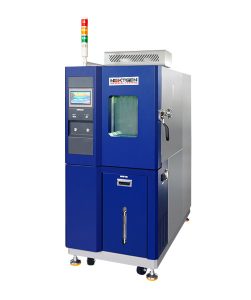
Common conditioning equipment: Temperature/humidity environmental chambers (for controlled moisture and temperature exposure), temperature-controlled ovens (for elevated-temperature conditioning where humidity control is not required), and temperature-controlled water baths or immersion setups when moisture exposure is specified via water contact.
Common strength-test equipment: Universal testing machines (UTMs) with grips/fixtures matched to the selected bond strength method (for example, lap shear, tensile, peel, or other joint-specific strength tests), plus appropriate load cells and displacement measurement as required by the companion method.
Selection caution: The conditioning environment and the chosen post-exposure strength test drive the equipment configuration. If you are matching a chamber and test frame to a specific adhesive-joint geometry and exposure condition, you can request a detailed quote for a configuration aligned with your lab workflow.
How to Read This Designation or Revision
ASTM D1151 is commonly cited in a format such as D1151-00(2022) or as a reapproved designation shown as D1151-00R22 in catalogs. In this style, “D1151” is the standard number, “-00” indicates the year associated with the last revision, and the “(2022)” / “R22” indicates a reapproval year.
Revision sensitivity: When you are quoting equipment or writing a compliance plan, match the exact edition cited by your customer or specification, since exposure conditions, reporting expectations, or referenced terminology can vary by edition.
Related Standards, Methods, or Frameworks
ASTM D1151 is typically paired with an adhesive bond strength test method that matches the joint design (for example, lap shear, tensile, or peel configurations) and with any applicable material/product specifications that define specimen construction, exposure duration, and acceptance criteria.
If your requirement references ASTM D1151 but does not specify the companion strength method, clarify that detail before building your test plan and selecting fixtures.
Talk with us about an ASTM D1151 test setup
If you are selecting an environmental chamber and mechanical test system for adhesive bond durability work, contact our team to discuss exposure conditions, specimen size, and the strength-test fixtures that best match your application.