ASTM E208 is a standard test method for conducting a drop-weight test to determine the nil-ductility transition temperature (NDT) of ferritic steels. It is commonly referenced when a purchase order, code case, or material specification requires evidence of brittle-fracture resistance at low temperature using the drop-weight approach.
The output of this method is typically used to support fracture-control decisions for thicker steel sections, where temperature-driven transition behavior is critical. If you need help aligning a cited edition of ASTM E208 to your material thickness and test temperature range, talk with our team.
ASTM E208 — Standard Test Method for Conducting Drop-Weight Test to Determine Nil-Ductility Transition Temperature of Ferritic Steels
ASTM E208 defines a drop-weight test method used to determine the nil-ductility transition (NDT) temperature for ferritic steels that meet the thickness range covered by the standard. The method is most often used as part of a broader brittle-fracture control or fracture-toughness qualification workflow.
Quick Definition
Document type: Test method.
What it determines: A temperature value (NDT) associated with transition-to-brittle behavior using a standardized drop-weight test setup and acceptance criteria.
Typical use case: Establishing or checking a low-temperature transition reference point for ferritic steel products where brittle fracture is a concern.
What This Standard Covers
ASTM E208 covers determination of the nil-ductility transition (NDT) temperature of ferritic steels in a defined thickness range. It is written for situations where an inquiry, contract, order, or specification states that the steel is subject to fracture-toughness requirements determined by the drop-weight test.
Scope note: The standard’s scope is specific to ferritic steels and is explicitly tied to minimum thickness (the method is intended for thicker material, not thin sheet).
Why This Standard Matters in Testing
Ferritic steels can show a strong temperature dependence in fracture behavior, especially in the presence of notches or crack-like flaws. ASTM E208 provides a standardized way to establish an NDT temperature that can be used as a reference point in brittle-fracture evaluations and material acceptance decisions.
From a practical lab perspective, the standard often drives requirements for controlled low-temperature conditioning, repeatable impact energy delivery, and clear documentation of the test temperature associated with each result.
Common Materials, Product Types, or Applications Covered
ASTM E208 is most commonly applied to ferritic steel products where low-temperature toughness and brittle-fracture resistance are design concerns, particularly in thicker sections.
Commonly encountered contexts: Pressure-containing and structural components, heavy plate, forgings, cast steel components, and other applications where brittle-fracture control programs reference an NDT temperature.
Common Test or Verification Workflow
ASTM E208 is typically run as a controlled-temperature series rather than a single test, because the goal is to establish the transition reference temperature (NDT) rather than a single “pass/fail” at one temperature.
Common workflow:
- Machine and prepare drop-weight specimens appropriate to the standard and the product being evaluated.
- Condition specimens to the required test temperature (often requiring stable sub-ambient temperature control).
- Perform the drop-weight impact event per the standard method and evaluate the outcome at each temperature step.
- Determine and report the NDT temperature result as defined by the standard, along with required test details (temperature, specimen identification, and relevant equipment information).
Equipment Commonly Used for This Standard
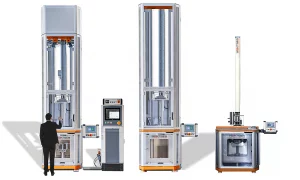
ASTM E208 is equipment-intensive because it combines controlled-temperature conditioning with a repeatable drop-weight impact event. The exact configuration depends on specimen size requirements, facility safety practices, and the temperature range being evaluated.
Common equipment families:
- Drop-weight impact test system (drop tower) capable of repeatable drop height / impact energy control as required by the method.
- Specimen support/anvil and striker/impactor components designed for the standard’s specimen format.
- Low-temperature conditioning equipment (environmental chamber, cold bath system, or equivalent) suitable for the specified test temperatures and stabilization time.
- Temperature measurement and verification tools (surface/contact sensors and/or embedded measurement approaches as appropriate for the lab’s procedure).
- Specimen machining and notch preparation capability appropriate to the standard’s requirements.
If you are comparing drop tower capacity, conditioning options, or enclosure/safety configurations for an ASTM E208 workflow, you can request a detailed quote matched to your target temperature range and specimen throughput.
How to Read This Designation or Revision
ASTM standards are commonly cited as “ASTM E208” followed by a hyphen and a revision year (for example, ASTM E208-20). A suffix such as “e1” may also appear on some editions, indicating an editorial-type update to that year’s revision.
Practical tip: When ASTM E208 is referenced in a contract or specification, match the exact cited edition (including any suffix) before finalizing test parameters, documentation, or equipment configuration.
Related Standards, Methods, or Frameworks
ASTM E208 results are often used alongside broader fracture-control or brittle-fracture assessment requirements that may be defined by a project specification, purchase order, or industry code. In many programs, NDT is treated as one input among multiple mechanical-test and service-condition checks.
Talk with a Testing Specialist
If you are planning ASTM E208 testing and want to confirm the right temperature-conditioning approach, drop-weight system configuration, or documentation package for your cited edition, contact our team to discuss your material and test requirements.