ASTM C367/C367M is a standard test methods document used to evaluate strength-related properties of prefabricated architectural acoustical tile and lay-in ceiling panels. It focuses on hardness, friability, sag, and transverse strength rather than serving as a product specification.
These test methods are commonly used during product development, manufacturing control, specification acceptance, and service evaluation for acoustical ceiling products. If you need help deciding whether this standard fits your panel type or test program, Contact Us.
ASTM C367/C367M Standard Test Methods for Strength Properties of Prefabricated Architectural Acoustical Tile or Lay-In Ceiling Panels
ASTM C367/C367M addresses physical strength properties that matter when acoustical ceiling products are handled, installed, and exposed to service conditions. The document is written as a set of test methods so results can be generated in a repeatable way across labs, product lines, and project requirements.
The standard is narrow in scope and product-specific. It applies to prefabricated architectural acoustical tile and lay-in ceiling panels, and it allows the user to select only the tests that are relevant for the product and application being evaluated.
Quick Definition
Document type: Standard test methods.
Primary properties: Hardness, friability, sag, and transverse strength.
Typical use: Ceiling panel development, quality control, specification support, and comparison of strength-related performance under defined test conditions.
What This Standard Covers
ASTM C367/C367M covers four separate evaluations used to characterize the strength properties of acoustical tile and lay-in ceiling panels. Not every product needs every test, so the cited project requirement or internal quality plan usually determines which sections apply.
-
Hardness: Resistance to surface indentation.
-
Friability: Tendency to crumble or lose material, especially at edges and corners.
-
Sag: Deviation from flatness under defined exposure conditions.
-
Transverse strength: Resistance to loading across the panel span.
Because the standard is organized as multiple methods within one document, it often supports a mixed test plan rather than a single one-step bench test.
Why This Standard Matters in Testing
Acoustical ceiling materials are often relatively low-density and need to balance sound absorption with practical durability. ASTM C367/C367M is useful because it measures properties tied to surface damage, edge breakdown, dimensional stability, and flexural resistance during handling and use.
For manufacturers and specifiers, these results can help compare panel constructions, track production consistency, and support product acceptance where strength-related ceiling properties are part of the requirement set. The standard is especially useful when appearance and field handling are just as important as acoustic performance.
Common Materials, Product Types, or Applications Covered
The scope is aimed at prefabricated architectural acoustical tile and lay-in ceiling panels. In practice, ASTM C367/C367M is most relevant for acoustical ceiling products used in suspended ceiling systems where panel damage, humidity response, or breakage risk can affect installation quality and service appearance.
Common product types: Acoustical ceiling tiles, lay-in ceiling panels, and other prefabricated architectural acoustical panels cited to this method.
Common evaluation context: Product qualification, factory quality checks, submittal support, competitive comparison, and follow-up testing when shipping or installation damage is a concern.
Common Test or Verification Workflow
A typical ASTM C367/C367M workflow starts with identifying the panel construction, thickness, and the exact properties that matter for the application. Samples are then prepared and conditioned under controlled laboratory conditions before the selected tests are run.
From there, the workflow usually branches by property. Hardness looks at indentation resistance, friability looks at edge and corner durability, sag looks at dimensional stability under exposure, and transverse strength looks at flexural loading behavior. The final report is used for comparison, quality monitoring, or specification support rather than as a universal pass-fail statement for every ceiling product.
Common workflows: Incoming comparison testing, production lot checks, product development trials, and project-specific verification of panel handling or service-related strength properties.
Equipment Commonly Used for This Standard
ASTM C367/C367M usually points to a small group of mechanical test and conditioning tools rather than a single dedicated instrument. The exact setup depends on which sections of the standard are being performed.
| Property | What Is Being Evaluated | Common Equipment Path |
|---|---|---|
| Hardness | Surface indentation resistance | Mechanical or hydraulic test machine with the specified penetrator |
| Friability | Resistance to edge and corner damage | Balance plus the specified rotating friability container and media |
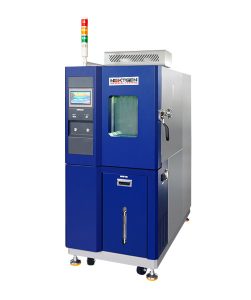
| Sag | Dimensional stability and center deflection | Conditioning or exposure chamber with a setup for sag measurement |
| Transverse strength | Flexural load resistance across the specimen span | Load frame or testing machine configured for transverse loading |
Common equipment: Load frames, penetrator fixtures, environmental conditioning equipment, balances, friability apparatus, and measurement accessories suitable for panel specimens.
Practical quoting caution: ASTM C367/C367M often requires more than one fixture or station, so equipment selection depends on whether you need one property only or a full four-part testing workflow.
How to Read This Designation or Revision
ASTM C367/C367M uses ASTM’s fixed designation format. The number following the designation identifies the year of original adoption or last revision, and a year in parentheses indicates a reapproval. An editorial change may also appear as an epsilon suffix in ASTM formatting.
The paired designation C367/C367M shows that the document contains SI and inch-pound units. Those unit systems are used separately rather than mixed. Older citations may appear as ASTM C367 without the paired metric designation, while later versions are commonly cited as ASTM C367/C367M.
Revision sensitivity: If a purchase order, project manual, or customer specification calls out a specific year or reapproval, the lab setup and report should match that cited edition.
Related Standards, Methods, or Frameworks
ASTM C367/C367M is often read alongside other acoustical ceiling references when a project needs both product classification and strength-property testing.
Related standards: ASTM E1264 for classification of acoustical ceiling products and ASTM C634 for terminology used in building and environmental acoustics.
That relationship matters because a ceiling product may be classified under one document while its hardness, friability, sag, or transverse strength are evaluated under ASTM C367/C367M.
Get Help with ASTM C367/C367M Equipment Selection
If you are planning ASTM C367/C367M work, the main decision is whether you need a single-property setup or a broader system that can support indentation, friability, environmental exposure, and transverse loading in one program.
For equipment options, fixture planning, or a lab-ready configuration for this standard, Request a Quote.