ASTM F606/F606M is a set of standard test methods used to determine mechanical properties for externally and internally threaded fasteners (such as bolts, screws, studs, and nuts), plus washers, direct tension indicators (DTIs), and rivets. It is commonly used in acceptance testing and quality control where a product specification calls out proof load, tensile behavior, hardness, or related verification.
Because property requirements are typically defined in the individual product standard (and F606/F606M supplies the test procedures), edition matching and the exact required test set matter. If you need help mapping a product requirement to the right F606/F606M test approach, talk with our team.
ASTM F606/F606M — Standard Test Methods for Determining the Mechanical Properties of Externally and Internally Threaded Fasteners, Washers, Direct Tension Indicators, and Rivets
ASTM F606/F606M provides standardized procedures used by labs and manufacturers to evaluate mechanical performance of threaded fasteners and related hardware. It is frequently referenced by fastener product specifications that define pass/fail requirements (loads, strengths, and hardness ranges) and rely on F606/F606M for how those properties are measured.
This document is a practical “how-to test” reference for multiple fastener and accessory types, spanning tensile-related tests, proof loading approaches, and hardness methods, with additional procedures for items like DTIs and coated fasteners where specialized checks may be required.
Quick Definition
Document type: Standard test methods.
In plain terms: A collection of standardized mechanical test procedures used to verify fasteners, nuts, washers, DTIs, and rivets when a product standard requires mechanical performance confirmation.
What This Standard Covers
ASTM F606/F606M covers procedures used to determine mechanical properties for:
- Externally threaded fasteners: including hardness checks, proof load approaches, and tensile-based evaluations (full-size and, where permitted, machined specimens).
- Internally threaded fasteners (nuts): including hardness and proof-type testing (including cone proof load).
- Washers and DTIs: including hardness-based verification and compression-load type evaluation for DTIs.
- Rivets: including hardness-based evaluation.
- Additional checks in the standard: procedures addressing embrittlement evaluation of metallic-coated externally threaded fasteners and a method addressing decarburization/carburization determination.
F606/F606M also clarifies that property requirements and which tests apply are typically defined by the individual product standard; when a product standard differs, the product standard’s test requirements control.
Why This Standard Matters in Testing
Fasteners are often safety- and liability-critical components, and many purchasing requirements are written around standards-based acceptance. ASTM F606/F606M is widely used because it standardizes how mechanical verification is performed, helping reduce ambiguity between suppliers, third-party labs, and end users.
From an equipment and lab workflow standpoint, F606/F606M is important because it drives decisions about load capacity, fixturing, measurement approach (for example, proof loading by length measurement versus other approaches), and the balance between full-size testing and other permitted evaluations.
Common Materials, Product Types, or Applications Covered
ASTM F606/F606M is used across common industrial fastener categories where mechanical properties must be demonstrated using standardized procedures, including:
- Bolts, screws, and studs: full-size tensile-related testing and proof-type verification where required by the product specification.
- Nuts: proof-type verification and hardness checks used to support acceptance in many nut specifications.
- Washers (including heat-treated washer types): hardness-based verification and related checks that support product-standard compliance.
- DTIs (direct tension indicators): compression-load style evaluation used to support DTI performance requirements.
- Rivets: hardness-based evaluation.
Because the required properties and acceptance limits usually come from the product standard, the same F606/F606M lab may support very different purchasing specifications depending on fastener grade, size, coating, and service environment.
Common Test or Verification Workflow
A typical ASTM F606/F606M-driven workflow is organized around the product specification’s requirements and then mapped to the correct F606/F606M procedures.
Common workflow steps:
- Identify the governing product standard and confirm which mechanical properties must be documented (for example, hardness, proof load, or tensile-related properties).
- Select the appropriate F606/F606M procedure(s) for the product type (externally threaded fastener, nut, washer, DTI, or rivet).
- Perform the required testing using appropriate fixturing and measurement approach for the cited procedure.
- Record and report results in the units and format expected by the purchasing/product specification, including the edition year of the cited standard(s).
Practical caution: F606/F606M contains multiple procedures and options; the “right” approach is often dictated by the product specification and the part geometry (size, length, thread form), so test planning matters as much as test execution.
Equipment Commonly Used for This Standard
ASTM F606/F606M typically points to a mix of tensile/load-frame equipment and hardness equipment, plus application-specific fixtures for fasteners and accessories.
Common equipment families:
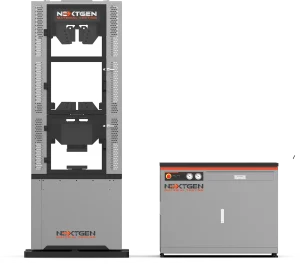
- Universal testing machines (UTMs): for axial tension and proof-type loading, typically configured with a suitable load cell, controls, and data acquisition for the required measurement approach.
- Fastener tensile fixtures: threaded adapters, nut/bolt holders, and related tooling designed to apply axial load through the fastener assembly in a controlled, repeatable way.
- Wedge-tension fixtures: used when the test program calls for wedge-based evaluation on full-size products.
- Compression tooling: commonly used for washer and DTI compression-style evaluations (where required by the product standard and the applicable F606/F606M procedure).
- Hardness testers: commonly Rockwell and/or Brinell hardness systems, with microindentation capability where needed for smaller parts or specific evaluation requirements.
- Measurement accessories: depending on the selected procedure, this may include appropriate length-change measurement tools or extensometry suited to the test setup.
If you are selecting a load frame, fixtures, and measurement package for fastener testing programs that cite F606/F606M, you can request pricing for an equipment configuration matched to your part sizes, force range, and required procedures.
How to Read This Designation or Revision
F606/F606M: The “/M” indicates the standard is presented for use with SI metric units as well as inch-pound units, and the standard treats the two unit systems separately (they are not intended to be combined).
Edition year suffix: The year shown after the designation (for example, F606/F606M-21) indicates the year of adoption or, for a revision, the year of the last revision. Some editions may also include an additional suffix as part of the designation (for example, “-25a”); cite the complete designation shown in your contract or purchase specification.
Revision sensitivity: Test setup details, allowed options, and reporting expectations can change between editions, so the cited year (and any suffix) should be treated as a required part of the test requirement.
Related Standards, Methods, or Frameworks when useful
ASTM F606/F606M commonly references other ASTM standards for general testing requirements and verification practices used in the same workflow.
Examples of commonly associated references: ASTM E8/E8M (tension testing of metallic materials), ASTM E4 (force verification of testing machines), ASTM E18 (Rockwell hardness), ASTM E10 (Brinell hardness), and ASTM E83 (extensometer verification/classification).
In many procurement or compliance situations, the product specification for the fastener, nut, washer, DTI, or rivet defines the acceptance criteria and points to F606/F606M (and related standards) for how testing is performed.
Talk with us about ASTM F606/F606M testing setup
If you need help selecting fixturing, force capacity, and measurement approach for an ASTM F606/F606M test program, contact our team with your fastener types, size range, and the exact edition cited on your requirement.