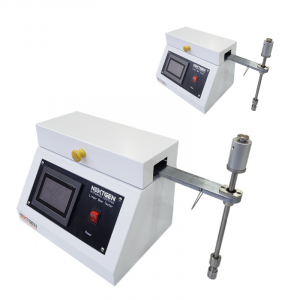
ASTM F1319 is a test method that uses a crockmeter-style rubbing action to evaluate abrasion and smudge resistance of printed or copied images. Results are based on how much image material transfers to a white cloth and/or how the image changes after rubbing.
This standard is commonly referenced for business forms, transactional documents, and other printed outputs where readability after handling matters. If you need help determining whether this method fits your print technology and acceptance needs, talk with our team.
ASTM F1319 — Standard Test Method for Determination of Abrasion and Smudge Resistance of Images Produced from Business Copy Products (Crockmeter Method)
ASTM F1319 describes a controlled rubbing procedure intended to simulate handling damage, such as paper-to-paper rubbing against a printed image. The method is associated with “crocking” style evaluations where transferred image material is captured on a cloth.
ASTM has listed ASTM F1319 as withdrawn (with no replacement), so procurement and compliance teams should confirm what edition (if any) is cited in customer, internal, or legacy requirements before setting up equipment or reporting formats.
Quick Definition
Document type: Test method.
What it evaluates: Image abrasion/smudge behavior by rubbing and observing image transfer to a white cloth and/or changes to the image after rubbing.
Common name: Crockmeter method for printed image rub resistance.
What This Standard Covers
ASTM F1319 focuses on determining the amount of image material that transfers to a white cloth during a defined rubbing action. It is positioned for “business copy products,” including images produced by impact printers, thermal transfer printers, and non-impact printers or copiers.
The standard also allows for comparing samples before and after rubbing, supporting evaluations where a print’s functional performance after handling (for example, readability) is important.
Why This Standard Matters in Testing
Many printed images can look acceptable immediately after printing but degrade with routine handling, stacking, or document-to-document contact. A crocking-style rub evaluation helps identify whether an ink, ribbon, toner, substrate, or printer setup is likely to smear, abrade, or transfer under use conditions.
Because rub-transfer results can be sensitive to print technology, supplies, and environmental conditions, teams often use this type of method for quality control checks, supplier comparisons, and print process development work.
Common Materials, Product Types, or Applications Covered
ASTM F1319 is most often associated with printed or copied images where resistance to smudging and abrasion is a performance requirement.
Common applications: Business forms, transactional documents, office printing/copying outputs, and other printed substrates where image transfer to adjacent sheets or loss of legibility is a concern.
Common imaging technologies: Impact printing, thermal transfer printing, and non-impact printer/copier outputs.
Common Test or Verification Workflow
Most labs use ASTM F1319 as a comparative method: prints are prepared consistently, rubbed in a controlled way, and then evaluated for transferred image material and/or image change.
Common workflow: Prepare printed samples → condition/handle consistently as required → rub using a crockmeter-style tester with a white cloth → compare transfer and image appearance against a control, specification limit, or internal benchmark.
Equipment Commonly Used for This Standard
ASTM F1319 points to a crockmeter-based rubbing setup and supporting tools for documenting change and transfer. Final configuration depends on the cited edition and how your lab documents results.
Common equipment: Crockmeter (crocking/rub tester), white crocking cloth, sample mounting accessories, and basic inspection/measurement tools for before-and-after comparisons.
Common lab add-ons: Densitometry or image evaluation tools when numerical before/after comparisons are required by an internal procedure.
If you are selecting a crockmeter-style rub tester or need a configuration aligned to a legacy requirement, you can request a detailed quote based on your sample size, throughput, and documentation needs.
How to Read This Designation or Revision
ASTM citations for this method commonly appear with a base designation and a year in parentheses (for example, ASTM F1319-94(2011)). The base number identifies the method, while the year format indicates the year associated with the referenced edition.
Because ASTM identifies ASTM F1319 as withdrawn (and notes no replacement), it is especially important to match the exact cited edition in a contract, customer drawing, internal SOP, or regulatory file when defining rubbing conditions and reporting expectations.
Related Standards, Methods, or Frameworks
Other abrasion or rub-resistance approaches may be referenced for similar printed-image durability questions. ASTM F1319 itself notes that results from different rub/abrasion instruments are not necessarily equivalent, so method selection should be driven by what a customer or internal requirement actually cites.
Commonly referenced alternatives: Taber Abrader-based image abrasion methods and other rub testers (for example, Sutherland-type rub testers) used for smudge/abrasion evaluation of printed images.
Discuss your ASTM F1319 test setup
If you’re working from an older citation or need to align equipment and reporting to a specific customer callout, contact our team to review your sample type, evaluation method, and the exact edition being referenced.