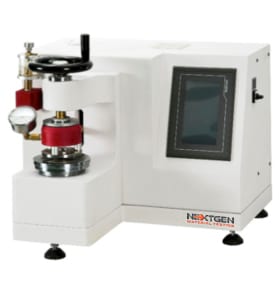
ASTM D2210 is a standard test method for evaluating how light leather resists grain cracking and how much it extends when the material is bulged by steady hydraulic pressure using a Mullen-type diaphragm tester.
If you are unsure whether D2210 applies to your leather type (or to a specific customer/specification callout), talk with our team about the material, thickness range, and reporting requirements before choosing a setup.
ASTM D2210 — Standard Test Method for Grain Crack and Extension of Leather by the Mullen Test
ASTM D2210 is used to determine the force required to crack the grain surface of leather during a controlled bulging deformation, and to measure leather extension at defined loads or at the point of grain crack.
The method is commonly referenced for manufacturing control, acceptance checks, and performance comparisons where the “lasting” behavior of light leather is important.
Quick Definition
What it is: A leather physical test that uses steady hydraulic pressure on a diaphragm to bulge a clamped leather specimen until grain cracking occurs (and/or to specified loads).
What it outputs: Grain crack force and leather extension (stretch) values tied to the loads and endpoints defined in the standard.
What it is not: A general “burst strength” test for all materials or a universal method for all leather types.
What This Standard Covers
ASTM D2210 covers resistance to grain cracking and measurement of extension for light leathers when bulged from the flesh side using a diaphragm-based (Mullen) test instrument.
The scope is limited to light leathers (such as shoe uppers, garment leather, gloves, and upholstery) and excludes certain leather conditions (for example, it does not apply to wet blue or wet white).
Why This Standard Matters in Testing
Grain cracking can be a practical failure mode in forming and lasting operations, where the material must deform without the grain surface splitting. D2210 helps labs and production teams quantify how much bulging deformation a leather can tolerate before the grain cracks.
Because natural defects (cuts, scratches, and similar discontinuities) can strongly influence results, consistent specimen selection and careful clamping are essential for meaningful comparisons and for reducing avoidable variability.
Common Materials, Product Types, or Applications Covered
ASTM D2210 is typically applied to light leather materials where controlled stretching during fabrication or end use is a concern.
Common product areas: Shoe upper leather, garment leather, glove leather, upholstery leather.
Common reasons for use: Lot-to-lot quality control, supplier qualification, comparing finishing/tanning variations, and troubleshooting grain-crack complaints tied to forming or shaping operations.
Common Test or Verification Workflow
D2210 is commonly run as a comparative physical test in a QC or lab environment, with results reported against a customer specification, internal control limits, or a product-development target.
Typical workflow:
- Cut and identify specimens taken from defined areas/directions of the leather.
- Clamp the specimen in the Mullen-style test head with the required opening/diaphragm geometry for the method.
- Apply steady hydraulic pressure to bulge the specimen from the flesh side.
- Record the load/pressure at grain crack and measure extension at specified loads or at the cracking endpoint (as applicable to the cited procedure).
- Report results in the units and format required by the cited edition and by the customer/specification.
Equipment Commonly Used for This Standard
D2210 typically points to a diaphragm-based Mullen test instrument configured for leather grain crack/extension measurement. In many labs this is a dedicated burst/bulge tester with accessories intended for leather specimens.
Common equipment elements: Mullen-type hydraulic diaphragm tester, appropriate clamping head/rings for the method, pressure/load indication, and a means of measuring bulge/extension as required by the procedure.
Common supporting tools: Specimen cutting dies or cutters, thickness measurement tools (when needed for internal control), and conditioning/environmental controls when the purchase specification requires defined conditioning prior to test.
If you are matching an instrument to an existing spec callout (including specimen size, clamp geometry, or extension measurement approach), you can request a detailed quote for a configuration aligned to your test volume and reporting needs.
How to Read This Designation or Revision
ASTM standards are identified by a letter-and-number designation (here, D2210). The suffix after the hyphen indicates the last two digits of the year of acceptance or last revision (for example, “D2210-21”).
Older listings may also show reapproval notation (for example, an “R” with a year) for versions that were reaffirmed without a technical revision. For procurement, reporting, and compliance, it is good practice to document the exact cited year-date/edition used for testing.
Related Standards, Methods, or Frameworks when useful
ASTM D2210 is maintained within ASTM’s leather standards activity (Committee D31). In many leather QA programs it is used alongside other D31 physical-property methods selected to match the product’s performance risks (for example, strength, tear, flexibility, or finish durability tests).
When a customer specification references multiple leather methods, equipment selection should be based on the complete list of required tests and the exact editions cited.
Get help selecting a D2210-ready test setup
If you need help aligning a Mullen-style leather grain crack/extension tester to a specific ASTM D2210 year-date and your internal reporting format, contact our team with the edition you must follow and the leather types you test.