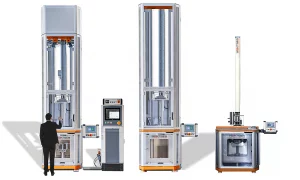
ASTM D7136/D7136M is a standard test method for measuring the damage resistance of continuous-fiber, polymer matrix composite laminates subjected to a controlled drop-weight impact event. It is widely used to characterize how composite panels respond to low-velocity impacts that can create internal damage with limited visible indication.
This method is commonly used as a stand-alone damage resistance screen or as the impact-damage step before follow-on damage tolerance testing (such as compression-after-impact programs). If you need help confirming whether D7136/D7136M fits your laminate form, thickness range, and impact energy target, talk with our team.
ASTM D7136/D7136M-25 Standard Test Method for Measuring the Damage Resistance of a Fiber-Reinforced Polymer Matrix Composite to a Drop-Weight Impact Event
ASTM D7136/D7136M is a drop-weight impact test method focused on composite laminate plate specimens. The intent is to create a defined impact event and then quantify damage resistance based on the resulting damage size and characteristics.
Because impact response is sensitive to specimen geometry, support conditions, impactor geometry, and energy level, D7136/D7136M is typically used for controlled comparisons within a defined configuration rather than as a universal “single-number” material property.
Quick Definition
Drop-weight impact damage resistance test for multidirectional polymer matrix composite laminated plates using a hemispherical impactor, with damage quantified after impact.
What This Standard Covers
ASTM D7136/D7136M covers an out-of-plane, concentrated impact event applied to a flat, rectangular composite laminate plate using a drop-weight device.
In practical terms, it addresses: selecting a defined impact energy (via impactor mass and drop height), applying impact with a hemispherical striker, and documenting the resulting damage in the specimen.
The method also allows optional measurement of impact contact force and impactor velocity during the event when the drop-weight system is instrumented for those signals.
For sandwich constructions, D7136/D7136M points to a separate practice for procedure modifications rather than treating sandwich panels as fully interchangeable with monolithic laminate plates.
Why This Standard Matters in Testing
For many composite structures, susceptibility to concentrated impact damage is a major design and qualification concern. D7136/D7136M provides a standardized way to create repeatable impact events and compare damage resistance across laminate designs, processing variables, or material systems.
This test method is also frequently used to introduce controlled damage into specimens for subsequent strength testing, supporting common damage tolerance programs where post-impact performance is evaluated.
Common Materials, Product Types, or Applications Covered
ASTM D7136/D7136M is used for continuous-fiber reinforced polymer matrix composite laminates, typically evaluated as multidirectional laminate plates.
Common use cases: aerospace and defense composite laminates, industrial composite panels, and R&D screening of layups or resin/fiber systems where impact damage resistance is a selection or qualification driver.
Common Test or Verification Workflow
D7136/D7136M is commonly run as a controlled impact-and-inspection workflow, with the impact event defined first and the damage assessment performed afterward.
Typical workflow elements: define specimen configuration and support, set impactor mass and drop height to achieve the specified potential energy, perform the impact, and then measure and record the resulting damage characteristics required by the test plan.
The standard is also used as the impact-damage step before compression testing under ASTM D7137/D7137M when running a Compression After Impact (CAI) sequence.
Equipment Commonly Used for This Standard
D7136/D7136M typically points to an instrumented or non-instrumented drop-weight impact system configured for composite plate specimens.
Common equipment families: drop-weight impact tower/device, hemispherical impactor/striker, specimen support fixture and clamping/boundary-condition hardware, and (when required) sensors and data acquisition for contact force and velocity.
Because results are sensitive to impactor geometry, boundary conditions, and impact energy definition, equipment selection and fixturing details should be matched to the exact edition and the test program requirements (including whether force/velocity traces are required, and how damage will be characterized).
How to Read This Designation or Revision
D7136/D7136M: “D” indicates an ASTM standard within the D-series, and “/D7136M” indicates the companion designation that supports SI and inch-pound usage under the combined standard.
Units note: D7136/D7136M states that SI and inch-pound values are regarded separately, and values from the two systems should not be combined for conformance.
Revision suffix (for example, “-25”): the number after the dash indicates the revision year of the cited edition. Always align the test setup, data requirements, and reporting format to the exact year/version called out in your customer, internal, or regulatory documentation.
Related Standards, Methods, or Frameworks
ASTM D7136/D7136M is often referenced alongside other composite damage and damage tolerance methods, depending on whether the goal is to measure impact damage resistance or residual strength after damage.
-
ASTM D7137/D7137M: commonly used to measure compressive residual strength of specimens after impact damage created per D7136/D7136M (CAI sequence).
-
ASTM D6264/D6264M: quasi-static indentation method that may be used as an alternative way to create out-of-plane damage in some programs.
-
ASTM D7766/D7766M: practice referenced for modifying procedures when assessing sandwich constructions.
Request a quote for a D7136/D7136M drop-weight impact setup
If you are specifying a drop tower, impactor, fixture set, or instrumentation package to support ASTM D7136/D7136M (including optional force/velocity capture), you can request a detailed quote based on your specimen size, energy range, and data requirements.