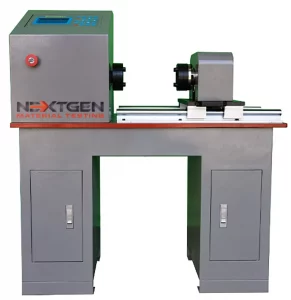
ASTM E143 is a standard test method used to determine the shear modulus of structural materials at room temperature using torsional loading in the elastic (Hookean) range.
This method is commonly referenced when design teams or QA/QC groups need a shear modulus value to support torsional stiffness calculations (for example, rotating shafts or springs) and want a repeatable, standards-based approach. If you need help aligning specimen geometry, torque/angle measurement, or reporting needs to the edition you are citing, contact our team.
ASTM E143: Standard Test Method for Shear Modulus at Room Temperature
ASTM E143 is a mechanical test method focused on determining shear modulus (modulus of rigidity) from a torque–twist response at room temperature. The intent is elastic-property measurement under conditions where creep is negligible relative to the immediate strain on loading.
Because shear modulus measurement is sensitive to specimen condition, alignment, and instrument capability, the most important practical outcome is obtaining clean, repeatable torque and angle-of-twist data in the appropriate low-strain region.
Quick definition
What it is: A torsion-based test method for determining shear modulus of structural materials at room temperature in the elastic range.
What it produces: A shear modulus value derived from torsional loading (torque) and angular deformation (twist) under controlled, low-strain conditions.
What it is not: A procedure for tangent or chord shear modulus in nonlinear elastic behavior, and it is not intended for conditions where creep meaningfully affects the result.
What this standard covers
ASTM E143 covers determination of shear modulus for structural materials using torsion at room temperature. It is intended for materials and stress levels where creep is negligible compared with the immediate strain response.
The method is used across a broad range of material types and specimen sizes, but test quality depends on using specimen geometry and apparatus capability that are appropriate for the material form (for example, solid vs. tubular sections) and the torsional stiffness involved.
Why this standard matters in testing
Shear modulus is a key elastic property used to estimate torsional compliance when the material follows Hooke’s law (angle of twist proportional to applied torque). When engineers need to support torsion-based design calculations with laboratory data, ASTM E143 provides a recognized framework for generating that modulus value.
In practice, repeatability depends heavily on specimen quality (for example, concentricity for round or tubular parts), test setup (alignment and axial position), and stable room-temperature conditions. This is why instrumentation capability and fixturing discipline often matter as much as the load capacity of the system.
Common materials, product types, or applications covered
ASTM E143 is commonly applied to structural materials where torsional stiffness is relevant and an elastic shear modulus is needed for design or verification.
Common applications: Rotating shafts, spring-related torsional calculations, and other components where torsion-driven deflection needs to be estimated from material properties.
Common specimen forms: Test coupons or representative sections prepared in geometries suitable for torsion (often cylindrical or tubular forms), where geometry control supports a clean elastic torque–twist response.
Common test or verification workflow
A typical ASTM E143 workflow is centered on obtaining high-quality torque and angle-of-twist data in the elastic region under room-temperature conditions.
- Define the goal (material shear modulus for design inputs, QA verification, or material comparison) and confirm the cited edition of ASTM E143.
- Select or prepare a torsion-suitable specimen geometry and document key dimensional features that influence torsional response (especially for tubes).
- Set up torsion fixtures with careful alignment and consistent axial positioning.
- Apply torsional loading within an elastic range appropriate to the material and the intended “creep negligible” condition.
- Record torque and twist with appropriate resolution, then compute/report shear modulus from the elastic torque–twist behavior.
Equipment commonly used for this standard
ASTM E143 generally points to torsion-capable mechanical test systems designed to measure torque and angular deformation accurately at low strain.
Common equipment: Torsion testing frames or torsion attachments, torsion fixtures/chucks sized for the specimen, calibrated torque transducers, and an angle-of-twist measurement system (for example, rotary encoder or equivalent angular measurement).
Common accessories: Alignment tools, specimen centering aids (especially important for tubular or slender specimens), and data acquisition/control software capable of producing stable torque–twist curves in the elastic region.
If you are selecting a torsion setup based on specimen stiffness and the torque/angle resolution you need, you can request a detailed quote for a configuration matched to your material form and measurement targets.
How to read this designation or revision
ASTM standards are commonly cited using the designation plus a hyphenated year, such as “ASTM E143-20.” The suffix year identifies the edition being referenced, and the specific edition can matter for instrument checks, calculation details, and reporting expectations.
Revision sensitivity: Setup details and reporting requirements may depend on the exact cited edition, particularly for how the elastic region is selected and how test variables are documented.
Related standards, methods, or frameworks when useful
ASTM E143 is often used alongside broader mechanical testing programs where multiple elastic and strength properties are being characterized. In those cases, shear modulus results may be paired with other modulus and strength measurements performed under separate, appropriate standards.
Practical note: When correlating shear modulus to other properties, keep the comparison disciplined—room-temperature elastic response, specimen geometry, and the specific measurement approach can change the outcome.
Talk with us about torsion testing setups for ASTM E143
Whether you are adding torsion capability to an existing lab or setting up a dedicated shear modulus workflow, we can help map your specimen geometry and measurement targets to a practical torque/angle instrumentation package. To discuss options, request pricing for a torsion configuration sized for your materials.