ASTM C451 is a standard test method for evaluating early stiffening in hydraulic cement paste. It is used when labs and producers need to understand whether a cement begins to stiffen too quickly after mixing and whether that behavior may affect handling, placement, or specification conformance.
This standard is narrower than a general setting-time method. It focuses on early stiffening behavior in paste and is commonly used in cement quality control, product evaluation, and troubleshooting when false set or flash set is a concern. If you need help deciding whether ASTM C451 fits your application, Contact Us.
ASTM C451 Standard Test Method for Early Stiffening of Hydraulic Cement (Paste Method)
ASTM C451 is written as a test method, not a product specification. Its purpose is to measure the degree of early stiffening in hydraulic cement paste and, when needed, support comparison against a specification limit.
Because the method works at the paste level, it is most useful in cement-focused laboratory programs rather than in finished concrete performance testing. It is often part of a broader cement evaluation workflow that also considers consistency, setting behavior, and other basic cement properties.
Quick Definition
Document type: Test method.
Primary focus: Early stiffening in hydraulic cement paste.
Common result: A penetration-based indication of how strongly the paste stiffens at an early stage, often used for relative comparison or specification compliance.
What This Standard Covers
ASTM C451 covers the determination of early stiffening in hydraulic-cement paste. In practical terms, it helps a laboratory evaluate whether a cement shows unusually rapid loss of plasticity soon after mixing.
The method is commonly used in two ways. One is compliance testing against a specified limit on early stiffening. The other is comparative evaluation, where the lab wants to understand the relative tendency of one cement or production lot to show this behavior.
This is not a broad concrete test and it is not a general acceptance standard for all cement performance. Its scope stays focused on early stiffening in paste.
Why This Standard Matters in Testing
Early stiffening can create handling and placement problems if cement paste or concrete loses workable consistency too quickly. ASTM C451 is valuable because it helps separate ordinary setting behavior from an early stiffening problem that may need attention in production or quality control.
In day-to-day operations, this can matter most where mixing times are short or where material is not continuously agitated before placement. The method is also useful when a lab needs to judge whether remixing changes the observed behavior, which can help distinguish a less persistent false set tendency from a more persistent and more serious flash set tendency.
That distinction matters for both process control and field performance discussions. A cement that only shows temporary stiffening may be handled differently than one that shows a stronger and more persistent early reaction.
Common Materials, Product Types, or Applications Covered
ASTM C451 applies to hydraulic cement paste. It is typically relevant in cement plant laboratories, independent test labs, construction materials labs, and QA programs that monitor cement behavior before the material is used in mortar or concrete production.
Common use cases include production quality control, incoming material checks, product qualification, and troubleshooting when fresh mixtures appear to tighten up too quickly after mixing. Because the test is performed on paste, it is especially useful when the goal is to isolate cement behavior rather than the combined response of a full aggregate-bearing mixture.
Common Test or Verification Workflow
A typical ASTM C451 workflow begins with preparing a hydraulic cement paste under controlled laboratory conditions. The paste is then evaluated through penetration measurements, and the result is used to judge the degree of early stiffening.
Where the method is being used for compliance, laboratories commonly focus on the calculated final penetration result and compare it with the limit named in the governing specification or purchase requirement. Where the method is being used for diagnosis or comparative evaluation, the remix portion of the procedure can add useful insight into how persistent the stiffening behavior is.
This method is best viewed as part of a cement laboratory workflow rather than a stand-alone answer to every setting or workability question. Users often interpret it alongside other cement tests when qualifying a material or investigating field complaints.
Equipment Commonly Used for This Standard
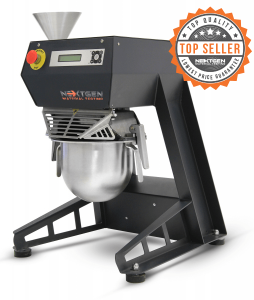
ASTM C451 commonly points to a cement testing setup centered on a Vicat apparatus and the supporting tools needed to prepare and handle cement paste consistently. Laboratories running this method also commonly use a laboratory mixer, a weighing device, and glass graduates as part of the overall workflow.
For buyers and lab managers, the main equipment question is usually not a large structural load frame. The more relevant path is a paste-preparation and penetration-measurement setup with the right accessories, conditioning practices, and cement-lab support items.
Common equipment path: Vicat apparatus, cement mixer, balance or mass-measuring device, graduates, and related cement paste preparation accessories.
Practical quoting caution: ASTM C451 setup decisions should match the exact edition cited by your customer or specification and should fit the rest of your cement laboratory workflow, especially if you also run related consistency or setting-time methods.
How to Read This Designation or Revision
In a citation such as ASTM C451-21, the number C451 identifies the ASTM standard designation and the suffix identifies the edition year. When a project, purchase order, or internal procedure calls out ASTM C451, the exact year matters because laboratories are expected to work to the cited edition.
Older references may show earlier years and, in some historical cases, an amended year suffix. That is why edition matching is important when comparing procedures, training records, or acceptance requirements across different documents.
Related Standards, Methods, or Frameworks
ASTM C451 is often considered alongside other cement time-of-set and paste or mortar evaluation methods. Related ASTM methods in the same general area include ASTM C359 for early stiffening of hydraulic cement by the mortar method, ASTM C191 for time of setting of hydraulic cement by Vicat needle, ASTM C266 for time of setting by Gillmore needles, and ASTM C807 for time of setting of hydraulic cement mortar by modified Vicat needle.
These standards are related, but they are not interchangeable. ASTM C451 stays focused on early stiffening in paste, so equipment selection and procedure planning should reflect that narrower purpose.
Need an ASTM C451 Equipment Quote?
If you are building out a cement lab, replacing a Vicat-based setup, or matching accessories to an ASTM C451 workflow, we can help configure the right equipment path for your testing program. Request a Quote.