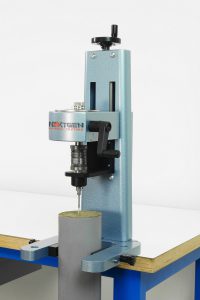
ASTM D4648/D4648M covers laboratory miniature vane shear testing used to estimate the undrained shear strength of saturated, fine-grained cohesive soils (typically clays and silts) from undisturbed, remolded, or reconstituted specimens.
This standard is commonly used in geotechnical labs when a rapid shear-strength check is needed for design inputs, stability assessments, and strength comparisons between sample orientations or conditions. If you need help confirming applicability (soil type, strength range, or which method fits your lab setup), talk with our team.
ASTM D4648/D4648M — Standard Test Methods for Laboratory Miniature Vane Shear Test for Saturated Fine-Grained Soil
ASTM D4648/D4648M is a laboratory test-method standard focused on miniature vane shear measurements for saturated, fine-grained soils. It is intended to support consistent test execution and reporting when estimating undrained shear strength using a motorized vane device with torque measurement.
Quick Definition
Laboratory miniature vane shear testing estimates undrained shear strength by rotating a small four-bladed vane within a saturated fine-grained soil specimen and measuring the torque required to reach failure.
What This Standard Covers
This standard addresses miniature vane testing for saturated, cohesive, fine-grained soils where undrained behavior is expected during the test. It is not intended for sandy soils or non-plastic silts that may drain during shearing.
Included equipment approaches: It recognizes two instrument approaches: a calibrated torque spring system (Method A) and an electrical torque transducer system (Method B) used with a motorized miniature vane shear device.
Typical strength range: It is intended for soils with undrained shear strength below approximately 100 kPa (about 1.0 tsf).
Why This Standard Matters in Testing
Undrained shear strength is a key parameter for short-term stability and construction-stage assessments in fine-grained soils. ASTM D4648/D4648M provides a standardized laboratory pathway to generate strength estimates quickly, using relatively small specimens and straightforward torque-based measurements.
The standard also notes that miniature vane testing can be useful for investigating strength anisotropy (differences in measured strength with specimen orientation) when appropriate specimens are available.
Common Materials, Product Types, or Applications Covered
ASTM D4648/D4648M is most commonly applied to saturated fine-grained cohesive soils evaluated in geotechnical laboratories, including:
- Soft to stiff saturated clays and clay-rich silts where undrained conditions are expected during shearing
- Undisturbed samples (for example, from thin-wall tubes) and prepared remolded or reconstituted specimens
- Project workflows where rapid strength estimates are needed for screening, comparisons, or supplemental characterization
Common Test or Verification Workflow
While the official document governs the detailed procedure and reporting, a typical ASTM D4648/D4648M workflow in a soil mechanics lab includes:
- Confirm the specimen is saturated and appropriate for undrained miniature vane testing
- Prepare a specimen surface and position the vane within the specimen as required by the selected method
- Rotate the motorized vane and record torque response to obtain an undrained shear strength estimate
- Report results in the unit system used for the test method (inch-pound or SI) and document specimen condition and test approach
Practical caution: Results depend heavily on specimen disturbance, saturation condition, and whether drainage occurs during shearing. Soil type and plasticity strongly influence whether this method is appropriate.
Equipment Commonly Used for This Standard
ASTM D4648/D4648M is equipment-forward: the measurement is built around a motorized miniature vane shear device and a torque measurement system.
Common equipment: Motorized miniature vane shear apparatus; miniature vane(s) sized for the expected strength range; torque spring assembly (Method A) or electrical torque transducer with readout/data capture (Method B); fixtures/stands to stabilize alignment; basic specimen trimming and handling tools.
What drives equipment selection: The expected strength range (torque capacity and resolution), the desired output (dial/analog vs. digital capture), repeatability needs, and how your lab wants to document torque-versus-rotation behavior.
How to Read This Designation or Revision
D4648/D4648M: An ASTM “D” designation identifies a standard under ASTM Committee D18 (Soil and Rock). The paired “/D4648M” indicates a combined standard that supports both inch-pound and SI unit presentations.
Year suffix (for example, -24 or -24a): The two-digit year indicates the year of original adoption or most recent revision. A trailing letter (such as “a”) indicates more than one revision occurred within that same calendar year.
Why this matters: Labs and project specifications often require a specific cited year/version, and equipment setup, reporting expectations, and acceptance language can depend on the exact edition referenced by the contract documents.
Related Standards, Methods, or Frameworks when useful
Miniature vane shear results are often used alongside other geotechnical characterization methods (for example, classification/description practices and other strength/consistency tests) to build a complete understanding of fine-grained soil behavior. Where project documents specify companion methods, align specimen preparation, conditioning, and reporting across the full test plan.
Get help selecting a miniature vane shear setup
If you are equipping a lab for ASTM D4648/D4648M and want to match torque range, resolution, and data output to your soil types and reporting needs, you can request a detailed quote for a configuration that fits your workflow.