ASTM A938 covers torsion, or twist, testing of metallic wire. It is a standard test method used when manufacturers, labs, and buyers need a practical check on how wire behaves under rotational loading and how much ductility it shows in twist.
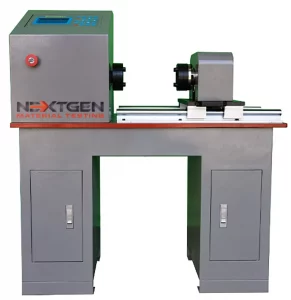
In day-to-day lab use, ASTM A938 points toward a dedicated wire torsion setup rather than a general tensile-only system. If you need help matching the method to your wire product, cited edition, or lab setup, Contact Us.
ASTM A938-18(2024) Standard Test Method for Torsion Testing of Wire
ASTM A938 is a test method for torsion testing of metallic wire. The current ASTM listing identifies ASTM A938-18(2024) as the active edition.
This method is focused on a specific mechanical test, not on a full material specification. The official ASTM document should be used whenever exact setup details, acceptance criteria, reporting requirements, or edition-specific instructions are contractually required.
Quick Definition
Document type: Test method.
Material focus: Metallic wire.
Primary purpose: Evaluate wire ductility under torsional loading by twisting a wire specimen under controlled conditions.
What This Standard Covers
ASTM A938 describes how metallic wire is twisted in a torsion test and what test conditions need to be controlled for meaningful results.
-
Specimen straightening and end preparation.
-
Test length between the clamping heads.
-
Clamping alignment and the use of tensile force to keep the wire straight during twisting.
-
Twisting speed and counting of turns.
-
Fracture handling and basic report content.
Why This Standard Matters in Testing
Wire can be sensitive to small material and processing differences when it is loaded in torsion. That makes ASTM A938 useful when a lab needs more than a simple straight-pull result and wants to understand how the wire behaves when it is twisted.
In practice, ASTM A938 is commonly used when a product specification, drawing, or purchase requirement calls for torsion performance or a minimum twist result. It is especially relevant for quality control, incoming inspection, and production comparison work on wire products.
Common Materials, Product Types, or Applications Covered
ASTM A938 applies to metallic wire. The method is about the wire product form itself, so it is narrower than a general metals testing standard and should not be read as a method for strip, rod, or larger torsion-bar specimens.
The exact alloy, finish, and acceptance limits usually come from the governing product specification or customer requirement. ASTM A938 provides the torsion test method, while the controlling product document typically determines whether a result is acceptable.
Common Test or Verification Workflow
A typical ASTM A938 workflow follows a straightforward wire torsion sequence.
-
Prepare a straight wire specimen without creating surface damage that could affect the result.
-
Set the required test length and grip the specimen so the wire is twisted only over that length.
-
Keep the specimen aligned with the clamping heads and apply enough tensile force to help maintain straightness during the test.
-
Rotate one clamp at a controlled speed until fracture or until the required number of turns has been reached.
-
Record the required specimen and test details in the report.
Common workflow output: Twist performance is typically used as a ductility or pass/fail check for metallic wire under torsional loading.
Equipment Commonly Used for This Standard
ASTM A938 points to a dedicated wire torsion test setup with the ability to grip, align, twist, count turns, and protect the operator during fracture.
| Equipment element | Why it matters for ASTM A938 work |
|---|---|
| Wire torsion frame with coaxial clamping heads | Helps keep the wire aligned while torsion is applied. |
| Axially movable head with tensile loading capability | Helps maintain specimen straightness during twisting. |
| Revolution or turn counter | Tracks the number of twists applied in the test. |
| Protective shield or guarding | Reduces operator exposure if the wire breaks and releases fragments. |
Common equipment path: Dedicated wire torsion testers, appropriate wire grips or clamping heads, turn-counting controls, axial loading features, and safety guarding.
For quoting, the main selection points are usually specimen diameter range, usable test length, clamping approach, counting and control features, and the level of guarding needed for the product being tested.
How to Read This Designation or Revision
ASTM A938 is the base designation for this wire torsion test method. In ASTM formatting, the number after the designation identifies the edition year, and a year in parentheses indicates a later reapproval.
Example: ASTM A938-18(2024) identifies a 2018 edition that was reapproved in 2024.
If a drawing, purchase order, or product specification cites ASTM A938, the exact referenced edition should be matched during method setup, reporting, and any compliance review.
Related Standards, Methods, or Frameworks when Useful
ASTM A938 references ASTM E6 for mechanical testing terminology. In actual use, this method is often read alongside the governing wire product specification, because that companion document may define required test lengths, acceptance limits, sampling, or purchase criteria that ASTM A938 itself does not set on its own.
Need Help Quoting Equipment for ASTM A938?
If you are selecting a wire torsion tester for ASTM A938 work, we can help you match specimen range, clamping, axial loading, counting, and guarding to your application. Request a Quote.