ASTM D3364 is an ASTM standard test method used to measure flow rate behavior of non-rigid poly(vinyl chloride) (PVC) compounds using an extrusion plastometer-style approach. It is commonly used as a quality-control tool to monitor processability and detect changes in formulation or polymer behavior.
If you need help confirming whether ASTM D3364 is the right fit for your PVC compound and reporting requirements, talk with our team about your application and the edition you are working to.
ASTM D3364 — Standard Test Method for Flow Rates of Non-Rigid Poly(Vinyl Chloride) with Molecular Structural Implications
This standard focuses on measuring PVC flow behavior under controlled conditions and interpreting the result as a practical indicator of compound-to-compound consistency. It is often applied in material qualification, incoming inspection, and ongoing production QC for plasticized PVC compounds.
ASTM D3364 is not a general “melt flow index for all plastics” reference; it is specific to PVC compounds and is intended to be more sensitive to PVC formulation and stability effects than a one-size-fits-all approach.
Quick Definition
ASTM D3364 measures the flow rate of non-rigid PVC compound through a defined die under specified conditions, supporting QC control and detection of composition- and stability-related changes that can affect processing.
What This Standard Covers
ASTM D3364 describes a standardized way to determine flow rate for non-rigid PVC compounds using an extrusion plastometer configuration and defined test conditions. The method is designed to cover a wide range of PVC melt viscosities and uses shear-rate conditions that are relevant to low-shear material behavior.
In practice, the output is used as a comparative metric (lot-to-lot, supplier-to-supplier, or before/after processing) rather than as a single standalone number that guarantees end-use performance.
Why This Standard Matters in Testing
ASTM D3364 is widely used as a practical screen for changes that can impact processing behavior in extrusion, molding, milling, or mixing of PVC compounds. It is particularly valued in QC environments because it can highlight formulation shifts or instability effects that may not be obvious from basic melt flow testing alone.
For many labs, ASTM D3364 functions as a “control chart” style metric: a stable flow-rate result helps support consistent processing, while a shift in the result can trigger additional checks (for example, formulation review, plasticizer verification, or thermal history review).
Common Materials, Product Types, or Applications Covered
This standard is most commonly applied to non-rigid (plasticized) PVC compounds used for products where processing consistency is critical.
Common material types: Plasticized PVC compounds (non-rigid PVC formulations).
Common application areas: Compound QC for extrusion or molding operations, supplier qualification, and monitoring compound stability and composition-related effects that influence flow behavior.
Common Test or Verification Workflow
Most ASTM D3364 workflows follow a controlled sequence: condition and prepare the PVC compound per the method, run the extrusion plastometer portion at the required test settings, and report the flow rate results in the units and format required by the standard and the purchasing/specification document.
Common workflow goals: Lot acceptance, lot comparison, process drift monitoring, formulation-change control, and troubleshooting of processing variation.
Practical caution: Results can be highly sensitive to test conditions and sample handling (temperature control, timing, charge mass, and load/conditioning details). Equipment configuration and operator procedure should match the cited edition of ASTM D3364.
Equipment Commonly Used for This Standard
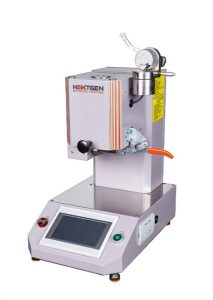
ASTM D3364 is commonly run on an extrusion plastometer / melt flow tester (often referred to as a melt flow indexer) configured for the PVC-specific requirements of the method. Because PVC compounds can be sensitive to thermal history and stability effects, stable temperature control and repeatable timing/control functions are typically key to good day-to-day repeatability.
Common equipment families: Extrusion plastometer / melt flow tester, temperature-controlled barrel and die set, calibrated mass/load system, cutting/collection tools, balance for mass measurements, and basic dimensional measurement tools as required by the method.
If you are selecting a melt flow system and need help matching options (manual vs. automated cutting/timing, temperature control range, reporting features) to ASTM D3364, you can request pricing for a configured system.
How to Read This Designation or Revision
ASTM D3364 is the base designation for the standard. A suffix such as D3364-26 indicates the year of the version being cited.
You may also see an editorial-change marker such as e1 in citations (for example, D3364-26e1). This indicates an editorial correction to the standard text (not a new test method designation). When you are writing purchase specs, procedures, or reports, it is best to cite the full designation exactly as required by your customer or quality system.
Related Standards, Methods, or Frameworks when useful
ASTM D3364 is closely associated with melt flow measurement concepts used in broader thermoplastics testing. In many organizations, it is used alongside general melt flow testing to separate “general flow behavior” from PVC-specific sensitivity to formulation and stability effects.
Commonly referenced related method: ASTM D1238 (melt flow rates of thermoplastics by extrusion plastometer) is often referenced in discussion and laboratory programs when comparing PVC-specific flow testing to general-purpose melt flow testing.
Talk to us about ASTM D3364 equipment and test readiness
If you are setting up ASTM D3364 in a lab or production QC environment, we can help you align the equipment configuration, control features, and reporting needs to the exact edition you must follow. To get a budgetary or detailed configuration, request a detailed quote.