ASTM D1183 is a set of standard practices used to evaluate how adhesive bonds hold up after repeated exposure to cycling laboratory aging conditions such as temperature and relative humidity extremes.
Because D1183 ties aging exposure to changes in bond strength, it is commonly used alongside an adhesive strength test method selected by the material specification. If you need help aligning the exposure cycle with your chosen strength method and specimen type, you can talk with our team.
ASTM D1183-03(2019), Standard Practices for Resistance of Adhesives to Cyclic Laboratory Aging Conditions
ASTM D1183 provides a controlled way to expose bonded adhesive specimens to cyclic accelerated service-like conditions in the laboratory, then evaluate performance by measuring the change in selected strength properties after exposure.
It is typically used for comparative screening, supplier qualification, and process/material change control where environmental durability of an adhesive bond is a concern.
Quick definition
ASTM D1183 is an accelerated aging exposure practice for adhesive-bonded specimens that uses cycles of high/low temperature and high/low relative humidity, with degradation assessed by changes in bond strength measured before and after exposure.
What this standard covers
D1183 covers cyclic laboratory aging conditions applied to bonded specimens to assess an adhesive’s resistance to accelerated service conditions. The exposure is based on cycling environmental conditions rather than a single steady-state condition.
The standard also emphasizes that the exposure condition, number of cycles, which strength property will be used, and whether specimens or panels are used should be defined by the applicable material specification or test plan.
Why this standard matters in testing
Adhesive joints can be sensitive to moisture uptake, thermal cycling, and combined hygrothermal stresses that may not appear in room-temperature strength tests. D1183 helps labs introduce repeatable, documented environmental cycling so durability can be compared across adhesive formulations, surface preparations, substrates, or process conditions.
D1183 is also useful when procurement or QA/QC needs a consistent exposure practice to support qualification, auditing, or ongoing verification testing.
Common materials, product types, or applications covered
D1183 is used for adhesive-bonded joints where service exposure may include temperature swings and humidity changes. It is most commonly applied when the performance question is durability of the bond (strength retention) after cycling exposure rather than initial strength alone.
Common evaluation focus: Strength change (retention or loss) after cycling exposure, using a separate, appropriate adhesive strength test method for the joint design being evaluated.
Common test or verification workflow
D1183 is typically run as an “expose then test” workflow.
Common workflow: (1) Prepare bonded specimens per a selected adhesive strength method, (2) establish baseline strength for unexposed controls when required, (3) expose specimens to the specified cyclic aging conditions for the specified number of cycles, and (4) test exposed specimens using the same strength method and compare results to baseline/controls.
The standard’s scope notes that D1183 is intended for use with specimen configurations described in established ASTM adhesive strength methods, including ASTM D897, D903, D906, D950, D1002, D1062, and D1344.
Equipment commonly used for this standard
D1183 itself is driven by environmental exposure, but it is normally paired with mechanical testing equipment to quantify strength changes.
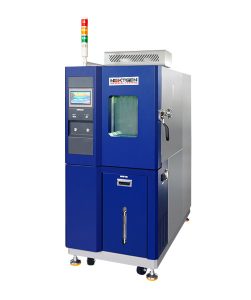
Common equipment for D1183 exposure: Programmable environmental chamber(s) capable of cycling the required temperature and relative humidity conditions; specimen racks/holders suited to the bonded coupons or panels; calibrated temperature/RH monitoring as required by lab practice.
Common equipment for post-exposure strength testing: A universal testing machine (or other test frame) and the fixtures/grips specified by the selected adhesive strength test method (for example, shear, peel, or other joint-specific fixtures), plus any required conditioning/measurement accessories used by that method.
How to read this designation or revision
ASTM standards are identified by a letter and number (here, D1183), followed by a year date that indicates the year of original adoption or the most recent revision. A year date in parentheses indicates the year of last reapproval.
For example, ASTM D1183-03(2019) indicates the standard carries a “-03” year date with a reapproval shown in parentheses as “(2019).” Always match your internal requirement to the exact cited edition, since exposure details, terminology, and referenced methods can vary between versions.
Related standards, methods, or frameworks when useful
ASTM D1183 is commonly used alongside an adhesive strength test method that defines specimen geometry, bonding area, loading configuration, and calculation/reporting requirements. The D1183 scope note cites examples such as ASTM D897, D903, D906, D950, D1002, D1062, and D1344.
When specifying D1183 in procurement documents or internal test plans, it is good practice to cite both the D1183 edition and the exact strength method(s) used before and after exposure.
Get help selecting an exposure and test setup for ASTM D1183
If you are planning cyclic aging plus post-exposure strength testing and want to align chamber capability, specimen capacity, and the mechanical test method fixtures, you can request a detailed quote for a configuration matched to your D1183 workflow.