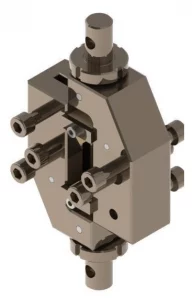
ASTM D3410/D3410M is a standard test method used to determine in-plane compressive properties of polymer matrix composite (PMC) materials using a shear-loading approach with an unsupported gage section.
This method is commonly referenced when teams need compressive strength and modulus-type data for high-modulus fiber reinforced laminates as part of qualification, incoming inspection, or process control. If you need help confirming whether shear loading is the right compression approach for your laminate form and thickness range, talk with our team.
ASTM D3410/D3410M — Standard Test Method for Compressive Properties of Polymer Matrix Composite Materials with Unsupported Gage Section by Shear Loading
ASTM D3410/D3410M describes a compression test approach where load is introduced into a composite coupon through shear at wedge-grip interfaces, leaving the central gage section unsupported. The intent is to generate compressive property data suitable for engineering use, while controlling common compression-test challenges such as specimen instability and end-loading artifacts.
Quick Definition
Document type: Test method.
Primary purpose: Determine in-plane compressive properties of polymer matrix composite materials (reinforced by high-modulus fibers) using shear loading through wedge grip interfaces.
Typical outputs: Compressive strength and strain at failure, compressive modulus, and related compression response values as defined by the standard.
What This Standard Covers
This test method addresses in-plane compressive behavior of PMC materials reinforced with continuous or discontinuous fibers where the elastic response is orthotropic with respect to the test direction. The procedure introduces compressive force through shear at wedge grip interfaces rather than transmitting load directly by end loading.
The standard also recognizes that composite product form (for example, unidirectional tape, textile/fabric forms, or short-fiber forms) can influence how closely a lab can follow the “as-written” procedure, and that some forms may require deviations handled by the user’s test plan and reporting.
Why This Standard Matters in Testing
Compression data for fiber-reinforced polymer composites is often sensitive to how load is introduced, how the coupon is aligned, and how out-of-plane bending is managed. ASTM D3410/D3410M is widely used when programs want a defined shear-loading compression method for generating comparable material property data for specification, R&D, quality assurance, and structural design and analysis.
For labs and QA teams, the most practical impact is that equipment and fixturing decisions (gripping/fixture type, alignment capability, and strain measurement approach) can strongly influence whether results are acceptable for a customer’s cited edition of the method.
Common Materials, Product Types, or Applications Covered
ASTM D3410/D3410M is most often associated with polymer matrix composites reinforced by high-modulus fibers used in performance-driven structures.
- Common material systems: Fiber-reinforced thermoset and thermoplastic composites (for example, carbon/epoxy and glass/epoxy laminates), when tested as composite coupons.
- Common product forms: Unidirectional tape laminates, textile/fabric laminates, wet-tow placed laminates, and other similar PMC forms referenced by the method.
- Where it shows up: Aerospace and other structural composite programs where compressive allowables, batch release, or process-change validation requires standards-based compression testing.
Common Test or Verification Workflow
Because this is a test method (not a product specification), it is usually used as one step inside a broader qualification or QC plan.
Common workflow: Define laminate and orientation → prepare compression coupons to the method’s geometry requirements → condition specimens and define the test environment → install specimens into the shear-loading compression fixture/wedge-grip interfaces → apply monotonic compression loading while recording force and strain → calculate and report compressive properties and document key test variables that can influence results (material form, layup, specimen preparation, conditioning, alignment/gripping, speed, and environment).
Equipment Commonly Used for This Standard
ASTM D3410/D3410M is equipment-sensitive because the method relies on introducing compressive load through shear at wedge grip interfaces and maintaining good alignment to avoid bending-driven failures.
Common equipment families: Universal testing machines (electromechanical) or servo-hydraulic test frames with appropriate force capacity; a shear-loading compression fixture/grip arrangement designed for the D3410-style wedge interface; and an appropriate strain measurement approach (selected to match the customer’s reporting needs and the cited edition).
Practical selection points: Alignment capability, fixture compatibility with specimen thickness/width ranges, grip/fixture condition and repeatability, and data acquisition channels for load and strain are typically the gating items when quoting a system for D3410 work.
How to Read This Designation or Revision
ASTM commonly publishes this method as D3410/D3410M, indicating a combined designation where SI and inch-pound units are both addressed (to be used independently, not mixed). The year in the designation (for example, “-16”) indicates the year of the last revision, and a year shown in parentheses (for example, “(2024)”) indicates a later reapproval year associated with that revision.
Revision sensitivity: Fixture expectations, reporting details, and acceptance criteria in customer documents can depend on the exact cited edition (including reapproval), so purchase specifications and test reports should match the same designation string wherever possible.
Related Standards, Methods, or Frameworks
ASTM D3410/D3410M is one of several composite compression approaches that differ mainly in how load is introduced into the coupon.
- ASTM D695: Compression by end loading (commonly used for plastics, and sometimes referenced for comparison when discussing load introduction differences).
- ASTM D6641/D6641M: Compression using combined shear and end loading (often selected when a program specifies that particular fixture style).
- ASTM D5467/D5467M: Compression-related evaluation for certain sandwich constructions using a bending-based configuration.
Get help configuring a D3410/D3410M compression test setup
If you are equipping a lab for composite compression testing and need a system matched to D3410/D3410M-style shear loading (including fixture compatibility, alignment, and strain measurement needs), you can request a detailed quote for a configuration that fits your specimen range and throughput.